
Alright – so today we’ve got the honor of introducing you to Gwendoline Van Doosselaere. We think you’ll enjoy our conversation, we’ve shared it below.
Gwendoline, appreciate you joining us today. Risking taking is a huge part of most people’s story but too often society overlooks those risks and only focuses on where you are today. Can you talk to us about a risk you’ve taken – it could be a big risk or a small one – but walk us through the backstory.
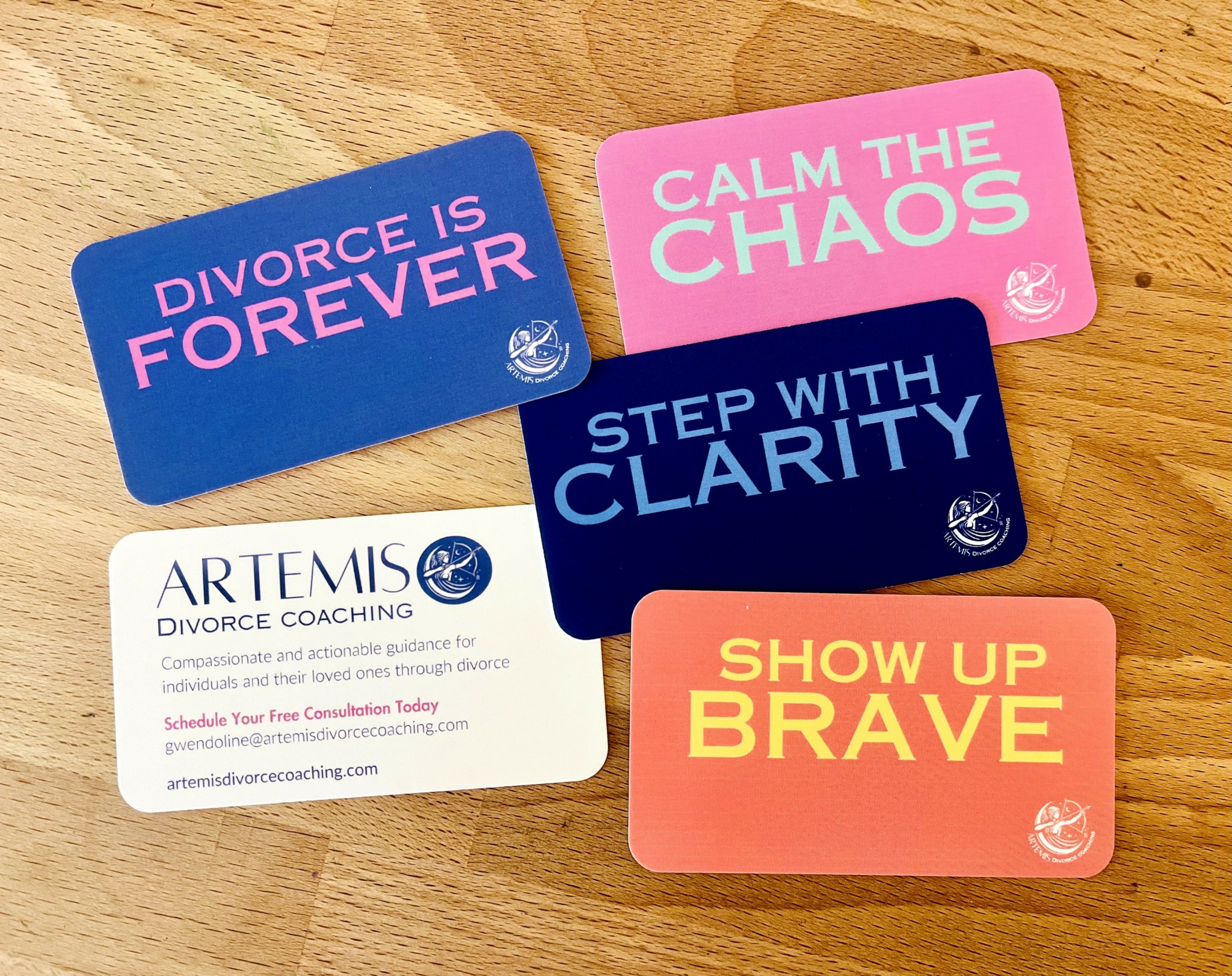
The founding and launching of Artemis Divorce Coaching and The Divorce School for Women was — and continues to be — a risk.
Stepping into entrepreneurship is not foreign to me. Knowing what it takes to run a small business is not unknown.
Turning the lens on myself, however — flattening the gap between the product and myself and my work — is entirely new. And exquisitely and uniquely challenging. Every. Single. Day.
Never in my wildest dreams did I imagine I would launch a divorce coaching business. Even as someone who’s always been deeply connected to my professional North Star, I could not have foretold this trajectory.
And yet it’s the most logical conclusion and culmination of the work I’ve done to date — a true coupling of my professional background and my most personal experiences. When I first started hearing the whispers of becoming a divorce coach and launching this business, I realized I was really being asked to continue a soulful journey of facing my fears and becoming. I’d already embarked on that journey through several iterations — like leaving all that I’d known to travel the world solo and then divorcing, agonizing for years before deciding that was the right choice.
When I lost my job on the heels of my divorce — quite literally weeks after — I was completely and utterly lost. In the span of months, I’d walked through three of the greatest traumas we face in adulthood: divorce, moving, and job loss. Losing your job, especially as a single parent, is utterly paralyzing. I spent the better part of the first year in a state of panic. I had the spins from stress. I felt humiliated and abandoned by the universe. It is deeply humbling to lose your professional identity, especially as someone who’d been working since she was a teenager.
I applied for job after job. I got a few leads, including one very warm one I was sure would become my next chapter. It fell through at the last minute.
We often talk about divorce as a very deep process of learning to let go — of deeply learning what’s yours to control and what is not, of radical acceptance. I realized I had more layers to go. More layers of learning to trust the very universe I felt rejected by. I realized that, much like when facing other terrifying decisions in my life, I had to really tap into myself spiritually. I needed to tune back into the fullness of myself — to the spiritual growth before me, to this next stage of becoming and ego death, really.
So I started to listen and to take seriously the whispers of divorce coaching. I had been informally coaching friends and contacts through their own divorces, having navigated an extraordinarily difficult, high-conflict one myself.
I leapt and launched Artemis Divorce Coaching over a year ago, stepping into the most vulnerable professional territory of my life — one where I am the product, where my story is the credential, where every day requires showing up fully exposed. It has been one of the most spiritually demanding and meaningful things I’ve done.
Entrepreneurship, for me, is not just a career move. It is a profound spiritual practice, one where you are confronted with yourself every day, every minute.

Gwendoline, before we move on to more of these sorts of questions, can you take some time to bring our readers up to speed on you and what you do?
I come to divorce coaching and education work with deep firsthand experience in what it takes to birth yourself through divorce — and through the grievous years spent contemplating it and building a dissertation-level understanding of high-conflict dynamics, coercive control, and what it takes to emerge.
I was left with just how underserved divorce truly is — how much people suffer in isolation and shame, when that’s the last helpful thing to do. Almost half of marriages end in divorce, meaning roughly a third of the adult population is touched by it — and yet divorce goes largely unsupported and unacknowledged for the depth of trauma and transformation it requires of us.
It’s like giving birth with no access to medical facilities or doctors.
What sets me apart isn’t just that I’ve lived this — it’s the depth at which I’ve lived it and the professional lens I bring to it. My background in diversity, equity, and inclusion work means I’m deeply fluent in systemic dynamics: sexism, power imbalances, the ways institutions and legal systems are not designed with women in mind, despite what some would have you believe.
For my clients, that means I can often articulate and reflect back what they’re experiencing before they can fully name it themselves, before it’s fully formed in front of their eyes. Together, we demystify the divorce journey so that they are better prepared — practically, emotionally, and spiritually.
My ambition is to help reshape how we, culturally, experience divorce — and how we, collectively, grow through it together. I’m in the process of co-developing a robust directory of divorce professionals, a one-stop shop that connects people to vital divorce support with clarity and guidance.
I’m also building The Divorce School for Women — an online community to help women navigate everything divorce touches and all the ways this midlife transition asks us to grow and learn. The premise is simple and fundamental: divorce is better with girlfriends.
Women’s experience of divorce is distinct — emotionally, legally, financially, spiritually — and women deserve a space that speaks directly to that experience without shame or judgment, without making them feel less than or like failures, from navigating co-parenting as single moms, to taking up more space in negotiations, to the inner work of rebuilding identity, to logistics like car maintenance and finances.

What’s been the best source of new clients for you?
Divorce is still so deeply shrouded in shame and feelings of failure. Hiring divorce support requires enormous vulnerability; you have to trust that the person you’re opening up to can hold what you’re carrying.
I take that seriously, which is why continuing to build my clientele through high-touch, high-trust referral partnerships is my number one growth strategy.
Right now, my clients come almost entirely through referrals — one or two degrees of separation from me. While that’s very typical at this stage of an entrepreneurial journey, I think it also reflects something specific and essential to divorce work. That level of trust is almost always built through a warm introduction: someone who knows me vouches for me, creating the safety a potential client needs to take the first step.

We often hear about learning lessons – but just as important is unlearning lessons. Have you ever had to unlearn a lesson?
There are so many lessons to unlearn — and the one I’m really focused on right now is to play instead of perfect. To try and experiment instead of having it all figured out.
You could call this perfectionism, though I don’t think it’s fully that. I think it’s more about the extra labor required of women to bridge the credibility gap — to ensure that every angle, every message, every asset is airtight and beyond reproach. That discipline served me enormously in my previous work.
As an entrepreneur, it has been one of my biggest obstacles.
Instead, I’m taking my cues from some of the men around me, past and present. I’m borrowing from their ingrained confidence and bravado — the kind that lets men apply for jobs at 50% qualified while women wait until they’re 100% ready. It’s oddly liberating.
The world of early-stage entrepreneurship rewards scrappiness and speed over polish. You have to put ideas out there while they’re still half-baked and see what hooks people. The structure has to follow the demand, not the other way around. Building the backend before you’ve validated the idea is expensive, laborious, and potentially wasted.
I am fundamentally inverting how I operate — how I stand in myself and out there — giving myself permission to lead with lived expertise, to launch The Divorce School for Women as it’s still taking shape.
Instead of perfection, I’m practicing deep presence and play. And trust.
Contact Info:
- Website: https://www.artemisdivorcecoaching.com/
- Instagram: @artemisdivorcecoaching
- Linkedin: https://www.linkedin.com/company/artemis-divorce-coaching