

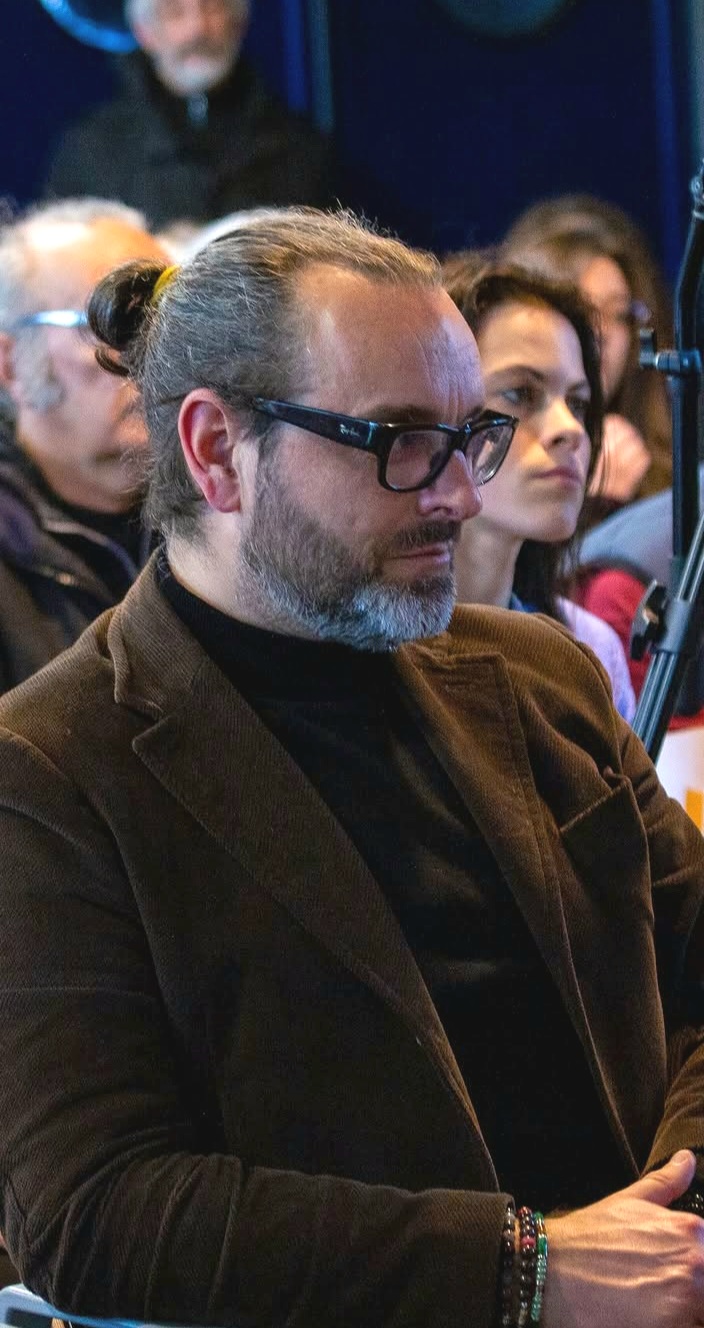

We’re excited to introduce you to the always interesting and insightful Giuseppe Calandrini. We hope you’ll enjoy our conversation with Giuseppe below.
Hi Giuseppe, thanks for joining us today. We’d love to hear about when you first realized that you wanted to pursue a creative path professionally.
I decided to pursue a creative and artistic career path later in life, around the age of 33. However, my curiosity and passion for artistic and creative expression—especially in music and writing—date back to my childhood, along with my music studies, which began in 1984. The choice to turn my passion into a profession came late for one specific reason: my deep respect for art and music. Even though I started studying so early and spent practically my entire life learning, experimenting, listening, exploring, and making music, I deliberately chose to wait until I had completely mastered the craft before making it my career. I never wanted to cheapen music by creating something mediocre or less than completely satisfying. Then one day, a moment came when I felt 100% confident in both my technique and creativity. I accepted an offer from abroad to join a synthpop band based in Hannover, Germany, as a lyricist, vocal melody writer, and, of course, lead singer. From that point on, things took off. Our albums were released by the American label A Different Drum, and we gained recognition in the US and Europe, eventually earning praise from music producer David M. Allen (The Cure, Depeche Mode) and Vince Clarke, one of the co-founders of Depeche Mode itself. During those years, I also started getting more and more into songwriting and using DAWs (Digital Audio Workstations). A few years later, the next step was transitioning into scoring for television, and later, for feature films.
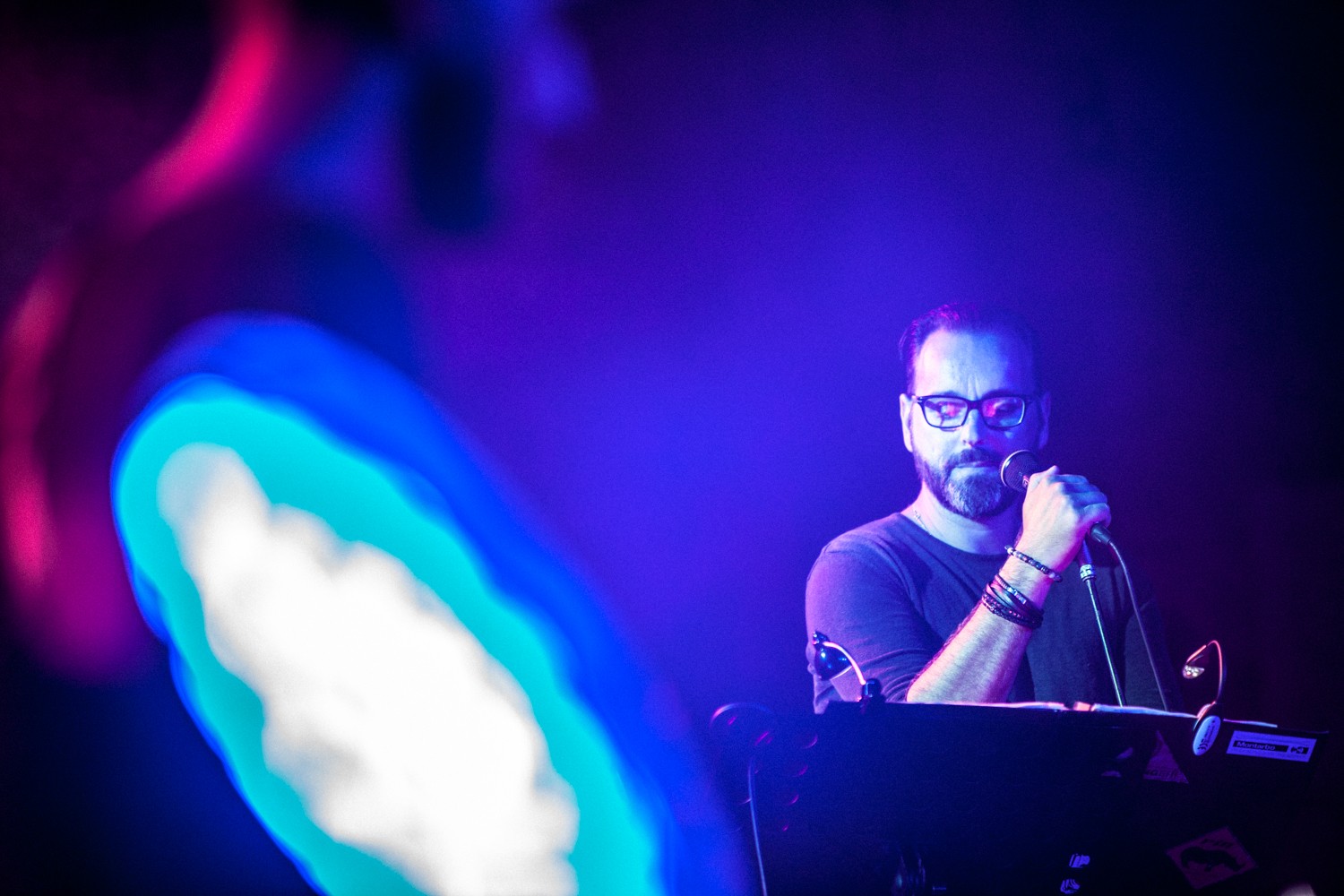
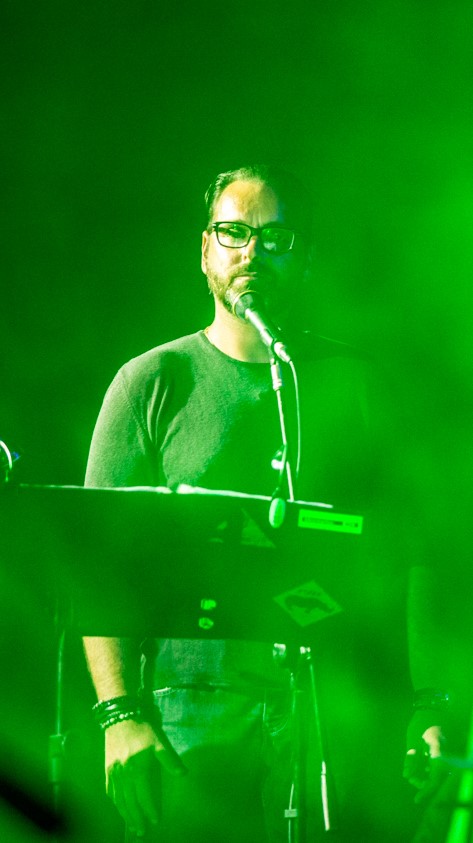
Giuseppe, before we move on to more of these sorts of questions, can you take some time to bring our readers up to speed on you and what you do?
My professional evolution eventually led me to my true calling: translating raw human emotion and moving images into powerful cinematic soundscapes. Moving into applied music allowed me to collaborate closely with visionaries across both the European and American film industries, solving complex narrative challenges through custom scores. A major milestone in this journey was composing the entire original soundtrack for all four episodes of ‘Una Storia Chiamata Gomorra – La Serie’ (A Story Called Gomorrah) for Sky Atlantic, which later reached global audiences on platforms like HBO Max and Amazon Video. For years, I had dreamed of setting the dark, gritty atmospheres, stories, and deep colors of shows like Gomorrah to music. When it finally happened, it was a profound experience. Working directly at Sky Italia’s post-production studios in Milan and screening the raw footage was unforgettable. Collaborating on the docuseries alongside director Marco Pianigiani and video editor Massimiliano Feresin was a masterclass in creative synergy—it was an incredible opportunity to work with top-level professionals who are also wonderful human beings to bring that epic, real-world narrative to life through sound. Following that momentum, my international collaborations have expanded deeply into both psychological and narrative cinematic realms. I scored the prominent US feature film Woodbridge, written and directed by the talented filmmaker Stephen Meier, which established my ability to deliver high-end, emotionally gripping themes within the American market. I also teamed up with director Frank Zanella to score several of his films like The Footprint—which was featured at the Los Angeles Awareness Film Festival—as well as his striking short films The Worm and the Butterfly and his latest The Incredible Irrationality Of Dreams, beautifully edited by Massimiliano Feresin. For Frank’s projects, I focus on creating deeply evocative, immersive scores that draw the audience directly into the protagonist’s psychological reality. In Italy, my creative partnership with director Barnaba Bonafaccia has allowed me to push the boundaries of emotional depth. I composed the custom original scores for his poignant films Cobalto and Nodi, using music as a vital moral and narrative anchor to elevate delicate, hard-hitting themes. Additionally, I recently dove into dark, synth, urban sonic textures for the feature film Territorio, directed by Fran Marconi and produced by Hubris Pictures. For this gritty USA-Italy production, I custom-crafted a heavy electronic backbone utilizing analog and digital modular synthesizers. This raw, hardware-driven approach also defines my recent collaboration with Van Harrel, where sound design and musical composition blur together to form a unique, tense sonic identity. Whether I am collaborating with American storytellers or European indie auteurs, I solve a critical problem for directors: I translate abstract emotional concepts into a broadcast-ready, meticulously mixed sonic reality. I want potential clients and filmmakers to know that I don’t just provide a soundtrack; I provide a tailor-made sonic soul for their stories.
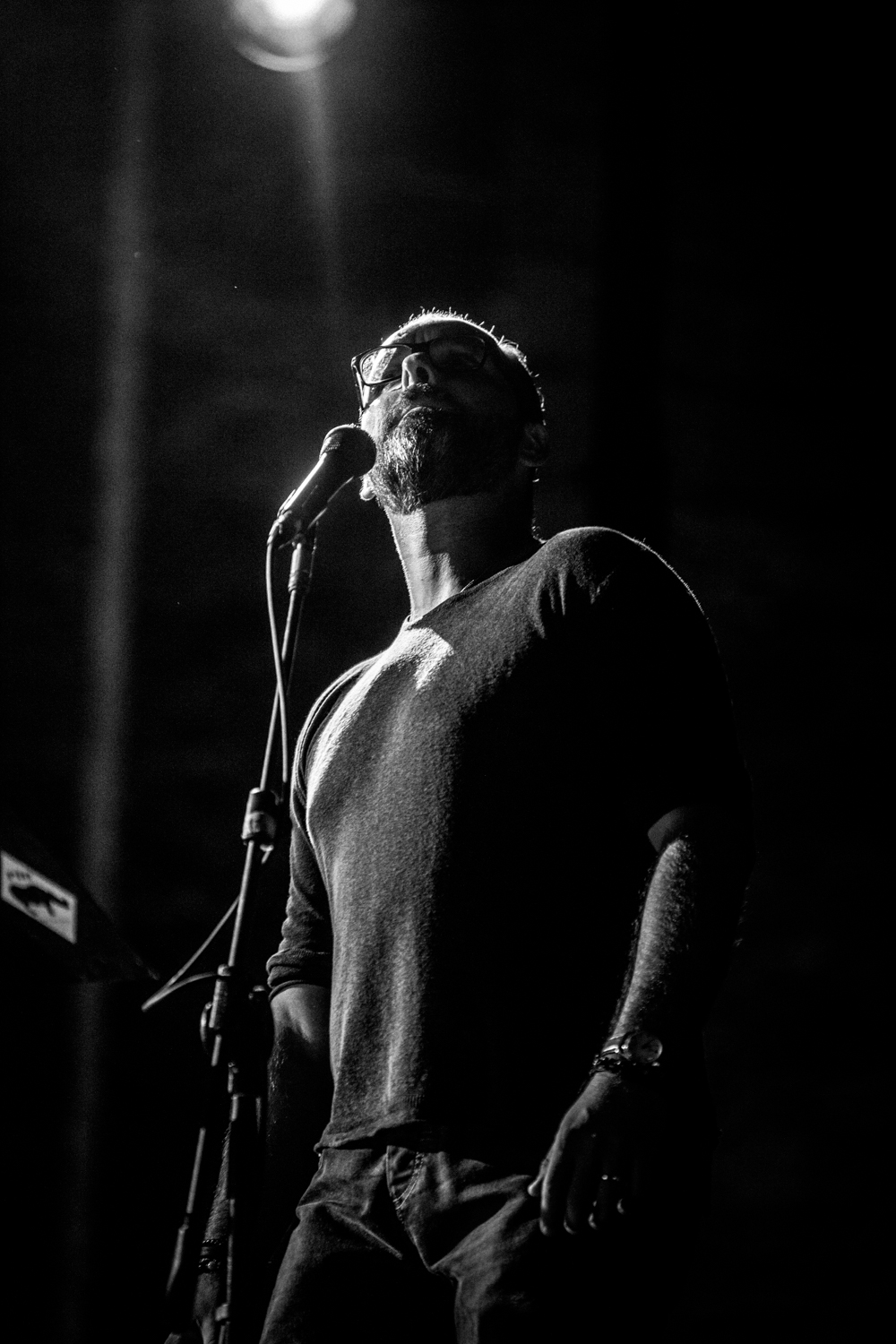
We often hear about learning lessons – but just as important is unlearning lessons. Have you ever had to unlearn a lesson?
I have two major lessons I had to unlearn, and here is their backstory. The first lesson I had to unlearn came courtesy of American director Stephen Meier—a remarkably talented professional and, above all, an exceptional human being. Up until that point, my interactions with industry professionals in the U.S. had been shaped by a very specific workflow: extreme speed, minimal explanations, and a general lack of communication. I had conditioned myself to believe that working with American clients meant putting aside my Italian identity, my empathy, and my need for detailed conversations. I thought I just had to deliver high-speed results based on brief, cryptic requests followed by absolute silence. Stephen completely flipped that script. Working with him forced me to reset how I engage with U.S. filmmakers, and I was thrilled to discover that top-tier professionals like Stephen exist—people who are deeply attentive to detail and capable of immense empathy. While coordinating the score for his feature film Woodbridge, we were in daily communication. We constantly exchanged feelings, hypotheses, and creative ideas; in short, it was the exact kind of synergy you hope for between two artists and professionals. I am incredibly grateful to him for that experience. The second lesson forced me to rethink my entire approach to music production. I had to realize that film scoring doesn’t always require stacking dozens of layers of sounds and harmonies to achieve a dense, rich track. Very often, directors and editors look for a minimalist approach—music that acts as background texture, almost like an atmospheric sound design with a subtle melodic pulse—leaving only three or four fully layered, richer tracks to serve as the film’s main themes. Of course, this isn’t a hard-and-fast rule. However, while working with the brilliant young director Frank Zanella and the renowned editor Max Feresin, it became clear to us that to truly emphasize a specific scene, a narrative beat, a glance, or a line of dialogue, you sometimes only need a handful of the right, unique sounds and resonances. These elements must be perfectly calibrated to the imagery, the lighting, the colors, the faces, and the shared emotions sought in that exact moment, without distracting the viewer with unnecessary sonic and melodic clutter. By doing this, you can then hit the audience straight in the heart when a rich, beautifully harmonized theme finally kicks in. In short, it taught me that sometimes, less really is more.
What do you think is the goal or mission that drives your creative journey?
My creative journey is driven by a fundamental human need: to communicate with people. Whether I am composing music—communicating through emotions, sounds, melodies, and harmonies—or writing stories and screenplays, the core necessity remains the exact same: to convey emotion. It is about creating worlds and telling stories. It is about sculpting space and time. If a painter works with color and a sculptor works with physical matter, what does a filmmaker work with? They work with time. The Russian director Andrei Tarkovsky famously defined cinema as ‘sculpting in time.’ It is an incredibly powerful expression: to sculpt time means to shape duration, to decide how long a moment should live, and how deeply it should breathe. A long, lingering shot is not just an aesthetic choice; it tells the viewer: stay here, inhabit this space, prolong this moment. A fast-paced, rapid edit, conversely, fractures time, making it nervous and unstable. In cinema, time is not merely what passes; it is what is actively constructed.In the same way, space in cinema is not a simple scenic container; it is a relationship. Think of Stanley Kubrick’s 2001: A Space Odyssey: the space there is geometric, silent, almost metaphysical. It is a space that dwarfs humanity. On the other hand, in Chris Marker’s La Jetée (a brilliant short film from the 1960s), space is almost immobile, made up entirely of static photographs edited in sequence; yet time explodes, breaks apart, and loops back on itself. This teaches us something fundamental: cinematic space is not just three-dimensional—it is emotional, perceptual, and mental.And this applies to music as well. A long, cavernous reverb creates an immense space; a dry, dead sound completely obliterates it; a well-placed silence can feel vast, even wider than an entire orchestra.To invent a story is to invent a timeline. Every time we write a story, we are deciding how time functions within that specific universe: is it linear, circular, fractured, or simultaneous? In Christopher Nolan’s Memento, time is reversed; the viewer experiences the protagonist’s memory loss firsthand because they live the events backward. In Denis Villeneuve’s Arrival, time is no longer a line but a simultaneity, where past and future coexist. At our core, those of us who invent stories are narrative physicists: we dictate the temporal laws of the world we create, and when that world is captured on film, editing becomes the supreme act of that decision.Editing, therefore, is a philosophical gesture. Sergei Eisenstein argued that montage was a collision—two images placed side by side generate a third, entirely new meaning. But editing is also a metaphysical act. Every single cut is a declaration: this still exists, this no longer exists, this timeline continues, this timeline breaks off. Editing connects distant locations, makes moments separated by decades happen simultaneously, and brings the impossible to life. In this sense, cinema is perhaps the art form that most closely mirrors the structure of human memory, organizing a puzzle of scattered fragments across time.Music, then, is time made audible. If cinema sculpts time, music embodies it. Music cannot exist outside of duration; we cannot gaze upon it all at once like a painting on a wall. We can only experience it as we move through it. Bach built time as mathematical architecture; Beethoven transformed it into raw tension.When music and cinema collide, something extraordinary happens: visual time and sonic time fuse together. A slow-motion scene without music is merely the perception of a moment; with the right music, it becomes that moment’s destiny. This touches on art, memory, and our interior time. The philosopher Henri Bergson spoke of durée—duration—meaning lived and perceived time, rather than the ticking of a clock. Art always operates within this lived duration. Cinema captures what is no longer there: every filmed frame is already the past, and every sound heard is already a memory even as we are actively living it. Therefore, creating art means something very precise: shaping someone else’s future memory. When we invent a story, we aren’t just narrating; we are constructing a pocket of time that someone else will inhabit internally. Cinema makes the past and the future simultaneous. Writing makes the non-existent inhabitable. Music transforms a single fleeting instant into eternity. In the hands of an artist, space and time are not limitations—they are the raw materials to be molded and shaped. Ultimately, perhaps our task as creators is not to explain the universe, but to prove that we can inhabit it poetically. Because that is exactly what every work of art is: a fragment of the infinite compressed into the present, an ‘outer space’ that becomes our immediate ‘now.’
Contact Info:
- Instagram: https://www.instagram.com/giuseppe__calandrini
- Linkedin: https://it.linkedin.com/in/giuseppe-calandrini-0154501a3
- Youtube: YouTube: https://www.youtube.com/@giuseppe_calandrini
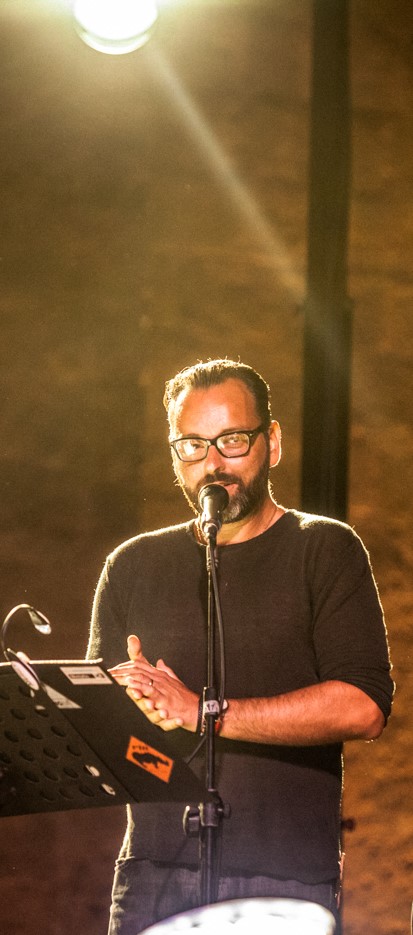
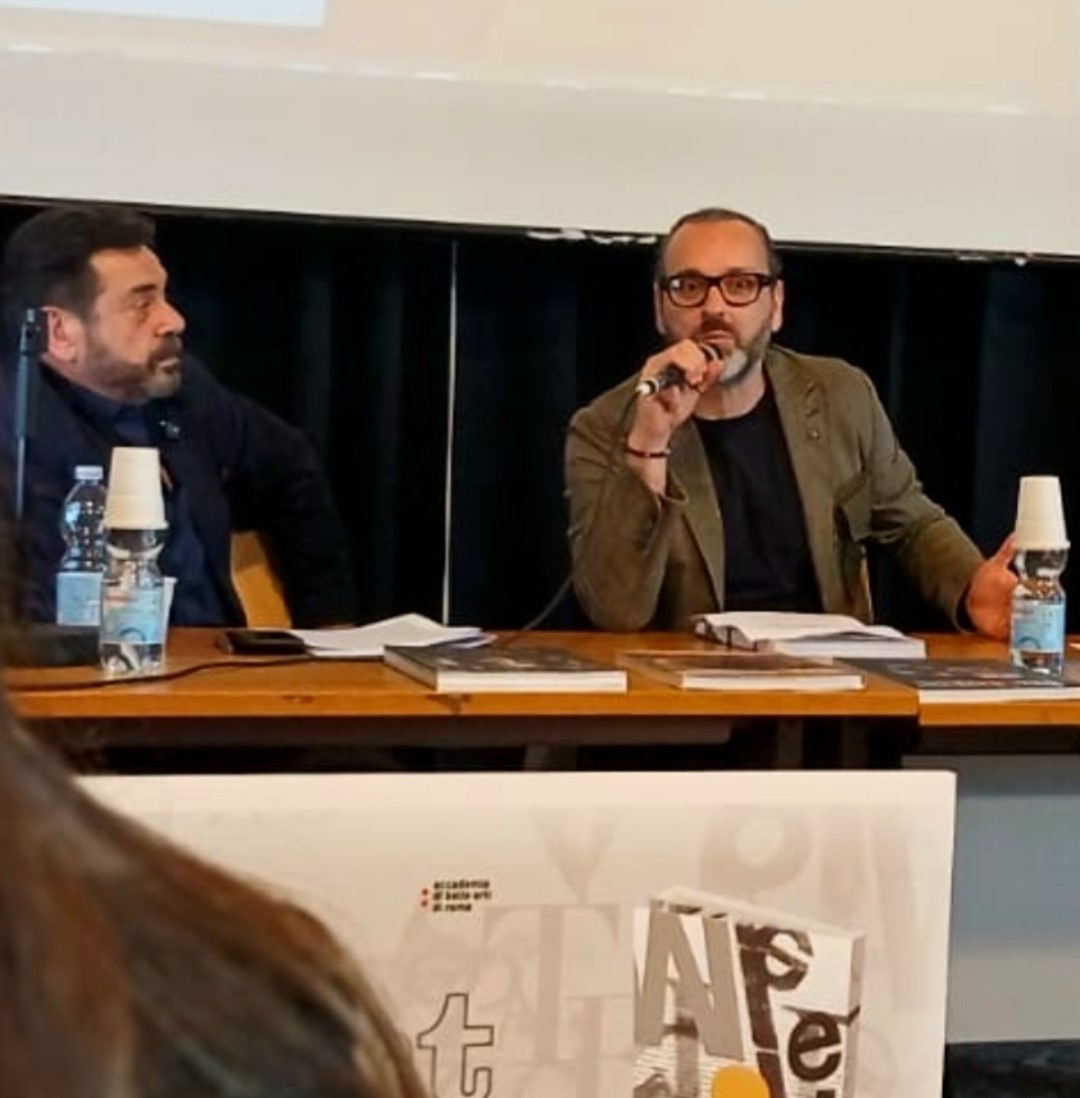
Image Credits
photo credits: Cesar Vasquez Altamirano and Academy Of Fine Arts of Rome.