

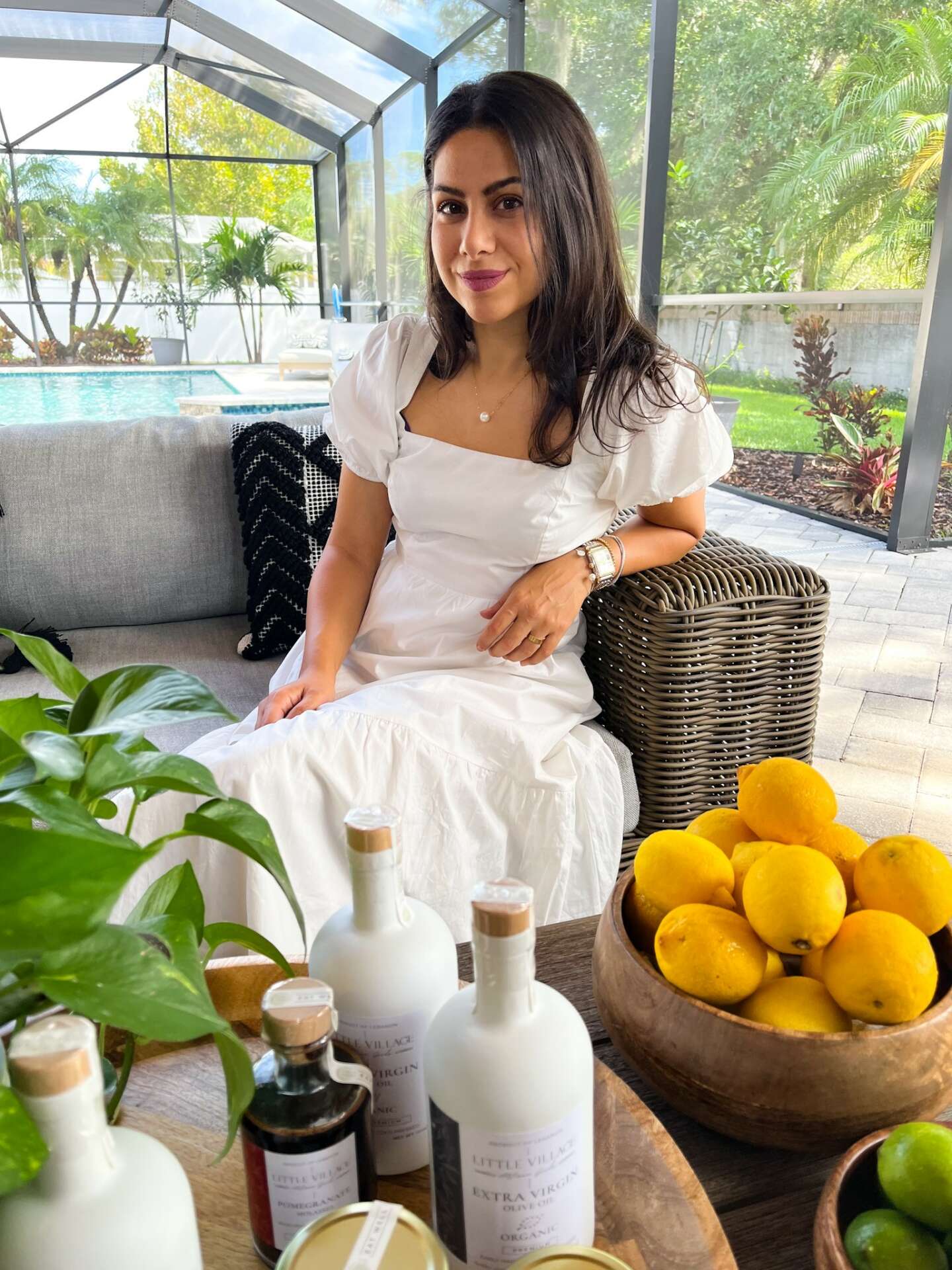

Alright – so today we’ve got the honor of introducing you to Farrah Mansour. We think you’ll enjoy our conversation, we’ve shared it below.
Alright, Farrah thanks for taking the time to share your stories and insights with us today. We’d love to go back in time and hear the story of how you came up with the name of your brand?
Choosing a company name was the hardest and most exciting part of the journey because we were eager to launch our business. Our goal was to try to find a name that embraces our background and the high quality of our products. We come from little villages in south Lebanon, where all goods are naturally vegan, wild grown, and hand made with love by artisans that inherited the land and still use centuries old techniques. That’s how Little Village Goods was born. And then, of course, we chose our colors that were inspired by those views of the mountains and fruit trees; shades of green from olive, fig, pomegranate trees, beige hues from stone walls and floors, and a deep red of pomegranate seeds.


As always, we appreciate you sharing your insights and we’ve got a few more questions for you, but before we get to all of that can you take a minute to introduce yourself and give our readers some of your back background and context?
I am a first generation Lebanese-American who grew up with a lot of culture and food in our home. Our traditions revolve around the dinner table entertaining friends and family with our bold flavors. My family used to bring back goods from our visits so I grew up knowing the true taste of Lebanon. But when I became a wife and mom, I strived to cook with healthy products and follow the Mediterranean diet, but was struggling to find high-quality ingredients in our local stores. So with the help of my husband and our passion and love of our country, we wanted to fill the gap in the market for better ingredients that tasted authentic, while also making an effort to raise awareness about our country, our culture, and our people. We wanted to showcase artisans in small villages who have been practicing their specialties for generations, are known for their quality, and who have perfected and put love into their technique. So we flew their products here and are excited to share our premium quality goods with hope to land in kitchens all over the US and have people fall in love with real Lebanese flavors.


We’d really appreciate if you could talk to us about how you figured out the manufacturing process.
We do not manufacture our products, as our goods are all wild grown, harvested by hand in small batches, and seasonal. We source our products from unique artisans in the villages who are wildly known for their craft of making the best Zaatar, Sumac, Pomegranate Molasses, Carob Molasses and especially good Organic EVOO in the area. We wanted the best ingredients, techniques and flavors in the country. Our EVOO is through a woman farmer who inherited her grove and adopted the Organic European certification for her process. Our pomegranate and carob molasses and herb mixes are handpicked in the mountains and hand prepped. It was important for us to find artisans who are dedicated to using pure ingredients without any additives. We are grateful for their work and love of their trade.


Do you sell on your site, or do you use a platform like Amazon, Etsy, Cratejoy, etc?
We have invested a lot of time and resources to build a unique and clean website with a social media focus to educate and enhance our customer experience, as our main focal point. Our customers can find our products on instagram at littlevillage.goods or on our website littlevillagegoods.com. We are a luxury brand and did not want to be lost in the world of Amazon shoppers who are solely based on pricing, but looking for quality ingredients that are seasonally picked.
Contact Info:
- Website: littlevillagegoods.com
- Instagram: littlevillage.goods
- Facebook: Little Village Goods
Image Credits
taken by Farrah Mansour White EVOO photographed by team at Oxford Exchange,