

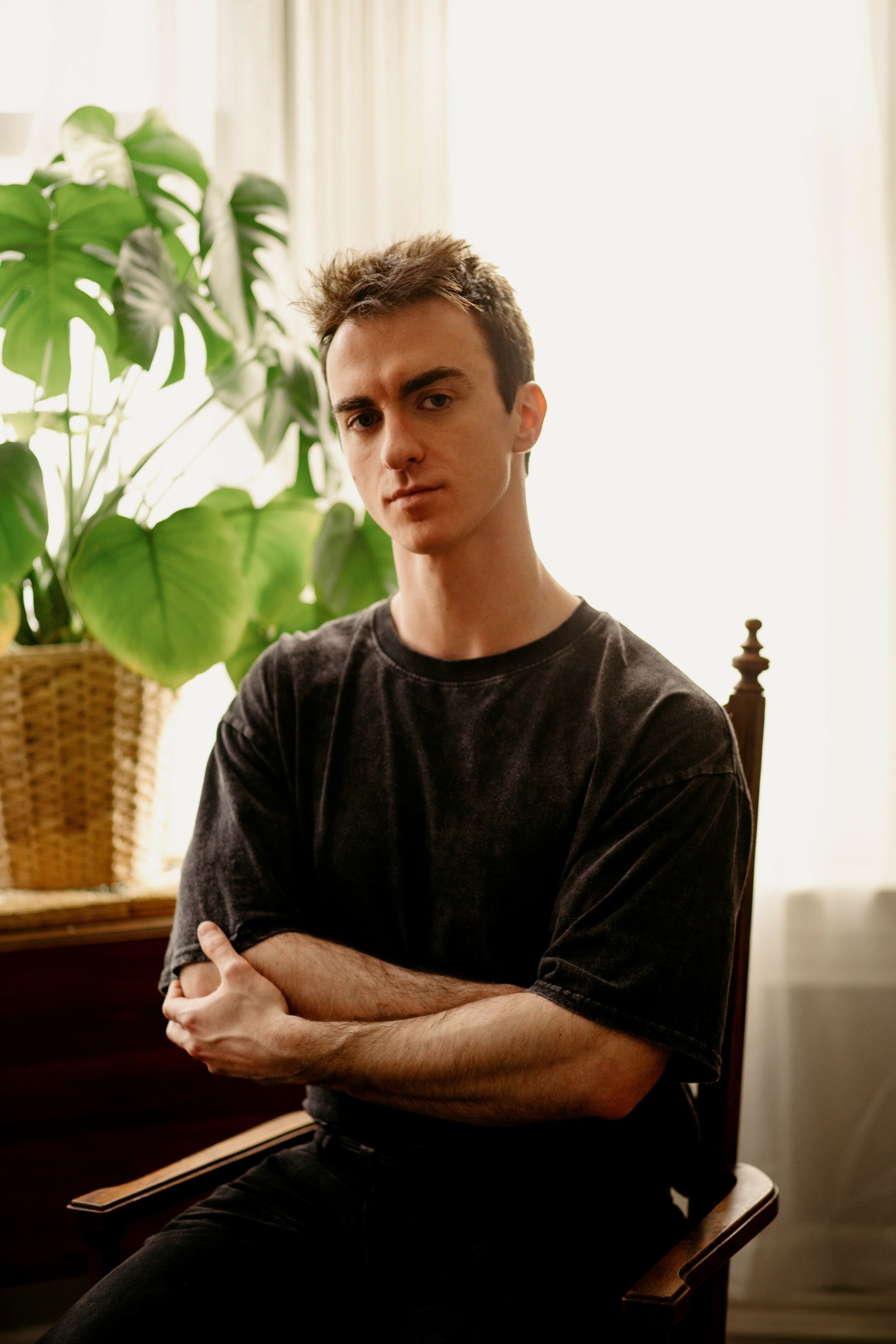

We caught up with the brilliant and insightful Evan Vissat a few weeks ago and have shared our conversation below.
Alright, Evan thanks for taking the time to share your stories and insights with us today. How did you learn to do what you do? Knowing what you know now, what could you have done to speed up your learning process? What skills do you think were most essential? What obstacles stood in the way of learning more?
I wouldn’t be who I am if weren’t for the people who taught me. I learned how to write stories and create music by learning from others. My parents, teachers, mentors, and friends have all played a pivotal role in the ongoing development of my skills.
People and the communities they form within the worlds they inhabit are my “why”—now and forever.
My mom is an art historian and teaches it at the collegiate level. From an early age, she taught me a critical truth about art:
All artistic styles are connected through human history, and so a diversity of style exposure increases what we can learn about ourselves and one another.
My dad was a graphic designer and creative director at an advertising agency. He taught me a critical truth about the process of making art:
If you want to do something, that means you have to do the work—whatever form that may take.
Both of my parents raised me in a household that not only encouraged creativity, but instilled within me and my older sister the willingnes to go out into the world and try new things.
When I was very young, like wire-rimmed glasses and braces young, I met a graduate student of my mom who started me down the creative path. Her name is Stephanie M. Wytovich. At that time, she was actively studying to become an expert in writing horror stories. I didn’t know that was something one could learn. I had always assumed that creativity was a thing people were just born with. I have her to thank for showing me, through walking her own creative path, just how wrong I was.
One high school diploma and two BFAs later, I applied to the University of Southern Maine’s (USM) Stonecoast Writing MFA program. From 2020 to 2022, I honed my writing craft under the direct mentorship of JJ Amaworo Wilson, Aaron Hamburger, Ron Currie Jr., and Tobias Buckell.
Under their guidance, I learned to make characters into fully-dimensional people and show readers constructed worlds through their unique, human perspectives. My undergraduate studies taught me how to be creative, while USM showed me how to balance quality with repetition. Through their feedback, I improved.
My favorite thing to write is character dialogue and their interactions with the physical world. Those used to be my weakest craft points, though. Old drafts contained flat characters that did nothing but exist in between blocks of texts describing the environment. When they did speak, they dumped more exposition than your favorite shōnen protagonist.
It is often said that the human brain remembers much more of the negative than it does the positive. The greatest power an artist can gain is when they make this concept work in their favor. Through constructive critique and self-assessment, every mistake made during the creative process can enable the reinforcement of long-lasting positive skills.
Post-graduation and to this day, I meet up with Stonecoast alumni via Zoom for regular co-writing Zoom sessions where we check in on each other’s project progress and conduct what I like to call “adult study hall.” Through these co-writing sessions, I completed the manuscript for a collection of body-horror-meets-self-care poetry titled “PetriDish.”
Stories that experiment with genre traits have always fascinated me, and so I love to merge different stylistic facets with each new project. Body horror serves as a prime candidate for this kind of genre mashing to occur, as one of its core themes centers around abnormal and extreme transformations.
As I shop “PetriDish” and produce my current working novel, “TraumaWeld: Patient,” my friends at Stonecoast keep me grounded and on track. I’m very thankful for not only what I learned at USM, but for this inter-state community we have post-grad.
Shoutout to Chloie, Jake, Maggie, Tessa, Caed, Liz, Cara, Dyani, Jessi, Sam, Nick, and everybody in the Discord chat.
As we think about essential skills and obstacles, I think a few things can go a long way to make people better storytellers.
Get Curious—Ask why something is about a character and or aspect of your world. Answer it, then ask “Why?” to that answer. By doing this, you’ll create characters with souls and worlds comprised of atoms, rather than just text.
Get Specific—If a character feels an emotion, how does their body respond? What are their senses telling them about a given environment? What does their attention shift to? Characters open portals to world building and vice-versa.
Get Active—Harkening back to my dad, the way that I, and every other writer, can speed up the learning process is to flat-out write more. I’m very fascinated with interviews and talkshows, and have noticed conversations with highly-successful, skilled writers seem to point in a similar direction: Write every day, even for a little bit.
I think the biggest obstacle for me regarding craft is giving the work room to breathe. I sometimes find myself in raw output mode, only to be interrupted by the need to pause and edit to perfection before proceeding.
This comes from a need to get as much work done perfectly as possible within a short time. This usually leads to less work getting done. It’s often a really good practice to create in large, imperfect swaths to cover a lot of ground. Editing something that exists is easier than making something perfect that isn’t even tangible yet.
If we consider music production, a similar principle applies. I once heard someone say that a really good production tip is to split studio time into two segments: Creative and Technical
Creative—Just send it. Play with sounds. Record stuff that sounds sick.
Technical—Clean up what you have. Make things fit together. Build the song into a singular unit.
I feel very thankful that I’m at a point in my life where I can actively engage with both book writing and music production at the same time. Making music didn’t seem like an option for me just a few years ago, but I am the product of those that have enabled me to go out and try.
My buddy Nigel Seibert is the reason I produce music. Full stop. When I was a high schooler, my friend Jackie took me to see her friend’s band “A Lovely Crisis” open for The Misfits in downtown Pittsburgh. Nigel drummed for ALC at the time and after the band broke up, he taught himself music production/how to build out an entire song.
Throughout my time in undergrad at Seton Hill University, we would periodically hang out and he’d show me the latest production tip he’d learned.
He even had me sit-in on client sessions to give creative input, so I got to witness the “behind the scenes” process of what goes into making hip-hop, punk rock, and pop songs. I learned how to make music by initially making trap and club beats alongside these clients.
At one point Nigel told me “You should try making something!” From that point on, our hangouts became half-yap session/half-feedback session. Nigel went from being one of my best friends to also being my music mentor.
In figuring out what I wanted to make under my own artist’s voice, I jumped head-first into experimentation. I wanted to serve as a crossroads to every artist that I love, from every genre including hip-hop, edm, hyperpop, industrial, hardcore, hyperglitch, and heavy metal.
From seeking to splice together a variety of genres together, the “mutate often.” project came into being.
Ocean Vuong has this really good quote that reads, “Definition is the enemy of imagination,” and I like to let that idea lead the creative phase of music production. The less expectations we can enter a new track with, the more possibilities for making something exciting tend to make themselves visible.
Since my initial releases with the project, I have had several opportunities to play live alongside a diverse array of artists, ranging from hip=hop, house, to hardcore—with a majority alongside the latter.
The current “mutate often.” discography includes solely-electronic instrumentation, so increasing the heaviness of the project came out of a necessity to essentially “match the freak” of multi-member hardcore and beatdown bands. I’m very excited to be working on the next batch of songs, as combining metal riffs with already room-shaking distorted bass is sure to make for an interesting series of experiments.
In terms of challenges and continued learning, I’d say the biggest one comes from this project being a full DIY mission. The quality of production, mixing, and mastering all currently fall to the responsibility of myself. If something is executed poorly, it’s up to me to learn how to make it sound worthy of other people’s time and attention.
Thankfully, I can rely on my friends for guidance on how to grow as an artist, both creatively and with regard to technical skill.
I think this is where the biggest opportunity for the project lies—I’m not paying anyone to make my music for me, so it can take on a multitude of forms.
As I conclude this specific question response, I’m excited to do the following:
– Grow as a storyteller and musician
– Creatively function at a professional level
– Work alongside others
– Enable people within my community
– Open the pit, maybe a corpse or two
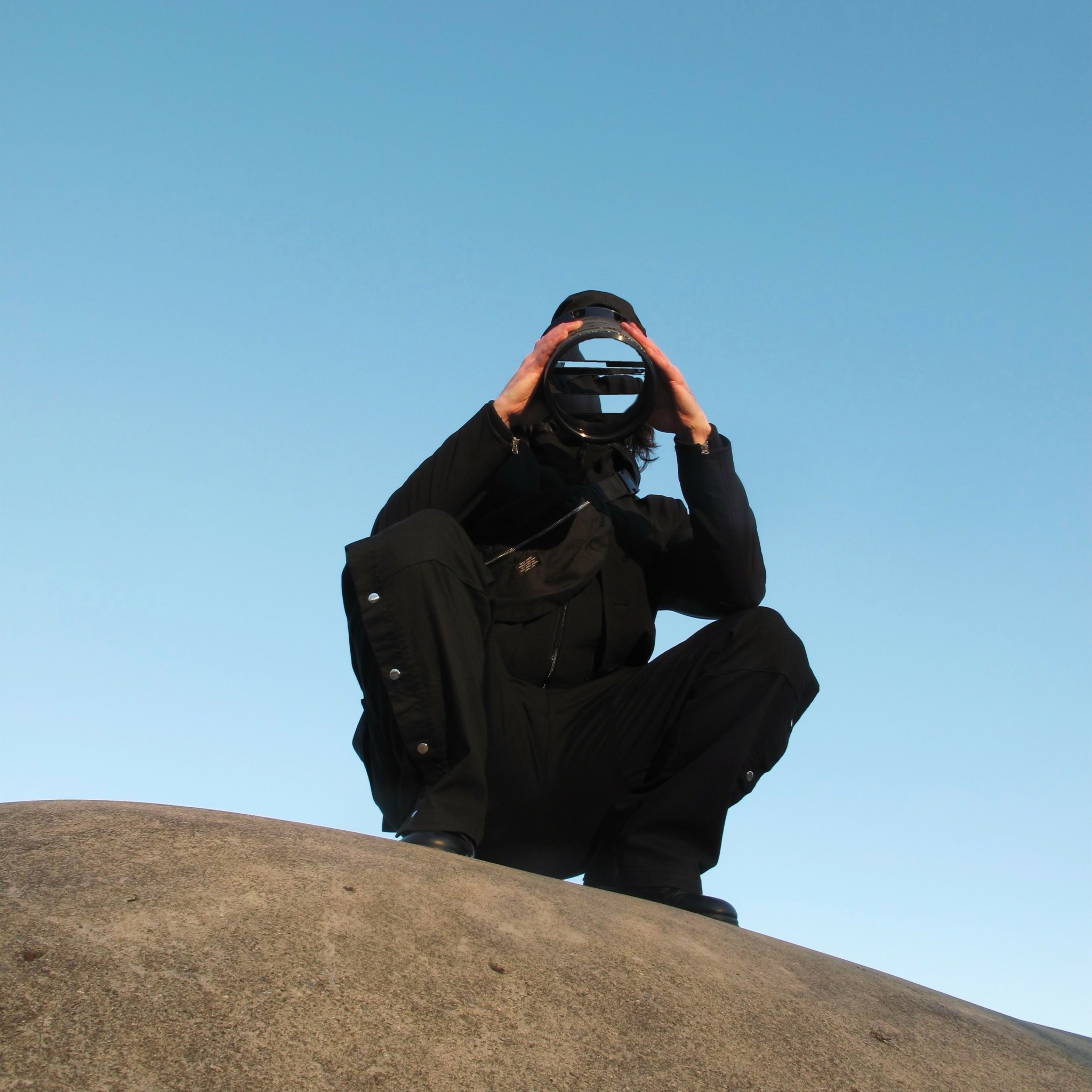
As always, we appreciate you sharing your insights and we’ve got a few more questions for you, but before we get to all of that can you take a minute to introduce yourself and give our readers some of your background and context?
I’m going to split this segment into two parts—Overview and Inspirations—each containing their own subsection for my work as a both a writer and musician. We covered a lot of ground during the previous question. Now we’ll dive a little deeper into both media, as well as showcase some of the works inspired me to take up the craft. Let’s get started!
Overview
Hey everybody, welcome back to my channel. For those that don’t know me, my name is Evan J. Vissat. I am a hybrid genre writer from Pittsburgh, Pennsylvania as well as the producer and vocalist for the industrial music project “mutate often.”
I specialize in hybrid genre fiction, with a current focus on body horror. Some of my favorite stories center around intense transformation, whether it be environmental, societal, mental, emotional, and or physical. I love reading about worlds in which the setting is just as much of a character as the people we read about.
Inspirations_Storytelling
– The Archetypes and the Collective Unconscious – C.G. Jung
– Black Lagoon – Rei Hiroe
– Brothel – Stephanie M. Wytovich
– Bunny – Mona Awad
– Chainsaw Man – Tatsuki Fujimoto
– Damnificados – JJ Amaworo Wilson
– Dead Space I, II, and III – Chuck Beaver
– Dorohedoro – Q Hayashida
– The Elder Scrolls IV: Oblivion – Michael Kirkbride
– The Grand Dark – Richard Kadrey
– Human Communication as Narration – Walter Fisher
– Krampus – Brom
– Neuromancer – William Gibson
– NieR: Automata – Yoko Taro
– Pendragon: Journal of an Adventure Through Time and Space – D. J. MacHale
– Percy Jackson & the Olympians – Rick Riordan
– The Power of Myth – Joseph Campbell and Bill Moyers
– Ranger’s Apprentice – John Flanagan
– The Substance – Coralie Fargeat
– Titane – Julia Ducournau
– Vesper – Bruno Samper, Kristina Buozyte, and Brian Clark
– What Moves the Dead – T. Kingfisher
From the fast and bombastic to the slow and contemplative extremes really fascinate me. I think that both factors enable each other’s best qualities; I work to have this dynamic play out in my own works—both musical and literary.
I am currently shopping the manuscript for “PetriDish,” a collection of self-care body horror poems. I have also recently began production for my upcoming novel “TraumaWeld: Patient,” a sci-fi fleshmetal horror tale.
Now let’s talk about music!
“mutate often.” combines experimental sound design with electronic, hip-hop, and heavy metal music. “mutate often.” was actually the motto of the project’s initial name, “MUTO County.” (see Godzilla 2014). I ultimately chose the former because it achieved a lot of things that I love to see in a band’s name. It gives readers a sneak peak into what they may hear, and what they may experience from a visual aesthetic perspective.
The name also shows people the band’s mission statement: Change frequently. Experiment. Morph into something that uniquely You.
I’ve used a few different phrases to communicate the project’s style:
– Mutant Pop
– Rage Metal
– Nü Aggro
– Industrial Hardcore
– Rock and Roll Music (see Family Members)
I think what gets me the most excited about “mutate often.” is that diverse fandom and experimentation serve as the two main reasons for its existence. The more genres we mash together, the harder it becomes to describe, the better.
Inspirations_Music
– amo – Bring Me the Horizon
– Artpop – Lady Gaga
– Astro-Creep: 2000 – White Zombie
– Big Fish Theory – Vince Staples
– Disgusting – Beartooth
– Hau Ruck – KMFDM
– Injury Reserve – Injury Reserve
– iridescence – BROCKHAMPTON
– KiCk i – Arca
– Magma – Gojira
– N/O/I/S/E – Ghostemane
– Oil of Every Pearl’s Un-Insides – SOPHIE
– Rivals – Coal Chamber
– Strangers Only – My Ticket Home
– Suture – Kavari
– TA13OO – Denzel Curry
– United States of Horror – Ho99o9
– Untrue – Burial
– Vol.4 :: Slaves of Fear – HEALTH
– Wisconsin Death Trip – Static-X
– We Love You – Combichrist
– Yoshu Fukushu – Maximum the Hormone
– 32 Levels – Clams Casino
At the end of the day, I’m just a fan of many things. That’s where my biggest strength as an artist lies. I work to free myself up to the possibility of pushing boundaries in a fun and meaningful way.
If I can make songs that I’m excited to play live, stories that I could get easily lost in, then I’d say that’s a creative path well-travelled.
***Side Note: I understand that I use a lot of em dashes (—) in conversational writing.
As you read this article, I am reading your mind.
You may rest assured knowing that I do not use generative AI for writing nor music, and never will.
R.I.P Sora. Human labor >>>
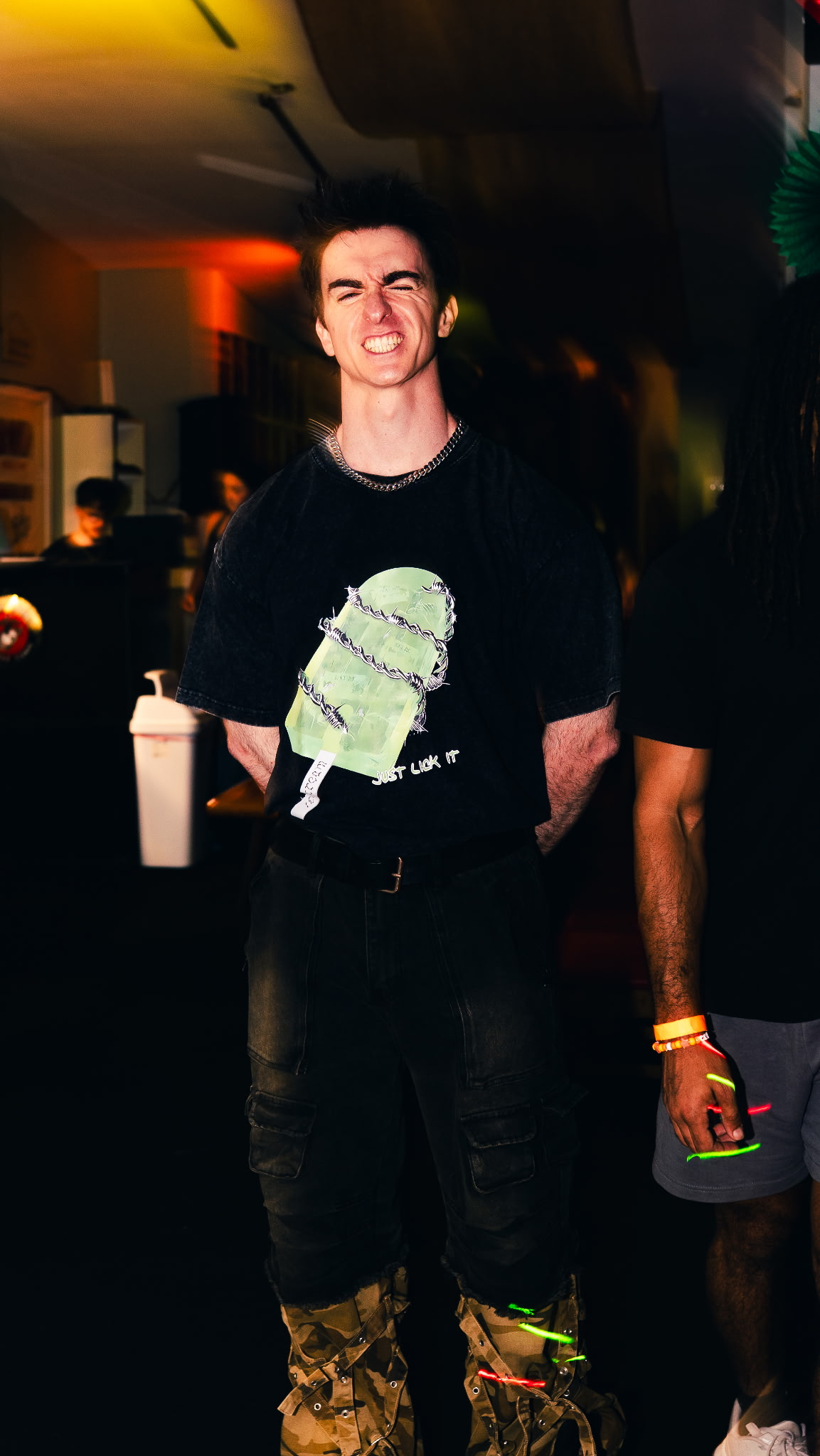
Can you share a story from your journey that illustrates your resilience?
Absolutely! Let me tell you about a time that radicalized me.
About a year-and-a-half ago, I met up with some friends in Homestead PA for a yap session. A friend of a friend and singer/songwriter joined up with the group and the two of us got to talking about some of our favorite collaborators in pop music. We talked about Kendrick and DJ Mustard, Halsey and Trent Reznor, among other names.
This person revealed that they provide vocals, while other artists to produce, record, mix, and master songs under their name. They had recently began working with a full band to perform live sets. I asked them how cool it must have felt that people were helping them bring their songs to the stage. I’ve never played alongside a band before, so I wanted to know what it was like.
“Yeah it’s cool,” They said. “Nice that people know when to take a back seat sometimes. Like these producers, man…Too many producers are trying to be artists nowadays,”
“But doesn’t that make them artists?” I said.
They chuckled. “I dunno man…”
I started chatting with their one friend about the LaNell Grant, best known for shaping the early discography of hip-hop artist Tobe Nwigwe—Please listen to her beats on the album “Three Originals.”
On the drive home, I kept thinking about what this person had said.
“Too many producers are trying to be artists…”
This conversation was one of several in which people spoke about skilled artists in a demeaning manner. It didn’t sit right with me. Although spoken by different people in different places, they all said the same thing:
“I’m the artist. You’re the resource. I have money. You have skill. I’m the one who deserves to be on the magazine covers, and you’re the one that’s gonna help get me there.”
Remember doing all the work for group projects when you were younger?
I share this story because it provides the clearest example of why I hold DIY ethos and positive transformation in such high regards. If I have a reasonable means to enable someone, I will. If I ever get the chance to work with other artists, it will be one of collaboration, rather dictation. Every project needs a clear goal, but only good leaders respect the skillset of each teammate.
To conclude, I invite those on the creative path to recognize their importance. Many of us question whether or not we deserve to be making art, and others may say that a win for us somehow takes away the prospects of another. The creative pursuit—regardless of medium—is an open-world co-op game. Nobody’s an NPC out here.
So the next time someone tells you to “take a back seat,” hit the gas pedal.
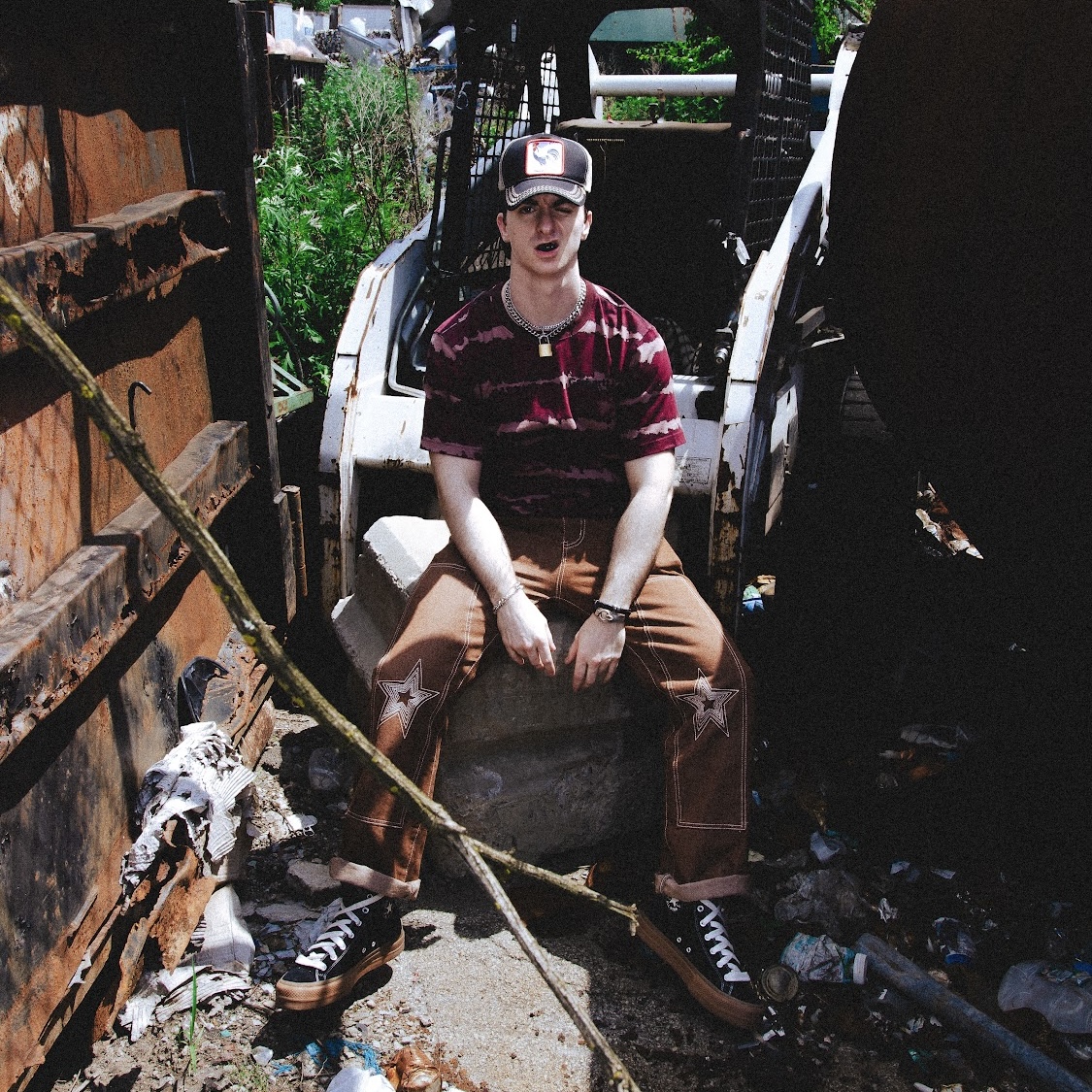
Is there something you think non-creatives will struggle to understand about your journey as a creative? Maybe you can provide some insight – you never know who might benefit from the enlightenment.
I don’t write stories or create music for self-aggrandizing purposes.
I view my creative journey as a craft.
My art is work.
Throughout my life, I’ve witnessed people not on the path view those taking the journey as hyper-egotistical, that their work serves as a means to an end for praise, fame, and adoration. In the previous segment, I showed one of many examples in which these assumptions proved to be unfortunately true. To those who stick around and who are worth investing your attention, however, this is not the case.
I often compare the creative path to fantasy blacksmithing. Forging magical armors and enchanted swords is messy work. You get sweaty. Your arms hurt, and you might burn your hand when infusing metal with arcane energies. Regardless of the artistry and filigree placed upon each piece, the forge is the smith’s home—not the royal market district.
It’s for this reason that I describe the creative world as a co-op game.
No reasonable blacksmith would be out here like, “Oh you make fire swords? Cringe. MY blades conjure lightning.”
A smith worth anybody’s time would ask, “How did you do that?” Creative people who care about their craft engage with a curiosity to learn, and enable others to hone their own.
I also compare the path to lifting weights. I can’t tell you how many times I’ve spoken to friends who feel too intimidated to work out for fear of being harshly judged by others. The most athletic people in the gym, however, will not perceive you with disdain. They’re too busy getting swole.
Despite the uncomfortability that it brings, people train. They do it for the love of the process. More often than not, they will gladly share their know-how to enable other people in their pursuit of gains. The only haters in the gym are the ones who suck at lifting. If you don’t believe me, go to one. If you’re about it, then you already know.
Many people view creativity as a soft skill. Those who engage with it recognize it for the hard skill that it is.
To people not on the creative path, I understand where you’re coming from. I see you. Throughout history, art has been viewed by many as a superfluous, optional facet of life—that those who produce it do so on borrowed time and mooched attention.
I invite you to challenge this perception of creative labor. Because that’s what it is to those of us who are legit about it: Labor—as valuable and sweat-inducing as any other.
To those of you who give the creative path a bad name, I challenge you to change your motivations and get good.
Contact Info:
- Website: https://linktr.ee/mutateoften?utm_source=ig&utm_medium=social&utm_content=link_in_bio
- Instagram: https://www.instagram.com/evanjvissat AND https://www.instagram.com/mutateoften
- Youtube: https://www.youtube.com/@mutateoften
- Other: Summer of Rust 2026 – https://theticketing.co/e/summerofrust2026pgh?utm_source=ig&utm_medium=social&utm_content=link_in_bio
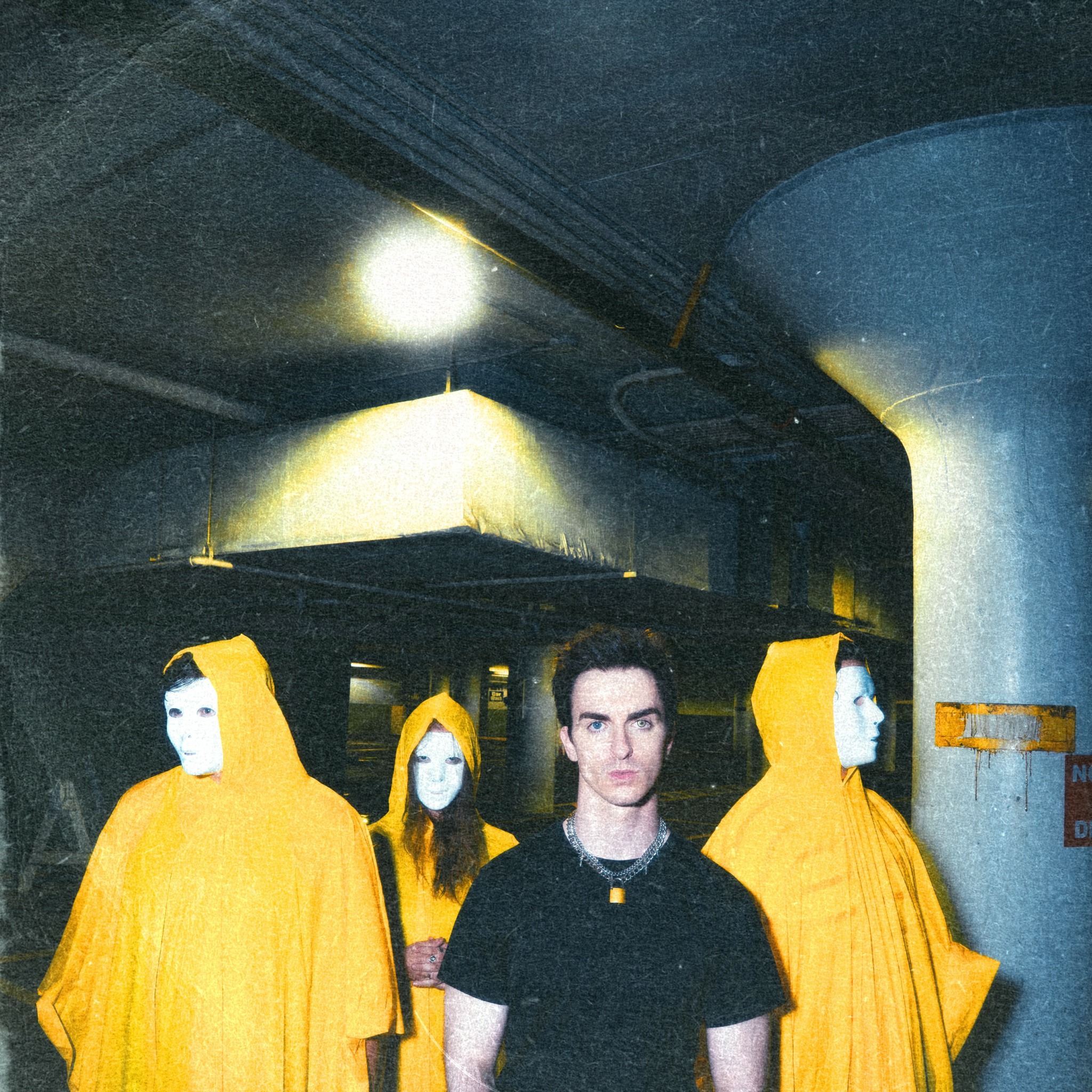
Image Credits
Cameron Breze
Benjamin Bartling
Vondre Clark
Alessandra Gibson
Jim Hails