

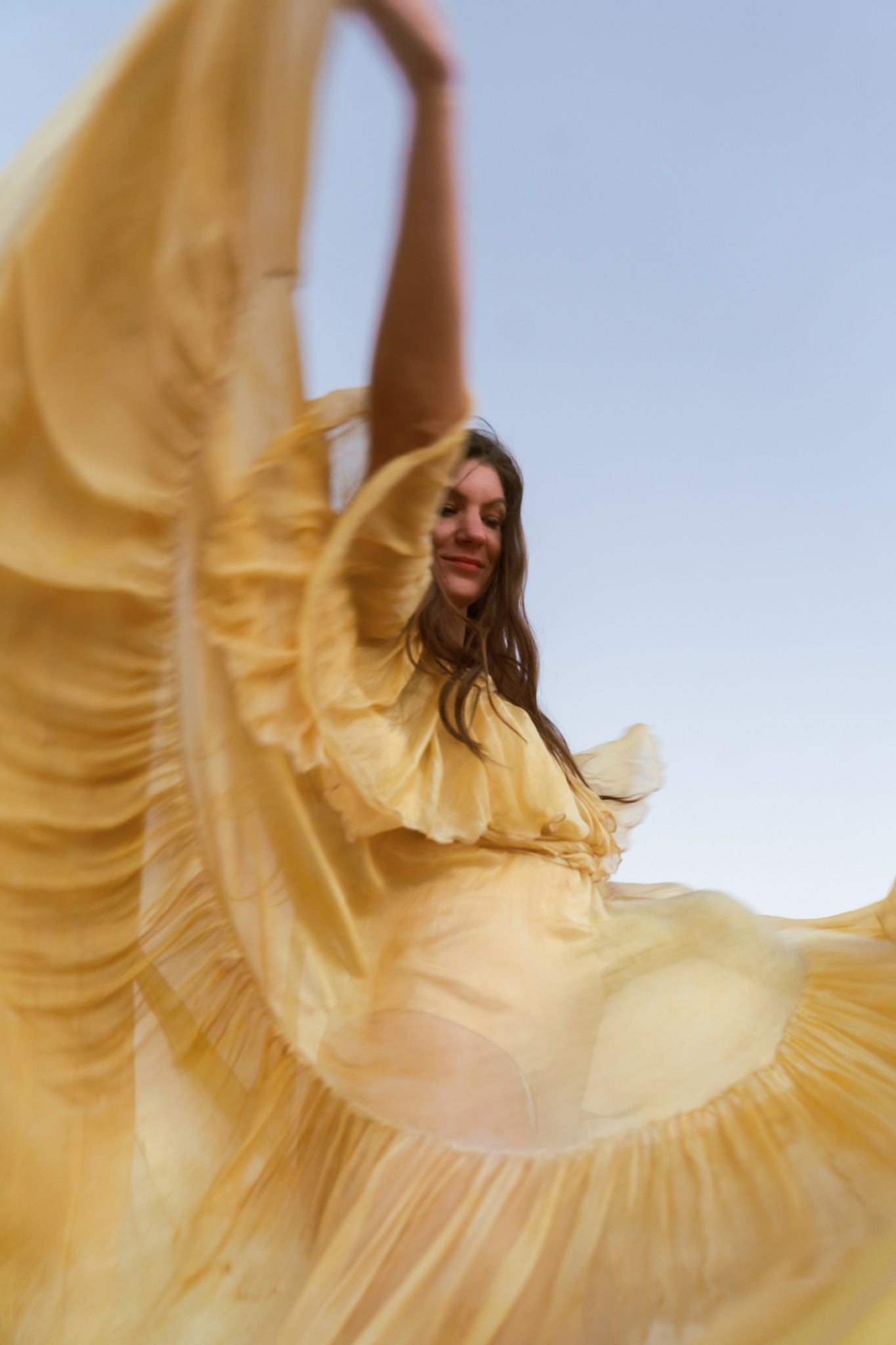

We’re excited to introduce you to the always interesting and insightful Esther Mcfarland. We hope you’ll enjoy our conversation with Esther below.
Alright, Esther thanks for taking the time to share your stories and insights with us today. To kick things off, we’d love to hear about things you or your brand do that diverge from the industry standard
I’ve always wanted to design and create garments but as I learned more about the waste that happens in the fashion industry I knew I wanted to do it in a way that minimized this in what I created. I love that a lot of smaller brands are moving towards finding more sustainable ways to create and produce things and I wanted to be a part of this.
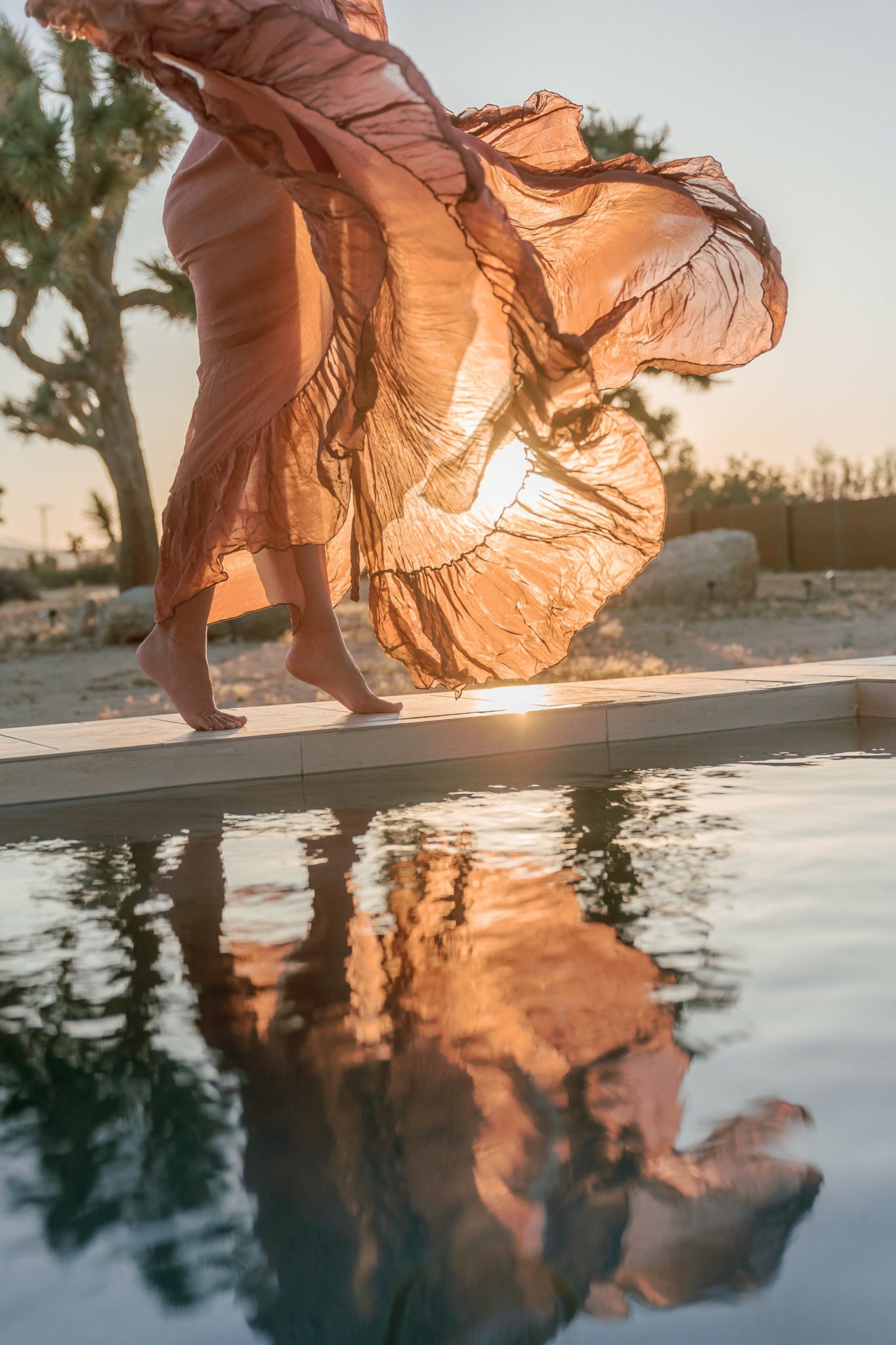
The majority of our dresses are made in natural fibers in PFD fabric, which means that each style is made in a plain white fabric that is prepared for dye. This allows us to carry some stock of plain garments and then customize the color by dyeing after a client places an order. Not only does it allow us to create beautiful one of a kind garments, but it also means there is no leftover stock of colorways that didn’t sell as well. If the garments are pre-made in color lots you have to guess at what people might want and sometimes end up with pieces that don’t sell that could end up in the landfill.
For the garments that we don’t dye, I choose to use deadstock fabric. A lot of larger fashion brands have fabric made each season and some of it doesn’t get used. This leftover fabric is available to purchase so it isn’t thrown away so I like to use this instead of creating new fabric ourselves.
I also try to use up all of the leftover scraps from our production. When you cut a dress pattern there are always some leftover smaller pieces of the fabric that don’t get used and instead of throwing these away we save them to create something. The natural fibers are all kept in a bin and once we have enough I will create a garment from them. I recently made one with litte flower petal shapes cut from them and attached to the dress to make a 3-d floral fabric . The scraps from the other fabrics are either shredded and used as filling for pillows or are donated to our local grade school to put in their crafting bin so the kids can use them for art.
Awesome – so before we get into the rest of our questions, can you briefly introduce yourself to our readers.
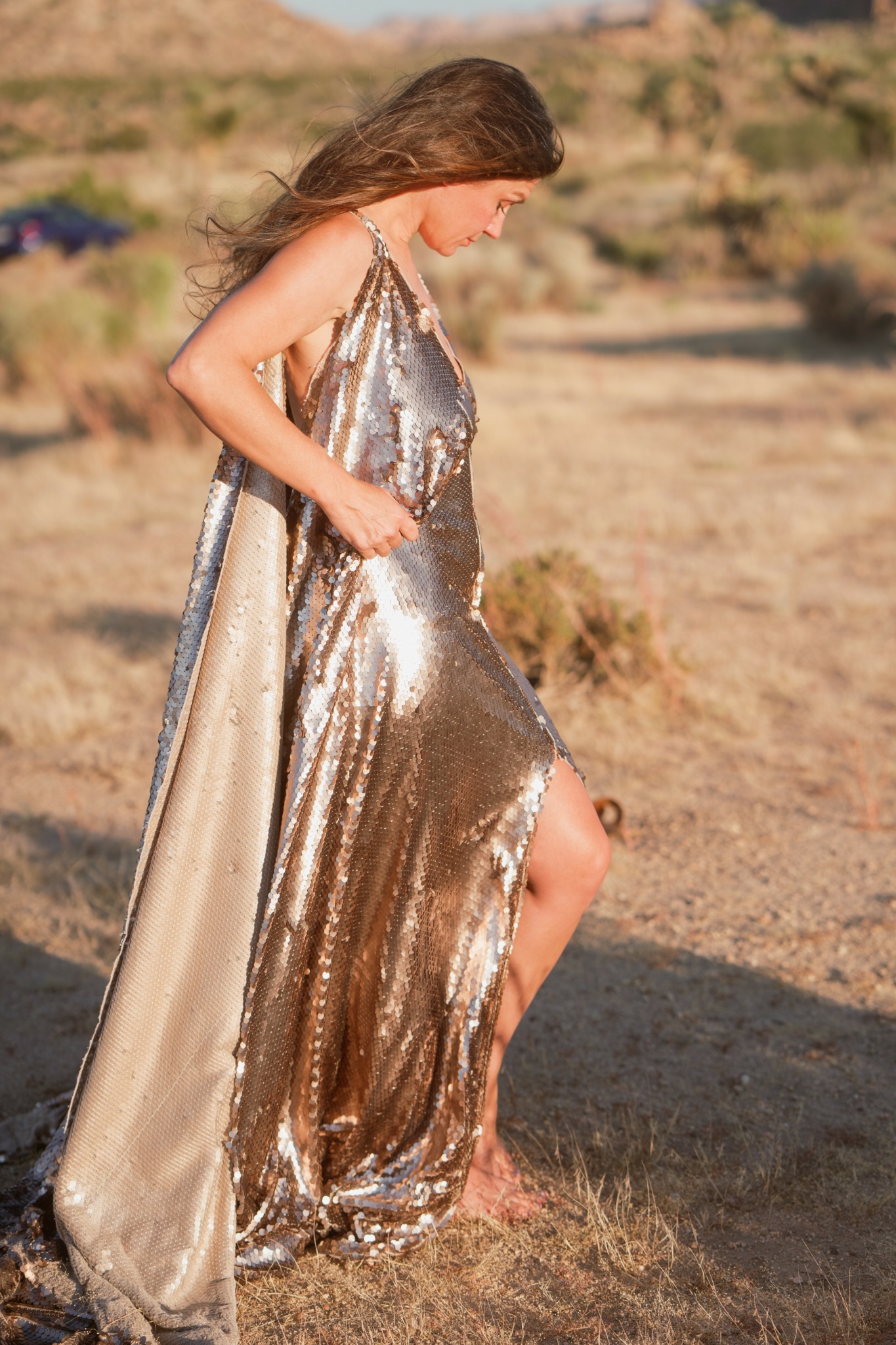
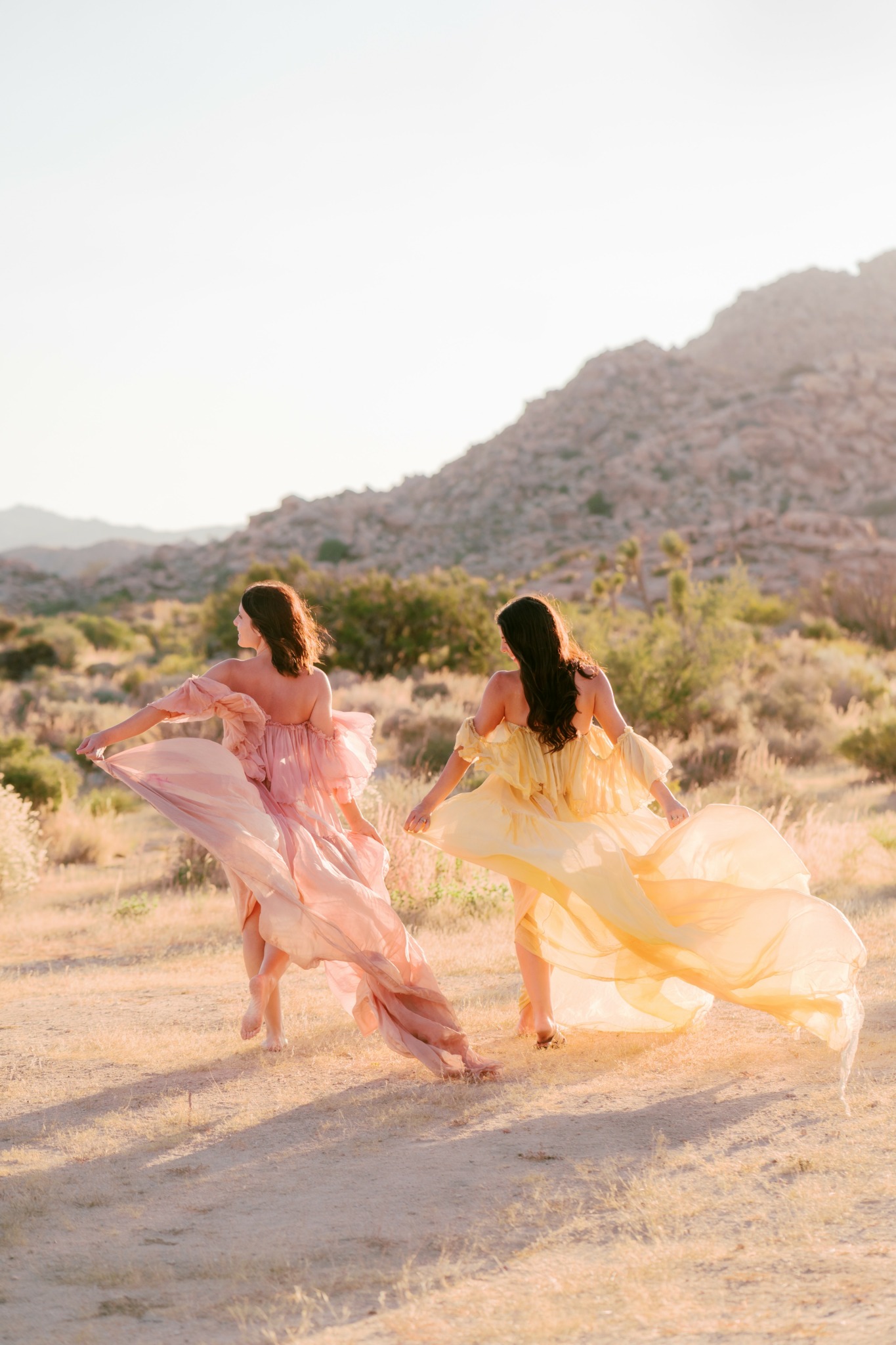
I design dresses for photographers to use at their photoshoots. I was a portrait and wedding photographer for a decade and understand how much the right garment can change the tone and feel of pictures. My true love has always been designing dresses so I started to make them for my own shoots and then slowly started making them for other photographers as a side project. When Covid happened and everything shut down I took it as an opportunity to transition my time and energy fully to designing.
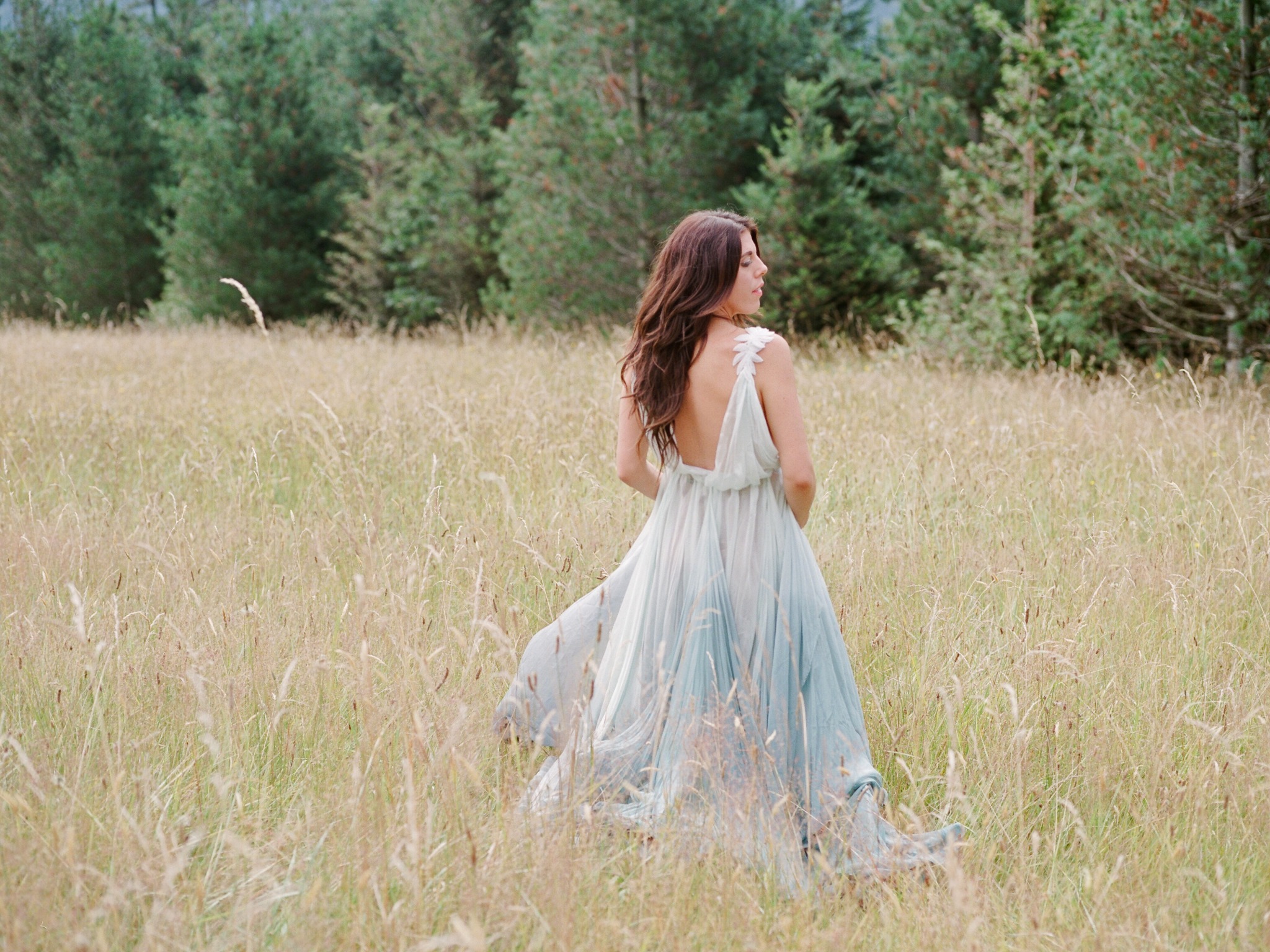
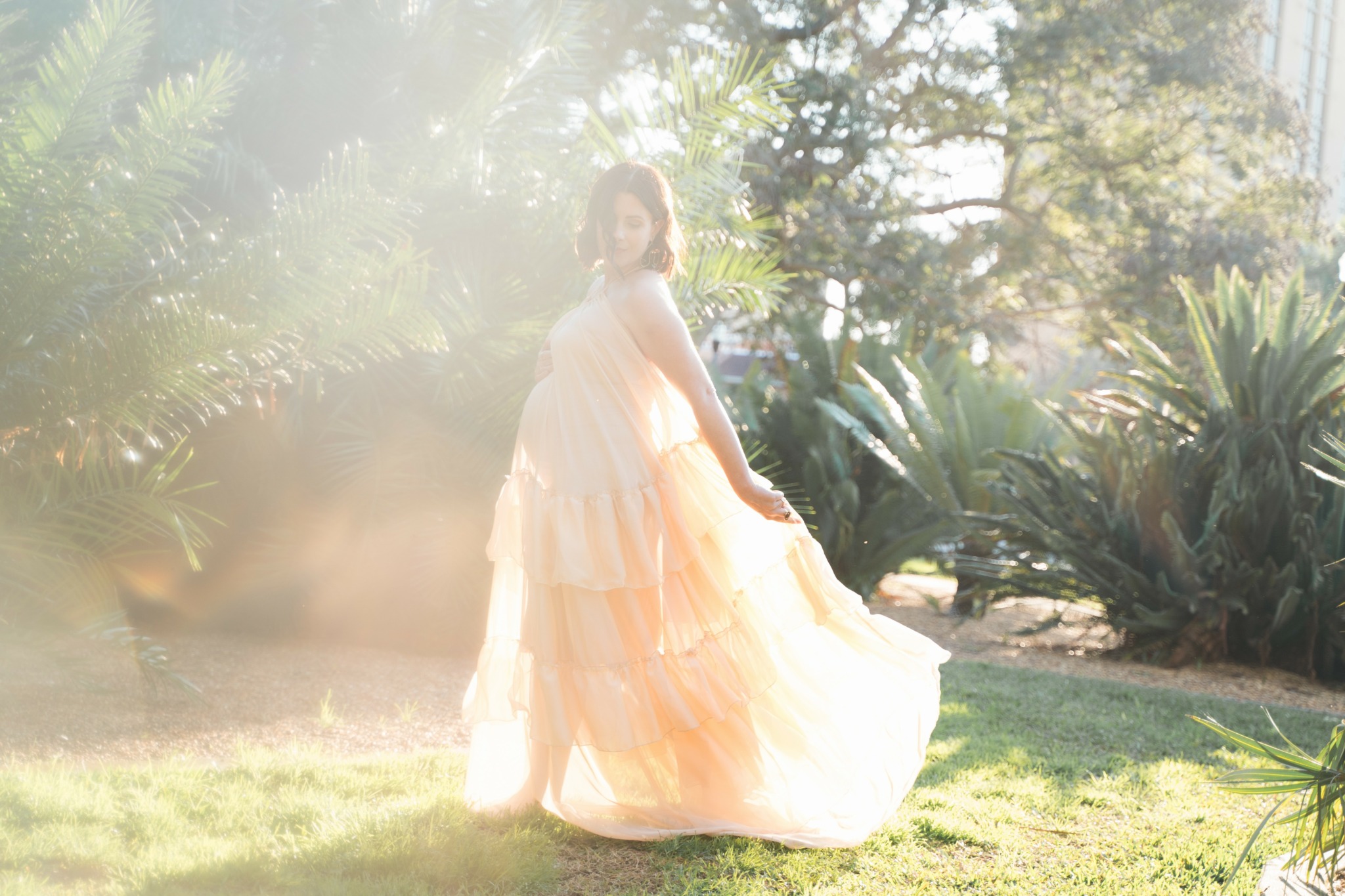
I design everything with a photo shoot in mind. When I am choosing fabrics I toss them around to see how they move and hold them in the light to see how they look with direct light or backlit. I’m most drawn to silk because it moves like liquid and also feels incredible to wear. I also design with multi-sizing in mind. Photographers that keep a client closet need the pieces to fit as many sizes as possible so when I design I try to come up with ideas that will fit and be flattering on maternity and non-maternity and as wide of a range of sizes as possible. This can be challenging and I’m often going back to the drawing board many times with each style until I figure it out. It is an honor to have a piece I designed included in a photographer’s work and I want to create pieces that fit as many of their clients as possible.
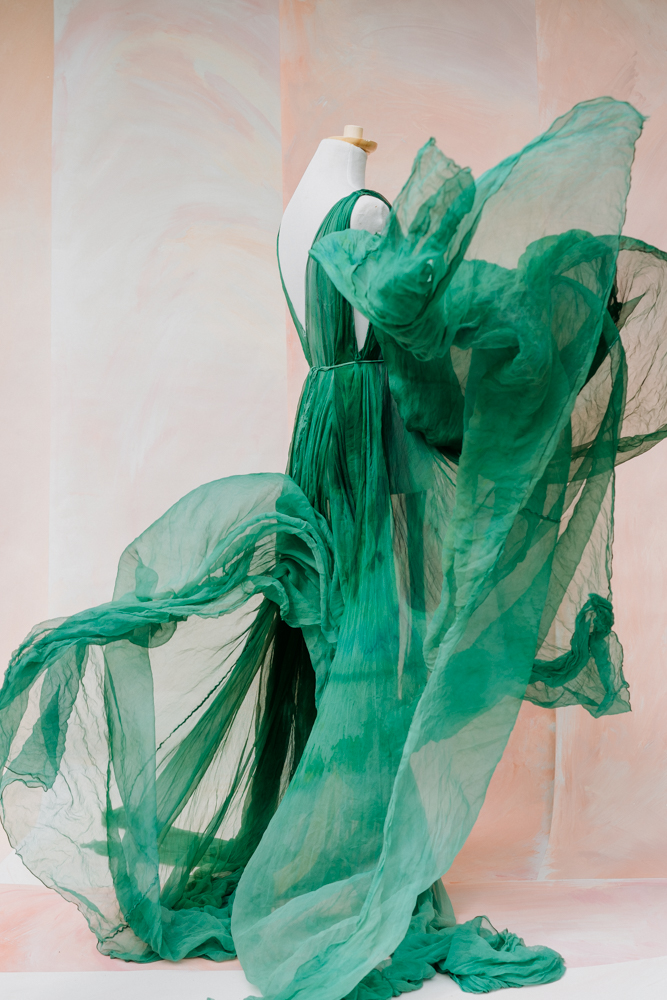
A lot of the pieces we offer are hand-dyed to order which helps us with sustainability but also creates beautiful one of a kind pieces that are dip-dyed or hand painted.
We’d really appreciate if you could talk to us about how you figured out the manufacturing process.
This has been the most challenging part of growing this business for me and has been a moving target for several years now. Typically in the fashion industry you start a business by finding capital and then do a bulk production run so you have 100-300 pieces of each garment style produced then you market and sell them. I knew I wanted to start small and scale so that I wasn’t guessing at what would sell and possibly creating waste.
I started attending tradeshows and paid to have mentoring sessions with some experts in the industry and after piecing together some knowledge about the process I decided to use independent contract seamstresses. I’ve learned a lot the hard way throughout this process and the biggest takeaway is to not put all of your eggs into one basket and to put measures into place to protect your business. I’ve found some incredible contractors along the way who retired or took a full-time job in the middle of a busy season. The process of finding and vetting a new contractor can take weeks or even months and if you need product immediately it can bring your business to a complete standstill. Having contracts and a split-up payment structure has been helpful for trying out new vendors or contractors. I have had more than one factory or contractor disappear with our fabric and money never to be heard from again. Some of the process of finding manufacturing has been painful but each time I take as a learning opportunity to update my vendor contracts or change the payment structures.
I’ve also learned to expect the manufacturing process to always take a bit longer than I plan for. There can be a lot of back and forth while developing a new style of making tweaks to adjust the fit or change the method of construction. I’ve started to factor in extra time for development and delays so it is a part of our flow and not a surprise.
Can you tell us about a time you’ve had to pivot?
At the time I decided to pivot from my photography business into designing, I also had a brand new baby. I knew that I wanted to stay at home with her for at least the first 1-2 years, she will be our only child so it was really important to me to soak up as much time as possible with her while she was little. As a new parent I had no idea of what this would actually look like and had some pretty unrealistic ideas of what it would be like to start a new business while caring for an infant. I pictured her happily laying in her swing while I worked on new designs and marketing. I quickly learned that I woefully underestimated how difficult it would be to try to launch a business and be a stay at home mom. I started to feel like I was failing at both things because my mind was always pulled in different directions. It was a humbling time for sure.
Before having a baby if I set my mind to building something I would work at it tirelessly until it was achieved so I had to go through a pretty big mindset shift about myself and my capabilities and what that looked like for the future. I decided to put the brakes on the business big time and treat it as a part-time learning quest. Instead of trying to create the biggest most profitable fastest-growing version of the business, I scaled way back and started offering just one design at a time. In hind-sight I think this was valuable because the lessons that I learned were on a small scale. The times that there was a manufacturing error or a problem with a vendor it was 3-5 dresses instead of hundreds so it allowed me to gain industry knowledge without risking or losing as much. Now that my daughter is older and I can focus more energy on scaling, I have a strong foundation of knowledge and experience that I’ve built up slowly over time. The business didn’t look like I had originally set out for it to during that time, but it ended up setting me up for future success in a way I hadn’t anticipated.
Contact Info:
- Website: https://www.goldenhourgowns.com
- Instagram: @goldenhourgowns
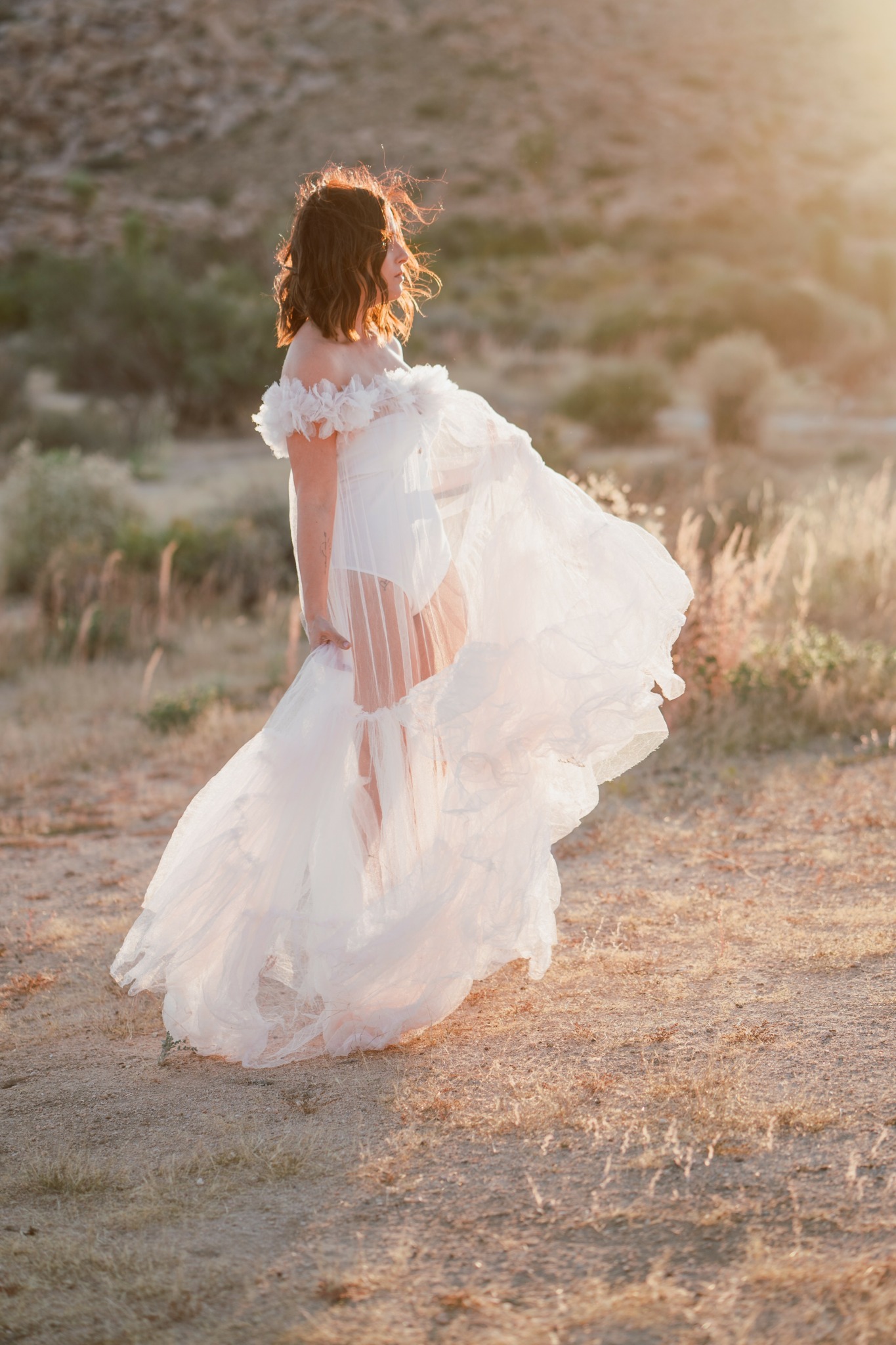
Image Credits
Lexia Frank Photography