

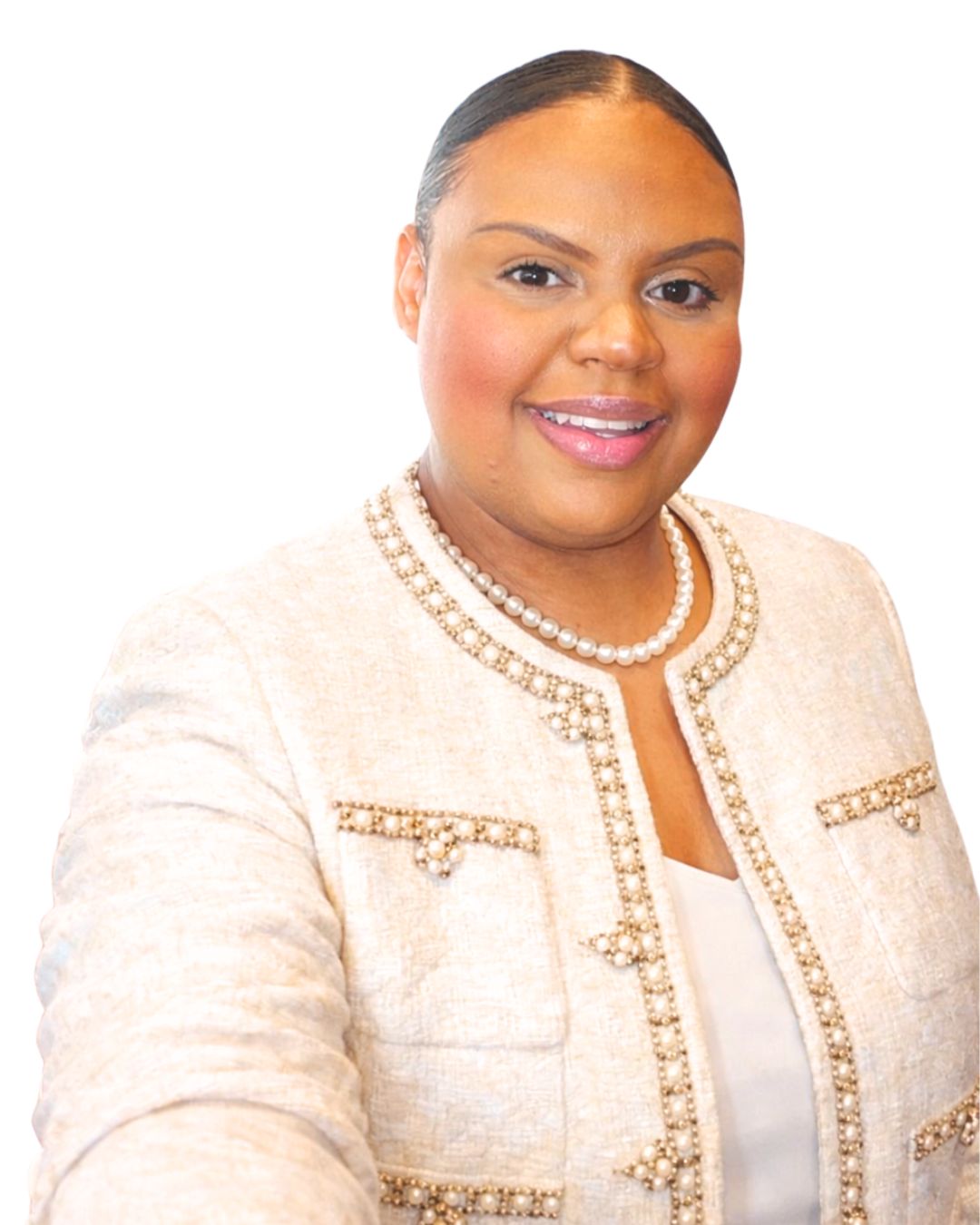

We’re excited to introduce you to the always interesting and insightful Esther Kentish. We hope you’ll enjoy our conversation with Esther below.
Hi Esther, thanks for joining us today. What’s the kindest thing anyone has ever done for you?
The kindest thing anyone has ever done for me was give me tough love.
When I was about eight, following the death of my mother, I was heading home after a school production. My third-grade teacher had agreed to drop me off at my house. When we arrived at my friend’s house, he had a huge, two-story home with a warm light glowing from the front door and large glass windows on every corner. The roof was made of strong, sturdy plywood. He ran out of the car onto a curving pathway, where two eager parents were waiting for him, holding each other’s arms at the door. That was my friend Sal.
As we passed his house and continued down the street toward mine—in Houston, Texas, not as glamorous as one might imagine, but still my home—I said, “Well, here we go to my old house.” The teacher’s daughters, Jami and Jes, one on each side of me, with their mid-length bobs, pleated skirts, stockings, and black heels, laughed.
Then their mother, Mrs. Win, stopped the car mid-ride. I was confused at first, but she turned around, pointed her finger directly at my face, and said, “Don’t you ever be ashamed of where you come from.”
From that day forward, no matter where I go or what I do, I have always told the truth as loud and as proud as I can. I have never been ashamed of where I come from—and I carry that pride with me on my shoulders wherever I go. In that moment, she was no longer just driving me home. That moment was also teaching me how to see myself. A single act of kindness gave me a direct, unwavering message that later became the foundation for my courage, my honesty, and my pride.

Awesome – so before we get into the rest of our questions, can you briefly introduce yourself to our readers.
I wrote my first poem, “The Red Shiny Shoes,” at the age of eight. At the time, I did not yet understand that writing would become more than a childhood habit—I only knew that it was the one place where my voice felt fully my own.
As I continued to read and write, I began to notice something I could not yet name: the absence of stories that reflected people like me.
I continued to write not only as a creative practice, but as a way of locating myself within narratives that rarely made space for voices like mine.
At twelve, I wrote my first short story entitled “Judy First: Duty Calls.” Although the title was not particularly popular around the house, I scribbled down every line about the vivacious character named Judy. I was excited that it would become my first children’s book. I never finished it, but now that I think about it, I may reignite the idea and revamp it one day.
Even as a child, I began to understand why representation in stories matters. Today, studies show that more than 70% of children’s books still feature White characters—or even animals—rather than diverse human protagonists. As a result, many children grow up without seeing themselves reflected in the stories they read.
Throughout middle school and high school, I spent much of my time in libraries reading books. I have traveled the world—from Tokyo to Rome, to France, and to Oxford—and in each place I always found myself in a library or bookshop.
When I went to Japan, I ended up in Tokyo’s famous book district, Jimbocho Book Town. I would love to go back someday—not only to try more of the street food, but also to once again see the locals engrossed in reading on the subway. That was something that fascinated me deeply.
When I lived in Oxford, England, I had the privilege of entering and studying in the Bodleian Library, one of the most prestigious and invitation-only libraries in the world. I would walk down the aisles, gently running my fingers along the books, and remain there for hours.
During a visit to Italy, I enjoyed exploring universities and their libraries. At one library, I noticed a sign warning patrons “not to touch” the books. It was the first time I had ever seen such a sign in my life. Although it was written in Italian and I initially did not take heed of the warning, the experience fascinated me. I was amazed by the differences in texts—the languages, styles, sizes, and shapes of books from around the world.
Even before these experiences, I had always been interested in publishing. When I was about seven years old, a book publisher visited my elementary school and helped our class create a book together. A few weeks later, they returned with printed copies of our work. It was a hardcover book, and I remember being captivated by it. I later realized that I have a slightly kinesthetic, neurodivergent way of engaging with things, which may explain why I developed such an appreciation for the physical presence of books—especially hardcovers.
The publishing industry, however, has historically lacked diversity. In fact, about 95% of fiction books published by major publishers between 1950 and 2018 were written by White authors.
My sister later noticed that I constantly wrote poems in my journals. I poured my feelings and emotions onto paper. Although I talked a lot, my truest feelings lived on the page.
Today, I run a journal company called Kentish Elegante Journals, where I encourage people to write out their feelings the old-fashioned way.
Some of the poems from those journals eventually became my first book, The Emotional Healing Behind Words, which I published in my early twenties as part of a digital humanities research project—and also as a gift to myself. I self-published the first twenty copies and sold them locally to people who wanted to support me.
My local support system played a major role in helping me believe in myself, my academic journey, and the journeys of others.
The publishing industry still struggles with representation. In the United States, more than 70% of publishing employees are White, while Black professionals make up only about 5% of the workforce. As a Black publisher, I have always felt it was important to uplift and produce the stories of others.
While major publishing houses can easily commercialize a story and sell hundreds of thousands of copies, my goal in starting and continuing my publishing company was different: to give underrepresented voices a platform.
It is not always about money. Sometimes it is simply about listening to another person’s story. I believe smaller publishing houses create space for that.
Critics may say there is “no point” or that the work is frivolous if profit is not the main factor. But I believe business can also thrive on passion, impact, and the outcomes experienced by the people we serve.
I mentor many young people—college students and emerging professionals—who are seeking experience while continuing their studies. I also offer volunteer opportunities for veterans from the military, Navy, and Marines so they can bring their leadership and service into the company.
Today, the company includes people from many races, age groups, and countries around the world. We highlight stories from authors in remote war zones, such as Iran, as well as writers from Cuba, Nigeria, and many other places.
Our company is a Christian publishing house. My goal is to spread the Gospel of Jesus Christ in a way that is engaging, relatable, and healing.
Our authors receive mentorship through The Genius Mentorship Network, which offers one-on-one mentorship with me or with mentors across the world. For example, one of our MBA interns recently connected with a mentor in Dubai. At the heart of everything we do are relationships.
To further support our authors, I noticed that many struggled with writing about difficult topics. In response, I designed Narrative Behind Words, a platform that helps writers track their healing process through guided writing prompts over time.
It has even helped me.
What I am most proud of is my ability to keep the faith and keep moving forward, even when larger institutions may say otherwise.
I want everyone to know that their stories matter—whether they are published by a major publishing house or remain unpublished until they are discovered years later in journals or letters.
Small presses often serve as talent incubators and cultural tastemakers, helping authors whose voices might otherwise be overlooked by large commercial publishers.
Your story matters.
My ultimate goal is to one day purchase land and build bookstores around the world—places where stories from every culture, background, and belief can sit on the same shelves and remind people that their voices deserve to be heard.
If you would like to publish a book on any experience you have had, you could visit us at www.kentishpublishingcompany.com

Learning and unlearning are both critical parts of growth – can you share a story of a time when you had to unlearn a lesson?
One lesson I had to unlearn was the belief that you must attend a Russell Group or Ivy League university in order to have a global impact.
For a long time, I believed that success, credibility, and influence were tied to the prestige of the institution attached to your name. Society often reinforces this idea. Rankings, elite networks, and historical reputations can make it seem as though meaningful contributions to the world only come from a select group of universities.
However, my experiences gradually challenged that assumption. Through my work in publishing, mentorship, and international collaboration, I have met brilliant thinkers, writers, and leaders from a wide range of educational backgrounds—community colleges, regional universities, and even individuals who never completed formal degrees. What ultimately mattered was not the prestige of their institutions, but the strength of their ideas, their resilience, and their willingness to contribute to others.
I also came to realize that some of the most powerful and transformative stories come from disadvantaged and marginalized communities rather than the perceived “elite.” These are stories shaped by resilience, survival, faith, and lived experience. They carry perspectives that are often missing from traditional academic or literary spaces, yet they have the power to move people, shift narratives, and inspire meaningful change.
At the same time, I began to understand that what is often associated with elite institutions is not simply their name, but the depth of thinking, the rigor, and the level of mentorship they provide—qualities that should not be limited to a select few. As an educator, this realization has shaped the way I teach. My goal is to make that level of intellectual engagement accessible to all students, equipping them with the skills to think critically, communicate effectively, and develop ideas that can have real impact.
Unlearning this belief allowed me to redefine what impact truly means. Global influence is not determined by the name of a university on a diploma, but by the courage to pursue ideas, the discipline to act on them, and the commitment to amplify voices that might otherwise go unheard.

Can you talk to us about your experience with buying businesses?
While I have not personally bought a business, I have been directly involved in a business transfer that required many of the same considerations as an acquisition.
In 2019, I sold my company to someone close to me for $0.01. At the time, I was preparing to move to England and needed to ensure I was fully compliant with legal requirements, particularly around business ownership and visa restrictions.
The business focused on publishing and mentorship, supporting writers and creating opportunities for underrepresented voices. The individual who assumed ownership had been involved in the company’s development and had supported me early on, which made the transition both a strategic and relational decision.
Although the financial value of the transaction was nominal, the process itself required careful consideration. It involved ensuring continuity of operations, transferring knowledge, and aligning on the long-term vision for the business. I also sought guidance throughout the process to better understand legal structures and sustainable business practices.
This experience gave me practical insight into how business transitions function beyond the financial transaction. I learned that successful acquisitions and transfers depend heavily on trust, clarity of vision, and the ability to maintain the integrity of what has been built.
It also reinforced my understanding that meaningful impact in business is not driven solely by valuation or prestige, but by the strength of relationships, the willingness to learn, and the intention behind the work.
I have since applied these principles in my current work, including developing products such as Kentish Elegante Journals, where I focus not only on creation, but on building sustainable, purpose-driven models that can grow, scale, and, where appropriate, be positioned for long-term value.
Contact Info:
- Website: https://www.kentishpublishingcompany.com
- Instagram: EstherRKentish
- Facebook: https://www.facebook.com/EstherRKentish
- Linkedin: https://www.linkedin.com/in/kentish/
- Twitter: https://x.com/estherrkentish
- Youtube: https://www.youtube.com/@kentishpublishingcompany
- Other: https://www.youtube.com/@EstherKentish


Image Credits
All credits belong to Esther Kentish