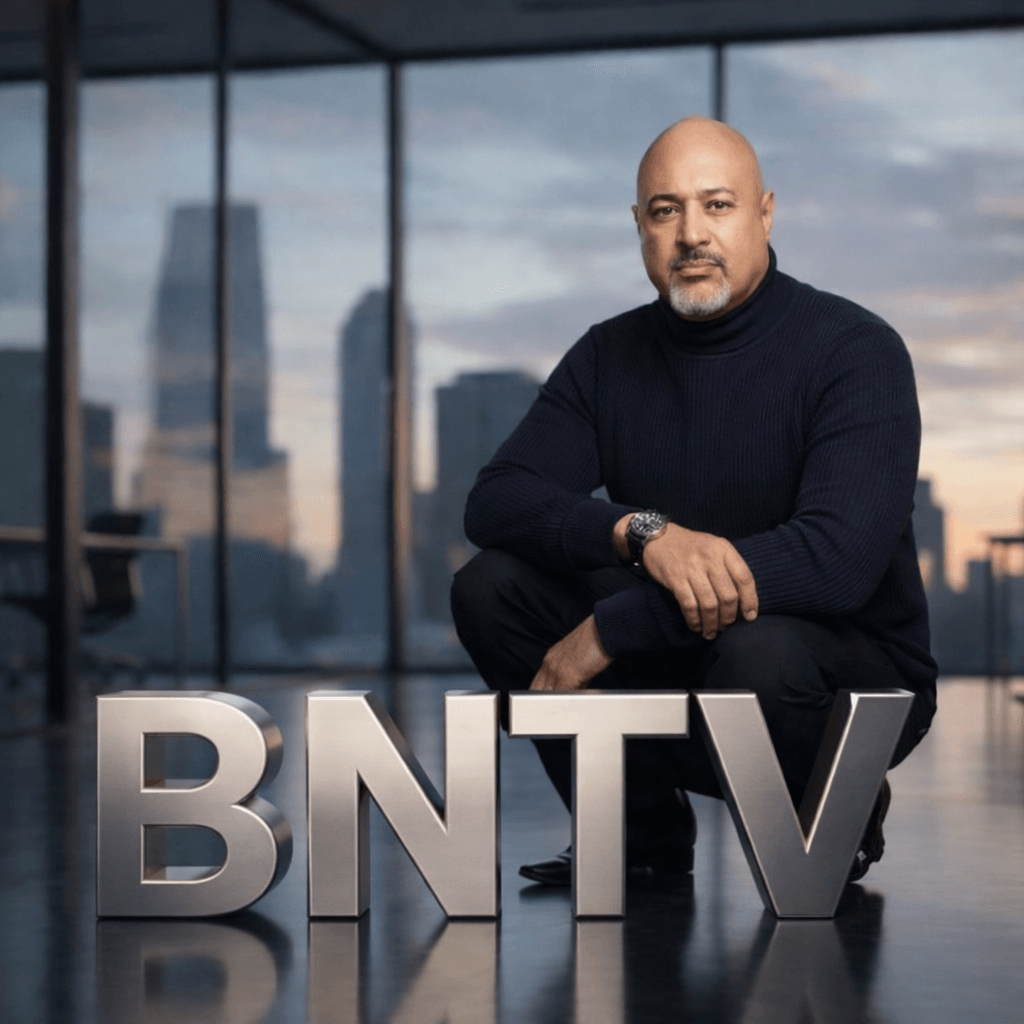

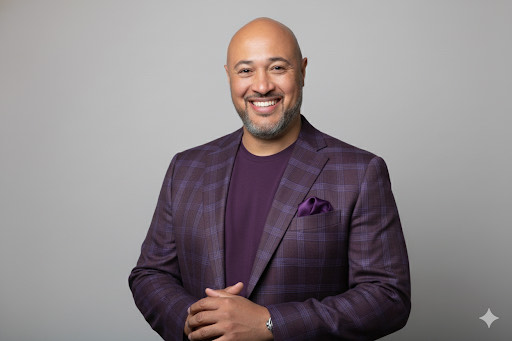
Alright – so today we’ve got the honor of introducing you to Eric Hylick. We think you’ll enjoy our conversation, we’ve shared it below.
Eric, thanks for taking the time to share your stories with us today Talk to us about building your team? What was it like? What were some of the key challenges and what was your process like?
In the very beginning, it was absolutely just me — and honestly, that phase was both exhilarating and exhausting.
Like many founders, I started with a vision that was much larger than the resources I had at the time. Build Network TV wasn’t born inside a fully staffed office with departments and org charts. It started with late nights, constant problem-solving, and wearing every hat imaginable — strategist, producer, marketer, negotiator, tech support, and sometimes even customer service.
That early stage teaches you something no business school ever really can: you develop a deep respect for every function inside a company because you’ve personally done all of them.
When it came time to bring in the first team members, the process was less about “hiring employees” and more about finding aligned builders. At that stage, you’re not simply recruiting skill sets — you’re recruiting belief. Startups don’t offer the comfort of stability; they offer opportunity, growth, and the chance to help shape something from the ground up.
Most of my early team relationships came through conversations, networks, and shared vision rather than traditional job postings. I was looking for people who resonated with the mission — individuals who understood that we weren’t just building a streaming platform, but creating an ecosystem centered on storytelling, visibility, and opportunity.
The interview process itself was very conversational and intentionally unconventional. I cared less about rehearsed answers and more about mindset:
How do you think?
How do you handle uncertainty?
Do you naturally solve problems or wait for instructions?
Are you comfortable building while flying?
In an early-stage company, adaptability and attitude often outweigh perfect credentials.
Training was equally organic. Instead of rigid onboarding manuals, the process involved immersion. People learned by doing, collaborating, iterating, and sometimes navigating challenges in real time. Startups are living classrooms — you grow together because everything is evolving together.
Looking back, that phase was intense but invaluable. There’s something powerful about building a foundation with people who join because they genuinely believe in what you’re creating.
If I were starting today, the one thing I’d likely do differently is accelerate delegation sooner. Founders often hold onto too much for too long — not from ego, but from necessity and protective instinct. But scaling truly begins when you trust others to own pieces of the vision.
That said, I don’t regret the journey. Starting solo forced clarity, resilience, and precision. It ensured that when others joined, there was already a strong strategic backbone and deeply defined mission.
Every stage served its purpose.
The solo phase built the discipline.
The early team phase built the culture.
The growth phase builds the legacy.

Eric, before we move on to more of these sorts of questions, can you take some time to bring our readers up to speed on you and what you do?
I’m the Founder and CEO of Build Network TV (BNTV), but at my core, I’m a strategist and builder. My journey into this industry wasn’t a straight line through film school or traditional media — it evolved from a background in business, enterprise architecture, and strategy.
For over two decades, I worked in technology, business systems, and organizational design. That experience shaped how I see problems and opportunities. I’ve always been fascinated by how things connect — people, platforms, revenue models, ideas. Media, in many ways, became a natural extension of that mindset.
I didn’t enter the entertainment space simply to “create content.” I entered to build infrastructure — a platform, an ecosystem, a vehicle that empowers creators, entrepreneurs, and brands.
Build Network TV was created around a simple but powerful observation: there are countless talented individuals, businesses, and storytellers who struggle not because they lack value, but because they lack visibility, positioning, and distribution.
That’s the gap we fill.
BNTV operates as a streaming and media platform focused on storytelling, brand elevation, and strategic exposure. We produce and distribute commercials, television shows, films, business programming, and educational content. But beyond production, we help clients think bigger about their presence, their narrative, and their long-term brand equity.
We solve problems that often sit beneath the surface:
How do I position my brand so it looks like it belongs on major platforms?
How do I transition from “local credibility” to “global perception”?
How do I leverage media not just for awareness, but for revenue and authority?
What sets us apart is that we don’t approach projects like a typical production company. We think like business architects. Every piece of content, every show, every campaign is treated as an asset — something designed to create leverage, not just impressions.
Because of my background, I naturally view media through multiple lenses: branding, monetization, scalability, partnerships, and long-term valuation. That perspective allows us to guide clients beyond aesthetics into strategy.
What I’m most proud of is not just the platform itself, but the philosophy behind it.
BNTV was built around the idea of “Purpose Meets Opportunity.” That isn’t a slogan — it’s an operating principle. We work with creators, entrepreneurs, speakers, filmmakers, and business owners who are building something meaningful, and we help translate that into visibility and growth.
I’m especially proud of the collaborative nature of what we’re building. BNTV isn’t designed to be a closed system where value flows only to the platform. It’s structured to create shared growth through partnerships, revenue-sharing models, and creator opportunities.
For potential clients, partners, and followers, the most important thing to understand is this:
We’re not just creating media.
We’re building positioning.
We’re building perception.
We’re building long-term brand assets.
And personally, I don’t see BNTV as a project — I see it as a legacy platform.
Everything we create is rooted in that mindset: build something durable, scalable, and meaningful. Something that outlives trends, algorithms, and temporary cycles.
Because at the end of the day, attention is fleeting.
But a well-built brand, a powerful story, and strategic visibility — those compound over time.
We’d love to hear a story of resilience from your journey.
One moment that really captures resilience for me didn’t involve a dramatic public failure or a headline-worthy setback. It was quieter — but far more defining.
There was a period early in building Build Network TV where the vision was clear, the strategy was mapped, and the momentum looked promising from the outside. Conversations were happening, partnerships were forming, opportunities were emerging.
But behind the scenes, the reality was far less glamorous.
Like many founders, I hit that stage where everything requires capital, timing, and patience — three things that rarely move in sync. Deals take longer than expected. Revenue ramps slower than planned. Expenses, however, have perfect punctuality.
I remember sitting at my desk late one night, surrounded by plans, projections, pitch materials, and partnership frameworks, fully aware of the gap between where things were and where they needed to be. Not because the model was flawed, but because building anything meaningful takes time — and time tests conviction.
That phase challenges you psychologically more than strategically.
There’s no applause.
No external validation.
Just decisions.
Do you slow down?
Do you compromise the vision?
Do you shrink the ambition to match current comfort?
What resilience required in that moment wasn’t some heroic act — it was disciplined belief. The ability to stay anchored to long-term thinking while navigating short-term uncertainty.
Instead of retreating, I leaned further into strategy.
I refined positioning.
Strengthened partnerships.
Expanded revenue models.
Focused on building infrastructure rather than chasing quick wins.
Most importantly, I protected the integrity of the vision. It’s easy to pivot out of fear. It’s much harder — and often more necessary — to persist with precision.
What that period taught me is that resilience isn’t about enduring catastrophe. It’s about maintaining clarity when progress feels slower than effort. It’s about separating temporary conditions from permanent decisions.
Because startups, like life, move through seasons.
There are building seasons.
Testing seasons.
Quiet seasons where foundations are laid without visible fireworks.
Looking back, that stretch became one of the most valuable parts of the journey. It strengthened decision-making, sharpened focus, and reinforced a mindset that now guides everything we do:
Short-term pressure should never dictate long-term vision.
Resilience, ultimately, is patience with purpose.

Learning and unlearning are both critical parts of growth – can you share a story of a time when you had to unlearn a lesson?
One of the biggest lessons I had to unlearn was the belief that effort automatically produces outcomes.
Early in my career — especially coming from technology, enterprise systems, and structured business environments — there’s a very logical equation: work hard, execute well, deliver value, and results follow. In many traditional settings, that formula largely holds true.
Entrepreneurship, however, plays by very different rules.
When I began building Build Network TV, I carried that same mindset. Long hours, relentless focus, constant refinement — I assumed that if I simply outworked challenges, momentum would naturally accelerate.
What I eventually realized is that markets don’t reward effort. They reward positioning, timing, perception, and leverage.
You can work incredibly hard on the wrong things.
You can execute flawlessly on initiatives that don’t move the needle.
You can exhaust yourself building value that isn’t yet visible or properly framed.
That was a difficult shift.
There were moments where the workload was intense, progress felt slower than expected, and the instinctive response was always: work more, push harder, grind longer.
But startups don’t always require more force — they require more precision.
I had to unlearn the idea that productivity equals progress.
Instead, I began focusing on higher-impact questions:
Is this activity creating leverage?
Is this decision improving positioning?
Is this effort aligned with long-term scalability?
Am I building assets or just staying busy?
That mental pivot changed everything.
Rather than trying to muscle growth into existence, I became far more intentional about strategic alignment — partnerships, perception, brand architecture, revenue design, ecosystem building.
In other words, I shifted from working harder to building smarter systems of momentum.
The backstory isn’t about a single failure — it’s about a gradual realization that entrepreneurship is less about endurance and more about calibration.
Energy is finite.
Attention is finite.
Time is the only non-renewable resource.
Now, one of my core operating philosophies is this:
Effort is necessary, but leverage is transformative.
You don’t win by doing more.
You win by doing what compounds.
Unlearning that was both humbling and liberating — and it fundamentally reshaped how I build, decide, and lead.
Contact Info:
- Website: https://buildnetwork.info/
- Instagram: https://www.instagram.com/build_networktv/
- Facebook: https://www.facebook.com/profile.php?id=100063716161750
- Linkedin: https://www.linkedin.com/company/build-network-tv/?viewAsMember=true
- Youtube: https://www.youtube.com/@BNTV-f9p