

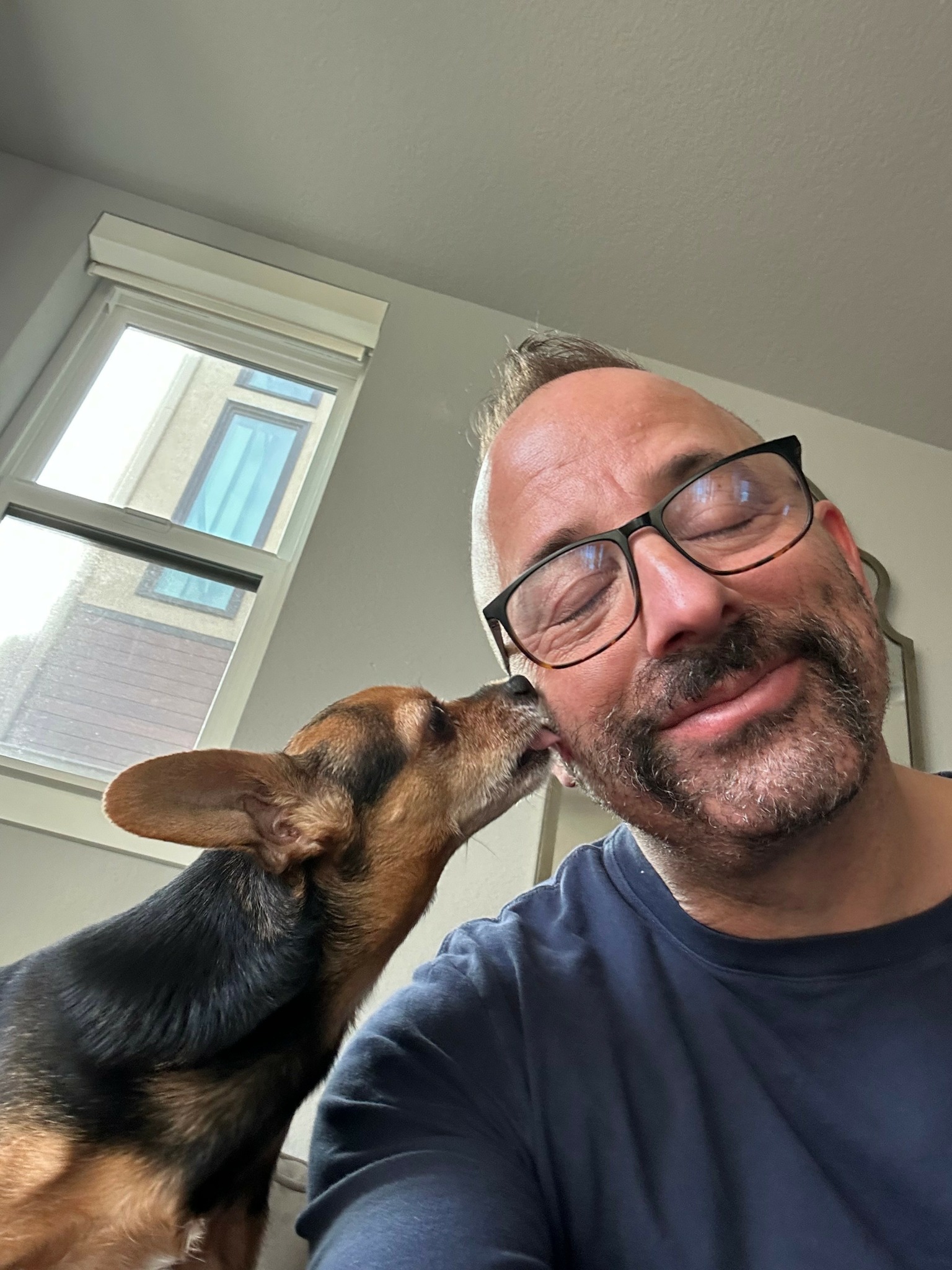

We’re excited to introduce you to the always interesting and insightful Eric Elkins. We hope you’ll enjoy our conversation with Eric below.
Eric, thanks for joining us, excited to have you contributing your stories and insights. Your ability to build a team is often a key determinant of your success as a business owner and so we’d love to get a conversation going with successful entrepreneurs like yourself around what your recruiting process was like -especially early on. How did you build your team?
WideFoc.us started as just me — and for the first few months, I thought that was fine. I was a one-person strategy shop and I liked the autonomy. The moment I realized I needed help wasn’t a dramatic epiphany; it was more like a slow accumulation of dropped balls. I was managing multiple clients, writing content, building strategy (and handling contracts, billing, invoicing, emails, single parenting of a 7-year-old, etc.). So something was always getting less attention than it deserved (like client care or…crucially… following up on payments so I could pay my bills).
My first hires came through my network, based on areas where I needed immediate help. I hired an admin person to keep me on track, monitor progress with client work, and chase checks when needed. Next was a content writer, who could help with execution of the social media strategies I was developing.
The thing I’d do differently if I were to start over is something I learned the hard way, which is hire support roles earlier than is comfortable. If you wait to start looking when you’re already behind, you just get more under water. It takes time to find the right person, train them, and have them producing. Every time I’ve brought someone on before we felt “ready,” it has paid off. The right people don’t just take work off your plate — they make the whole operation smarter.
And that’s the other thing I would have done differently is that I should have hired someone who knows how to run a business early on. For years, I learned through trial and error, whether it was how to price our work, managing cash flow, keeping track of all the moving parts, and making growth decisions. Business consulting got me on track like TEN YEARS after I’d started the company, and I often wonder how much faster we could have grown if I’d asked for help sooner.

Great, appreciate you sharing that with us. Before we ask you to share more of your insights, can you take a moment to introduce yourself and how you got to where you are today to our readers.
I started WideFoc.us in 2007, which means we were building social media strategies for businesses before most people had heard of Twitter, before Instagram existed, and while some business leaders were still trying to understand why they even needed a functional website. I got into it because I’d spent years in communications, marketing, and media, and I could see that the way brands connected with audiences was fundamentally shifting. Social media wasn’t just a new channel — it was a new kind of relationship between businesses and the people they wanted to reach, where content and communications were interconnected. I wanted to help brands show up in that space with intention to drive ROI.
At WideFoc.us, we provide full-funnel social media strategy and execution for brands that want their online presence to generate revenue. That means building content strategies grounded in real business goals (and AI SEO), managing communities, running paid social campaigns that convert, advising on how AI and generative search are changing content visibility, and helping clients understand not just what to post, but why it matters and how it connects to growth. Our clients range from regional small businesses to larger brands across industries — home services, hospitality, B2B, nonprofits, and more. The thread that connects them is that they’re serious about their marketing and want a strategic partner, rather than someone to fill a calendar and check off the “social” box.
What sets us apart is the strategy layer. A lot of agencies will take over your social channels and keep them sort of active. We start by asking questions: Who are you trying to reach? What do you want them to do? What does your audience care about that intersects with what you offer? And increasingly, we’re asking: How is your content being found and interpreted by AI-driven search tools? GEO — generative engine optimization — is something we’ve been paying close attention to, because the businesses that build authority and relevance are the ones that show up in AI-generated answers.
And yeah, I’m an unapologetic em dash guy.
I’m most proud of our longevity (18+ years!) and our relationships. We’ve had clients who’ve been with us for more than a decade. In an industry that moves fast and burns through agencies quickly, that kind of trust means everything to my team and me. I’m also proud that we’ve stayed ahead of the curve — not by chasing every trend, but by staying genuinely curious about what’s changing and honest with clients about what works and what’s not worth their time. (Like… staying away from X, now that it’s a cesspool of toxicity.)
We’ve put together a team of kindhearted, compassionate, competent professionals who are fun to work with, super smart, and adaptable to the constant churn of change in social media.

Do you have any insights you can share related to maintaining high team morale?
The thing that has made the biggest difference for us is treating people like the capable adults they are. That sounds obvious, but a lot of agency culture runs on surveillance and micromanagement disguised as “accountability.” I’d rather set clear expectations, give people the tools and context they need, and then support their strengths. When people feel trusted, they tend to rise to those expectations.
That said, morale isn’t self-sustaining — it requires active attention. For a distributed team working in social media, where the work can feel relentless and the feedback loop is noisy, it matters that people feel seen. We check in regularly, and not just about deliverables but about how people are doing. We celebrate wins out loud, with compliments, kudos, and little gifts along the way. And we try hard to make sure nobody feels like they’re carrying something alone.
The other thing I’d say: Protect your team from clients who treat them badly. It costs you more in turnover and morale damage than losing the client ever would.

Can you open up about a time when you had a really close call with the business?
The early days of Covid definitely slowed things down for us, when some clients decided to cut their marketing budgets because things were so uncertain. Our priority was to keep employees fed and secure, so we found other ways they could bill hours, whether it was writing internal blog posts and case studies for WideFoc.us, planning webinars, or building out processes and organizing files. Our profitability was nil, but the PPP loans helped us take care of the team and muddle through while we made the case with new clients that the brands that spend on marketing through downturns are the ones that outpace their competitors in the longterm.
Eventually, things picked up and we were able to get back on track, but it was pretty tight for a long time. I learned a lot about cutting expenses with humility and optimizing cash flow, and those lessons have stuck with me.
Contact Info:
- Website: https://www.widefoc.us/
- Instagram: https://www.instagram.com/ericelkins/
- Facebook: https://www.facebook.com/WideFocus
- Linkedin: https://www.linkedin.com/in/ericelkins/
- Other: https://www.denverlicious.com/
