



We’re excited to introduce you to the always interesting and insightful Elizabeth Lang. We hope you’ll enjoy our conversation with Elizabeth below.
Elizabeth, thanks for taking the time to share your stories with us today Can you talk to us about how you learned to do what you do?
I think everyone plays around with art at some point in their lives. It seems like the most natural thing in the world to see a child coloring with crayons or painting. For some reason, I kept doing it beyond childhood. I’ve always had a really big imagination. I would come up with stories and ideas that were incredibly vivid in my mind. I felt almost transported by art. As if it was taking me away from reality. My mom was always really supportive of me as an artist, so she signed me up for local art classes. I absorbed every second of those classes. I can remember how the room was filled with the smell of pencils and erasers. That smell still brings me some joy and comfort today. It was in those classes that I had my first lessons in techniques and really practiced enough to improve my skills. But the biggest part of those classes was how they created a world in which it was ok to be an artist. I could create there – in fact, that’s what I was being asked to do! Whatever messages or ideas I had in my head that kept me from thinking art was a career option were very real. I’m not entirely sure where they came from, but it took me a very long time to consider art as a profession.
Years later when I left my job to become an artist full time, I had to find my artistic voice again. I spent a lot of time drawing and painting realistic looking scenes, and have gradually moved into more abstract. This I believe is a sign of my confidence growing. It takes skill to paint reality, but it takes bravery to paint abstractly. I’ve had to constantly push myself to be brave. I’m still working on it. It’s the thing I admire most in other artists, and it’s the thing I struggle with the most. There’s a sense of freedom when you are brave enough to do and say exactly what you want to.
I don’t know that I would want to speed up my learning process or if that’s even possible, but I can see the value in having a degree in art. I find myself being jealous of fellow artists who went to school to study art. I chose to study psychology and become a counselor because I wanted to help people. I love that I did that and I loved being a counselor and plan to return to that one day – hopefully combining art and counseling. But I recognize now how much I was discrediting art and any ambition I had to do it professionally. I had to give that part of myself a chance, so I spent a lot of time nurturing and training it. I think that is something I would have appreciated about art school and learning from artists and with other artists. Of course, it’s never too late, so who knows – maybe I’ll return to school one day and get to have that experience.
I think I’ve always been good at coming up artistic ideas that will appeal to others. I’ve painted lots of places that are recognizable and well loved locally in Atlanta. I love connecting with people who come to a show and want to discuss or purchase something I’ve made. I think this makes me even more in touch with what my customers are looking for. Overall I think this is a really valuable skill to have in my profession, but at times it has felt like a personal obstacle. I find myself having to shake off the mindset of what people are looking for when I sit down to paint. I have to find myself again – my artistic voice again – in order to create something new. I usually do this by hiking or some activity that gets me out of that mindset. Traveling works too! That’s my favorite thing to do as it gives inspiration and also seems to shake off all the dust that life leaves behind. Whenever possible, travel is my preferred source of renewal and inspiration.

Elizabeth, before we move on to more of these sorts of questions, can you take some time to bring our readers up to speed on you and what you do?
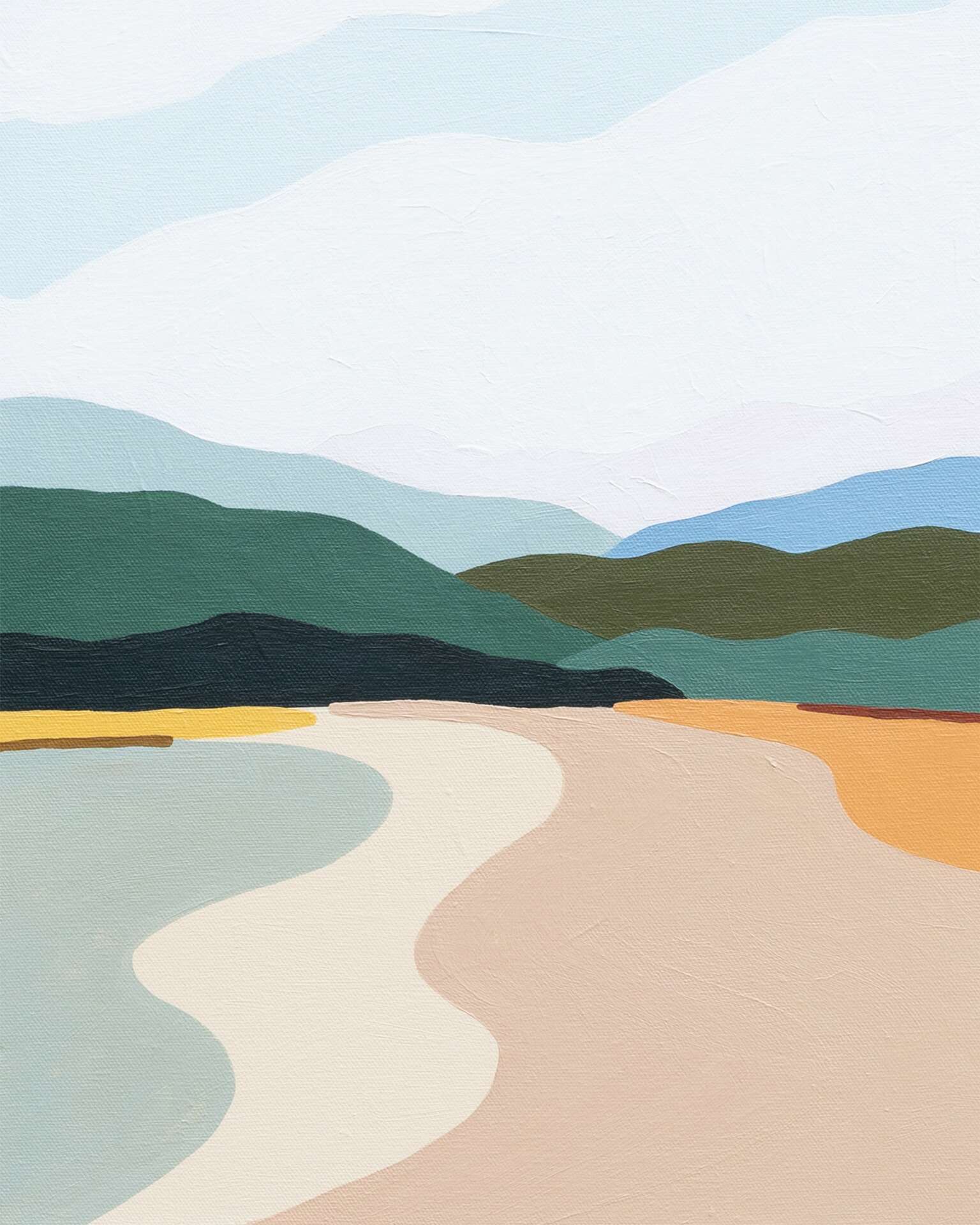
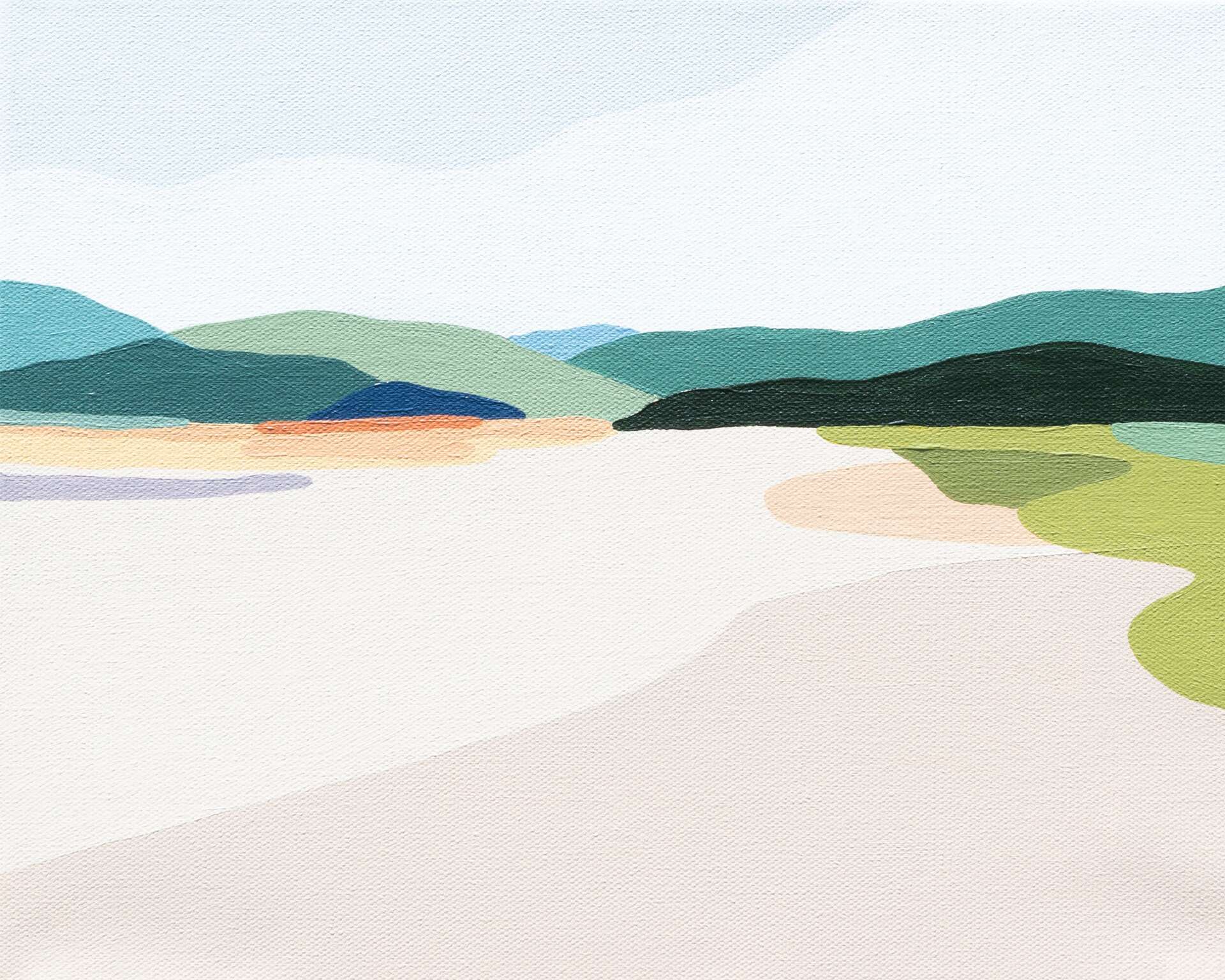
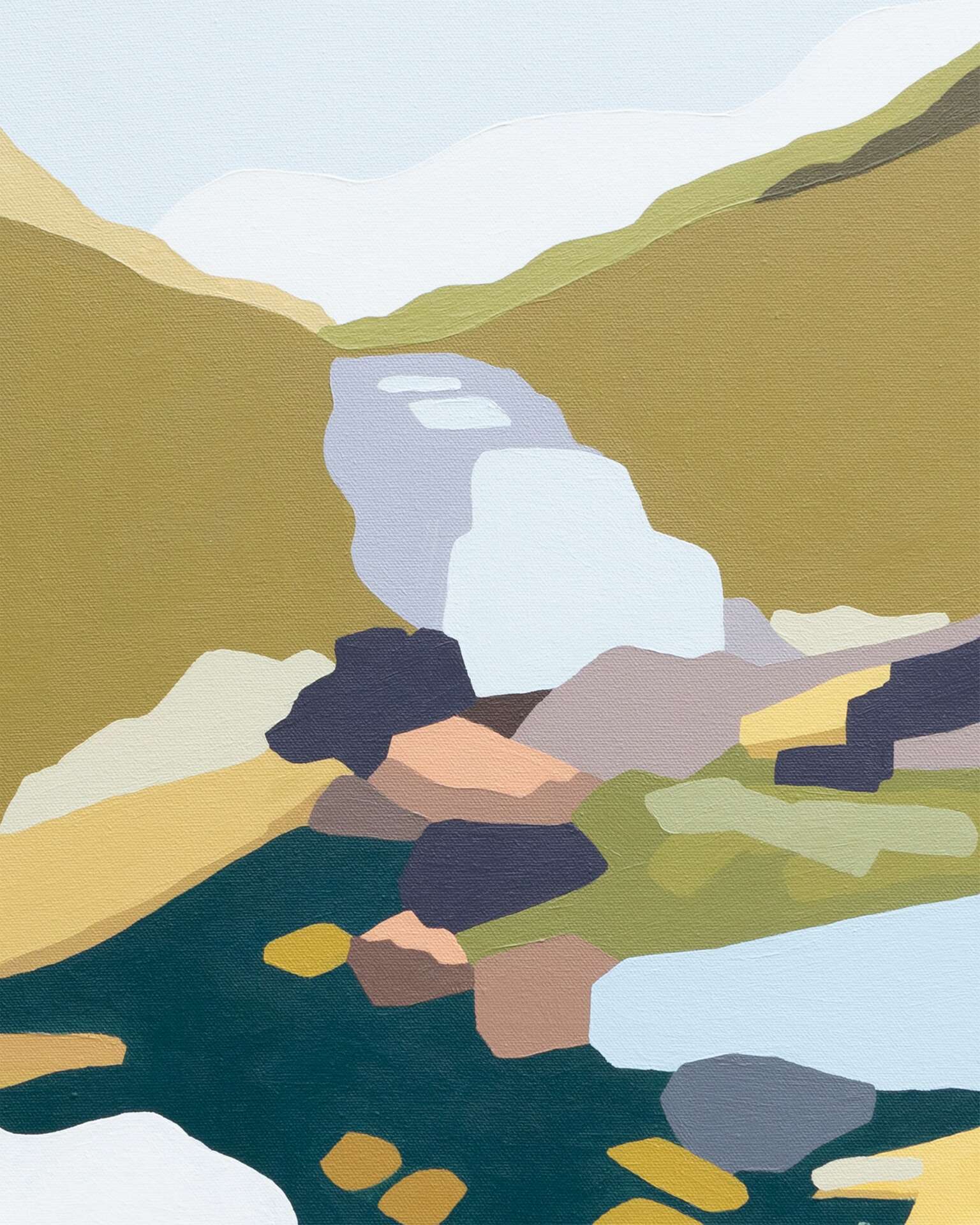
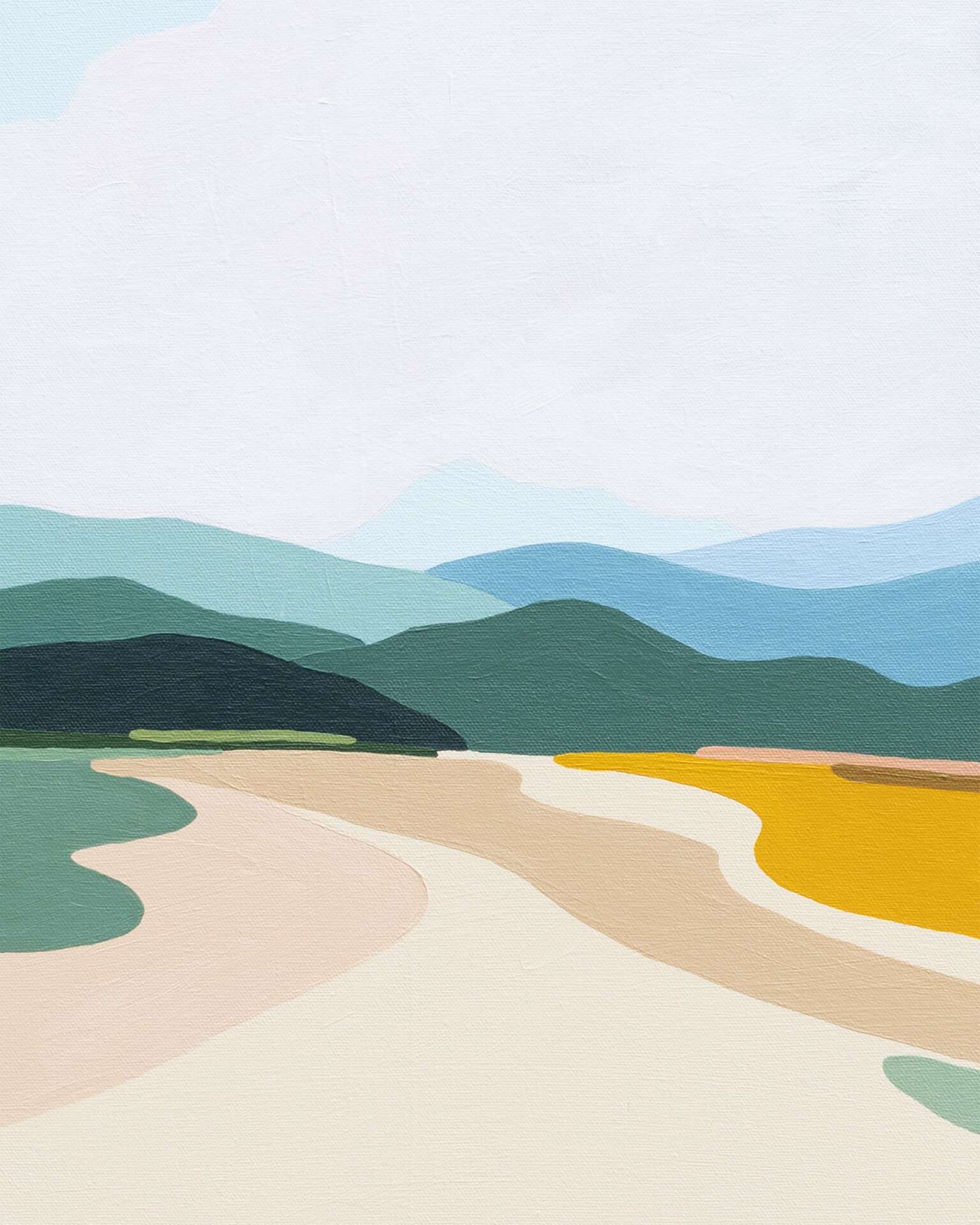
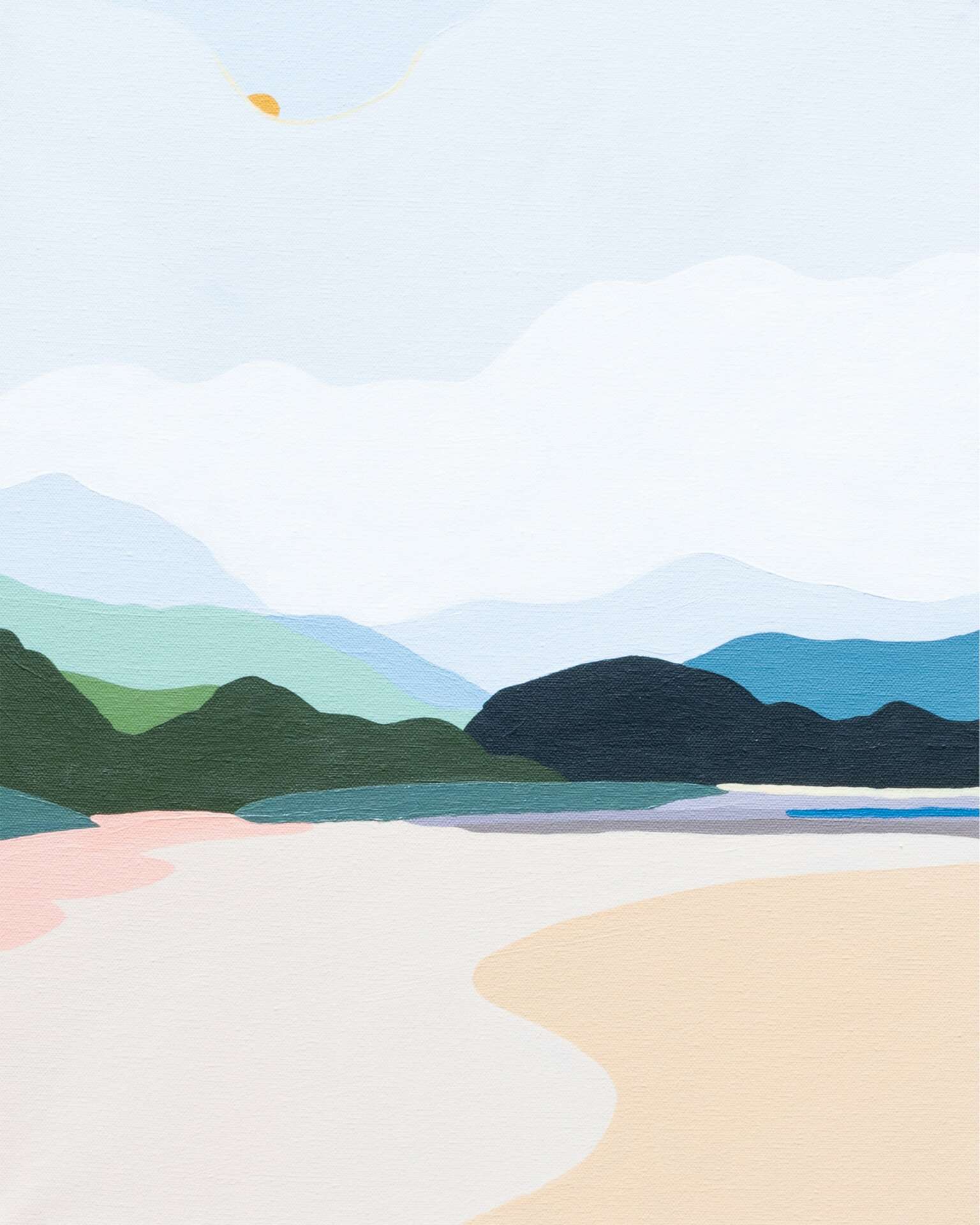
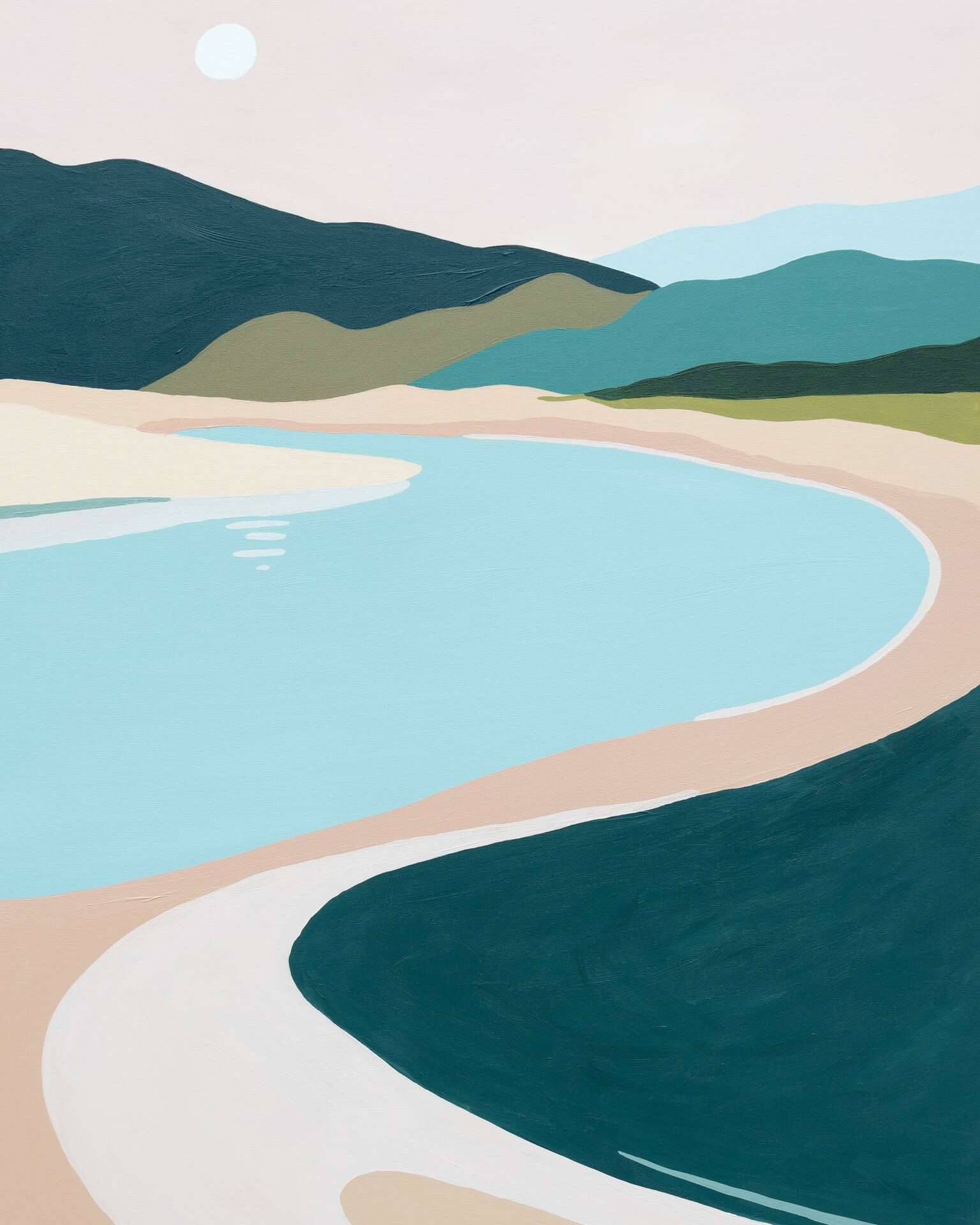
I am a painter, working primarily with acrylic paint on canvas to depict abstract and colorful landscapes. I love travel and hiking, so most of my work comes from inspiration from a real place. And as silly as it sounds, I had a lot of influence from doing paint-by-number as a kid. I loved the idea that you could make a recognizable place using solid blocks of color. When I look at a place in real life or a photograph I’ve taken along the way, I do basically the same thing. I break it down by shapes and colors, often exaggerating those in order to compose my painting. I love this challenge, because it’s fun to see how you can convey something in such an abstract form. And I also love being able to pull the smallest hint of color from a rock or a tree and make it the focal point of a painting.
I sell original artwork, custom pieces, and reproductions. I love having a variety of art to sell, because to me it means I am able to reach more people who enjoy my work.
My business name “Between the Evergreens” comes from this idea that you will find a new world in nature. The name was inspired by a John Muir quote that says, “between every two pines is a doorway to a new world.” I believe through observing nature, I have become a happier and healthier person. When I go on a hike or even sit on my porch, I feel more calm and content. That is the feeling I’m trying to convey in my artwork. I am most happy when I hear someone say that my work made them feel that way. But truly whatever inspiration my work brings to others, makes me happy.
How can we best help foster a strong, supportive environment for artists and creatives?
I don’t blame people for wanting to buy affordable artwork that is mass-produced, but I would just say when you are able to afford something that is hand made, consider the positive impact that purchase makes. I’ve been there too! I’ve been the one who buys a poster on sale at a chain store, because I can afford it and it will look good in my bedroom. But now that I am a professional artist (and able to give back), I choose to give part of what I earn back to the community of artists around me. I think what bothers me most, is that sometimes people don’t seem to understand the value of a hand made or painted piece. Not everyone will care, but until you make something yourself, you don’t fully understand how difficult a process it can be. A lot of thought, labor, and love goes into hand made items. I don’t think I’ve ever seen an artist at a show that has something for sale that looks like they just didn’t care how it turned out.
Just like voting, I see how you spend your money as a vote for whatever future you want. I want to see artists empowered and succeeding and not all the power and money going to massive chain stores. I feel good about being able to spend money on artists like myself. I mostly buy small originals and reproductions but one day I hope to afford larger originals.
I don’t believe actions are isolated. I believe they have a ripple effect that will help or hurt beyond the moment’s decision when are made. Supporting artists will contribute to their ability to create, give back, provide resources for other artists, and contribute to the beauty of our world. These may sound like things that won’t affect you, but I believe in some cases you’ll notice they’re absence more than you appreciated their existence.
We’d love to hear a story of resilience from your journey.
As an artist who makes a large portion of her income from in person shows and festivals, it can be incredibly discouraging to not get into a show or to have a really disappointing weekend selling at an event. I remember one time doing a show that I was sure would be a huge success. I had heard great things about it and it had a long reputation of being a popular show with huge crowds and lots of artists’ sales. It was a long drive for me – further away than my home than any show I had done so far. It was a three day show, so I had to spend more money on lodging. And it was the hottest day in years, so much so that the local news was advising people to not go out if they didn’t have to! I was physically exhausted, discouraged, dehydrated, and to top it off had to survive a massive storm that demolished some tents and the inventory of other artists. I thought I was going to drive away from that show with income to burn, but instead had to ask for help from my family to pay my rent. It was so discouraging.
When I got home, I just kept doing what I was doing – putting one foot in front of the other, making new art, doing more shows, getting into some and rejected by others… It was a spectacular story of recovery and resilience, it was just me keeping on! And it worked! Some times progress is slow and consistency pays off more than elaborate stunts. I continued to consistently market myself, sell my work at shows, and grow as an artist and business owner. I did learn from that experience that there is always an unknown factor in this business and that it’s good to have some money reserved for the periods where you didn’t make what you thought you would.
Overall I learned to protect my energy. I learned I would have to keep taking risks and that not all of them would pay off, so it was and is really important for me to protect myself from burnout along that journey. There’s a kind of faith and bravery in persisting in the face of uncertainty.
Contact Info:
- Website: https://betweentheevergreens.com/
- Instagram: https://www.instagram.com/betweentheevergreens/
Image Credits
profile photo: Dave Williamson Photography