We recently connected with Eliot Rausch and have shared our conversation below.
Eliot , thanks for taking the time to share your stories with us today Earning a full time living from one’s creative career can be incredibly difficult. Have you been able to do so and if so, can you share some of the key parts of your journey and any important advice or lessons that might help creatives who haven’t been able to yet?
Although we were a working class family, Mom and Dad were both struggling artists. Dad took the safe job at the Chevron refinery to pay the bills and mom taught art in Compton, Watts, and Venice. We had enough to get by, paycheck to paycheck in early-’90s Los Angeles. But the feeling of financial insecurity, of the bottom falling out, was always in the room. It didn’t help that my brother and I attended school in a neighboring, wealthier city while being tagged as “those kids from Felony Flats.” It creates a strange inferiority complex laced with fear, and yet, given that we were gifted, our hustle and grit were elevated by necessity.
I can still remember my old man telling me, as I approached art college, not to follow their path. “Try something like Graphic Design,” he said, “for a better shot at making money.” I wish I could say I took the straight and narrow road through higher education, but the truth is that the terror underneath me of ending up broke produced alcohol-fueled, maladaptive strategies for gaming the system. I never bought a single book in college and graduated with a 3.4 GPA. I cut every corner imaginable.
In those painful years while I was delivering Mediterranean food out of my old surf blue Honda Civic and trying to sell laptop computers on the side— failing miserably — a fellow grifter on a similar journey handed me Dale Carnegie’s How to Win Friends and Influence People, and said, “Eliot, your bad with people, read this and all will change.” The rest was history.
Thereafter doors started opening immediately and a creative lane appeared where there had only been stacking college debt before. Carnegie says you can make more friends by getting interested in others than by talking about yourself, so I started letting my listening ear and curiosity lead every conversation. Soon my Typography teacher was offering me an internship at the prestigious Ogilvy & Mather in Culver City and a vocational gifting was born. I stayed when they tried to kick me out after three months, worked for free, and eventually they fired my superior and gave me his job.
I’ll spare you the rest, but I found my love for editing, filmmaking, and directing in that director’s tape vault. I also learned the art of listening well and asking the right questions that unlock relationships and doors.
There was a delicate and essential dance between art and commerce and I was soaking it in. I still remember Dave Wein who told me to get an American Express credit card as the only car I ever had because I would be forced to pay off my debt at the end of every month — always staying within my means.
A few years later, I also learned the divergent way all opportunity seems to happen in my industry. After crashing my car in an alcoholic blackout, getting sober, and coming upon a story I’d captured in Long Beach about a friend and ex-convict putting his pit bull down, I won Best Film at the Vimeo Film Festival, and Time magazine celebrated it one of the most important things to happen that year. Grit, grace, luck, sobriety, talent, or the immense terror of ending up broke. Those early years were formational, giving me profound insight into what it means to fail, to sometimes let grace carry you, and to thrive as a frugal, debt-free creative entrepreneur.

Eliot , before we move on to more of these sorts of questions, can you take some time to bring our readers up to speed on you and what you do?
I went long on the previous question. I’m including my bio below (with a small caveat) because my fingers are tired. I turn 45 this year and I’m in the throes of another strange vocational shift. The kind of liminality that is liberating for an artist and also hair-raising, because I’m the sole provider for my family and the risk of failure carries much larger consequences. I just finished my first manuscript illuminating stories of American men in the throes of unemployment and hiding. It’s part journalism part memoir. It addresses a subject similar to the Johatsu, or “evaporated people,” phenomenon in Japan. So while I am still acting as a director, documentarian (still doing commercial work) my sights are set on a writing career. The bio below might be outdated by the time you read this, but to answer your question: I think my talent, my gift at it’s core is being some kind of witness for others. Witness in the creative, James Baldwin sense.
Eliot Rausch is an award-winning director whose work spans documentary, branded film, and visual storytelling. His expansive international film career launched on the heels of a docu-series examining human frailty. “Last Minutes with Oden” won the Documentary Award and Grand Prize at the Vimeo Festival, while Time Magazine honored it as one of the most significant events of the year. Working with brands ranging from The Red Cross, LA28, Veterans Affairs of America, to Volvo and Apple, Eliot has garnered other noteworthy accolades. His short film “Find Your Understanding,” created for Expedia, was awarded “Most Tear-Jerking Viral Ad of the Year” by Ad Age and one of TED’s 10 Best Ads of the Year. While developing personal work surrounding Alzheimer’s and ALS, Eliot won a Cannes Lion and Clio award for a series honoring those living with multiple sclerosis. His partnership with the Department of Justice and Futures Without Violence helped launch a multi-year “Changing Minds” film campaign that addressed children’s exposure to violence and childhood trauma. Alongside Alejandro González Iñárritu, he directed the documentary “A World Unseen,” a complementary piece to “The Revenant,” and recently directed “Finding Harry,” a film preceding the launch of HBO’s Harry Potter series. Given the scale and reach of Eliot’s work, including hundreds of commercials seen by global audiences, it’s estimated that his projects have garnered upwards of 100 million views and impressions across digital platforms. His work continues to be celebrated for its poetic realism and unflinching examination of the human experience.

Have any books or other resources had a big impact on you?
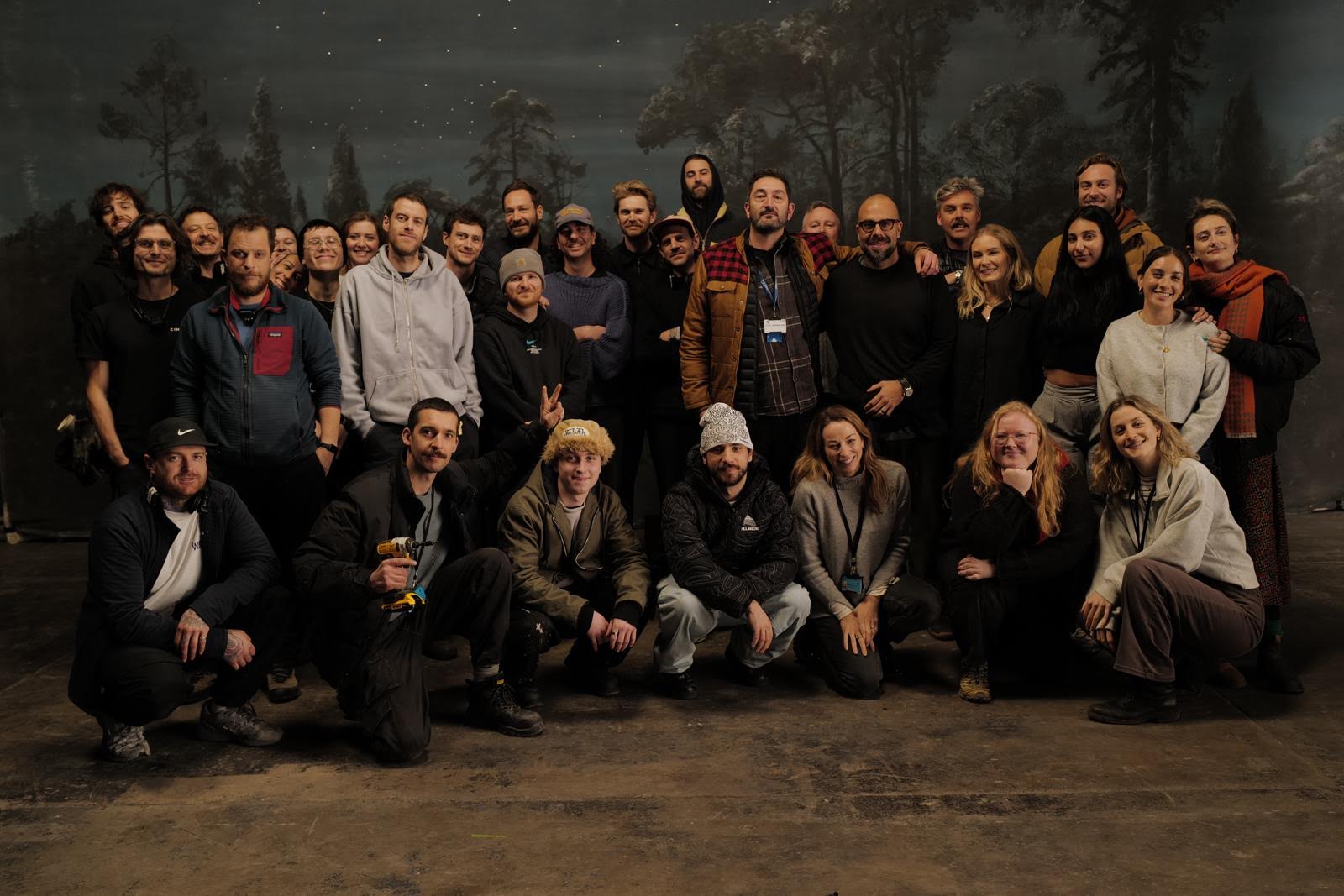
The wild thing to confess is that most days as a director on a large set — sometimes upwards of 350 people — very little of what I’m asked to lead is actually art. Surely there are those moments when a team is synergizing and ideating together, the muse is present, and disparate realities coalesce in some beautiful, synchronistic way, and you’re like, yes, this is the creative life, this is what I was made for. But that is seldom. Most often my task is managing people, leadership, conflict resolution, persuasion, and sales — yes, sales. You have to convince people to pay you large sums of money and then hold their hand through a journey of unrelenting risk, failure, setbacks, and sometimes terrible outcomes. And you need the character, the spirit, and the attunement to do that really well.
So I — and I know you’re thinking I’m a cheeseball — would double down on Dale Carnegie’s How to Win Friends and Influence People, and one I just finished that summarized much of what I’ve had to learn the hard way: A Failure of Nerve by Edwin H. Friedman. I’m a voracious reader and insatiably curious, so my library is full. Read as much as you can.

Can you share a story from your journey that illustrates your resilience?
I’ve always struggled with the massive contradictions in the realm of art and commerce. I was five years sober and working on a beer commercial. I was down in Uruguay, really struggling, trying to keep my integrity, feeling like Daniel working for Nebuchadnezzar in Babylon. I was praying one day: “God, help me find purpose and meaning in this moment. I know it’s not just to use my gifts to help sell Miller High Life, and I know making money isn’t a good enough excuse — so help me see your will here.” And suddenly I had this sense to take the $500 worth of per diem in my pocket and give it to the homeowner whose house we were filming in. So I quietly walked over and handed him the cash as a gift. He immediately started crying and said, “How did you know? We were behind on rent this month by that exact amount. Now we’ll be able to keep our home.” From there I realized that God’s ways are above my ways, and reality is not what I perceive it to be. For me as a creative being, staying tuned in is essential.
Contact Info:
- Website: https://www.eliotrausch.com
- Linkedin: https://www.linkedin.com/in/eliot-rausch-546b281/