


We were lucky to catch up with Edamovement Lab recently and have shared our conversation below.
Edamovement Lab, thanks for joining us, excited to have you contributing your stories and insights. We’d love to hear about a project that you’ve worked on that’s meant a lot to you.
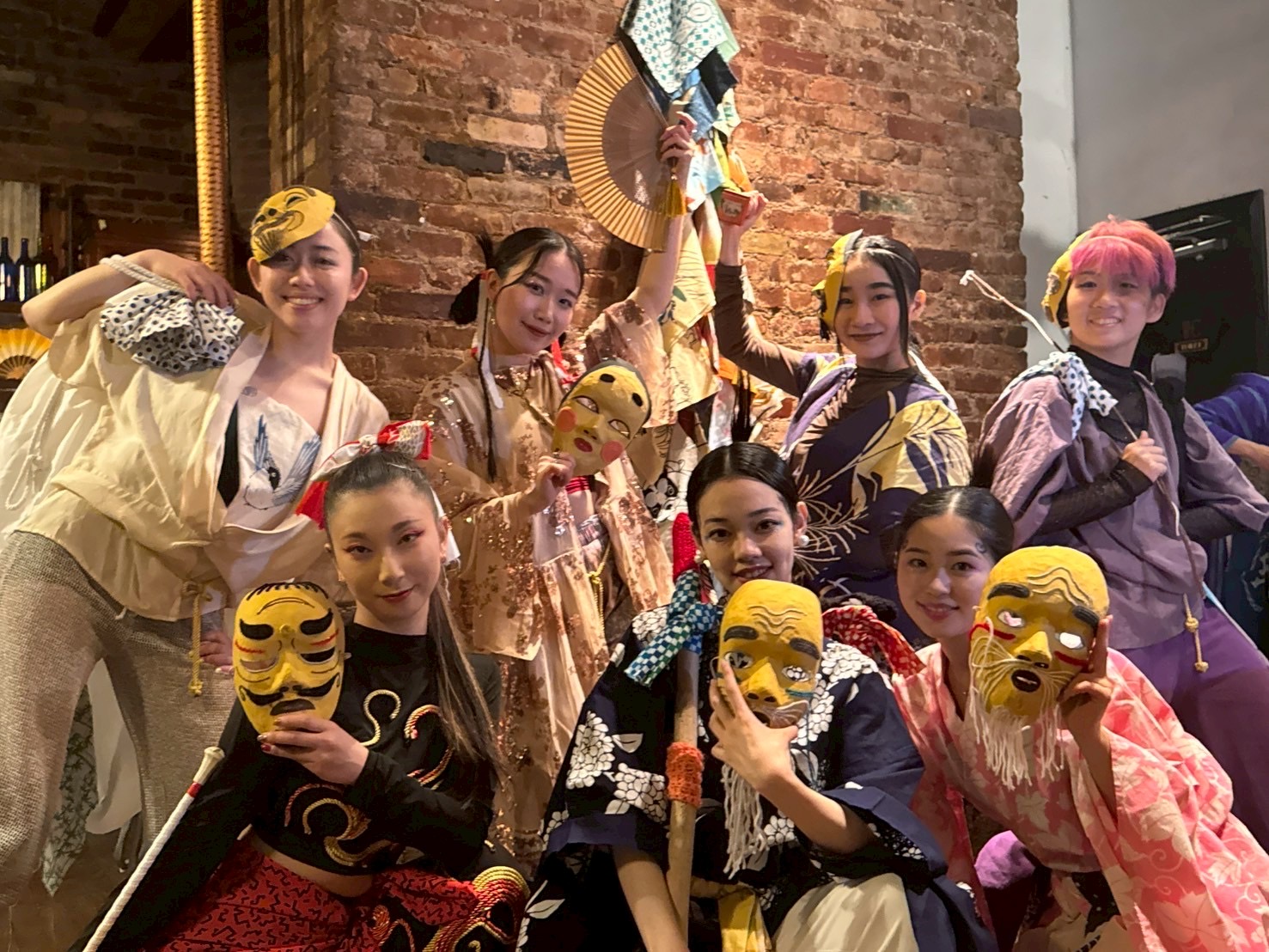
One of the most meaningful projects we’ve created is Edamovement Lab, a collective of young Japanese artists based in New York.
We started this group with the desire to build a space where we could create freely, on our own terms, and express what truly matters to us—with our own power.
We realized that the dreams we once thought were far off could actually start now.
Being young gave us the energy and speed to take risks.
We also wanted to challenge the common struggle of earning a living as performers, and most of all, to create something meaningful with trusted friends—that’s our ideal.
What makes this project socially and culturally meaningful is our mission to share Japanese culture with the world—not just in wider reach, but in deeper and more thoughtful ways.
Through living in New York, we recognized that our roots in Japan are our strength.
We began re-learning our own culture and exploring how to introduce it to people outside Japan in ways that resonate.
Our work moves between two core styles.
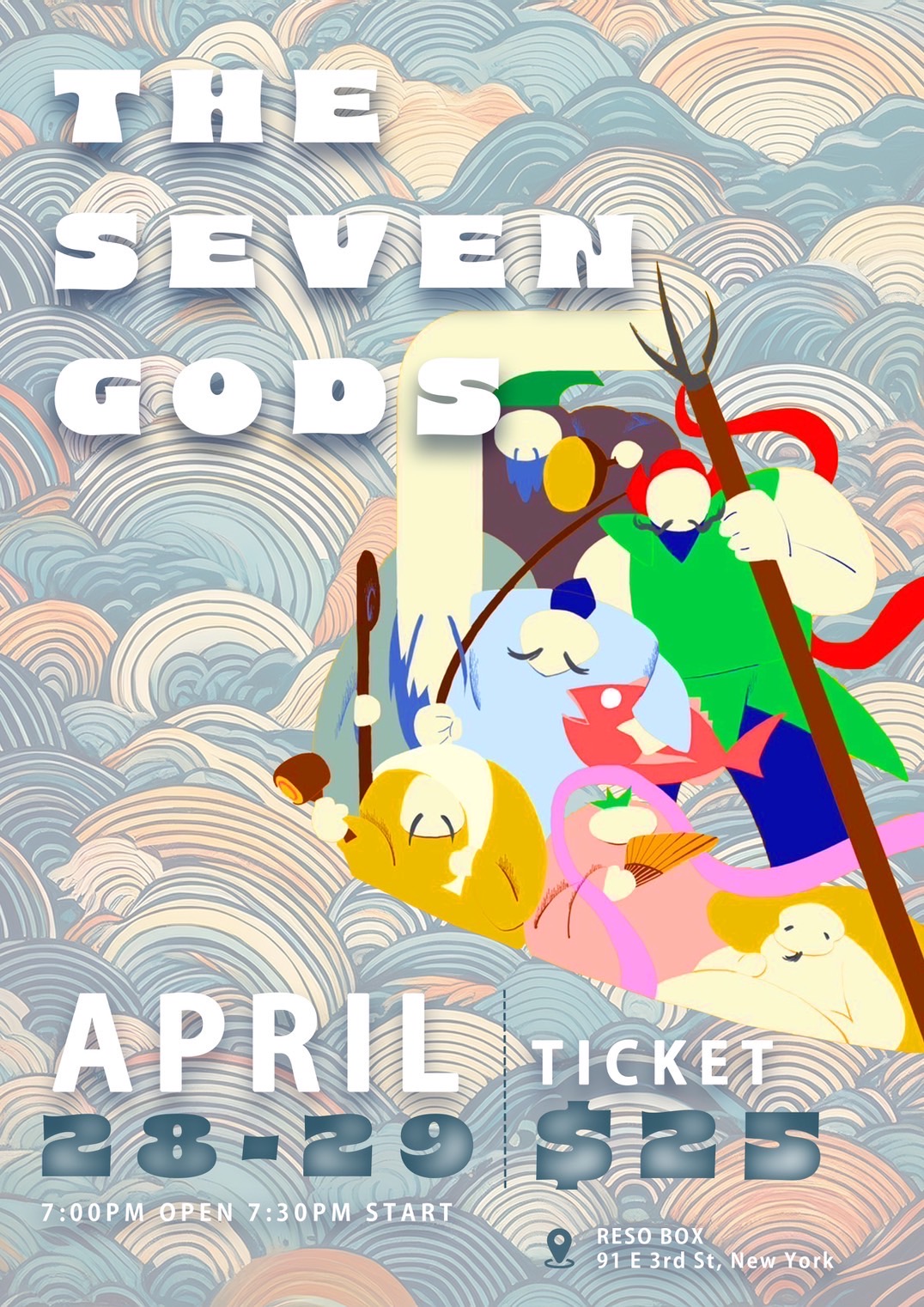
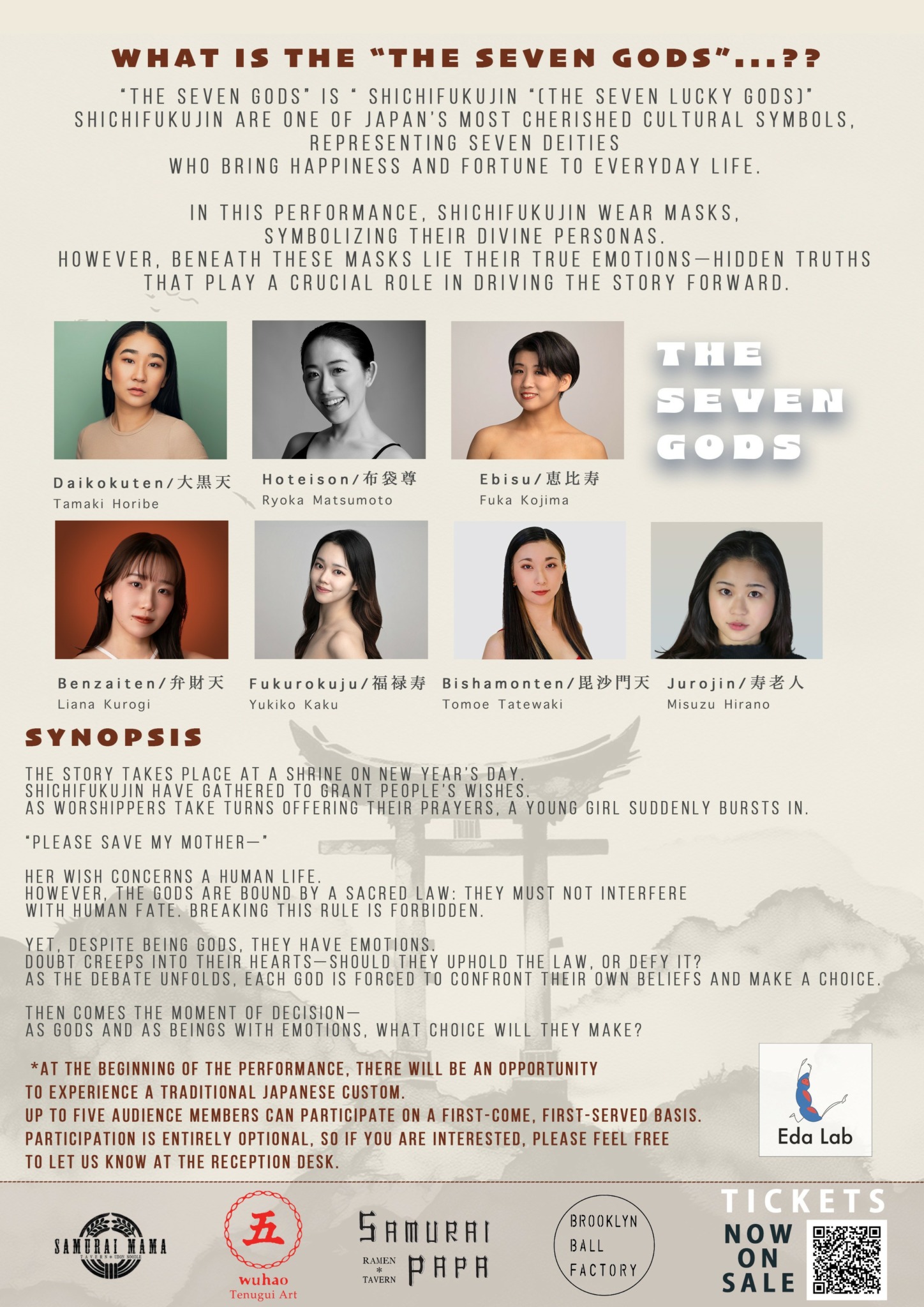
One is our original performances, like our self-produced show themed on the Shichifukujin (Seven Lucky Gods).
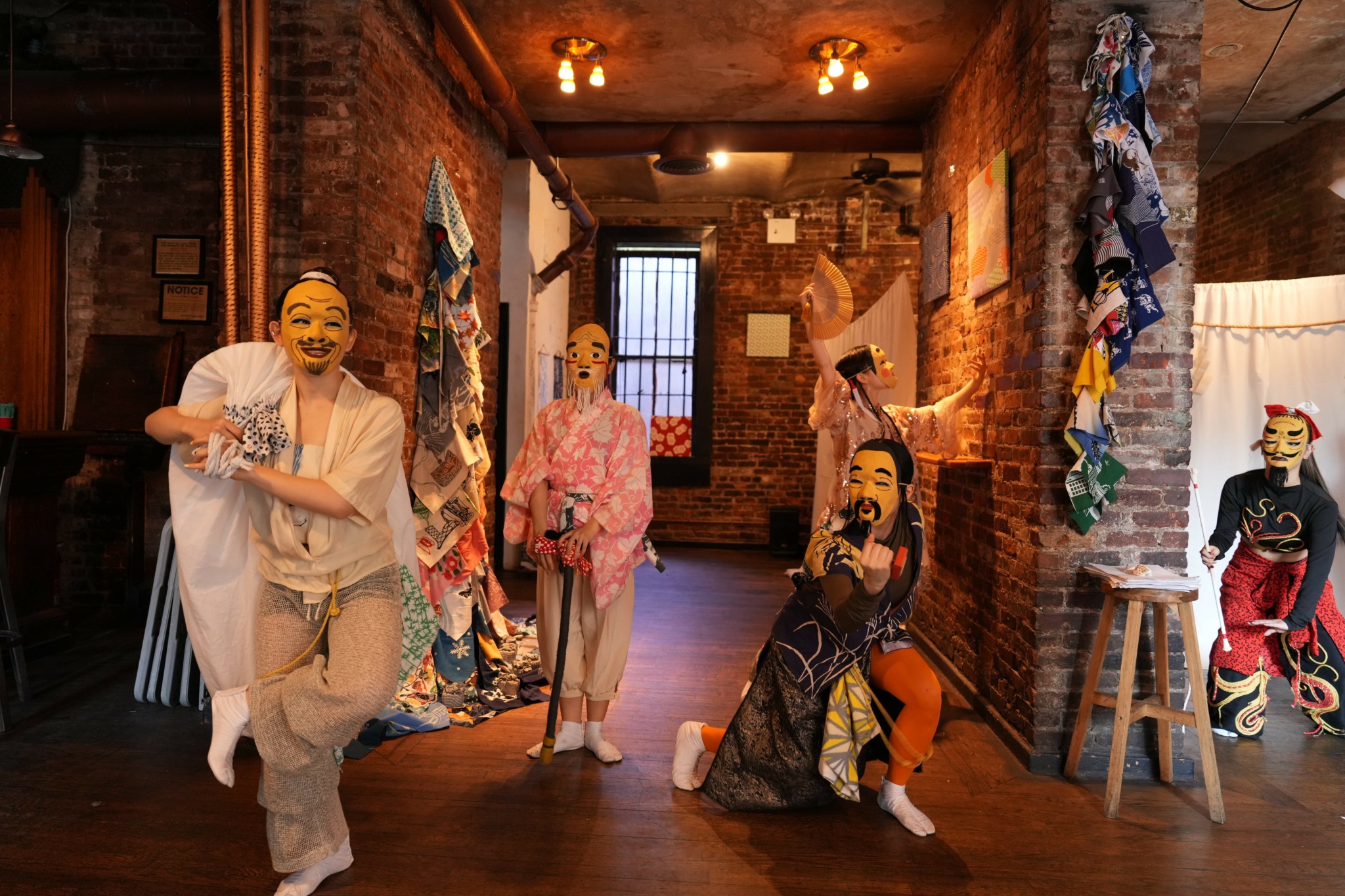
In this project, we used no words—only physical expression—to communicate the stories and spiritual presence of Japanese mythology.
Audience members, including Japanese people, often said they’d never known these gods in such depth.
The piece focused on presence, quietness, and atmosphere—how to express that through the body.
Having experienced language barriers ourselves, we committed to trusting the power of nonverbal expression, believing it can go even deeper than words.
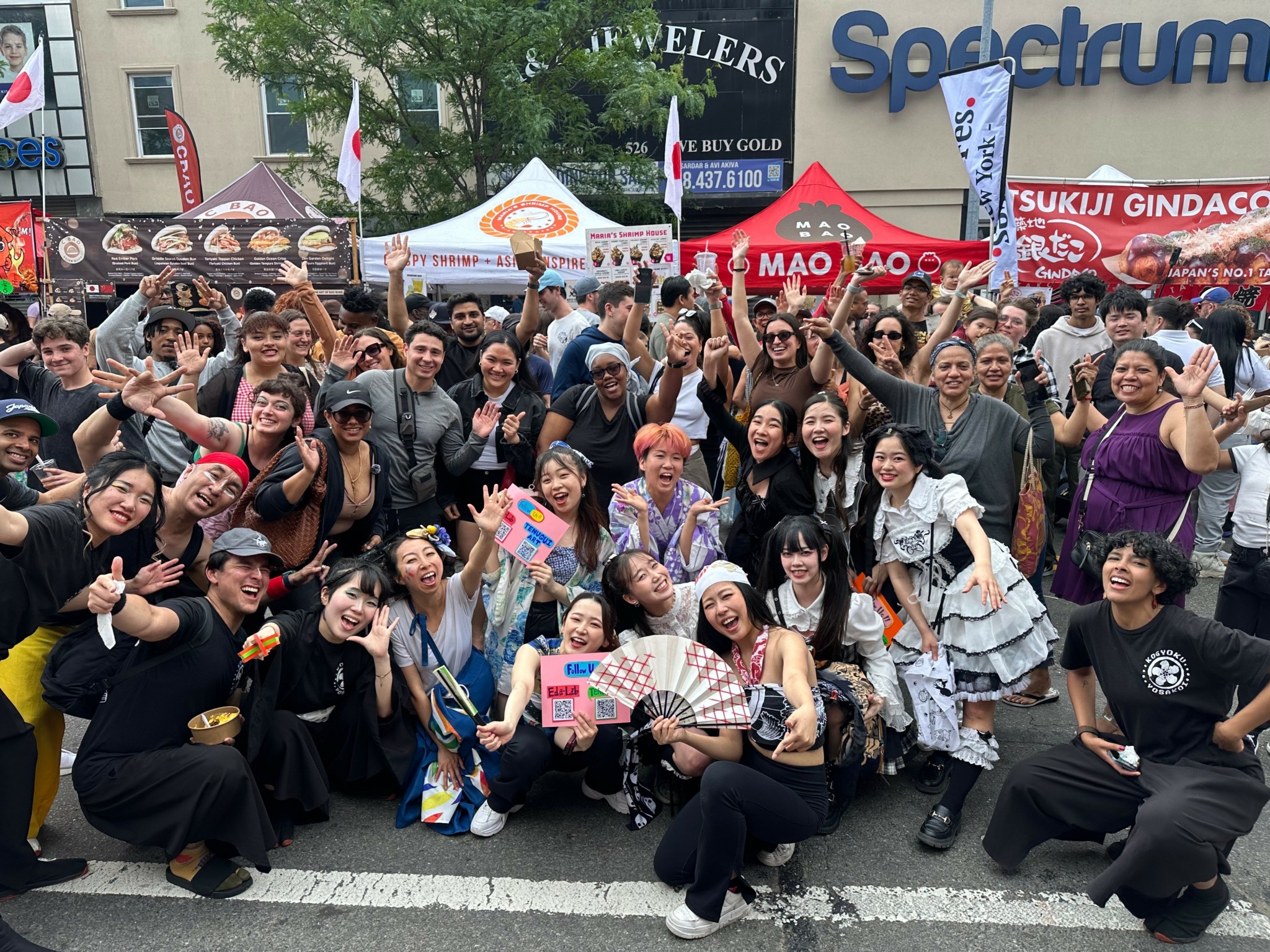
The other style is what we present at public events like Japan Fes and Japan Parade.
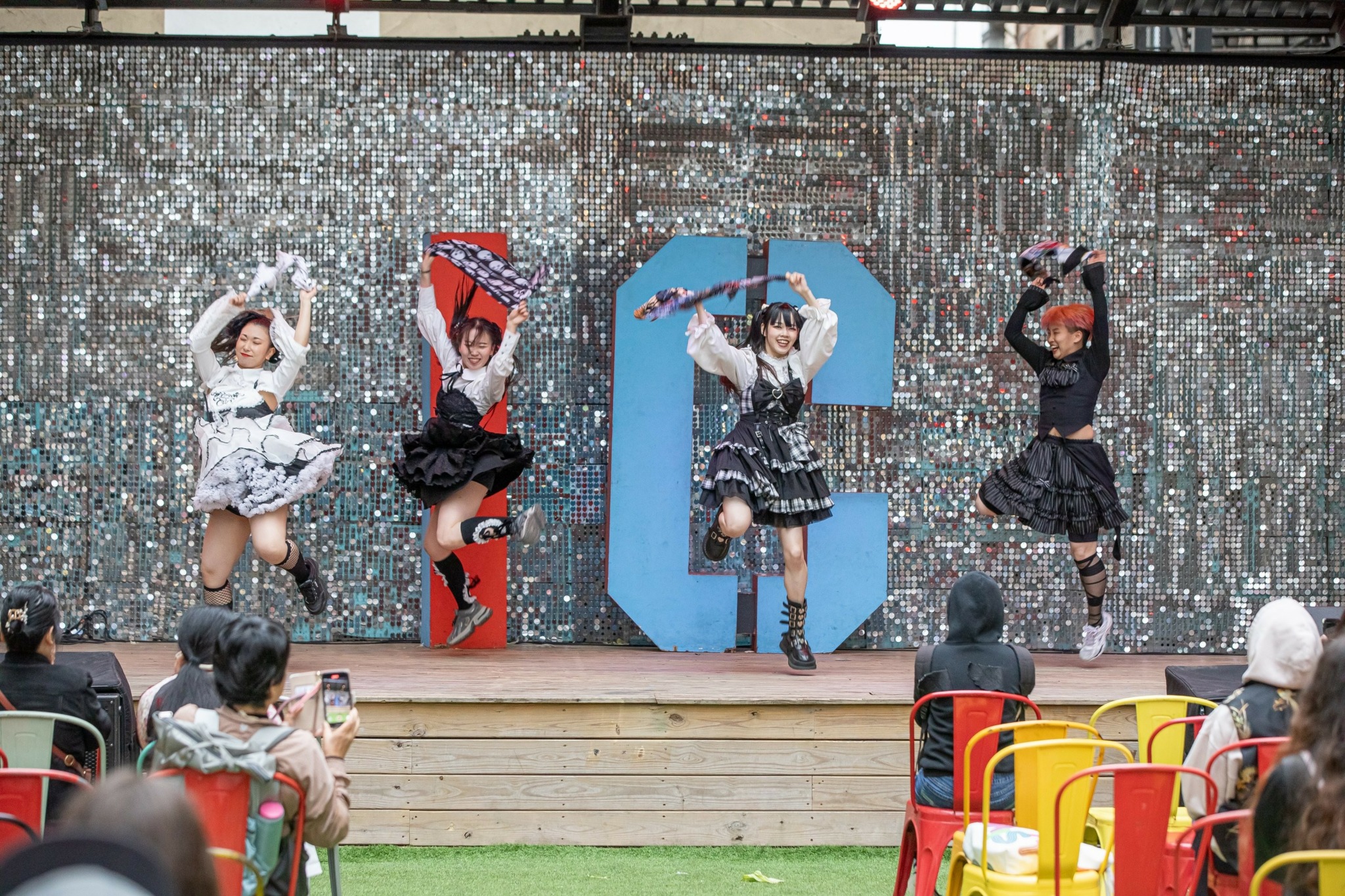
Here, we emphasize eye-catching and playful performances—combining subcultural elements like goth-loli fashion and anime music with traditional touches like tenugui and yukata.
It’s a way to draw people in—to surprise and delight them, and spark curiosity about Japanese culture.
Within that fun, we still weave in subtle movements and aesthetics inspired by classical Japanese dance, so that beneath the flash, people feel something rooted and real.
For us, these festival performances are not separate—they serve as gateways.
By first reaching people in accessible, exciting spaces, we hope to guide them toward our deeper, original works.
That journey—from curiosity to cultural immersion—is one of our favorite things to create.
People often say we give them energy, perhaps because we express something youthful yet grounded.
Even in new formats, we want to carry the essence—the dignity, elegance, and quiet beauty—that Japanese culture holds.
Through our bodies, we seek to express what can’t be put into words.
As a team, we’ve learned a lot.
We know we still have more to understand about our heritage, and more to refine in how we share it.
Our members come from diverse fields—dancers, singers, actors—and we aim to grow in ways that let each person’s strength shine.
Of course, starting something with friends brings conflict too.
But each challenge teaches us to listen, to talk more openly, and to move forward together—stronger than before.
Edamovement Lab is not just about showcasing Japanese culture.
It’s about exploring how the body can carry stories across borders, beyond language—
and how art can connect people in powerful, unspoken ways.
Edamovement Lab, before we move on to more of these sorts of questions, can you take some time to bring our readers up to speed on you and what you do?
We are Edamovement Lab, a group of young Japanese artists based in New York, co-founded by Fuka Kojima, Ryoka Matsumoto, and Tamaki Horibe.
Our collective blends traditional Japanese culture with contemporary performance, expressing everything through the body without using spoken language. Our members come from diverse creative backgrounds—dance, theater, singing—and we value individuality and cultural storytelling.
We started Edamovement Lab because we wanted to create a space where we could produce the kind of work we truly believe in, on our own terms, and share our roots with global audiences. Living in the U.S. as Japanese artists, we’ve experienced the language barrier firsthand, which is why we focus on movement-based, visual storytelling that transcends words.
At cultural festivals like Japan Fes and Japan Parade, we use eye-catching styles—like goth-loli fashion mixed with traditional tenugui—and perform to anime music or Japanese pop to immediately capture attention. These performances often serve as an entry point to draw people toward our deeper, original works like our “Seven Lucky Gods” stage production, where we explore Japanese mythology through body and atmosphere.
What sets us apart is our approach: we believe art should be both accessible and deeply rooted. Our goal is to create bridges—between tradition and subculture, East and West, lightness and depth.
We hope our work inspires curiosity and emotion, and that audiences come away feeling something real—something they might not have the words for, but can still deeply understand.
Let’s talk about resilience next – do you have a story you can share with us?
One of the most powerful examples of resilience in our journey was creating our very first original production, The Seven Lucky Gods.
At the time, we had almost no public recognition and no funding. We decided to launch a crowdfunding campaign to make the project happen—but it didn’t take off easily.
We spent two months doing everything we could: handing out flyers at Japan Fes, asking friends and family in Japan to spread the word, posting every day on social media to share our vision, and reaching out directly to people who might be willing to support. We constantly put ourselves out there and tried every possible way to get noticed.
Finding a venue was also a challenge—we searched multiple times and realized we couldn’t afford a traditional theater. Instead, we worked with what we could get and reimagined how to transform the space to its fullest potential.
We made all the costumes, props, and set by ourselves, and we were incredibly grateful to wuhao newyork TENUGUI ART, who donated a generous amount of tenugui that became a key element of our visual storytelling.
There were many moments when our hearts nearly broke. But we kept reminding each other: “We can do this.” That mutual support kept us going.
Even up to the last minute, ticket sales were slow. We were worried the venue would feel empty. But we didn’t give up—we kept promoting, reaching out, showing up.
In fact, we reached our crowdfunding goal just one week before the show—it was a last-minute miracle powered by everyone’s support.
And on the day of the show, the house was full.
What carried us through wasn’t just persistence—it was our team’s spirit. That special energy that comes from working with close friends, trusting each other, and pushing forward together.
We are deeply grateful to Misuzu Hirano, Yukiko Kaku, Tomoe Tatewaki, and Liana Kurogi—friends who stood by us and made this first step possible.
How did you build your audience on social media?
Social media has played a huge role in how we connect with audiences—especially as a collective that performs live in both niche art spaces and big public festivals.
For Edamovement Lab, we started by being visually intentional. We performed in goth-loli costumes, used traditional tenugui, and mixed anime music with classical movement. Our aesthetic caught people’s eyes first, then curiosity led them to our deeper work.
We also focused on making our story accessible: bilingual captions, behind-the-scenes clips, and reels that show both our performance and purpose.
My advice to others is: don’t try to be perfect or copy trends—just show why you do what you do. Authenticity draws people in way more than algorithms.
Also, engage! Talk to your audience like real people. We’ve made actual collaborators from people who first followed us on Instagram.
Social media is a stage, but it’s also a bridge. Use it not just to show off, but to invite people into your world.
Contact Info:
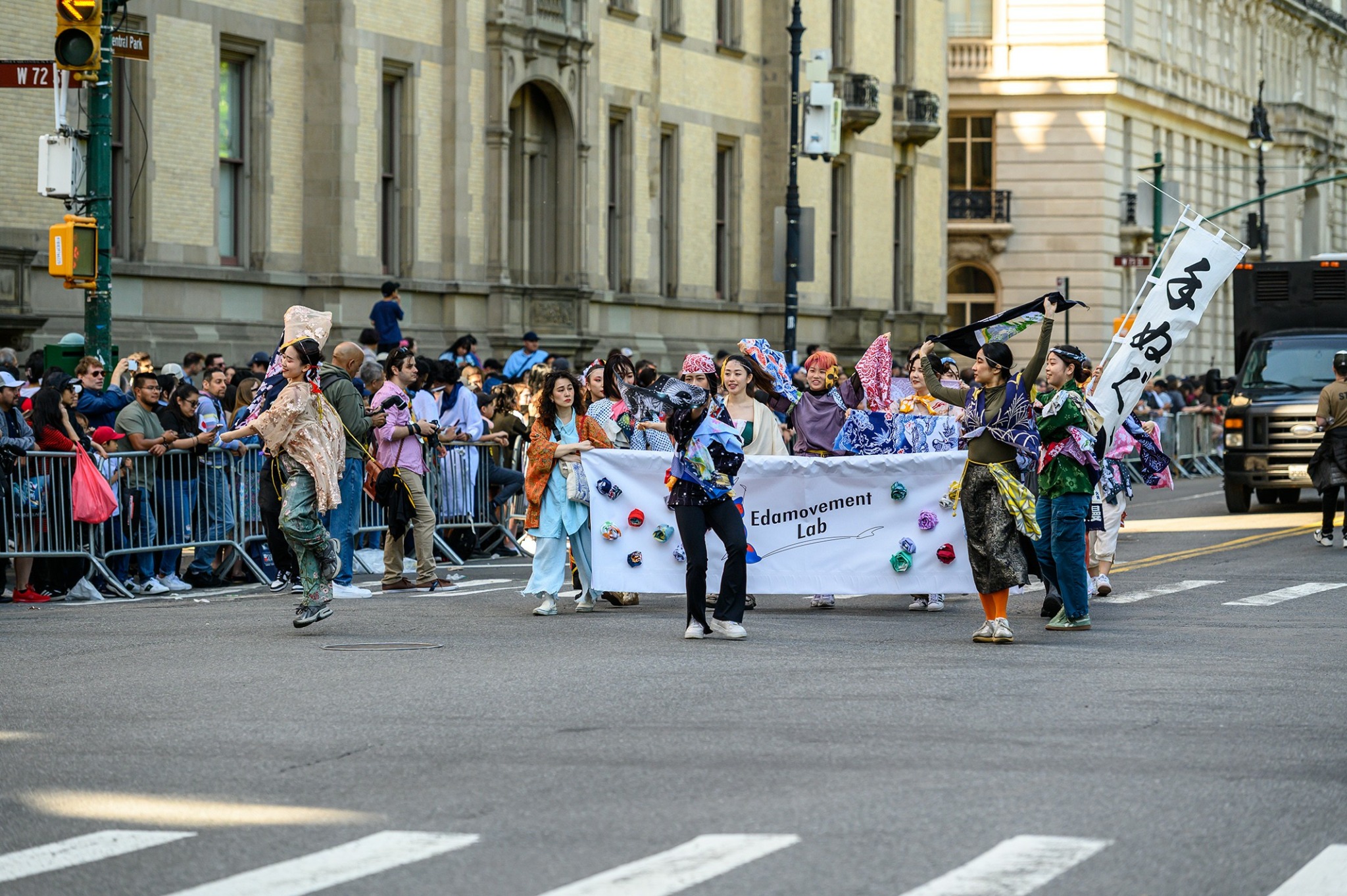
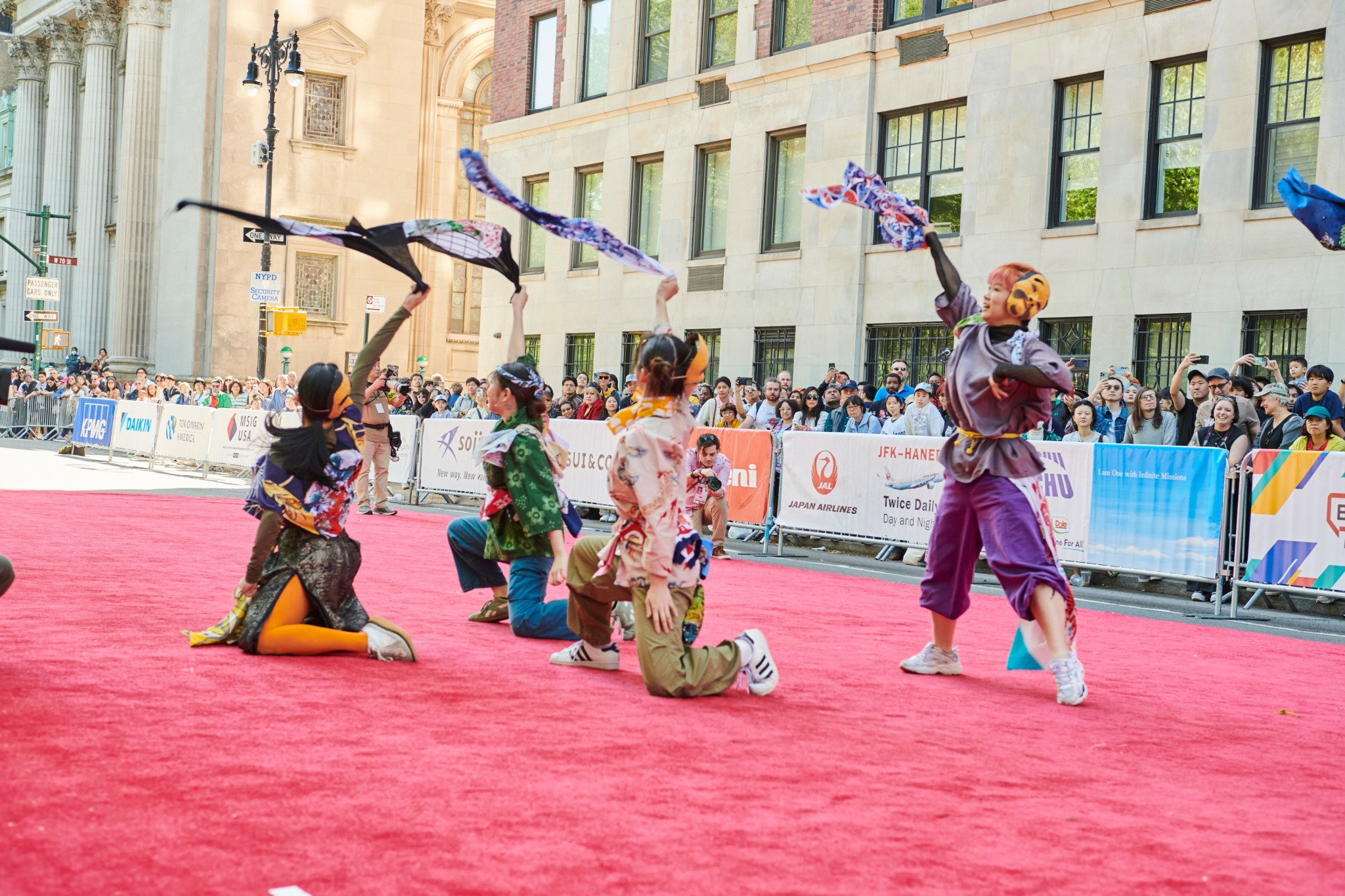
Image Credits
Flyer Designer: Ai Tsujimoto
Logo Designer: Yuka Matsumoto
Japan Parade Photographer: Masahiro Noguchi,Masaki Hori
Night Market Photographer: Shintaro Ueyama/Courtesy of Brooklyn Chamber of Commerce
The Seven Gods Photographer: Yunagi Miki