

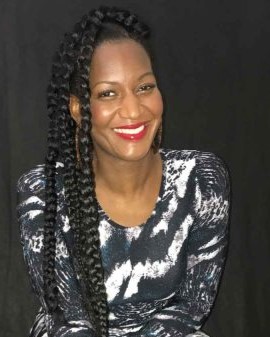

We recently connected with Dr. Monique Charles and have shared our conversation below.
Alright, Dr. Monique thanks for taking the time to share your stories and insights with us today. It’s always helpful to hear about times when someone’s had to take a risk – how did they think through the decision, why did they take the risk, and what ended up happening. We’d love to hear about a risk you’ve taken.
In 2020, as the world locked down and everything fell quiet, I sat with a silence I already knew too well. My PhD, “Hallowed Be Thy Grime”, had done the pioneering work of tracing grime’s sonic theology, its sociological weight, its genealogy as Black British cultural formation. The academy had responded by actively not engaging. Not arguing, not debating. Just silence. The kind of silence that tells you your work does not register as serious in their framework, that your methodology does not fit in their silos.
I was an adjunct (hourly paid lecturer) and working at a meditation center then, doing sound therapy with tuning forks. I was learning cardology, reading energy for others, turning to the cards for guidance. And I kept asking myself: what does freedom look like? I walked with Zora Neale Hurston in my mind, the pioneering anthropologist who collected Black folk life in her own voice, was undervalued in her lifetime, buried in an unmarked grave, revered only once she could no longer speak. I walked with Harriet Tubman. She fought the very people she was trying to liberate because they could not see the path she saw, they could not trust the freedom she was leading them toward. I understood that pioneering work is often orphaned in its own time. And I understood that staying in a space that refuses to see you is its own slow death.
So I made a decision rooted in radical self-knowledge: I would go wherever I needed to go. I would go where the love flows, where I am appreciated, and, where my boundaries hold. “Autonomy over everything” became my principle, my prayer and my practice. I left the UK for the US, to pursue my academic career. I was already on a fitness journey at the time, but had not yet fully claimed it. Once I arrived, I committed and that risk crystallized on stage, in a bikini, presenting a body the academy would say disqualifies my intellect, the church might say disqualifies my ministry (I am an Ordained Minister), the fitness world might not see as scholarly. But this body is mine, this body is strong, this body is beautiful in its wellness and healing, and this body does not negate my brain. I am “Brainy, Brawny, Beautiful” three threads of one integrated self, refusing fragmentation. I seek wholeness in all my passions.
I am still figuring out what freedom looks like. I am still willing to take the risk for it. The pioneering of Black British music studies continues, feeding into British National Exhibitions, into British high school classrooms and curriculum, university syllabi across the world, academic and popular press, it is now in new rooms that may, or may not understand – but it is there. My principle holds. I will build this legacy wherever I am, because the work travels with me, because I trust myself enough to keep asking the question, and because I know now that the risk was never about a destination; it’s about becoming someone who refuses to let any place, any institution, any expectation, limit my wholeness.
As always, we appreciate you sharing your insights and we’ve got a few more questions for you, but before we get to all of that can you take a minute to introduce yourself and give our readers some of your background and context?
Who I Am and How I Got Here I’m a cultural sociologist, popular music scholar, sound therapist, cardologist, ordained minister, and pro bodybuilder. I’m third-generation Caribbean British, with roots in Dominica and Jamaica.
I grew up writing songs and poetry, feeling the way words and sound move through the body and change everything around them. But even as a child, I was aware that the music I heard in my family, among my friends, in my community (Caribbean sounds, Black British sounds, working-class sounds) was completely different from what I saw on television and heard on mainstream radio. The music that spoke to me, that carried my world, existed in a separate universe from the one being celebrated in the mainstream. That awareness deepened when I reached secondary school. The music I loved as a teenager (Reggae Dancehall, Jungle, UK Garage) bore no resemblance to what was taught in the classroom. The curriculum had its canon, and my music wasn’t in it. That absence stayed with me. It planted a question I would carry for years: why is the music that holds my communities together not considered worthy of serious study?
My work now sits at the intersection of scholarship, sound, and embodiment. I study Black British music (grime, garage, reggae, UK funky and beyond) as someone who carries these frequencies in my body and lineage. I show knowledges in Black British music that traditional frameworks in
sociology, theology, history etc., haven’t learned to hear. And I build the tools (methodologies, concepts) and structures (editorial boards, conferences, exhibitions, publications) so the next generation doesn’t have to fight the same battles to get their music taken seriously.
What I Do and Who I Do It For
As a scholar, I write, teach, edit, and organize. I edited Black Music in Britain in the 21st Century (Liverpool University Press, 2023), bringing together voices mapping where our music is now and where it’s going. I’ve written for the British Library, the Victoria and Albert Museum, Popular Music & Society, The Conversation, and many other venues. I sit on editorial boards for the International Association for the Study of Popular Music (University of California Press), Global Hip Hop Studies, and Manchester University Press’s Subcultures Series. I organize conferences and advise exhibitions (including the British Library’s Beyond the Bassline, which won major cultural enterprise awards in 2025) because this work needs to live in public spaces, not just academic journals.
As a practitioner, I offer sound therapy with tuning forks, cardology readings, and energy work. I hold space for people who know the body remembers what the mind forgets, who need healing through frequency and presence. My ministry and my scholarship aren’t separate. They’re the same practice of listening deeply, holding space, and honoring what the mainstream often overlooks.
What Sets Me Apart
What sets me apart is integration. I don’t leave my body at the door when I enter the classroom. I don’t leave my spirituality out of my research. I don’t pretend my physical strength is irrelevant to my intellectual work. I am brainy, brawny, and beautiful (three threads of one self, refusing fragmentation). I study sound because I know it from the inside: as a writer, as a singer, as a healer who works with frequency, as a bodybuilder who knows the body is intelligent and sacred.
My methodology is immersive and embodied. I analyze music and I listen with my whole self. I write about community and I build legacy. I study culture and modalities that I’ve lived, heal through, and I fight for its place in institutions that would rather ignore it.
What I’m Most Proud Of
I’m proud of Hallowed Be Thy Grime. I’m proud of the edited collection that gave other scholars a platform. I’m proud of the Bashy conference at London’s Roundhouse, where scholarship met the stage and the community. I’m proud of standing on a bodybuilding stage, my body becoming evidence of my discipline and mental strength, proof that I own my beauty and that strength and intellect belong to the same self. I’m proud of every person who left a sound session lighter than they arrived, every boundary I held when compromise would have been easier.
What I Want You to Know
I want you to know that Black British music is serious. It is sociology, is theology, is history, is future. I want you to know that popular music belongs in schools, in curricula, in rigorous conversation. I want you to know that the body is not separate from the mind, that healing is not separate from scholarship, that strength is not separate from intellect. I want you to know that I am still building (still editing, still organizing, still healing, still lifting) and that if you are building something that honors wholeness, that refuses to fragment people into pieces, keep going, the world will catch up.
How’d you build such a strong reputation within your market?
I lead with integrity, social justice, and love. Those are foundational to every choice I make in my work. I believe that scholarship should serve the communities it studies, that research should be a form of care, and that building a discipline means building it with people, not extracting from them. That orientation (leading with love rather than ego, with justice rather than ambition) is what has allowed people to trust me and what has drawn others to the work I do. I built my reputation by pioneering Black British music studies as a serious field of sociology and cultural theory. When I began, this work was not recognized as intellectual labour. Grime, garage, reggae, UK funky (these sounds were treated as entertainment or social problem, not as theology, or British
history). I insisted on their weight. I wrote the scholarship, edited the collections, organized the conferences, and sat on the editorial boards that gave this emerging discipline a structure. I became a guardian of the field not by claiming ownership, but by building the infrastructure so others could enter and thrive.
What has made me visible within that work is my refusal to present as a stereotypical academic. I wear bamboo earrings. I wear over-ear headphones as a regular part of my appearance. I do not perform the disembodied, neutral intellectual that institutions often demand. My appearance is political, and I lean into it. I show up as my full self because I believe that shifts what people think an intellectual can look like. When a Black British woman with Caribbean roots enters a seminar room or a conference stage, being herself, the room has to recalibrate. That recalibration is part of the work.
I also refuse to compartmentalize. I am brainy, brawny, and beautiful (scholar, healer, minister, bodybuilder) and I let all of these be visible at once. The world tells us to pick one lane, to shrink ourselves into manageable categories. I reject that. My reputation has grown because people see that integration is possible, that you do not have to amputate parts of yourself to be taken seriously. In fact, the more whole I am, the more seriously the work lands.
Together, these choices (leading with love and justice, pioneering a field, presenting politically, refusing fragmentation, and building infrastructure) have built a reputation that is not just about me. It is about what becomes possible when someone decides to be fully themselves and to bring others with them.
Let’s talk about resilience next – do you have a story you can share with us?
Resilience, for me, is about the daily choice to keep building when the conditions are not ideal, when the recognition is absent, and when you are far from everything that grounds you.
I learned this in the gym and in my scholarship at the same time. When I came to the US, I was already on a fitness journey, but I committed to it fully (pro bodybuilding, standing on stage in a bikini, presenting a body that the world says contradicts the mind). The training is relentless. You show up when no one is watching. You lift when there is no applause. You eat, sleep, and recover with precision, knowing that the result is months away, invisible to everyone except yourself. That discipline taught me what resilience feels like in the body.
That same discipline is what kept me building Black British music studies from thousands of miles away. I’ve been in the US for 4 years, but my subject (grime, garage, reggae, the sounds of my community) is in the UK. The silence I had already faced around my PhD, “Hallowed Be Thy Grime”, deepened with distance. It would have been easy to let the work slow, to let the infrastructure I was building crumble, to say I would return to it when I was back on familiar ground. But I did not. I kept editing collections, sitting on editorial boards, organizing conferences, advising exhibitions like the British Library’s “Beyond the Bassline”. I kept pouring into a discipline from a country where the culture I study is not present in the everyday, or largely known.
The bodybuilding and the scholarship became the same practice. Both require showing up when the conditions are not ideal. Both require trusting that the work accumulates even when no one sees it. Both require holding your own value when the external validation is absent. From being on stage to being in seminar rooms, from controlling the weight to controlling the words, each practice has taught me that resilience is not a performance for others. It is the quiet, stubborn, daily refusal to stop building that is essential to creating legacy.
Contact Info:
- Website: www.drmoniquecharles.com
- Instagram: @Neake81


