

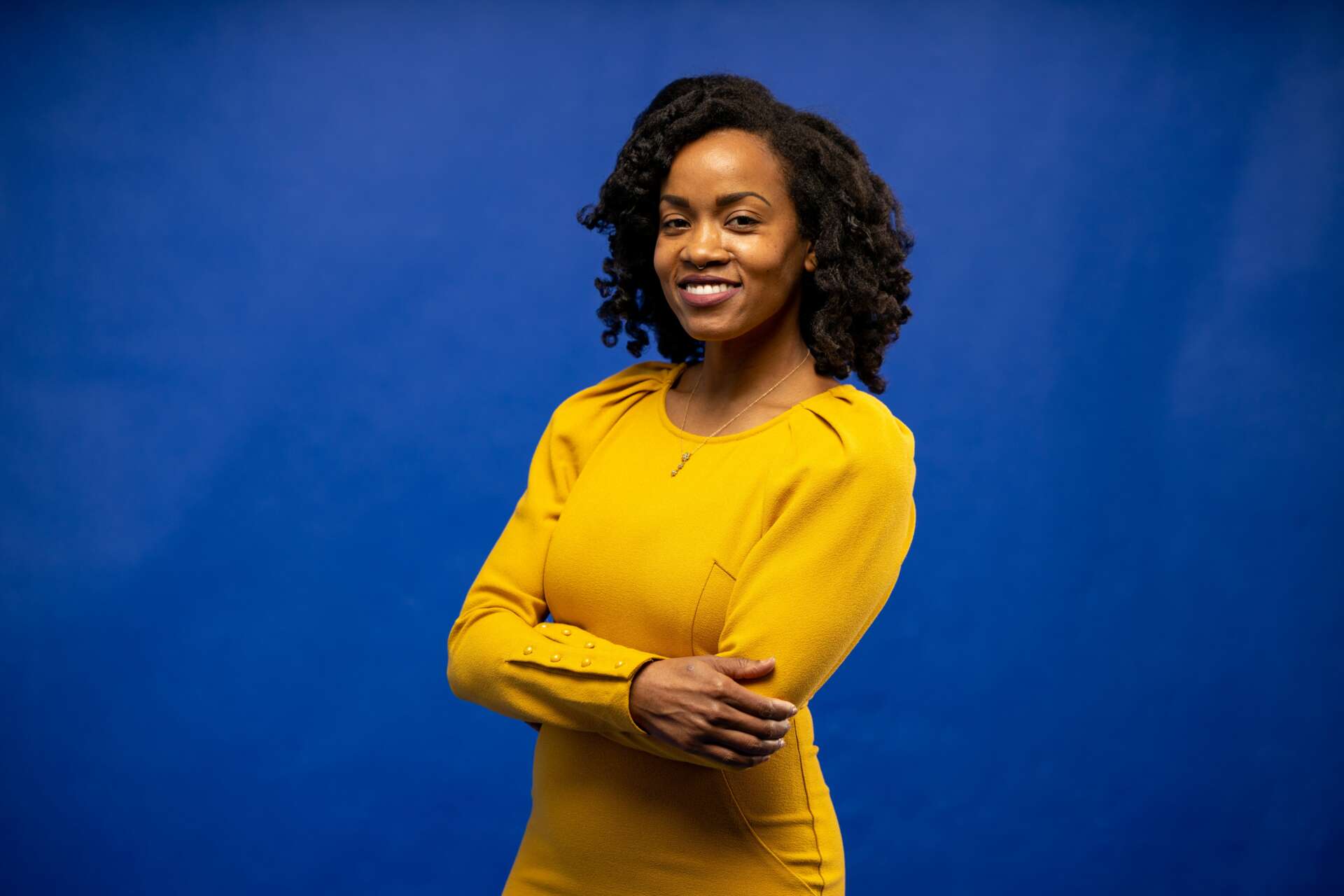

Alright – so today we’ve got the honor of introducing you to Dr. Aishah Augusta. We think you’ll enjoy our conversation, we’ve shared it below.
Dr. Aishah, appreciate you joining us today. What’s the backstory behind how you came up with the idea for your business?
I had several bad experiences related to racism and discrimination while I was shopping. The one that was the catalyst for Sepow took place summer before I started my Ph.D. program in 2016. My son was several months old and we went to a baby store because they were having a going out of business sale. I was really excited to stock up on some essentials for my son and especially being a student with no money I was happy for any type of sale let alone a close out sale! My son is trapped in his stroller and I’m gathering baby clothes, toys, health essentials, etc and when we finally make it to the checkout line, the sales clerk insinuates that I am trying to steal the stroller that my son is strapped in. To add insult to injury she asked me if I need a running total in case I cannot afford everything because she doesn’t want to ring up all the merchandise if I don’t have the money for it. So I asked her a couple questions to let her know that we both know what’s going on and clearly these are not common questions that you ask a paying customer…I wanted her to know that I knew that she was being racist and playing in my face.I finished checking out and sat in the parking lot for about 30 minutes calling multiple people because in that moment I needed some sense of justice and it was as if I couldn’t leave the parking lot until I got that. I knew that the normal route of making a complaint to the corporate office was not good enough and probably wouldn’t result in effective change. It was there as I sat and vented to loved ones about my experience that I realize that I needed to create something to solve this problem. I needed to design a solution so that people like me, who are minding their business, going about life and who are deserving of being treated like humans, did not have to deal with such insensitivity that this sales clerk exuded. In that moment, Sepow was conceived. I had was a strong sense of responsibility that I began to carry and nurture and grow within me that I have the power to create a solution. I know for a fact, that most businesses are unaware that paying customers are having a terrible experience related to diversity, equity, and inclusion. In the same way, most organizations may be unaware of how their employees are experiencing the organization related to diversity, equity, and inclusion. I also knew, and felt very strongly that I can create a solution to help organizations find out immediately when these issues come about so that they can rectify them and ultimately prevent the negative impact on their bottom line.

Awesome – so before we get into the rest of our questions, can you briefly introduce yourself to our readers.
My name is Dr. Aishah Augusta and I am a psychologically trained Healing Professional, an Oppression Relief Coach, Organizational Consultant, and DEI expert. I also serve as the Founder and CEO of Sepow and the Director of Programming at Black Excellence. I am passionate about assisting others as they heal from racial trauma. My approach to work is inspired by the words of Albert Einstein, “We can’t solve problems by using the same kind of thinking we used when we created them.” I recognize the importance of innovative thinking and welcomes the challenge of assisting clients with creating new solutions to complicated problems. I completed two Bachelor of Arts, one in Criminal Justice and one in Communications from the University of Missouri Kansas City. In addition, I received a Master’s in Clinical Mental Health Counseling from Regent University, followed by a Ph.D. in Counseling Psychology from the University of Kansas.
Sepow is a cutting-edge technological solution designed to holistically address the challenges organizations face in fostering genuine diversity, equity, and inclusion (DEI) within their ecosystems. At its core, Sepow employs a proprietary formula that generates a real-time inclusive score for businesses, offering them an immediate snapshot of their DEI health. This score is complemented by an analytical dashboard, enabling organizations to dive deep into specific areas, gauging their effectiveness and identifying potential areas of concern. Unlike traditional methods that require businesses to wait for months to glean insights from DEI initiatives, Sepow’s real-time feedback mechanism facilitates instantaneous strategic adjustments, saving both time and resources.
Our value proposition is multi-dimensional. First, we address the substantial financial impact discrimination incidents have on businesses, potentially saving them a significant portion of the $64 billion annually spent on such issues. By providing real-time insights into DEI initiatives’ effectiveness, businesses can swiftly redirect their resources towards more effective strategies, ensuring a higher ROI on their DEI investments. Secondly, Sepow’s technology acts as a bridge, mending the disconnect between recruitment CRM software and HR platforms. This seamless integration not only ensures a fluid transition of applicants to employees but also ensures consistent DEI metrics throughout the employee lifecycle. Lastly, we’ve pioneered the creation of culturally competent ecosystems within businesses. By fostering an interactive community with a feedback loop, we empower businesses to actively guide their diversity strategies, ensuring that the initiatives resonate authentically with the employees. Through these offerings, Sepow ensures that businesses don’t just adopt DEI initiatives but embed them into their very fabric, leading to a more inclusive, innovative, and harmonious workplace environment.

Learning and unlearning are both critical parts of growth – can you share a story of a time when you had to unlearn a lesson?
I had to learn a really important lesson surrounding fear. When I was in graduate school, I knew that I wanted to do something professionally that would improve society and help humanity heal. I was incredibly passionate about that. But as I progressed through the five-year program, from 2016 to 2021 a lot of stuff happened related to social justice issues especially surrounding the death of George Floyd and the social unrest in 2020. As a result, my relationship with fear begin to shift, and I became more fearful about the work that I wanted to do. I went through a period of not trusting my voice, and being unsure of how to show up in the world. It wasn’t until my second to last year when one of my advisors pulled me aside after my oral exams, and really questioned what had happened essentially because I wasn’t talking about racial trauma in the way that I usually do I was incredibly passive in my remarks, and in my defense of my research. Those remarks from my advisor were a much-needed shock for me to do a lot of internal work, and finding balance and peace related to my purpose for my life. Understanding that desiring to help humanity heal can be incredibly frightening, and that’s okay, and in that moment, I had to make peace with fear. I recognized that fear was not my enemy, but actually a friend it appears to give me good information and insight into what is taking place internally. It allows me to go inward to help heal and bring into balance the parts of me that may be scared or frightened or unsure of myself. So that was the biggest lesson that I have learned in life and I’m so grateful for it.

Can you share a story from your journey that illustrates your resilience?
I have so many stories to share about resilience. I grew up the youngest of five with a single mother, had a pretty traumatic childhood growing up in the projects on the south side of Chicago. At one point we were living in a homeless shelter for close to a year. But I’d rather talk more about my current relationship with resilience, and that is on the complete opposite spectrum of my childhood. It’s more related to being a Black woman and actively fighting for peace and rest. I love seeing this sentiment reflected it in the culture I think, even Summer Walker referred to this time in a woman’s life as a soft season. I very much connect with that, especially with all of the responsibilities that I carry. I think it’s incredibly important and very radical to strive for a soft life. So my resilience currently is making sure that I protect and pursue the softness in life.

Contact Info:
- Website: www.sepownow.com
- Instagram: psychological_justice
Image Credits
Head Shot: University of Missouri-Kansas City