


We’re excited to introduce you to the always interesting and insightful Doug Mazell. We hope you’ll enjoy our conversation with Doug below.
Doug, thanks for joining us, excited to have you contributing your stories and insights. Can you tell us the backstory behind how you came up with the idea?
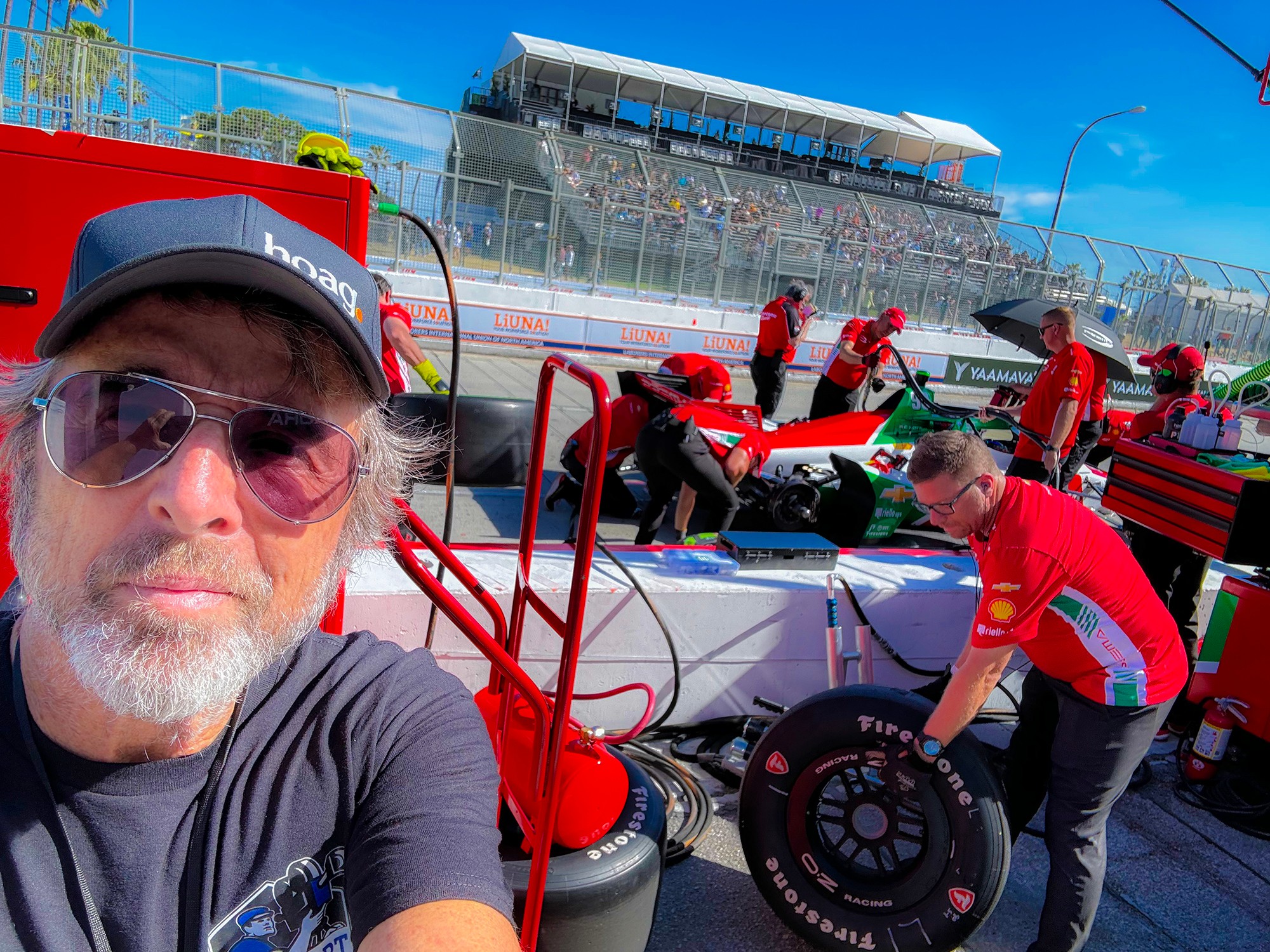
Cinematographer and commercial photographer for twenty years. Always on the lookout for interesting stories. I play tennis with an Indy car driver from the 90’s. I set up an interview with him and discovered that the mechanical and medical innovations created to save race car drivers after race car crashes eventually migrated to American streets and became our 911 emergency medical system. The more interviews I conduct the more fascinating the story becomes. We’re in the process of building our budget of $500k and we’re about 50% there. The final film will be sold to Netflix, ESPN or HBO.

Great, appreciate you sharing that with us. Before we ask you to share more of your insights, can you take a moment to introduce yourself and how you got to where you are today to our readers.
I starting seeing things at age 12 and began shooting photos. Required a few years to understand how to recreate what I saw into an exact duplicate on film. I began shooting races at Riverside. I was convinced to study computer programming in college, but a free hour to take the school newspaper altered the direction of my career. After I received my degree in photojournalism I worked for local LA newspapers as a staff photographer for one year. I then moved to Oregon with a college friend where I created my ideal fantasy schedule. I worked nights at the local newspaper shooting anything that happened after dark ij the city of Bend, I worked weekends the world class ski resort, Mt. Bachelor and then I skied every day Monday through Friday. At Christmas time I shot a ski photo that was picked up world wide over the UPI Network and eventually ran in Newsweek Magazine. (https://www.moneyfoto.com/post/going-viral-before-going-viral-existed)
After three of skiing 100 days per year I retuned to LA and landed a job in the defense industry as a commercial photographer. At night I attended class at The Art Center College of Design to study light and filmmaking. Between the technical photography I was created during the week I began to shoot professional sports on the weekends. (https://www.moneyfoto.com/la-sports-photo-1985-to-1989)
When the Cold War Ended I was one of 500,000 defense industry employees to be laid off. I immediately landed a job as a staff photographer for with Easyriders Magazine shooting motorcycles, motorcycle lifestyle products, girls in bikinis, girls without tops and hot rods. It was an interesting change of pace. After Easyriders I began to freelance for a multitude of companies and was lucky enough to travel nation wide for my corporate clients.
It was at this time I started shooting more video and film projects. I also started shooting still photos on movie sets. This turned into working as Director of Photography on 16 feature films. I continued working as a commercial photographer and also shooting commercials and writing scripts. At the moment I have ten projects in various stages of completion and one is my 50% production comp/ete “The 200 MPH Laboratory. The story that INDYCAR doesn’t want you to know.”
One of my projects is a five to ten season TV series about a man who convinces an entire city to work with him on a thousand year project.
What’s been the best source of new clients for you?
Networking
Is there a particular goal or mission driving your creative journey?
Networking
Contact Info:
- Website: http://www.moneyfoto.com
- Instagram: https://www.instagram.com/great_art_studios/#
- Youtube: https://www.youtube.com/@greatartstudios
- Yelp: https://www.yelp.com/biz/great-art-studios-irvine-2
- Other: htttp://www.200mphcrashlab.com
htttp://www.movingmarsmovie.com
Image Credits
Doug Mazell