

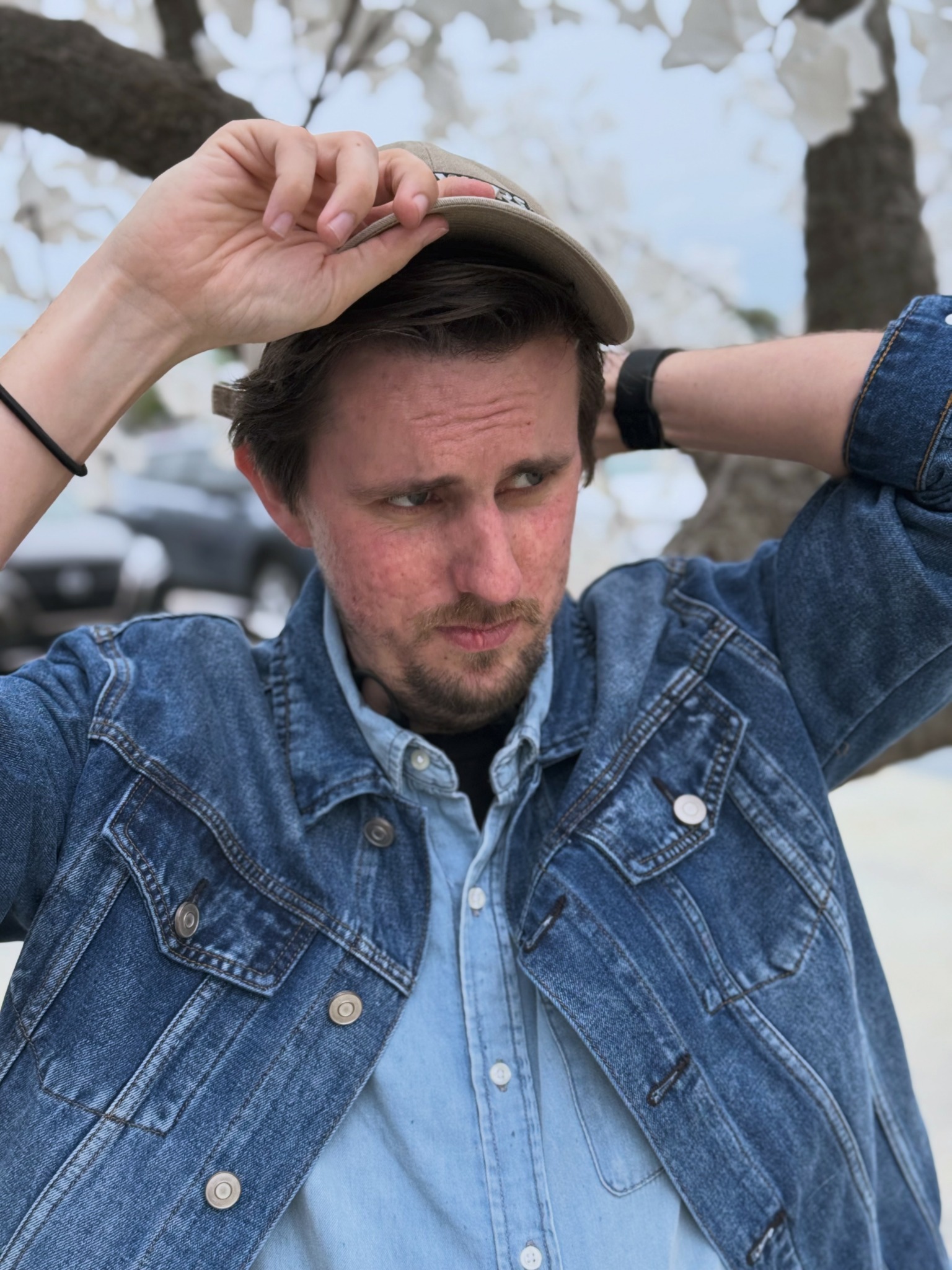

We recently connected with Dirk Sholar and have shared our conversation below.
Alright, Dirk thanks for taking the time to share your stories and insights with us today. We’d love to hear about a project that you’ve worked on that’s meant a lot to you.
There are so many projects that have had big takeaways. But in 2014, my brother Drake and my dad Duane participated in the 30 Day Zombie Film Challenge. Within those 30 days, we had to write, shoot and edit within that deadline. We couldn’t have anything prepared beforehand. As soon as the email was sent to the participants, the clock started.
This is one of those challenges where we were given a handful of mandatory items and lines of dialogue and then we had to make a zombie themed film around them. The item required was a toilet plunger, and the lines of dialogue were a zombie joke of our own creation, “You gotta get them before they get you,” and we had to choose from a list of famous movie lines with a zombie twist to it, to which we settled on “My dad always said; keep your friends close and your enemies. But, y’know, I don’t dad’s ever met a zombie.” Because we knew the majority of the entries would be action adjacent, we decided to go full comedy and turned it into a screwball comedy of two sloppy roommates that acquire a mail order zombie butler – hijinks ensue. That film was A-1 Zom-B, which is still on our YouTube channel.
What I loved about that project was the weaponization of limitation. I was a senior in high school and Drake had a day job, but with that we would still plan to shoot after school or on weekends. We also had to work around our other players such as Greg the Zombie, played by my brother’s manager from McDonald’s, and our friend and long time collaborator Adam Oliver who played the hunchback delivery man. I learned something about myself as a filmmaker during that project that has impacted me since; I write better in a collaborative space. If I’m by myself writing anything I overthink every element and I look at the film from every single department and I can’t focus on just the narrative. But in a collaborative setting (especially for a comedy) there were jokes and scenes that we all contributed to when writing this film. No one’s idea was overshadowed by another, you work together to improve the other’s idea, or the best part where you both make the discovery at the same time and rush to write it down.
When it came to filming, even the simplest of scenes had to be done in a timely manner. If writing took less than a week, and post is always going to be place where problems arrive, then we had to shoot fast. That’s the other big thing with these challenges, you start to learn what corners you can cut creatively or learn and discover new ways to create something and still be able to deliver an entertaining piece of media.
As a standalone film, it’s one of my favorite pieces I’ve gotten to work on. I loved doing comedy around that time and we still didn’t find ourselves doing horror as much – even though we were still under the monicker “Death Lake Productions,” named after our first zombie feature film we made in high school.
We weren’t the only ones who loved it, thankfully. The contestants of the challenge were invited to a 2 day screening where all of our work was shown on a big screen in a local movie theater in Tampa. We saw an array of incredible films that ranged from drama, horror, action and even comedy, but they more or less still stuck to the tropes of a zombie film – until our screening. When the audience heard how we re-contextualized the line “you gotta get them before they get you,” the entire room went “oooOOOOOoohhh” in chorus. It was one of the many benefits of getting to see your work in a theater setting you don’t get making stuff to go online – and it especially meant something for us as youths wanting to get into this industry.
After the screening had finished on the second day it was time for the award ceremony. For a festival focused on a very specific sub-genre, we were graced to walk away with two awards: Best Screenplay, and the craziest of all, Best Zombie. With what felt like 100 short films with zombies, they loved Greg the mail order zombie butler the most.
Anytime that I would promote Death Lake Productions at a convention, I would always include A-1 Zom-B in our lineup – even if it is over 10 years old, it still holds up in my eyes.
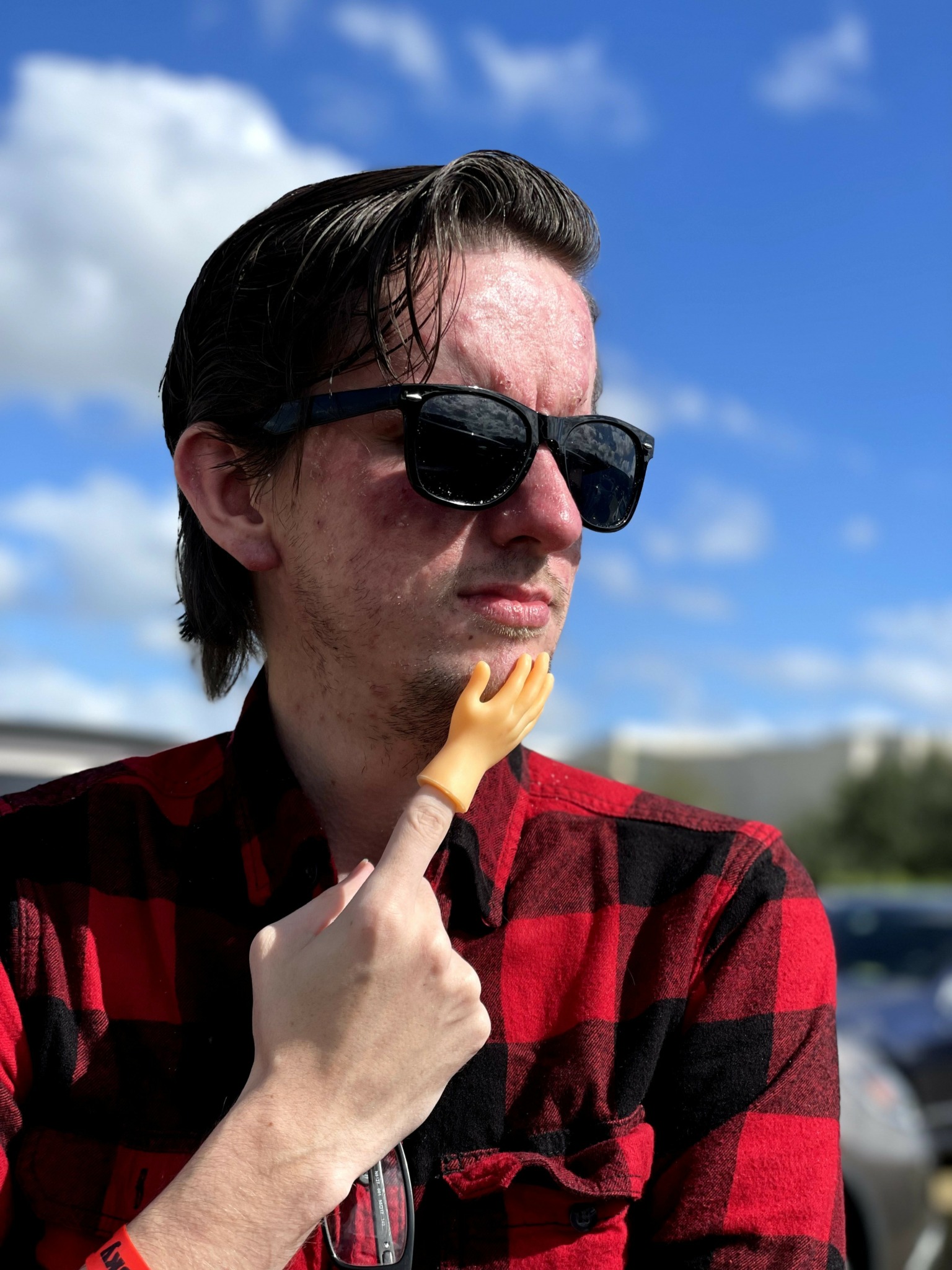
As always, we appreciate you sharing your insights and we’ve got a few more questions for you, but before we get to all of that can you take a minute to introduce yourself and give our readers some of your background and context?
My name is Dirk Sholar. I’m a Florida native—born in Miami, raised in Lakeland, and spent a wonderful seven years of my childhood in Kissimmee with my dad Duane, my mom Donna, and my brother Drake (yes, we’re all D’s!)
I couldn’t tell you exactly what the “lightbulb moment” was that made me want to be a filmmaker. As a little kid, I just loved movies, TV shows, and cartoons. Before I was even five years old, I knew how to operate a VHS player. I was raised on everything from VeggieTales, Batman: The Animated Series, classic Looney Tunes, and Scooby-Doo! to Indiana Jones (Temple of Doom was my favorite), the original Star Wars trilogy (pre-special edition), Universal Monsters, and ’50s sci-fi flicks like War of the Worlds, The Time Machine, and Invaders from Mars. Clearly, I had an early love for action, horror, sci-fi, and comedy. I didn’t realize it at the time, but I was essentially being babysat by George Lucas and Steven Spielberg.
I was homeschooled for most of my childhood by my dad, and my only classmate was my brother, who is two years older than me. My dad did his best to make school fun. On Fridays, we would do science experiments, visit museums, or do art projects—like a comic strip series we made called Bug’s Eye View (or Bugged Eyed View, according to my brother, so maybe it was two different comic strips).
One year, we started learning about animation. This was the early 2000s, mind you. YouTube wasn’t a thing yet, and everyone hosted their Flash animation on their own websites. Through a lot of research, we stumbled into the world of online cartoons—predominantly Homestar Runner—and we were hooked. Combining that style with our love for VeggieTales, we created a handful of cartoons about anthropomorphic crayons whose colors showcased their unique personalities and shortcomings, called Crayon Cronies. Armed with a cheap microphone, Audacity, and our animation program of choice, Moho Studio (later renamed Anime Studio), we were off making cartoons for a few years, sharing them with friends and family. Around this same time, we also started playing around with Windows Movie Maker to assemble our cartoons. Looking back, that was really our first true introduction to the art of editing—cutting clips together, syncing audio, and figuring out pacing. It was a massive creative turning point for us, but like all good things from childhood, it eventually ran its course. Between moving back Lakeland, starting public school and the inescapable reality of puberty absolutely ruining our youthful cartoon voices, the Crayon Cronies were officially put back in the box.
Now it’s 2007, Drake started high school and I entered middle school – we were now in public school and we weren’t classmates anymore. The transition was too jarring for me, so I went back to homeschooling for two more years. My dad remained my teacher, and on Fridays, he would find online courses and workshops for videography. For my birthday that year, I got my first camera: a Panasonic PV-GS320. It shot on DV tape, and I filmed everything with it—lightsaber fights with my brother, really dumb unscripted sketches, and overall just playing around.
YouTube has been around for awhile and was evolving into the “Viral Era” – becoming the hub for online entertainment: sketch videos, action content, music videos, and short films. By the time 2010 rolled around, zombie movies were the hottest thing in theaters. With Drake’s group of friends in high school, my group of friends in middle school, and the help of our dad, we decided after years of goofing around with the camera, it was time to get serious and be filmmakers. It was time to make zombie movie.
After numerous script drafts between us Sholars and our friend Graham, we finally settled on an idea called Death Lake. The plot followed a group of teens going camping in the woods who cross paths with a neighboring group of campers infected with zombie blood after a freak hunting accident. It’s up to the head camp counselor to guide the uninfected to safety and warn the city that the water supply is contaminated, all while being hunted down one by one. It was simple on paper, but an endeavor that made a lasting impression on us all.
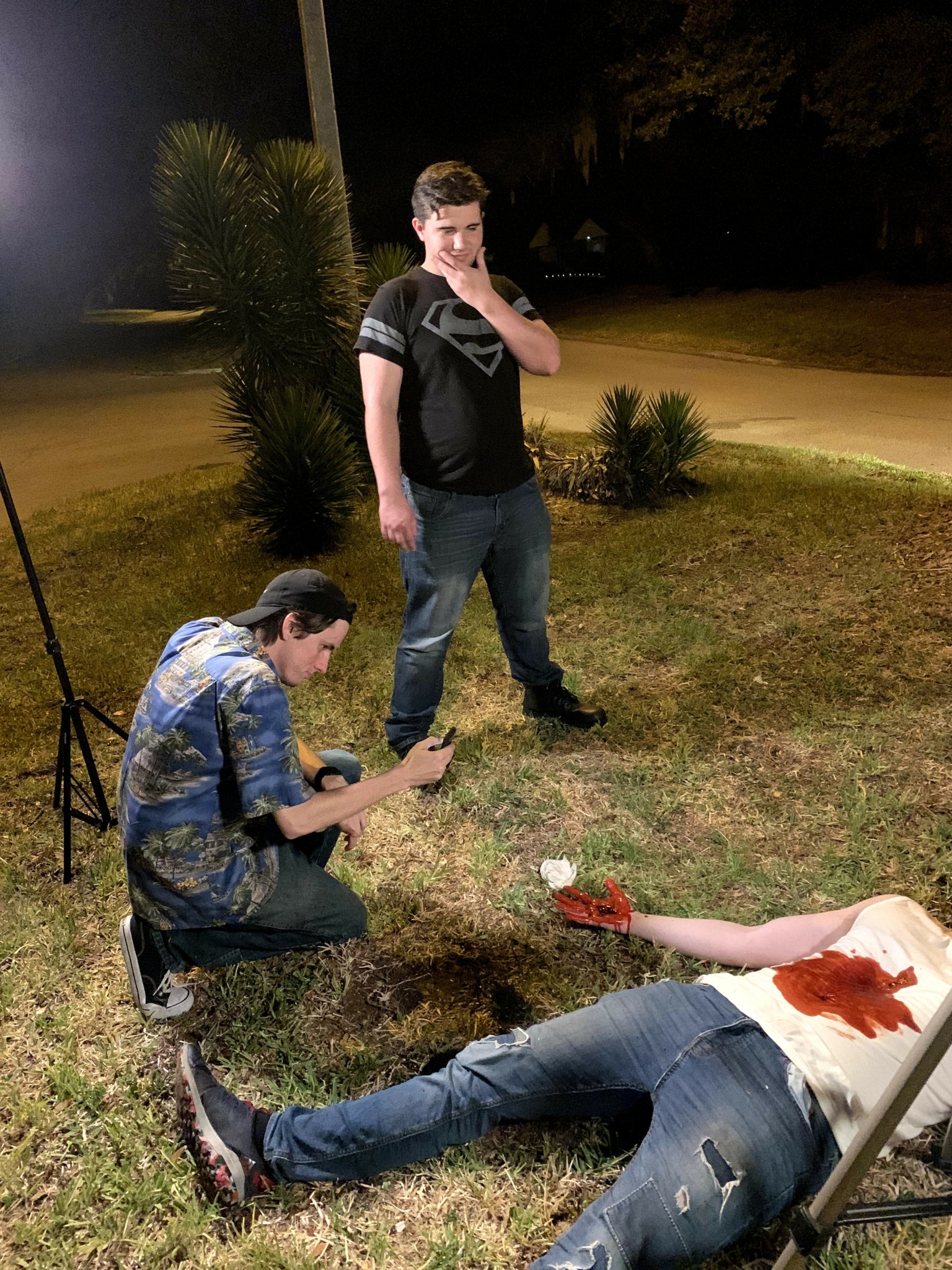
It was the classic tale of eager high schoolers heading out to make a movie in the woods. All we had were airsoft guns, camping gear, our scripts, and our dad acting as our ringleader, trying to wrangle a bunch of teenagers to focus. While we had our hiccups with casting conflicts, scheduling mishaps, the Florida heat, and local wildlife, we still managed to create some awesome special effects. We made exposed intestines out of pantyhose and gelatin, and a severed leg out of raw steak with our friend Justin’s actual leg buried in the dirt.
We had everything in the can and ready to edit. However, of all the tools I mentioned we had at our disposal, I didn’t mention audio equipment—because we didn’t have any. Who knew audio was supposed to be recorded separately? Not us!
We made the film with what we had, and we thought we had a ton of footage. But remember, my birthday camera shot on DV tape. The thing about tape is that it will record over itself if you aren’t careful—or if you’re a bunch of morons in the woods. We lost an entire tape of scenes because we hadn’t backed them up. We figured we could just go out one weekend and shoot pickups, right? Wrong. By then, it was fall, the leaves were dead, and I had recently shaved my head to cosplay as Tallahassee from Zombieland. We had to wait for the leaves to grow back—and my hair!
The following summer, we finally shot our pickups, and the film was finally finished. We screened it in a presentation room at the Imperial Swan Hotel that looked like a mini movie theater. The cast showed up two years after we started to witness our hard work come together.
By 2011, we wanted to put the film on YouTube. I had noticed a trend where established creators put their big film projects on a separate, dedicated channel while keeping their short-form sketches on their main hub. My brother and I already had a channel where we goofed around, but Death Lake was our big project; it needed its own home. We settled on the channel name DeathLakeMovie. We promoted the heck out of it at school and at a local Halloween event called Zombiefest.
Before we knew it, DeathLakeMovie was booming, while our original channel, ShoBro Productions, was stagnant. I still remember seeing a comment on the movie saying how they had received a flyer from us at Zombiefest (guerilla marketing payed off!) We decided to abandon ShoBro, upload all future videos to the DeathLakeMovie channel, and officially rebrand ourselves as Death Lake Productions. This had its perks, but also its drawbacks.
For some reason, we never actually wanted to make pure horror films. We did action, comedies, and the occasional thriller, but we never truly committed to horror—which was ironic given a name like Death Lake. During college, Drake wanted to do freelance videography work for his friends under the company name, but who was going to hire a video team with “DEATH” in their title? There was some internal debate over it, but we kept using the channel for our sketches.Years went by, and Drake answered his calling to join the military—he wanted to be in the Army just as badly as I wanted to be a filmmaker. So, the keys to the Death Lake car were handed down to me. I had just graduated high school and was ready to conquer the world at 19! I went on to do a couple of projects with my dad. One was a dark superhero story heavy on VFX (which I was terrible at), and the other was an overly ambitious video game crossover short called Aftershock (BioShock meets Fallout) with even more VFX that I was terrible at doing. These projects marked a notable shift for us. We left Aftershock on a cliffhanger, but as we developed the sequel, the story got too dense. Feeling burnt out from the heavy post-production work, I wanted to pivot to something smaller and fun.
I had an idea for a horror short about a VR headset that messes with the player’s mind until they can’t tell the difference between virtual reality and actual reality. I called it VR for a while during development, until a college classmate inspired me to give it a proper horror title. With the help of my friend Dominick Gard, we wrote a script titled Violent Realm. The story follows a boring game night that turns unforgettable when a friend brings over a VR headset and makes everyone play a sketchy horror game he found online.
As always, we filmed at our friend Adam’s house because it was spacious enough for the cast, crew, and gear. This became my most fulfilling project since A-1 Zom-B. While that older short scratched my comedy itch, Violent Realm made me realize just how fun the horror genre is for storytelling.
Looking back, horror wasn’t in a great place in the early 2010s. It was dominated by Paranormal Activity, Saw, found-footage knockoffs, torture porn, or subpar remakes. On top of that, I had been traumatized by The Ring as a little kid and used to be terrified of the black void of a powered-off TV screen. Because of that, I looked down on horror and stayed away from it. I still loved monster and zombie movies, but in my mind, those were action films—I didn’t consider them true horror.
That all changed when I discovered a brilliant feature called Oculus, directed by Mike Flanagan. My brother Drake had taken a date to see it and came home gushing about it. When I watched it, all my biases against horror evaporated. I was enthralled. The characters were complex and emotionally grounded, the scares were smart and effective, and the ending left me jumping out of bed in absolute disbelief. I was gobsmacked. I never realized you could make a horror movie that was mature, terrifying, and fun all at once, without it feeling cheap or mean-spirited. That was the film that inspired me to make Violent Realm.
After a swift production cycle from cradle to grave, I promoted the film on social media. But I knew this project was different—it needed a bigger stage. Enter the Spooky Empire Horror Film Festival. It was a massive horror convention with a film festival attached. It was a perfect fit for me because I absolutely love conventions!
The film was accepted, and I ended up winning the Florida Spotlight Award. This marked a major paradigm shift for both myself and Death Lake Productions. We had finally found our footing and our audience: we were horror filmmakers. The deeper I dove into the genre, the more stories I wanted to develop. Slashers, superheroes, psychological horror, horror-comedies—the most mundane situations can become terrifying if you twist them just right. Even though our overly ambitious video game crossover sequel never got off the ground, we finally knew exactly who we were.
Is there a particular goal or mission driving your creative journey?
I graduated from Polk State College, where I was a part of their Digital Media Program. I mastered the Adobe Suite—Photoshop, InDesign, Premiere, After Effects, Audition, and SpeedGrade—and learned the fundamentals of media management and production gear, from lighting to audio and cameras. I also worked closely with the lab assistants as a news anchor for their weekly campus report all four years I was there. Every year at the end of the spring semester, the department hosted the Digital Media Showcase, where graphic design, audio, and video students showcased their work and competed for awards. For a small department, we made a massive splash on campus; everyone knew who we were!
I absolutely loved the sense of community and family we built there. We would hold potlucks for post-showcase celebrations and host Christmas gift exchanges. I was a part of that family, and I remain close with them to this day. I’ve always wanted to replicate that experience and bring that same community-driven learning environment to the public. I never wanted to go to a traditional film school because, from the war stories I’ve heard, it always felt like an outdated, almost predatory machine. The difference with Polk State was that you were holding the gear and playing with the software by week two. Some of those corporate institutes make you analyze film for an entire semester before you’re even allowed to touch a camera.
I want to make feature films, but it takes a village to do this kind of work. There are so many incredibly creative people living in our neighborhoods and cities, yet we often don’t even know they exist. For example, I was introduced to my friend Nathan Swehla (of the YouTube channel NatesFilmTutorials) through an online video competition hosted in the UK. It literally took two guys in England to point out to me that my next great collaborator lived just down the road!
While I am still actively developing short films and features with my ever-growing team, I am also in the process of building an open-community computer lab. My goal is to take everything I learned and experienced at Polk State and turn it into a public-access space. We plan to make this venue a hub for networking mixers and a resource center where up-and-coming artists can produce videos, podcasts, photoshoots, and more.
We want to welcome everyone from high school and college students to independent artists. We are also actively developing programs to provide at-risk youth and veterans with opportunities to express their voices and find career paths through this studio project. We have teamed up with the Lakeland Arts Association, and as of writing this, we are working hard to get the physical space up and running in the near future.
For you, what’s the most rewarding aspect of being a creative?
Getting it done and crossing the finish line. There is nothing like putting your work in front of an audience that shares your deep love for the cinematic medium. Seeing all the stress, tears, anxiety, and long nights finally grow legs and walk is incredibly rewarding. I love having my peers support or critique me (lovingly), meeting new people through the work, and continuing to expand my community over a shared love for movies.
It’s truly not about the money. In all my years of doing this, I’ve never made a dime off the films themselves—unless you count me bugging the internet to buy merch from my online apparel stores. I go to my day job to make money, and then I spend that money on cool gear to make more movies. I’ve learned to love this purely for the craft. Yes, I know there will come a time when the financial rewards follow, but I have to put the work in first and love film for what it is—flaws and all.
Contact Info:
- Instagram: @DeathLakeProductions
- Youtube: Death Lake Producitons
- Other: While Death Lake is our horror branch, we’re also in the works of launching The Spilled Lunchbox Network. A multichannel network for our team to be able to create their own art and collaborate with the rest of the team that falls outside of horror. A chance to experiment in other mediums, tell unique stories and entertain. More will be coming soon with SPLB
Image Credits
Daniel B. Carrion, Alexander Hoff, Sarah Lindsey.