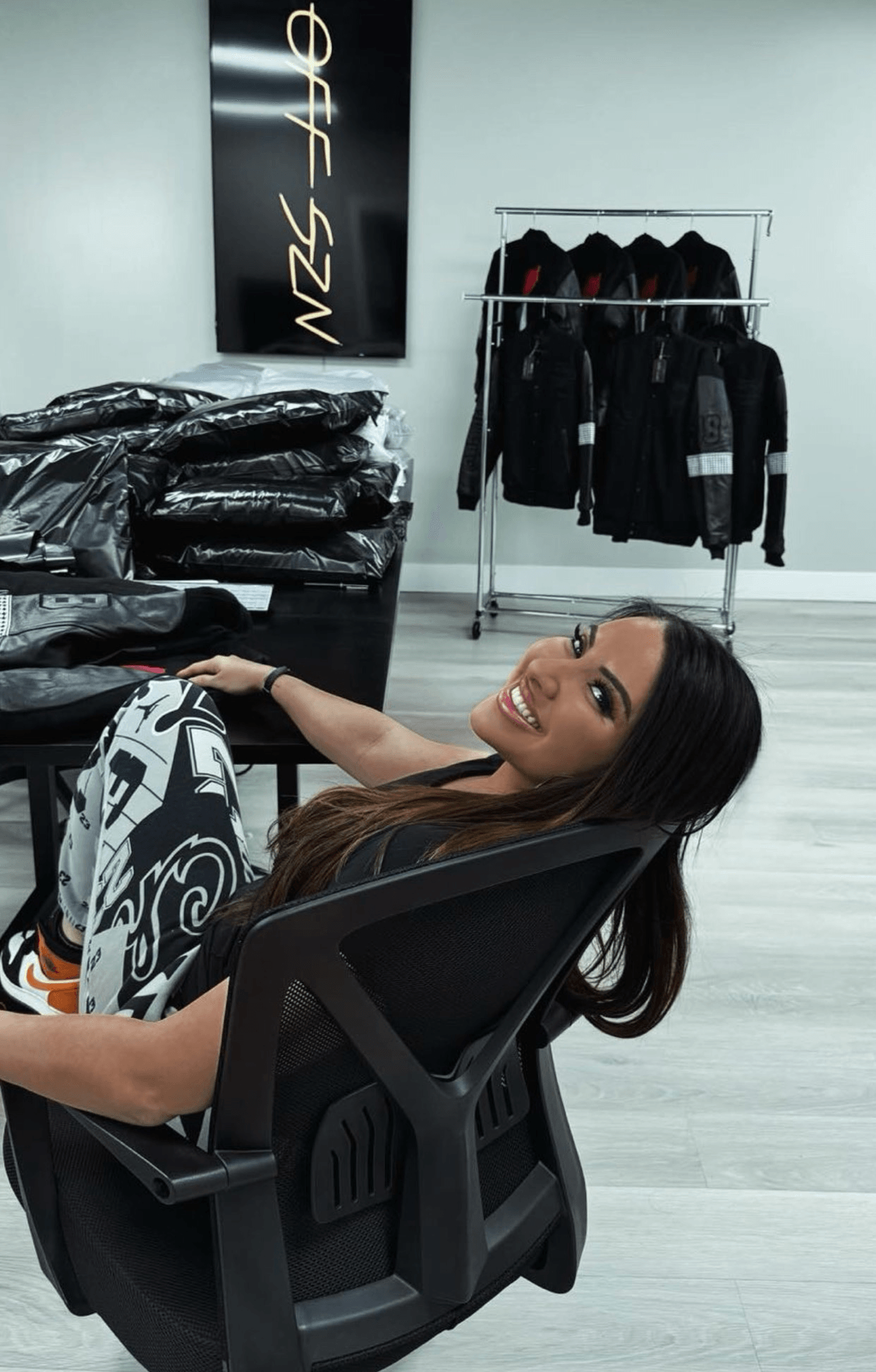

We were lucky to catch up with Dee Sader recently and have shared our conversation below.
Alright, Dee thanks for taking the time to share your stories and insights with us today. Can you talk to us about how you learned to do what you do?
I didn’t go to school for design, I’m actually a college dropout, and I say that with pride. Everything I know came from hands-on experience, shadowing colleagues, teaching myself, and what I like to call “YouTube University.”
That said, looking back, I do think there’s value in formal education. Even taking a class at FIT to learn the fundamentals would have saved me a lot of trial and error. I taught myself Illustrator the hard way. Beyond the technical skills, understanding the fashion industry and the production calendar is essential if you want to grow and sustain a career.
As for obstacles, the biggest one was myself. I struggled with imposter syndrome for years. I had friends who went to school specifically for this field and ultimately didn’t end up in the industry, and that comparison sometimes got in my head. My pride and ego have tripped me up more times than I’d like to admit.
If there’s one lesson I’ve learned, it’s that curiosity is your most valuable skill. Stay open. Stay teachable.
Great, appreciate you sharing that with us. Before we ask you to share more of your insights, can you take a moment to introduce yourself and how you got to where you are today to our readers.
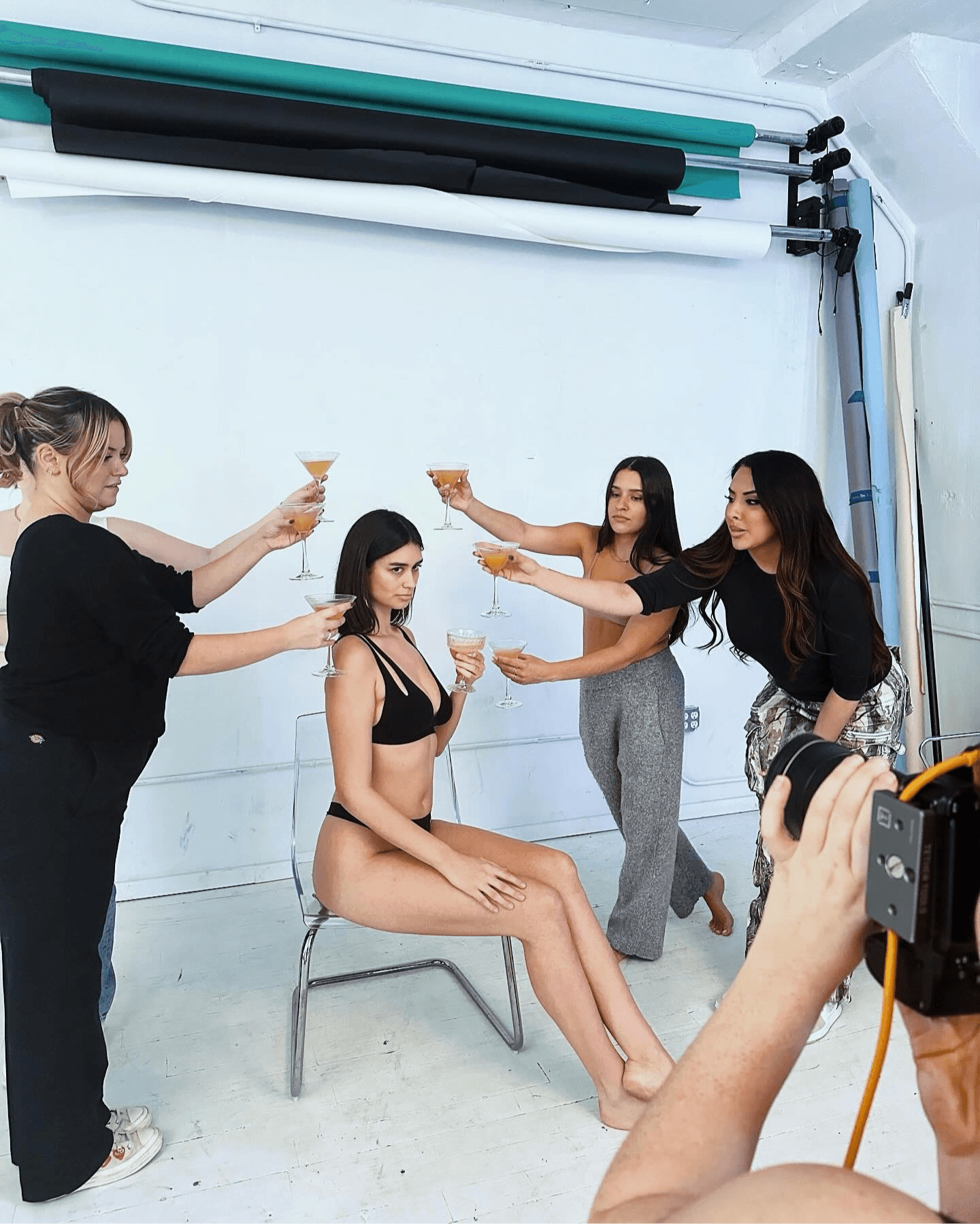
I’m a Celebrity technical designer, though I like to describe myself as Cinderella’s mice. Without them, she never would’ve made it to the ball. Designers have the vision. Brands have the platform. But without someone translating that vision into something factories can actually produce, that dress never gets made.
That’s where I come in.
I create technical packages — essentially the blueprints of a garment. I take a concept or sketch and turn it into a fully executable plan: detailed measurements, construction methods, grade rules, fabric and trim specifications, fit intent, and production call-outs. I work closely with designers, founders, and creative directors to ensure their ideas don’t just look beautiful on paper; they fit correctly, function properly, and can be manufactured at scale without losing integrity.
My role lives at the intersection of creativity and precision. I guide projects from concept through production, overseeing fittings, refining patterns, solving construction challenges, and communicating directly with overseas factories to ensure quality and consistency. I’ve partnered with major brands and high-profile celebrities to launch and develop apparel lines, translating their creative vision into commercially viable collections.
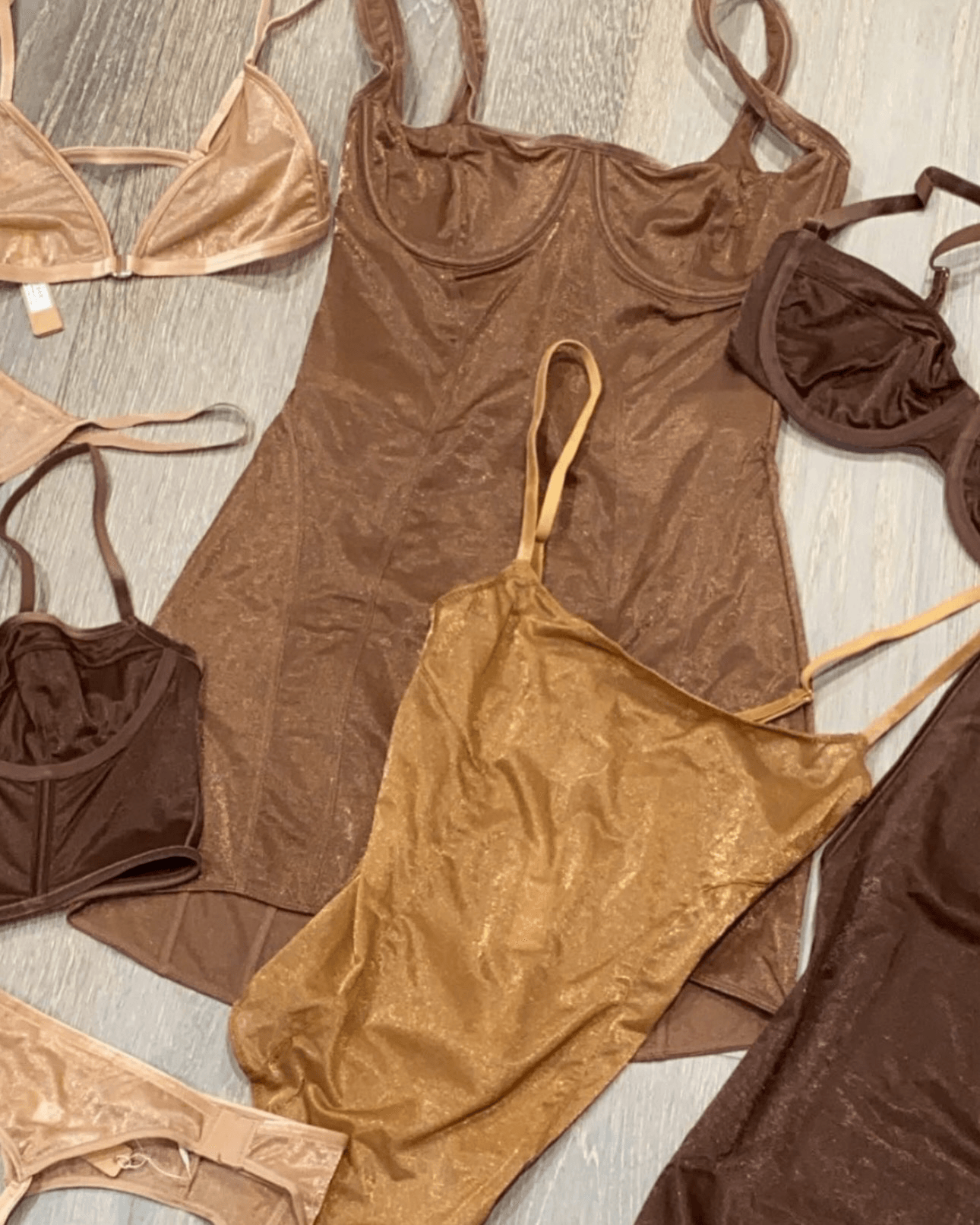
One of my proudest career milestones was being recruited to help launch Skims and working alongside Kim Kardashian. That experience introduced me to the celebrity side of the fashion industry and solidified my reputation as someone trusted to execute at the highest level. It showed me that technical design isn’t just behind-the-scenes work — it’s foundational to a brand’s success.
What sets me apart is that I don’t approach projects differently based on status. Whether I’m working with a globally recognized name or a mom of two launching her first small collection, I bring the same level of passion, detail, and professionalism. I understand that for some clients, this is a business expansion — and for others, it’s a lifelong dream. Both deserve excellence.
I’m also proud of the fact that I didn’t follow a traditional path into this industry. My expertise was built through experience, relentless curiosity, and years of refining my craft. That journey has made me adaptable, resourceful, and deeply solution-oriented. When challenges arise — and they always do in production — I don’t panic. I troubleshoot.
If there’s one thing I want potential clients and collaborators to know, it’s this: I care deeply about the integrity of the final product. I don’t just make clothes, I protect the vision behind them. My job is to ensure that what you imagined is what ends up in the customer’s hands.
Because at the end of the day, every Cinderella deserves to make it to the ball.

What do you find most rewarding about being a creative?
The most rewarding aspect of being a creative — especially as a technical designer — is seeing something that once existed only in someone’s imagination become real, tangible, and wearable.
There’s something incredibly powerful about taking a two-dimensional idea, a sketch, a mood board, a late-night voice note, and turning it into a garment that fits beautifully, moves correctly, and lives in the world. I get to sit in that space between dream and execution. That transformation never gets old.
What makes it even more meaningful is that fashion is emotional. The right fit can change how someone feels about their body. The right construction can make a founder feel validated in their vision. The right launch can shift someone’s entire career. Knowing I played a role in that — even if I’m behind the scenes — is deeply fulfilling.
I also love the problem-solving aspect. Creativity isn’t just about aesthetics; it’s about solutions. How do we engineer this neckline so it lays flat? How do we adjust grading so it fits inclusively from XS to 5X? How do we maintain quality while scaling production? Every challenge sharpens the craft.
But above all, the most rewarding part is impact. Whether I’m supporting a globally recognized brand or a first-time founder, I get to help people bring their ideas to life. And there’s nothing more satisfying than watching someone hold their finished piece and realize, “This is real.”
That moment…when vision becomes reality, is the magic.

We’d love to hear a story of resilience from your journey.
Early in my career, I was brought into a project for Meek Mill, that was already behind schedule. The tour was in two months, and samples were coming in… wrong. Measurements were off, the fit wasn’t aligning with the intended silhouette, and the factory communication was fragmented. Everyone was frustrated, and I was the technical designer without the “formal degree.”
I remember sitting in that first fit session feeling the weight of imposter syndrome hit me hard. There were people in the room with fashion degrees, big titles, and louder voices. For a moment, I questioned whether I even deserved to be there.
But instead of shrinking, I went back to the fundamentals.
I spent nights reworking spec sheets, correcting grading rules, and rewriting the technical package so there was zero ambiguity. I got on early-morning calls with overseas factories, clarified construction details stitch by stitch, and rebuilt the measurement charts from scratch. I didn’t try to prove I was the smartest in the room…I focused on being the most thorough.
The next round of samples came in almost perfect.
That project went on to launch successfully, and made it on his tour. What stayed with me wasn’t just the win, it was the shift in my confidence. I realized resilience isn’t loud. It’s not dramatic. It’s choosing to stay in the room when you feel like you don’t belong. It’s outworking your doubt. It’s turning insecurity into precision.
There were many moments in my journey where I could’ve let not having a traditional path define me. But each challenge forced me to sharpen my skill set, deepen my curiosity, and trust my experience.
Resilience, for me, has been less about surviving setbacks and more about refusing to let them decide my value.
Contact Info:
- Instagram: deeszn