

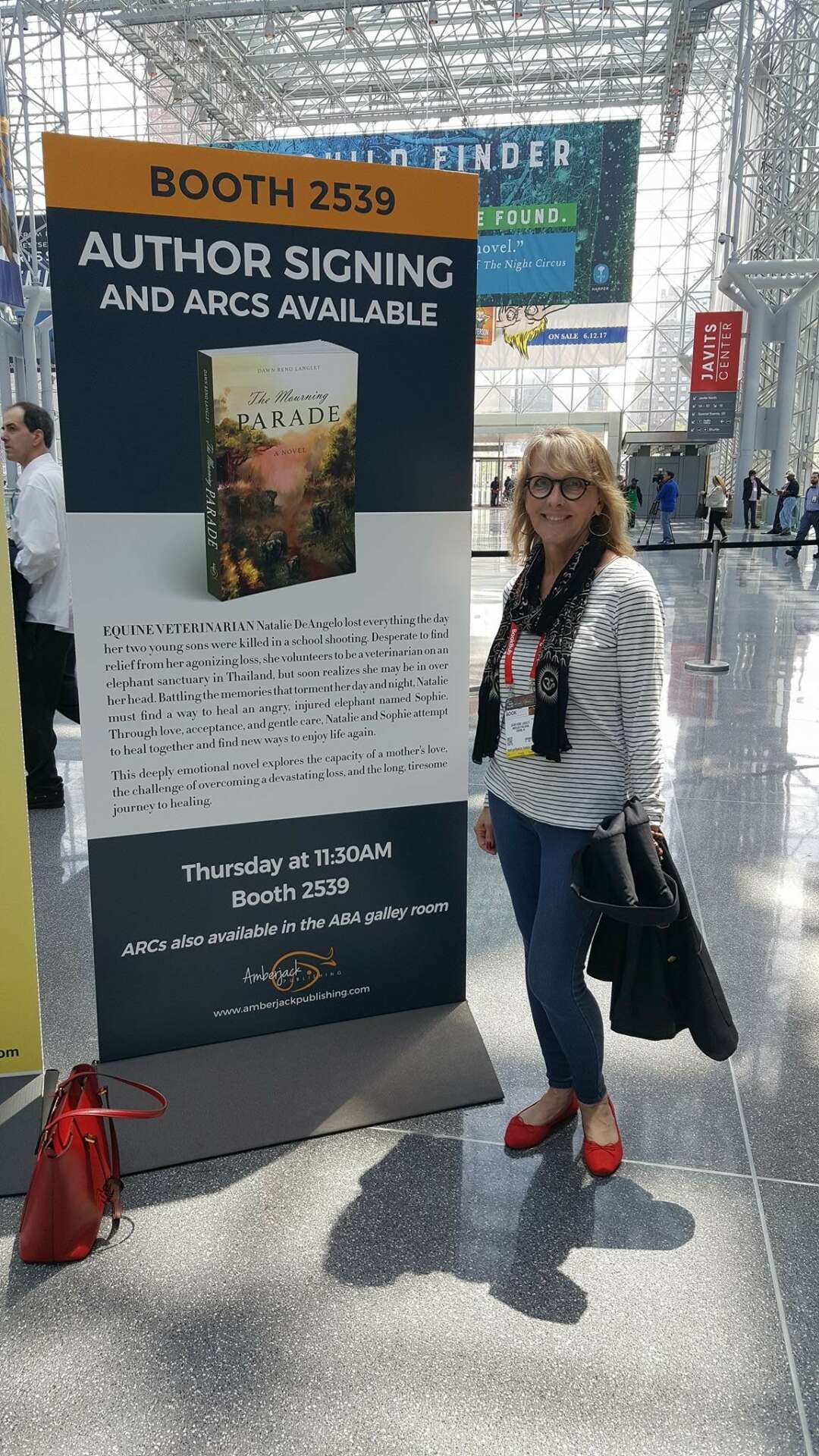

We recently connected with Dawn Reno Langley and have shared our conversation below.
Hi Dawn, thanks for joining us today. Have you signed with an agent or manager? Why or why not?
I’ve signed with six agents during my career.
Awesome – so before we get into the rest of our questions, can you briefly introduce yourself to our readers.
My life has always been full of stories — written and spoken. I don’t remember a time when writing wasn’t part of my life. As a child, my favorite place was the local library, and I’d pick up the maximum number of books I could withdraw (ten) and carry them home, stopping at my grandmother’s place along the way. I think I read every book that little library held. When I graduated to the imposing and magnificent main library on Broadway, I found heaven. Books have held that magic for me ever since.
When I was nine, I wrote an essay on the threat of nuclear war, and the local newspaper published it. For years, I thought I was 11 when that article came out, but when I returned to my hometown many years later to launch one of my novels, the editor of the newspaper brought the original copy to me, and I was shocked to see that I was only in third grade when that essay was published. I’ve been writing/publishing ever since.
Throughout my career, I’ve irritated agents and editors because I write everything. Children’s books, novels, nonfiction books, essays, articles, blogs, poetry, short stories — you name it. I can write a sentence, and I’m fascinated by stories, so I try to write them all. Unfortunately, the publishing industry wants writers they can easily understand and sell, not chameleons who write (and publish) everything.
I’m most proud of that fact: that I write and publish everything. I’ve been lucky in that respect, but I think it’s more than that. This business isn’t about luck, it’s about sticking with it and never giving up.
I would love for my fans to “get something” from my writing. When a reader tells me that they’ve remembered details about elephants because of my novel The Mourning Parade, nothing makes me happier. When someone says their life was changed by some information I provided, I figure I’ve done my work as a writer. I want to speak about important matters in this world and make a difference, which is why I keep my fingers on the keyboard and write about issues I care about.
Let’s talk about resilience next – do you have a story you can share with us?
In the writing world, we face rejections every day. Sometimes those rejections bring us to our knees, and sometimes they close the doors completely. When writers succumb to the defeat that comes hand in hand with rejection, they will not succeed. Early on in my career, I learned that rejection was part of the game if I wanted to become a writer. Publishers would send nice notes that ended in, “but we can’t use this piece at this time” (or something similar). Often, that nice note was forgotten, because of the “but” at the end of the sentence. I almost gave up more times than I can count.
My first books (The Jenny Books, a children’s series) came to fruition somewhat easily. My boss introduced me to a publisher, and before I knew it, I had children’s books in bookstores. I had no idea what I was doing, at that time, but I did know that I wanted to continue.
After the children’s books came out, I began writing as a freelance journalist for newspapers and magazines throughout the United States. Often, a story idea would go through several iterations before it found a home. I learned quickly that in order to gain an acceptance, I often saw at least half a dozen rejections. Sometimes more.
At that point, I decided to give myself a certain period of time to “mourn” a rejection, then I’d send my idea right back out to someone new, and play the waiting game once again. More often than not, those ideas ended up being accepted, but sometimes, I had to give up and start anew.
Each rejection is difficult, but I think that when one of my agents (who sold six books for me in one year!) said that she couldn’t work with me because I was “hard to brand,” I felt more defeated than at any other point in time in my career. I cried for days, told my husband that I didn’t know if I could write anymore, and felt like I might end up a waitress for the rest of my life.
I couldn’t quit, though. Writing is who I am, and if it meant that I was only going to write for myself, so be it. About a week after that agent let me go, I took my notebook and went on a hike. That day, I wrote a poem that was published a month later, and for the first and only time, I was paid for my poetry.
That day, I knew I’d never give up again, and I haven’t, even though the publishing industry has changed so much I hardly recognize it from those first days of freelancing.

What can society do to ensure an environment that’s helpful to artists and creatives?
In my TedX talk on How Creatives Can Save the World a few years ago., I discussed the ways creativity works in society. We creatives are not only here to entertain. We present new ideas to the world around us, opening up possibilities and making suggestions for change. When we write about an issue such as elephant abuse (as I did in my novel), we might reach people who would not otherwise learn about a subject. By telling a story, we enact the age-old, around-the-fire storytelling that marks us as human beings. It’s the same with music and dance. Creativity is what makes us human, and it’s the venue that we can use to spread information in a non-threatening manner.
I believe that supporting artists and creatives means providing financial support as well as creative opportunities for those in the arts. It means giving space to the arts and introducing children to that field as soon as possible. Giving creatives a voice in our world is vital to our success as human beings.
Creatives are not only those writers, artists, musicians, and dancers who entertain us. Creatives are engineers who build highways from mountain to mountain, they are doctors who think outside the box to heal the sick, and they are the leaders in designing the world around us. It’s our responsibility to take care of the creatives so that we can have a thriving creative ecosystem. Without support, any ecosystem will die. It’s no different. 


Contact Info:
- Website: www.dawnrenolangley.net
- Instagram: @proflangley
- Facebook: /dawn.r.langley
- Linkedin: Dawn Von Wald, PhD
- Twitter: @proflangley
- Youtube: @DawnLangley
- TikTok: @dawnrenolangley