

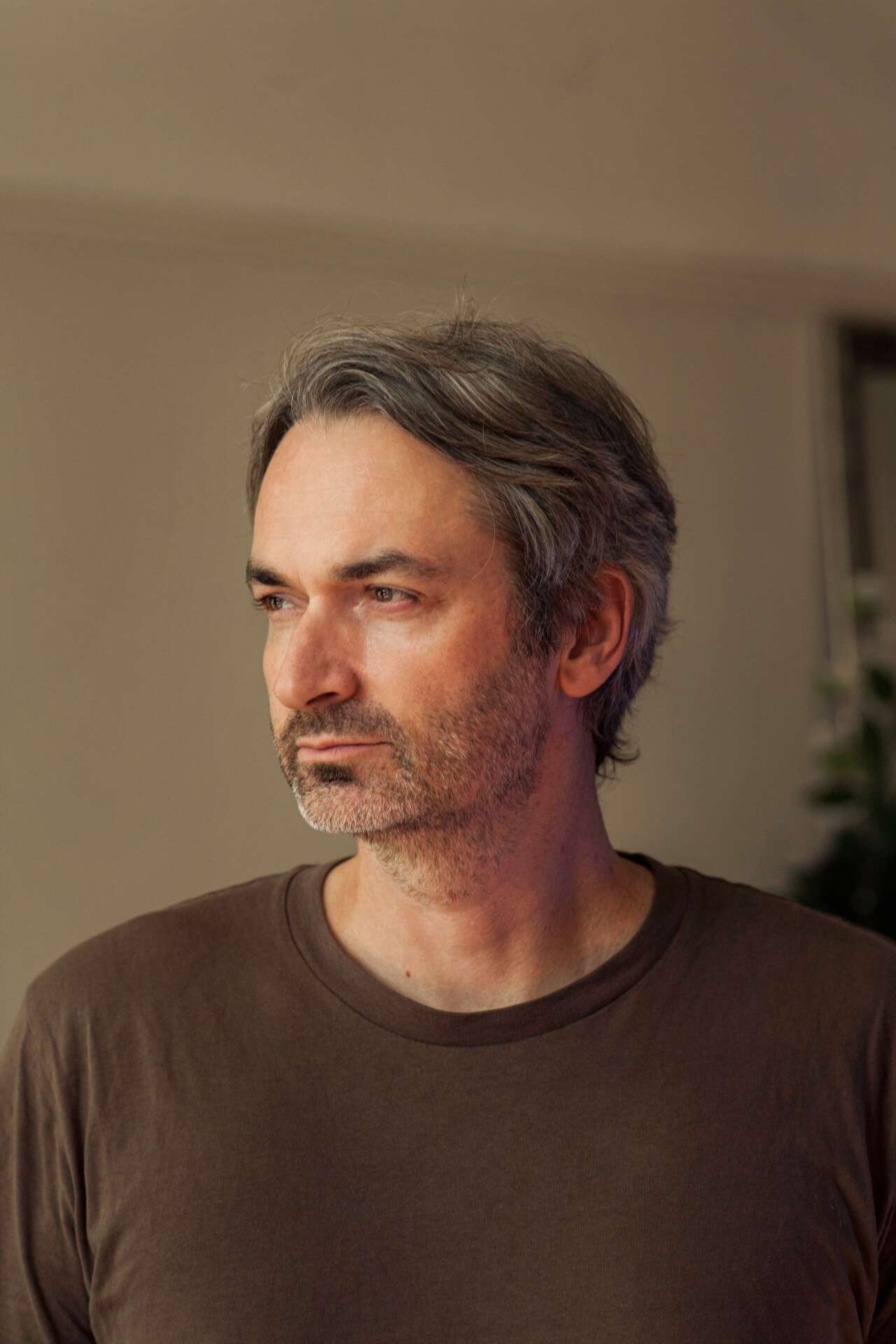

We caught up with the brilliant and insightful Christopher White a few weeks ago and have shared our conversation below.
Christopher, looking forward to hearing all of your stories today. How did you learn to do what you do? Knowing what you know now, what could you have done to speed up your learning process? What skills do you think were most essential? What obstacles stood in the way of learning more?
The realm of film composition is a multifaceted discipline that demands a wide spectrum of specialised skills and logistical acumen. From deciphering scripts, surmising themes and narrative trajectories, composing emotional feelings in musical form, technical wizardry, producing musical collaborations, psychology, organising recording sessions, contractual law, networking, learning. It often feels endless. And so because of that, learning this craft is also seemingly endless. Every film completed involved the solving of a new problem. The craft of film composition is fundamentally the encapsulation of a feeling that can be presented along with sound and image, to propel a story forwards on its arc. So therefore the focus of learning this craft is often about the ability to interpret a film, and to translate that interpretation into music. I think a great example is the working relationship between Alfred Hitchcock and composer Bernard Herrmann. A film like “Vertigo” could be summed up in one word – ‘obsession’. If you listen to Herrmann’s score, it is a pure encapsulation of ‘obsession’. It’s brilliant. Similarly the score to “Psycho” could be said to be a manifestation of ‘anxiety’. A word that accurately sums up the film. The meeting point between composer, director and script is marked by one simple word, and from this the film score is created. Learning to do this is a big part of learning the craft.

Christopher, love having you share your insights with us. Before we ask you more questions, maybe you can take a moment to introduce yourself to our readers who might have missed our earlier conversations?
I work as a composer and producer, predominately working in film and television, and recently scored my eighth feature film, Hungarian/Slovakian animation White Plastic Sky. I graduated from the National Film and Television School in the UK in 2007 with a masters in composition for film. Since then I have composed hundreds of hours of broadcast television, and composed the scores for 8 feature films.
Beyond my compositional work, I have also made a mark as a performer, most notably serving as the saxophonist and arranger for the legendary Van Morrison from 2010 to 2022. During my career, I shared the stage and recording studio with a stellar lineup of artists, which included icons like Paul McCartney, Billy Ocean, Paul Anka, Taj Mahal, Noel Gallagher, George Benson, Gregory Porter, Michael Bublé, Bobby Womack, Mavis Staples, and Maceo Parker.
I am proud of my approach to music within filmmaking, and feel I have developed a process that works and shapes the score in an inventive and inspired way.

We’d love to hear the story of how you built up your social media audience?
In the realm of social media, I find it to be a dual opportunity—a platform where I can showcase my artistic persona to a potentially vast audience while also experimenting with novel musical concepts and instrumentation. The process of filming a performance and presenting it to my followers is one that encourages a perseverance, consistency and a desire for a sense of completion that otherwise might not have been present – really valuable when working alone. Adhering to this process of authentically presenting myself as an artistic entity means I am giving potential followers the real me. It shows other filmmakers what I can offer, indicating the depth of my creative contributions and paving the way for future collaborations. I feel growth on social media comes through the exposition of the real self, and everything that pertains to that. Your creative aesthetic. In essence, commencing one’s social media journey with an authentic self-presentation and an unwavering commitment to one’s art, coupled with consistent engagement, lays the cornerstone for substantial growth. This is the foundation I have sought to build upon. The pillars of my instagram identity would be music composition, musical experiments, and the exploration of nature as an artistic inspiration. Consequently, what I share on Instagram is an authentic reflection of my interests and ideally resonates with my followers.

We’d love to hear a story of resilience from your journey.
I often reflect on my early days in London, after moving from my home in New Zealand, as being a time when it was a real struggle to exist as a musician. Lots of part time work, late gigs, night buses, hunger and disappointment. It was, I believe, a typical immigrant experience, one that many newcomers to a big city endure – struggling financially, navigating an unfamiliar environment, and lacking connections. Despite the hardships, there were moments of light and hope that served as my driving force and reminded me of the purpose behind my move to London. I would do an early morning shift in a warehouse and then travel to the other side of London to hopefully sit in with a band who didn’t know me. At the time it felt bleak. But it was building a network and foundation that still serves me 25 years later. Today there is still an occasional bleak moment, but the memory of those early days are an ever present reminder not to let that younger me down.

Contact Info:
- Website: https://www.christopherwhite.online/
- Instagram: https://www.instagram.com/christopher.white_/
- Facebook: https://www.facebook.com/chriswhitemusic
- Linkedin: https://www.linkedin.com/in/chriswhitemusic/
- Youtube: http://www.youtube.com/c/ChrisWhite_HQ
Image Credits
Scarlett Warwick, Parry Ray, Krstan Petrucz