

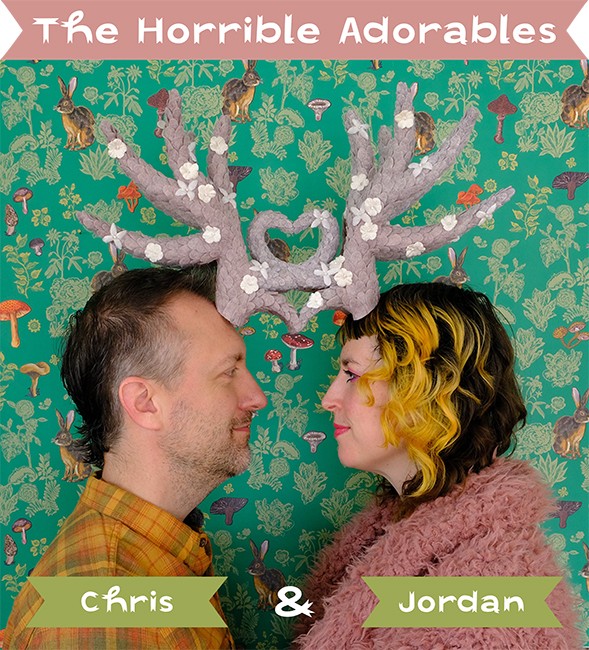

We recently connected with Christopher Lees and have shared our conversation below.
Christopher, looking forward to hearing all of your stories today. Can you open up about a risk you’ve taken – what it was like taking that risk, why you took the risk and how it turned out?
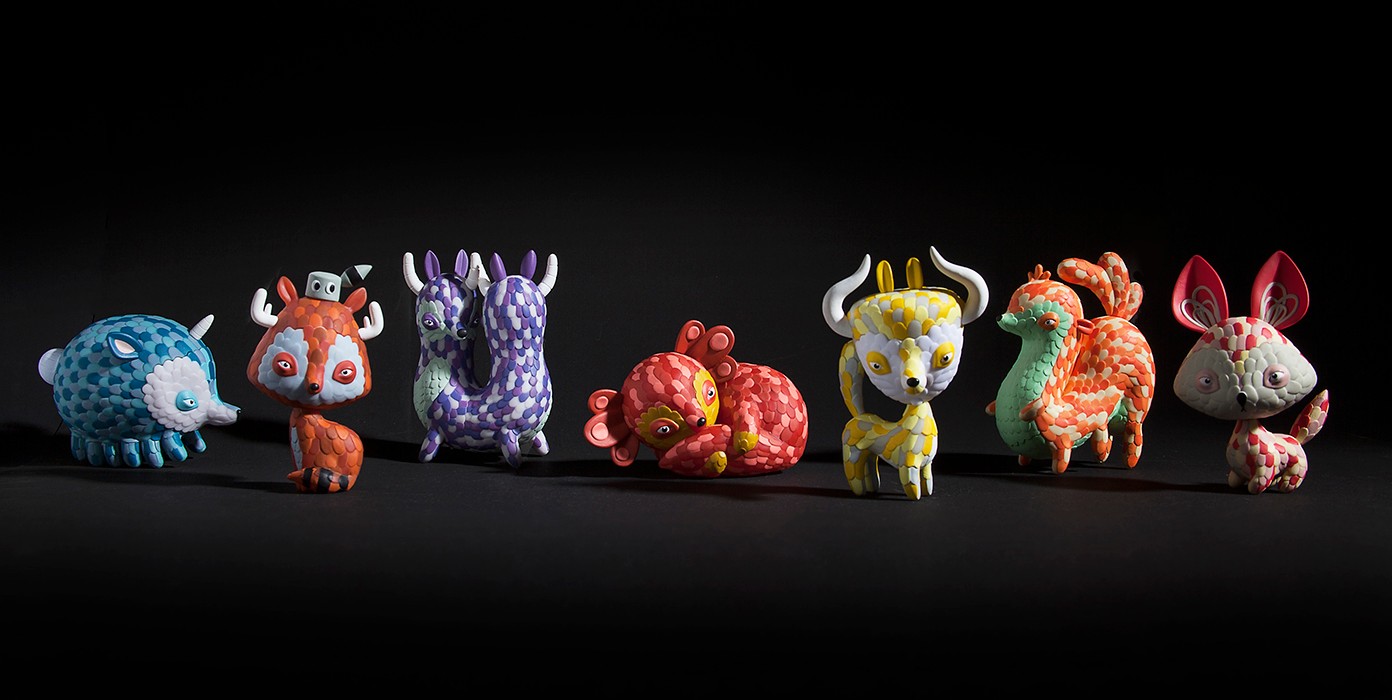
A few years ago, we decided to try something different with our business – produce a board game. Horrible Adorables has two main areas of focus – our own artwork that we show around the world and freelance design work for toy companies. A good portion of the art we make falls into the designer toy category (small run art collectibles that reference toy nostalgia and use traditional toy production techniques to create). In 2019 we released a vinyl figure called The Familiar. It was a cute little magical creature with a cape, wizard hat, and satchel with a frog poking out. For the packaging we decided to go with a drawstring pouch to play up the magical theming of the toy. Jordan even joked that we should toss a twenty-sided die in the bag to really push a Dungeons and Dragons reference.
Around the same time, friends were introducing us to many new board games that we had been previously unaware of. We were beginning to scratch the surface of the hobby board game world and really enjoyed discovering so many new types of games. Our latest diversion mixed with Jordan’s joke about the D20 resulted in us deciding to build a board game based on our new toy.
The challenge was that we didn’t know how to design a board game, we had minimal to no knowledge of the market, and we had absolutely no presence in the hobby board game world. All these hurdles would take time, effort, and financial investment to overcome. To our benefit we could bring top notch artwork to a game, we knew how to manufacture high quality products, and we had some friends that were willing to help us draft the design of the game. We saw an advantage with this type of product because it could be scaled with mass production and sold through distributors and stores as opposed to our artwork that is mostly one-of-a-kind, labor intensive, and handmade. A game resonated with our values of making objects that bring joy and happiness to people and we decided to go for it.
In three months, we developed a card game that worked fairly well. We had made 5 different colors of our toy and we decided to divide up the cards and include a portion of the game with each colorway. If you collected all five colors, you would have the complete game. This was mostly marketed to our designer toy audience with the intention of revisiting the game and expanding it into a stand-alone product. We started visiting major board game conventions to research how the industry worked. We realized quickly that we were stepping into a much larger market and had a lot to learn. Then the pandemic hit and we put the project on the shelf for 2 years.
We had done some research off-and-on, but really started the project back up in early 2021 when we signed up to demo our game at a couple of conventions. This gave us a deadline and a goal. With our production knowledge, we started building prototypes. We would have them play-tested, gather feedback, revise, create new prototypes, and test some more. We lost track of how many times we went through this cycle. We also learned that the top venue to release board games was through the crowdfunding website Kickstarter – board games are one of the largest product categories on the site. This worked to our advantage because we could gather the funds to place a production order without having to front the full investment ourselves.
Our biggest challenge was building an audience. We were practically starting over in a new market with no social media presence or any way to reach potential customers. We used a several methods to build an audience that included in-person events such as game meet-ups and conventions, we joined and posted on many Facebook board game groups, we invited board game reviewers (influencers) to preview our game, we joined an Indie Game Alliance that specialized in helping new producers, and we used a marketing firm to run ads on social media. We set our Kickstarter to run in October 2022 and exceeded our funding goal.
As of this interview, our board game Familiars and Foes is being mass produced. We plan to deliver to our Kickstart backers in early fall 2023 and have begun working with several distributers to get our game into more stores. We continue to promote the game through social media and bring it to conventions to grow our audience and customers. So far, we consider this new venture a moderate success – the project was able to fund itself, but hasn’t produced significant profit. We’re optimistic that once we have product in hand, we can leverage the success we’ve had and continue to grow this new segment of our business.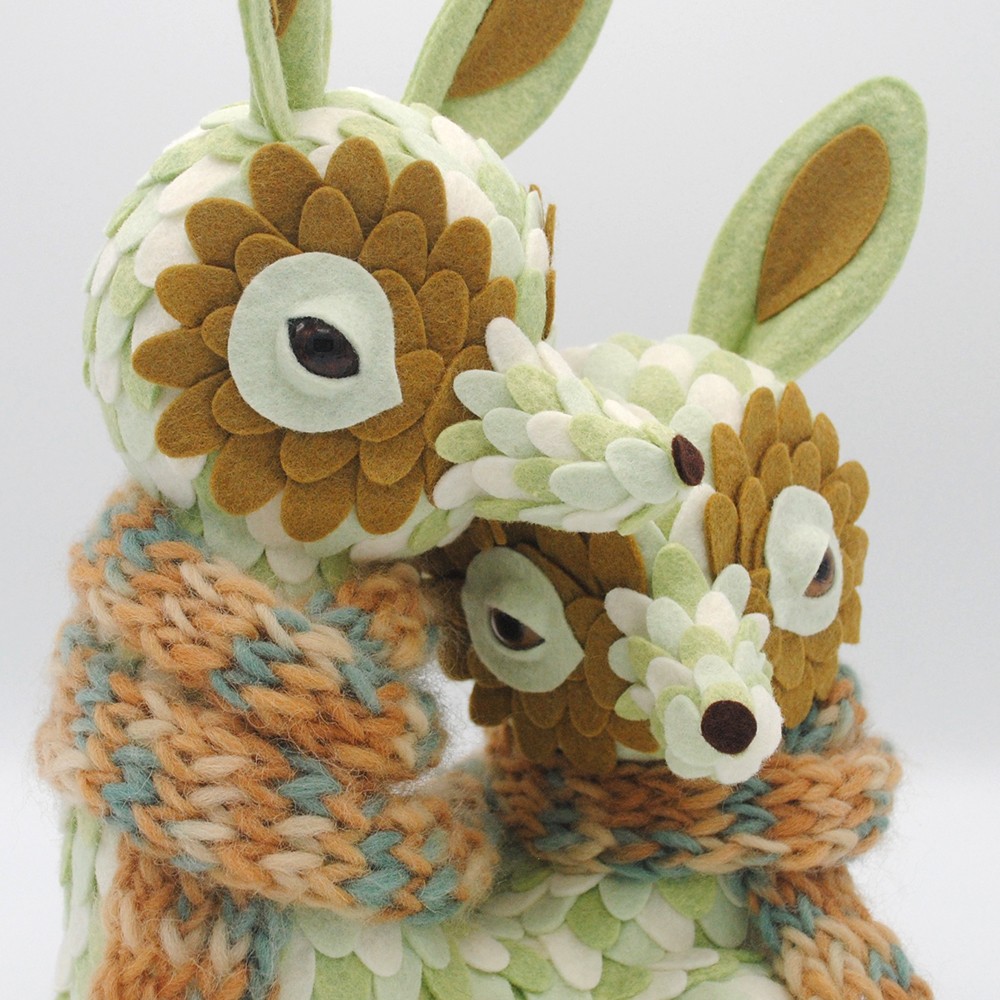
Awesome – so before we get into the rest of our questions, can you briefly introduce yourself to our readers.
Jordan Perme and Christopher Lees are a wife and husband team from Cleveland, Ohio. They are better known by their artist identity and company brand, Horrible Adorables. The duo met at the Cleveland Institute of Art where Jordan graduated with her BFA in Fiber & Material Studies, and Chris pursued training in the Fine Arts after completing his BS in Mechanical Engineering.
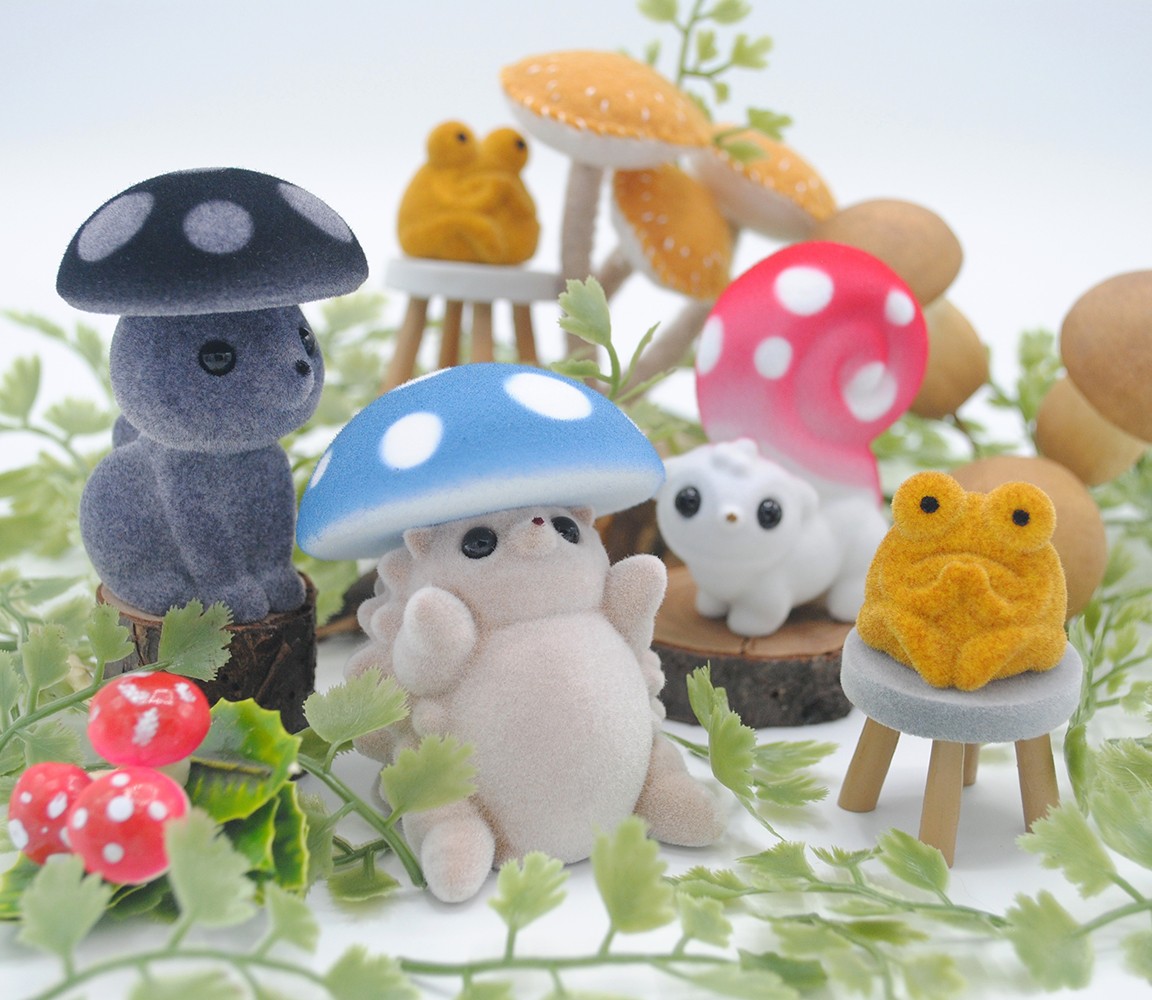
They are most recognized for their soft sculpture characters that possess both cartoonish and eerily realistic qualities. Their love of toys, monsters, fairy tales, taxidermy, patterns, and oddities has directly influenced their bright and whimsical style of work that tends to have a dark undertone. Their artwork focuses on depicting strange hybrid creatures from a fantastical world. Jordan and Chris bring their work to life by meticulously arranging patterns of felt scales onto sculpted forms and using an electrostatic flocking technique to add velvety textures.
Jordan and Chris have adapted their Horrible Adorables into illustrations and repeat patterns which are applied to a wide range of mediums and products. Their work can be found at art fairs, galleries, and boutiques across the globe.
In addition to Horrible Adorables, Chris continues to consult on engineering projects and Jordan works as a freelance toy and textile designer.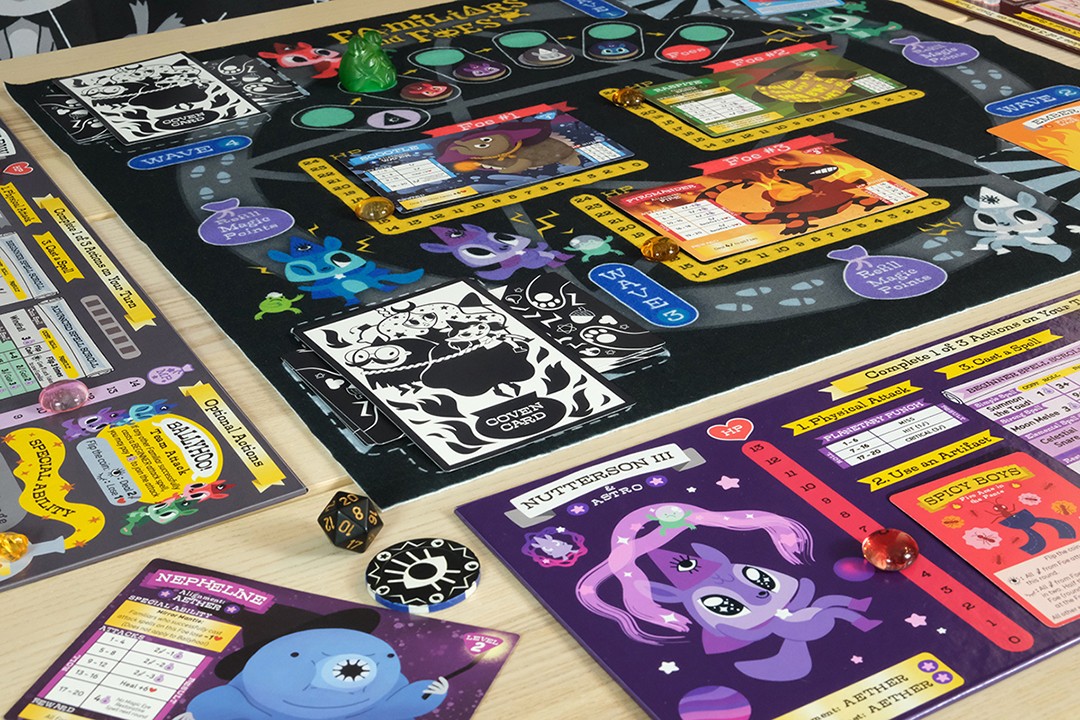
Any insights you can share with us about how you built up your social media presence?
We primarily use Instagram for our social media because it’s a good fit for visual art, but we also have Facebook, TikTok, YouTube, Discord, and Twitter accounts depending on how we want to share content with our followers. We’ve always taken care to produce the best quality photos and videos of our work so they are interesting and engaging to our audience. We joined Instagram in 2012 and have seen a lot of changes over the years. Of course, the largest change was when Facebook purchased Instagram and instituted an algorithm-based feed as opposed to the original chronological feed. Unfortunately, we saw an immediate negative impact on our business with these changes because we could no longer reach our audience as easily as before. Our interaction dropped significantly and we were not gaining followers as quickly as we once were. Even paid advertisements didn’t have as much impact as regular posts used to. Despite the drop in effectiveness, we continue to be most active on Instagram because it’s still our best social media outlet. We have also taken to posting our videos on TikTok which has had some uneven success – some videos will garner very large numbers of views while others fly under the radar.
In 2021 we decided to open new social media accounts dedicated to our board game. It has been an uphill battle growing those audiences, but we learned a valuable lesson along the way – we have no control over how social media platforms distribute our content. Even if someone follows us specifically to see our work, a social media platform may choose not to show our content to them. The only way to guarantee that someone receives our updates is through direct email campaigns. This was somewhat of a hard lesson for us to learn. We’ve always had an email list, but we lost a lot of opportunity to grow it over the years because we were passive about gaining subscribers until very recently. We do not spam our subscribers – we reserve our emails for when we release new work or have big announcements to share. As a result, we have a fairly high rate of our subscribers viewing our messages. There is certainly a place for social media in regards to marketing, but there’s a lot of value in a simple email which will always be delivered to subscribers who request it.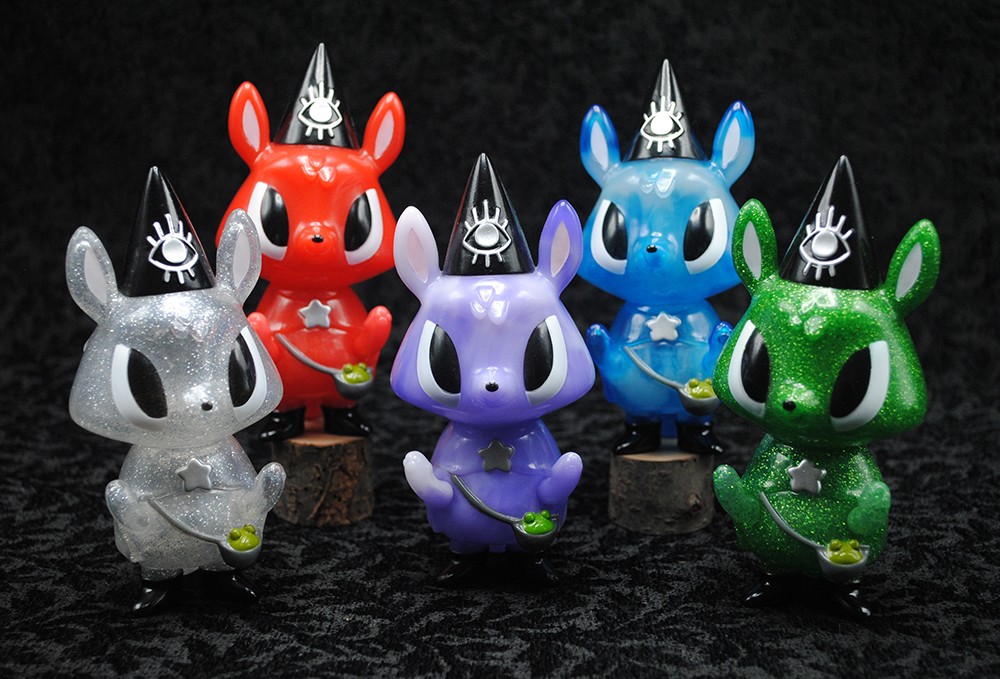
Learning and unlearning are both critical parts of growth – can you share a story of a time when you had to unlearn a lesson?
Throughout our careers as artists, we’ve enthusiastically said “Yes” to every opportunity that has come our way. This attitude helped us to quickly grow our professional network and resulted in even more opportunities. We hold ourselves to very high standards, so we work relentlessly to deliver the best quality product for every job we’ve said “Yes” to. “Yes” to gallery shows, “Yes” to freelance work, “Yes” to public art, “Yes” conventions, “Yes” to group shows, “Yes” to art fairs, “Yes” to friends of friends who need some illustration work for their event, but really can’t afford to pay us properly. It’s opened a lot of doors for us – like working with art museums to showcase our art or having our own line of toys produced, but it has obviously had its pitfalls. Now that we are in our mid-career, we struggle to let go of saying “Yes” to everything that is asked of us. It’s partly because we don’t want to miss out on any amazing opportunities and partly because we have a hard time feeling like we are disappointing someone. We have begun to say “No”, but it hasn’t some easily or naturally. We realize that our most valuable resource is our time and that we need to scale back the quantity of projects we work on so we can focus on the ones that have the largest impact. 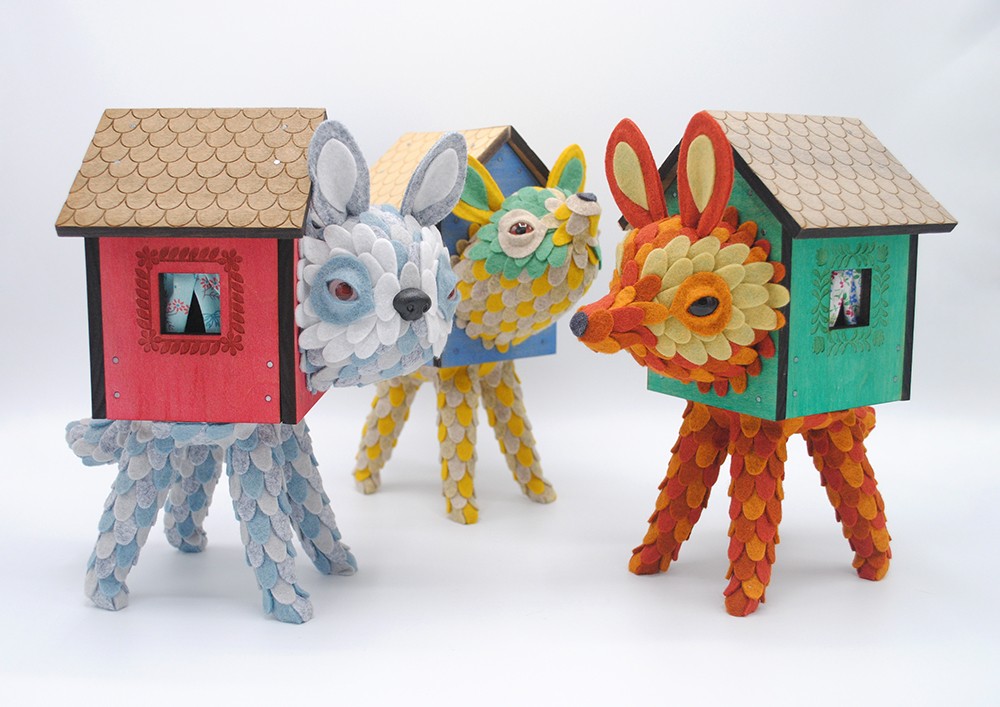
Contact Info:
- Website: https://www.horribleadorables.com/
- Instagram: @horrible_adorables
- Facebook: Horrible Adorables
- Youtube: @familiarsandfoes
- Board Game Website: https://www.familiarsandfoes.com/BoardGame
- Instagram: @familiarsandfoes
Image Credits
Jordan Perme