

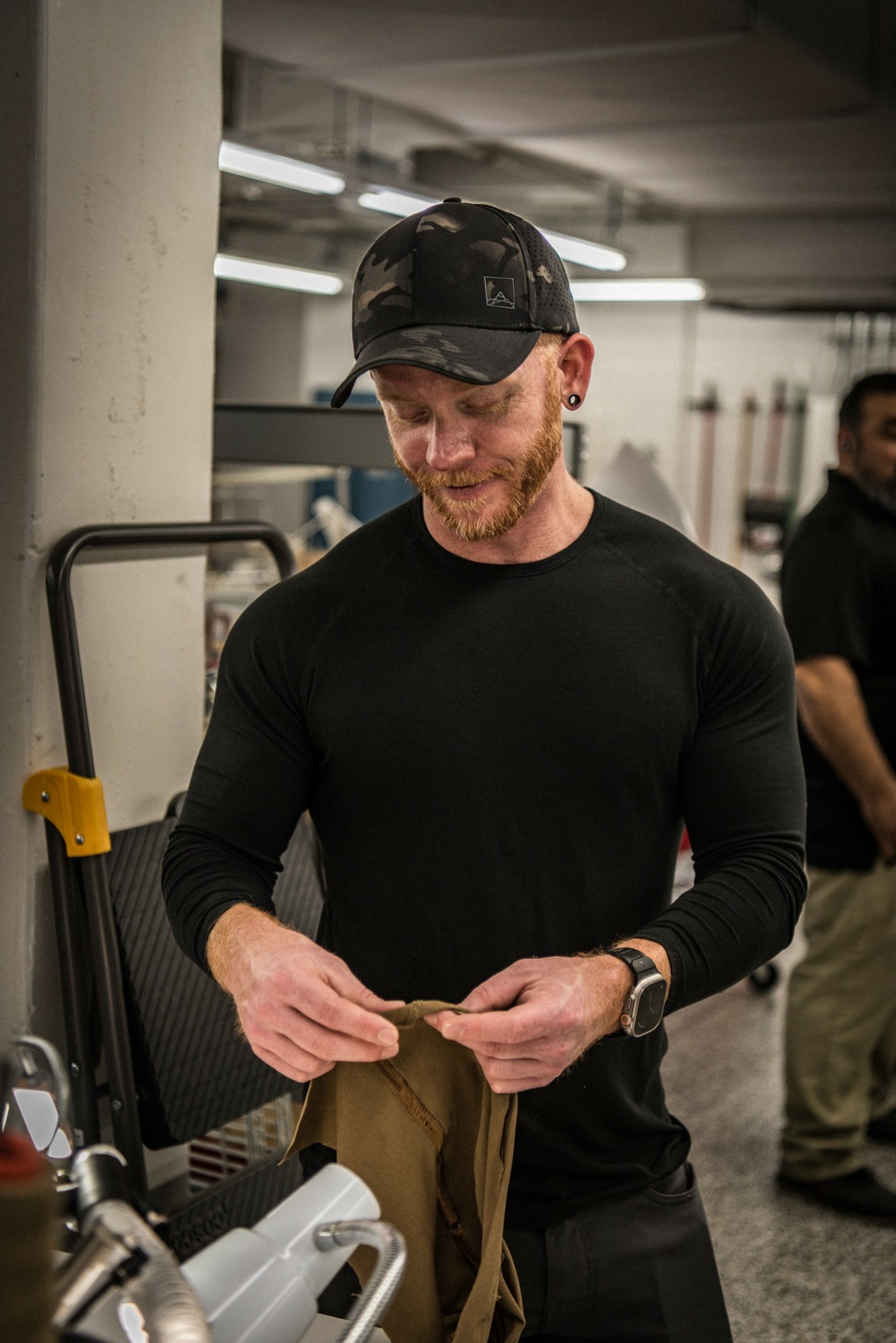

We caught up with the brilliant and insightful Christian Meyers a few weeks ago and have shared our conversation below.
Alright, Christian thanks for taking the time to share your stories and insights with us today. We’d love to have you retell us the story behind how you came up with the idea for your business, I think our audience would really enjoy hearing the backstory.
I first had the idea for Terra Arma on my last deployment.
Not in a boardroom. Not as a “startup concept.” It was one of those quiet moments you get in between missions where you’re exhausted, you’re watching how people move, what they’re wearing, what’s failing, and you can’t unsee it anymore.
I kept noticing the same thing: everyone was adapting their behavior around their gear. Working around seams that rubbed, layers that didn’t breathe, fabrics that held sweat, cuts that restricted movement, pieces that were “standard issue” but clearly not designed for the way people actually lived and worked. And in the environments we were operating in, discomfort wasn’t just annoying. It was a tax. It distracted you, slowed you down, made you more fatigued, and eventually it changed the way you performed.
The emotional part wasn’t some big inspirational moment. It was more like a pressure building. Frustration. Respect. Responsibility. I had been surrounded by people doing serious work, and it bothered me that the clothing system meant to support them was often a compromise. It felt like we accepted “good enough” because the alternative was complicated and nobody wanted to take it on.
That’s when the idea clicked: what if someone built a layering and uniform system the same way we approached mission planning? Purpose-driven. Simple on the surface. Brutally thought-through underneath. Every seam, every fabric choice, every panel placed for a reason. Comfort as a performance advantage, not a luxury.
The logic side came later, and it’s why I knew it wasn’t just a fantasy.
First, the problem was real and persistent. Even with a crowded tactical market, most products were either built for looks, built for a spec sheet, or built to hit a price point. There were great pieces out there, but a lot of the industry still felt like marketing first, product second. And almost nobody was obsessing over the intersection of comfort, true durability, and real-world function in a way that could scale.
Second, I understood the customer because I was the customer. I wasn’t guessing. I wasn’t doing market research from a laptop. I’d lived the consequences of “almost right” gear.
Third, I could see a gap in approach. We weren’t trying to be another “tactical brand.” Terra Arma was always meant to be a manufacturing-minded company. Product development, materials development, patterning, function, and repeatability. The goal was to own the process so we could actually control quality and evolve quickly.
Fourth, the timing made sense. Demand for better uniforms and performance layers was rising across military, first responders, and serious outdoor users. At the same time, so many brands were outsourcing everything and building fragile supply chains. I believed there was room for a company that could say, “We make it here, we control the build, and we’re going to get the details right.”
Was I solving a problem nobody else was solving? Not in the sense that no one made tactical clothing. But I do think we were solving it in a way most people weren’t willing to. We were treating comfort and mobility as mission-critical, not “nice to have.” We were taking the long road on materials and manufacturing so the product could be consistent, not just impressive in a photo shoot. And we were building with a deeper reason behind it: to serve the people who carry weight most others never see, and to build a company that reflects that kind of integrity.
What excited me most was the idea of earning trust.
Not through slogans, but through repeat experiences. A product that becomes someone’s default because it works, because it disappears when they’re moving, because it holds up, because it makes life slightly easier in a world that’s already hard.
That’s what Terra Arma is to me. A company built from lived experience, backed by manufacturing discipline, and driven by a simple promise: we’re going to do it the right way, for the right reasons, and we’re going to keep earning it.
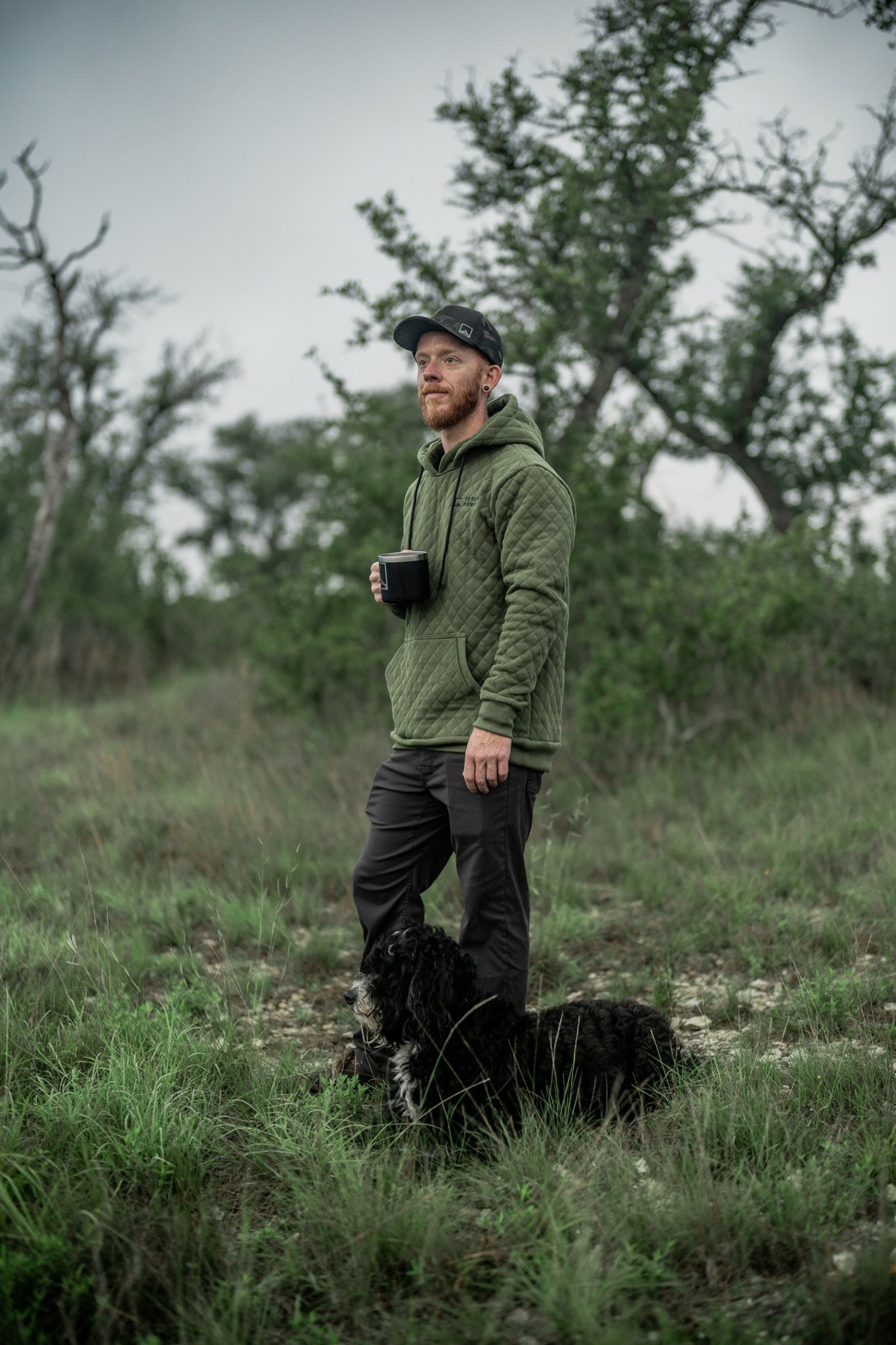
Christian, love having you share your insights with us. Before we ask you more questions, maybe you can take a moment to introduce yourself to our readers who might have missed our earlier conversations?
I’m Christian Meyers, founder and CEO of Terra Arma. Before building this company, I spent 13 years in the U.S. Air Force as a Special Missions Aviator in Combat Search and Rescue, flying and supporting complex operations where performance and reliability aren’t abstract ideas. They’re the difference between “fine” and failure. That background shaped how I think: systems first, mission first, no wasted motion, and no tolerance for solutions that only work in perfect conditions.
Terra Arma sits at the intersection of uniforms, performance apparel, and materials development. We design and manufacture base layers, mid layers, and outer layers intended for military, first responders, and serious outdoor users. But the core of what we do isn’t “tactical clothing.” It’s solving a very specific problem: most gear looks capable, yet it often performs like a compromise. It binds, runs hot, holds sweat, breaks down early, or simply isn’t comfortable enough to wear hard, day after day. We treat comfort as a performance variable, not a luxury, because discomfort is a tax on attention, endurance, and decision-making.
What we provide can be described simply: we build dependable clothing systems that disappear when you’re working. That includes our flagship base layer line (Catalyst Luxe), key accessories like the Murphy waterproof hat and Adventurer sock, and the expansion of our uniform capabilities into more specialized categories like combat uniforms and flame-resistant systems. Underneath that product list is our real differentiator: we’re a manufacturing-minded company. We source and produce in the United States, and we’ve invested in a build process we can control, iterate, and scale without sacrificing quality. For government buyers, enterprise uniform programs, and B2B partners, consistency and repeatability matter just as much as the design itself. For end users, it shows up as fit, comfort, durability, and reliability under real use.
The “industry” I’m in is often split between two extremes: fashion-driven brands that market an identity, and utilitarian suppliers that build to a spec sheet. Terra Arma is built in the middle, where lived experience meets engineering discipline. We take the emotional weight and reality of service seriously, but we express it through product performance, not slogans. Our aesthetic is gritty and grounded because our audience is, but our approach is rigorous: fabric selection, patterning, mobility mapping, reinforcement strategy, moisture management, and the details that become obvious only after months of hard wear.
For customers and clients, the problems we solve depend on the channel:
For service members and first responders: we solve “I don’t want to think about my clothing system.” The goal is gear that moves, breathes, wicks, doesn’t chafe, and holds up—so they can focus on the job.
For unit, agency, and enterprise buyers: we solve reliability and consistency. A great sample doesn’t matter if production can’t repeat it. We build for repeatability, delivery, and trust.
For outdoor enthusiasts: we solve comfort and capability without gimmicks. Clean design, real materials, durable construction, and performance that shows up when conditions get rough.
What sets us apart is the combination of three things:
Authenticity of experience
We’re not guessing what matters. Our product direction comes from real operational needs and real wear environments, not trend boards.
Manufacturing control and discipline
We’ve prioritized U.S. sourcing and production so we can control quality and evolve faster. That decision is harder and more expensive, but it’s the foundation of trust.
A brand built on meaning
Terra Arma isn’t “warrior cosplay.” It’s built with reverence for the people who carry weight most others never see. Our tone is serious because the work is serious. We focus on quiet excellence, not noise.
What I’m most proud of is that Terra Arma has become real in the world. We’ve earned serious traction with military and B2B customers, and we’ve grown into meaningful retail distribution, including placement in AAFES and NEX stores. That matters because those channels are demanding. They don’t reward hype. They reward reliability.
I’m also proud of how we’ve built giving into the structure of the company instead of treating it as a marketing move. Through our Ascend Together Initiative, we support nonprofits through monetary donations, at-cost clothing, and free media services. We also run community-driven initiatives like the Terra Arma Adventure Club, because I believe a brand should create connection, not just transactions.
If there are a few things I’d want potential customers, partners, or followers to know, it’s this:
We build for people who actually use their gear, and we take that responsibility seriously.
We don’t cut corners for hype, and we don’t chase trends that compromise function.
We’re building a long-term company with long-term standards—one that can scale while staying honest, dependable, and rooted in real service.
At the end of the day, Terra Arma is a promise: we’ll keep earning trust through product, through delivery, and through the way we operate when nobody is watching.
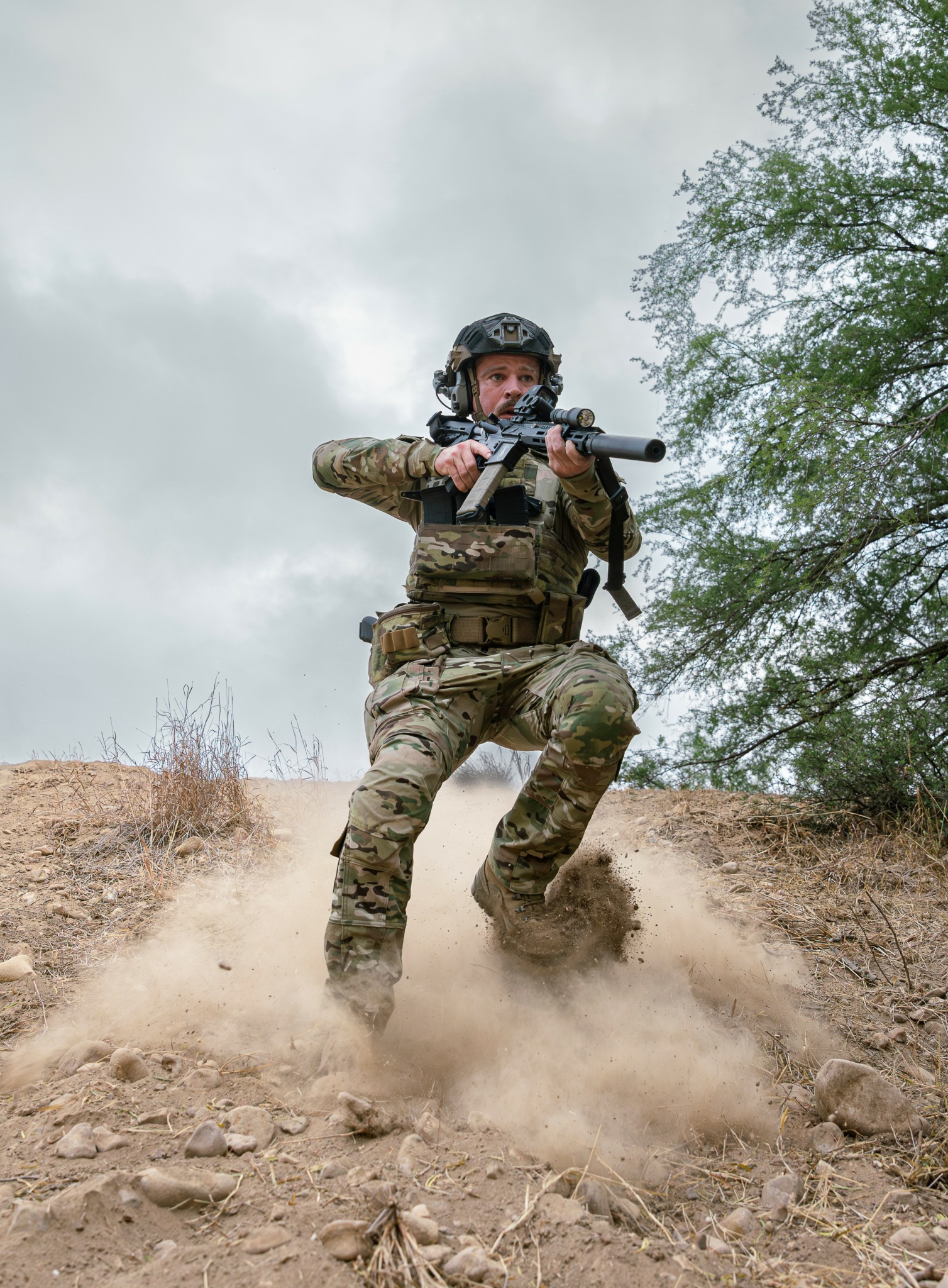
Okay – so how did you figure out the manufacturing part? Did you have prior experience?
Yes — we manufacture our products, and that’s not a marketing line for us. It’s a strategic decision that shaped how Terra Arma was built from the beginning.
How we got started
When the idea for Terra Arma became real, I quickly realized something: if I wanted to build truly dependable gear, I couldn’t treat manufacturing like an afterthought. A lot of brands start with design and marketing, then “find a factory” to make it. That can work, but it also creates a gap between what you intend to build and what actually gets produced at scale.
So from the start, the plan was to build a manufacturing system we could control in the United States. Not because it’s easy or cheap, but because quality, repeatability, and speed of iteration are what separate a product that’s impressive in photos from one people trust in the real world.
Did I already know how to manufacture?
I didn’t come from fashion. I came from operations. My background taught me systems thinking: plan, execute, debrief, improve. But apparel manufacturing has its own language and physics: fabrics behave differently under tension, patterns don’t scale the way people assume, seams and stitch types matter more than aesthetics, and “good enough” tolerances become expensive when you’re producing thousands of units.
In the beginning, I learned by doing. I got deep into technical packs, patterning, construction methods, fit, and materials science. I made a lot of early mistakes that taught me quickly. The biggest shift was realizing that product development isn’t just creative — it’s engineering, documentation, and process control.
Finding the right manufacturing partner
Early on, I had to find vendors who could match our standards. That meant a few things:
Made in USA was non-negotiable, which immediately narrows the field.
We needed people who could do precision work, not just basic cut-and-sew.
We needed partners who could handle consistency, not just prototypes.
We wanted vendors willing to collaborate, not vendors who just take orders.
The process was unglamorous. I called shops, visited facilities, asked uncomfortable questions, looked at their output, and tested their consistency. The right partners weren’t always the ones with the best pitch. They were the ones who could explain their process, show their QC approach, and prove they could repeat the same build twice, three times, ten times.
Over time, Terra Arma built deeper manufacturing capability and stronger partnerships — including working closely with teams that could take over larger portions of production, warehousing, and logistics so we could scale responsibly.
Lessons learned about manufacturing
If I had to summarize the biggest manufacturing lessons, they’d be these:
1) Prototypes don’t mean you can produce.
A sample can be perfect and still be impossible to build at scale. Production requires repeatable patterns, controlled materials, consistent machine setups, trained operators, and a documented process.
2) The tech pack is the product.
If it isn’t clearly documented, it doesn’t exist. The difference between a great product and a mess at scale is often the discipline of specs, tolerances, stitching callouts, BOMs, and revision control.
3) Material selection is half the battle.
Most issues people blame on “manufacturing” are actually material issues: stretch behavior, shrinkage, hand feel changes after wash, color consistency, or how a fabric behaves at speed on industrial machines.
4) Consistency beats perfection.
Customers trust repeatability. A “perfect” first run that can’t be repeated is worse than a very good run that’s consistent every time. Consistency is built through process, not hope.
5) Made in USA is hard — and worth it if you commit.
Domestic production forces you to be more disciplined. It costs more and demands better planning, but it gives you tighter control, faster iteration, and a level of accountability that’s hard to replicate when everything is outsourced.
6) You don’t scale by pushing harder. You scale by building a system.
The real bottlenecks are almost never “work ethic.” They’re workflow design, QC gates, lead times, vendor alignment, and clear communication. Scale is an operations problem.
Where we are now
Today, manufacturing is a core part of Terra Arma’s identity and strategy. We design with production in mind, we source and build domestically, and we treat every product like a system that has to be repeatable and trustworthy. That’s how we protect quality as we grow — and it’s how we keep earning trust from the people who depend on what we make.
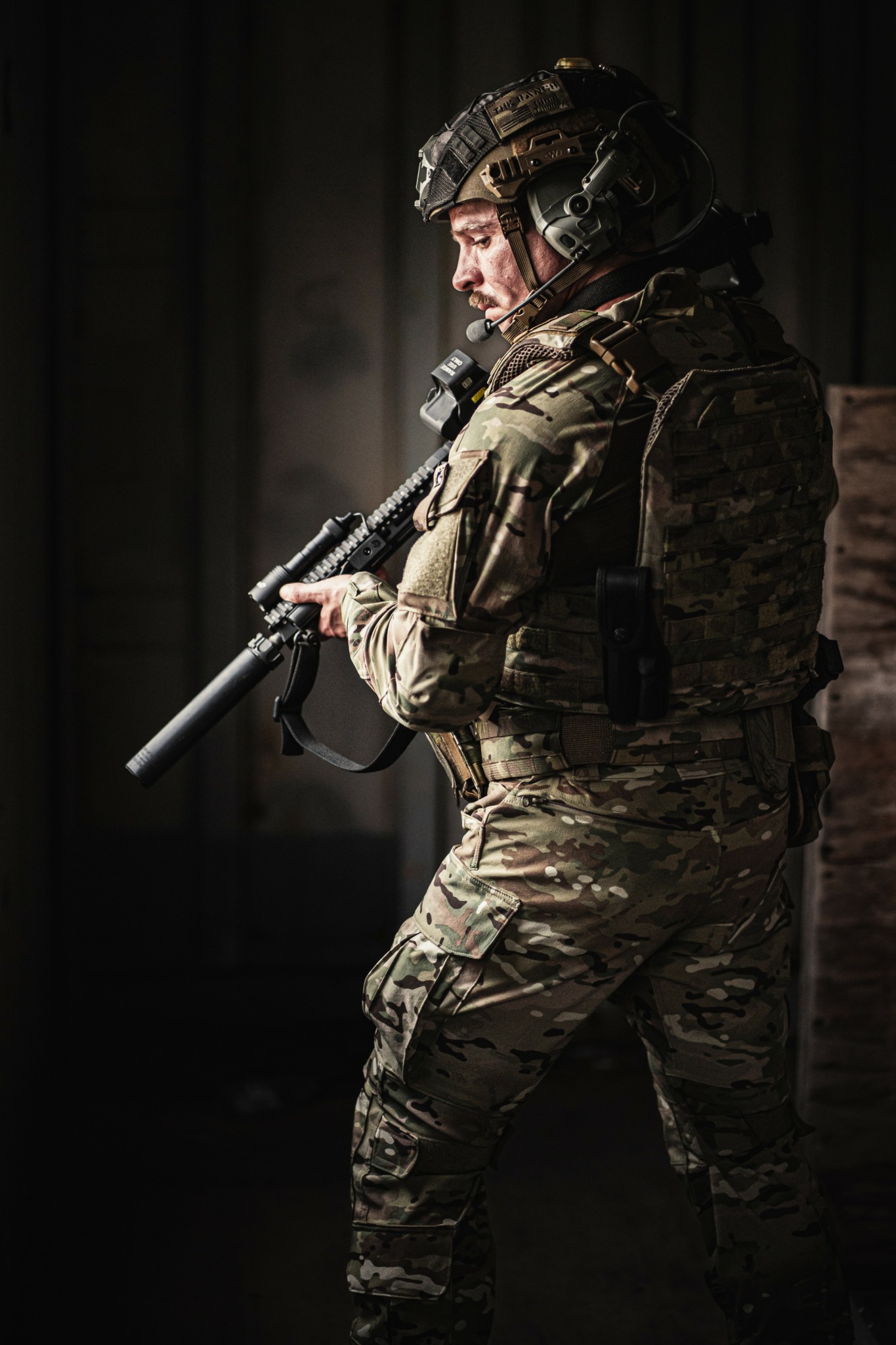
Any advice for managing a team?
Morale isn’t something you “create” with vibes or speeches. It’s a byproduct of trust, clarity, and people feeling like their effort matters. In my experience, the fastest way to protect morale is to make the mission concrete and keep priorities painfully clear. Most morale problems aren’t really motivation problems, they’re confusion problems—people don’t know what matters most, what “done” looks like, or who owns what, and living in that fog burns them out. I try to keep the team focused on a small number of priorities each week and protect that focus like it’s money, because constant pivots and unnecessary urgency will drain even great people.
I’m also big on being specific—both with praise and with standards. Generic “great job” doesn’t do much, but calling out exactly what someone did and why it mattered builds pride fast. At the same time, morale drops when high performers watch low performers coast, so standards can’t drift. That doesn’t mean being harsh, it means being consistent: clear expectations, direct feedback, and real follow-through if something isn’t changing. People respect a leader more when they know the bar is real and it applies to everyone.
Rhythm matters too. I’ve found teams do better when there’s a predictable cadence instead of constant communication—short daily check-ins to surface blockers, weekly planning so everyone knows what wins look like, and quick retros so we fix what keeps breaking. It also helps to share a simple scoreboard so people can feel progress: what shipped, what improved, what slipped, what we’re fixing next. And as a leader, I try to be the emotional thermostat. You don’t have to be emotionless, but you do need to be steady. When you stay calm under pressure, your team borrows that nervous system.
Finally, morale stays high when people can see a future and the environment feels clean. That means giving people real ownership, helping them grow, and handling conflict quickly instead of letting tension fester in the background. Unresolved friction and unclear priorities poison teams faster than almost anything. If the mission is clear, the bar is consistent, the rhythm is stable, and the leader stays steady, morale tends to take care of itself.
Contact Info:
- Website: https://terraarma.com
- Instagram: https://instagram.com/jolly.christian
- Linkedin: https://www.linkedin.com/in/christian-meyers-237309b5/
Image Credits
Cameron Meyers, Director of Media and Content at Terra Arma