



We were lucky to catch up with Chava Floryn recently and have shared our conversation below.
Hi Chava, thanks for joining us today. We’d love to hear about how you went about setting up your own practice and if you have any advice for professionals who might be considering starting their own?
Starting a new practice—especially one centered on guiding others—forces a kind of honesty with yourself that is both humbling and demanding. You begin to realize that the work you ask of your clients must first live in you. I cannot ask someone to make courageous decisions at a crossroads if I’m avoiding my own. I cannot encourage someone to break lifelong patterns if I’m unwilling to confront and interrupt my own.
Building a private practice as a transformation strategist has required that I hold myself to the same standard I invite my clients into: radical accountability. It means looking directly at my own narratives, my own patterns, and doing the continual work of recalibration and growth.
What excites me most is not the idea that I have everything figured out—but that I trust the process. I trust that I am committed to doing the work within myself, and that I will keep learning, evolving, and refining how I serve others. From that place of integrity, I can help people do the same for themselves.
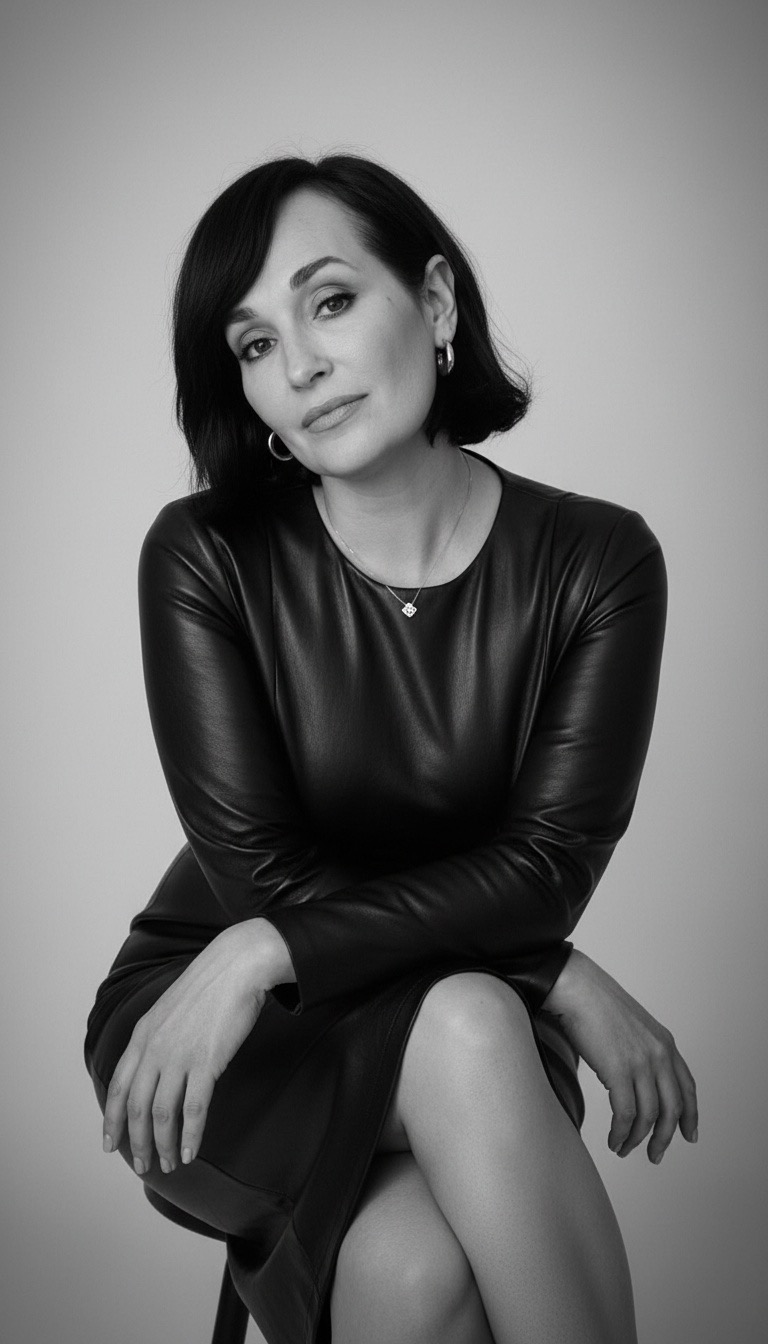
Chava, love having you share your insights with us. Before we ask you more questions, maybe you can take a moment to introduce yourself to our readers who might have missed our earlier conversations?
For most of my life, I’ve worn two hats. One as a filmmaker, musician, and creative—and the other as a community leader and guide. Over time, that second path has evolved into the work I do today as a transformation strategist.
For more than thirty years, I’ve worked closely with people at the highest levels of responsibility—executives, political leaders, athletes, physicians, lawyers—helping them navigate the deeply personal terrain behind their public lives. I’ve always had a natural ability to see patterns in people’s lives and help them recognize what they themselves cannot yet see. It’s something that’s been with me since I was very young. At the same time, I have an immense curiosity about people—their stories, their struggles, their resilience—and that curiosity fuels both my coaching work and my work as a filmmaker.
One of the projects I’m most proud of is my latest documentary, *Resilient*. The film explores the mental health realities of living in a war zone. I chose to go into that environment personally, having been diagnosed with complex PTSD myself, because I wanted to understand how trauma shapes people—and more importantly, how people remain resilient within conflict. I’m deeply fascinated by how human beings move through adversity, and by the courage it takes for someone to break their patterns and reinvent themselves.
Someone said to me recently, “Life is so hard.” And I replied, half joking but completely serious: life itself isn’t hard—sleeping on a bad mattress is hard. That hurts your back. Life becomes hard when we make it harder than it needs to be. Much of our suffering comes from the patterns we repeat unconsciously.
The people who come to work with me are usually at an inflection point. They’re standing at a moment where a decision must be made—about a career change, launching a new venture, leaving a role that no longer fits, reshaping a relationship, or becoming the kind of parent or leader they know they’re capable of being. What they recognize is that the patterns they’ve been operating within can no longer continue without real consequences—sometimes financial, sometimes relational, sometimes deeply personal.
My work with clients is intentionally short and intensive. Most people work with me for one to three months. Occasionally it stretches to six. During that time we identify the patterns that are driving their decisions and recalibrate them at the root level. The human brain is remarkably plastic. Once someone becomes aware of a pattern—truly aware of it—it becomes almost impossible to continue living inside it unconsciously.
Through a combination of breathwork, somatic work, and emotional regulation, we interrupt those patterns and build a new internal narrative. The goal isn’t long-term dependency. The goal is rapid clarity, recalibration, and the ability for someone to move forward with a steadier internal operating system.
That’s the essence of the work I do as a transformation strategist. It’s about helping people see clearly, shift quickly, and step into the next version of themselves with intention.

Have you ever had to pivot?
Pivoting is the creative’s pen—the instrument that allows an idea to evolve rather than remain fixed. In a creative mind, nothing exists in only one form. Every idea can be turned, reframed, and explored from new angles, with new structures and new possibilities. There is always space for reevaluation, expansion, and reinvention.
Ideas rarely arrive fully formed. More often they begin as a small kernel—a title, a phrase, a passing thought. That kernel might grow into an article. The article might reveal the depth of a podcast. The podcast might evolve into a book. And that book may open the door to an entirely new direction in life. I’ve seen this happen in my own work: a single idea became an article, then a podcast, then a book, and eventually helped shape the path that led me to opening my private practice as a Transformation Strategist.
This is the nature of creative work—taking one small truth and asking how it might unfold across many different forms.
Pivoting is not abandoning the path; it’s expanding it. It’s the willingness to ask, *What else could this become?* For entrepreneurs, artists, musicians, and builders of any kind, pivoting isn’t a failure of direction—it’s part of the creative process itself. When you’re willing to pivot, you never truly get stuck.
In 2020, during the uncertainty of the pandemic, I found myself in one of those moments of reevaluation. I was seeing clients, but I was also rethinking my own vision for my life and my work. At the same time, I noticed something happening in the community around me—families were having intense conversations, grappling with uncertainty, fear, and frustration about the future. What began as a simple conversation about those tensions grew into an online community gathering. That gathering evolved into a podcast, then a book, and ultimately became one of the foundations for the private practice I run today.
Many pivots are born inside storms. They emerge during moments of disruption or uncertainty. But if we’re willing to look closely, those storms often carry the very opportunities that allow something new—and more aligned—to take shape.
Do you think you’d choose a different profession or specialty if you were starting now?
If I could go back and choose again, I would still choose this path—despite the challenges that come with building something from the ground up, the constant conversations, the networking, and the effort it takes to sustain it. I genuinely love what I do.
At the heart of it, the reason is simple: I love people. What draws me to this work is the opportunity to understand the human mind—to see how people think, what drives them, what holds them back, and what ultimately allows them to grow.
And there’s an unexpected gift in that process. The more deeply I understand others, the more clearly I come to understand myself. In many ways, that’s one of the greatest privileges of the work.
Contact Info:
- Website: https://www.chavafloryn.com
- Instagram: @chavafloryn
- Facebook: https://www.facebook.com/chava.tombosky
- Linkedin: https://www.linkedin.com/in/chavafloryn/
- Youtube: https://www.youtube.com/@Chavafloryn
- Yelp: https://www.yelp.com/biz/chava-floryn-miami-beach?osq=Chava+Floryn
- Soundcloud: https://soundcloud.com/chavafloryn
- Other: https://watch.salemnow.com/series/0KptBAPUtWNo-resilient?channel=search-results

Image Credits
Chava Floryn