


We’re excited to introduce you to the always interesting and insightful César Oyarzabal. We hope you’ll enjoy our conversation with César below.
Hi César, thanks for joining us today. We’d love to hear about when you first realized that you wanted to pursue a creative path professionally.
Oh sure. My answer might not be the kind of “big realization moment” story you’re looking for because it didn’t come as a big “epiphany” moment. But for as long as I can remember, I’ve been watching films and jotting down little ideas—what I’d call “film ideas” or “film themes”—in my notes. It wasn’t like either of my parents were writers or lifelong creatives, so I’m not sure where that came from. Maybe it was just daydreaming?
But there was a sort of turning point that I didn’t realize at the time would be a form of “epiphany”, which was the day my dad simply said: “Hey, those ideas you have—why don’t you make one?” He said that after we’d just come back from living for two years in Chicago. And, you see, in America, there’s this idea that Action is more valuable than Thought. And in France Thinking is highly valued, seen as intellectual, even elite. In America you gotta be a “doer”. And so when we returned to France, I think that became even more apparent, that contrast.
At my new high school, I met 2 or 3 friends who were also really into cinema, and so I pitched to them this newly found idea that my dad had slipped in my brain, this idea of actually Doing it: “Hey, I want to make a short film. Do you guys want to help?” They all said yes—but you know what? They never followed through. I sent ideas, schedules, and scripts, but I didn’t get anything back. Eventually, I thought, Maybe they’ll hop on board, maybe they won’t—but either way, I’m doing this.
And I did. It was a four-scene script, all set indoors. I shot it at my house using a mic I bought for $50 and my iPhone for picture. I edited the whole thing on iMovie, which was free on my computer at the time. And boom, when it was done I uploaded it to YouTube.
I’m sorry if this doesn’t directly answer your question about when it became “professional”. But that’s the backstory of when I fell in love with making movies. But I was 15, I wasn’t thinking “Let’s pursue film professionally”. That came later, in college, when I experienced what it was like to be on a set with 50 people. I discovered the magic of collaboration—working with a music composer, a director of photography, a co-writer, an editor, and so on. I’d never experienced that with my earlier films.
Don’t get me wrong—those high school friends eventually started helping me out after I’d made a few films. But those were still very much student films, or even less than that. When I got to NYU’s film school, I saw how film students there were striving for something bigger. That environment pulled me up, and I realized I wanted to reach that level. That’s when I understood reaching that level entailed starting a professional career.
So, there you have it: the full backstory. The moment I fell in love with making films versus the moment I fell in love with making films collaboratively at a professional level. I hope that answers your question.
Awesome – so before we get into the rest of our questions, can you briefly introduce yourself to our readers.
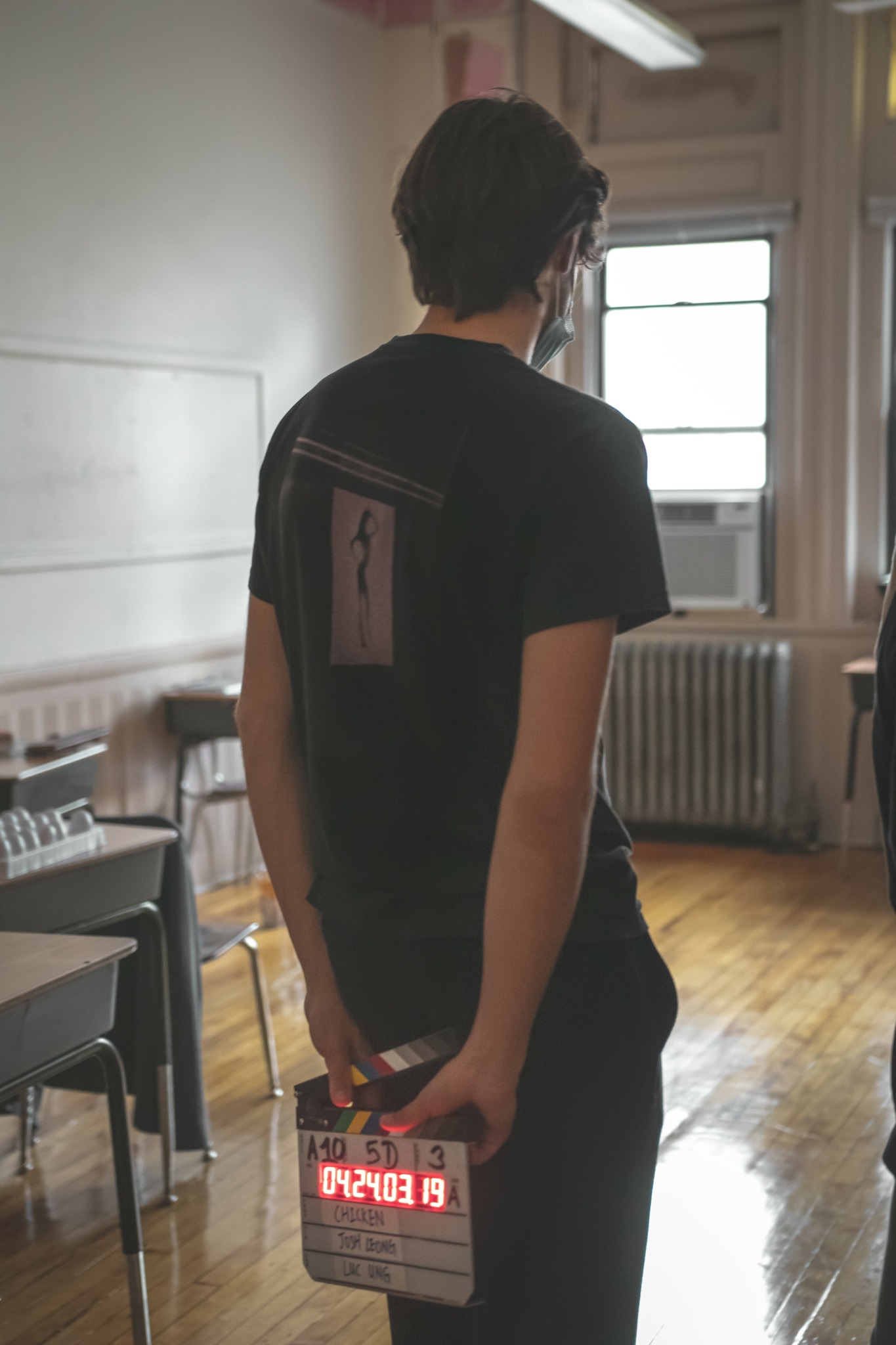
I studied film and television at NYU’s Tisch School of the Arts, where I learned I had a passion for editing. What I love about editing is not the technicality of the editing software I’m using or the effects I’m applying, what I like is that I am with the director in the editing room, and I’m there thinking with that director.
You know, the director comes with an idea—they took this great challenge of making a movie, started writing it at some point, went into production, and now they’re here in the editing room with me. This is the last step of the process, and for the first time, they actually have time. They have time! They never had it up until now. Even in the writing stage they’re always thinking “I’m writing, I’m writing, I’m writing, but when am I ever going to make this damn movie?” It’s a great thing to move on from writing to production—it’s essential because otherwise, you’ll never make anything—but that also means that when the editing room time finally arrives, you realize that there are tons of little mistakes that were left behind that now need fixing.
I wouldn’t even call them mistakes really, but once we’re in the editing room we now have the distance to understand some things don’t work. That happens on every single film: ideas are being tried out, being experimented on, whether it’s in the storytelling, or in the way it was shot, or how the music functions, but eventually even though some ideas succeed, some don’t. And the ones that don’t are often holding back the ones that do. That’s where re-writing starts for me. And you got to get creative.
Some people say being an editor is like being the director’s therapist. At first, it doesn’t seem that way because my job is to fix the unexpected storytelling hurdles and to get to the best possible product. I come in with fresh eyes, like an audience member would, and try to see the film without any context or explanation. Meanwhile, the director might still be picking their own brains about all the conceptions of the movie and why it works and how it works and how they got this shot to work so beautifully etc. This is really the reason why any director needs an editor. I’m here to make sure that the director, who is grieving the things that don’t work, actually works through the process fully. That includes the phase where they go “Let’s change everything up! Let’s be radical!” — although that seems like a step forward from the “we can’t delete this, no way!”, it comes with its own batch of problems that I try to tune down. Don’t get me wrong, I’ve had this problem as a director a thousand times over too.
For a long time, I was also the editor of all the films I made as a director. Then, as I went through film school and started editing other people’s films, I began to realize how stupid that was. So, I decided to stop making that mistake and hired an editor for my film. Guess what? That short film, Runaway, got selected into a ton of festivals like the Beverly Hills Film Festival, Mammoth Lakes Film Festival, New York Short Film Festival, and something like 15 other festivals. It even won an Honorable Mention for Best Editing—like, come on! Why hadn’t I done this sooner? And the next time I made a film, Head in the Clouds, Feet on the Ground, I also hired an editor. Once again it got selected to festivals, bigger ones this time like the Virginia Film Festival, the Coronado Island Film Festival, and it also won prizes at the Tallahassee Film Festival and the London Breeze Film Festival. And once again the editor of my film won an editing prize, this time at the First Run Film Festival.
I believe there is a reason why the editors who edited these two films of mine won such prizes. By that time, I knew how to direct those editors in the same way that I knew when to seriously start to listen to my editors, even when I didn’t want to. My understanding of the editing room very much goes both ways, and I believe it should for any editor. How else can you really help the director of the movie? It’s one thing to see, as an editor, that the director is making a mistake, but the challenge is to convince them of it. That’s why people say editors are the therapists to directors. I think it’s a harsh word, but I get the idea. But you know what? I love that job. Haha… it’s very fun, very genuine, and full of growing experiences. It’s really unique.
So that’s my job—that’s what I’ve been doing for the past four years. I’ve edited films for Emmy-nominated director Jim Doherty, multi-time Sundance-selected director Pola Rapaport, and I’m currently editing a feature documentary on Baltazar and Keith McNally. I’ve also edited commercials, TV, and narrative projects, but what I mostly specialize in is documentaries these days. It’s because documentaries don’t have a script. There is this wonderful thing with documentary, which is that you’re given a huge block of marble, in the same way Michelangelo was, and you have to chop it down. David already lives in that block of marble—Michelangelo’s job is to reveal him. In the same way, if you give me a big hard drive with 50 terabytes of footage, I make it my task to find the David in it.
A big part of my job also entails countless learning opportunities for myself as a director. The editing room is where the director finally has the time to settle down and learn all the lessons from their film. And as I sit next to the director, I learn alongside them. What’s nice is that I’m not learning these lessons the hard way, like they are. What’s also nice is that I realize a director’s state of mind has no correlation with how good or bad their film is. I’ve seen films where the director is extremely worried, but as I’m looking at the footage, I think the film is incredible. I’ve also seen directors feel very confident about how everything went so well in the editing room, and yet I look at the film and see that it falls short of its potential. So now, when I am the director of a movie and I arrive in the editing room, not only do I know that my state of mind has nothing to do with the quality of the movie—which allows me to think more clearly—but I’ve also gained 1,000 lessons from all the other directors’ films I’ve edited. Those directors were often very successful in the storytelling process, and I’m now able to replicate the mechanisms and wheels they used to create effective ideas.
I hope that answers your question. I know I meandered a lot.
In your view, what can society to do to best support artists, creatives and a thriving creative ecosystem?
My view is still not fully formed on that question, but I’m French, you know, and over there, the film industry is funded by public money. So I’m just telling you: that’s my foundation, it’s what I’ve been growing up to believe is right. At the same time, I’ve always admired—or maybe not admired—but I must acknowledge the American industry is the one that has remained capable of exporting its cinema on a global scale. Sadly, this especially goes to the incredible number of entertainment films that I have absolutely no admiration for. And yet I also recognize that this industry still does a lot of boundary-pushing films in some production houses, some of which have really impacted me. You know, people in Europe say that independent cinema stopped existing in the US for the past 20 years. I don’t know if I agree with that. I can’t argue with the fact that America has allowed huge conglomerates to bypass antitrust laws, and that now this American industry is fully established on entertainment, simply because the people who own these conglomerates are finance executives from Wall Street, and that’s (in 95% of cases) their directive. However, under most empires or oppressive regimes in past history, there have always been artists who were able to cleverly bypass the censorship by, say, making their characters be animals, like in Jean de la Fontaine’s fables. If you want a more recent example, take Barbie by Greta Gerwig. It’s a little too on the nose—it’s not the perfect example—but ultimately her film fits because Greta is making a movie with a strong authorial vision, and yet at the same time the Barbie products are getting sold 1,000 times more all around the world and Wall Street is happy. It’s a win-win.
I’m aware I’m painting a bit of a dark, dystopian image of the film industry in America, but in contrast to some other parts of the world, it really is. And yet let me be fair and tell you the dark thing about the French film industry. Less than half of the money that is being put into film by public funds is made back. Less than half. To me, that’s … sad. It’s not wrong or anything, it’s the French politic of putting the people’s money into culture—I have not a doubt that it’s a good use of that money. But it saddens me, these numbers. But my belief remains. I believe that having a political agenda creates a thriving ecosystem for creatives is right. It’s a real investment into the people who are going to be watching those films. It’s a guarantee of quality.
Have any books or other resources had a big impact on you?
Ha ha, yes, there are. There is this book called Deep Work by Cal Newport, which is a book for computer programmers really, but that impacted me. And let me just go back a few years earlier for a second when my philosophy teacher in high school made us read Emmanuel Kant’s essay “What Is Enlightenment?”. What Kant says is that we’re all lazy, except for a handful of us. And I remember feeling very strongly that he was right. It’s the same thing with the book for computer programmers. What Cal Newport says is that most of us do shallow work, and only a handful of us do deep work. And then he proceeds to tell you how to do deep work. You know, in appearance, everyone seems to be working 8 hours or more every day. What Newport demonstrates, though, is that what one person does in 8 hours of work, he can do in 2 hours. He can do it if he has absolutely zero distractions, if the previous task he was doing hasn’t been left unfinished, if his goals have been stated in a certain manner clearly earlier, and there are a few other conditions to it. But in short, it’s proven to work. And it’s extremely practical! Let me tell you, it’s not easy to put in place, but it works. I use different bits of this book’s method whenever I have to write a feature-length script. It works.
There are many more books… to name a few more “practical” books, there’s Making Movies by Sidney Lumet, or The Tools of Screenwriting by David Howard. And then I read a ton of literature, it would be hard for me to pick. But a couple of ones that are close to my heart are Montaigne’s Essays or Michel Houellebecq’s Submission.
Contact Info:
- Instagram: @_cesar_16
- Linkedin: https://www.linkedin.com/in/c%C3%A9sar-oyarzabal-b213a2228/
- Other: https://www.beyondtheshort.com/short-film/tuningbycsaroyarzabal
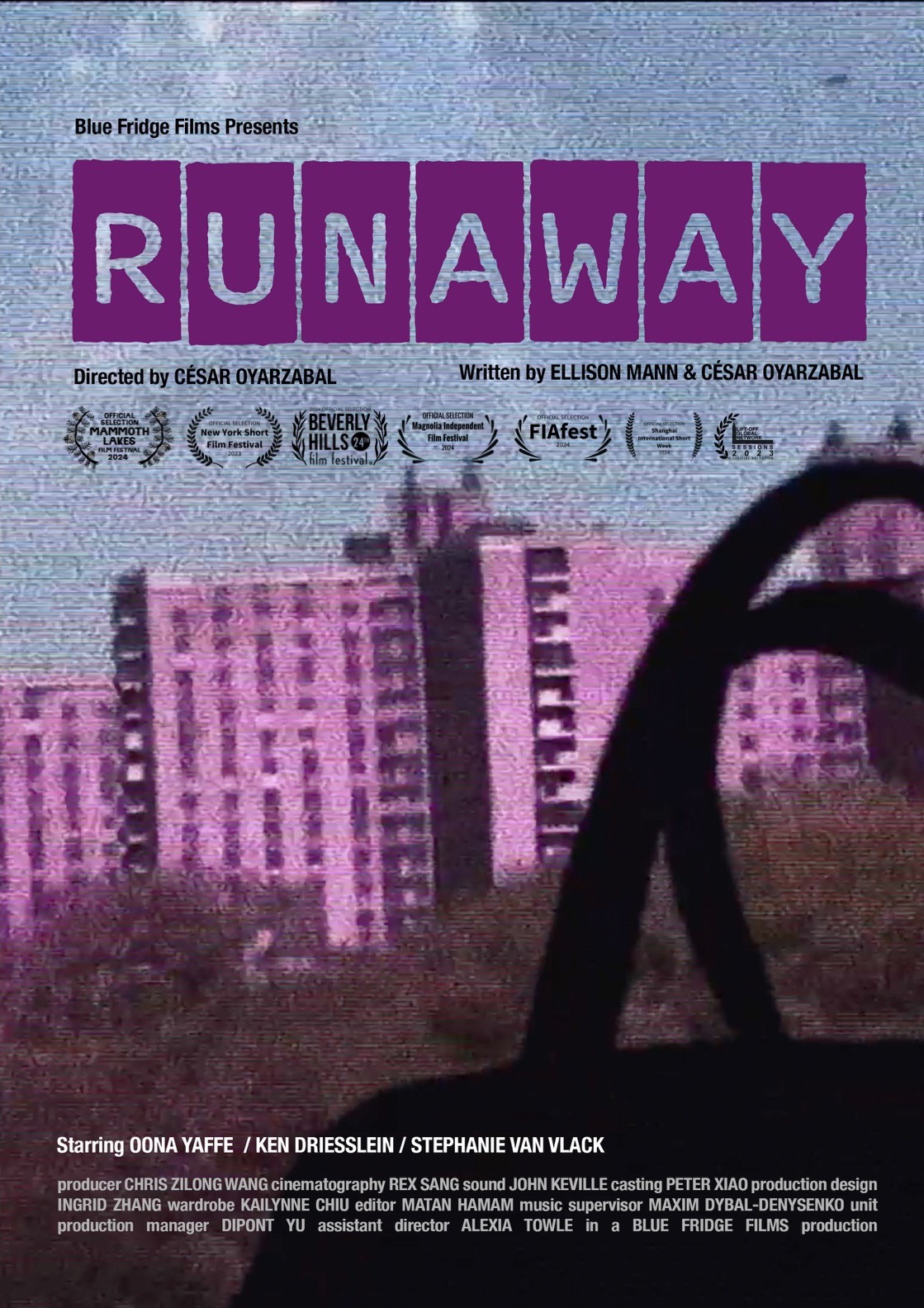
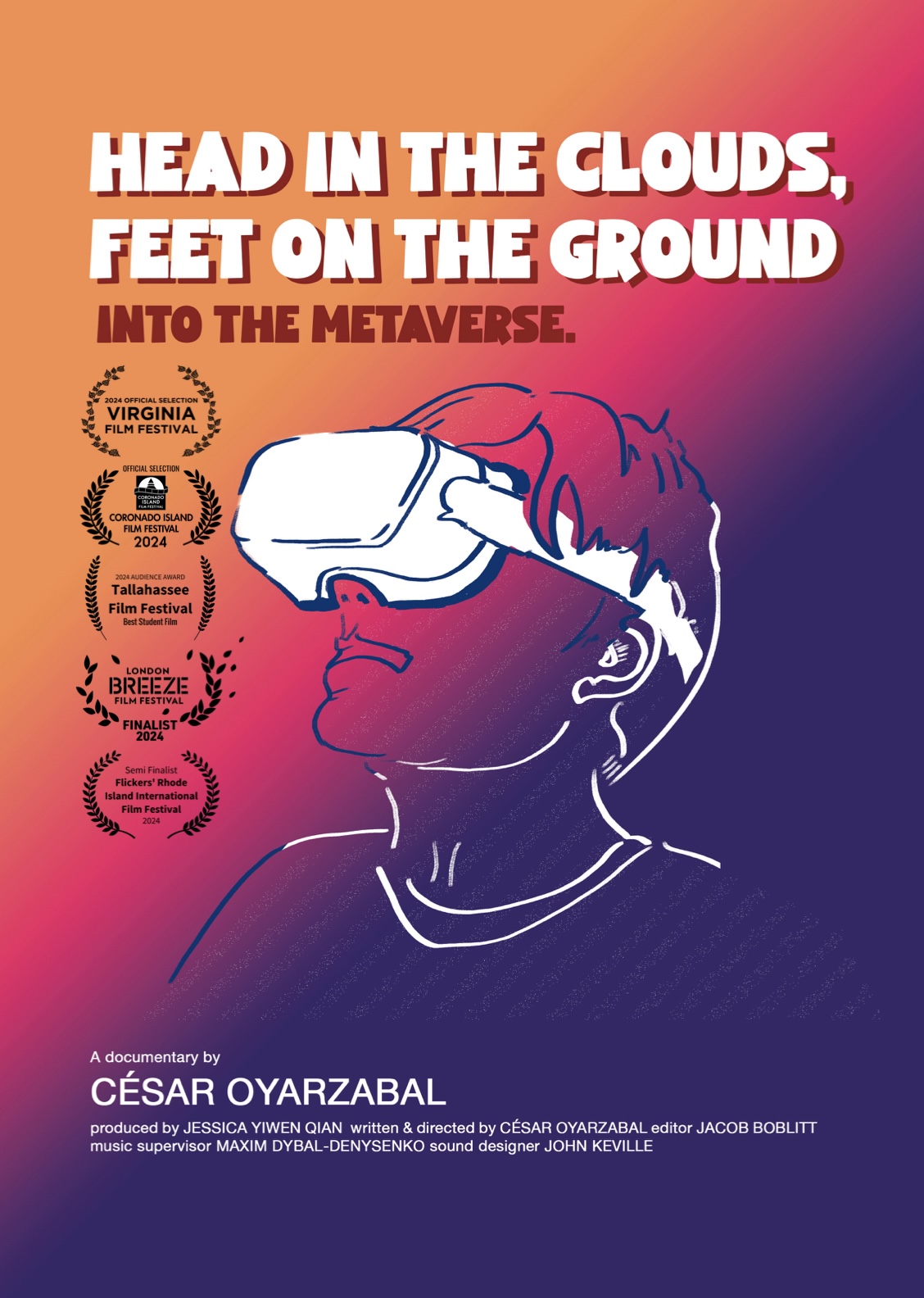
Image Credits
Yinan Shi
Devon Tayman
Zoë Brauchli