



We’re excited to introduce you to the always interesting and insightful Cat Lim. We hope you’ll enjoy our conversation with Cat below.
Hi Cat, thanks for joining us today. Can you open up about a risk you’ve taken – what it was like taking that risk, why you took the risk and how it turned out?
All the best decisions in my career started out as risks.
Growing up, my parents set the expectation that I’d follow in their footsteps by becoming a doctor. Working in healthcare meant stability. After all, the healthcare path allowed my parents to immigrate from the Philippines to the United States and enabled their children to grow up as U.S. citizens with bountiful opportunities.
You can probably guess how heavy the pressure weighed on me not to disappoint them. However, I was always artistic, finding many different outlets to fuel my creativity. These outlets included graphic design, songwriting, film editing—along with a brief attempt at YouTube stardom. Despite how important art was in my life, I tried my best to stay motivated towards a career in medicine. I majored in Biomedical Sciences at the University of South Florida (USF), focusing my efforts on the seven-year medical program.
During my third year at USF, a friend of mine recommended that I apply for a student graphic design position on campus. I had kept up my design skills through my involvement in various student organizations. The student job entailed working 10 hours a week for the Housing Department. I was thrilled by the opportunity. I convinced my parents that the job would not be a distraction from my studies and would simply provide money for groceries.
It didn’t take long for me to feel inspired. Not only was I designing, but I was actually getting paid for it. I remember thinking, “I can see myself doing this as a career.” I also realized I could never picture myself as a doctor wearing that white coat under the fluorescent lights of a hospital.
Before I knew it, graduation was around the corner. I had taken the MCAT (twice) and was in the process of applying to medical schools while still working as a designer for the USF Housing Department. I felt more and more at odds with my intended career path. I remember thinking, “I wish I could just invent something amazing so I could be financially set and not have to go to medical school.” I was steadily coming to terms with the situation that the years I spent studying, the classes I struggled through, and the internships I dedicated hours to—was all for a destiny that was not for me at all.
I decided to no longer pursue medical school, and I asked my boss if I could keep my design job after graduation. Fortunately, he loved the idea and started on plans to transition my position to full-time status. On the other hand, my parents did not love the idea whatsoever. In fact, they had a meltdown in the kitchen, claiming I’d turn into a starving artist. They begged that I consider alternatives—like nursing or dentistry (despite those being basically the same thing as going to med school).
I reminded myself that my parents would still love me no matter what as I embraced this new trajectory. It felt right, and that’s all that mattered.
Fast forward to today. I’ve been working in the design field for more than a decade. I rose from designer to creative director in my previous agency before taking on another risk: starting my solo entrepreneur journey last year as a freelance art director and graphic designer. I recently reached the wonderful point where I can be more selective with the work I take on. To know I’m supporting myself through business I’ve brought in and sustained myself is an incredible feeling of empowerment.
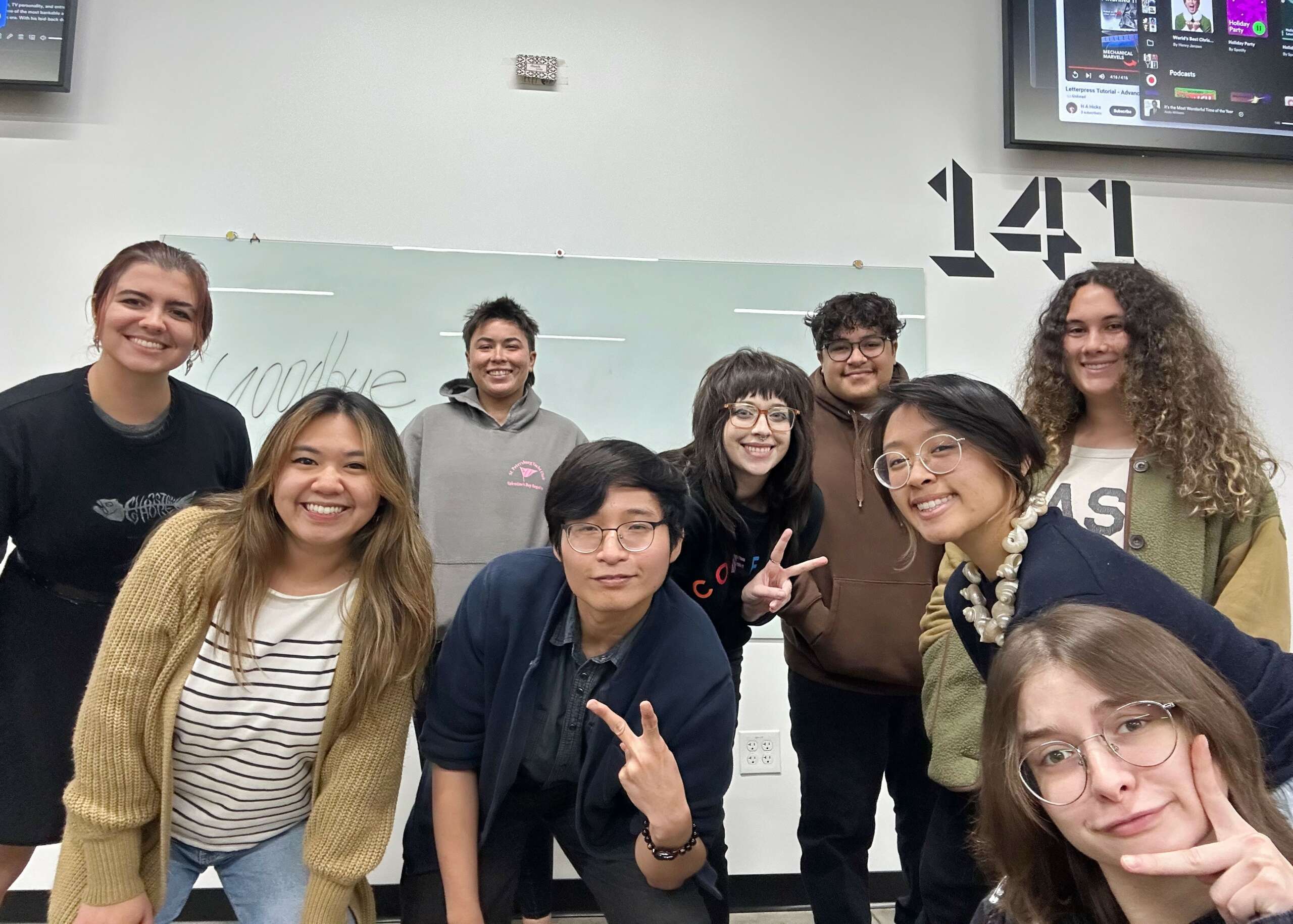
Outside of business, I choose to lead with the same boldness. As a self-taught designer, you can imagine my imposter syndrome when I was asked to teach as an adjunct professor at USF St. Pete’s graphic design program. Fortunately, my passion for mentoring outweighed my anxiety, and so far, I’ve taught three different courses within three semesters, entailing original material inspired by the real projects and challenges I’ve experienced in my career. While I’m still getting the hang of grading (design is subjective!), I feel so grateful for the students I had the pleasure of teaching and getting to know. Watching their growth is inspiring!
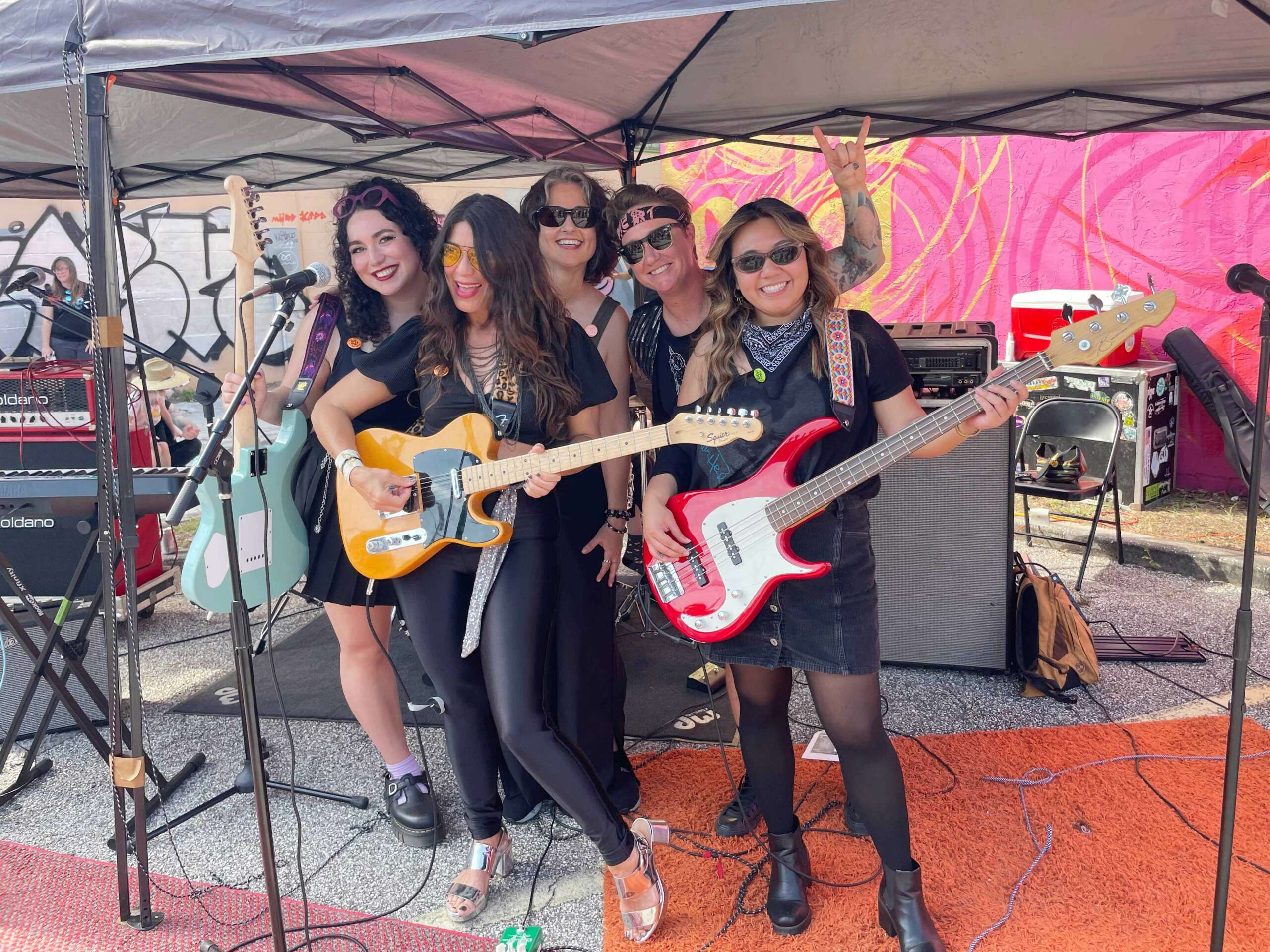
My other side gig is performing. I’m a stand-up comedian, sketch performer, improviser, and I recently joined an all-female punk rock band. Coming up with an idea and then presenting it to a live audience, hoping they also find it funny, entertaining, or relatable too—now that’s risky. But when I’m on stage, sharing who I am and my perspective through my humor or music, I get the same feeling as when I chose to change the trajectory of my career. It all feels right.

As always, we appreciate you sharing your insights and we’ve got a few more questions for you, but before we get to all of that can you take a minute to introduce yourself and give our readers some of your back background and context?
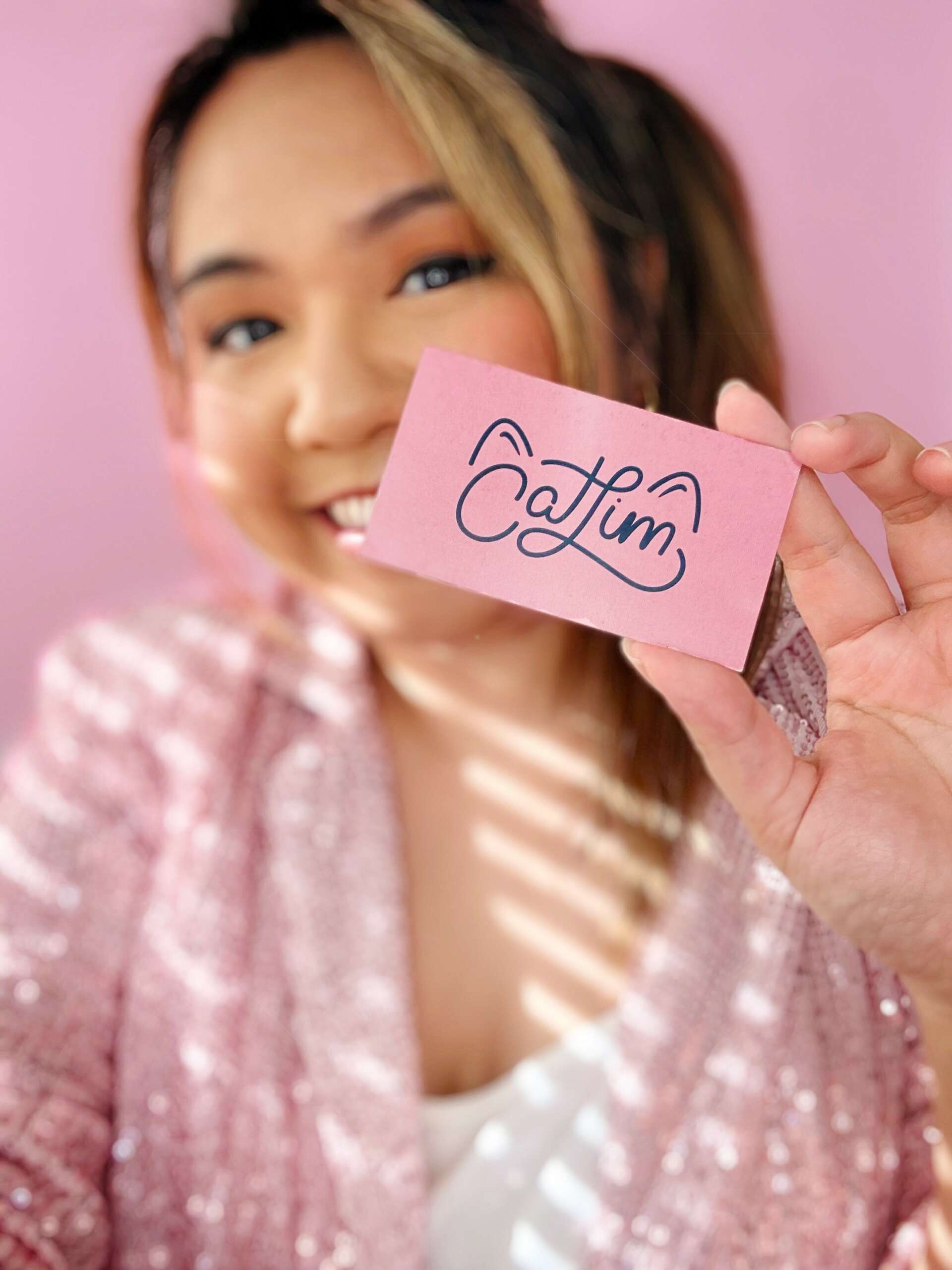
When people ask me what I do, I like to give the short answer: I’m a freelance art director and graphic designer. As people get to know me, they learn that I follow my passions—which run the gamut. I teach design, perform comedy, and rock out on the bass. I have a variety of interests, and leaning into them has enriched my creativity and the way I approach any challenge. These interests have led me to meeting different types of people and cultures. I’ve learned the true meaning of transferable skills. The ability to develop a quick, eye-catching ad definitely overlaps with the ability to write and perform a solid joke. Learning how to embrace your authentic self as an artist acts as proof that a strong unique selling point is vital to your brand.
Besides my array of skills and experience, I’ve been told I’m a strong listener who asks excellent questions. As a designer who works in marketing, you must deeply understand your client and your client’s audience. Understanding means listening and sparking the curiosity necessary for innovation.
To get into the nitty-gritty, my design services include branding, print (packaging, marketing collateral, etc.), content creation, digital advertising, and web design. I’m a big fan of Figma and Webflow and volunteer as a Webflow Global Leader, co-leading a chapter in Tampa Bay.
If you’re looking for a designer who “gets it” or need help injecting humor or entertainment into your project, I’m your gal.


What’s a lesson you had to unlearn and what’s the backstory?
For a long time, I believed that my professional happiness—and therefore personal happiness—would come from a dream job working for a dream company alongside a dream team. Big-name companies with impressive portfolios and inspiring “Our Culture” webpages would leave me yearning for the day I’d get there, making an impact that could be noticed by everyone.
I had been at the same branding/marketing agency for almost seven years after working my way up from graphic designer to creative director on the leadership team. I knew deep down my future would continue elsewhere. When I realized that future was now, I began my job search, applying to recognizable companies and delivering carefully crafted LinkedIn messages to design leaders I admired from afar.
I relegated freelancing as merely a back-up plan. It felt important that I get selected to join a prestigious, well-known company as a level up in my career. I hesitated to potentially become a competitor to my current agency (or at least being seen as one by my colleagues). Plus, I had always enjoyed working on a team.
Eventually, I realized that working for a big-name company only felt important because I assumed it would be a clear sign that I had “made it.” This would be the proof I was a good designer—not the rich experience I had amassed over ten years of working in design and marketing. I started to notice that the design leaders I followed transitioned from one company to another. Maybe one perfect-looking company isn’t the be-all and end-all of companies? Maybe a career of working for someone else wouldn’t be as fulfilling as I assumed.
I thought about how much love and dedication I poured into the companies I had worked for. I reflected on the growth I experienced and the connections I strengthened with my colleagues and clients. I started to feel excited by the thought of pouring that much love into myself and my own potential. I visualized how much brighter and electrifying my future could be, realizing that the validation I craved could emerge through my independence. Ultimately, I chose to work for myself—and for me.
Do you have any insights you can share related to maintaining high team morale?
Get to know each person on your team. It may seem like a waste of precious billable time, but the success of your business relies on you understanding the people who work for you.
Here’s the thing: every person is different professionally and personally. Each person has different needs, and therefore, has different goals for their career and desires from their employer. For many employees, a title change may mean absolutely nothing if that promotion doesn’t include a raise where it may be perfectly welcomed by others. A relaxed dress policy may come off as irrelevant to someone who’d prefer to work remotely. A weekly office happy hour wouldn’t be a perk for a sober teammate.
Engage in non-directly work-related conversations with your team, both individually and as a group. Learn (an appropriate) amount of their personal lives and any challenges they may be going through. We’re human, and we can’t always avoid thinking about personal worries, excitement, or wondering what you should have for dinner when we’re at work. Our personal life affects our work lives. It’s worth understanding how you can support your team as a manager. See your employees holistically—for who they are as people and not just the numbers listed on your payroll.
When people feel seen, it means they feel understood and accepted for who they are. This level of acknowledgment coupled with appreciation from their manager helps cultivate connection, engagement, and loyalty across the team. People want to support other people who support them which builds community. In turn, this sense of community fosters and maintains high morale.
Contact Info:
- Website: https://catlim.webflow.io/
- Instagram: https://www.instagram.com/catlimitless
- Linkedin: https://www.linkedin.com/in/limca/
- Twitter: https://twitter.com/catlimdesign
Image Credits
Matt Walker Jesse Miller Sydney Dworsky