


We were lucky to catch up with Casey Watts recently and have shared our conversation below.
Casey, thanks for joining us, excited to have you contributing your stories and insights. It’s always helpful to hear about times when someone’s had to take a risk – how did they think through the decision, why did they take the risk, and what ended up happening. We’d love to hear about a risk you’ve taken.
A few years ago I was hired to train a group of about 100 instructional coaches over the course of the school year. I knew going into these training sessions that it would be a unique situation. I had been informed that the instructional coaching program would be eliminated and restructured at the end of the school year, resulting in these 100 coaches shifting to different positions or leaving the district altogether.
No instructional coaching position? No problem! I planned something that I believed would be helpful no matter what position they held!
In our first three sessions, I made sure to communicate how the training content applied to work and life. And these sessions weren’t awful.
But then the last day of our training arrived…
I bet you can imagine it. Spring time. June is coming. Applications to other positions have been submitted. Everything is unknown except the fact that they will no longer hold instructional coaching positions.
Hesitantly, but with as much positive energy and excitement as I could muster, I took to the stage and began. Not even 10 minutes into our training session, I found myself experiencing defeat.
I was quick to start spinning a narrative that I was the problem, that it was because of me that they were disinterested. And in that moment, as soon as I recognized my assumption, I knew I had to make a decision: keep waiting for some outside force to give me permission to address it. OR I could give myself permission, right then, to take a risk say what needed to be said.
I paused. I surveyed the room of side conversations and discontent (or downright angry) body language. And then I made the bold move to address it.
Was I nervous? Yes. Did I know how it would land? Nope! But the risks of NOT having the uncomfortable conversation far outweighed actually shedding light on the very obvious issues. Their valuable time was at stake. My integrity and core values were at stake. NOT TODAY!
“I want to pause us real quick if I could have your undivided attention for a moment.” (pause… breathe…)
“Could I check my perception with you?” (pause… breathe…)
“The narrative I’m spinning in my head is that you are not interested in the content I have prepared and you don’t want to be here. It’s causing me to feel somewhat defeated and that what I’m sharing isn’t valuable. Is there any accuracy to that or am I way off base?” (…await the awkward glares…)
There was no guarantee that the impact of my words would align with my intent. But here I am, years later, eager to tell you that this single decision to stop waiting and give myself permission to be courageous had a significant impact on these instructional coaches and on me.
Because I didn’t wait on permission from someone or something, my last training session with these instructional coaches was the best of all sessions! We felt more connected and comfortable with one another. They felt as though they had been given the freedom to be more vulnerable — to say what THEY needed to say. We broke down barriers that would have kept us from growing and learning from the content I had prepared. I was able to shift and adjust to better meet their needs.
And this moment, while scary at first, increased my confidence tenfold — not because the training went well, but because I maintained my own integrity.
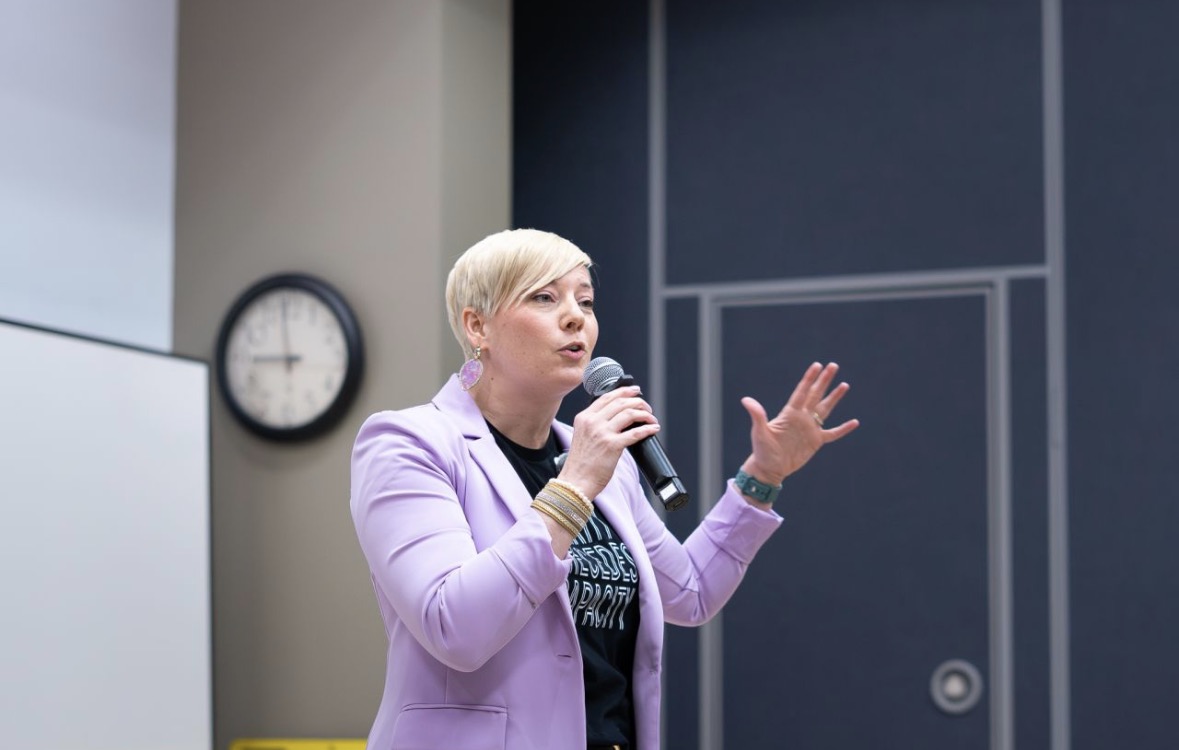
As always, we appreciate you sharing your insights and we’ve got a few more questions for you, but before we get to all of that can you take a minute to introduce yourself and give our readers some of your background and context?
I am Casey Watts, a dynamic national speaker, author, and researcher obsessed with clarity. Drawing on 20 years in education and 8 years coaching educators, entrepreneurs, and leaders, I developed the Clarity Cycle Framework to help leaders gain and create clarity in their organizations. Known for my authenticity and energy, I am a superconnector and trusted coach who helps women along the educational leadership pipeline stand firm in their integrity, say what needs to be said, and take the next bold step. I am also the founder and host of the Clear is the NEW Confident podcast, where my guests and I bring clarity to the seemingly small things in leadership that make a big difference.
I solve the problem of misalignment, for both individuals and organizations.
Too often, organizations notice a gap between what leadership says and what culture does. They have people on the same team, but on very different pages. When this happens in schools, not only does it result in gaps in student learning, it also results in a negative and stagnant culture. People attend meetings that feel pointless. Leaders continuously try to get people to “buy in” to campus goals, but either fall into neglect or micromanagement in their efforts.
But this work with organizations is only as effective as the leaders in them! There is also misalignment that shows up individuals. They may experience a gap between how they show up as a leader and how they WANT to show up as a leader. They rethink what they wish they would have said after a meeting on their drive home.
This is the gap I address through my book, keynote, and the Clear is the New Confident podcast — helping leaders close the distance between who they are and who they’re capable of being, using the three pillars of Goal Clarity, Emotional Clarity, and Social Clarity.
The moment this work became clear to me started in a district conference room with a group of first grade teachers, some Starbucks Frappuccinos, and a wall of tension I didn’t see coming. When I asked what they expected from our time together, no one spoke. Until Madison did. ‘We never know what’s going on,’ she said. In that moment I saw these two gaps simultaneously: the organizational gap between what leadership communicated and what teachers actually received, and the individual gap between what people knew needed to be said and what they actually said. Both gaps were costing people. That room is why I do this work.
Can you tell us about what’s worked well for you in terms of growing your clientele?
Connections and relationships- there is nothing more valuable.
In my sector, getting in front of people and making connections is the most effective and proven strategy for growing clientele. My goal is to create meaningful experiences for people during workshops, through my podcast, and when I provide virtual webinars or masterclasses. Once I have created an experience and they are part of my email list, I engage in extremely intentional and meaningful ways. It may be a personal story I’m sharing and inviting them to respond to. It may be a video or audio message that I’m sending, simply to allow them to hear my voice and feel more connected. Or, it may be a request to hop on a virtual coffee chat simply to get to know them and build trust. These small connections turn into relationships. Those relationships turn into referrals. And, while it is a strategy for building my business and generating revenue, it is also life-giving!
We often hear about learning lessons – but just as important is unlearning lessons. Have you ever had to unlearn a lesson?
“I’m not good at sales.” I know I’m not alone in telling myself this story. Since I began this journey into business, I have found myself saying this exact phrase and phrases like it: “I hate sales- it feels sleazy; It’s so uncomfortable to sell to people!; Who am I to charge this much??”
The truth, though, is that these are lies and limiting beliefs that cloud what COULD be the reality. The narrative I spin informs my beliefs. My narrative, based on what I’ve always heard and experienced (mostly at car dealerships or with the mobile phone guy in the middle of Target), is that sales was not for me and I would never be good at it. Because of this narrative, time after time I would get on calls and loosely state the price of my services, or bring the price down before we even had the chance to negotiate. Sometimes it left potential clients confused or left me feeling defeated.
What I’ve learned, though, is that sales is truly just a conversation. I am a great conversationalist and I enjoy connected with others. If I can reframe my mindset around “sales”, I can show up more authentically, more confidently, and more clear. I’m not saying I’m a pro at sales now. It is a reframe I have to practice regularly. But with each round of practice, it gets easier.
Contact Info:
- Website: https://www.catchingupwithcasey.com
- Instagram: https://www.instagram.com/catchupwithcasey
- Facebook: https://www.facebook.com/catchupwithcasey
- Linkedin: https://www.linkedin.com/in/catchupwithcasey
- Youtube: https://www.youtube.com/@catchupwithcase
- Other: www.clearisconfident.com (Substack)