


We caught up with the brilliant and insightful Candice Luebbering a few weeks ago and have shared our conversation below.
Candice, looking forward to hearing all of your stories today. Looking back, do you think you started your business at the right time? Do you wish you had started sooner or later
I wish I had started my business both later AND sooner and while that statement seems an impossibility, I promise I do understand how time works. Launched without a plan as a side hustle while finishing up graduate school, my business was a creative escape. When faced with pursuing the logical academic path or running fiercely in the other direction, I used my business as a destination for that full on sprint out of the ivory tower. But going from the years-long structure of the steps to obtain degrees to the wide open there-are-no-rules, there-is-no-plan of owning a small creative business, well, that transition was difficult to say the least. I wasn’t ready. I didn’t have my motivations for doing the business, I simply had my motivations for NOT doing other paths. Had I stayed the course I do think it would have worked out okay, and to be honest I would likely be further along than I am now, but it would have been a very rough ride. Instead, about a year and a half after trying the business full time, life and everything that goes with it, forced my hand a bit to return to the traditional path and I got a full-time job in my field which I then pursued for the next 7 years. And I liked the pay. And I liked the benefits. And I liked the supposed prestige. But I didn’t find fulfillment. I filled my time but not my soul. All the while I kept my small business alive on the side though sometimes dormant for months on end. It was a family emergency and subsequent loss that gave me the reality check. To do what you love now, to take risks, to not worry about what I was supposed to do in the eyes of whoever I thought was watching. At that point I walked away from the normal career and back into my business full-time, wishing I had done so sooner, because the #1 job benefit it offered, despite all the challenges that comes with it, is happiness.
As always, we appreciate you sharing your insights and we’ve got a few more questions for you, but before we get to all of that can you take a minute to introduce yourself and give our readers some of your back background and context?
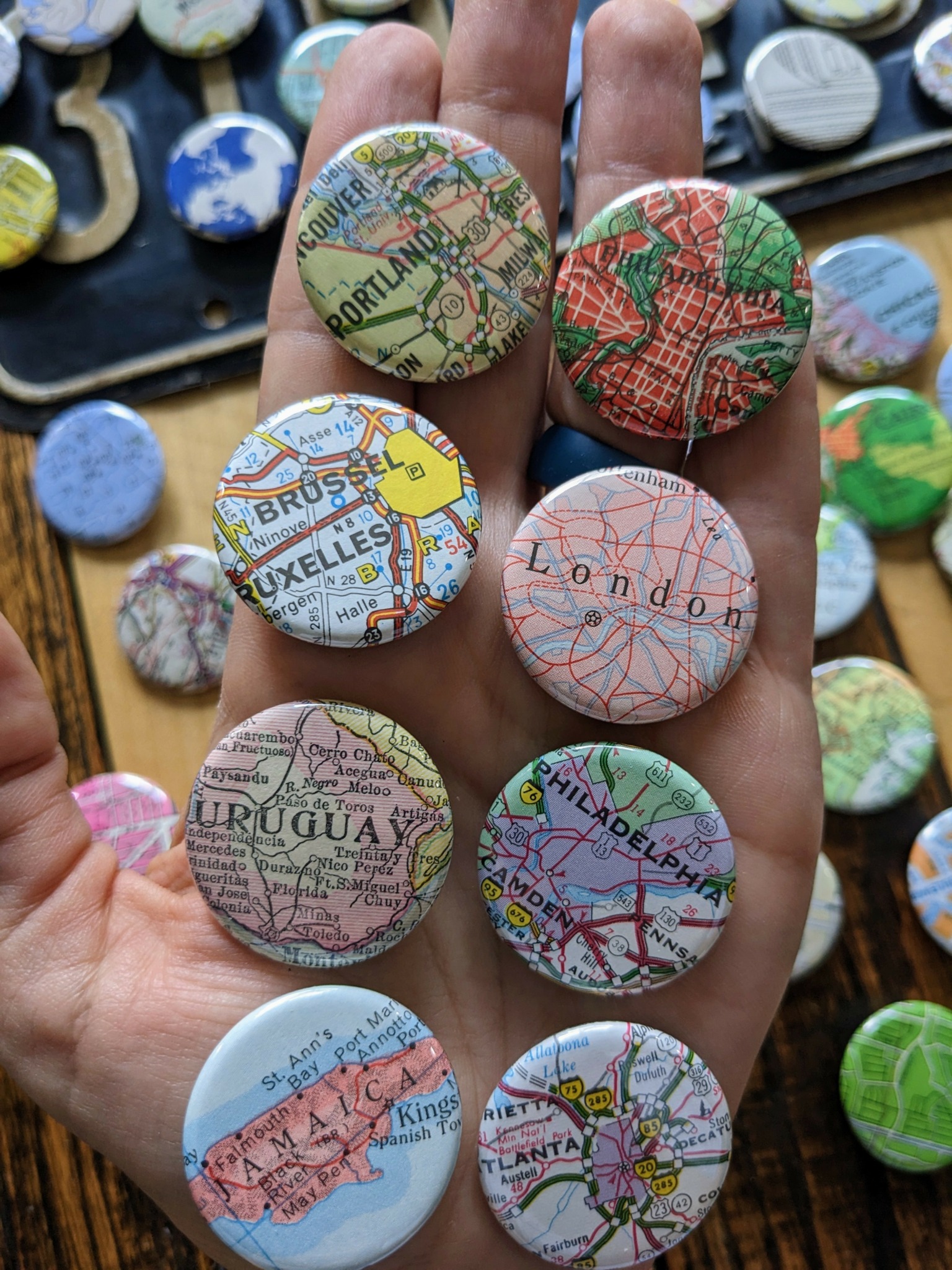
I am a geographer-turned maker that combines my map nerdiness with my repurposing roots. While in graduate school and wishing to escape the computer screen for a bit, I found myself amassing old atlases and maps. Not ones that are super old and valuable, not ones that are current enough to be useful, but that niche of outdated maps that folks cull from their cars and homes. The collection grew and I knew I better do something with them or it simply looked like I was a niche hoarder.
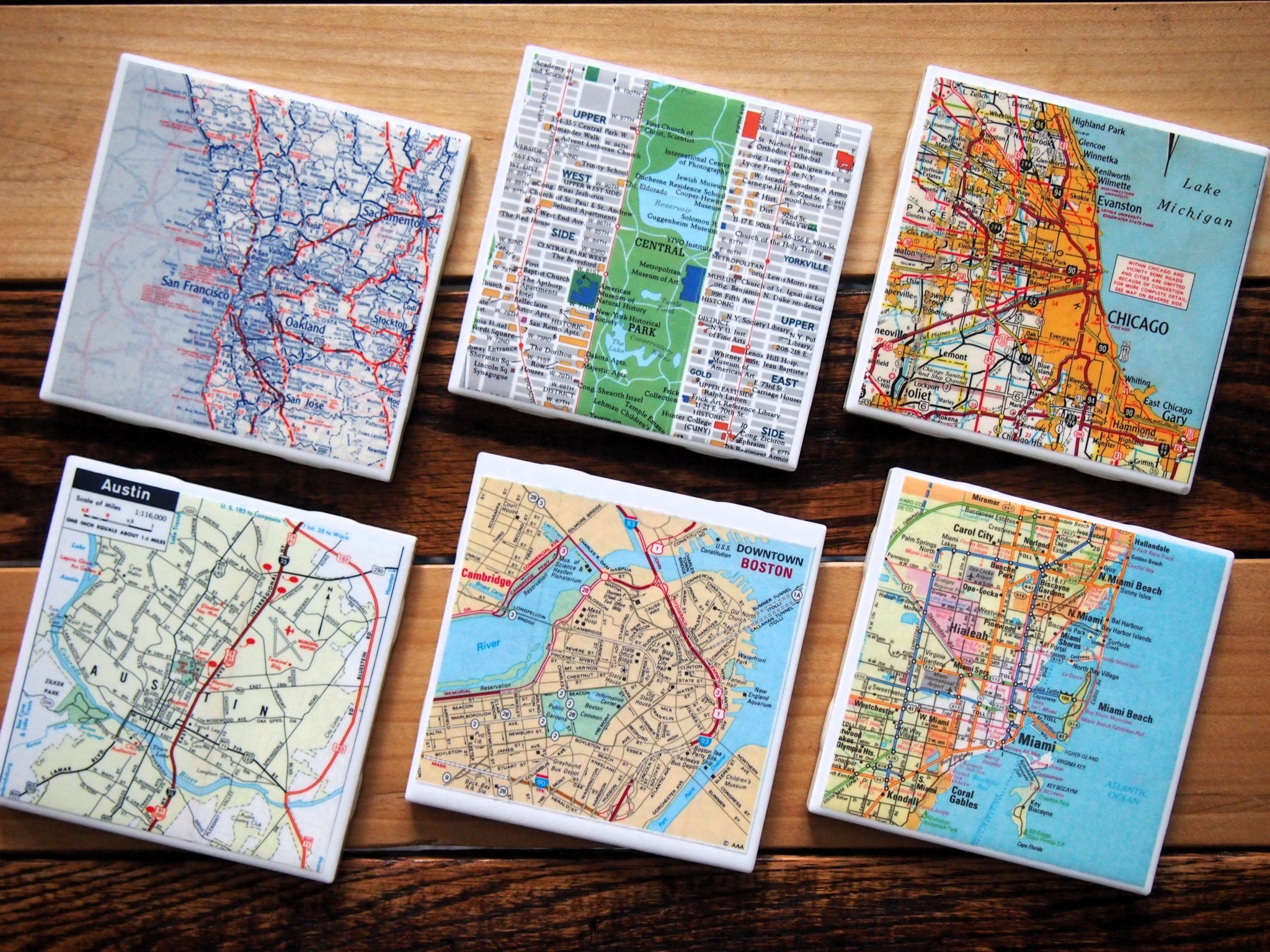
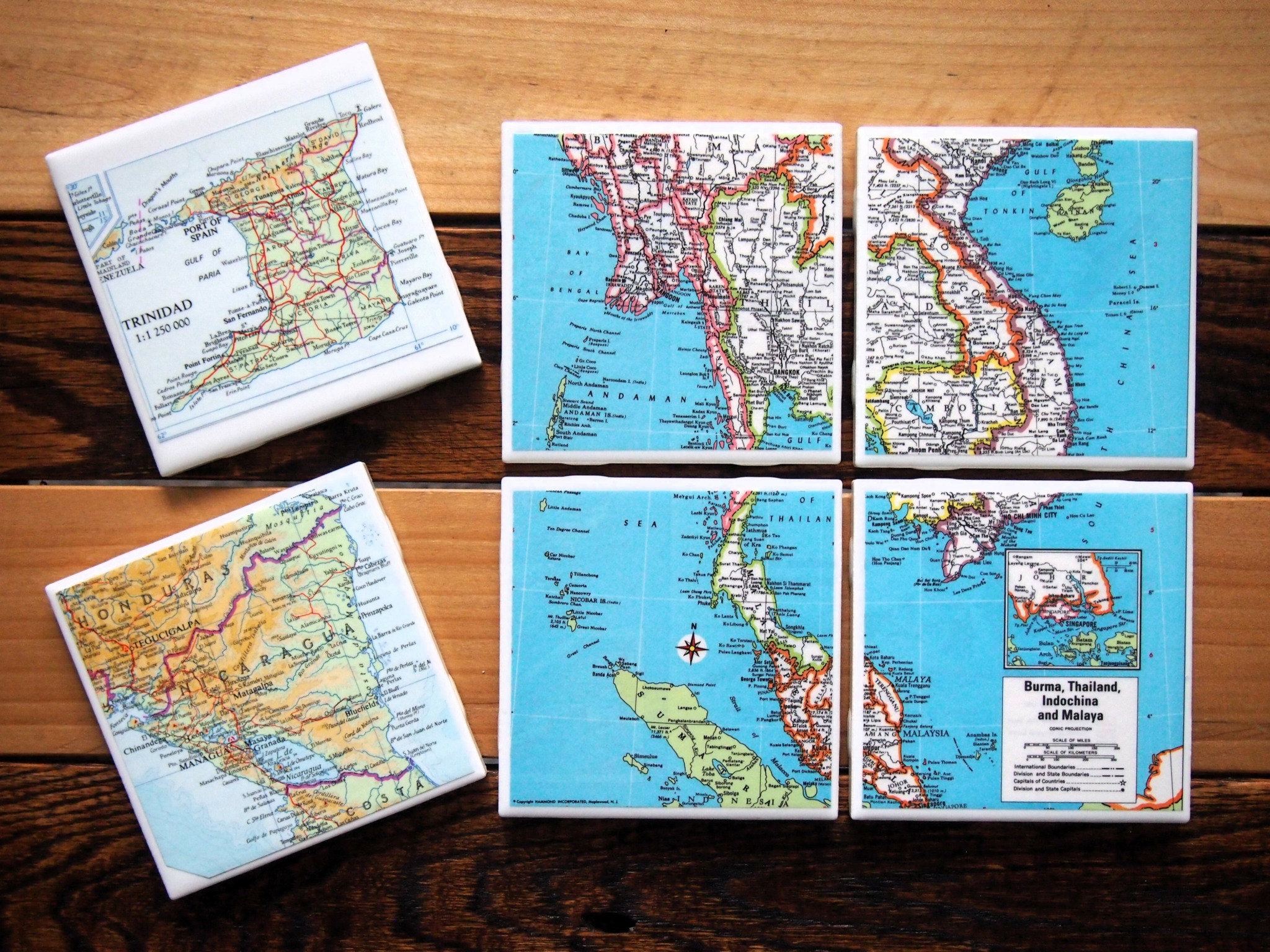
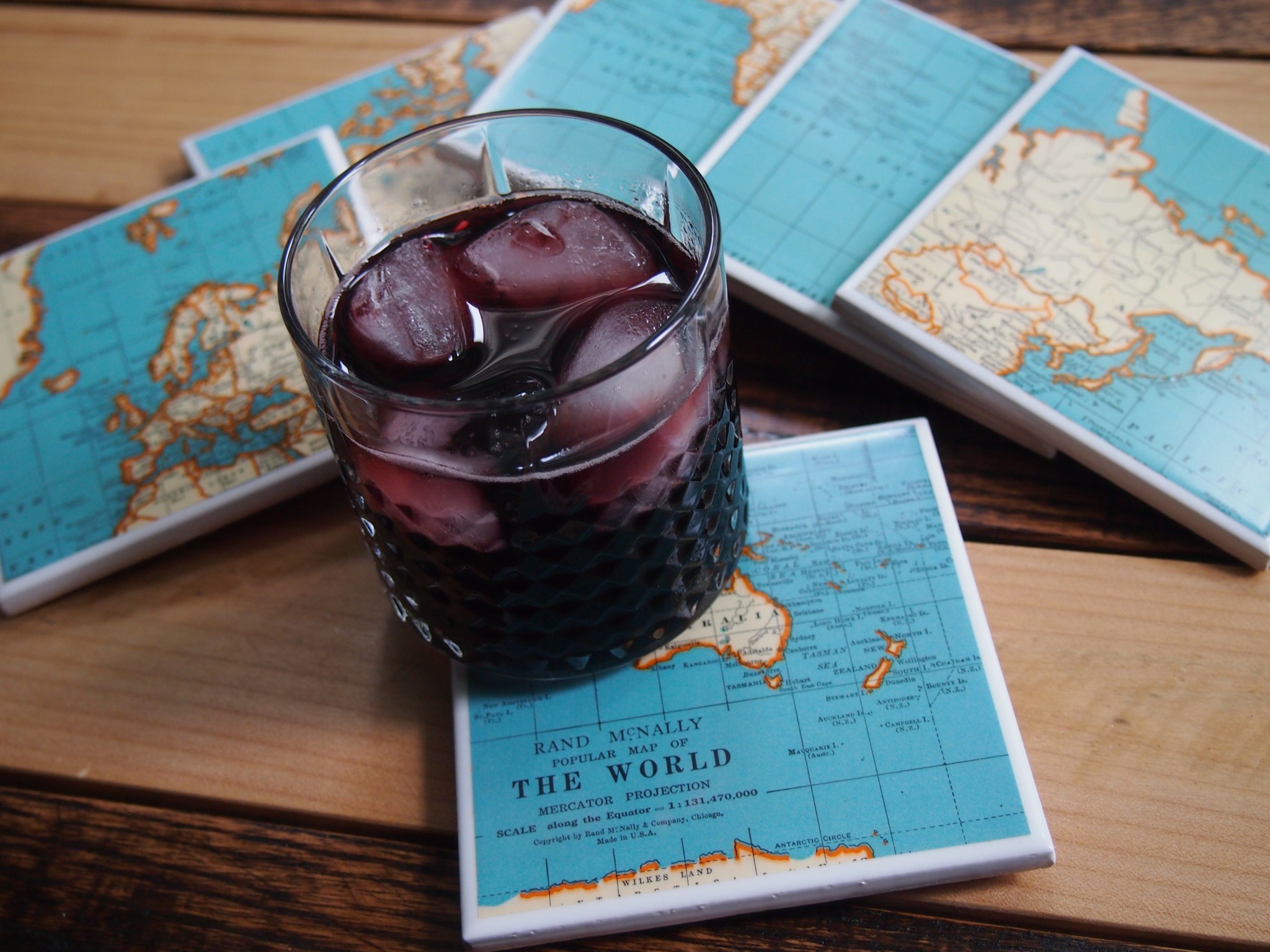
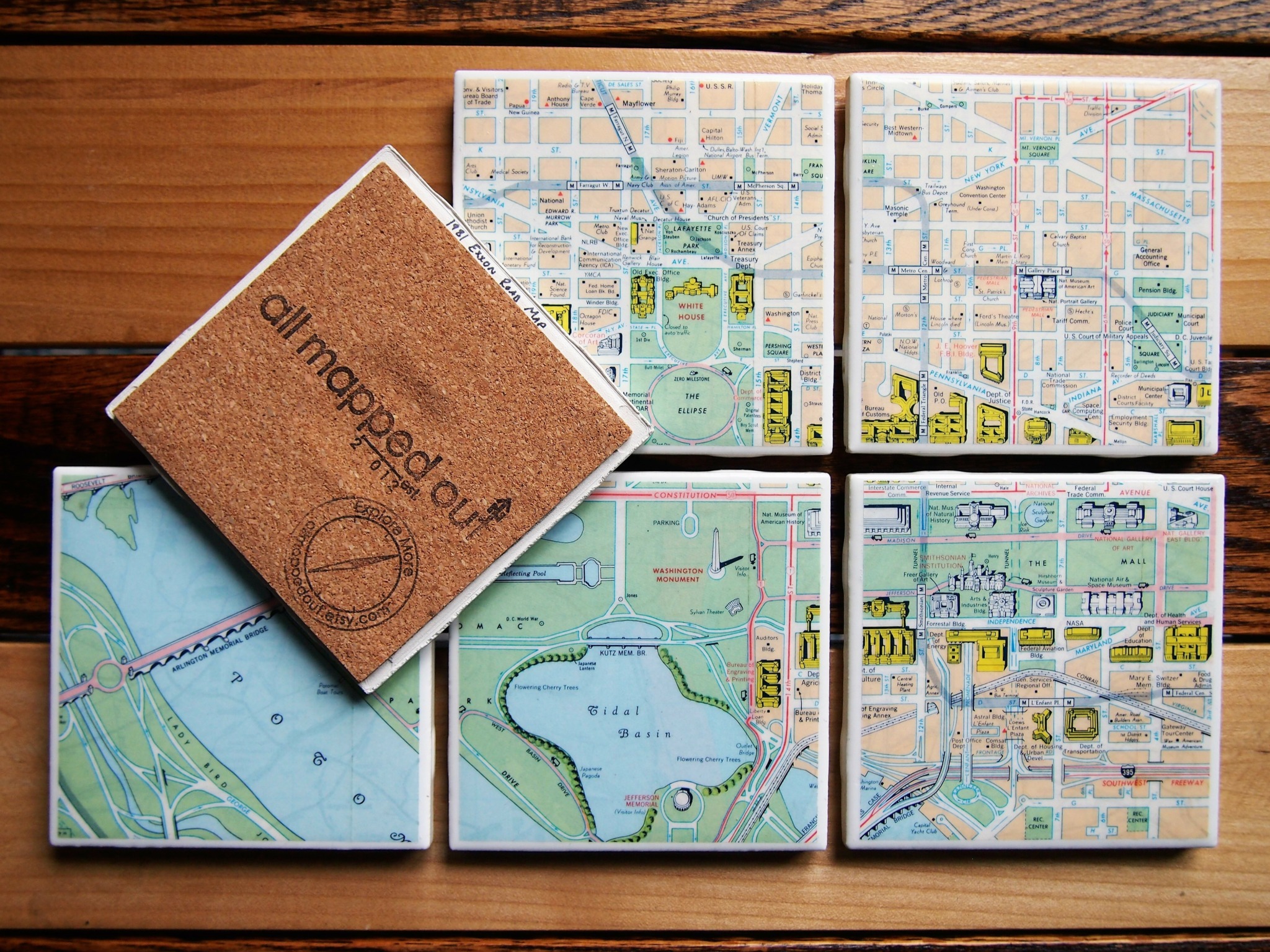
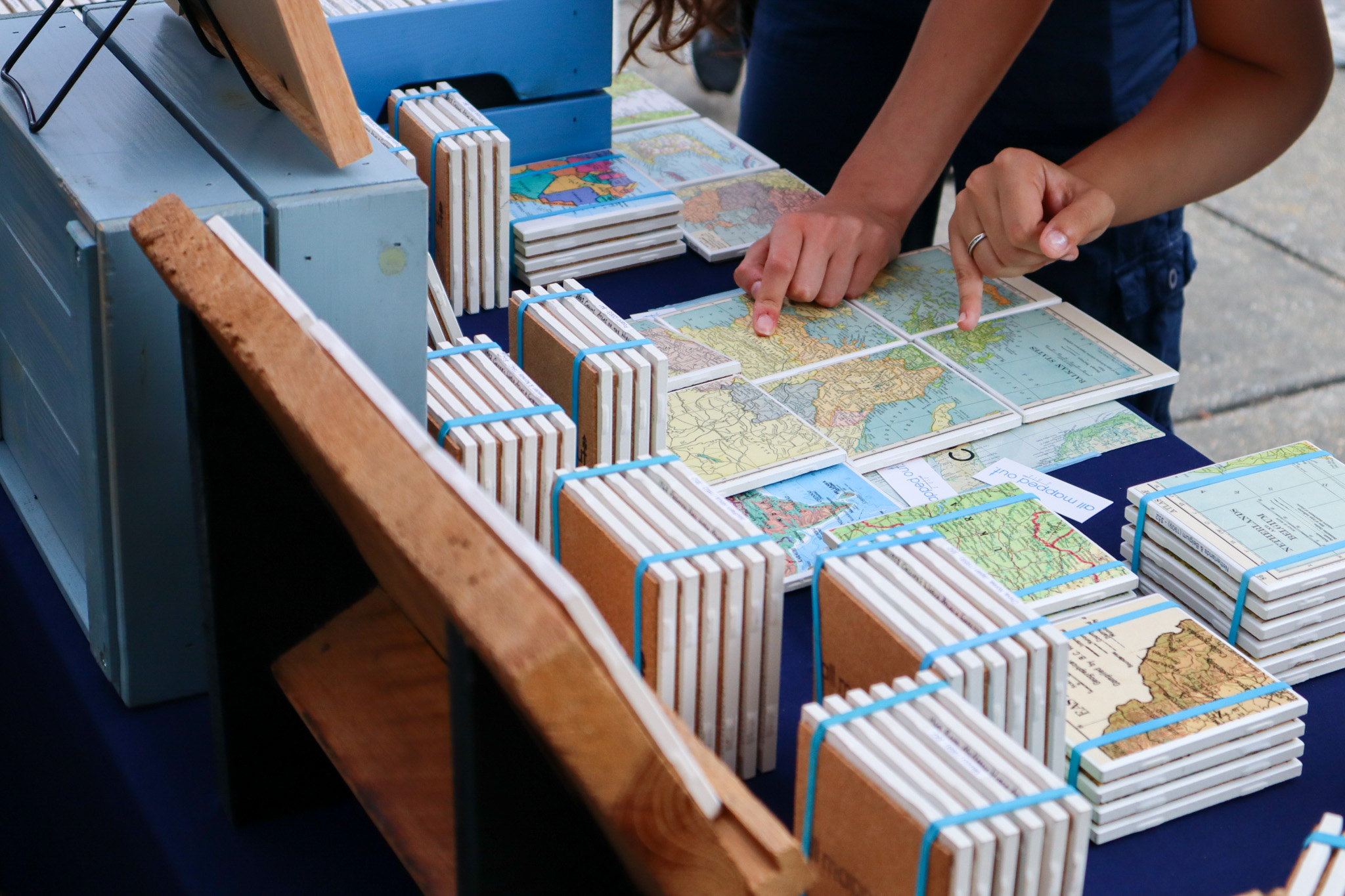
I started playing with the idea of coasters (which I would refer to as cartographic condesnation catchers). These ‘outdated’ maps were still works of art and science, they would still serve as reminders and conversation starters of places someone has lived, loved, studied, or someday hopes to go. And having learned from my parents the creative joys of repurposing objects, of using the old to make something new, I specifially wanted to repurpose old maps. No copies, no reprints, no fulfilling an order of 50 of the same map/place. No, I track every map I use. Every coaster item has the map source (year and title) handwritten on the back and unless I happen upon another map, atlas, or textbook of the same vintage and publisher, that coaster item is one-of-a-kind. That’s where the nerdiness comes in, with my mega spreadsheet tracking each coaster and source. That’s what makes an extra special connection with my customers when they find their place and its snapshot in time and they scoop it up for themselves or a loved one.
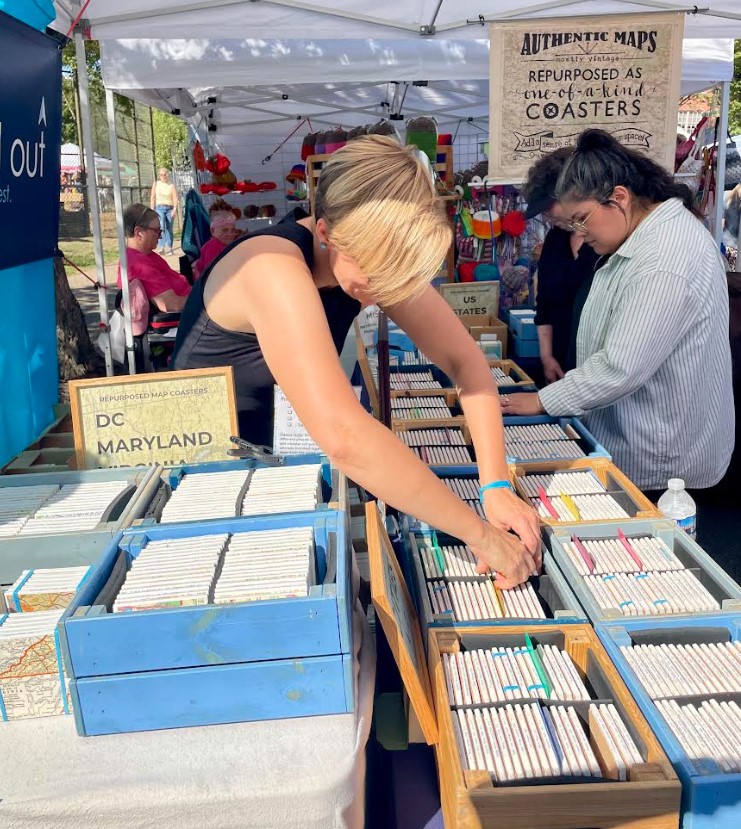
I also don’t just make the most populous or popular places. I try to make a little bit of everywhere, because every ‘where’ is special to someone. So if a map fits nicely on a single coaster or across a set (sets align to reform the map like a puzzle), then I’ll make it and I’ll travel around with it to various markets until it finds its person. From Albany to Zurich, from Paris, France to small Kankakee, Illinois, I strive to feature as many places as I can and I relish in connecting with customers over our personal geographies and sharing the places that we each find special in our lives. I get to talk about and learn more geography through my small business than I did as a professional geographer working for nonprofit organizations. How cool is that?
Okay – so how did you figure out the manufacturing part? Did you have prior experience?
I am a one person manufacturing business, a maker party-of-1. That is the extent of my business growth goal. I don’t want to hire a team, I don’t want to offload production elsewhere, I want to make a living making things with my hands. Obviously that means very different things for concepts like scaling, efficiences, and logistics. It means that what appears overall as small, subtle changes to others, are large fundamental improvements for my business.
To initially make my product, it was trial and error. Finding the right ceramic tiles (and ones that I can regularly and reliably source), experimenting with production steps to get the right finish, trying out different physical setups to make the process more efficient. In recent years I’ve gone from brush-coating coasters in my bathroom while donning a respirator, to lacquering trays upon trays of coasters with a spray gun in a specialized booth at a woodshop. This has made a massive difference in my business and my ability to make enough product to make a living. And it wasn’t even my idea! I took a part-time job at the woodshop to supplement my income and learn some new skills. My employer there suggested I try out this different approach to my product and voila – he helped me make a huge leap in my manufacturing process.
Be open to new opportunities and suggestions. Be willing to try doing things differently both in small, subtle ways and with entirely new processes. You never know what might stick – what might be the best fit for you. You never know what small change will reap big benefits. And be ready to pivot – when a supplier goes out of business, when an input cost forces you to look elsewhere, when you realize your knowledgebase is lacking and you need to ask about, study up on, and practice other ways of doing things. We are all lifelong learners and if you embrace being one as a business owner, it will help you adapt and grow.
Learning and unlearning are both critical parts of growth – can you share a story of a time when you had to unlearn a lesson?
Perfectionism will eat you up. You may think it will drive you to make the better, best product. You may think it will be the difference maker as to why your work will rise above others. But it may actually take you down. Early on I obsessed with getting things perfect. Always straight lines, right angles, perfectly smooth finishes, crisp labels, flawless script. But it can drive you mad. And it also can leave you striving for a benchmark that no one else is requiring of you.
Yes, you should have standards. Yes, there should be things that are unacceptable – metrics for cutting things that miss the mark. But perfection, particularly in the handmade business, is not the metric. It’s not even what people are looking for. In a world of AI and mass production, customers are looking for signs that the product is handmade, human-made, produced on a small scale. That’s what makes it unique and special. There are many small things that I would previously use to harp on myself about, until I realized over time that NONE of my customers saw those things. Things that are glaring to you, the maker who is ridiculously close up and knowledgeable of every little detail, are often invisible to your customer. Or more than that, what you may view as a flaw, they view as another positive marker of a product’s handmade origins.
Strive for the best that you can do, the best that you can make, and for improving your craft over time (I’m not suggesting anyone just settle!). But don’t set the standard so high that it’s unachieveable, it’s maddening, and is unnecessary for you to create something high quality and beloved by your customer base. It doesn’t have to be perfect, or what you perceive to be perfect, to be perfectly great.
Contact Info:
- Website: https://www.allmappedout.co/
- Instagram: https://www.instagram.com/all_mapped_out/
- Linkedin: https://www.linkedin.com/in/crluebbering/
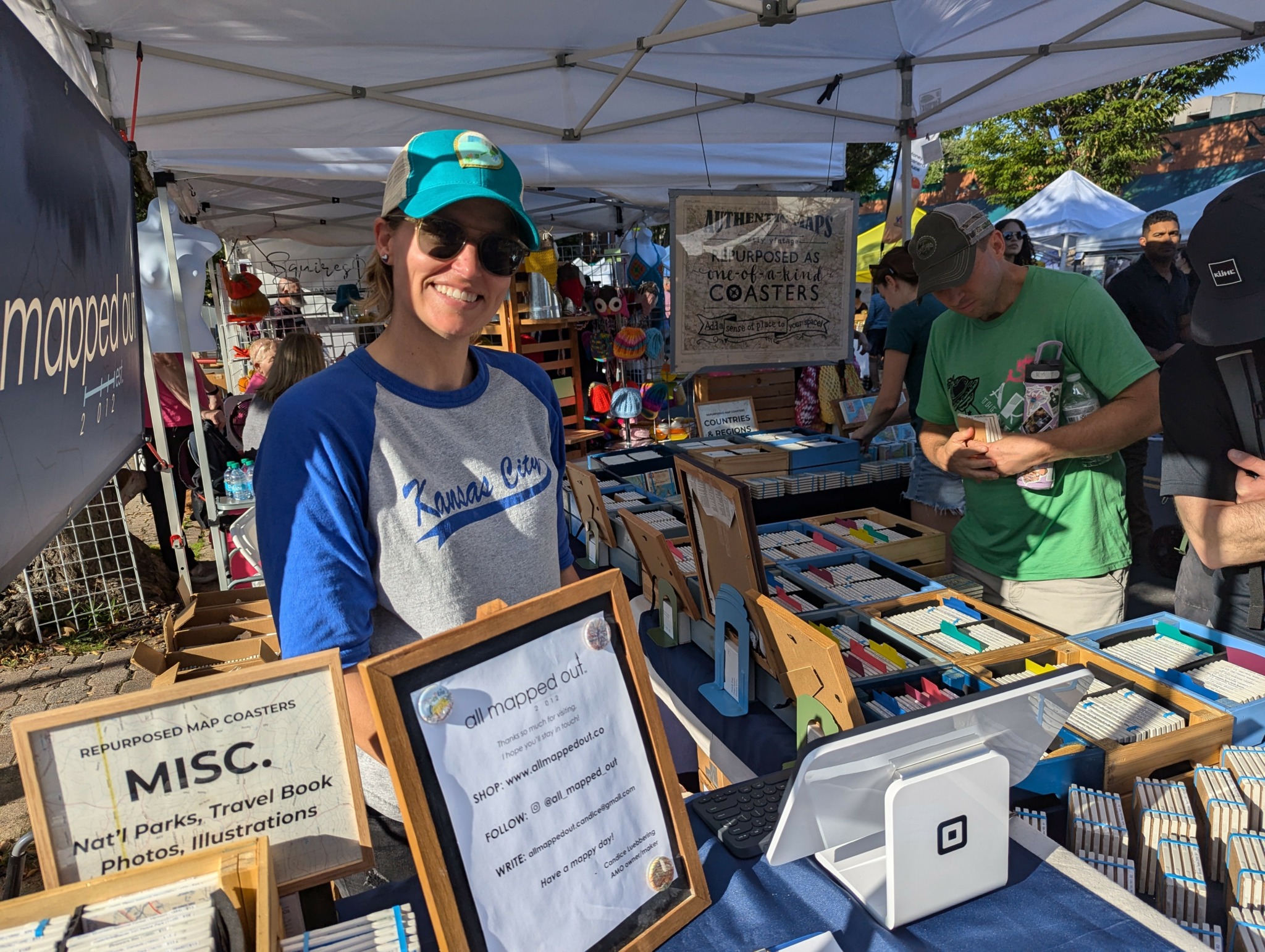
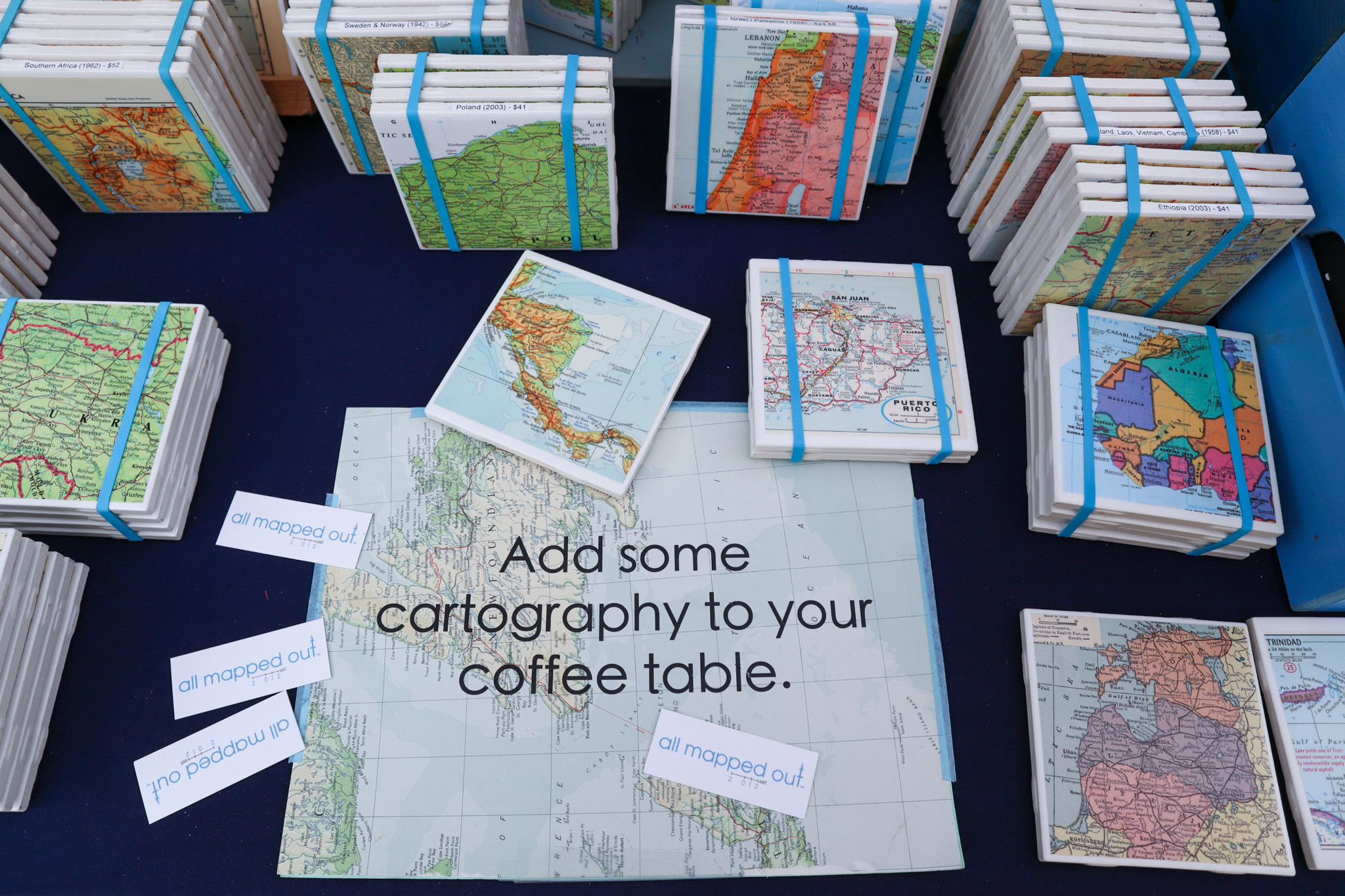
Image Credits
Candice Luebbering, Kayla Galczynski, Greg Osburn