

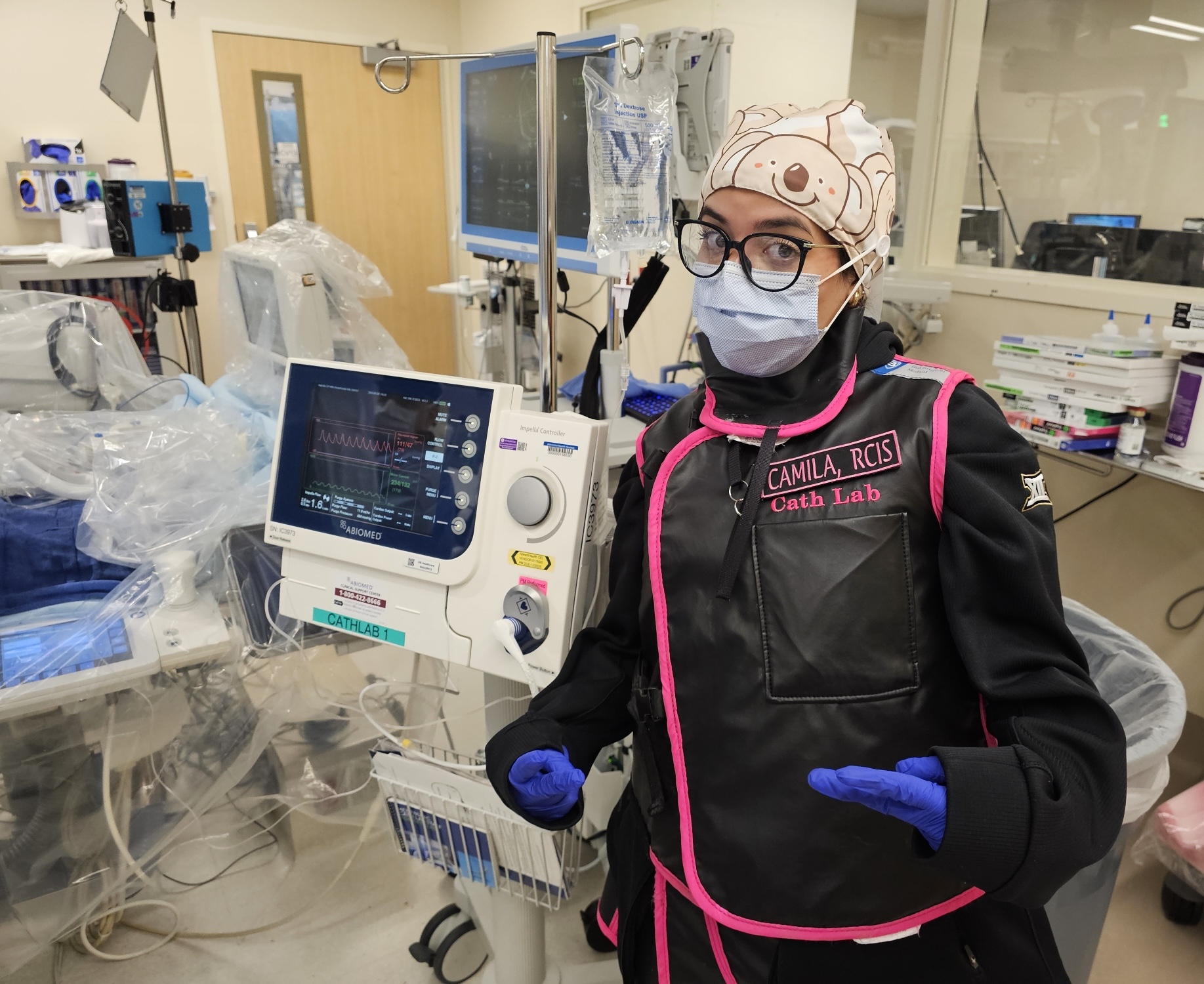

We’re excited to introduce you to the always interesting and insightful Camila Tortolero. We hope you’ll enjoy our conversation with Camila below.
Hi Camila, thanks for joining us today. What was your school or training experience like? Share an anecdote or two that you feel illustrate important aspects or the overall nature of your schooling/training experience.
When I started nursing school, I thought I had a little head start. I had already been working as an RCIS in the cath lab. High acuity. Fast pace. Critical situations. I knew my way around a sterile field and I could anticipate complications before they happened.
So I walked into clinical like, okay I got this.
And then nursing humbled me real quick.
I remember watching a nurse give handoff report and realizing it was not just about labs and meds. She talked about how the patient was anxious because their daughter had not visited. She mentioned that he barely slept. She noted that he was scared but trying not to show it.
In the cath lab, care is intense and focused. You fix the problem. You stabilize. You move. But in nursing, you stay. You see what happens after the procedure. You see the fear, the family dynamics, the teaching, the quiet moments when someone just needs reassurance.
That was new for me.
There was a shift in my brain where I realized being clinically strong is not the same as being present. Nursing forced me to slow down and actually listen. Not just assess. Listen.
And let me be honest, going from being confident in my role to being a student again was uncomfortable. Asking questions. Getting corrected. Feeling like a beginner. My ego had to sit down for a second.
But that experience made me better.
Training has taught me that growth requires humility. It taught me that knowing a lot is different from caring deeply. And it reminded me why I chose this path in the first place. Not just for the science. For the people.
Nursing did not just expand my skill set. It expanded my heart.
Awesome – so before we get into the rest of our questions, can you briefly introduce yourself to our readers.
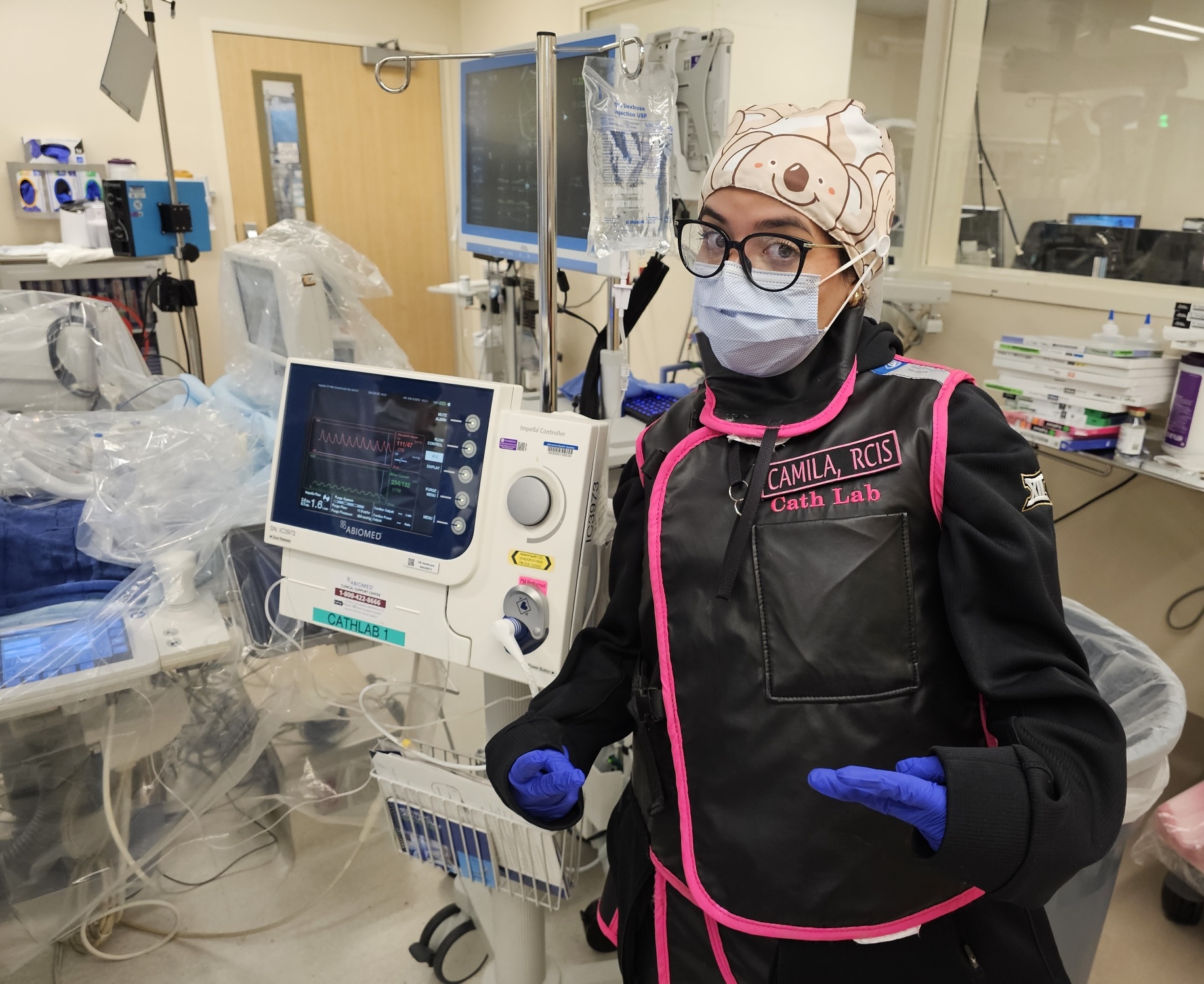
My name is Camila Tortolero and I currently work as a Registered Cardiovascular Invasive Specialist while also pursuing my nursing degree. My career has lived in high acuity hospital spaces, specifically in the cardiac cath lab, where every second matters and every decision can change an outcome. I did not grow up thinking I would work in invasive cardiology, but once I stepped into that environment and saw the combination of science, precision, and real human vulnerability, I was hooked.
I got into this field through curiosity and grit. I have always been drawn to spaces where there is intensity, teamwork, and purpose. The cath lab is exactly that. You are working with physicians, nurses, techs, anesthesia, all moving in sync while someone’s heart is literally on the line. It teaches you discipline very quickly. It also teaches you humility.
Over time, I realized I wanted to expand my impact beyond procedures. That is what led me to nursing school. I wanted to understand the full patient journey, not just the intervention. I wanted to be part of the education, the advocacy, the long term care, the emotional support. Nursing allows me to combine technical skill with relational care, and that balance feels aligned with who I am becoming.
Professionally, I provide high level cardiovascular procedural support in the cath lab and I am training to provide holistic bedside nursing care. I solve problems in high stress environments. I anticipate complications. I support life saving procedures. I translate complex medical information into something patients and families can understand. I step into moments where people are scared and try to make them feel safe.
What sets me apart is that I understand both worlds. I understand the fast paced, procedure driven side of acute care and I deeply value the slower, human side of nursing. I am comfortable in critical situations, but I also care about the conversations that happen after the monitors quiet down. I bring emotional intelligence into technical spaces.
I am most proud of choosing growth over comfort. I built experience and confidence in one role and still decided to challenge myself by going back to school. Starting over is not glamorous. It is humbling. But I am proud of betting on myself anyway.
If there is one thing I want people to know about me, it is that I care. I care about doing things well. I care about people feeling seen in vulnerable moments. I care about becoming excellent, not just competent. And I am not afraid to evolve. My brand, if you want to call it that, is growth with intention, heart with skill, and showing up fully in whatever room I am in.
What do you think helped you build your reputation within your market?
Working in the cath lab, your reputation builds fast. It is not something you announce. It is something people observe.
For me, it came down to consistency. I show up prepared. I know my cases. I anticipate what the physician might need before they ask. In high acuity settings, that matters. When someone’s heart is literally on the table, hesitation is not cute.
But technical skill is only half of it.
I learned early that people remember how you make them feel during stressful moments. I stay calm. I do not panic out loud. I communicate clearly. I treat every member of the team with respect, from the newest tech to the most senior physician. That kind of steadiness builds trust.
I also ask questions. Even now. Especially now as I transition into nursing. I do not pretend to know everything. Ironically, that humility has strengthened my reputation more than pretending ever could.
My market is high pressure medicine. What helped me build my name in it was simple. Be prepared. Be steady. Be teachable. Repeat.
Any advice for managing a team?
In procedural medicine, morale is everything. You can have the smartest people in the room, but if communication breaks down, everything feels chaotic.
The best teams I have worked with share three things. Respect. Clarity. And emotional regulation.
Respect means everyone’s role matters. The circulator. The scrub. The tech. The nurse. The physician. No ego. When people feel valued, they perform better. It is that simple.
Clarity means saying what you mean. In critical situations, vague communication creates stress. Direct and calm communication lowers it.
And emotional regulation is underrated. If the leader spirals, the room spirals. Staying composed does not mean you do not feel pressure. It means you manage it in a way that protects the team dynamic.
My advice is this. Create environments where people feel safe to speak up. Recognize effort, not just outcomes. And remember that morale is built in small moments long before a crisis ever happens.
High performing teams are not loud. They are aligned.
Contact Info:
- Instagram: https://www.instagram.com/oncallcami?igsh=MXE5bjNmeDlmZGVpdQ%3D%3D&utm_source=qr
- Linkedin: https://www.linkedin.com/in/camila-tortolero-7440371a0?utm_source=share&utm_campaign=share_via&utm_content=profile&utm_medium=ios_app