

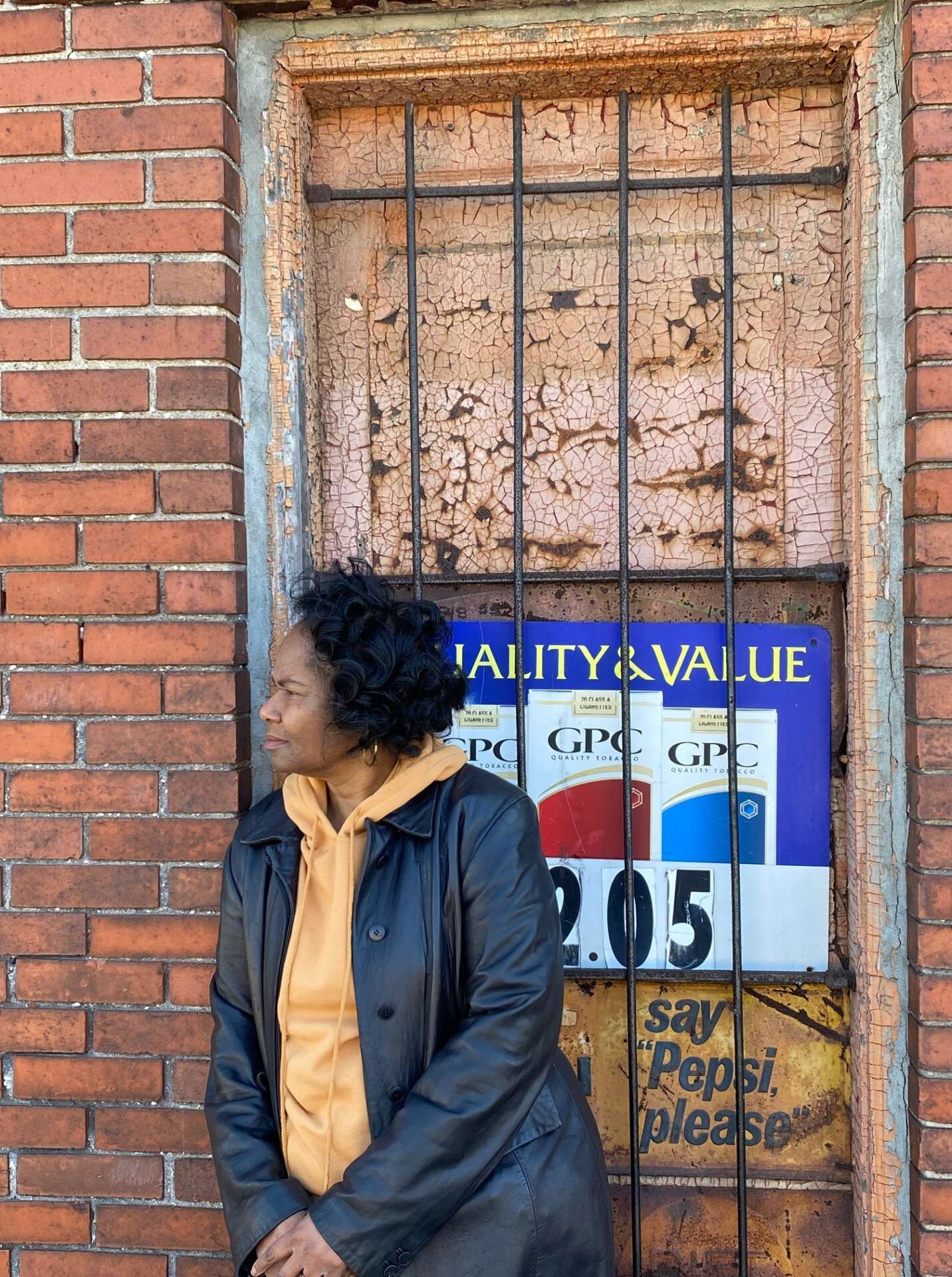

We recently connected with Brinda Devine and have shared our conversation below.
Great, appreciate you sharing that with us. Before we ask you to share more of your insights, can you take a moment to introduce yourself and how you got to where you are today to our readers?
I started in commercial real estate about 25 years ago managing portfolios of commercial real estate assets, along with real estate development and brokerage. In 2020, I started P8 Real Estate Solutions to focus on small-build neighborhood development. Currently, I am rehabbing a vacant mixed-use commercial building into a neighborhood marketplace called Kornr Store. The 1,566 sq. ft building is located at 6224 16th Street, Detroit, 48208 in the historic NW Goldberg neighborhood and was once operated as Crockett Grocery. Kornr Store fits within the neighborhood footprint and will offer what I call “life essentials”, which include healthy food and drink options, a coffee bar, some fruits and vegetables, prepackaged breakfast and lunch foods along with a mix of marketplace goods. Plans are for Kornr Store to open Spring 2023 as an amenity to the neighborhood and a fun place to start your day with coffee, eating something healthy, and catching a cool vibe.

Let’s talk about resilience next – do you have a story you can share with us?
Being a Black woman in commercial real estate requires a resilient mindset particularly because the industry is predominately White men and even more so, as a developer seeking capital for your small build project. In commercial real estate, you have to be resilient to manage multiple tasks, think through problems and opportunities to work towards the best solution at the time. My story – I have spent my entire career behind a desk working for organizations that supported large-scale development projects; however, none of the projects were owned by Black developers or other People of Color. In 2020, I decided I wanted to be a developer so I applied to Capital Impact Partners’ Equitable Development Initiative (EDI), a national minority developer program within Detroit so that I could get an idea of what it was like to be on the developer side of the table. I graduated from the EDI program and was naïve in thinking that my experience and education would be the weight to help me secure a commercial bank loan for my Kornr Store project. I sadly discovered that a Black developer’s lending experience is drastically different from their White counterpart in that they are burdened by bias, structural racism, an investment market interested in +$10 million projects, and bank underwriting that favors the familiar – that is a borrower the loan officer knows and has done business with in the past. Within that larger framework, I discovered that there is no investment market for small-scale neighborhood developments like my project Kornr Store. So, for small-build developers, you will have to be resilient in seeking every opportunity to access capital for your project which in my experience includes grant funds, crowdfunding, and personal funds.


What’s a lesson you had to unlearn and what’s the backstory?
The lesson that I had to unlearn is the idea that my 25+ years of professional experience in commercial real estate, education, credit score, site control, and 25% equity dollars in my Kornr Store project carried enough weight in a lender’s underwriting process to secure a commercial real estate loan. I learned that while important, none of those points individually or collectively really mattered. I learned that lenders tend to lend based on familiarity – people they’ve done business with in the past and large million-dollar projects with predictable success for repayment. Black women are not typically within a banker’s business circle, so they and their projects are unfamiliar to bankers and subsequently, it’s easy for banks to not approve Black woman developers’ loan requests.
I also learned some local lenders love and support your real estate project and want you to succeed, but their hands are tied with regulations, underwriting criteria, loan investment committees, and national lenders that make the final decisions for communities they don’t live in.
Finally, I learned that more people (including me) typically have the mindset, “If it’s not happening to me, then it must not be happening”. The majority of people in Detroit and its surrounding metropolitan areas don’t think twice about getting in their cars and driving miles to shop at a grocery store. But that’s not the experience of thousands of Blacks, other People of Color and seniors that live in Detroit neighborhoods and throughout the United States that do not have grocery stores within/ near their neighborhoods or access to transportation. So, the quick solution is to shop at gas stations and dollar stores and consistently eat unhealthy fast food. But because this problem is not happening to the majority of the population, it’s not perceived as a problem. When actually, it’s a huge well documented problem tied to legacy health problems within the Black community. In my mind, this problem should be solved, and I believe in addition to existing resources, my project Kornr Store can be part of a neighborhood solution.
Contact Info:
- Website: https://www.kornrstore.com/
- Instagram: @kornrstore
- Facebook: https://www.facebook.com/kornrstore
- Linkedin: www.linkedin.com/in/p8realestatesolutions
- Other: https://womendevelop.org/
Image Credits
Brinda Devine