

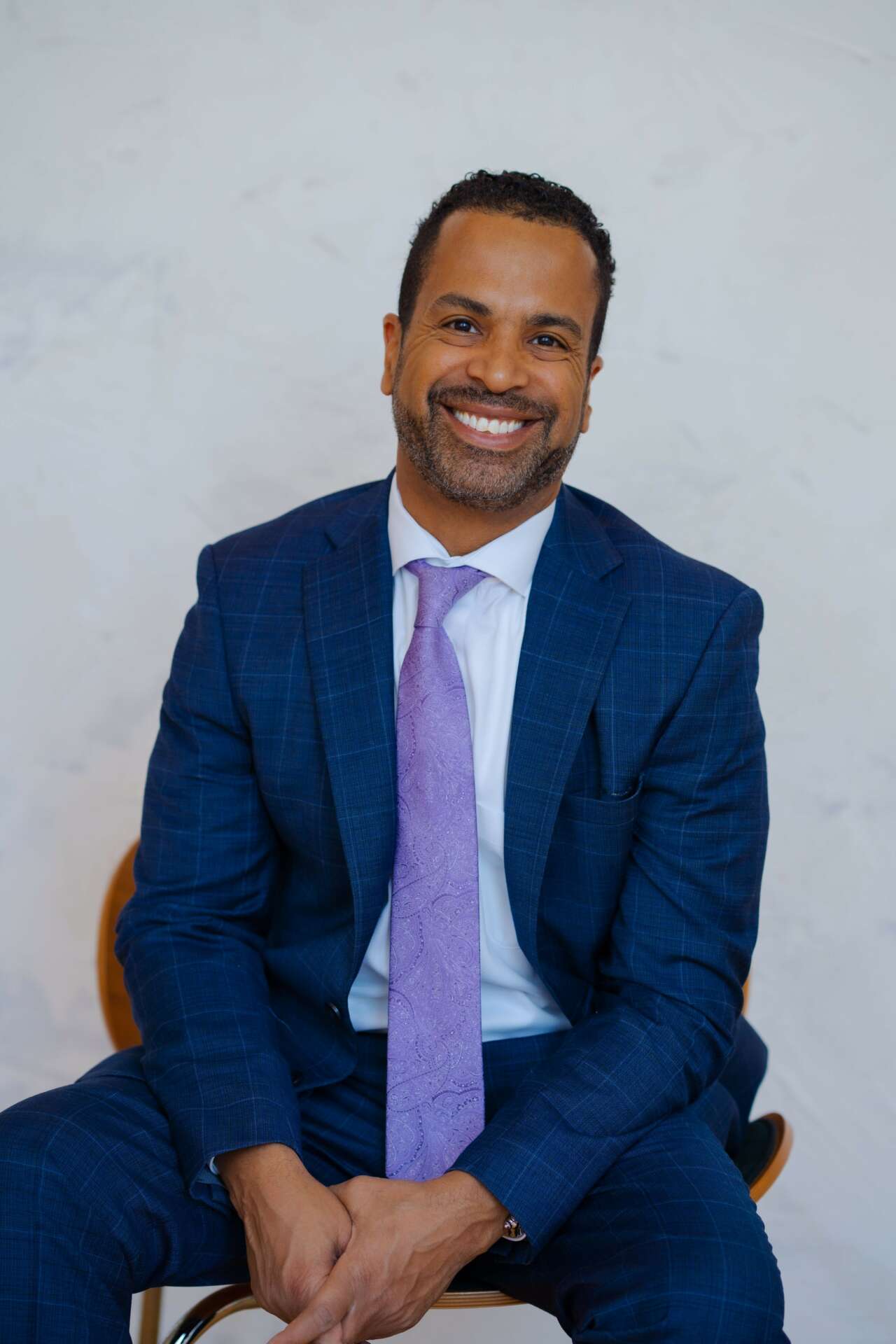

We recently connected with Brian Thomas and have shared our conversation below.
Alright, Brian thanks for taking the time to share your stories and insights with us today. Let’s kick things off with your mission – what is it and what’s the story behind why it’s your mission?
I own a Plaintiff’s personal injury firm. My clients are people who have been injured due to the negligence of others. One thing about my practice that goes overlooked in jokes is when my clients get to me. I have a client right now who is fighting in a hospital trying to get his life back after being hit by a car while crossing the street.
There are many layers to me and one of them is that I am a kidney transplant patient. I have had two transplants, one when I was 13 and my second at 32. Having been the hospital for many weeks at a time and living with a chronic illness, I understand what it is like to lose good health. From having other health issues related to the kidney transplant, I understand chronic pain. I understand how it wakes you up in the middle of the night, how it effects your sleep and how that can affect you for days. I understand the frustration of not being able to do the things that you used to do and how that leads to mood changes and depression. I understand feeling useless around the house when your spouse/roommate/family does housework that you are physically incapable of doing. It sounds like a mini-vacation not being able to take out to trash or mow the lawn. and maybe it is for a week or two, until it creeps into your psyche that you are less than because of it.
I could tell you all the ways this makes me a better advocate for my clients. Yet the WHY of my practice is to get people to better health. I make it my job to cheerlead and counsel and coach my clients letting them know that better health is possible. I allow myself to be an example. If I can come back from a couple kidney transplants and three hip surgeries (needing two more!), then they can too. It may not be necessarily easy, but I find that giving people an example of someone how has their own health challenges and now thrives — in part because of it– can help people along in their recovery.
Much of my mission revolves around mindset: viewing myself as someone who thrives in spite of hurdles and obstacles rather than just survives them. I recently authored a book, The Privilege Race, that discusses mindset over circumstance. My goal in writing the book was to rather than help one person in the Chicago area at a time in my practice, to be able to expand the reach of mission and help people around the country.


Brian , before we move on to more of these sorts of questions, can you take some time to bring our readers up to speed on you and what you do?
As I said I am a lawyer. My parents started my journey into law… I’m not certain I had much choice. They moved into a school district they knew would propel me into college. My parents did not graduate from a traditional four-year college out of high school– my father eventually went to night school when I was in high school. One day my senior year of college, I received a phone call from a LSAT test prep course saying I was signed up and had to show up in the morning for the start of the class. My parents signed me up for that class, along with the LSAT and after being accepted into law school, physically drove me to the school to get scheduling and finances together.
I provide this context because I am not certain “being a lawyer” is what I wanted to do rather than what I was told I should do. After graduating law school, it took me a few years to find my footing. But starting at Faklis & Tallis as an associate attorney in my fourth year as an attorney, I was able to find my way. My managing attorneys taught me how to practice and I was able to find my way by finding my why.
I have owned Thomas Law in Chicago for over ten years. My law firm represents people who have been injured at work or due to the negligence of others. Our approach is to multi-faceted: we first work with our clients through medical treatment with the goal of getting them back to the same level of health they were in before the acute event and then we seek or maximize compensation for their losses. To our firm, the first is most important– because anyone who has lost their health knows that health is much more important than money.
I also provide the context of my parents, because if it wasn’t for their push– I question whether I would be practicing law. I certainly do not regret it, but it is something that piques my curiosity. I love to write. I love puking my thoughts and feelings onto a page and then massaging them into a message. 15 years ago, my love of writing looked like producing a blog for ChicagoNow called Your Doubting Thomas which discussed state and national politics. However, I found that the toxicity of writing about politics was something I carried with me for days. I loved writing. I loved politics. But putting them together was detrimental on my mental health. So I moved away from writing for some time. However, over the last two years, I wrote my book, The Privilege Race, due to be released in February 2024. My goal for the next ten years is to write and speak on mindset while practicing law and managing my firm. It puts together my two great professional loves.

Let’s talk about resilience next – do you have a story you can share with us?
I started my law firm, Thomas Law, when I was 40 years old. The start was strange, because my vision was different from that of my partner at the time, yet I didn’t have the guts to break away myself and start my practice to mold the vision of my firm. My partner notified me he wanted to exit our partnership agreement on my fortieth birthday. I remember exactly where I was when I got the email: sitting in a box at the United Center watching Illinois take on Indiana in the Big Ten tournament with my friend Gus. I also remember the gut punch that email was. And how I had to hold myself together until I could figure out my life later when I returned home. we just sold our home in the city and was un the process of moving to the suburbs.
The next 60 days spent — was creating letterhead, a logo, getting phone numbers, getting malpractice insurance, all thing things necessary to open a new company. I was doing this while we were packing up all of our belongings, including our two children, four and one at the time– and seeking to buy a home in the suburbs.
On day one of my new venture, I didn’t know I could do it. One some deep level, I questioned whether I could. My commute to work that first year or two was riddled with anxiety. Would I be able to support my family? How would I find clients? How would I be able to build a practice? These questions swirled through my head for months, if not years.
I found that showing up to work every day and doing the work was the antidote. I was going to court, I was taking depositions, I was meeting people who wanted to help me succeed. Day by day, week by week, the business grew. When I had opportunities to hire, I changed the question from “how can I afford to hire her?” to “can I afford NOT to hire her?”
I knew when I turned 40, I had to do this. I wanted to own my own firm and create my own culture. It wasn’t fair to my partner to try to force my culture onto his firm. The termination of the partnership agreement was the best thing to ever happen to me professionally. Yet, I can tell you that I lost a lot of sleep for years after that day.
It did work out. It worked because I decided to focus on each individual hurdle I was facing that day, rather than looking at the larger, overwhelming, picture.

We often hear about learning lessons – but just as important is unlearning lessons. Have you ever had to unlearn a lesson?
This is great because I am going through this right now! I am a grinder. I get up, beat everyone to the office, and am the last to leave. I trained myself to work this way because I told myself, after law school, that I may not be the smartest in the room, but I will outwork everyone.
And although that mindset ultimately led to the modicum of success I have; it is also exhausting. Over the last few months, I have come to a realization that I am working myself to exhaustion. I have done it before: in 2016, I worked so hard that I developed blood clots in my legs (likely for sitting for hours at a time) which led to a pulmonary embolism. I was fortunately OK and thought I learned my lesson having dealt with medical anxiety after that episode, but once my health returned, I find myself again the one unlocking the door in the morning and the one locking it at night.
One morning not long ago, I had been in traffic for about 45 minutes, with another 45 to go, I videoed myself to my office manager explaining that I could not do this anymore. The commute and the hours were hurting me.
During the pandemic, we were forced to work remotely. I can work remotely, yet reflexively choose to go to the office. Since the pandemic, my family has traveled pretty extensively and each place we go I say to myself: I could work from here! The irony is that I refuse to work from home.
So that is what I am currently trying to unlearn. I am unlearning the reflexive “I have to work as hard as possible to be successful” mentality. I am learning how to work remotely; I am learning to work from home in the morning and commute midmorning when traffic is lighter. I am learning to take days off. I am learning to trust that my team will work as hard when I am not there as when I am. I am learning that better integrate my work with my life, so the weekend is less distinctive than it used to be. Again, these are all things I’m currently working on. Check back with me in six months!!!


Contact Info:
- Website: www.thomaslawchicago.com; www.theprivilegerace.com
- Instagram: brianthomas2.0
- Facebook: BrianThomas2.0
- Linkedin: https://www.linkedin.com/in/brian-thomas-4650aa5/