


We were lucky to catch up with Beth Klepper recently and have shared our conversation below.
Beth, thanks for taking the time to share your stories with us today Being a business owner can be really hard sometimes. It’s rewarding, but most business owners we’ve spoken sometimes think about what it would have been like to have had a regular job instead. Have you ever wondered that yourself? Maybe you can talk to us about a time when you felt this way?
Yeah, I’m definitely happier as a business owner, but I also think it takes a very specific kind of person to enjoy it.
I don’t believe only certain people can be business owners. I think anyone can do it. But whether you’re happy doing it comes down to your natural disposition, your tolerance for risk, pressure, and responsibility.
There’s that statistic that most businesses fail, but I’ve always felt like it’s less about failure and more about the reality that a lot of people just don’t actually want this life. It’s hard. You have to care a lot. Probably more than is healthy at times and you have to believe you can solve problems constantly.
For me, that’s always been how I’m wired. Even in past jobs, I treated the business like it was my own. I worried about it like it was my own. So at a certain point, it just made more sense for it to be my own.
What really drives my happiness is the freedom. I get to choose who I work with, how we work with them, and the kind of company we’re building. Earlier in my career, I worked with people I didn’t respect or didn’t enjoy working with, and not having a choice in that was draining. Now, I have that agency.
There’s also time freedom, of course, but honestly, it’s more about control than anything. I’ve worked in environments where the wrong behaviors were rewarded, where hard workers were taken advantage of, and where I didn’t feel aligned with how things were run. I don’t miss that.
I don’t really fantasize about having a traditional job. The only time it crosses my mind is in stressful moments (usually around money) where I think, “This would be simpler.” I remember once watching someone casually working at a bowling alley, and it felt appealing in that moment because there was no weight to it But I think that’s more of a “grass is greener” thought.
For me, a job has always felt like something I have to do, not something I’d choose. Even when things have been tough in the business, I’ve never genuinely thought I’d be happier working for someone else.
If anything, I think the lack of ownership and not caring as deeply would actually be harder for me.
That said, if business has taught me anything, it’s that things don’t usually go like you thought, and there is even better stuff on the other side. So who knows maybe there’s a job that could pull me from this.
Beth, before we move on to more of these sorts of questions, can you take some time to bring our readers up to speed on you and what you do?
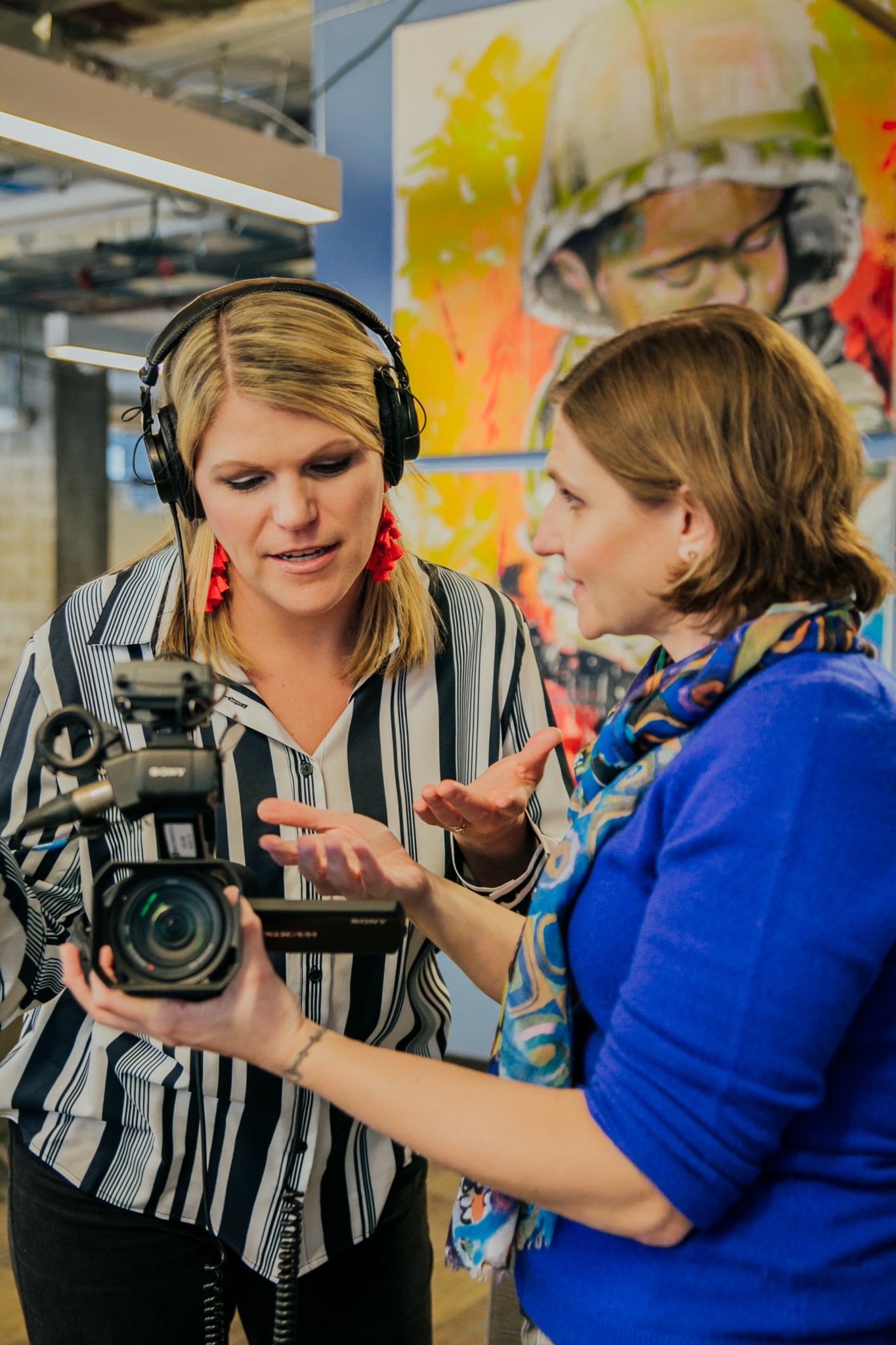
I have always been obsessed with video, tv, and films. I think about them all the time. I always wanted to make them. When I was little that is what I did, I would watch a movie, I would get my friend Joanna down the street to reenact it. We would get her dad to film us. I would script on my parent’s old DOS processor, of like what I thought a script should be. I was always into it and always wanted to work in it. I was a kid and I didn’t know what that meant.
I ended up going to school for it and really got into the rhetoric of it, and why films are so powerful. Then I got into the practical part of it. I was working at a TV network and actually producing and writing scripts.
I wanted to start my own business because I wanted to be free. I had worked with exec producers and producers and I wanted to be in charge, I wanted to be the boss of me and my time and the project and how it got done and so some freelance work fell in my lap.
This kind of painted a picture of “Oh, businesses need video! This company needs a training video. These people over here who have a football recruitment program need highlight videos. I could do this and I could make money.”
That was it, That was the business plan. That’s how I started Mainstream.
I was gonna knock on doors, I am not afraid to talk to people. I thought, “I’m gonna be able to do the thing I love and help people with video.”
What I’ve learned about our specialty and who we are is that video is a bigger communication medium and tool than the business sector will have you understand it to be. What I mean by that is, TikTok and Reels, which weren’t invented when I started Mainstream, and all the CapCuts and consumer grade software, and AI editing that’s been going on (a lot longer than ChatGPT has existed, just FYI). All of those things are not what makes video so powerful or what connects people to stories and messages.
It’s the full picture, it’s the story, the way in which it’s told; With words, with voiceover, with actors. It’s also the visuals that support the story and the words. Then it’s the music that designs the emotion. Then when we’re talking about videos for business, it’s the goal. What is this video for? What do you want people to do with the video?
You’re not making a major motion picture. You’re making it to get a lead, to close a lead, to explain something that you’ve been explaining over and over. You need to understand all of that and really put that as the center and then you can think about the creative elements.
Most people, including others in my industry, put that creative first. So I think we differentiate in that way, we have always been about the core messaging first and the goal of your video. We want people to understand that first so that then we can talk about what the best footage to capture for that is, not the other way around.
Any fun sales or marketing stories?
I was a scrappy business owner, probably not even six months in. I was doing everything that everyone told me to do.
One of these things was to go to the local chamber. I ended up in a meeting that had the executive director of E-470. In Colorado, E-470 is a pretty big brand, one of those brands that everyone knows because it’s the highway authority. Because I was at this networking event and I was such a newbie, the executive director presented and I went straight up to him and I shook his hand and said “Hey, do you guys ever need video?”
He said, “You know, we do. Here’s this person’s number, tell her I sent you.”
So I got to go to the decision maker and say, “Your boss sent me.”
She said, “Great, we’re doing a 25th anniversary video. We’d love to talk to you.”
So I was beyond nervous for this. This was by far the biggest meeting I had had to date, with the biggest brand I had to date. They had a big communications team. I was so scared to be late, and so worried about it, and I practiced my pitch and went over everything. I actually got there an hour early because I wasn’t sure where it was and I didn’t want to mess this opportunity up.
Right before I went into the pitch, I, in my absolute fussing locked my keys and my pitch in my car.
So the first thing I had to say to the communications team at E-470 was, “I’ve locked my keys in my car, can I borrow someone’s phone because I don’t know how I’m gonna get out of here. when I’m done pitching to you.”
They were all very understanding and cool about it. I pitched, and I got the job.
It was the single biggest asset I had to sell my brand, because if E-470 trusted me, it made such a big difference when I sold elsewhere.
What I felt back then was… pretty invincible. To be able to have the confidence to go up to the guy who just presented, sell him, have it work, get the meeting, kind of botch the entire thing and still get the job? That was really what I needed to see for myself to be able to have the confidence behind my business in the first place.
How do you keep in touch with clients and foster brand loyalty?
It’s video.
The number one way I stay in touch with my clients and people I’ve met over the years networking, who inquired about the business, is to email them weekly with some content about my industry.
Not only does that keep us top of mind for them, because they’re getting updates from us weekly or they’re a LinkedIn connection who sees our videos, they don’t just HEAR about our brand, they see our brand.
They see us in action, my tone of voice, my nonverbal messaging, showing and telling about the work we do and constantly trying to give value to people that are thinking about video.
That way when video comes up and someone wants to do a project, I’m naturally who they’re going to think of. That’s the goal, just to give as much as you can for free, stay on top of your industry, tell people about that, make it relatable to them, and then when the time is right, they’ll come to you.
The other piece of this is giving as much as you even when it doesn’t benefit you immediately.
Sending someone a referral, making introductions, pointing people in the right direction is of immense value for your brand, because nothing makes you more memorable than being genuinely helpful.
Contact Info:
- Website: https://www..mainstreamvideoproduction.com
- Instagram: https://www.instagram.com/mainstreamvideo/
- Facebook: https://www.facebook.com/MainstreamVideoPro
- Linkedin: https://www.linkedin.com/company/mainstream-video-production-llc