



Alright – so today we’ve got the honor of introducing you to Beata Mierzwa. We think you’ll enjoy our conversation, we’ve shared it below.
Beata, thanks for taking the time to share your stories with us today If you could go back in time do you wish you had started your creative career sooner or later?
My first impulse is to say yes – I wish I had started my creative career sooner – but upon further reflection, I realize that it is my path as a whole that has allowed me to pursue my passions as both an artist and a scientist.
When I graduated high school, I had two main interests – pursuing a career in art and studying molecular biology. At that time, I believed that the fields of humanities and science were mutually exclusive and that I needed to decide which one to choose for my future career. I applied for art school in Vienna, and after getting quite far in the application process, I was put on a waiting list. While this was very common for students as young as I was, at that time it felt like a failure. Since I didn’t want to wait to start studying, I decided to follow my other passion and study molecular biology. I still loved the idea of creating art and thought I could continue pursuing it alongside my career as a scientist, but I got so drawn into my scientific research that I didn’t have a chance to make time for creative projects for many years.
That was until my PhD, when I had an opportunity to create a drawing about my research. I started using it for my scientific presentations and quickly noticed how much it helped people remember my work. This was the first time I realized how powerful a tool art could be for science communication, inspiring me to continue experimenting with combining my passions. I started creating scientific illustrations (https://beatascienceart.com/) to help people understand basic scientific concepts and new discoveries, designed a science fashion line (https://www.etsy.com/shop/beatascienceart) that highlights the beauty of the molecular world, and created a video game (https://www.microscopya.com/) that allows players to explore the inside of the cell through hand-drawn visuals and puzzles based on real science.
After realizing just how impactful combining science and art could be, I wished that I wouldn’t have waited so many years to start my creative journey. However, in retrospect, I see that everything I do now is based on my foundation in science, and the entire niche that I work in is based on all these years that I spent growing and educating myself.
So, my final answer is no – I don’t regret taking an indirect path because you never know how the things that you learn and experience will shape your skill sets, knowledge, and tools that make you unique as a creative. Whatever path you’ve taken in life, this was the path that you needed to make you an artist who can share your unique perspective with the world – making the impact that only you can make.

Additional photo_1.jpg In the final step of cell division, the bridge connecting the cells is cut to give rise to two separate daughter cells. The top image shows a real microscopy image of a human cell, while the bottom image is a hand-drawn illustration showing the same process. The drawing is overlaid with microscopy images, with the blue DNA carrying the genetic information and the green microtubules giving shape to the cell – a combination that quite literally fuses science and art.

Additional photo_2.jpg An overview of my creative process. After reading the scientific background of a complex biological concept, I develop a sketch that uses metaphor to communicate its essence. I then create a detailed hand drawing using pencil on paper, adding colors and scientific data digitally to complete the artwork. This drawing illustrates how our chromosomes are segregated during cell division. To ensure that each daughter cell receives the correct set of chromosomes, the cell assembles a structure called the mitotic spindle, illustrated by the ropes, which pulls the chromosomes towards the opposite poles. This process is incredibly complex but having the correct amount of DNA is absolutely essential for all organisms. Chromosome segregation errors are a hallmark of cancer, so studying this process has been invaluable for cancer research. Microscopy image credit: Betzig lab, Janelia Farm Campus, HHMI
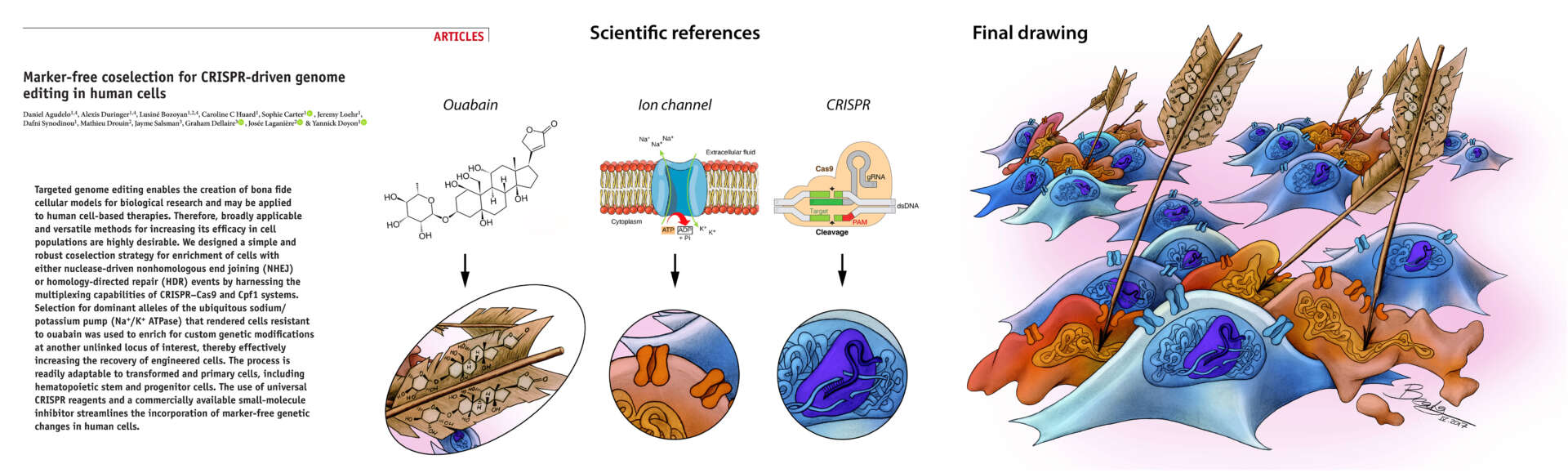
Additional photo_3.jpg This drawing illustrates a scientific paper describing a method to increase the efficiency of CRISPR genome editing. In this process, the edited cells receive a mutation that makes them resistant to ouabain, which kills the cells that were not edited. Ouabain is a drug derived from a molecule traditionally used as an arrow poison in the past. Using poison-tipped arrows as the metaphor, I incorporated visual metaphors, such as the real chemical structure of ouabain on the feathers of the arrows, the arrows piercing through the ion channels in the cells, which is the mechanism by which the drug kills the cells, and the structure of the CRISPR machinery needed for genome editing inside the cells that are protected from the arrows.
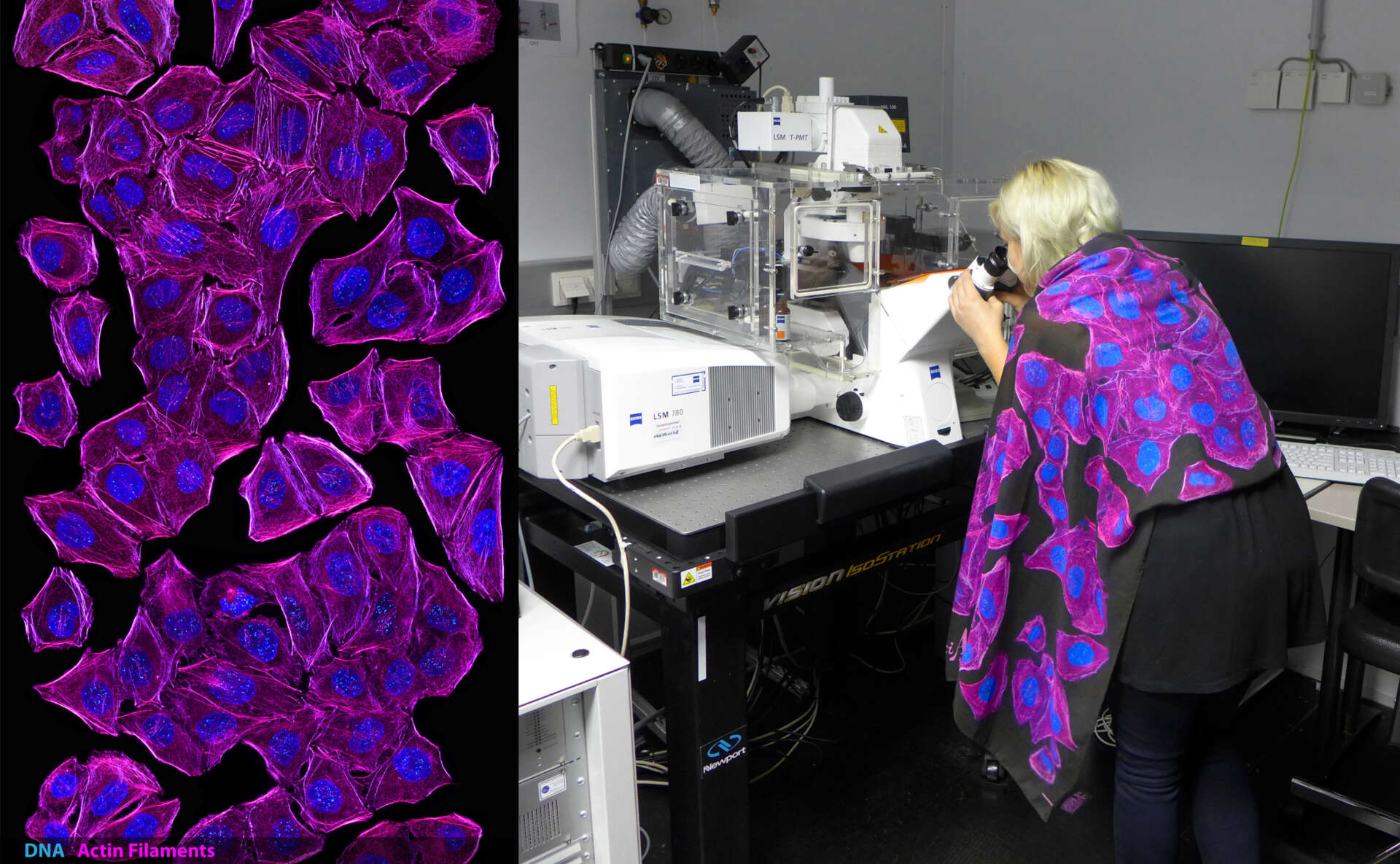
Additional photo_4.jpg To create science fashion designs, I spend hours in a dark microscope room capturing the most beautiful images of human cells that I can find, compiling them into aesthetic patterns to create individual designs. In this print, each cell has a unique shape created by a skeleton made of actin filaments.
Beata, before we move on to more of these sorts of questions, can you take some time to bring our readers up to speed on you and what you do?
I am a molecular biologist and artist who combines science, art, and fashion to celebrate the fascinating processes that make life possible. Ever since I saw my first microscopy image, I was blown away by the beauty of our cells and the structures within them. I thought it was such a pity that the gorgeous images that scientists see under the microscope every day rarely get shared with the world. This inspired me to create art and fashion that highlights these visually stunning images – offering a glimpse of what has fascinated scientists and scholars for centuries.
When I first started exploring science art, I experimented with creating drawings and clothes for myself. Soon, friends and colleagues began asking for illustrations and fashion items as well, which inspired me to continue exploring and share my work online. Now, when I’m not doing experiments at the lab, I offer illustration services where I help clients express complex scientific discoveries by translating them into intuitive and unique visuals. I also run an Etsy shop (https://www.etsy.com/shop/beatascienceart) that offers a wide variety of items for a diverse audience – from dresses, ties, swimwear, and accessories to art prints, yoga mats, and jewelry crafting kits. My newest and most ambitious project is a science video game titled Microscopya (https://www.microscopya.com/), which takes players on an immersive journey through the inside of the cell with puzzles based on real molecular mechanisms.
The mission of my work is to highlight that making discoveries is only half the story – scientific breakthroughs won’t bring us all forward unless we’re able to share them with the world, and creativity is an integral part of communicating these advances. There are countless unique interests to explore, and by expressing diverse passions in creative ways, we can connect with broad audiences and inspire our next generation of creative scientists and artists.
Learning and unlearning are both critical parts of growth – can you share a story of a time when you had to unlearn a lesson?
The biggest lesson I had to unlearn was about my value as an artist and the value of my time. Starting off as a hobbyist while working in research, I felt very uncomfortable asking for compensation for my work, especially without having received a formal education in art. But as demand for my work grew, I had to unlearn that the time I spend on creative work is not as valuable as the time I spend on scientific research and realize that sometimes my work is going to be outside someone else’s budget. While I’m still working on internalizing this, I feel like I’ve come a long way in being comfortable enough to ask for compensation that matches the substantial amount of time that I spend on each project.
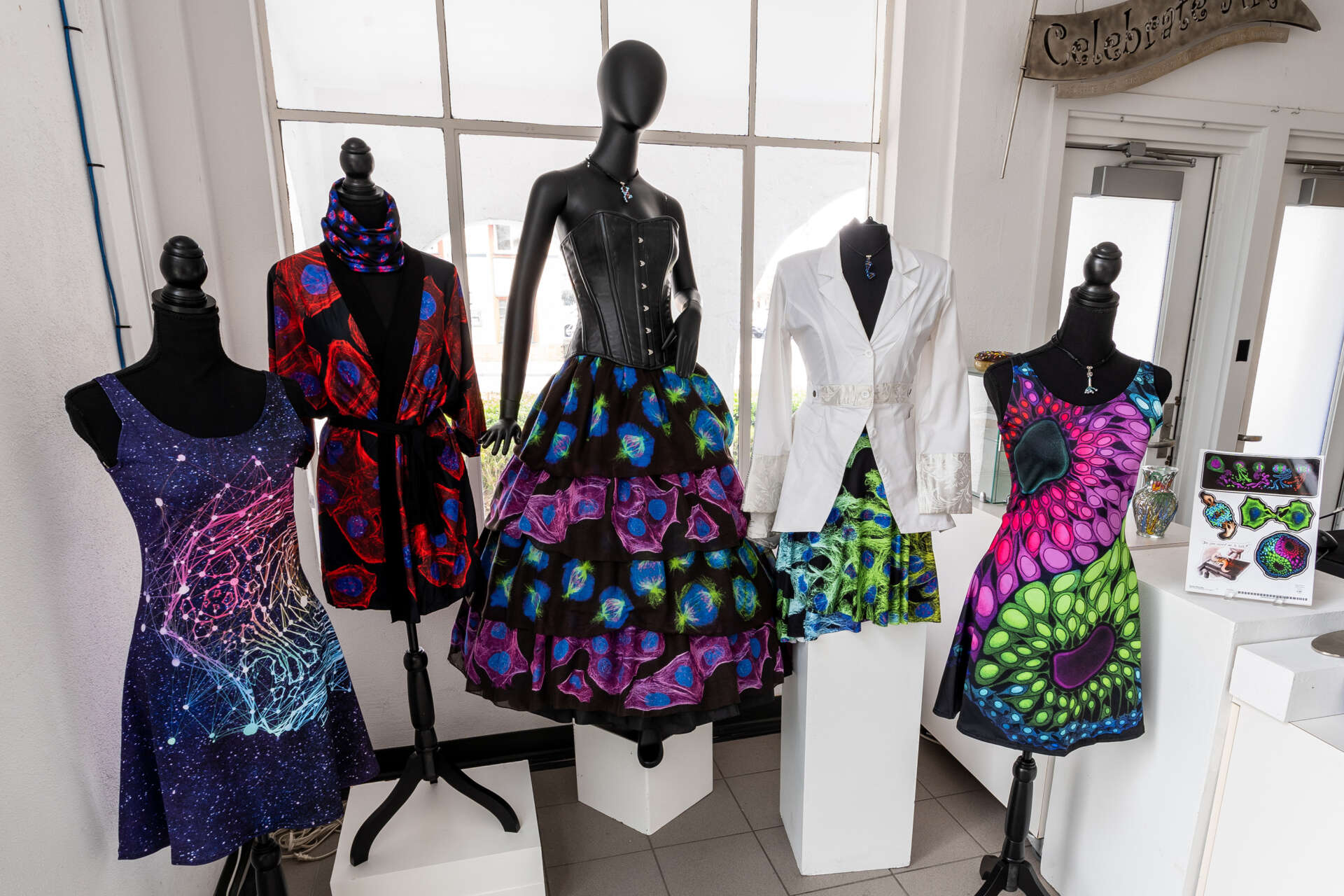
Additional photo_5.jpg Exhibition titled “The Beauty of Science” at the Oceanside Museum of Art in 2021. Photo credit: Oceanside Museum of Art
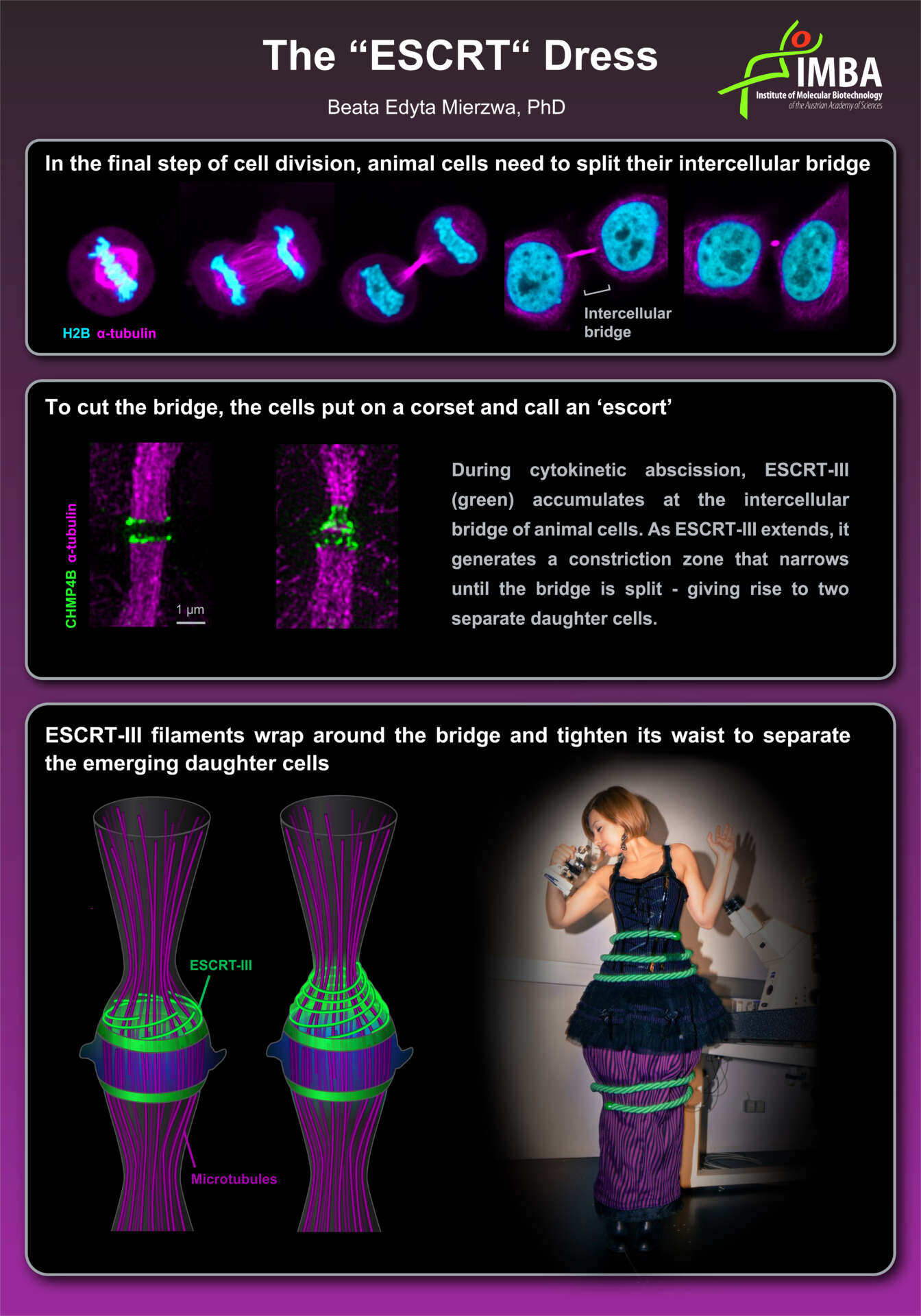
Additional photo_6.jpg The ‘ESCRT Dress’ illustrates my doctoral research on the final step of cell division. This dress was presented in a fashion show at the Vienna Science Ball in 2016.
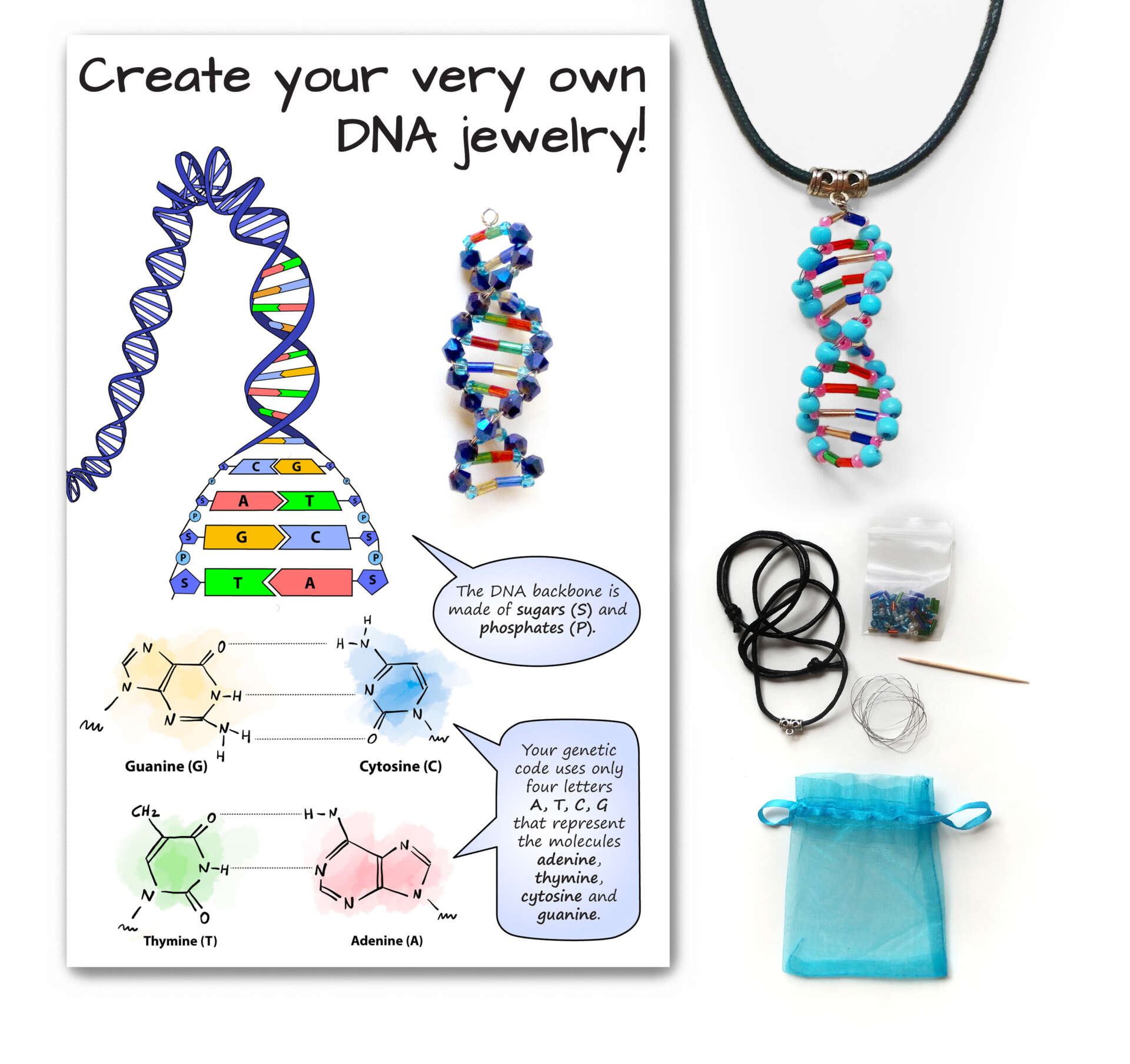
Additional photo_7.jpg A DIY crafting kit to create science-themed jewelry while learning about the structure of DNA and how our genetic information is encoded within our chromosomes.
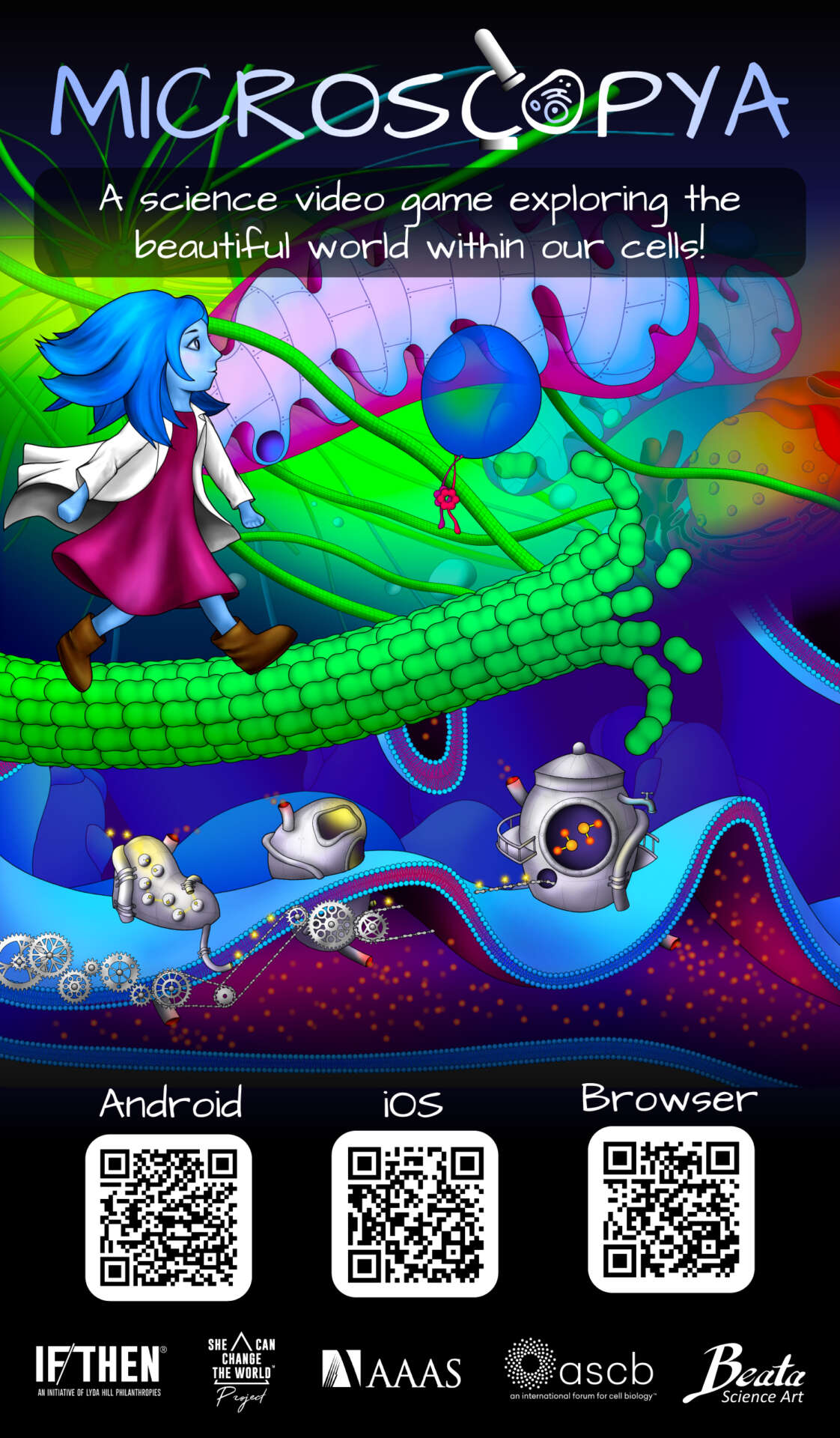
Additional photo_8.jpg Microscopya is a science-themed video game that takes players on a journey through the molecular world inside the cell, with hand-drawn illustrations and puzzles based on real scientific concepts. Aiming to spark curiosity and excitement about science, the game highlights the depth, complexity, and beauty of the wonders that make life possible.
Is there a particular goal or mission driving your creative journey?
My art aims to remove barriers to science access and change the way we as a society approach research, education, and communication. I believe that creativity and art, in all of its diverse forms, media, and technologies, are crucial to achieving this.
My creative approach is based on conveying the essence of a biological concept by combining visual metaphors with real scientific data to create designs that are engaging to diverse audiences – viewers unfamiliar with the topic can appreciate the basic concepts, while experts in the field can gain in-depth knowledge about the study at a glance. With my science fashion designs, I aim to share the beauty of science. Making this science-themed fashion line accessible to the public has allowed large audiences to share their fascination with biology and ignite an interest in the scientific world. Lastly, my science video game is designed to connect with younger audiences and those traditionally left behind in science education, increasing the accessibility of scientific concepts and bringing joy to learning.
Overall, I believe that the intersection of art and science is key to sparking fascination and curiosity for the wonders that make life possible. With my work, I aim to illustrate that science offers more than oversimplified concepts from textbooks, but rather countless wonders waiting to be discovered!
Contact Info:
- Website: https://beatascienceart.com/
- Instagram: https://www.instagram.com/beatascienceart
- Facebook: http://www.facebook.com/beatascienceart
- Linkedin: https://www.linkedin.com/in/beatascienceart
- Twitter: https://twitter.com/beatascienceart
- Youtube: https://www.youtube.com/channel/UCuv54J4F2cuDrnjhu3LJ3xA
- Other: Etsy shop: https://www.etsy.com/shop/BeataScienceArt
Image Credits
Personal photo.byIF/THEN Collection