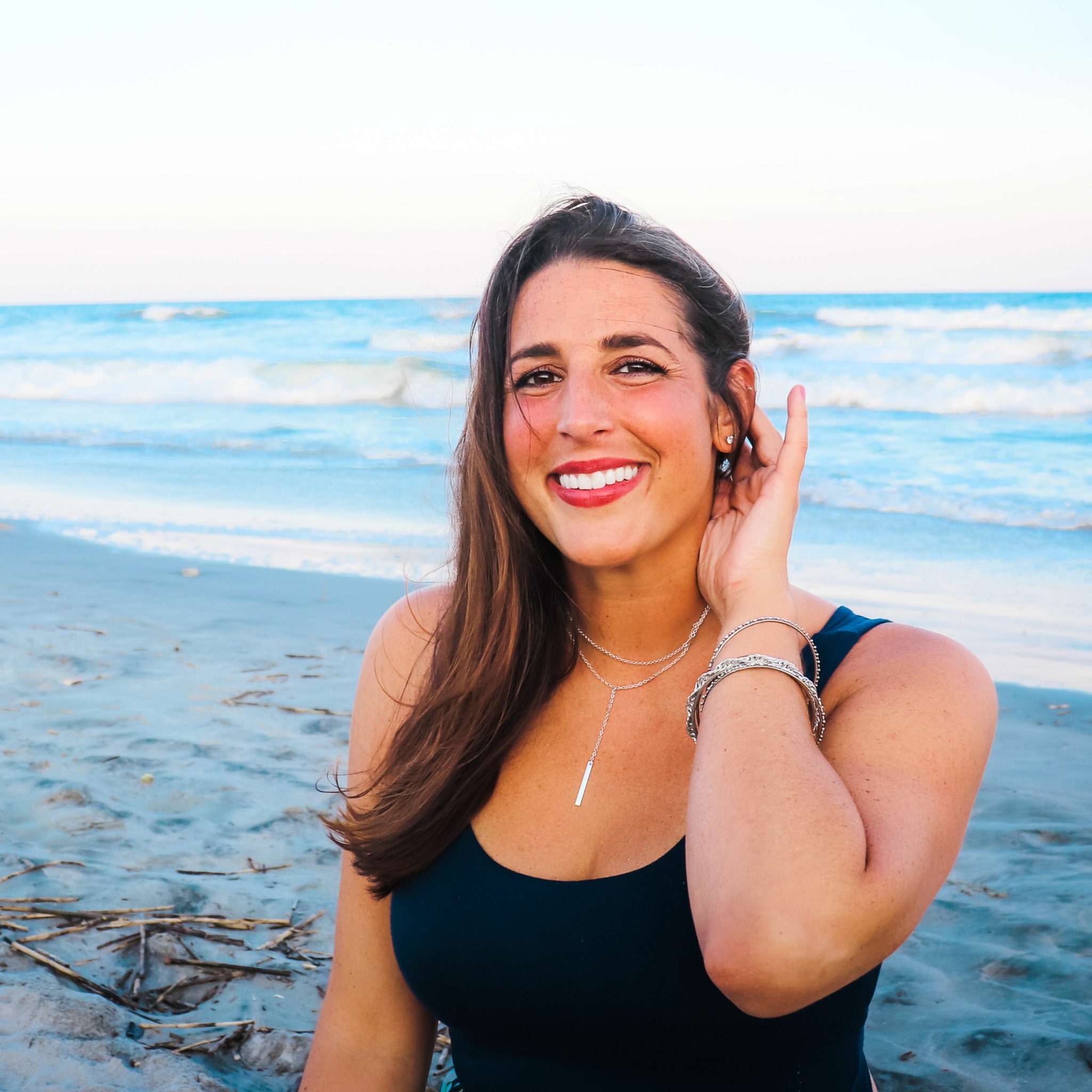

We caught up with the brilliant and insightful Ashley Perez a few weeks ago and have shared our conversation below.
Ashley, looking forward to hearing all of your stories today. If you could go back in time do you wish you had started your creative career sooner or later?
I have mixed feelings about this. While I wish I had grown up being encouraged to foster my artistic interests, I also recognize that being pushed into a more traditional path (e.g., going to college for a “practical” degree and working in Corporate America) gave me valuable skills that I now rely on as I pursue my art career.
The most challenging part of being an artist often isn’t making the art. It’s everything else that helps move your career forward. After nearly two decades in a corporate role, I developed skills in marketing, communication, technology, strategy, branding, research, budgeting, scheduling, project management, and time management.
Being an artist requires you to be proactive, professional, present, and responsive. I can’t just make a beautiful ceramic sculpture and hope someone discovers it. The business side of art takes a lot of skill and grit, so I’m grateful that my earlier career gave me the tools to help push my work forward.
At the same time, I sometimes wish I had pursued my artistic side earlier in life. I might have taken art courses in school, been surrounded by other creative peers, and had more time to develop my technical skills and artistic voice.
Art has given me a level of confidence in myself and my abilities that I wish I had felt during my younger years, when simply existing can feel very vulnerable. But in the end, I’m grateful that I found the courage to embrace it, even if it happened a little later in life.
As always, we appreciate you sharing your insights and we’ve got a few more questions for you, but before we get to all of that can you take a minute to introduce yourself and give our readers some of your back background and context?
I’ve always been a creative person. Before getting into ceramic art, I was a five-time published author. Unfortunately, I developed a chronic pain issue that made spending long hours behind a computer for my full-time corporate job and writing very difficult. I eventually had to step back from writing to better manage the pain, but as any creative person knows, you still need an outlet for all the ideas swirling around in your head.
A few years later, my husband and I took a pottery class at a local studio just to try something new. We both got completely hooked. That experience became the catalyst for creating our art studio, harlow. Over the past few years, we’ve slowly built out a home studio, developed our individual artistic voices, and begun showing our work through galleries, exhibitions, and events locally and internationally.
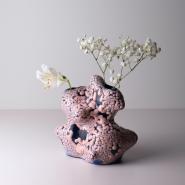
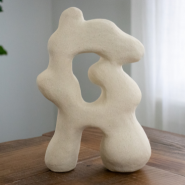
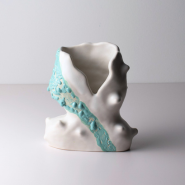
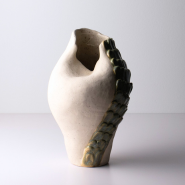
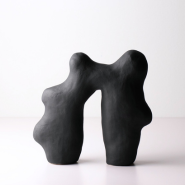
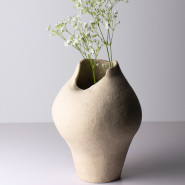
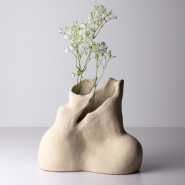
My work focuses primarily on ceramic sculptures and vessels that lean modern, abstract, and organic. Some pieces are more minimalist, with calming forms and quiet palettes. Others are a bit more playful, featuring bold textures or unexpected pops of color. Across all of my work, the shapes tend to be soft and flowing.
Every piece is one-of-a-kind and handbuilt using the coiling method. Many of my forms emerge from feeling rather than strict planning. I often step back and look at how light and shadow move across the surface, or whether the piece feels airy and balanced. Other times, the direction simply comes from how the clay wants to behave that day. I swear it has a mind of its own.
When I create work, I often think about interiors. I want my pieces to be in real, lived-in spaces, so I consider how they might feel in someone’s home or even in a commercial environment. My goal is to create pieces that add a sense of calm, character, or visual interest to a space.
Is there mission driving your creative journey?
My creative journey is really about having the opportunity to be unapologetically and authentically myself while owning my future.
A few years ago, I was late-diagnosed with ADHD and PTSD. Neither of these were even on my radar, so it was a shock to learn that my brain works differently than most people. It took a lot of time to process, with plenty of months cycling through anger and grief. Eventually, I reached a place where I could start to understand it and learn more about how my mind works.
It explained a lot. I always wondered why I felt and thought differently, and why it seemed like I had to fight so much harder than everyone else just to do things “right.” For most of my life, I tried to follow the expectations of others and do things in ways that would validate me or spare me from judgment. In many ways, that way of living prevented me from embracing the parts of myself that actually add value to the world, and that make me feel more whole and at peace.
Choosing to leave my corporate career to pursue art isn’t considered a conventional path, but mentally and physically I feel better than I ever have, even though building an art career can be incredibly challenging. There’s something deeply freeing about working in a way that feels natural to me, rather than constantly trying to fit into the neurotypical box I felt pushed into for most of my life.
There’s also a sense of agency that comes with it. I can make decisions quickly, pivot when needed, and know that every ounce of effort I’m putting in is going toward something meaningful. That feeling is a huge driving force behind my creative journey, and it’s not something I would give up easily after finally experiencing it.
In your view, what can society to do to best support artists, creatives and a thriving creative ecosystem?
Oh, this is such a loaded question.
First off, stop cutting arts programs in schools. We also need to stop telling kids they’ll be a “starving artist” if they show interest in something creative. Instead, encourage them to explore artistic courses and balance that with classes that can provide stability later in life, whether they go on to pursue art full-time or work a traditional career and create on the side.
There also needs to be more public understanding of the time, effort, and cost that go into creating art. When people don’t understand that, they often undervalue the work or expect artists to lower their prices just to make a sale. Art isn’t just the finished piece you see. It’s the materials, the years of skill-building, the experimentation, and the time it takes to create something meaningful.
Another important piece is creating more accessible community spaces where artists can work and connect with the public. Affordable studios, pop-ups, classes, educational programs, and gallery spaces can make a huge difference. Many artists can’t afford their own studio space, and traditional galleries often take a significant percentage of sales. Some artists also prefer having the freedom to connect directly with collectors rather than relying solely on the traditional gallery model.
Community art districts can do this really well. Places like the River Arts District in Asheville, North Carolina, and the Torpedo Factory in Alexandria, Virginia are great examples. They’re walkable, accessible spaces where visitors can easily discover many artists in one place, meet them directly, and learn about their work.
Lastly, if you know an artist—whether personally or simply because you admire their work—spread the word. Word of mouth is incredibly powerful. If you can like and share a random celebrity’s social media post, you can absolutely do the same for a friend or artist who’s building their career. It takes two seconds, but it can make a huge difference.
Contact Info:
- Website: https://harlow.studio/
- Instagram: https://www.instagram.com/ashleyperez_art/