
We caught up with the brilliant and insightful Anna Reed a few weeks ago and have shared our conversation below.
Alright, Anna thanks for taking the time to share your stories and insights with us today. If you could go back in time do you wish you had started your creative career sooner or later?
If I could go back in time, I would have started my art career sooner. I’ve always been an artist, but it isn’t until recently that I would have called myself as such. I would have led with being an art educator. I graduated with a BFA and went directly into a MA program for education. I have been in education for 21 years, all the while making art in the summer, on my breaks, and in the evening hours. I entered a few shows, but mostly, I made because I had to. I had techniques I wanted to explore and complex ideas that I could only fully express in my work. After one fateful summer workshop I was convinced to at lease explore grad school and put myself on the path of a full time creative. I worried that I was too old, that my ideas too redundant, and that it would cost too much. That was five years ago. Since then, I have only been met with support from the artist community, an influx of new ideas, and continued exhibition and collaboration opportunities. It has been such a highlight of my life and I can’t help but wonder where I would be in my career path if I had started sooner. On one hand, I started right when I needed to. My life experience, artistic skills, and ideas have all been crucial to the work I make exploring the intersection of humanity and tech. On the other hand, the time is always now. We only live in the present. A friend once said, “Time will pass, regardless. Where will you be at the end of that time?” I would have been passionate and resourceful at any age. The exhibitions, residencies, networking, research, and creation all take time. Looking back, I wish I had believed in myself and pushed myself sooner.
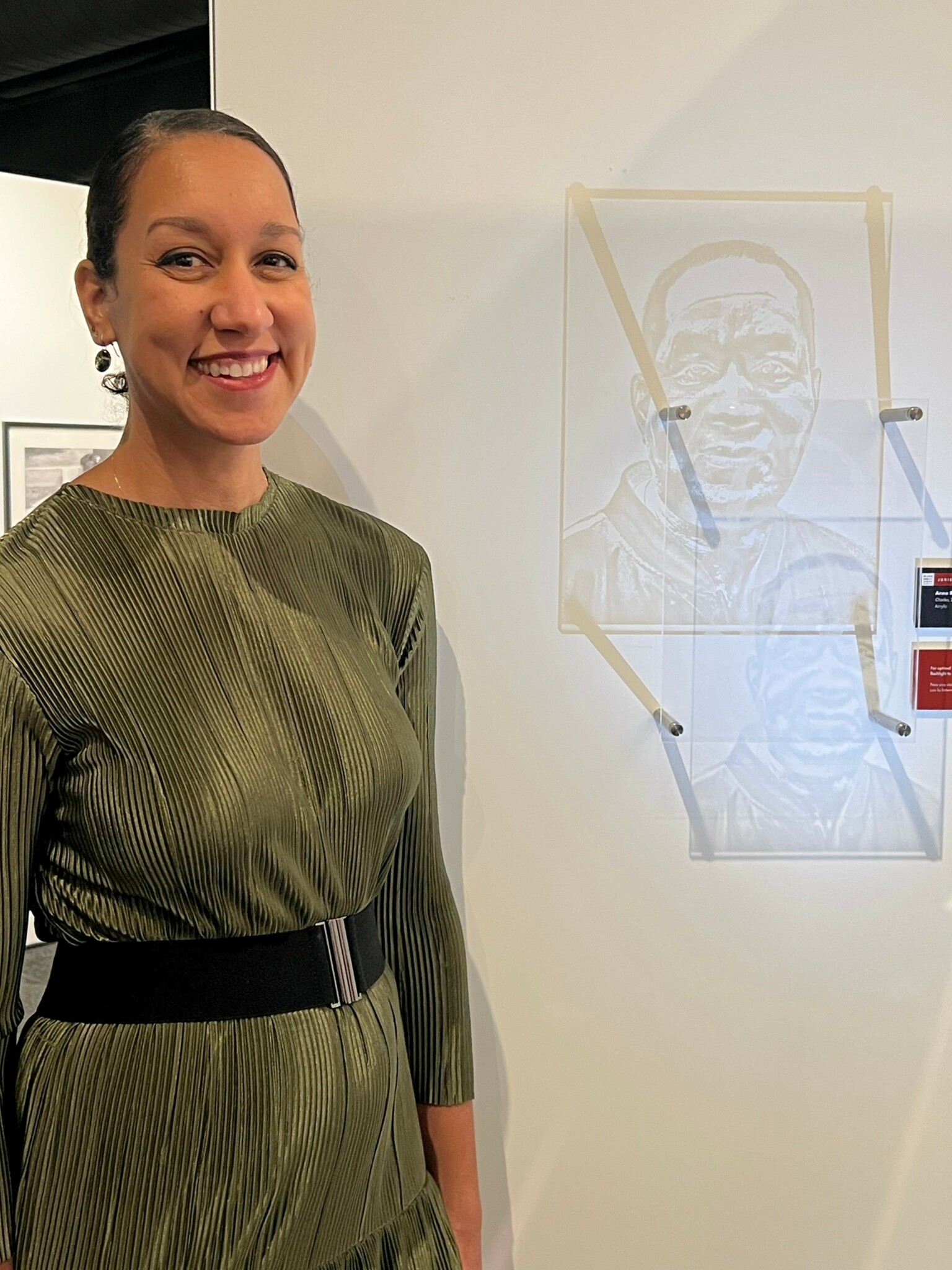
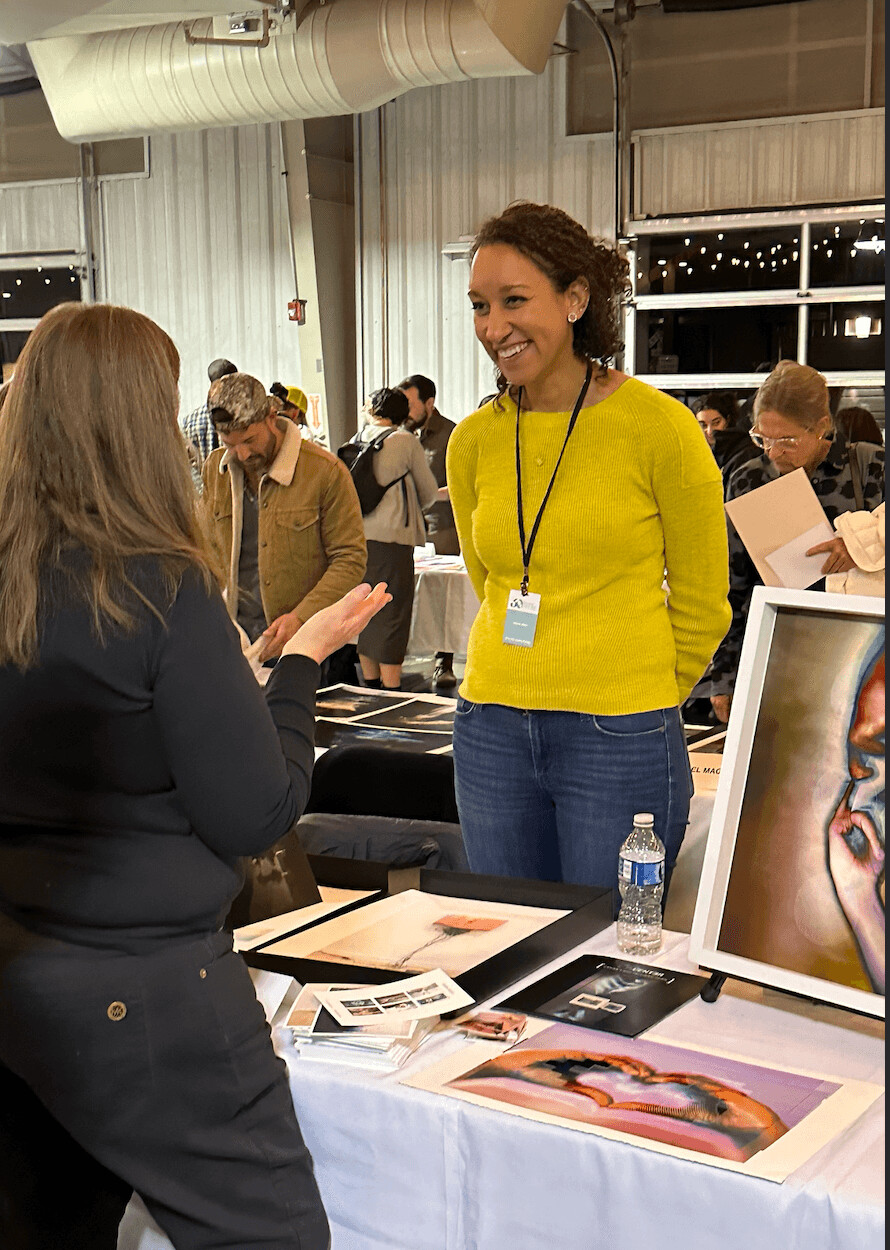
Awesome – so before we get into the rest of our questions, can you briefly introduce yourself to our readers.
I grew up at the pivotal time of technological change. Landlines were replaced with cell phones, email replaced letters, inexpensive laptops replaced computer labs, and social media has since replaced everything else. Having lived with and without an online world I began to question the nebulous boundaries between these modalities and consider the points of intersection and overlap.
As an educator I taught photography as the world transitioned from analog to digital cameras. My school was one of the first school districts to go 1:1 with the Chromebook. I watched students social relationships change with the onset of smart phones and social media. I was teaching and in the middle of grad school when the pandemic shut down the whole world. I have acknowledged the haunting specter of surveillance yet simultaneously found respite in curated programs, and felt comforting closeness of distant loved ones through computer generated light beams. Beyond the screen is a world we cannot see, hear, or touch. Online programs track and store our behavior and we become code and algorithms. Do we have a human future or have we become commodities as we project and consume our own images? Is our future already automated and curated for us? I wonder how much we are aware and if we were more aware, what we would choose.
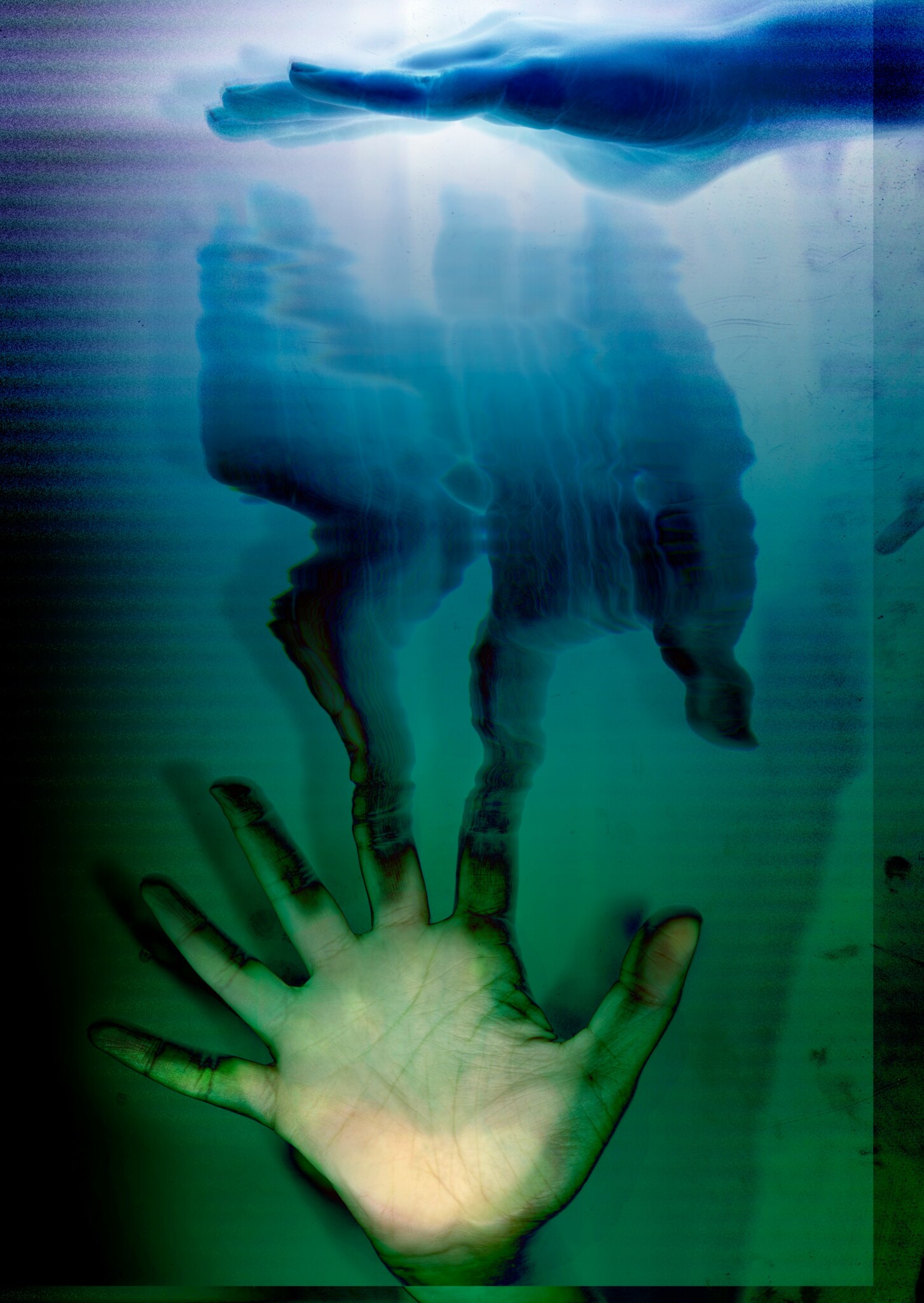
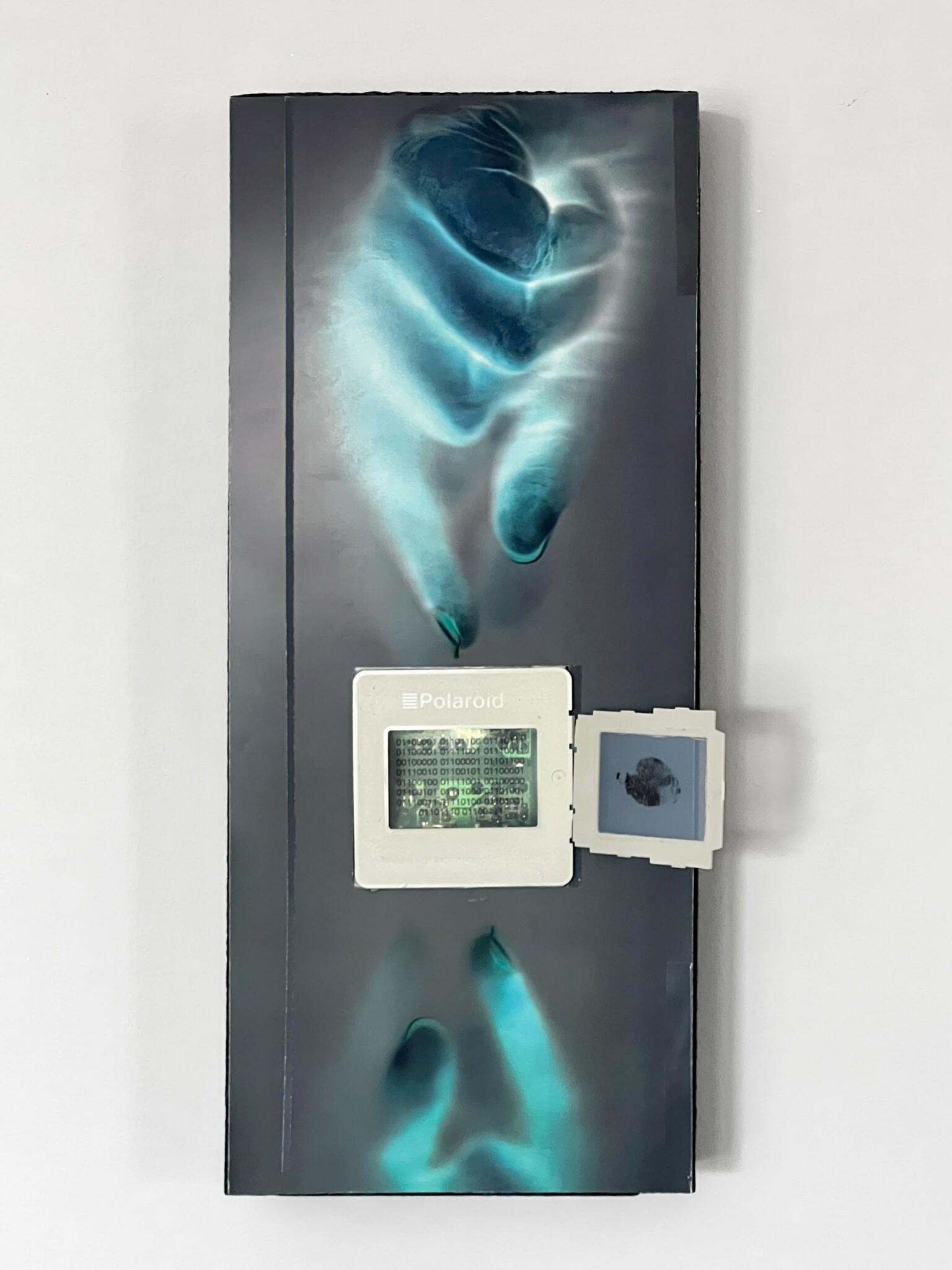
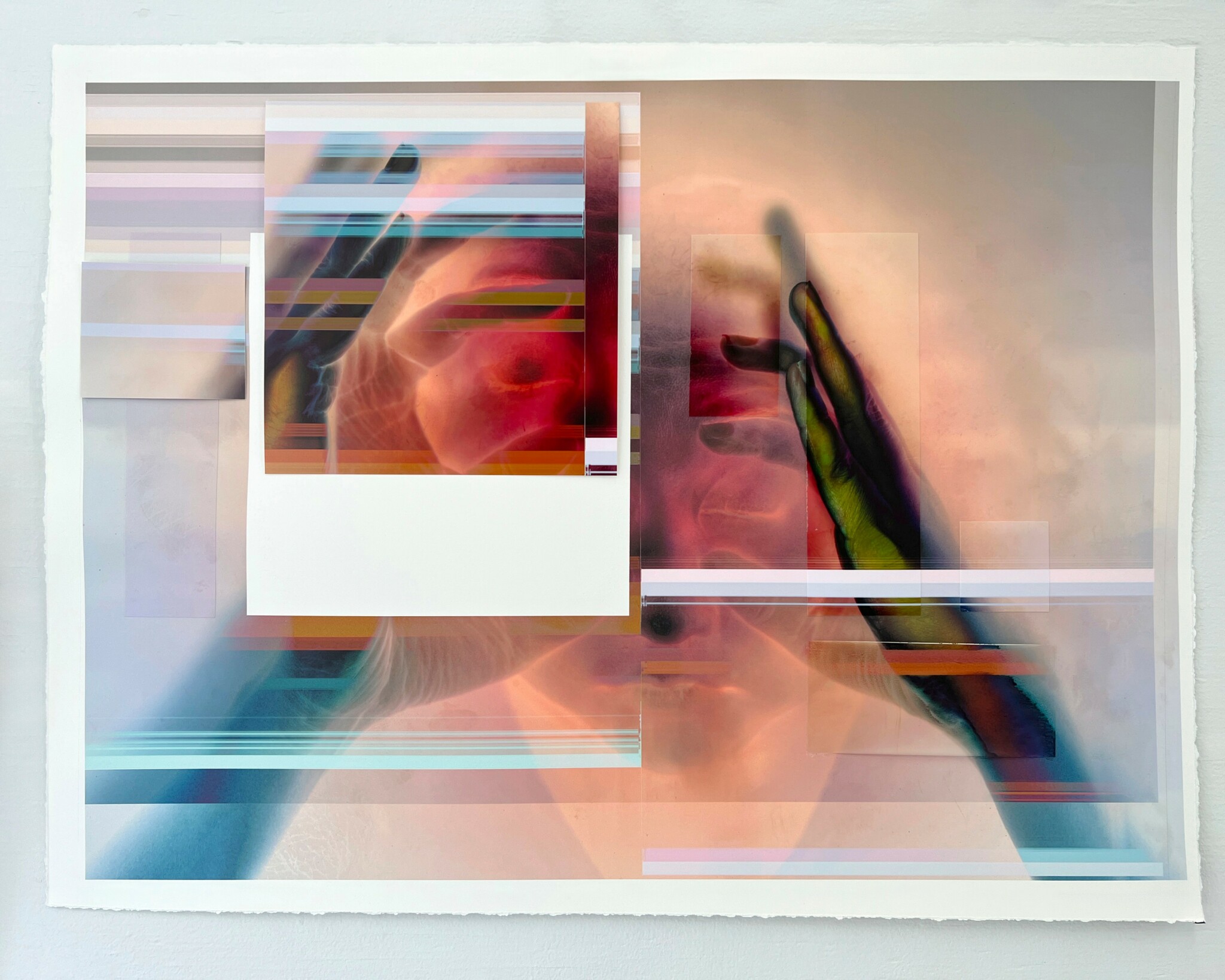
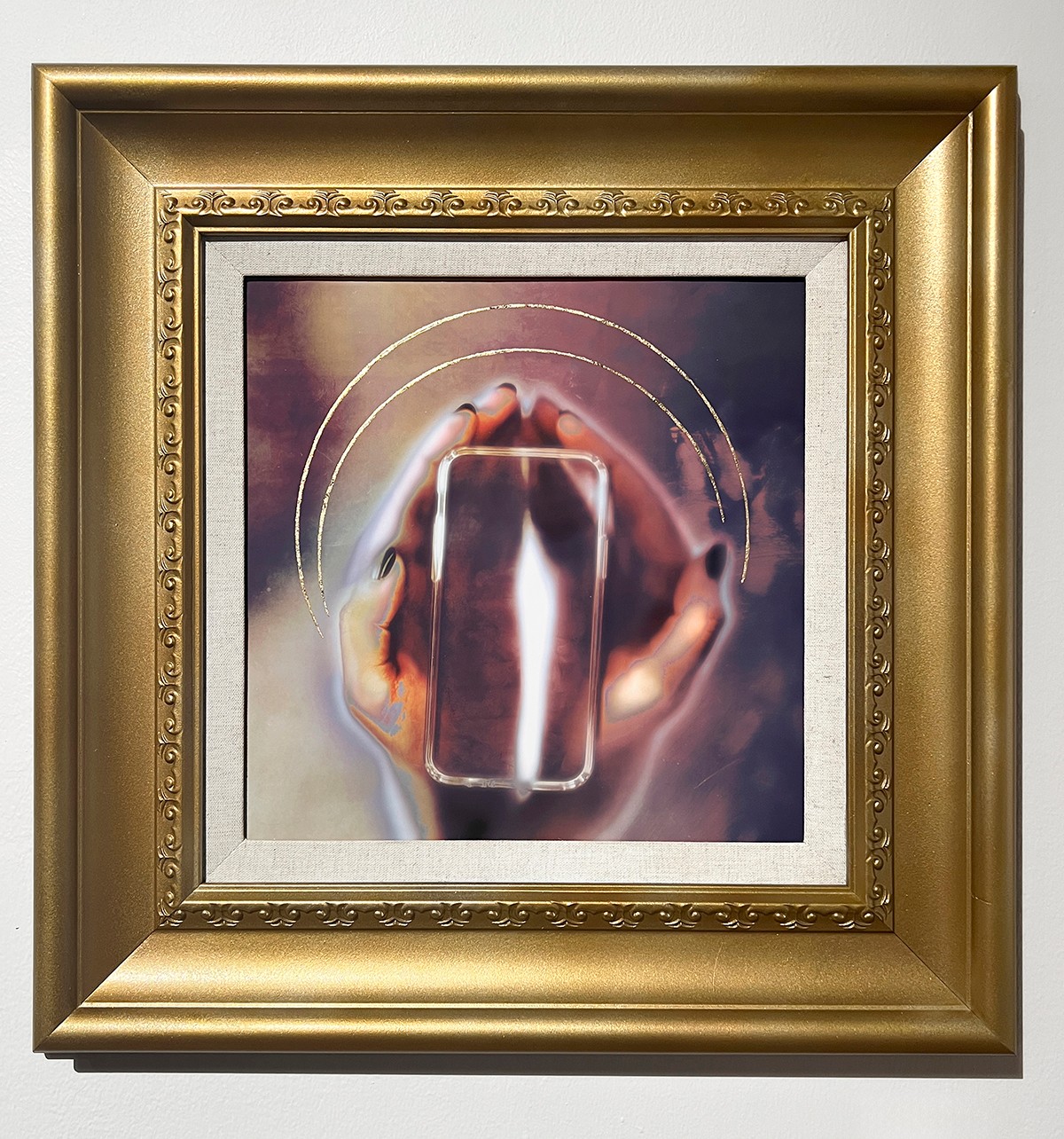
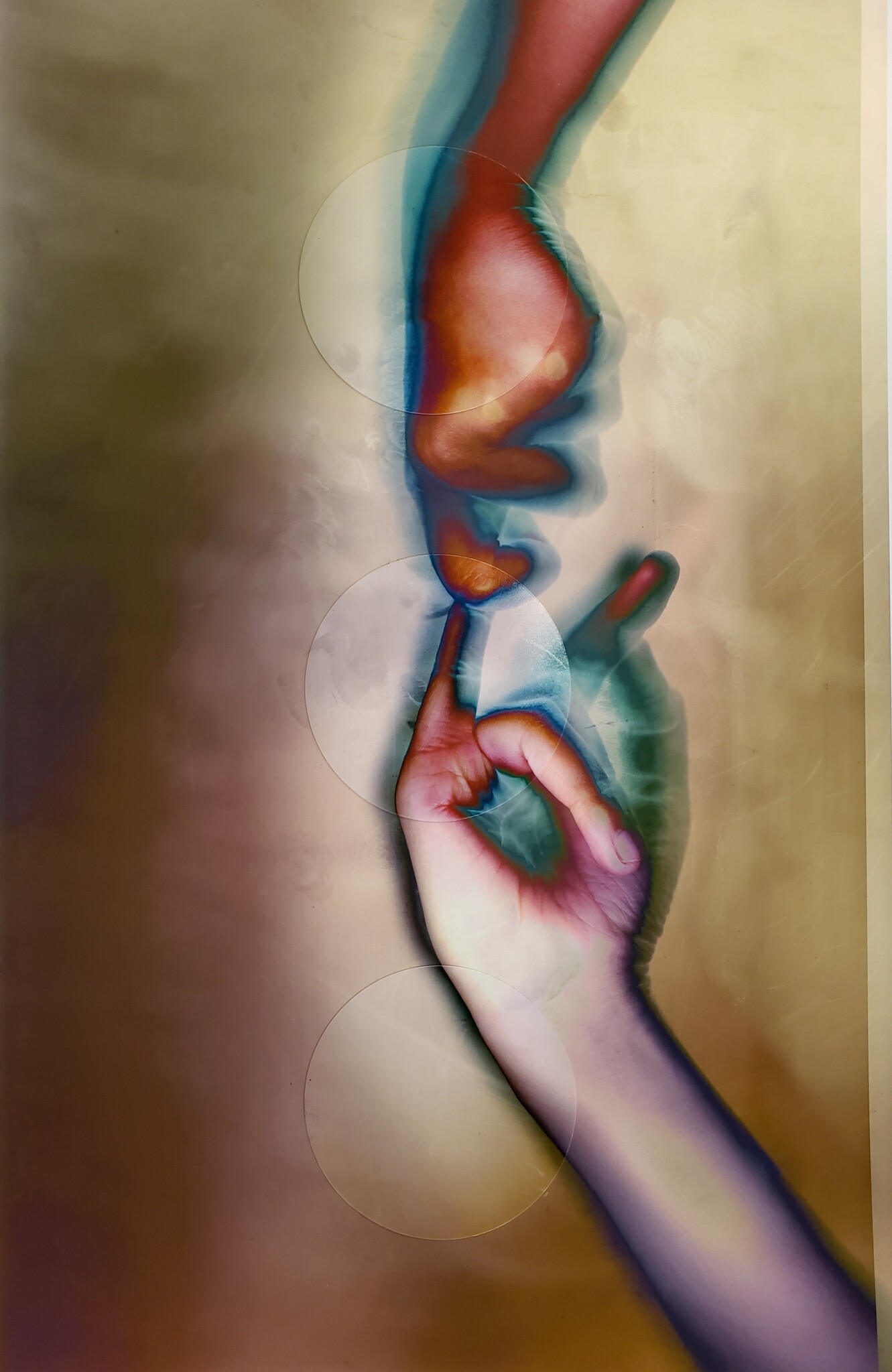
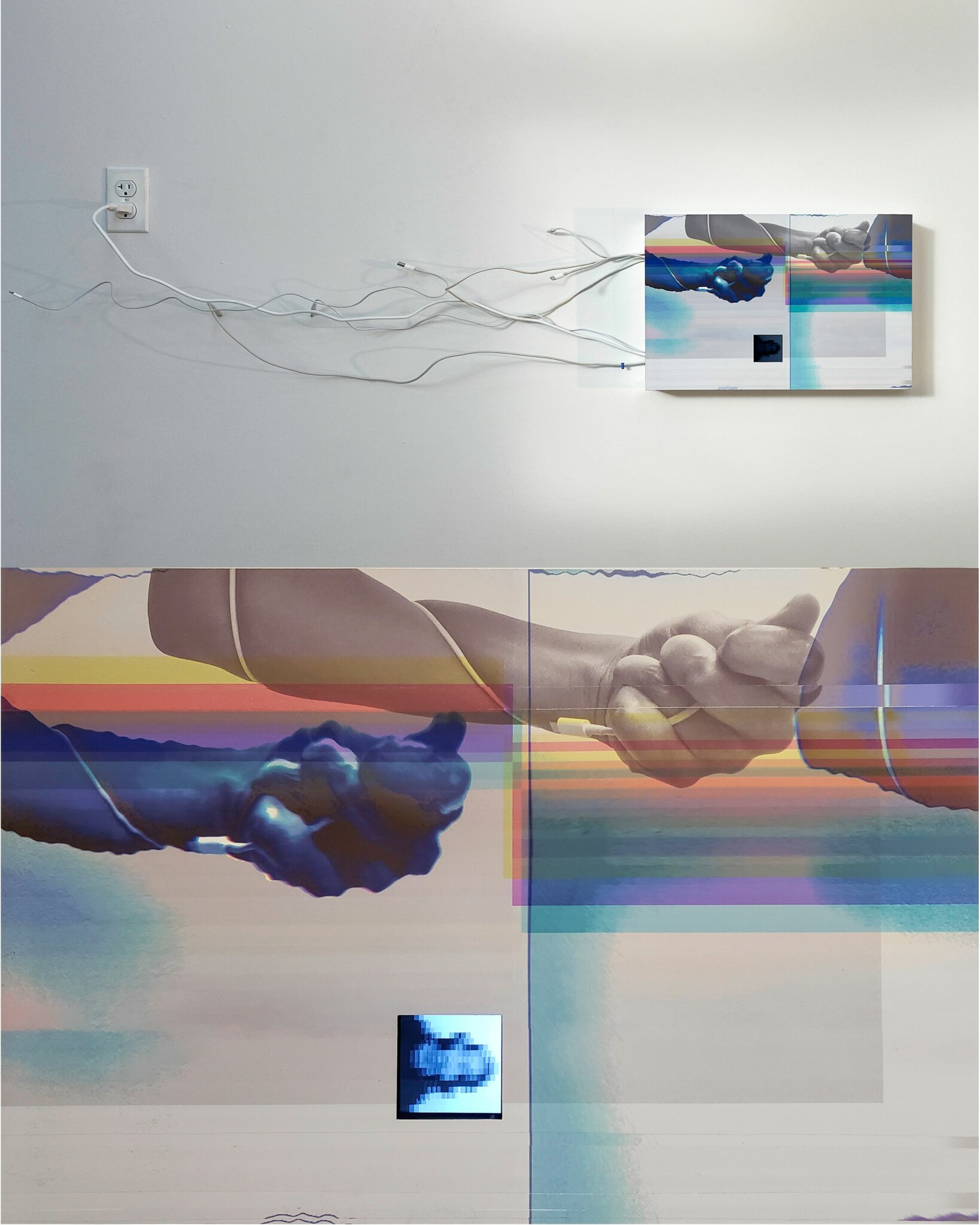
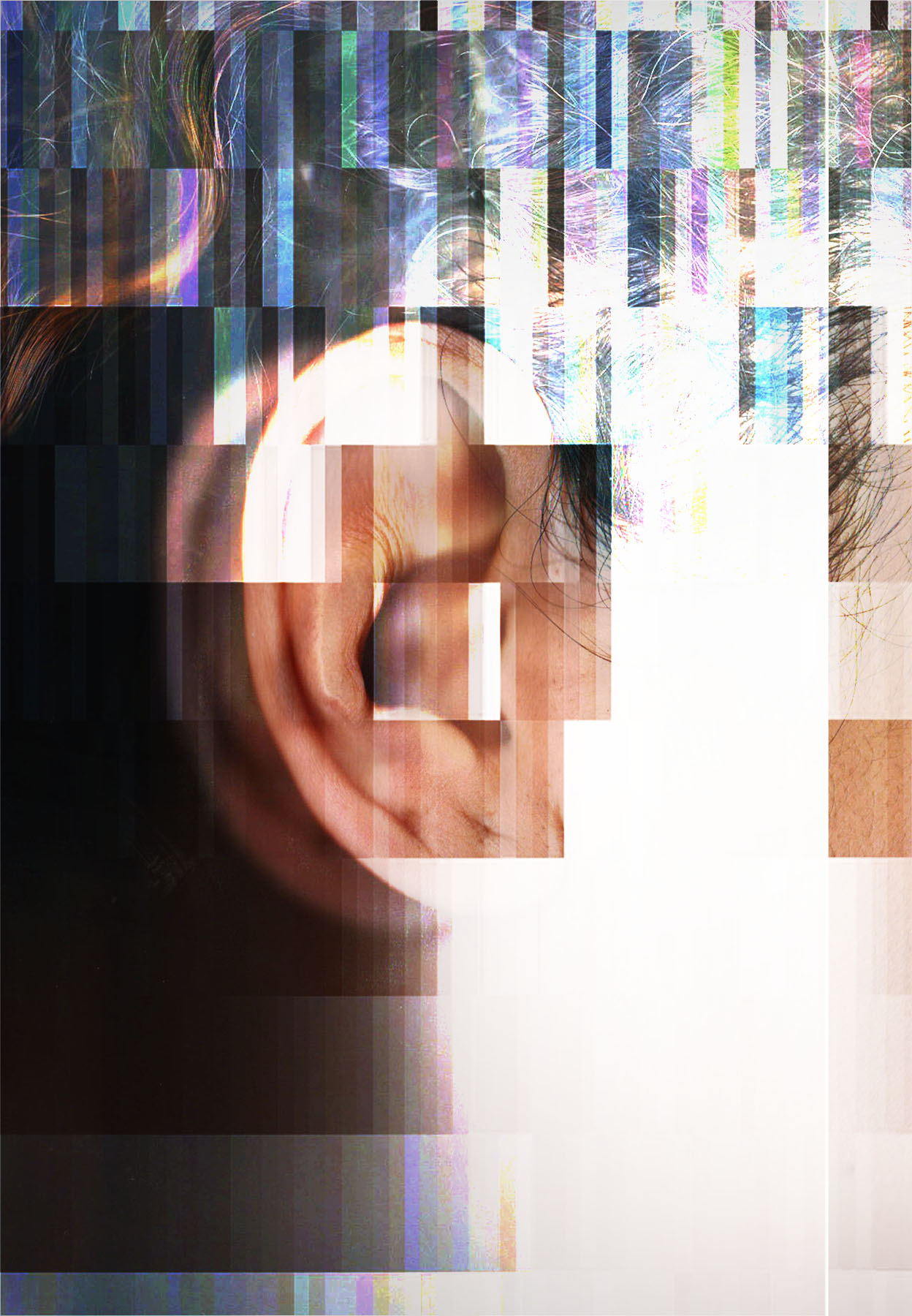
As I consider the fragmentation of our lived experiences I push the digital editing until portions of the image become fragmented, pixelated, or lost. The images are layered and printed on collaged surfaces as reference to the our layered and fragmented identities that together create a whole. Laser cut holes create windows into digital devices and projections overlap empty phone cases creating a complexity between what exists digitally and what is physical. I often use my body as source images and transform into digital material through Xerox, scans, and other low-fi devices. My physical body confronts the screen and pushes the invisible boundary of human, device, and the virtual. In a tech world where processes are increasingly opaque, I explore what is lived, felt, and controlled. I am a collaborator with my machines and platforms, alternating decisions, as the works move from physical to digital and back again.
This last year I was honored to be the recipient of the Me & Eve Award by CENTER and currently have works on exhibition at the Griffin Museum of Science and Industry in Chicago. I hope that these works help foster conversation around our relationships with emerging technology.
Is there something you think non-creatives will struggle to understand about your journey as a creative?
I am often asked if I can draw or paint something for someone. I can, but that’s not what I do. I make collages, small object, and installations. Those things are often hard to describe and not easy to sell. So why would I put so much time and resources into something that doesn’t make money?
I absolutely want my work to sell, and to have a career as a full time artist, but that’s not my driving force. I make work because I have something to say and something to explore further. In our society there is a draw to monetize everything and place value on what we can sell. It isn’t easy to find the time and energy to be a creative and have a full time job. However the work of creatives goes beyond profit. I believe creatives are the voice of society. They have the pulse on what is happening and react in profound ways. As a society we are changed because of what we see, hear, and experience. I saw a dance that moved me to tears. I’ve used a song to comfort or motivate me. I’ve read a book that forever changed how I interact with others. Trevor Noah once talked about humor as a way to break through barriers and open up conversation. I believe creatives are essential and pursuit valuable.
Are there any resources you wish you knew about earlier in your creative journey?
I wish I had known about the hustle. It is one part research, one part networking and ten thousand parts work. For research I use a lot of online databases to find opportunities. A mentor once told me that if you get 20% of what you apply for, you are doing well. I apply for everything. That practice has honed my skills in writing, organization, and time management. I use Artwork Archive, Call for Entry, Creative Capital, and Chicago Artists Coalition. I wish I had known how to leverage my circle. I know that sounds basic, but they have been a huge part of my journey. I know copy editors who have worked on my statement, fellow teachers who introduced me to critique groups, classmates that connected me to mentors, and friends who introduced me to clients.
Contact Info:
- Website: https://www.annaoreed.com
- Instagram: @annaoreed
- Linkedin: https://www.linkedin.com/in/annaoreed