

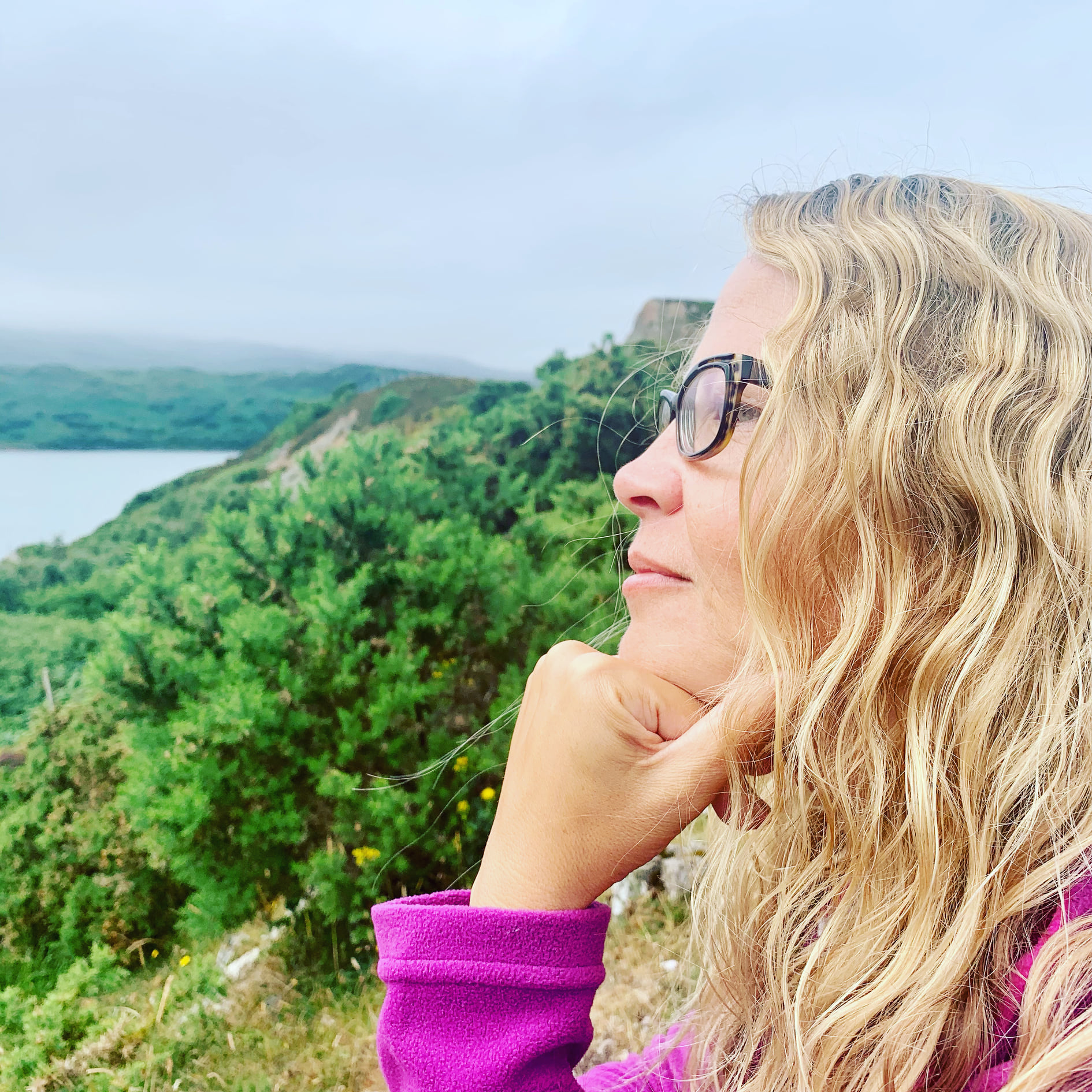

Alright – so today we’ve got the honor of introducing you to Andrea Goodridge. We think you’ll enjoy our conversation, we’ve shared it below.
Hi Andrea, thanks for joining us today. What did your parents do right and how has that impacted you in your life and career?
They let me be me.
I had a beautiful childhood. I used to feel guilty saying that.
I remember being in a CPD session where we had to share something deep about our upbringing. People around the room were sharing deeply personal, painful things. When it got to my turn, I burst into tears. Not because I had something hard to share. Because I didn’t. I didn’t want my joy to take up space in a room full of pain.
But that’s the truth of it. No arguing. No tension. Just warmth, curiosity, and doing things that made us smile. That’s who we were. A Northern, working-class family. Straight-talking, hardworking, honest, kind, and always looking out for one another. We weren’t the ones to make a fuss. We just did what needed to be done. Because that’s the way we were. We shone softly, in our own way.
Four people shaped me. Each gave me something different. And I didn’t fully understand what any of them had given me until I slowed down. Until they were gone.
My Gran was warm, nurturing, but with a strong presence. She took pride in everything she did, turning what many would see as the everyday into something special. She gave so naturally, as if caring for others was just part of who she was. When Gran spoke, everyone listened. Especially me.
I can still picture sitting in her garden after having my eldest son, feeling overwhelmed as a new Mum. As I admired the flowers she cared for, I couldn’t help but feel like I was wilting under the pressure of trying to be everything to everyone. In that moment, she turned to me and asked, “Are you looking after yourself?”
I looked back at her, not really understanding what she meant. And then she said it.
“You can’t be a great mum, wife, daughter, friend, neighbour, boss; if you’re not a great you. It all starts with you.”
Right there, in that moment, it hit me. Just as her flowers needed the right conditions to flourish, I needed to nurture my inner self to thrive in all my roles. Gran’s advice wasn’t about being selfish. It was a reminder, sharp and clear, of what I’d forgotten.
My Grandad was a true gentleman in every sense of the word. Well-spoken and elegantly dressed, he carried himself with a quiet grace that commanded respect without ever demanding it.
Although he was deaf, he never complained. He just got on with it. Grandad believed in doing the best with what you had, solving problems with patience and a level head. I vividly remember visiting him as a child, and no matter if he was doing a jigsaw, practising calligraphy, making soap, or pulling apart the mangle to fix it, he’d always drop everything for us. As if nothing in the world mattered more than being there with us in that moment.
Looking back, I see he was teaching us the art of being present. He showed us that, to truly connect with each other, you must first disconnect from everything else. Being present was his way of living, long before it became a trendy hashtag.
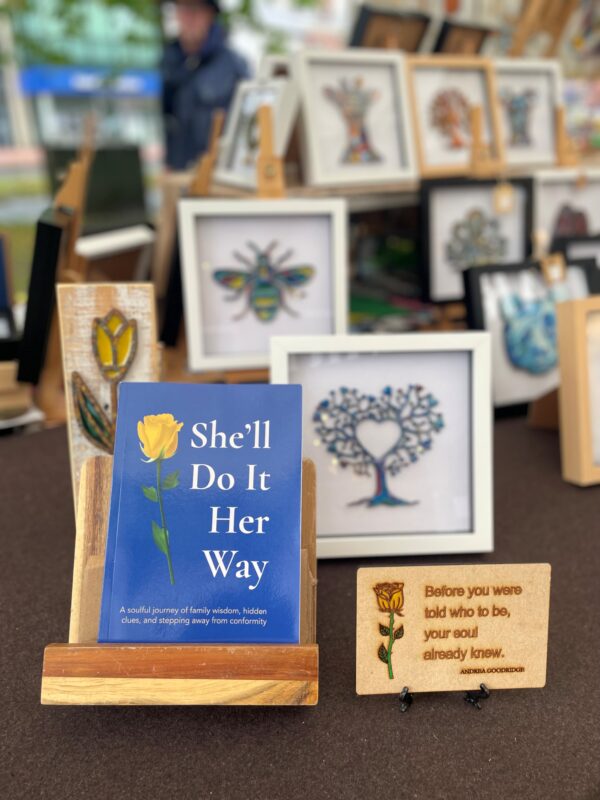
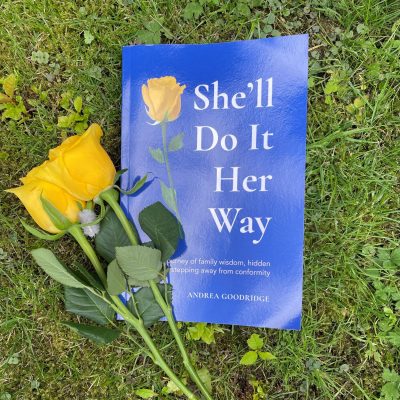
And then, there are his diaries. Twenty years’ worth of everyday moments, thoughts, and reflections. He didn’t write them for anyone else. Not for show, not for approval. He wrote them for himself. Now, when I read them, I feel like I understand him so much better. I see what mattered to him. How he thought and how he lived his life. Those diaries are the reason I wrote my own book, “She’ll Do It Her Way.”
My Dad wasn’t just my Dad. He was my rock and my guiding star all rolled into one. Small in size, but full of life, there was a quiet swagger about him. With that teddy boy quiff and his signature red tie, he had a way of carrying himself that made him feel like he was at the centre of everything.
He had this beautiful way of blending love, laughter, and honesty. His eyes would twinkle with mischief before he’d hit you with one of his cheeky one-liners, and next thing you knew, you’d be doubled over in stitches. But make no mistake, behind that joker’s smile was some proper wisdom.
I can’t begin to tell you how many times I’d be umming and ahhing about some decision. And he’d come in with his no-nonsense wisdom: “Look love, overthinking never solved owt. It’s either summat or nowt. Get on wi’ it.”
In other words, stop faffing about and make a decision.
Simple words, but they hit home every time. They cut through all the noise. And they still do.
My Mum was such a beautiful soul. She had the time, energy, and love for everyone she met. And when it came to connecting with people, she had this incredible ability of making you feel truly seen, heard, and valued. And she did it just by being herself. Calm and steady. She didn’t need to say much. Her presence was enough to ground you. And in doing so, she mirrored back to so many, including me, that those same qualities were already there within us, just waiting to be expressed in our own unique ways.
Whatever she did, she put her heart and soul into it. Her creativity was much more than just making things. It was about connecting with us, showing us that there’s beauty in bringing imagination to life. She gave me permission to be myself. Not just through what she did, but in how she lived.
Despite everything she did and the lives she touched, like the food parcels for the elderly, the holiday playschemes, the after-school clubs, even an invitation to the Queen’s garden party, my Mum was never one to look for attention or recognition. She quietly went about her work. Because what mattered most to her was the people she helped and the positive impact she made.
At first, when she passed, I felt a loneliness I hadn’t expected. But it was that loneliness that made me slow down and go within. And in the stillness, I found them. All of them. Still there. The sayings finally made sense. The presence finally had a shape I could hold. The diaries became a blueprint.
My Gran’s common sense about looking after myself reminded me that being authentic starts with taking care of yourself. My Grandad showed me how powerful a real connection can be. My Dad’s loving honesty kept me grounded, teaching me the value of just saying it as it is. And my Mum showed me how to create spaces where others could just be themselves.
Each of them brought something different. A challenge. A nudge. A mirror. A light. An opportunity to shine softly. And that’s the beauty of precious people. They don’t all play the same role. One will push. One will soften. One will call you out. One will call you home.
And in their own unique ways, they help you remember who you truly are. Because when someone sees something in you, something brave, something warm, something kind, it’s not just about them, seeing you. It’s about you, seeing you.
That’s what they did right.
Even though we weren’t well-off, our lives were rich in all the ways that truly mattered: time, encouragement, love, belief, and the freedom to be ourselves. And because of that, I learned what it means to live with heart. That quiet strength became the foundation I stood on when I started to find my own way.
“She’ll do it her way.” Something my parents would proudly say about me when I was a kid.
They were right. And I’ve got them to thank for that.
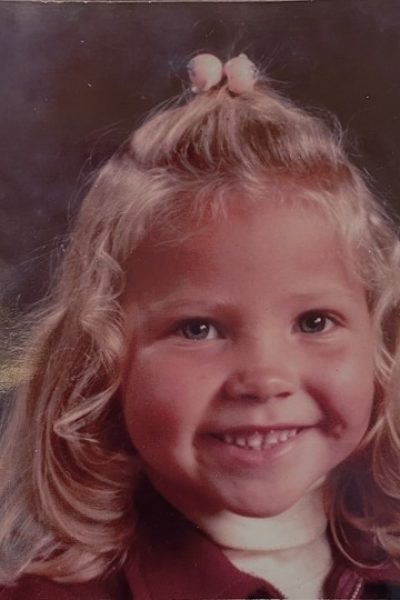
Andrea, love having you share your insights with us. Before we ask you more questions, maybe you can take a moment to introduce yourself to our readers who might have missed our earlier conversations?
I grew up knowing one kind of world. Public sector. Job for life. Pension. Holidays. Sick pay. Progression up a ladder that someone else had built. It felt safe. Solid. Sensible.
And for a long time, it was enough.
I built a career spanning the NHS, local government, and education, working with leaders, clinicians, and teams navigating some of the most complex, high-pressure environments you can imagine. Over twenty years, I gathered experience, qualifications, and credibility as a leadership coach and facilitator. It’s what I knew. It’s what I was good at.
But somewhere along the way, something started to feel off.
There’s one particular morning I still remember clearly. Same route. Same parking space. Same slow walk towards the building. And somewhere between turning off the car ignition and reaching the doors, I realised something.
I was leaving my brain behind. Just switching off. The work had become robotic. No depth. No spark. No real engagement. No sense of purpose.
I was turning up. Moving papers. Ticking boxes. Going through the motions. But I had nothing to think about. I was trying to care, but not enough was being asked of me. I felt like I’d been put in a box and moved to the corner of the room.
Maybe I was playing a long game of hide and seek, hidden behind layers and layers of other people’s expectations and compromises. Waiting for someone to say, “Ready or not, here I come.” But the game had gone on way too long. That realisation crystallised everything. I couldn’t keep leaving pieces of myself at the door, my brain, my energy, my wonkiness, my potential, my authenticity. I couldn’t keep following someone else’s script.
So, I chose to take control. I stepped forward on my own terms.
Going it alone felt terrifying. I’d grown up in a world where security meant staying put. Leaving that felt scary, even irresponsible. But what it actually opened up was something I hadn’t expected. The realisation that I got to control my own career. For the first time, I was writing my own script.
I set up my business doing what I knew. Leadership coaching and facilitation. And it worked. But looking back now, I can see I’d taken the leap …and then brought half the old world with me. The formal structures. The professional framing. The labels that kept me aligned to a certain kind of client. I’d left the institution, but I hadn’t yet left the box.
Nearly eight years in, it was writing my book that changed everything.
Twenty-two months. No clients. Just me, my thoughts, and my words. It took commitment, bravery, and real soul searching. And in that process of digging deep, I mean really deep, I started questioning everything. Including how I was showing up.
Coach. Writer. Creative. Those labels were all true. But none of them were the whole truth. What I actually do is soulfully challenge. I’m someone who helps people shed the layers that aren’t theirs. The conditioning, the conformity, the quiet dimming of themselves, and reconnect with who they actually are underneath. It’s work I’ve always done. I just hadn’t named it that way yet.
And once I named it, everything else followed.
I made a deliberate choice about where to put my energy. I ran an experiment, 22 posts on social media versus 4 emails in the same month. The social media comments were mainly about me. Affirming, appreciative, surface-level. The email replies were entirely about the people reading them. Their experience, their awakening, their transformation.
One left me drained. The other filled me with joy. I didn’t need more data to know which one feeds me. So, I chose depth over reach. I went all in on my email community. My weekly Shine Softly newsletter is where I write from the inside out, honest, direct, rooted in real life and real wisdom. People tell me it feels like a letter from a friend. That’s exactly what it’s meant to be.
I also realised something important about niching. Everyone tells you to niche, which I never really liked. For years I worked with leaders and clinicians because that was my background, but writing the book made me see that what I actually do helps so many more people than that. I’d just been hiding it behind a leadership label.
My niche isn’t a sector or a job title. My niche is authenticity. And the search for authenticity is universal.
So where do people start?
Some come to me through my words first. My book, “She’ll Do It Her Way”, my weekly Shine Softly newsletter, email courses and written journeys. Or through the Quiet Guides I make alongside my husband. Handmade rustic wall art, candles, and quote cards. Objects with intention. Things that anchor you back to yourself when the noise gets loud. That’s your own space, on your own terms, whenever you’re ready.
Others are done waiting. They want to be in a space with me. One-to-one Hide & Seek sessions, coaching programmes, or live gatherings where I’m present, intuitive, responding to what’s happening in the moment. For organisations, that looks like a fractional leadership partnership.
I also draw on over two decades of real-world experience, my own frameworks, and the family wisdom that shaped me. My Gran’s “It all starts with you,” and my Dad’s “It’s either important or it’s not. You choose.” My family are woven through everything I do.
There’s no right way to start. Just your way. Some people need to read first. Sit with it. Let it land quietly. Some people are done waiting. Ready to commit. Ready to stop hiding right now. Either way, you’re choosing yourself. And that’s where it begins.
What am I most proud of?
The book. Without question.
Twenty-two months of sitting with myself. Of not rushing. Of letting the real thing emerge at its own pace. The process of writing it became the philosophy of running my business. Patient. Honest. Done my way.
And I’m proud that I rank number one on Google for Significant Emotional Events, a blog post I wrote in 2018, with no thought of algorithms or strategy. Just something I needed to say, written from a place that was entirely unfiltered. It found its people all on its own.
What do I want people to know?
That you don’t have to choose between being professional and being real. That your background, your roots, your family wisdom, your creative instincts are not things to leave at the door. They’re the whole point.
For too long I’d been dimming my light. Following someone else’s script. Showing up as a version of myself that was easier to package, easier to label, easier for others to understand. The book, and everything that followed, was about unlearning that.
So, here I am. And I’m not going back.
Can You Share a Story From Your Journey That Illustrates Your Resilience?
Resilience, I’ve learned, isn’t about not feeling it. It’s about what you do when you’re right in the middle of it.
Before I set up my business, I had a conversation with my Dad. I was umming and ahhing, as I often did, about whether to take the leap. Whether it would work. Whether I was ready. He listened, the way he always did, and then he held out both hands in front of him. Left hand. Right hand.
“It’ll either work, or it won’t. Stop faffing in the middle.”
He wasn’t being dismissive. He was showing me something. The faffing in the middle, that lost ground between deciding and not deciding, is where you stay stuck. That’s where you lose yourself. The hands weren’t just about the business. They were about life. You choose, or you don’t. But the middle gets you nowhere.
Three months after I set up my business, he died.
I did what I’d always done. I kept going. I was capable Andrea. The one who organises everything, ticks the boxes, holds it together for everyone else. I didn’t stop. I didn’t break. I did what was expected. Because that’s what resilience looked like to me then. Carrying on. I’d also just started a business. Taking time off meant not earning. So I kept going.
Six months later, my younger son left home. Just after his GCSEs, two and a half hours away. I filled my diary to the brim. Client appointments, CPD workshops, concerts, DIY, time with friends. Hardly a space in my day or night when something wasn’t booked in. I told myself my energy was topped up. I was in the busy zone.
It wasn’t until I attended a CPD workshop about the left and right brain that I saw what I’d actually been doing. The facilitator explained that the left brain, the one focused on logic and reason, tends to take over when there are emotions we don’t want to deal with. It creates tasks, appointments, reasons to stay busy. Anything to keep us away from the discomfort we’re afraid to feel.
I sat there and knew immediately. My son was leaving the next day. And I’d filled every single space in my diary so I wouldn’t have to feel it. I went home and cancelled my appointments. The next day, I opened my heart and spent real time with him. I told him how much I loved him, even though it hurt to see him go.
What I’d thought was productivity had actually been grief dressed up as busyness. And once I could see it, I couldn’t un-see it.
Then my Mum died.
Her last words to me were: “Go and enjoy yourself, and keep improving yourself.”
Twenty-four hours later, she was gone.
I’d been due to go to London for a development programme that week. I’d already decided I wouldn’t go. How could I leave when she was like this? But when I went in to tell her, she’d perked up. Her eyes were clear. Her voice was stronger. My husband had made soup and she ate some. We had a proper laugh. For a few moments, I had my Mum back.
And then she told me to go. She knew what was coming. Knew I would struggle to be with her at the end. Knew that the only way I’d leave was if she told me to. So she gathered every bit of energy she had left, and she gave it to me.
I went. Because it’s what she wanted.
The next day, in the middle of the programme, the receptionist came into the room.
“Your husband’s waiting in reception.”
I didn’t need her to say anything else. I felt it in my body. I phoned my Auntie. “You need to come home. Now.”
We got in the car. And somewhere along that grey stretch of motorway, two birds appeared in the sky, flying side by side. My whole body reacted. Goosebumps. An ache in my chest. A knowing.
Then the phone rang.
She’d gone.
I did what I always did, at first. Organised the funeral like a project manager. Ticked boxes, made lists, kept busy. I was capable Andrea again. But when the funeral was over and the paperwork was done, I walked into my office. And stopped.
Nothing. No energy. No pull. No fire. Just stillness.
And this time, I didn’t fight it.
I chose to step away from my business for two months. Even though it cost me financially. Even though I’d never once done anything like it before. I chose me.
And in that same period, I was chasing a debt, the equivalent of five months of the salary I’d previously been used to, from a company that owed me money. Grieving. Stopped. And still having to show up in professional correspondence to fight for what I was owed.
That’s the part nobody talks about when they talk about resilience. Sometimes it’s sending a firm email when your heart is broken. Sometimes it’s keeping the lights on while you’re falling apart inside.
I’d taught about Significant Emotional Events for years. Helped leaders understand how these moments shape people. How they build resilience. How they force us to re-examine what we value and who we are. It made complete sense when I taught it. Clear. Logical. A framework that explained how people transform. But I’d always seen it as something that happened to other people.
When Dad died, I didn’t recognise I was in one. I just pushed through. When Mum died, I couldn’t push through. And in that stopping, suddenly I was inside the framework I’d been teaching all those years. Not the intellectual understanding. I’d had that for years. But the lived one. The “Oh god, this is happening to me” one.
My Significant Emotional Event felt like someone had thrown my deck of values cards up in the air, and I was left waiting for them to land in a new order. The way I’d always lived no longer worked. The patterns I’d relied on no longer fit. But once I could see it clearly, once I understood I was in a Significant Emotional Event, it became less frightening. Because I knew: this is real. I’m not losing my mind. This is what happens when everything changes.
That understanding changed me. And it changed everything about how I work.
What does resilience look like to me now?
Not pushing through. Not staying capable. Not filling the diary so you don’t have to feel it. Resilience is knowing what’s happening to you, having the language and the self-awareness to name it, and making a choice about how you respond. Even when that choice is simply to stop.
My Dad showed me that the middle gets you nowhere. My Mum showed me that we spend too long waiting for someone else to tell us it’s OK. She used her last breath to tell me. I’m not waiting anymore.
The hardest seasons of my life showed me that the framework I’d been teaching wasn’t just theory. It was lived. It was mine. And it changed me. That’s what I bring into every client now. Not textbook knowledge. Lived understanding. The kind that only comes from being right in the middle of it yourself.
Are There Any Books, Resources, or Videos That Have Significantly Impacted Your Thinking and Philosophy?
I’m going to answer this question differently. Because I think the question itself is worth questioning.
Every time this comes up, in interviews, in conversations, in rooms full of entrepreneurs and creatives, the answers are predictable. A reading list. A podcast recommendation. A TED talk. A guru. Someone else’s framework, someone else’s wisdom, someone else’s words.
But I’ve noticed something. We’re so conditioned to look outside of ourselves for inspiration, for answers, for direction, that we forget to look inward first.
We reach for the book before we reach for our own experience.
The things that have most shaped how I think, how I work, and how I run my business aren’t on any reading list. They’re my Gran sitting in her garden telling me it all starts with me. My Dad holding out both hands and telling me to stop faffing in the middle and just choose. My Grandad dropping everything, every single time, to be fully present. Teaching me that to truly connect with someone, you have to first disconnect from everything else.
They’re the morning I sat in a CPD session and burst into tears because my childhood was too good to share. The morning I left my brain behind in the car park. The two months I stepped away from my business entirely because my body told me I had to. They’re the client who said something that stopped me mid-sentence and made me see my own work differently. The leaders I’ve sat with in rooms where something shifted, where you could feel the moment a person reconnected with themselves.
Those are my resources.
Those are my texts.
Here’s what I know: You already have more wisdom than you realise. It’s in your history. In your family. In the things that happened to you that you haven’t fully stopped to examine yet. In the clients and colleagues and strangers who said something that landed differently than they knew.
We are taught, by business culture, by self-help culture, by the sheer volume of content available to us, that the answers live somewhere out there. In the next book, the next course, the next framework.
But what if you started with yourself first?
Not instead of reading, not instead of learning from others. But before.
What are the experiences that shaped you? What did the people who raised you actually teach you, not in words necessarily, but in how they lived? What have your hardest seasons shown you about who you are and what you value? That’s the deepest kind of research there is.
My whole practice is built on one thing, the answers are already within you. Not all of them. But more than you think.
My job isn’t to give people a reading list. It’s to help them uncover what’s already there. So when someone asks me what books have shaped my thinking, my honest answer is: my life has. The people I’ve loved and lost. The work I’ve done and the moments it broke me open. The wisdom that was handed down in kitchens and gardens and late-night conversations over coffee.
Start there. Start with yourself.
The books can wait.
What Do You Think Helped You Build Your Reputation Within the Market?
I’ve never liked networking. And I’ve never been great at selling myself. So how does work arrive at my door?
I’ve had to think hard about that. The honest answer is that I didn’t build my reputation deliberately. Not in the way people usually mean when they talk about personal branding or visibility strategies or showing up consistently on platforms. I just did the work. Properly. For over twenty years.
I didn’t set out to build a reputation. It was just there. The same way I remember people from years ago because of how they impacted me, both negatively and positively, people remembered me.
But the question I’ve always asked myself, long before I had a business, long before I had a brand, was a simple one. If my family were watching me through a window at work right now, would they recognise me? Would my two boys wonder why I was speaking like that, behaving like that, dressed like that? Would they see their Mum? Or someone performing a version of her for a professional audience?
That became my measure of authenticity. Just a window, and the people who know me best watching through it. It doesn’t mean being identical in every room. It means consciously choosing how much of myself to bring, not losing myself in the process. That question became my north star. And it’s the reason that every time someone meets me, in a presentation, a coaching room, a newsletter, or a market stall, they get the real me. Not consistent by schedule. Consistent by self.
There’s a presentation I still think about. I was asked to speak about authenticity, which, looking back, is both the most obvious and most revealing thing I could have been invited to talk about. Someone in the audience came to find me afterwards. They said, “You need to come and do some work for us.” They weren’t responding to a pitch. There was no pitch. They were responding to something they felt in the room. Pure, raw, full of stories, deeply engaging. Just me, talking about something I actually believe.
And then there was a celebration dinner with a group of leaders I’d been supporting for six months. During dinner, someone asked me: “Why are you so amazing?” I jokingly said, “Because I am!” But they wanted more. So I told them. About creating spaces of trust. About getting to know people beyond the professional exterior. About the layers we hide behind, and how my work is to help people find out who’s underneath all of that.
And then they said: “I’ve been hearing a lot about your work. And it’s impressive.” From someone I’d never spoken to. Who had only heard about me through others. That’s what reputation actually is.
I’ve never really networked in the traditional sense. I find the room full of business cards, elevator pitches and strategic relationship building exhausting and deeply unnatural. What I do instead is have real conversations. Deep ones. The kind where you find out what someone is actually carrying, what they’re searching for, what they haven’t said out loud yet. Not skimming the surface. Going underneath it. But it’s not a strategy. It’s just how I’m built.
And then there are the referrals that genuinely stop me. From people I’ve never even spoken to. Someone found me on LinkedIn, then joined my weekly Shine Softly newsletter. They didn’t become a client themselves, but they referred someone to me for coaching. That’s my email community working. LinkedIn was just the door. The relationship was built week after week through honest writing that felt like a letter from a friend.
So what actually builds a reputation?
Not visibility for its own sake. Not posting on a schedule or being on every platform. Not even networking, in the conventional sense. It’s doing work that genuinely changes something for someone. It’s having conversations that go underneath the surface. It’s writing something true and putting it into the world without knowing where it’ll land.
Work arrives at my door because of what people remember about me, and what they say when I’m not in the room. And I truly believe people find me when they need me the most. I don’t chase it. It’s just there.
Contact Info:
- Website: https://adflorem.com/
- Instagram: https://www.instagram.com/andrea.soulfulchallenger
- Facebook: https://www.facebook.com/andrea.soulfulchallenger
- Linkedin: https://www.linkedin.com/in/andreagoodridge/
- Other: https://adflorem.com/shine-softly/

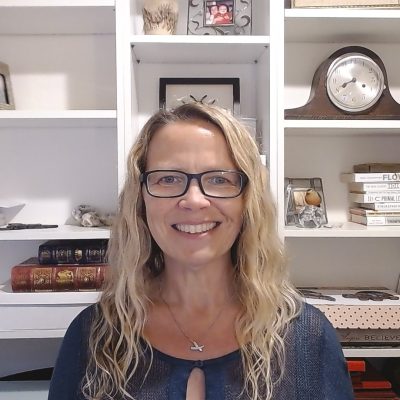
Image Credits
Andrea Goodridge