

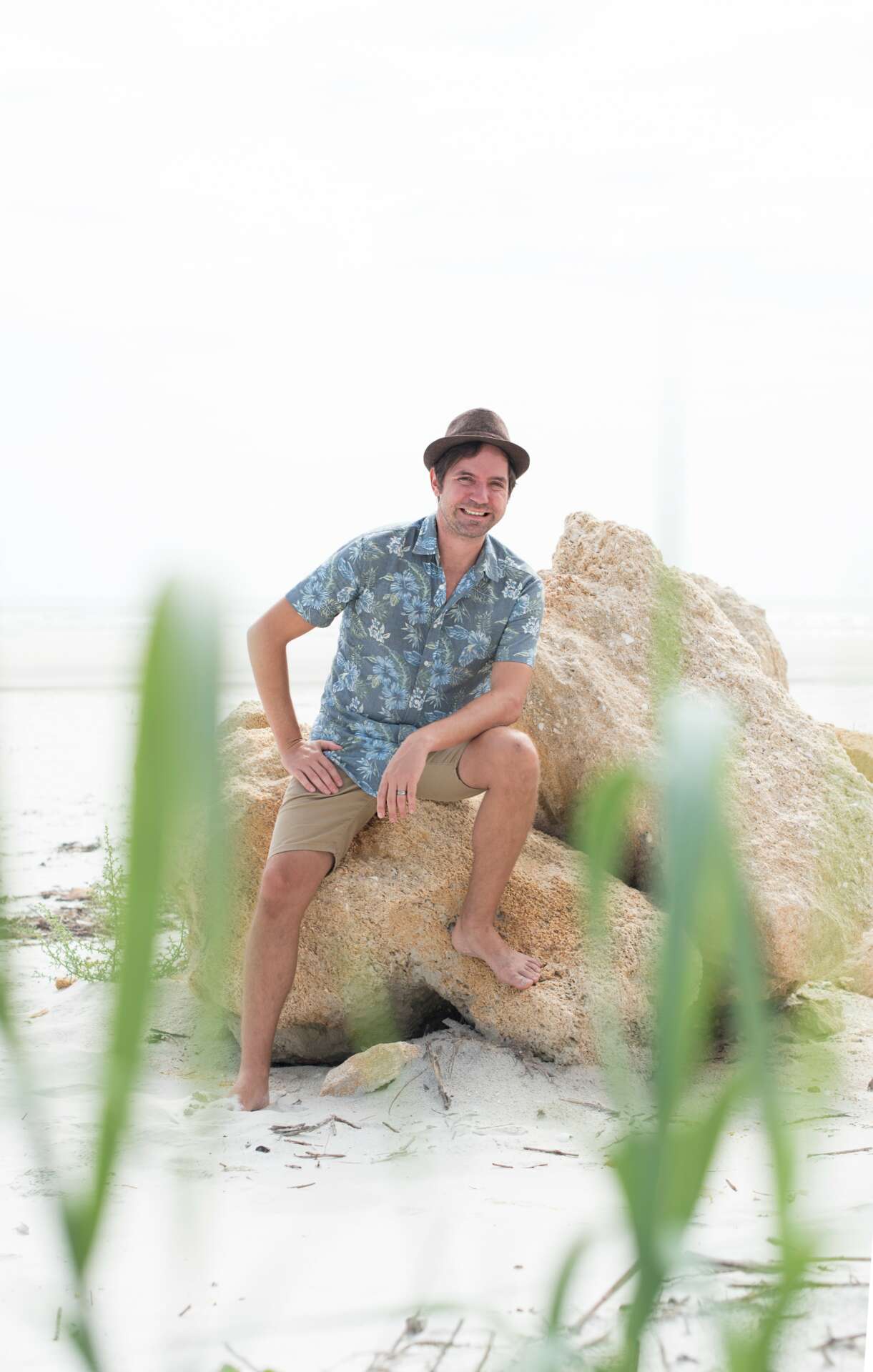

We’re excited to introduce you to the always interesting and insightful Andre Frattino . We hope you’ll enjoy our conversation with Andre below.
Andre, appreciate you joining us today. We’d love to hear from you about what you think Corporate America gets wrong in your industry and why it matters.
I think comics and graphic novels are still seen as both a kids medium and as primarily a super hero genre. It’s definitely made strides into showing that it’s more than that. Comics are vastly more supported by librarians and media specialists today as a learning tool and as a genuine format of literature, but I think the mainstream still grapples with just how broad comics can and should be. I won’t be satisfied until comics are a household medium, from the very young to the very old.


Andre, love having you share your insights with us. Before we ask you more questions, maybe you can take a moment to introduce yourself to our readers who might have missed our earlier conversations?
When I was five years old my mom helped me create my own children’s book, “Honey Pot Bear and the Prize at the End of the Rainbow”. I illustrated it and dictated the story to her (she typed it out on an old computer). We had the pages xeroxed a couple dozen times and bound the books ourselves. At five, the ability to hold a book that I made…was beyond transformative! It influenced my whole future of wanting to become a storyteller and seeing my work produced on a large scale. I graduated from Savannah College of Art and Design with a degree in Sequential Art (Comics) in 2009, published my first book in 2012, and have continued on to great success. Many of my books focus on historical people and events, and I find the medium of comics to be a great outlet for getting those stories out there to an audience that wouldn’t otherwise know about it.
We often hear about learning lessons – but just as important is unlearning lessons. Have you ever had to unlearn a lesson?
I learned that sometimes the key to success is to not focus so hard on one specific goal that you lose sight of potential alternate paths to the same goal.
When I was a kid, I grew up on one particular comics, and I took that love of that comic into my college years. I was fervent that I would work on THAT comic, even was mentored by current artists working on it. I had constant submissions sent to the editors…but nothing ever came of it. It was a disappointment that I never broke into that particular part of the industry but I realized later that there were other stories and projects I could get involved in, unrestrained by the confines of a particular narrative that I’d be forced to adhere to. That’s when I realized that I spent too much time trying to do something that wasn’t me, and allowed myself to flourish through my own unique work and narratives.


How’d you build such a strong reputation within your market?
I focus a lot on historical characters and events. While I’m by no means the first to work on historical comics, it’s definitely a smaller niche of creators then other areas of the industry. My work on SIMON SAYS and TOKYO ROSE spotlights historical figures who had huge impacts but who are not a household name, and in that sense I feel like I’ve built a reputation for being the steward of the forgotten or misunderstood heroes.
Contact Info:
- Website: www.arfstudios.design
- Instagram: @arfstudios
- Linkedin: https://www.linkedin.com/in/andre-r-frattino
- Twitter: @arfstudios
Image Credits
TOKYO ROSE: ZERO HOUR, Art by Kate Kasenow. Story by Andre R Frattino