



We were lucky to catch up with Althea Hrdlichka recently and have shared our conversation below.
Althea, thanks for joining us, excited to have you contributing your stories and insights. Coming up with the idea is so exciting, but then comes the hard part – executing. Too often the media ignores the execution part and goes from idea to success, skipping over the nitty, gritty details of executing in the early days. We think that’s a disservice both to the entrepreneurs who built something amazing as well as the public who isn’t getting a realistic picture of what it takes to succeed. So, we’d really appreciate if you could open up about your execution story – how did you go from idea to execution?
I didn’t start with a business plan. I started with a knowing.
By the time the idea of opening a birth center came to me, I had already lived inside the gaps of the system, first as a young mother whose birth felt taken from her, and later as a doula and midwife witnessing, again and again, how families were rushed, over-medicalized, or simply not heard. The idea wasn’t flashy. It was persistent. It kept asking: What would care look like if it were truly centered on women and families?
The day after that idea landed, nothing looked different on the outside, but internally, everything shifted. I began paying attention. I noticed what was missing in our community. I started asking better questions: Where would this live? Who would it serve? What would it take to do this safely, ethically, and legally?
One of the earliest, and most critical, decisions was location. For the first birth center, I built the building from the ground up. That allowed me to be intentional from the very beginning. I chose a site that felt calm and accessible, but was also practical, less than five minutes from the nearest hospital. That proximity mattered deeply to me. I wanted families to feel held and supported, and I wanted collaborating providers to see that this was thoughtful, responsible, well-integrated care.
From there, the work expanded quickly. I had to learn everything beyond clinical care: state regulations, birth-center licensing, zoning requirements, insurance, malpractice coverage, and how to design a space that met code while still feeling warm, human, and welcoming. I read regulations line by line. I sought out conversations with midwives who had gone before me. I built policies, informed consents, emergency protocols, and operational systems that honored autonomy while standing up to scrutiny.
Launching in 2020 required adaptability on every level. I had to learn how to budget and fund the project personally, using savings from my homebirth practice to bring the vision to life. There were, and still are, no outside investors or external funding. Every decision required careful planning, discipline, and a long-term view of sustainability. The only support behind the scenes was my husband, whose steady support of our family made it possible for me to take this leap of faith and stay focused on building something meaningful.
At the same time, I began bringing on a team. That meant learning how to lead, not just clients, but staff, students, and a growing organization. I had to shift from being solely a clinician to being a builder, mentor, and leader. I learned how to hire thoughtfully, train with intention, and create a culture rooted in trust, accountability, and shared values.
The birth center didn’t open fully formed. It evolved, through listening, adjusting, and staying anchored to the mission.
The second birth center came about when Bloomin’ Babies, the only birth center serving the Western Slope, closed its doors. Overnight, an entire region lost access to out-of-hospital birth care. Families were left with few options, and many were facing long travel or hospital-only care that didn’t align with their values. I didn’t set out to expand, but the need was clear. I took another leap of faith because this community truly needed a birth center.
When the opportunity arose in Grand Junction, the approach was different, but the values were the same. This time, I stepped into a raw space rather than building from scratch. Once again, location was non-negotiable. The center is situated in a strong, accessible area, less than five minutes from the nearest hospital, an intentional choice rooted in safety, collaboration, and trust.
What moved both centers from idea to execution wasn’t confidence, it was commitment. A willingness to stay with the work long enough for it to take shape. To learn what I didn’t know, to build systems carefully, and to let integrity guide every decision.
Looking back, the process wasn’t linear. It was organic. The idea led to research, research led to relationships, relationships led to systems, and systems finally allowed the doors to open. Much like birth itself, the centers grew through intention, patience, and trust in the process.
Althea, love having you share your insights with us. Before we ask you more questions, maybe you can take a moment to introduce yourself to our readers who might have missed our earlier conversations?
At my core, I am a midwife, a builder, and a protector of women’s choice where to give birth.
My path into this work began long before I ever held a license or opened a birth center. I became a mother as a teenager, and my own birth experience profoundly shaped me. I remember feeling unheard, rushed, and disconnected from decisions that should have been mine. That experience planted a seed, a quiet but persistent awareness that our systems often fail women at one of the most vulnerable and powerful moments of their lives.
I entered this field first as a doula, then trained as a midwife, and eventually became the founder and owner of Tender Gifts Birth & Wellness Center. Along the way, I witnessed the same patterns repeat themselves: families who wanted informed, respectful, holistic care struggling to find it; communities losing access to maternity services; and providers burning out within rigid systems that didn’t allow them to practice fully or humanely.
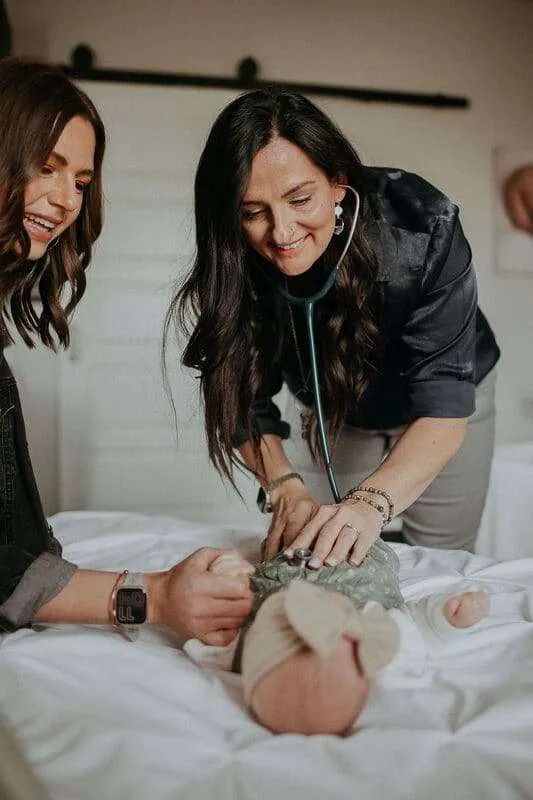
Today, I provide full-scope midwifery care through birth centers and homebirth services, offering prenatal, birth, postpartum, and newborn care. Through our centers, we also provide wellness services, education, and training pathways for student midwives and birth workers. My work spans clinical care, organizational leadership, mentorship, and advocacy, because I’ve learned that sustainable change requires engagement at every level, not just at the bedside.
The problem I set out to solve is access, to safe, compassionate, evidence-based maternity care that honors autonomy and choice. Too many families are forced into one-size-fits-all models or left without options altogether. Birth centers bridge that gap. They offer excellent outcomes, continuity of care, and a deeply relational approach, while remaining integrated with hospitals and emergency systems when needed. I am deeply committed to collaboration, not opposition, believing that families are safest when systems work together rather than in silos.
What sets my work apart is that it is both heart-led and systems-driven. I hold birth as sacred, but I also hold responsibility seriously. Every center I build is intentionally located within minutes of a hospital. Every policy, consent, and protocol is crafted to protect both families and providers. We prioritize informed consent, transparency, and preparedness, not as buzzwords, but as daily practice.
I am most proud of building something sustainable without outside investors or corporate backing. Both birth centers were funded through years of work, personal sacrifice, and careful stewardship, supported by my husband, who made it possible for our family to weather the long build seasons. I am proud of the teams we’ve built, the students we’ve trained, and the families who have felt truly seen and supported in our care.
I’m also proud of stepping into communities where care has been lost. Opening a second birth center on Colorado’s Western Slope came after the closure of the region’s only birth center, leaving families with few options. That expansion wasn’t about growth for growth’s sake, it was about responsibility, listening, and responding when a community clearly needed support.
What I want people to know about me and my work is this: I believe birth deserves time, respect, and trust. I believe families deserve real choices, not just theoretical ones. I believe midwives and birth workers deserve environments where they can practice safely, ethically, and with integrity. And I believe that building something meaningful takes patience, courage, and a willingness to stay when things are hard.
Tender Gifts is not just a place, it’s a philosophy made visible. It represents experience, relationship, holistic care, support, and trust. Everything we offer flows from those values.
At the end of the day, my work is about restoring dignity, to birth, to families, and to the providers who serve them. That is what I am most committed to, and what I will continue building for as long as I am called to this work.
Can you open up about how you funded your business?
Funding the business was a slow, intentional process, especially as a single owner of a woman-owned business. I built the initial capital by saving through my own homebirth practice and reinvesting those earnings back into the vision. I later secured a modest small-business loan, which is now nearly paid off after five years.
Like many small business owners, there were seasons where putting in the work meant making sure everyone else was paid first, even when that meant I wasn’t. That’s part of building something sustainable from the ground up, and it’s easier to carry those seasons when the work is rooted in genuine passion and purpose. Through disciplined budgeting and thoughtful decision-making, I’ve grown the practice without ever pulling from our personal household finances. The business has stood on its own from the beginning, and that’s something I’m deeply proud of.
Are there any books, videos, essays or other resources that have significantly impacted your management and entrepreneurial thinking and philosophy?
One book that has significantly shaped how I lead is Traction by Gino Wickman. The EOS (Entrepreneurial Operating System) framework helped me translate vision into structure, clarifying priorities, roles, and accountability while staying values-driven. In a fast-paced healthcare environment, EOS helps me lead less reactively and build something sustainable.
Just as important, our work requires us to be a very close team, for safety, trust, and deep connection, especially in an almost all-women environment. Tools like EOS and the DISC profile help us communicate clearly, understand one another’s strengths, and support each other well, which directly impacts both team health and client care.
Contact Info:
- Website: https://Tendergiftsbirth.com
- Instagram: https://www.instagram.com/tendergiftsbirth?igsh=MTZzOXlxNXRxdHVlcg%3D%3D&utm_source=qr
- Facebook: https://www.facebook.com/share/1ABuqj9s5L/?mibextid=wwXIfr
Image Credits
Maebelle photos