


We’re excited to introduce you to the always interesting and insightful Allison Green. We hope you’ll enjoy our conversation with Allison below.
Alright, Allison thanks for taking the time to share your stories and insights with us today. Are you happier as a creative? Do you sometimes think about what it would be like to just have a regular job? Can you talk to us about how you think through these emotions?
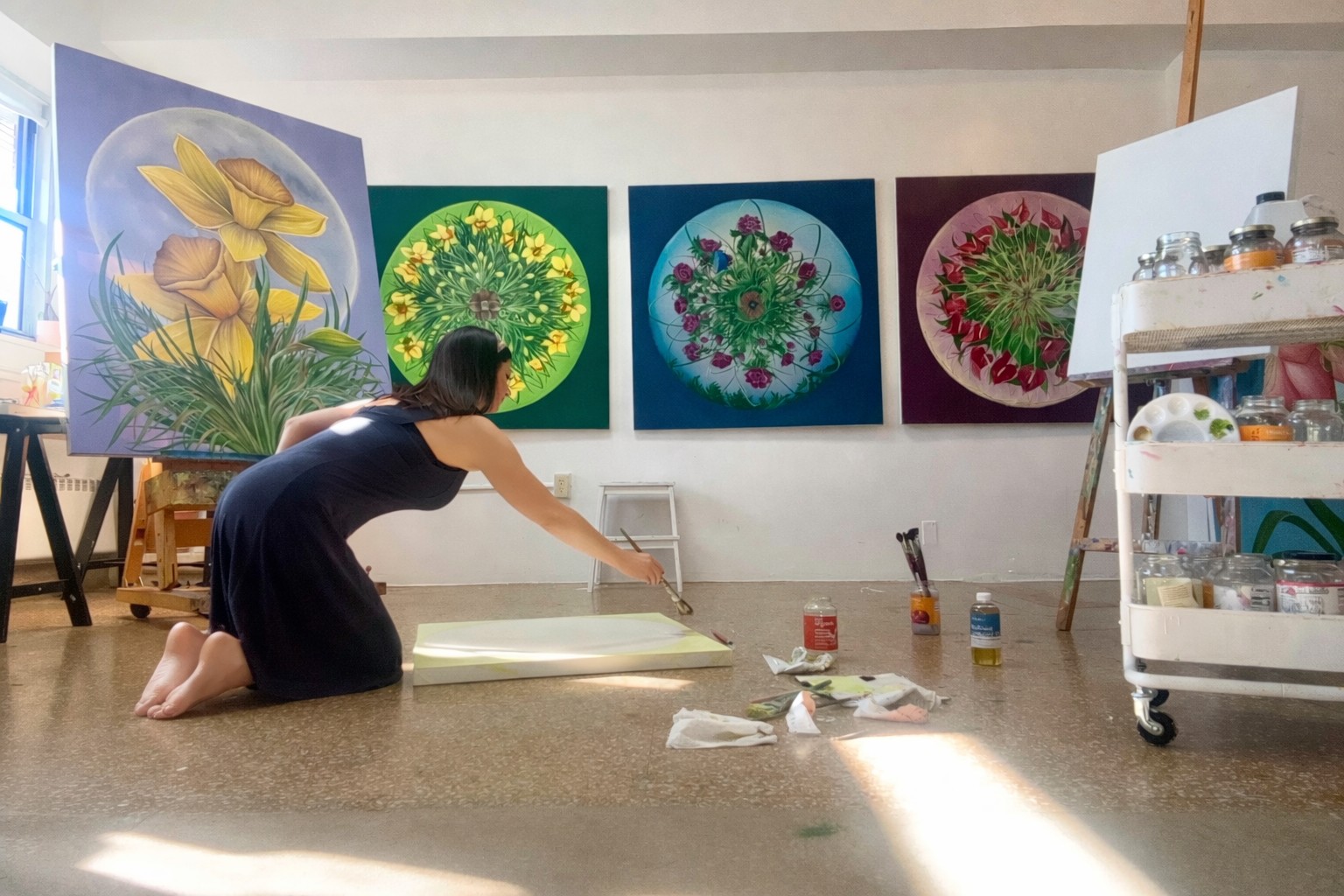
Like many artists, I sometimes imagine what life might feel like with the stability of a “regular job”—especially now, as a single mother dedicated to meeting my daughter’s needs while continuing to live a creative life as a painter of large-scale, surreal botanical works.
Many years ago, I experienced that “regular job” life when I worked full-time as an art teacher in an urban public school, teaching elementary and middle school students. There was so much joy in it, and sharing creativity with children felt completely natural and instinctive. At the same time, I found the structure and administrative demands challenging. The early mornings, staff meetings, lesson planning, and constant paperwork left very little room for the kind of meditative, expansive thinking that a serious creative practice requires.
I made the decision to leave that stability long before I became a parent, at a time when I believed my life would continue along a very different path. Life unfolded in ways I could not have predicted. Now, as a single mother raising my seven-year-old daughter, the stakes feel very real. There are moments when the predictability of a steady paycheck and routine feels especially appealing, and when the uncertainty of a creative career can feel challenging.
Over time, I’ve come to understand that living a creative life isn’t just a career choice for me—it’s who I am. Some people need to run—not just for exercise, but for clarity and balance. I’ve realized that I need to paint in the same way. There must be space in my life for creating on a regular basis.
Recently, I returned to teaching, but in a new way. I now offer painting workshops—ranging from one-day immersive experiences to sequential master classes—on a freelance basis with school districts, colleges and institutions. This has become a meaningful balance: a way to sustain my studio practice, share my love of painting with students, and maintain flexibility as a parent. Over time, I’ve built a disciplined studio practice which can hold its own ground alongside my teaching work, allowing both to support one another now.
And in the end, what grounds me is the space I’ve built as an artist. When I walk into my studio each day, I feel a sense of clarity and focus that is difficult to describe. I’m proud to have created and sustained a flourishing studio practice over many years. My studio is filled with paintings in progress, a lush garden growing in the windows, and a space for creating that is entirely my own. It’s not only a place where I meet collectors and gallerists, but also where my daughter spends time with me, watching ideas take shape from beginning to end. In our studio, she sees not just what I paint, but how I live and what it means to live a creative life—and that feels like the most meaningful form of stability I can offer
Great, appreciate you sharing that with us. Before we ask you to share more of your insights, can you take a moment to introduce yourself and how you got to where you are today to our readers.
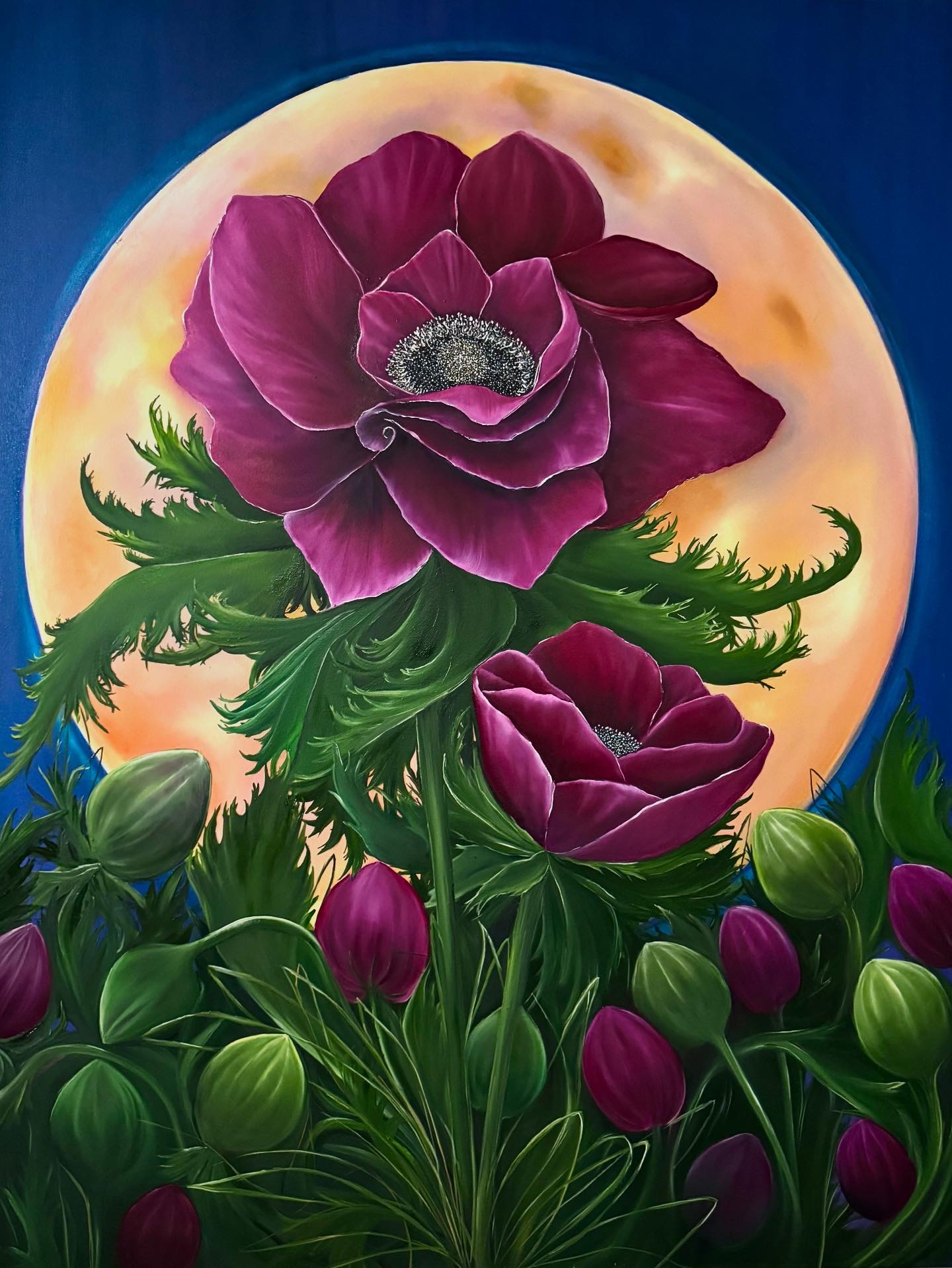
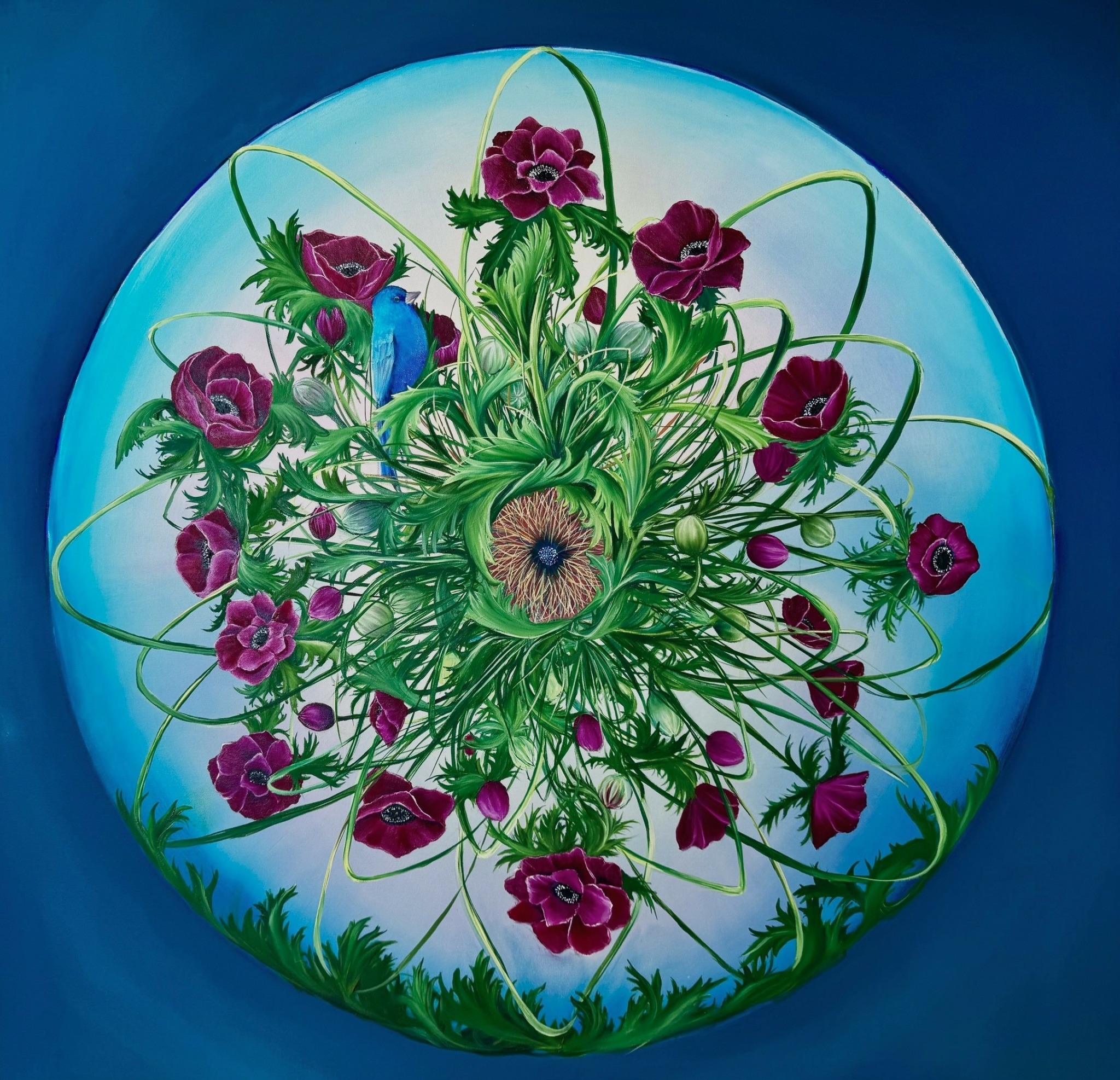
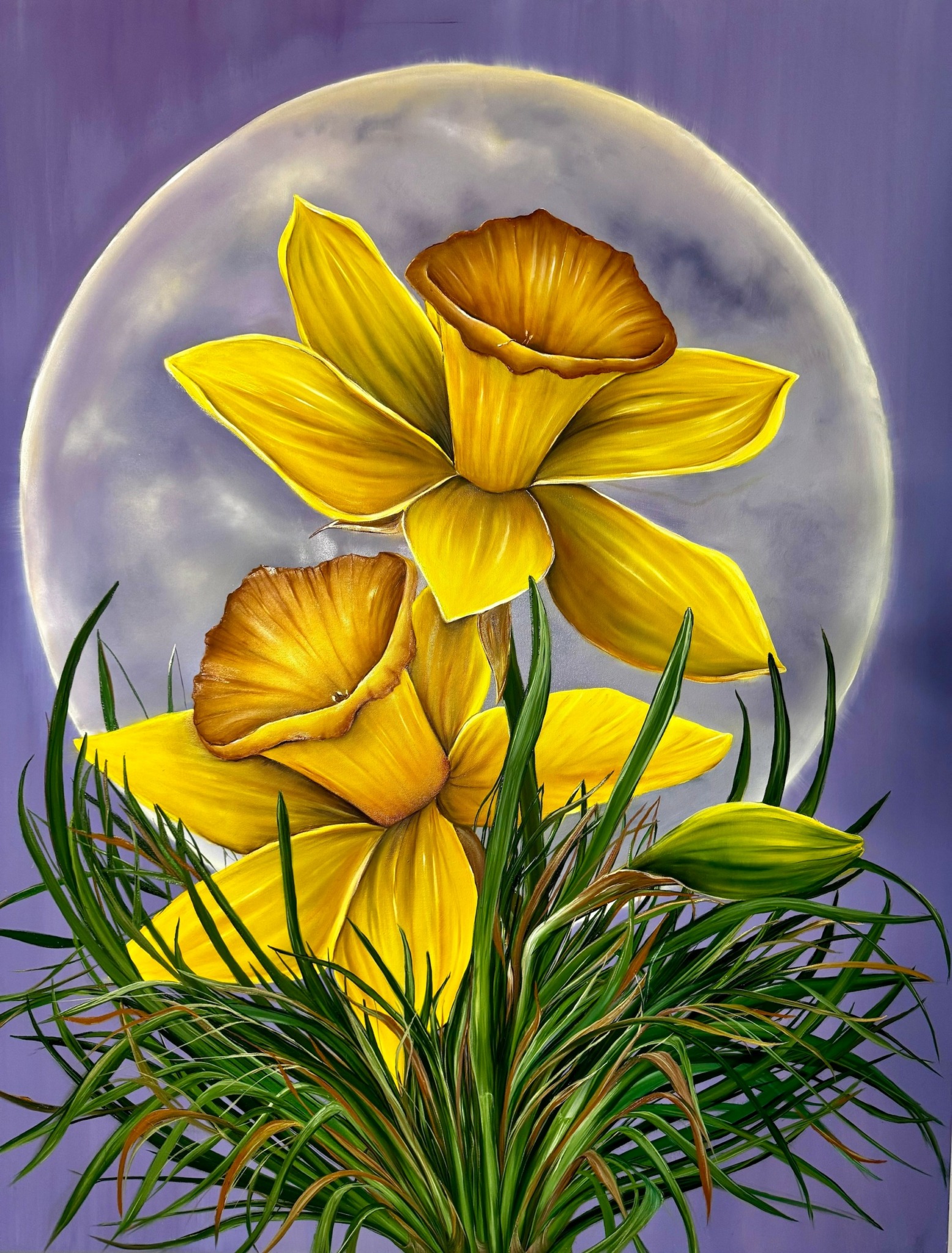
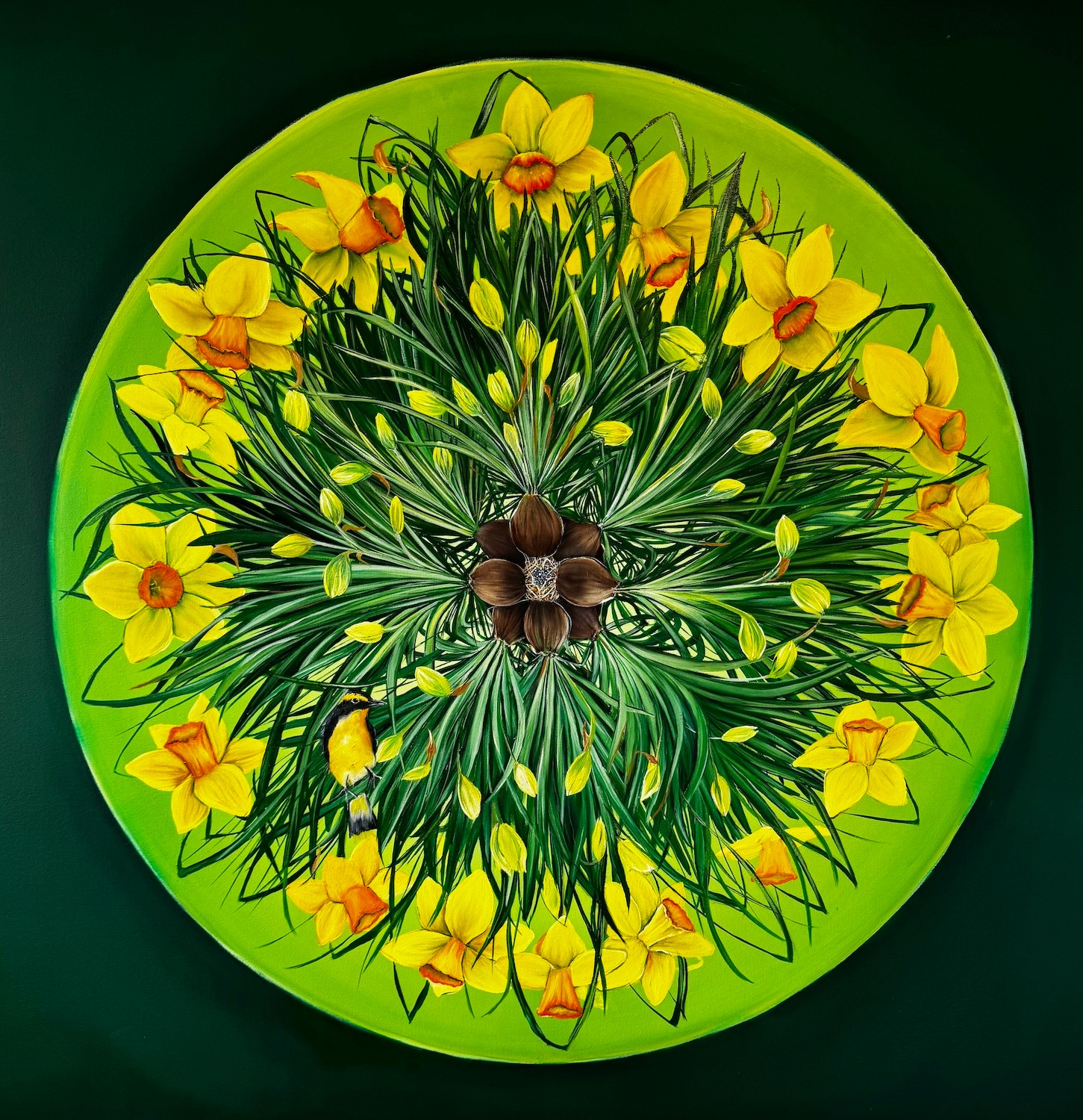
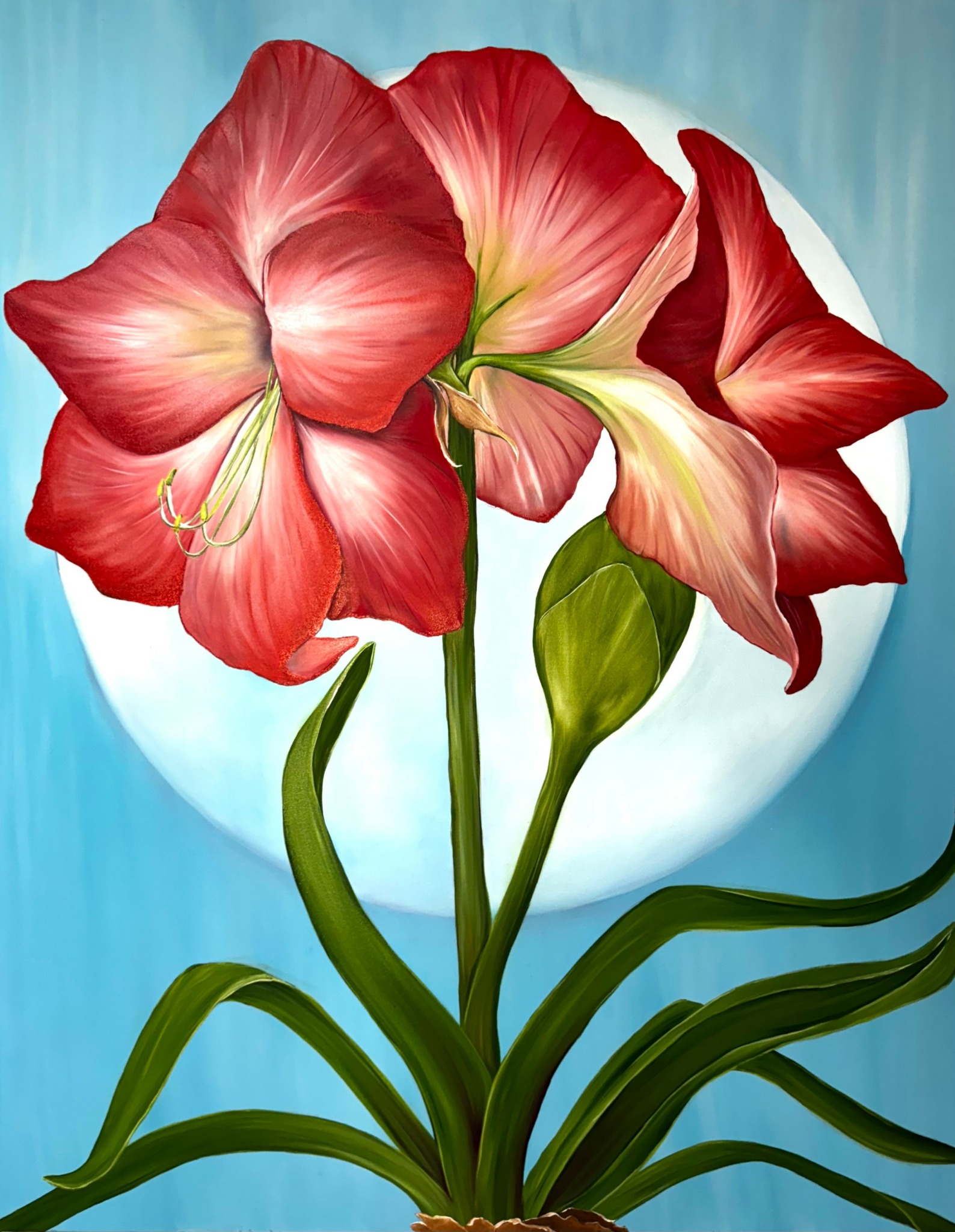
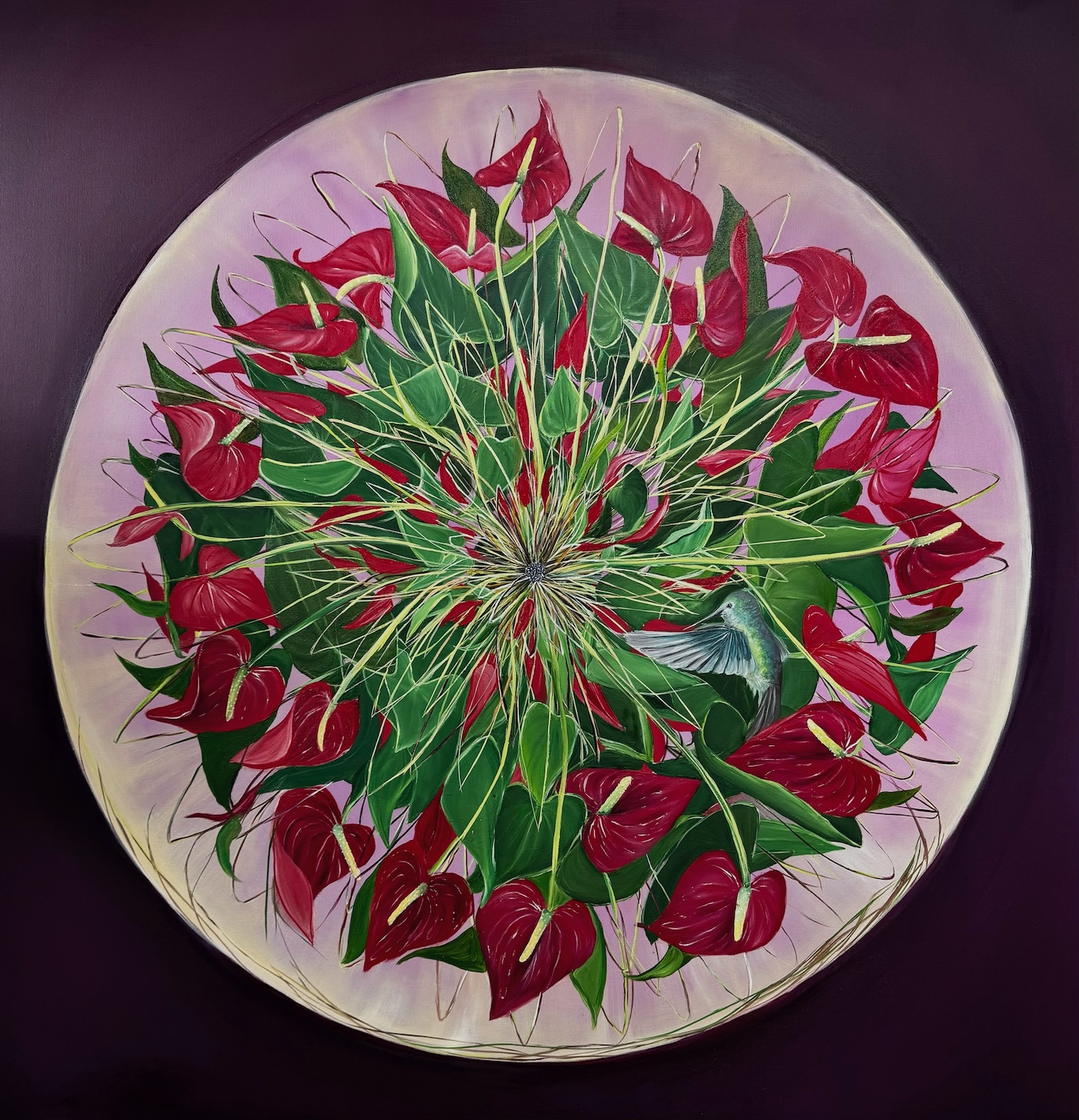
I am a large-scale oil painter whose work centers on botanical forms—flowers, plants, and organic structures depicted in ways that are both surreal and deeply expressive. My paintings often enlarge these natural elements beyond their expected scale, inviting viewers into an immersive, almost meditative encounter with the natural world. I’m particularly interested in the relationships between humans and plants, as well as the complex systems and connections that exist within nature itself.
Currently, I am working on a series of large-scale botanical mandalas and moonscapes that explore cycles of growth, transformation, and renewal. These works draw on the rhythms of nature as a way to reflect the emotional and psychological cycles we move through in our own lives—healing and growth, death and rebirth.
My path as a painter has evolved steadily over many years. I’ve had the privilege of presenting five solo exhibitions in New York City and Hudson New York with Susan Eley Fine Art, and my work is held in private collections across the United States and internationally.
What sets my work apart is the intersection of scale, subject matter, and intention. These are not simply botanical paintings—they are immersive environments, larger-than-life portraits, and what I think of as healing portals: spaces where viewers can pause and experience stillness, awe, and emotional resonance. While the work is grounded in close observation, it moves into something more psychological and symbolic. When experienced as a series, the paintings create an enveloping visual world—an imagined, heightened nature that invites deeper reflection.
For collectors, followers, and viewers, what I hope comes through is a sense of connection—to plant life, to nature, and to themselves. My paintings are an invitation to slow down, to look closely, and to recognize the powerful parallels between the natural world and our inner lives. At their core, they are about interconnectedness—something I believe sits at the heart of both nature and human experience
What do you think is the goal or mission that drives your creative journey?
My work is driven by a desire to explore the deeper relationships between humans and the natural world. I’m equally interested in the relationships within nature itself—the ways plants interact with one another, their connections to pollinators, and the systems of interdependence that sustain life. These dynamics often mirror human relationships in ways that feel both subtle and profound.
I’m drawn to the intersection of scientific observation and symbolic meaning in botanical forms. Through my paintings, I aim to create spaces where viewers can slow down and reflect on cycles of growth, transformation, and interconnectedness—experiences that shape both the natural world and our own lives.
On a broader level, my work is guided by a desire to evoke a sense of fascination and reverence for nature, particularly at a time when it feels increasingly vulnerable and overlooked. I hope my paintings offer not only moments of beauty and solace, but also a deeper awareness of and appreciation for the living world around us.
Can you tell us about a time you’ve had to pivot?
I am currently in the middle of a pivot—one I never could have predicted.
I adopted my daughter when I was 44, after a long and difficult journey through infertility and loss, at a point when I had truly made peace with the idea that I might never become a mother. It still feels surreal to look back on that moment—how my life settled in one direction, only to shift overnight with a single phone call telling me that a baby had been born and that we would be picking her up the next day. Becoming her parent changed everything in the most profound way. It was a life-altering pivot.
Several years later, I faced another unexpected turning point: the need to leave a marriage that had become deeply unhealthy. Today, I am raising my daughter on my own—a life I never could have imagined, and one that has required me to rebuild nearly every aspect of how I live and work.
For the past decade, I’ve built a career as a full-time artist, with gallery representation and a deeply committed studio practice. At the same time, the realities of navigating a major life transition and single parenthood led me to reassess how to sustain both my creative work and a reliable income over the long term.
That realization became the pivot.
I continue to work full-time in my studio, but I’ve also returned to teaching—this time on my own terms. I now offer painting workshops and classes independently, which has allowed me to reconnect with teaching in a way that feels both natural and sustainable. It’s been not only a financial shift, but an emotional one as well. Teaching has brought me back into connection with others—sharing knowledge, exchanging ideas, and stepping out of the solitude that studio life can sometimes require.
What I once might have seen as a compromise has, in many ways, become an expansion. This pivot hasn’t taken me away from my identity as an artist—it has deepened it. It’s allowed me to build a life that is more resilient, more connected, and more aligned with who I am now.
So while this chapter began in uncertainty, it’s one I’ve grown into with a strong sense of purpose and excitement for what it’s still becoming.
Contact Info:
- Website: https://www.allisongreen.net
- Instagram: @allisongreenart
- Facebook: https://www.facebook.com/AllisonGreenArtist
- Linkedin: https://www.linkedin.com/in/allisongreenart/
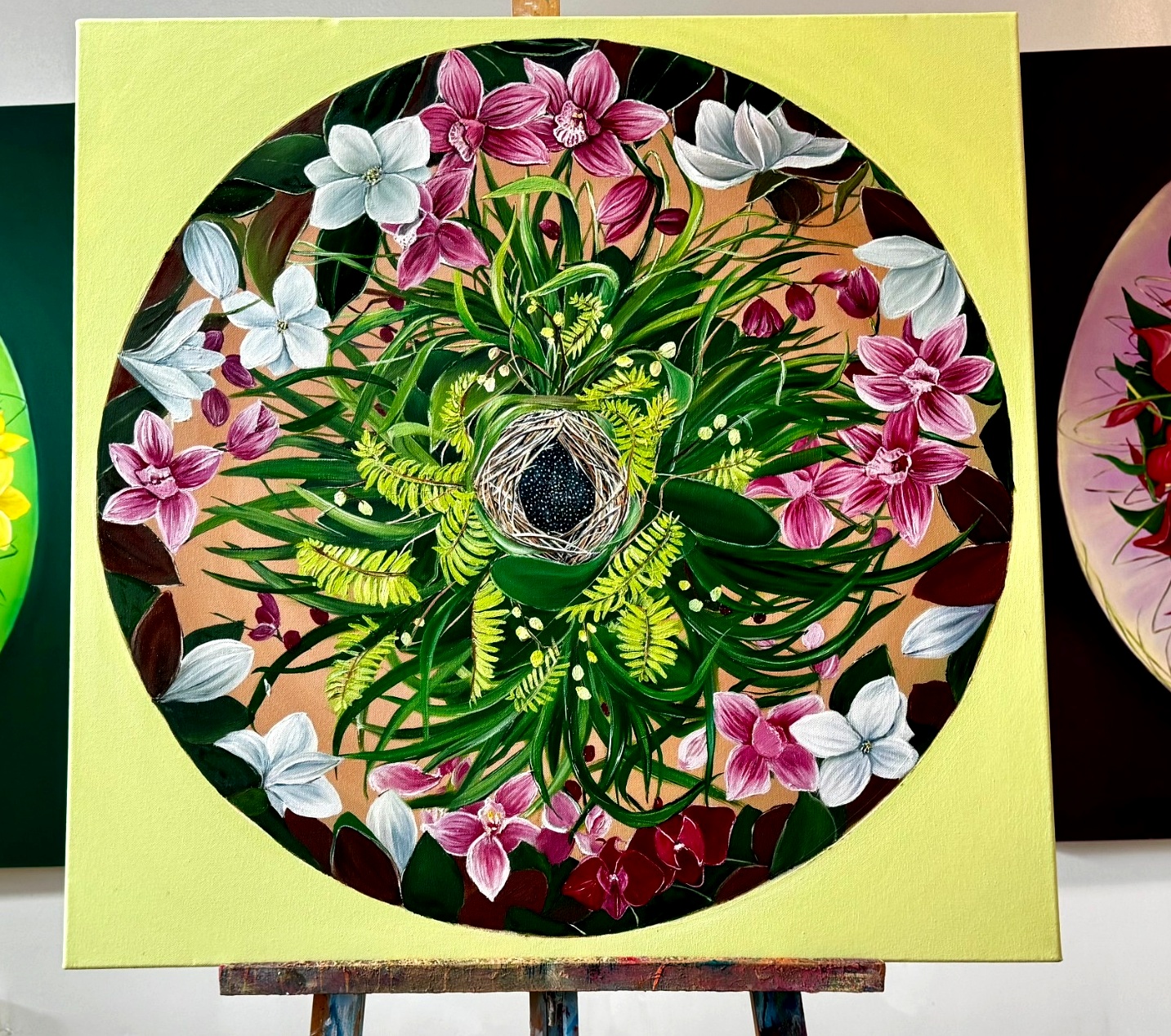
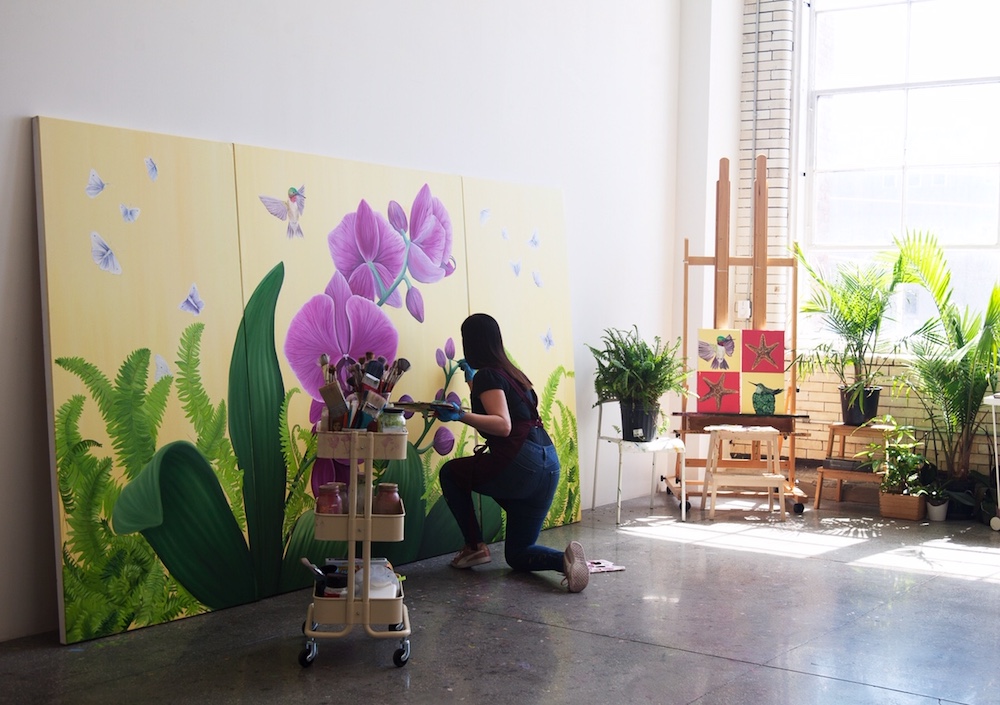
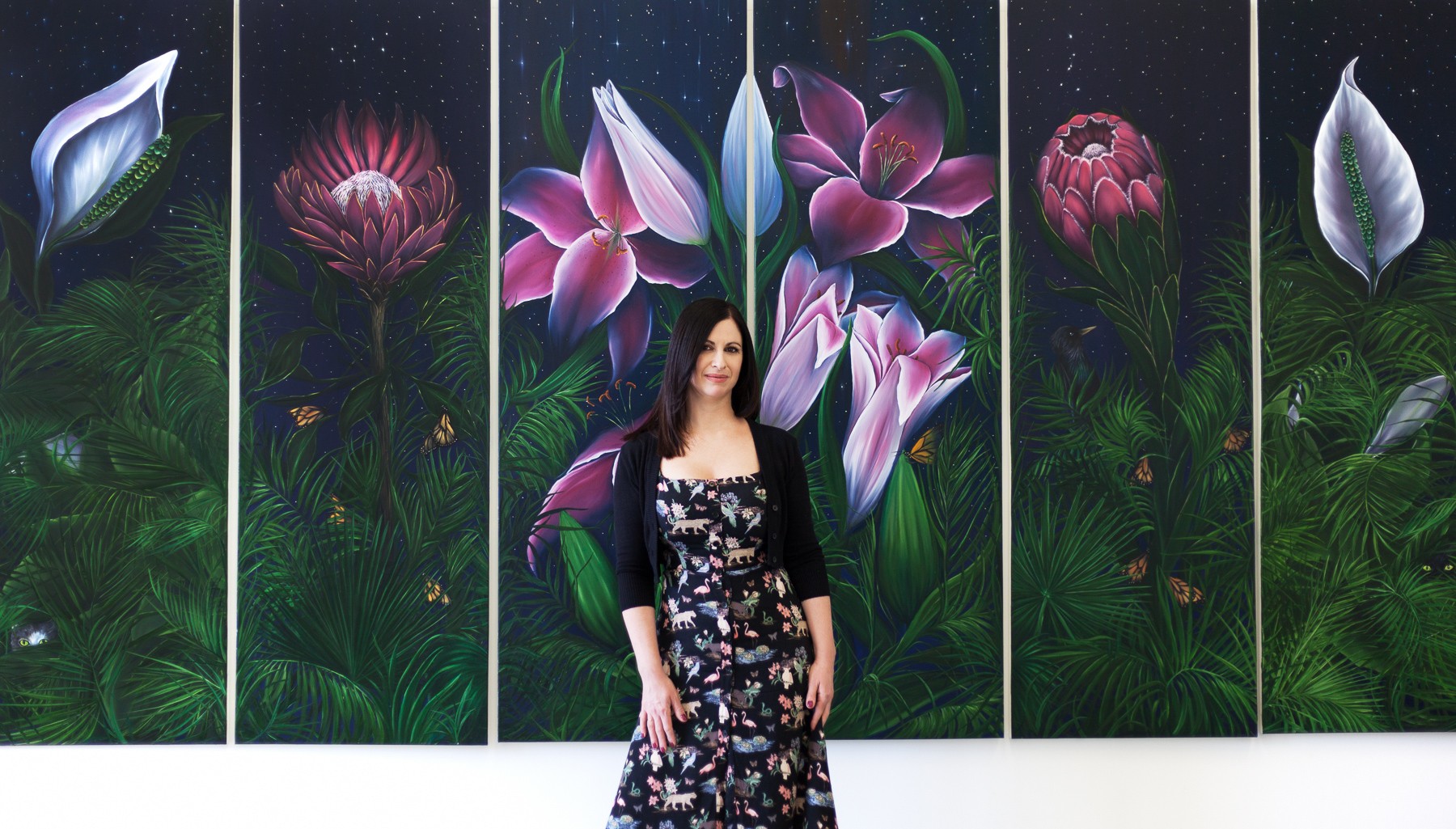
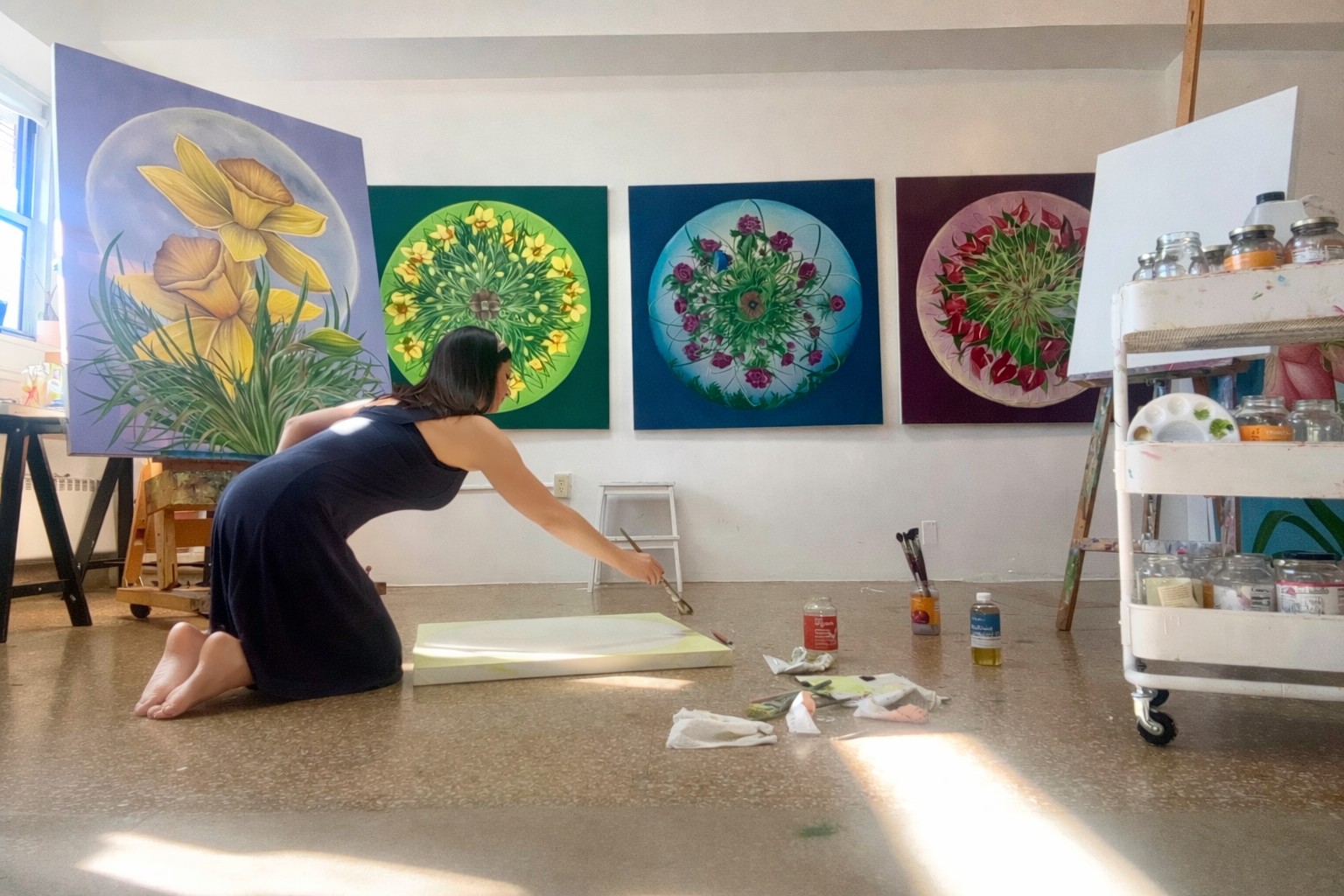
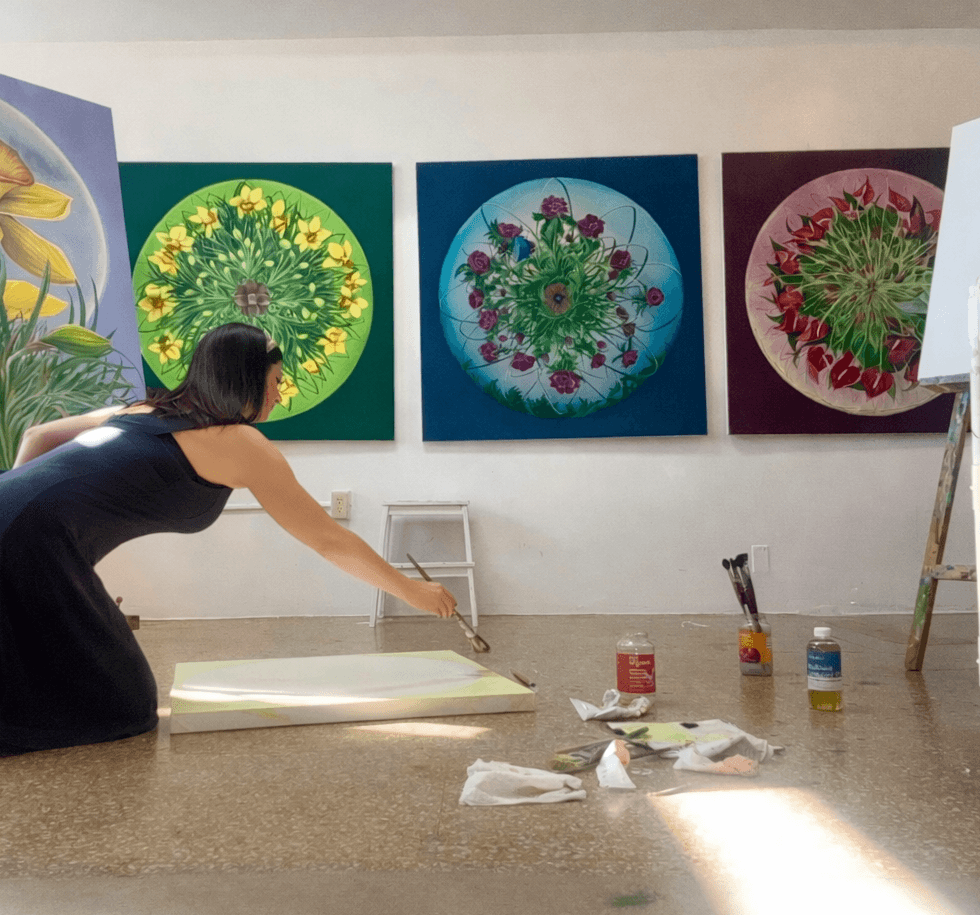
Image Credits
Images #8-9 StudioPortrait and StudioPortrait4 by Enga Purejav, courtesy of Mana Contemporary