


We were lucky to catch up with Alexis Chinery recently and have shared our conversation below.
Alexis , thanks for joining us, excited to have you contributing your stories and insights. Do you have any thoughts about how to create a more inclusive workplace?
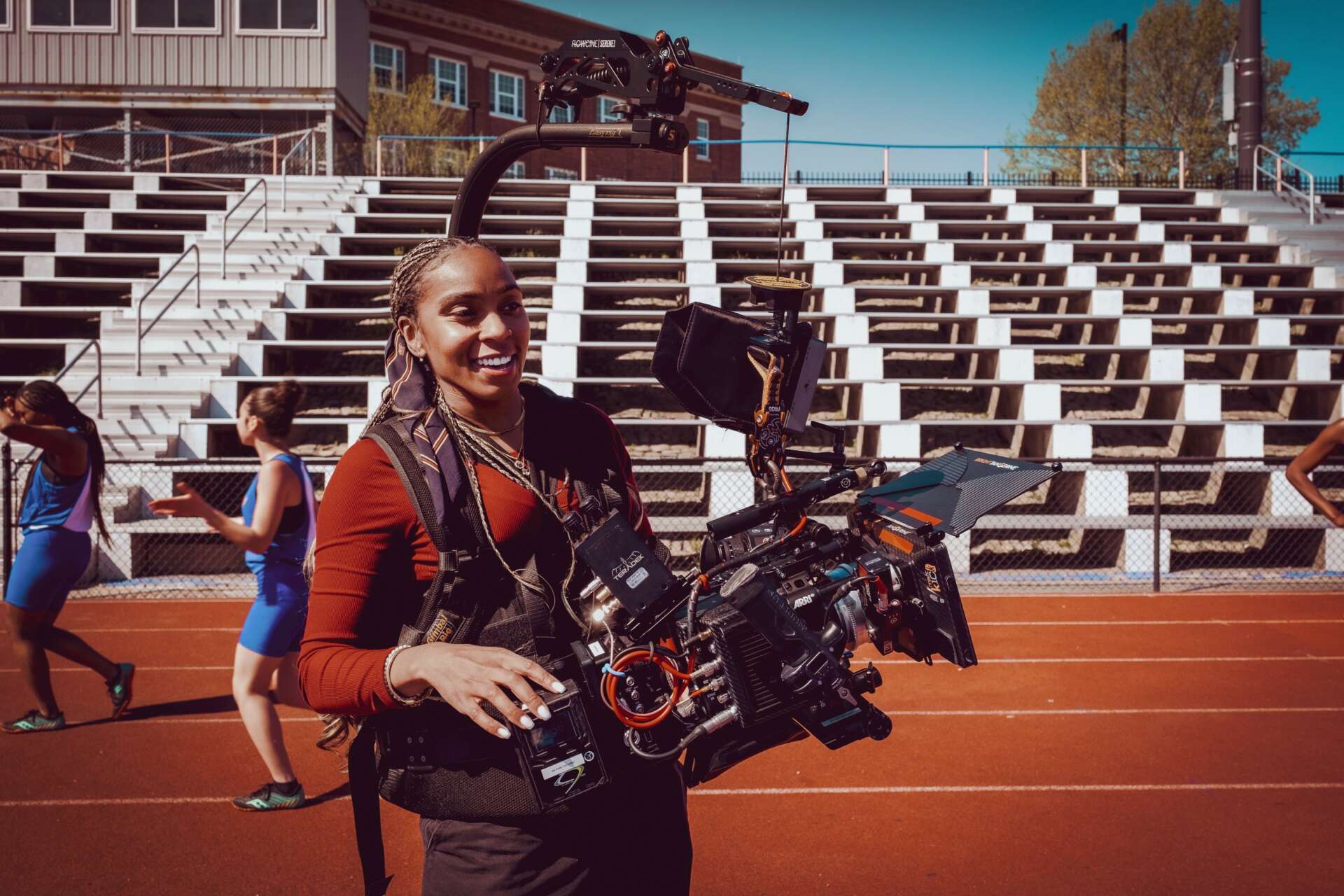
As a black female DP I saw very little representation of myself and other women of color in the same role throughout my career. Many of my inspirations were female director’s like Gina Prince-Bythewood, Kasi Lemmons, Ava Duverney – who then by collaboration introduced me to the work of DP’s like Cheryl Dunye and Kira Kelly. Recognizing that inclusivity starts on the home front has always been a huge motivator for the way my partners and I at Six Point Pictures set out to provide access to information, training, and industry standard equipment to aspiring filmmakers in our creative community. We created an accelerated filmmaking course known as ‘Filmmaker’s Meetup’ where we teach the processes of creating a film from pre-production to principal-photography to post-production. One of our main focuses was removing on-set intimidation factors like working with certain cinema cameras like the Arri Alexa Mini, or becoming comfortable with learning how to use an advanced follow-focus system. I know for me, these small hurdles used to stifle my confidence in mastering these tools – especially when I would production assist on certain sets and it felt like a “look but don’t touch” policy. Every piece of equipment we use on set is a tool, to tell a story, that’s it! I wanted to make sure that less people of color felt intimidated by certain pieces of equipment solely due to lack of access.


As always, we appreciate you sharing your insights and we’ve got a few more questions for you, but before we get to all of that can you take a minute to introduce yourself and give our readers some of your back background and context?
I am a DMV (DC, Maryland,Virginia) based Director of Photography/Cinematographer whose passion lies in creating an even playing field for all marginalized voices to be heard. My earliest exposures to storytelling and the capturing of imagery I credit to my father and maternal grandfather. Both always had a 35mm film camera at arm’s reach and found joy in photographing candid family moments. That innate passion for photography followed me into high school and college, more as a personal hobby. Surprising to most, my academic degree was in Economics and Statics, a polarizing difference to the creative industry I find myself in now. However, My background in economics and business was actually a defining catalyst to my first job in film production as a producer. After a year of producing I began to crave a more technical and hands-on presence on set. In 2015 I began my journey as a cinematographer under Six Point Pictures, one of Baltimore’s well recognized film production companies. I focused my efforts on shaping story through frame composition and lighting, and have been fortunate enough to DP/Camera Operate on productions under PBS, BET, Apple+, as well as some incredible independent works.
How about pivoting – can you share the story of a time you’ve had to pivot?
My career pivot from producing to cinematography was not only driven by my desire to aid in the visual storytelling but I strongly believe it was divinely confirmed when I committed myself to being a full-time caregiver to my late Mother who fought a 7-year battle with ALS. It was a period of discipline, servitude, and sacrifice I felt called to embrace. I could no longer commit to the hours most producers found themselves working, once they were on a production – which was pretty much around the clock. My colleagues supported my decision to transition into Camera department, and that afforded me opportunities to still be highly valued during principal-photography, while understanding my presence during pre and post production would be limited during my years as a caregiver. I continued to cultivate my own style of filming and began to DP for director’s who gravitated towards my work. Without the compassion from my film family and gaining a new profound outlook on empathy for anyone overcoming loss, hardship, or unfair circumstances, I wouldn’t be the filmmaker I am today.


How do you keep your team’s morale high?
Many people outside of the film industry aren’t aware of how big the Camera Department can be on any given production. Depending on the scale of the project you can expect multiples of any of the following roles in play: Director of Photography, Camera Operator, 1st AC, 2nd AC, Camera loader, Camera utility, and camera PA. That’s anywhere from 3-15 people or more within the department at once. As DP you run that ship and setting the tone on how direction is trickled down to each person/position is key. I personally like to fill my department with people who have great communication skills, are problem solvers on set, punctual, and are pleasant to work with. I know that if everyone on my team checks-off those boxes we will hold each other down even through the most adverse moments you sometimes find yourself in on set.
Contact Info:
- Website: https://www.lexlorraine.com/
- Instagram: @visuallexx
Image Credits
Bunmi Abari Tiffanie Drayton Gustavo Astudillo