

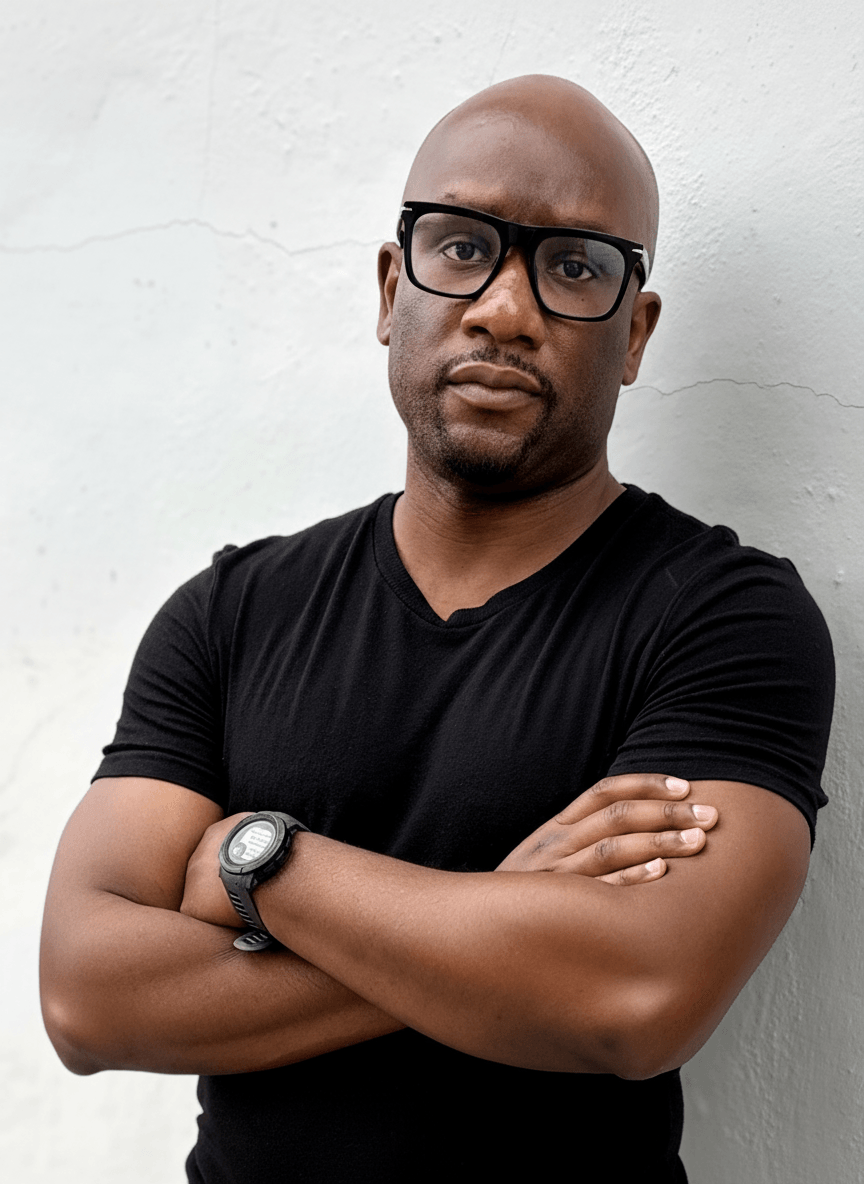

We recently connected with Aaron Philip Clark and have shared our conversation below.
Aaron Philip, thanks for joining us, excited to have you contributing your stories and insights. We’d love to hear about a project that you’ve worked on that’s meant a lot to you.
As an author, it’s hard to pinpoint my most meaningful project. I like to believe each book I write is the most meaningful at the time; however, my Detective Trevor Finnegan series has received the most praise and ultimately shifted the course of my career. Before publishing Under Color of Law, the first book in that series, I had written smaller, dare I say, less mainstream books. Under Color of Law was a police procedural and my first book published by a major publisher, rather than a small, independent press. It was also the most personal book I had written up to that point, inspired by my time at the LAPD Academy. The book explores police brutality and the policies and training that often lead officers to make poor decisions when interacting with the public.
Awesome – so before we get into the rest of our questions, can you briefly introduce yourself to our readers.
I am a USA Today Bestselling novelist, screenwriter, professor, and host of The Culture Point Podcast. My fiction explores themes of race, justice, identity, and redemption, often set against the moody backdrop of Los Angeles. I’ve had the pleasure of collaborating on novels with entertainment mogul Curtis “50 Cent” Jackson and renowned civil rights attorney Ben L. Crump. Before writing novels full-time, I worked odd jobs in the film industry and became somewhat disillusioned with the business and how screenwriters were treated. I decided to focus solely on writing prose, which gave me a sense of freedom I didn’t experience as a screenwriter. Having attended film school and earned my undergraduate degree in Writing for Film & TV, I was able to apply my screenwriting knowledge from years of education to my literary work. As a screenwriter, I consider story structure a key element. Whether it’s the traditional three-act structure or Save the Cat, a book needs to have a clear structure. My deep understanding of these structures has been a significant advantage, especially because I write genre fiction, and crime thrillers depend on a well-structured narrative that balances character development with a dynamic plot.
For you, what’s the most rewarding aspect of being a creative?
Freedom. I’ve spent considerable time in the corporate world and never felt I could fully leverage and use my creativity. Being able to write and be creative for a living has been a wonderful gift.
Is there a particular goal or mission driving your creative journey?
I’ve always loved mystery and crime fiction. The first mystery novel I read was Walter Mosley’s Devil in a Blue Dress. It had a profound impact on me, and I fell in love with the genre and reading about private investigators. When I looked for more crime and mystery novels by authors of color, I noticed there weren’t many. The ones I connected with were mostly published by small, independent presses that often highlight underrepresented voices, and I felt those novels deserved to be with the Big Five publishing houses — Simon & Schuster, Penguin Random House, HarperCollins, Hachette, and Macmillan. It’s always been important to me to create platforms to share work by authors who might not usually get those opportunities, which is why I created The Culture Point Podcast that explores how writers depict culture and subcultures in their work. While I love being a writer, as a writer of color, I feel it’s my duty to amplify other voices, promote youth literacy, and write about the Black experience honestly and thoughtfully.
Contact Info:
- Website: https://www.aaronphilipclark.com/
- Instagram: @realAPCbooks
- Facebook: https://www.facebook.com/AaronPhilipClark
- SoundCloud: https://soundcloud.com/authorsontheair/sets/the-culture-point

Image Credits
Photos by AV Quitain