

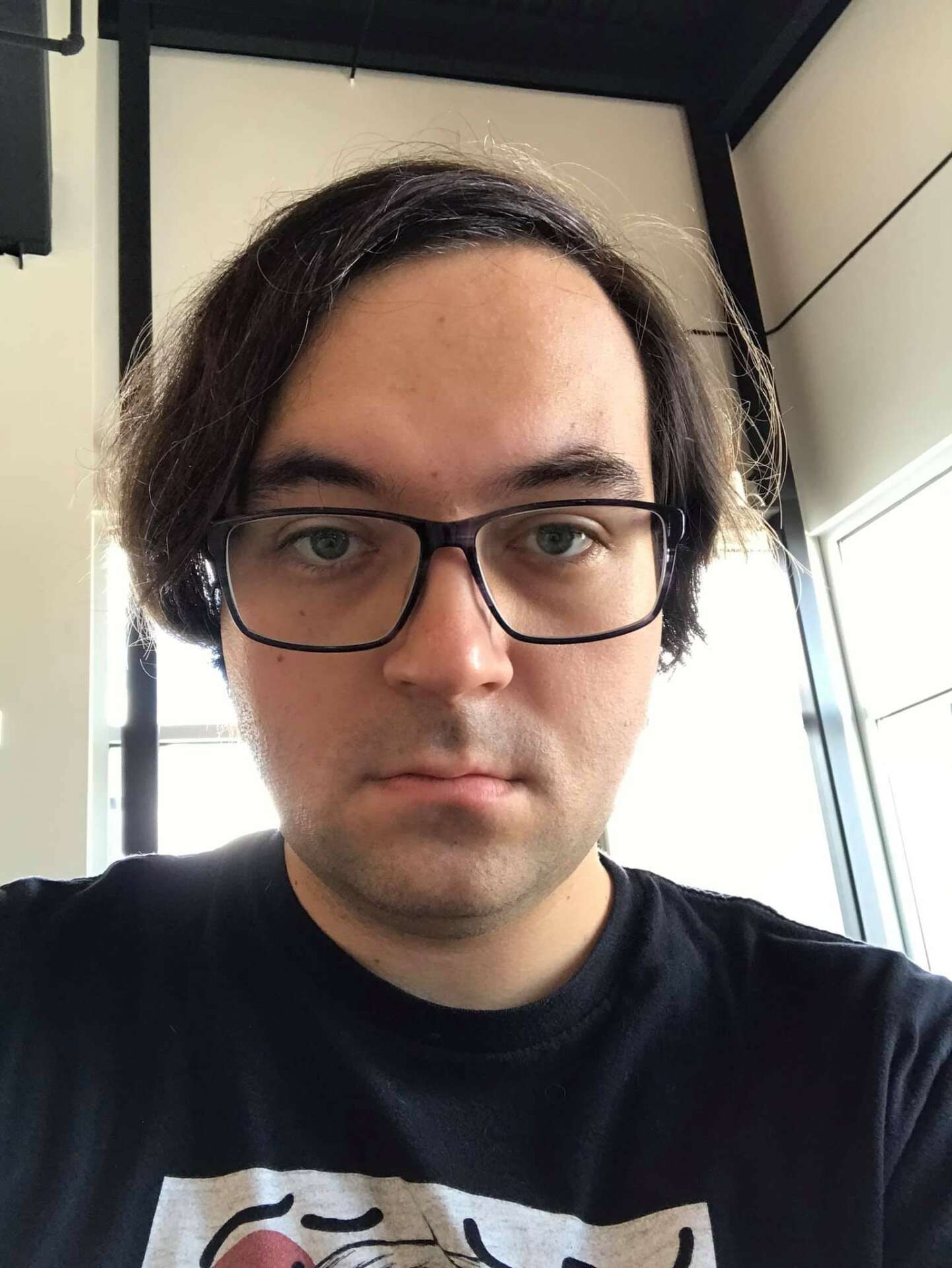

We recently connected with Connor Tones and have shared our conversation below.
Alright, Connor thanks for taking the time to share your stories and insights with us today. Learning the craft is often a unique journey from every creative – we’d love to hear about your journey and if knowing what you know now, you would have done anything differently to speed up the learning process.
When I started as a digital artist, I was mostly experimenting with things such as Photoshop elements on a parent’s computer. What I would do is draw my sketches out on paper and then go about scanning them into the computer to then painstakingly draw over them with a mouse. It was agonizing and I don’t recommend anyone does this now (pretty sure most tablets these days give a better experience than that). Realistically it was difficult to start out with, but overtime and with a lot more tools at my disposal, I finally understood what I was doing and took to art in a new way. Honestly speaking, I wish I had taken fundamentals more seriously. Stylization is important to make yourself stand out but if you don’t understand the foundation you’re working with it’s going to really make your journey a lot trickier to grasp. Most essential skills I had was my ability to find angles in almost anything and realizing what parts of my lineart I had to emphasize over other parts. The parts that were standing in my way was mostly tech. I had plenty of means to learn this stuff but tablets and such were a little out of my price range when I started. Nowadays you have a lot of resources at fairly cheaper prices, but when I first started out those were minimal and I could see how that would deter a lot of creatives outright.


Awesome – so before we get into the rest of our questions, can you briefly introduce yourself to our readers.
I’m a digital artist and graphic designer by trade. All of my work involves bright vibrant colors, thick lines, sharp edges, and dynamic angles to make the pieces stand out. I started taking art much more seriously around the second half of high school, in fact it was about the only thing folks really remembered me for. I went to college for animation, but decided instead to focus more on graphic design and digital art when I graduated as I felt it was more my style anyway. Clients generally present a crazy idea or stylistic design they want me to reinvent in my own way, and I spend a bit of time planning out what the most important aspect of the character is and what traits I need to exemplify in my work. For instance, if the piece is for a character that someone voiced in an anime or show (just going off one example I had recently) I look into the show in question and see what aspects of the character I want to incorporate the most into a design. Does the character have flowy fabric or a special power that is iconic to the character? Then that is something I work into the piece they have me create. Usually the pose and the piece itself revolves around what skill that character presents to me. It’s an interesting back and forth that I like to push as far as it can go.
As far as what makes me stand out, I usually leave that to folks who see my work to answer for me (which they have). My thick lines and colors are generally what I’m most known for. Usually folks even compare it favorably to various pieces of media they really enjoy, which I take as a compliment. If my work is getting compared to industry favorites then I must be doing something right. Some folks also marvel how fast I can complete works. It’s true I don’t like leaving stuff unfinished for too long, but I guess I just found more of my own shortcuts overtime due to practice and familiarizing myself with the tools. Realistically, that’s how anyone becomes more confident in what they do.
I would say my character design and linework is what I’m most proud of. Getting to work on either my own or a preexisting character is a huge amount of work but a labor of passion that someone trusted me with their favorite character. That work also goes into the characters I create myself and how I choose to improve them overtime. In short, clients help me help them, which helps me later on when I’m creating work for myself.
In your view, what can society to do to best support artists, creatives and a thriving creative ecosystem?
Honestly, if you see any artist, writer, musician, creative, or anyone of the sort whose work you cannot find yourself living without, show them that in so many ways. Share their work they post on social media with retweets or story sharing on insta; contribute to their patreon, buy their cds, commission them, or just plain make sure they know how much their works means to them. So many artists are discouraged by the results they get of their work. Art is often seen too much as a competitive ecosystem, when in reality we should be holding each other up and assisting each other in the best ways we can. Artists are living beings who need to look out for themselves as well, and gestures as simple as these can go a long way into keeping them going when pursuing future works and exploring their talents as artists.


We’d love to hear the story of how you built up your social media audience?
My social media presence from the start was very small. I had a twitter and instagram because that was just where everyone was, but unfortunately not many eyes were being cast on what I was doing. Realistically, you can’t affect what the algorithm is doing or even who sees what. That’s just how these websites work. However, what you can do is find any way you can to connect with people in your niche interests. Most people in the Houston area would know me as an FGC (fighting game community) artist, which means I work on art that pertains to this very specific niche of video game in a huge sea of various other games people would be going for. In the Houston area especially, I sought out all the art social communities I could because I knew the area was rich with artistic expression from people from all walks of life. Because of my choice in community, it’s lead me to huge opportunities as a creator as well as some of my closest companions in the field. Doing this all lead me to grow my presence online as I collaborated with many of my peers in the area on various projects and markets all around. It goes to show that in order to thrive, artists need to be willing to reach out; and other artists need to be sure to help out in ways that they can to bring each other up. Our community is only as strong as the bonds we make in it
Contact Info:
- Website: https://cinamuffins-art.squarespace.com/digital-art
- Instagram: https://www.instagram.com/cinamuffins/
- Twitter: https://twitter.com/Cinamuffins
Image Credits
Credits are the artist, Cinamuffins Art (Connor Tones) as the artist of all of these images