
We were lucky to catch up with Cathy Pierce recently and have shared our conversation below.
Cathy, thanks for joining us, excited to have you contributing your stories and insights. Often outsiders look at a successful business and think it became a success overnight. Even media and especially movies love to gloss over nitty, gritty details that went into that middle phase of your business – after you started but before you got to where you are today. In our experience, overnight success is usually the result of years of hard work laying the foundation for success, but unfortunately, it’s exactly this part of the story that most of the media ignores. Can you talk to us about your scaling up story – what are some of the nitty, gritty details folks should know about?
Scaling my business happened gradually and was built on relationships rather than traditional marketing. Over nearly twenty years in the fitness industry, I’ve learned that trust and community are far more powerful than advertising.
Early in my career, I taught classes and trained clients at as many as five different gyms and studios while raising four young children at home. Much of the work that clients never saw—writing workouts, organizing schedules, and designing programs—happened late at night after my family was asleep.
Working in multiple gyms early on helped me build a strong network of relationships with clients, gym owners, and community members who would eventually become the foundation of my business. Being based in my hometown also played a role. As a former athlete in the community, people already trusted my experience and knowledge. Having four young children also expanded my network, as I met many parents at schools, playgrounds, and local events.
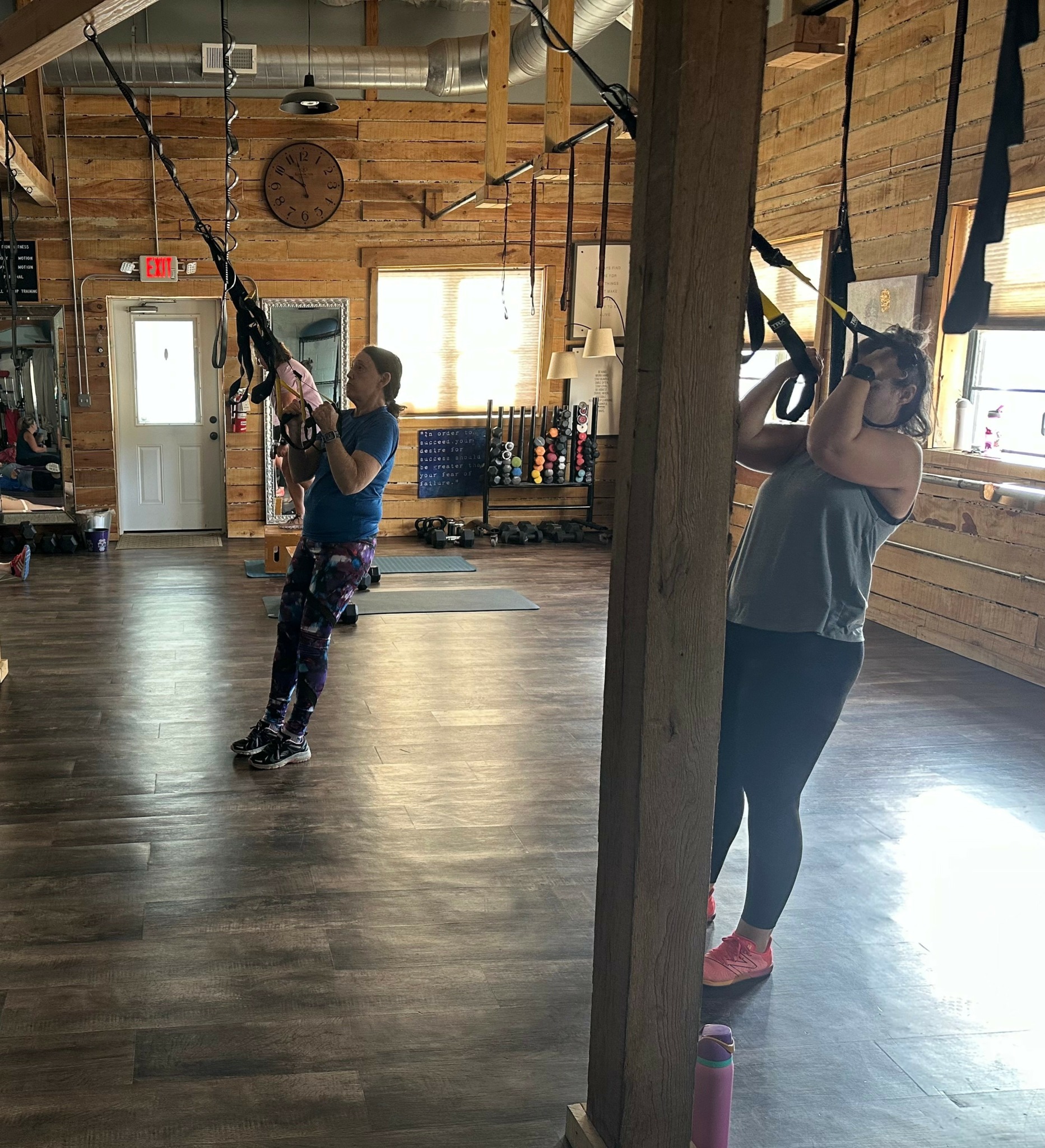
The most significant step in scaling my business came when I transitioned from one-on-one personal training to Small Group Training. Instead of training a single client each hour, I could work with six clients at a time. This allowed me to help more people while using my time much more efficiently, and it created a supportive environment where clients motivate each other.
In 2018, my business partner and I opened our own studio, which allowed us to build an even stronger fitness community. When my partner retired in the summer of 2024, I rebranded the business as Motion Fitness and simplified the model to focus entirely on Small Group Training and personalized program design.
Looking back, scaling my business has never been about simply increasing numbers. It has been about building relationships, earning trust, and creating a community where people feel supported in their long-term health and wellness.
Cathy, before we move on to more of these sorts of questions, can you take some time to bring our readers up to speed on you and what you do?
I began my journey as an elite athlete, earning a swimming scholarship to college—one of my earliest and most meaningful goals. That path shifted unexpectedly when I suffered a serious knee injury during my senior year, requiring two surgeries and ultimately forcing me to give up my scholarship. While difficult at the time, that turning point led me to West Virginia University, where I met my husband and formed lifelong friendships that remain incredibly important to me today.
After college, I pursued a career in Special Education, where I managed detailed Individualized Education Plans for my students while leading a team of paraeducators. That experience shaped my ability to design thoughtful, individualized programs—something that would later become the foundation of my work in fitness. When I became a mother of four children in just a few short years, I stepped away from teaching to focus on my family, but I never lost my passion for structure, planning, and helping others grow.
My entry into the fitness industry began organically. When my third child was just eight months old, I joined a local gym. Within a year, I was teaching classes, and over the next decade, I built a demanding schedule—teaching up to ten classes a week across five different gyms and studios. During that time, I became a Certified Personal Trainer and earned my 200-hour yoga certification, but it was personal training that truly captured my passion.
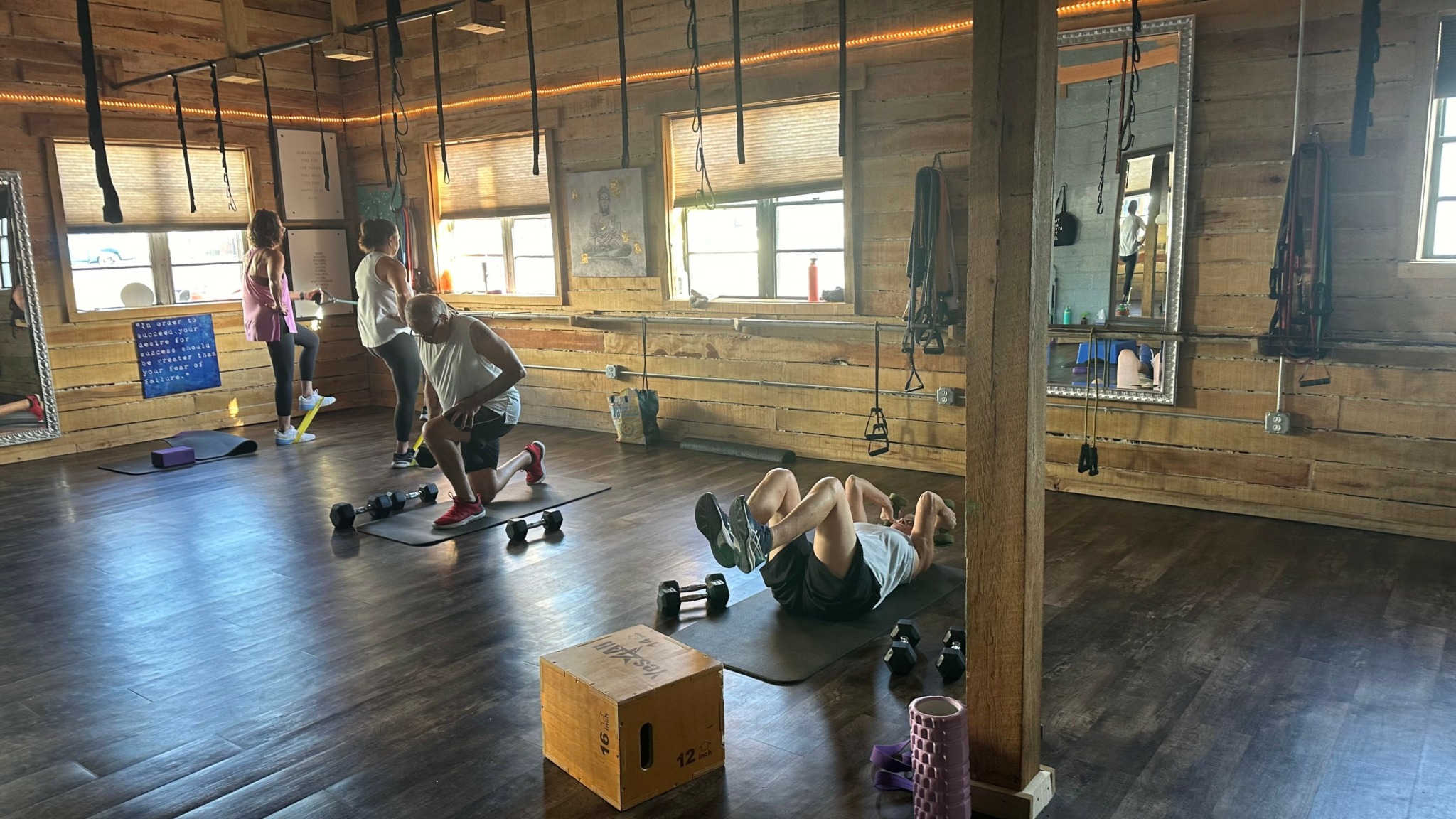
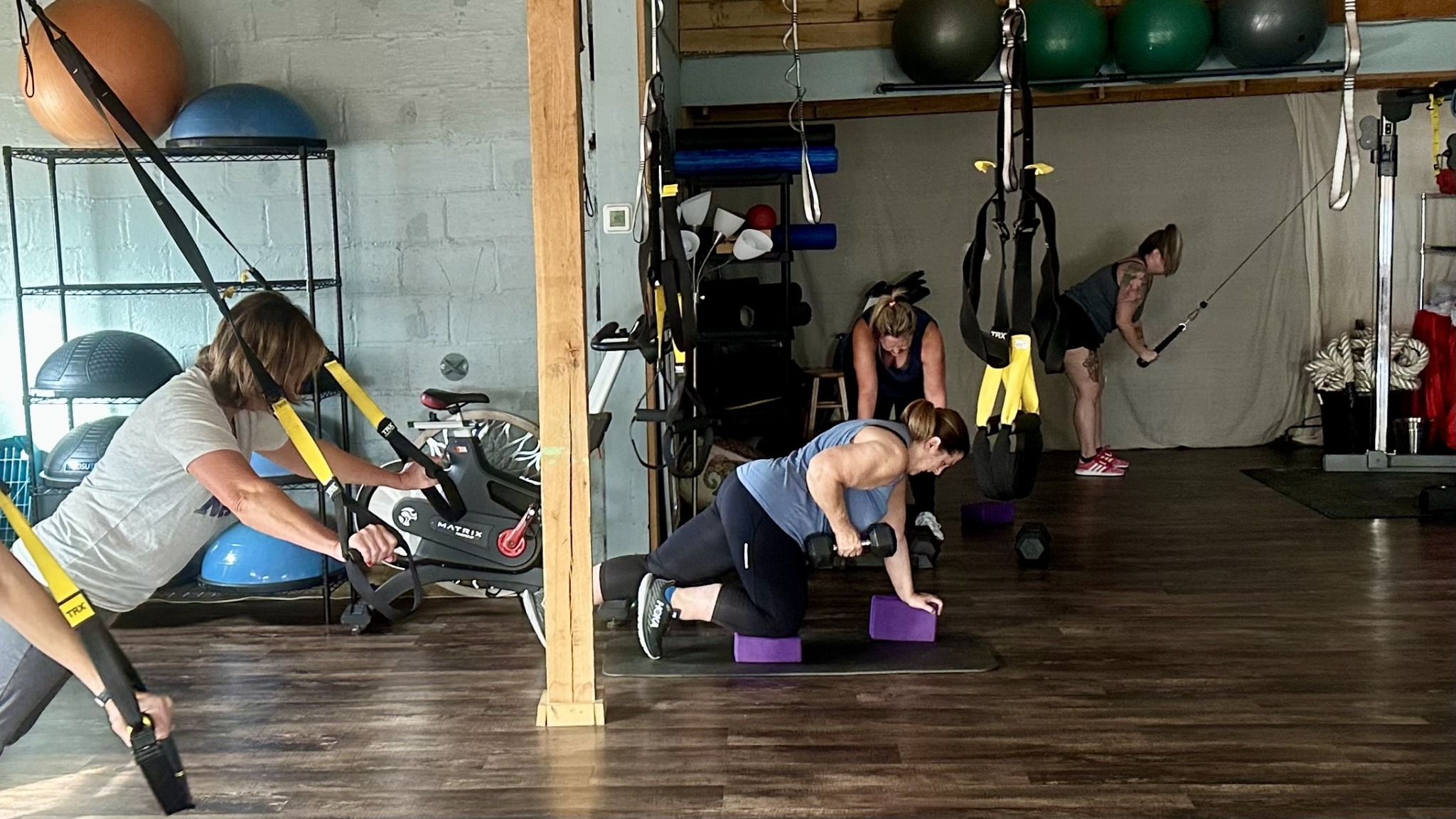
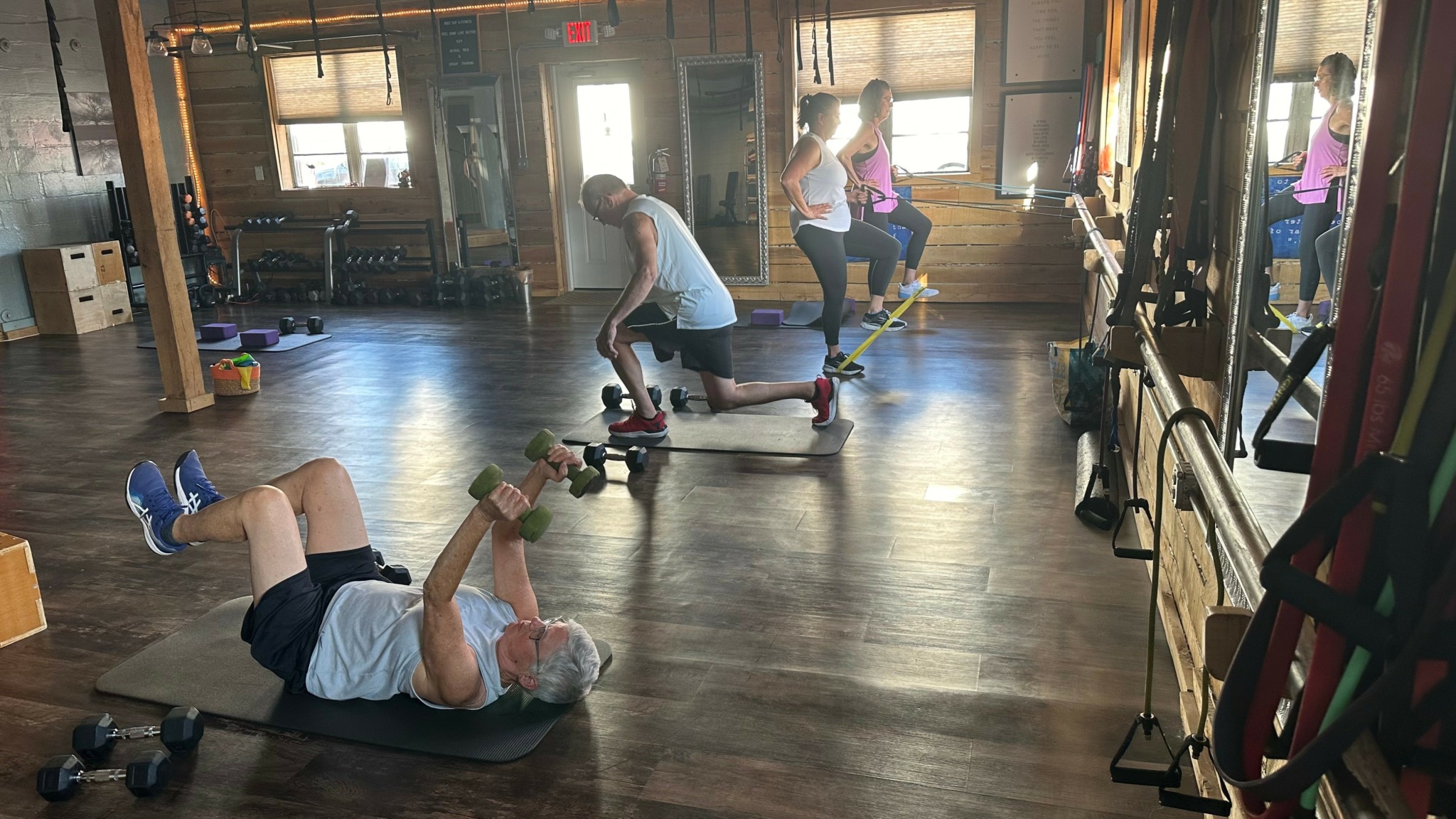
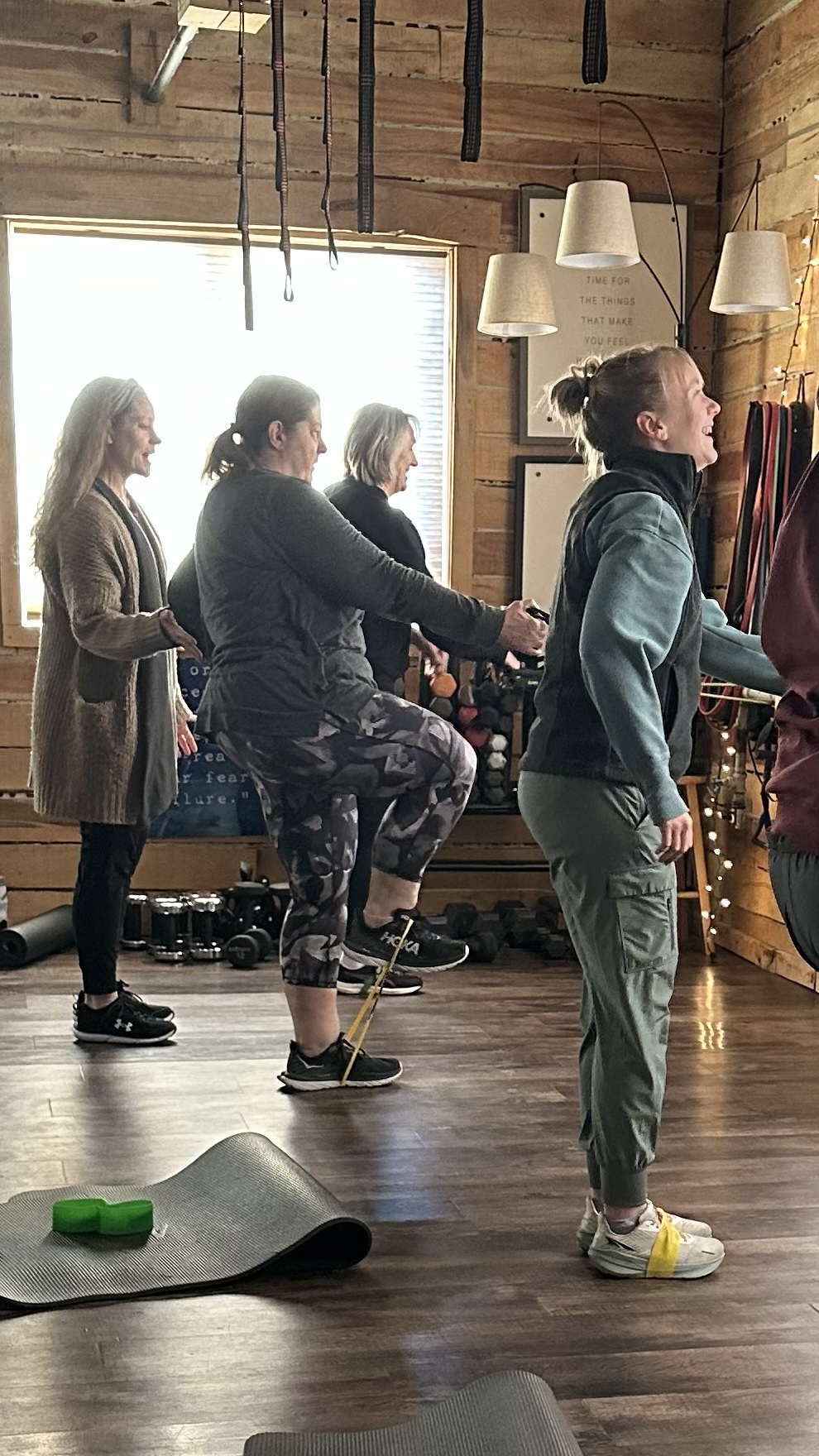
As my client base grew, I quickly found myself fully booked with a waitlist. That demand led me to create a Small Group Training model, allowing me to work with up to six clients at a time while still delivering individualized programming. A major benefit of this model is accessibility—Small Group Training offers a lower price point than private sessions, which allows clients to come more consistently. In many cases, four small group sessions can equal the cost of a single private session, giving clients more opportunities to move, improve, and stay accountable. This approach not only makes training more sustainable, but it also fosters a strong sense of community—something that would become a defining element of my business.
After ten years in multiple facilities, I co-founded a boutique fitness studio, offering a wide range of services including yoga, bootcamps, aerial yoga, personal training, and even stand-up paddleboarding and youth camps through our local waterfront. At our peak, we had a team of 14 fitness professionals and a thriving, deeply connected community. Even during the challenges of COVID, our clients stayed committed—not just to their health, but to each other. It had become more than a place to work out; it was their tribe.
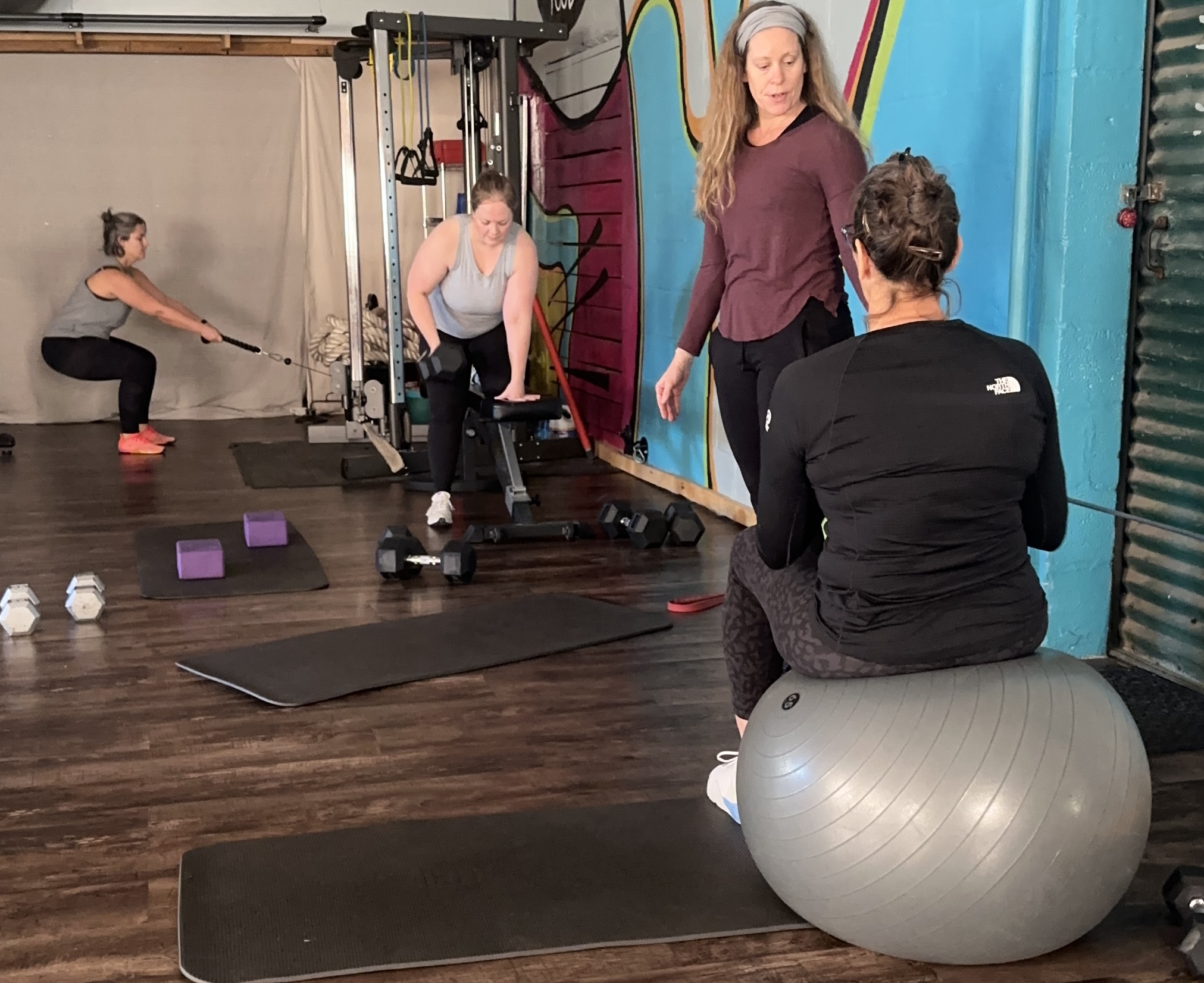
When my business partner retired, I took the opportunity to reimagine the business and launched Motion Fitness—a streamlined, highly focused model built entirely around Small Group Training. No staff, no classes—just individualized programming delivered in a supportive group setting. Every client follows a personalized fitness plan, designed specifically for their goals, needs, and physical history, while training alongside a small group of peers. It’s a model that blends precision with connection.
At the heart of my philosophy is a simple belief: *“A body in motion stays in motion.”* As we age, continuing to move our bodies is essential—not just for strength, but for longevity, independence, and quality of life. What we did in our 20s is very different from what we need in our 50s and beyond, and our training should evolve with us.
What truly sets my work apart is this commitment to individualization within a group environment. No two clients are doing the exact same program, because no two bodies—or life stages—are the same. My background in education, combined with nearly two decades in fitness, allows me to design programs that are both effective and deeply personal.
I’m especially proud of the relationships I’ve built over the years. Many of my clients have been with me for over a decade, and some for more than 15 years. I’ve watched friendships form, relationships grow, and even a book club—“Books in Motion”—emerge from the connections made in the studio. That sense of community is something you can’t manufacture; it’s built through trust, consistency, and care.
At this stage in my career, I’m also passionate about mentoring other fitness professionals. Small Group Training is becoming more popular, but true individualization is often missing. My goal is to help trainers develop the skills to design effective, personalized programs within a group setting—so they can better serve their clients while building sustainable, rewarding businesses.
Above all, I want people to know that Motion Fitness is about more than exercise. It’s about thoughtful programming, long-term health, and a supportive environment where every individual is seen, challenged, and valued—because a body in motion truly does stay in motion.
Have you ever had to pivot?
I’ve experienced two defining pivots in my life—both of which reshaped not only my path, but my identity.
The first came during my senior year of high school, when I was forced to give up my college swimming scholarship due to a serious knee injury that required two surgeries. Swimming had been a part of my life for over a decade. It wasn’t just something I did—it was who I was. Losing that identity so suddenly was incredibly difficult. While choosing a new college—West Virginia University—was relatively straightforward, thanks to family connections and prior acceptance, the emotional transition was far more complex.
I found myself asking questions so many athletes face when their careers end: *Who am I without this? What comes next?* That period challenged my mental resilience in a way I hadn’t experienced before. It forced me to grow beyond a single identity and begin redefining myself outside of sport—a lesson that has stayed with me throughout my life and career.
The second major pivot came years later in my professional life. I had spent a decade working in a large, traditional gym environment that truly felt like home. I knew the members, the staff, and I was managing the personal training team. There was comfort in that stability—and a built-in system that consistently brought in new clients.
Choosing to leave that environment and start something of my own was both exciting and overwhelming. Suddenly, I was stepping away from security into uncertainty. I questioned myself often—wondering if I was making the right decision, and whether I could recreate that same success independently.
What made that transition possible was partnership. I went into business with someone who was not only a colleague, but a close friend. We supported each other through every stage—sharing both the excitement and the fear. We celebrated the wins, worked through the challenges, and held each other accountable during moments of doubt.
Looking back, both pivots required me to step into the unknown and trust that I could rebuild—whether it was my identity or my business. Those experiences taught me resilience, adaptability, and the importance of having a strong support system. They also reinforced something I now share with my clients regularly: growth rarely happens in comfort, but it’s always worth the leap.
How’d you build such a strong reputation within your market?
Building my business in my hometown has been one of the most valuable advantages in my career. Growing up as a competitive athlete in this community established a foundation of trust early on—people have seen firsthand that fitness has always been a part of who I am, not just something I adopted professionally. That credibility has carried over into my work today.
Word-of-mouth has been my most powerful form of marketing. The relationships I built years ago continue to support my business in meaningful ways. Before entering the fitness industry, I was a Special Education teacher in the community, which allowed me to form strong connections with fellow educators—not only within my school, but across the district through conferences and workshops. Even though I stepped away from teaching over 20 years ago, those relationships have remained impactful. In fact, one of my long-term clients of nearly a decade is a former colleague from that time.
Raising four children in the same community further deepened those connections. Through schools, sports, and extracurricular activities, I naturally built relationships with families across a wide range of life stages. Having children close in age, yet spanning different developmental phases, allowed me to connect with people from postpartum mothers to women navigating menopause—and everything in between.
That shared life experience creates an authentic connection with my clients. They don’t just see me as a trainer; they see someone who understands their stage of life, their challenges, and their goals. That level of trust and relatability is something you can’t manufacture—it’s built over time, and it continues to be one of the cornerstones of my business.
Contact Info:
- Website: https://motionfitnessforlife.com
- Other: Email motionfitnessforlife@gmail.com