
Alright – so today we’ve got the honor of introducing you to Kate. We think you’ll enjoy our conversation, we’ve shared it below.
Alright, Kate thanks for taking the time to share your stories and insights with us today. The first dollar you earn is always exciting – it’s like the start of a new chapter and so we’d love to hear about the first time you sold or generated revenue from your creative work?
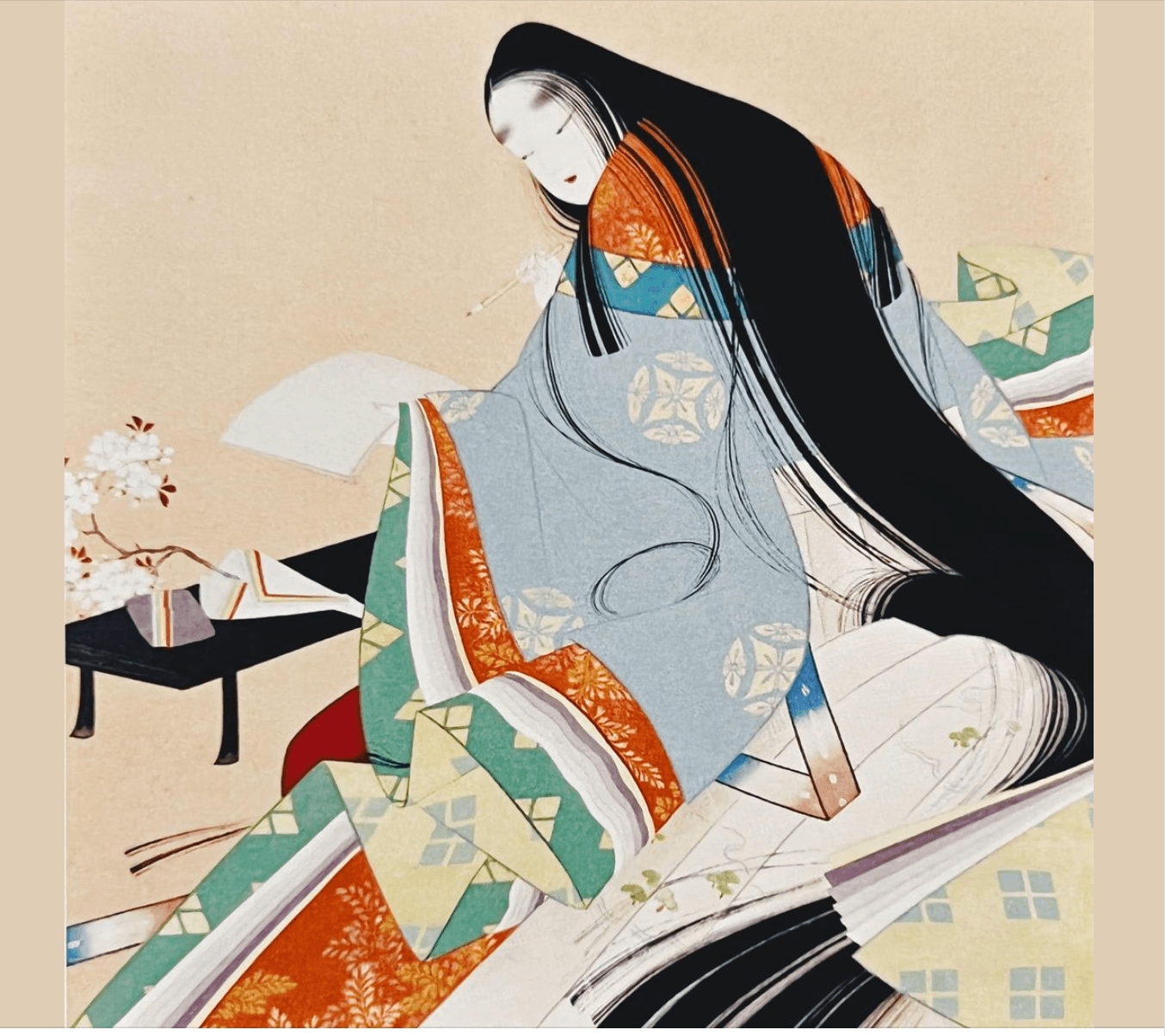
Writing my first novel was a passion project. I’d had an idea for years, maybe even decades, that I wanted to write a novel with Sei Shonagon as a main character. Sei Shonagon was a writer in 10th century Japan, and her journal is full of witty and descriptive short scenes and lists, a bit like Buzzfeed, that feel relevant to a modern-day American. Maybe not quite as relevant as to a 10th century Japanese noblewoman, but even more reason to write about her.
Anyone can write a book. To make it a book someone wants to read is a lot harder! And creating a book about an obscure (to Americans) historical figure and making that story something people want to read is not only very difficult, but it’s risky.
The first dollar I made from my first book was from my mother, who had been rooting for me all through the writing process. That dollar touched my heart, but the first exciting dollar I earned was the first time a total stranger bought my first book. It’s exciting, and it’s unnerving too, because my creation, my “baby,” was now in the hands of someone who might never read it. Or in a worst-case scenario, they might hate it.
Which is a risk every author has to take. We publish our first book, and now our words, our creations, are in the hands of complete strangers. Will they appreciate the love and passion that went into the story? The research? The craft? Yes, that first dollar is exciting, but it’s accompanied by anxiety, too. When I worked in an office, I had positive and negative feedback of all kinds, but it never felt as personal as writing and publishing a book that was 100% my own creation.
So, after that first book sale to a stranger, the second most exciting moment was reading the first five-star review written by a total stranger who had no relationship to me, and had purchased their own copy (not an ARC). I actually screamed when I read that review, and then ran around to show it to everyone within reach.
As always, we appreciate you sharing your insights and we’ve got a few more questions for you, but before we get to all of that can you take a minute to introduce yourself and give our readers some of your back background and context?
After graduating from the University of Michigan with a BA in Political Science (East Asia Concentration), I taught English in Sapporo, Japan for two years. I enjoyed the experience so much that I returned to U of M for an MA in Asian Studies (Japan Specialization), and while there, worked part-time for the Center for Japanese Studies.
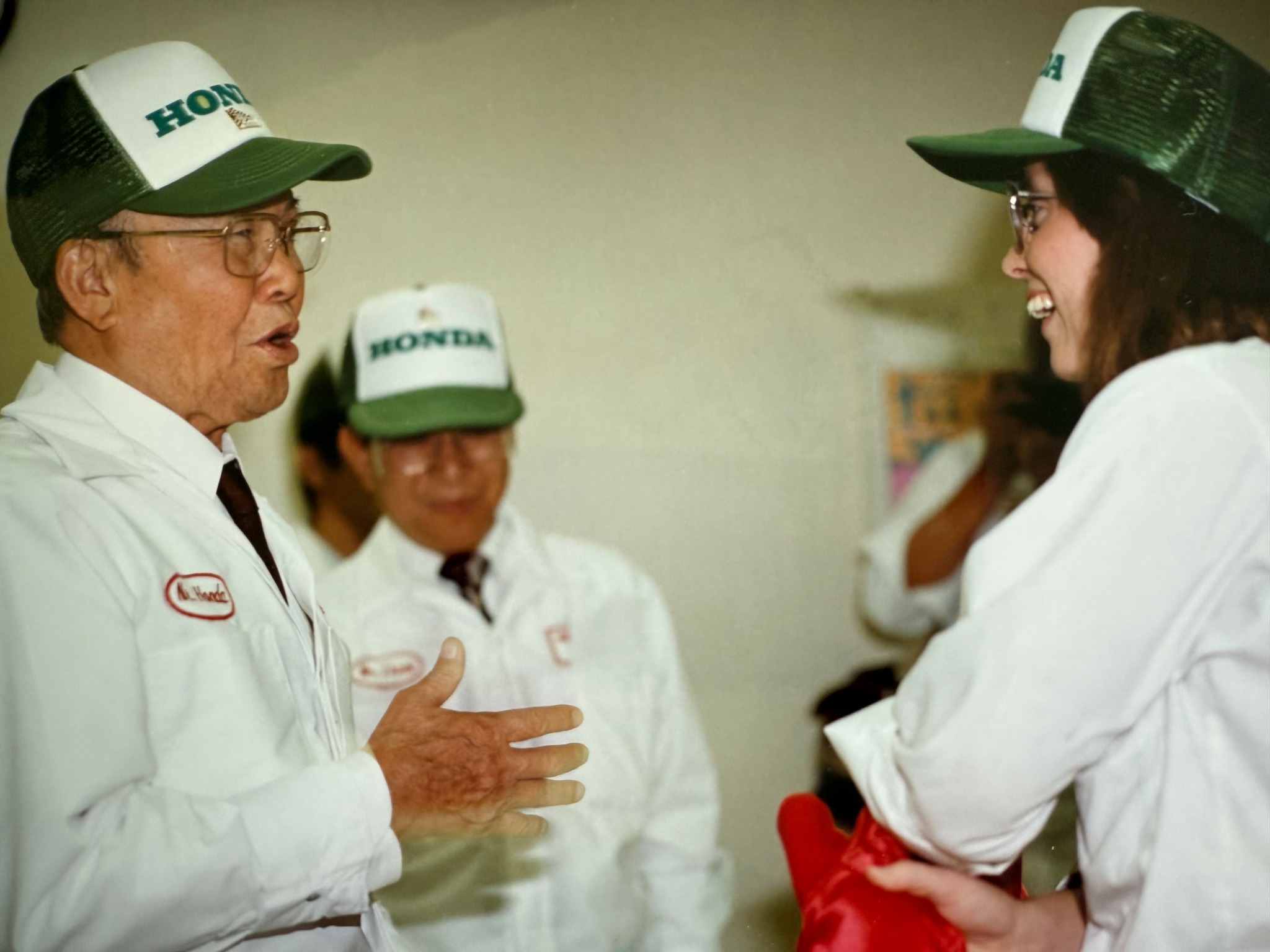
Fortunately for me, Honda was expanding operations in Ohio around the time I finished, and I spent an entire career at Honda in project, business, and people management, thrilled to travel to Japan and speak Japanese for work.
Honda was a good match for me, because it’s a company that encourages individual initiative and welcomes ideas to improve processes. Also, my managers were very supportive and encouraging, and moved me into various positions when I wanted growth opportunities, which is why I stayed there until retirement. Learning all those different roles, from project management to HR to Business Planning to New Model, kept me engaged and happy, but between working overtime, a long commute, and becoming a working mom, writing a book could not take place until I retired.
But as soon as I retired, I began by taking a writing workshop. The next few years were about learning the craft of writing. I always enjoyed writing, but I hadn’t written fiction since college. The workshop helped, and self-study as well, reading various books on writing, and most importantly, reading lots of really well-written books!
After the workshop, I took a writing coaching program in which we critiqued each other every month. That was also helpful. Pointing out to others what they needed to improve helped me to see I had made the same mistakes in my own writing.
My story was set in tenth-century Japan, a culture and era so different from ours that I wasn’t sure modern readers would understand it. In my historical research, I found out that people of that era believed in spirit possession. I decided to include an American college student on a study abroad in Japan whose spirit goes back in time to possess a young noblewoman. This premise gives the reader a companion who asks a lot of questions and brings the reader along with her, making the story fun and engaging.
My daughter, who was in high school when I began the first draft, gave me useful advice too. She suggested adding a little magic to the story. I had already decided on a time-travel tale, so it wasn’t so far off to include magic, but I insisted that the magic had to be based on the actual beliefs of the culture of the era (tenth-century Japan).
Many drafts and edits later, I had to decide whether to seek a literary agent to help me find a traditional publisher or to learn to be my own publisher. When another author told me it can take three years from a completed novel to publication, I decided I was up to the challenge of creating my own imprint and learning how to be a publisher.
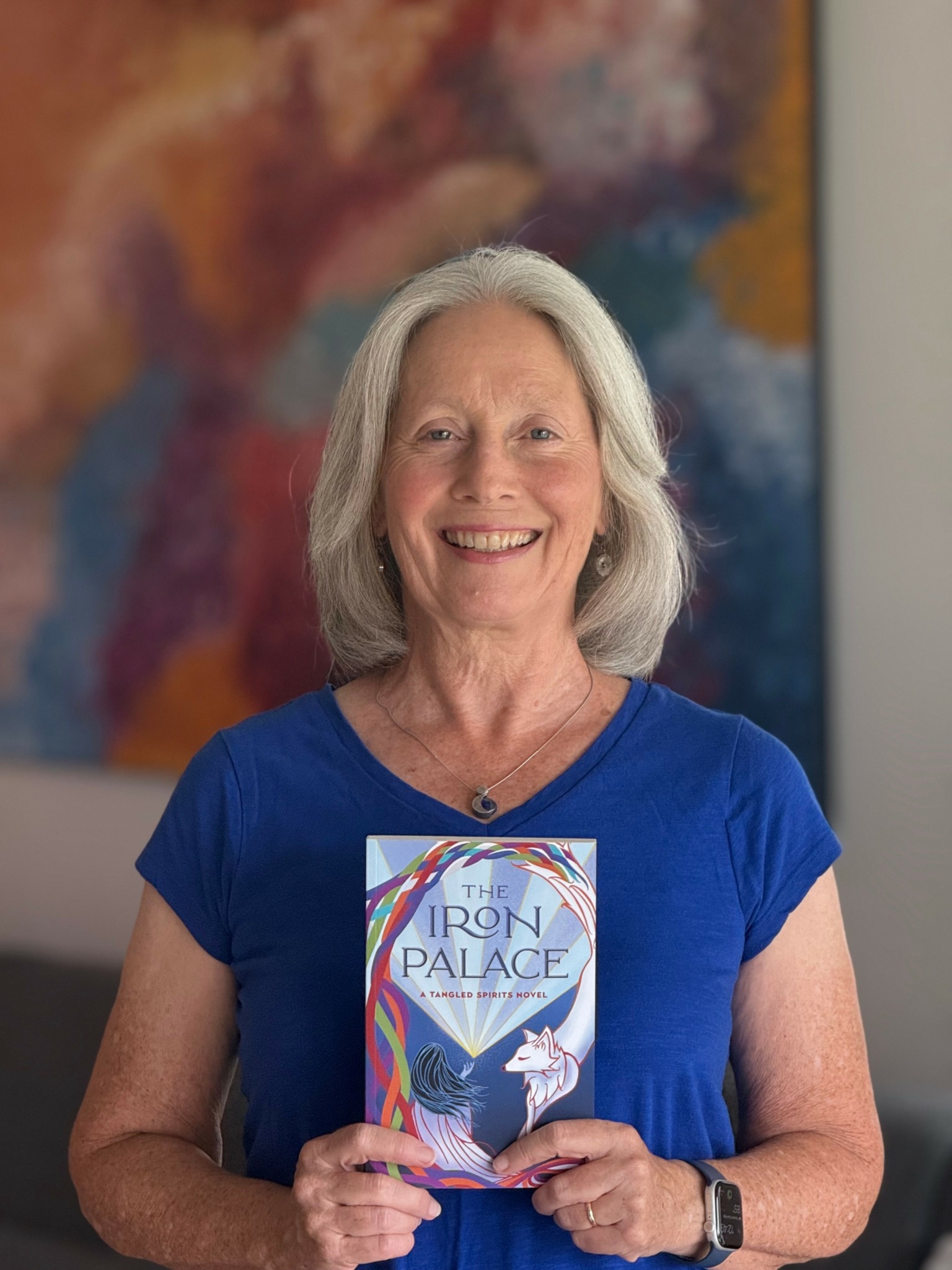
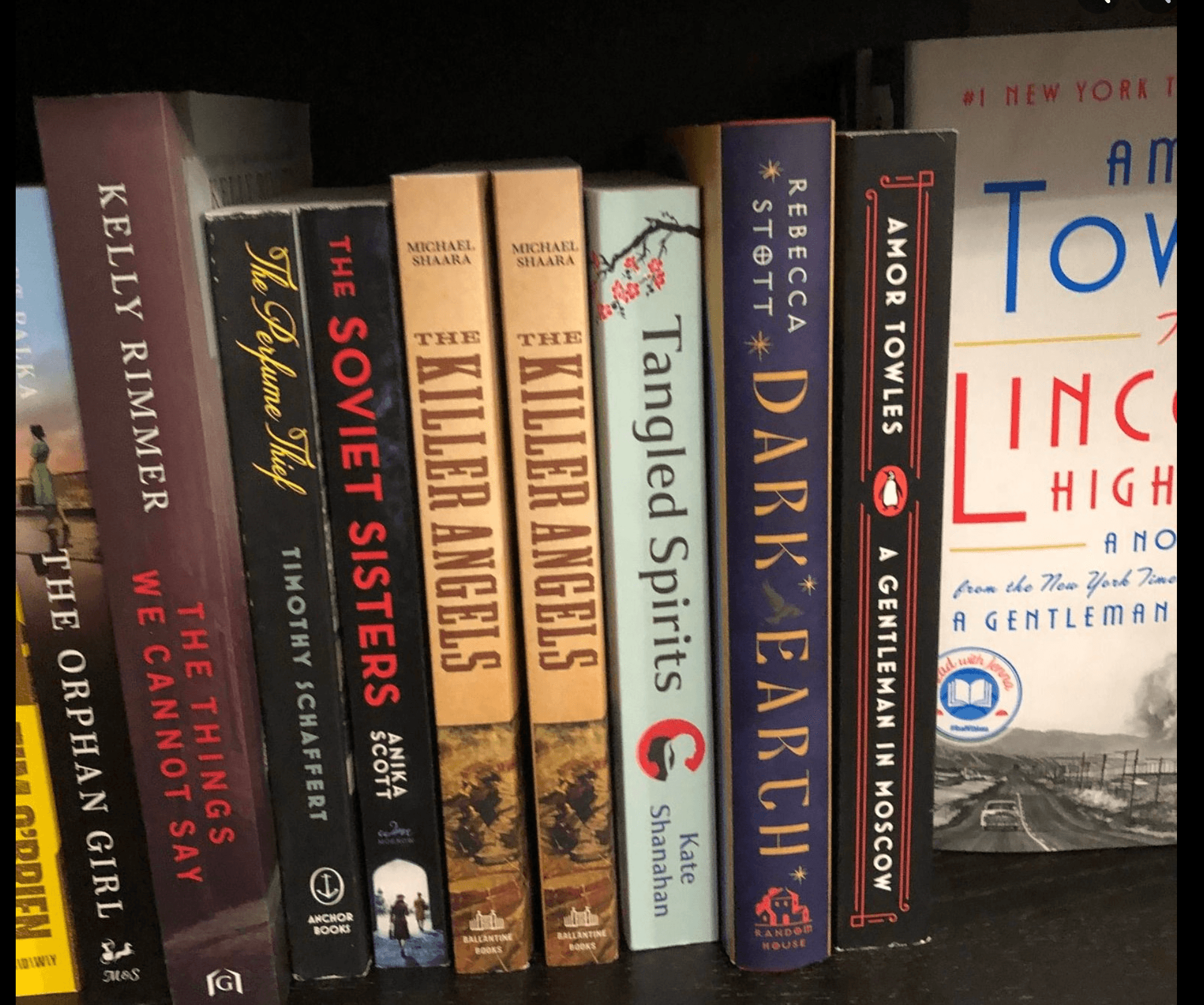
And so I created ROAV Press and published my first book, Tangled Spirits, which earned the Florida Authors and Publishers’ (FAPA) Silver Award for Historical Fiction. My second novel, The Iron Palace, published in 2025, earned the FAPA Gold Award for Folklore.
The third book in the trilogy, The Shrine Fox, will be published in late 2026.
What do you find most rewarding about being a creative?
I look forward to the moments I can sit at my desk, pull out my laptop, and write something from my imagination. I’m not a visual artist at all, but I draw pictures with my words, or I visualize a setting and sketch it with phrases. I can’t imagine a time when I won’t write, because it’s so fulfilling to create whole worlds, new characters with differing personalities, conflicts, moments to bring tears to a reader’s eyes or make them laugh.
How about pivoting – can you share the story of a time you’ve had to pivot?
I was driven to write a novel about how two historical figures, Murasaki Shikibu and Sei Shonagon, could live at the same time, write works in tenth-century Japan that are still studied and read for pleasure today, and yet not be friends. Murasaki wrote the world’s first novel, and Sei wrote the world’s first blog over one thousand years ago. They were both women at court, well-educated, who could read and write Chinese as well as their native Japanese cursive. I assumed my book would be literary historical fiction. You know, serious stuff read by serious people.
But I had to pivot when I realized that such a story would be difficult for modern Americans and other English-speaking people to understand without a lot of exposition. So what was I to do?
My research showed me that tenth-century Japanese believed in spirit possession and “spirit-calling”, and that women were mediums and miko (at that time, a miko was a shrine shaman who called spirits). So I changed my approach and made the story a time-travel adventure with an American college student as the main character, and her host is an aspiring miko who accidentally summons a spirit from the future – my main character. Murasaki and Sei both appear in the book, but over time, the theme of the book, friendship, shifted from the historical figures to my main character and her host.
Contact Info:
- Website: https://kvshanahan.com/
- Instagram: kateshanahan1
- Facebook: katevshanahan