

Alright – so today we’ve got the honor of introducing you to Preston Zeller. We think you’ll enjoy our conversation, we’ve shared it below.
Alright, Preston thanks for taking the time to share your stories and insights with us today. How did you come up with the idea for your business?
I had been exploring different AI concepts and particularly how large language models could analyze large sets of data, and was fascinated by the different methodologies that really existed beyond just using a chat interface. I was listening to a podcast about how AI could be applied to journaling and thought that was a really intriguing idea, but I wanted to narrow the focus to something I understood a bit more, which was journaling in the Christian space. Most people I know, whether secular or Christian, who have journaled for a long period of time, end up accumulating vast amounts of notebooks that rarely, if ever, get revisited. What you’re left with is essentially a very data-rich catalog about your own life experiences and thoughts that could be used to tell a more cohesive story about how you’re changing and growing over time. So I started talking to different people who I knew were also Christians and asking them about this journaling problem. And then I also asked people who didn’t journal, who maybe wanted to journal but found barriers to traditional methods like sitting down and writing, which is how most people journal. Although Psalmlog started out as a journaling tool, I later, through a more structured research methodology, it validated that while the journaling aspect is what they’re fundamentally doing, that’s not how people were thinking about it. They weren’t sitting there thinking, “I need to journal more.” Instead, people want personalized explanations from a biblical perspective for the problems they’re going through. The methodology you might do that is journaling, but the value proposition isn’t to journal. What got me most excited was creating the proof of concept early on that I knew could only get better, and being so excited about the results and really how helpful it was for me. I knew if it was helpful for me, that was a good starting point as to its usefulness for other people. Ultimately, I wanted to create a tool that could help people better understand and track their own spiritual growth in a way that’s never really been possible. By understanding the path of your growth, you could lean into that to create better and new habits for yourself.
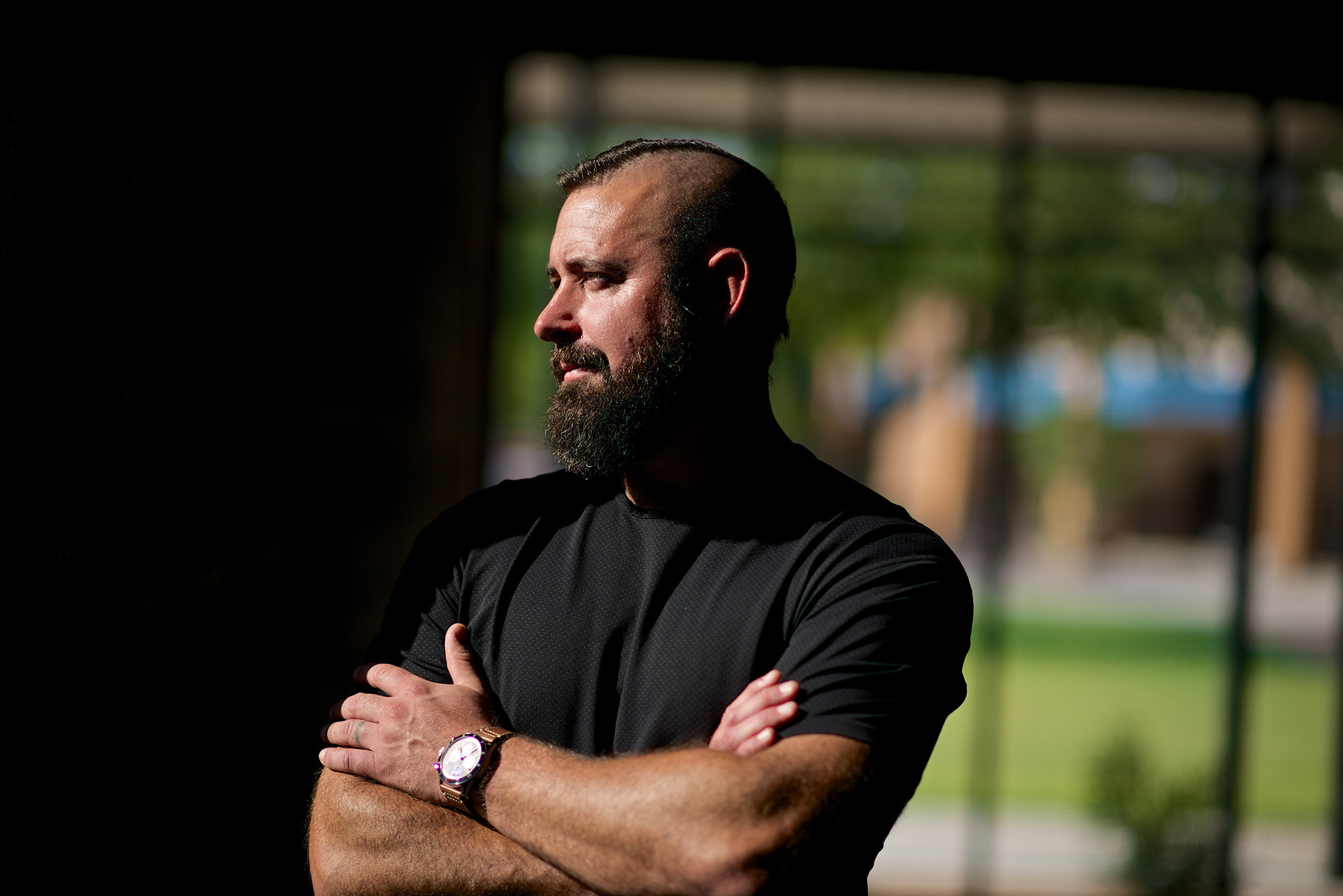
As always, we appreciate you sharing your insights and we’ve got a few more questions for you, but before we get to all of that can you take a minute to introduce yourself and give our readers some of your back background and context?
Most of my career has straddled the intersection of technology and creative disciplines. Basically, for the last 16 years, I’ve spent most of my time integrating and then later developing and marketing different kinds of technology. A lot of it focused around data or productivity. Along the way, though, marketing tends to demand a certain amount of creative muscle. That’s where my background as a musician and artist has come into play, because it allows you to think a bit more elastically about problem solving and how ultimately you’re speaking to your audience in an empathetic way. If you can’t learn to communicate the problem you’re solving very clearly to an audience, they will just not connect with it. At some point in my career, I learned a lot more about empathy through the loss of my brother in 2019. From there, I eventually went into a year-long project of painting every day for a year and later creating a documentary out of this called “The Art of Grieving.” That documentary forced me not only to understand myself much better, but also people going through their own grief. I later went on to do grief commission paintings for people. This was a very strange sidebar in my career that seemed temporary in some ways, but has become a fully integrated part of how I show up as a business leader, as an entrepreneur, and in all the other human aspects of work. What’s interesting is that the way I use music and painting over the course of my life and then the technological work has all converged into the creation of Psalmlog because the creative journey was always about a sense of journaling, even though I didn’t necessarily view it as that. I was seeking to understand my own thoughts and emotions better. The technological side was really about how things work and how you can build new technology and integrate that new technology. All that to be said, don’t discount the uniqueness of your background in finding your purpose, because it’s oftentimes things that seem disparate or skills that may not matter actually do and can be combined in surprising ways to have a more fulfilling approach to life.

We’d appreciate any insights you can share with us about selling a business.
In 2025, I got to be an integral part of selling two businesses at a real estate data and technology company. The few years leading up to it were turbulent because in 2022 the whole market shifted with rising interest rates and an economy that had a drastic change around it, not to mention the introduction of AI that followed over the course of those years. Since we serviced real estate investors and had multiple products, we were constantly battling the changing economy on different fronts. We had to get a lot more focused around who we wanted to be, what we were striving towards, and where we could make measurable impact without being overly ambitious into new ventures that were really too risky at the time. One of the best things we ever did was to implement rigorous tracking methodology for metrics across the business. Often times, when businesses grow very quickly, that’s great because it means a lot of cash is coming in through the door and it’s probably very profitable. Eventually, if you want to be able to replicate that success and also have an exit from that business, you have to be able to justifiably explain how the business is functioning and how a new owner could take on the business. Understand it and communicate it in exploratory meetings that happen while you’re selling. The rigor we put into place was a saving grace for us in the sales process because it meant that we could be intellectually honest about how we grew the business in different ways and what were the different methodologies. It wasn’t just a spray and pray type of strategy, which you can often do if you are making so much money that you just throw that cash at different channels. You have to pay attention to the timing of the economy and the timing of the market you’re in, and don’t have your head in the clouds. Even if you’re in the best of circumstances, that will eventually change. In sum, you need a solid foundation that helps you understand why your business is growing, shrinking, stagnant, and then a methodology to approach solving each of those.

Any advice for managing a team?
Oftentimes, leadership is caught between the necessity of profitability and revenue coming in the door, and then also making sure that employees are operating at a high level. Unfortunately, this can come at the expense of pretending like humans are not fully rounded with their own personal lives and problems that always bleed over into the workspace, even if you think they don’t. I believe it’s very important to have a culture which supports the whole person and an understanding that life is always happening for every single person. If you’re a manager or a leader, an easy thing to do is just understand and know the person who you’re leading:
– What’s their family life like?
– What are their goals?
– What are their dreams?
– What do they currently have going on in their life?
– What are their kids’ names?
– What’s their spouse’s name?
Oftentimes, leaders may be hesitant to do this because it creates an emotional barrier to letting someone go or giving them hard feedback if they do need to do that. In the process, though, you’re actually creating a rigid, non-trusting environment that may lead to more turnover and employees that are less dedicated to whatever the company mission is. Ultimately, everyone’s jobs are temporary anyways. The notion that we work somewhere for most of our life has pretty much vanished. But people will stay somewhere where they feel valued and where they feel like they’re making an impact. Obviously, career things like pay and title matter as well. But people will weather the storm with you if it’s a healthy environment. Clear communication starts with top-down, and if you want to get honestly bottom-up, that’s how you have to do it.
Contact Info:
- Website: https://zellerhaus.com
- Instagram: https://www.instagram.com/prestonzeller
- Linkedin: https://www.linkedin.com/in/prestonzeller/
- Other: https://psalmlog.com
https://prestonzeller.com