

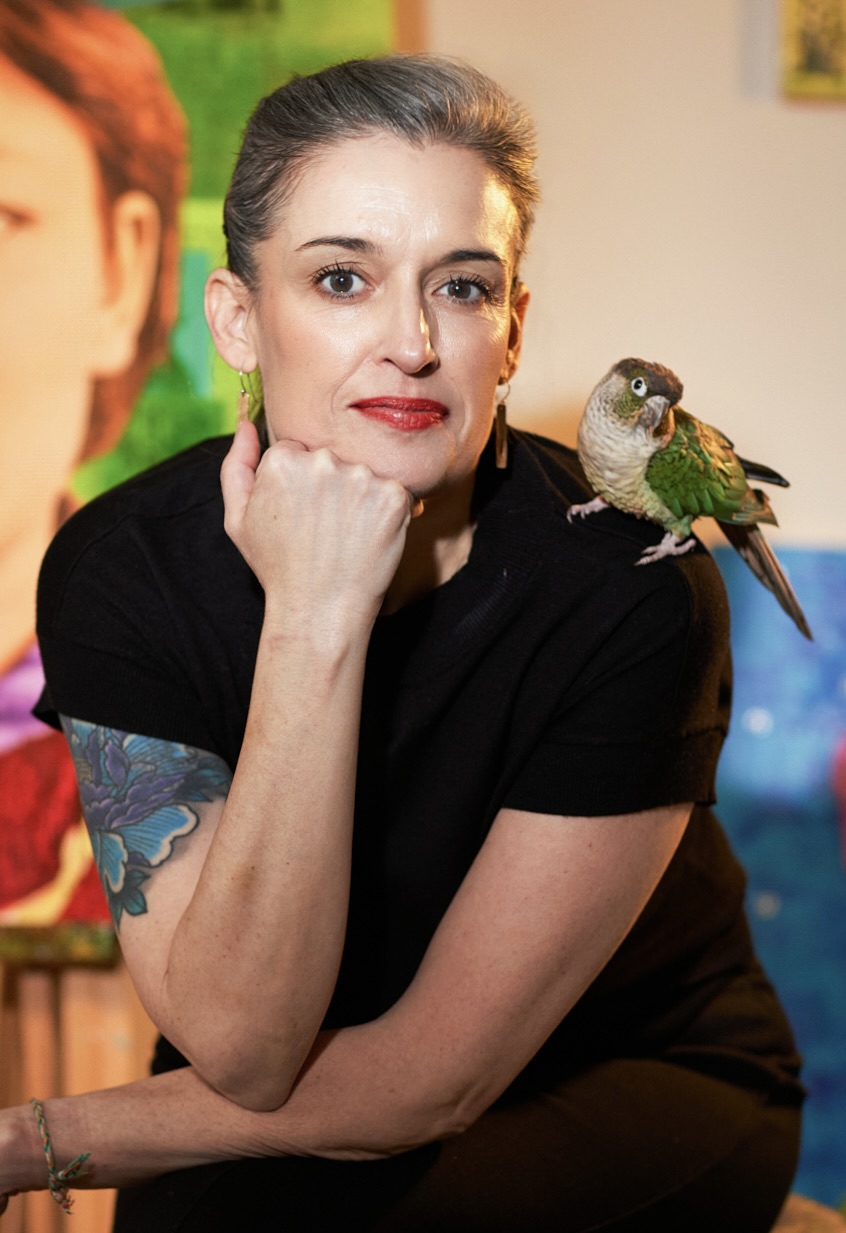

We’re excited to introduce you to the always interesting and insightful Sara Koenig. We hope you’ll enjoy our conversation with Sara below.
Hi Sara, thanks for joining us today. What’s been the most meaningful project you’ve worked on?
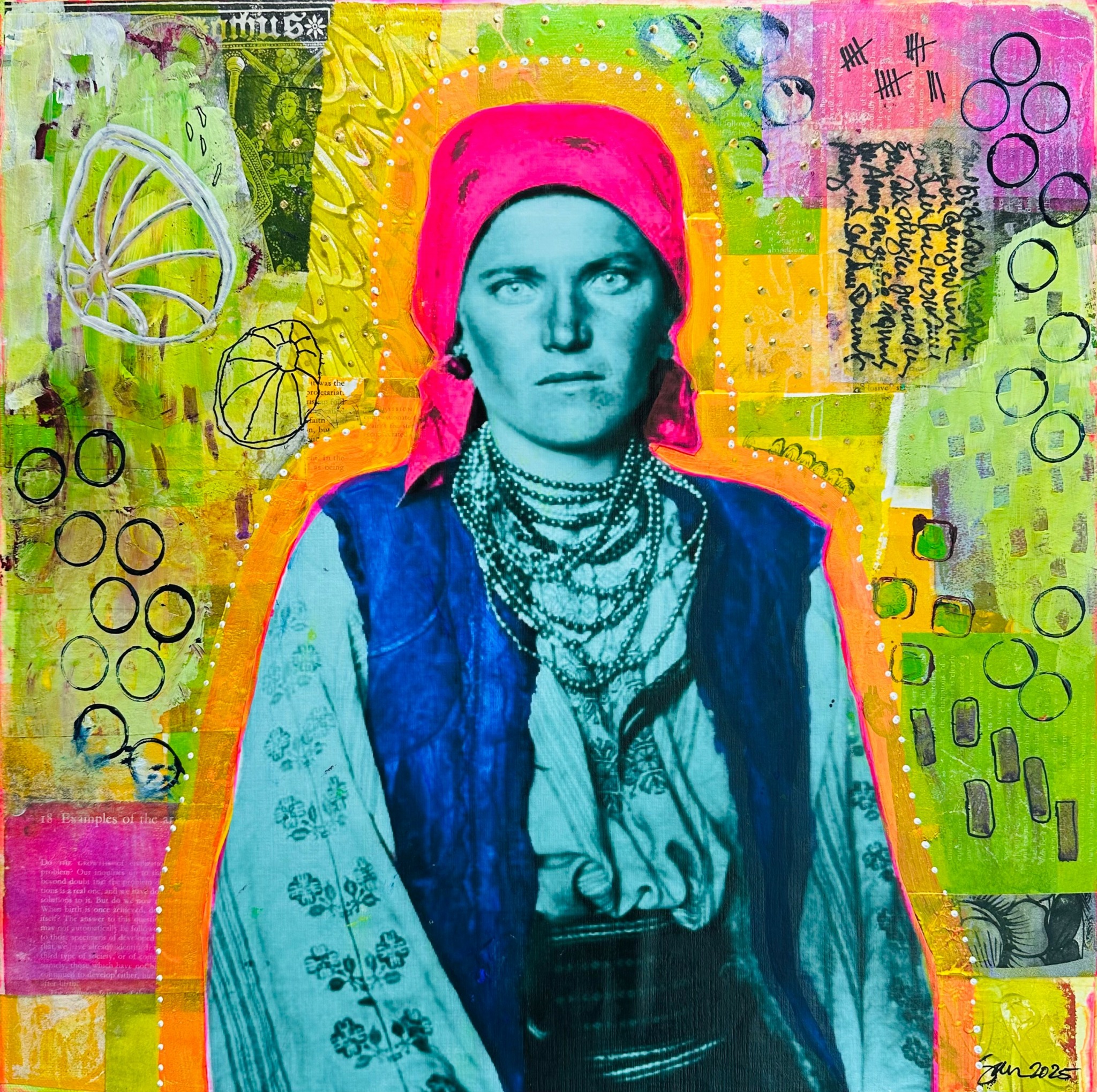

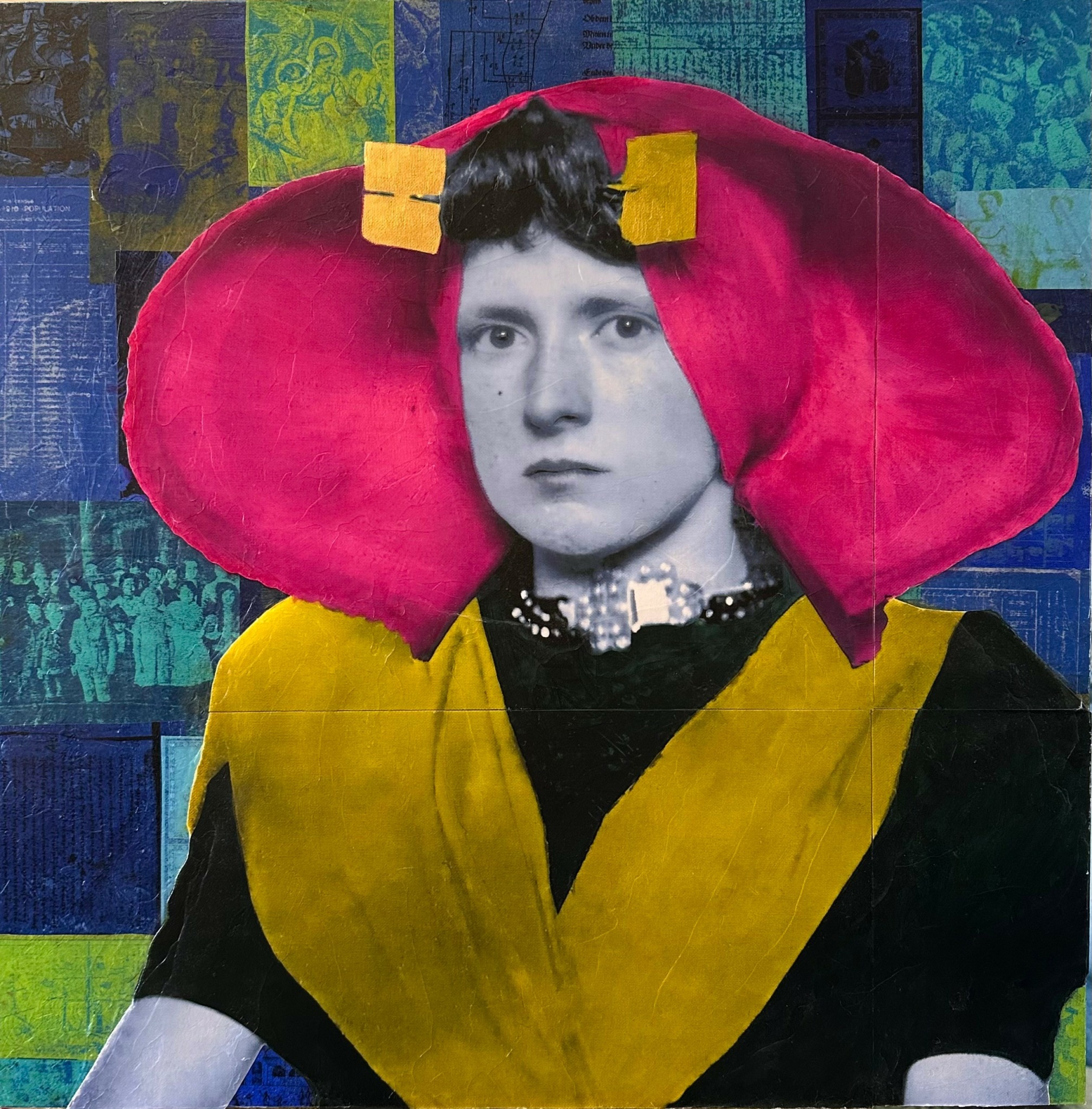
Lately I’ve been working on a series of mixed media portraits of women that focus on questions of belonging, cultural identity, and self construction. I work with archival images from the late 1880s to the mid-1900s. I was first inspired when I came across photographs taken at Ellis Island at the turn of the 19th century. One side of my family came over as immigrants from Holland through Ellis Island around this time. I was fascinated by the faces of the women in particular – how their experiences seem carved into the lines on their faces, how tired and wary they seemed in front of the camera at the request of a man they didn’t know, other than that he was a senior clerk at the institution that they were detained at. While these photographs were taken by a government employee on federal property, he was actually building his own personal ethnographic study. (This was also the time that eugenics was gaining popularity in the US). The people photographed rarely had names, instead they were named by their geographic place of origin “The Woman from Lapland”, “The Ruthenian Woman”, etc.. Their individualism, their stories, so poignant to me on viewing their faces, were reduced to objects of study and taxonomy. Their humanity was extracted, leaving their physical features and dress. Yet my experience with these photographs was one of recognition and intimacy. I instinctively understood the calculations made by the models to agree to sit for photography, I understood that “consent” as understood today was not available, and pragmatism, an essential tool for every woman to survive, was likely the deciding factor in their decision. The piece I most identify with in this series is “Dutch Girl in Blue” (24 x 24). I even hid a picture of my grandfather in the background.
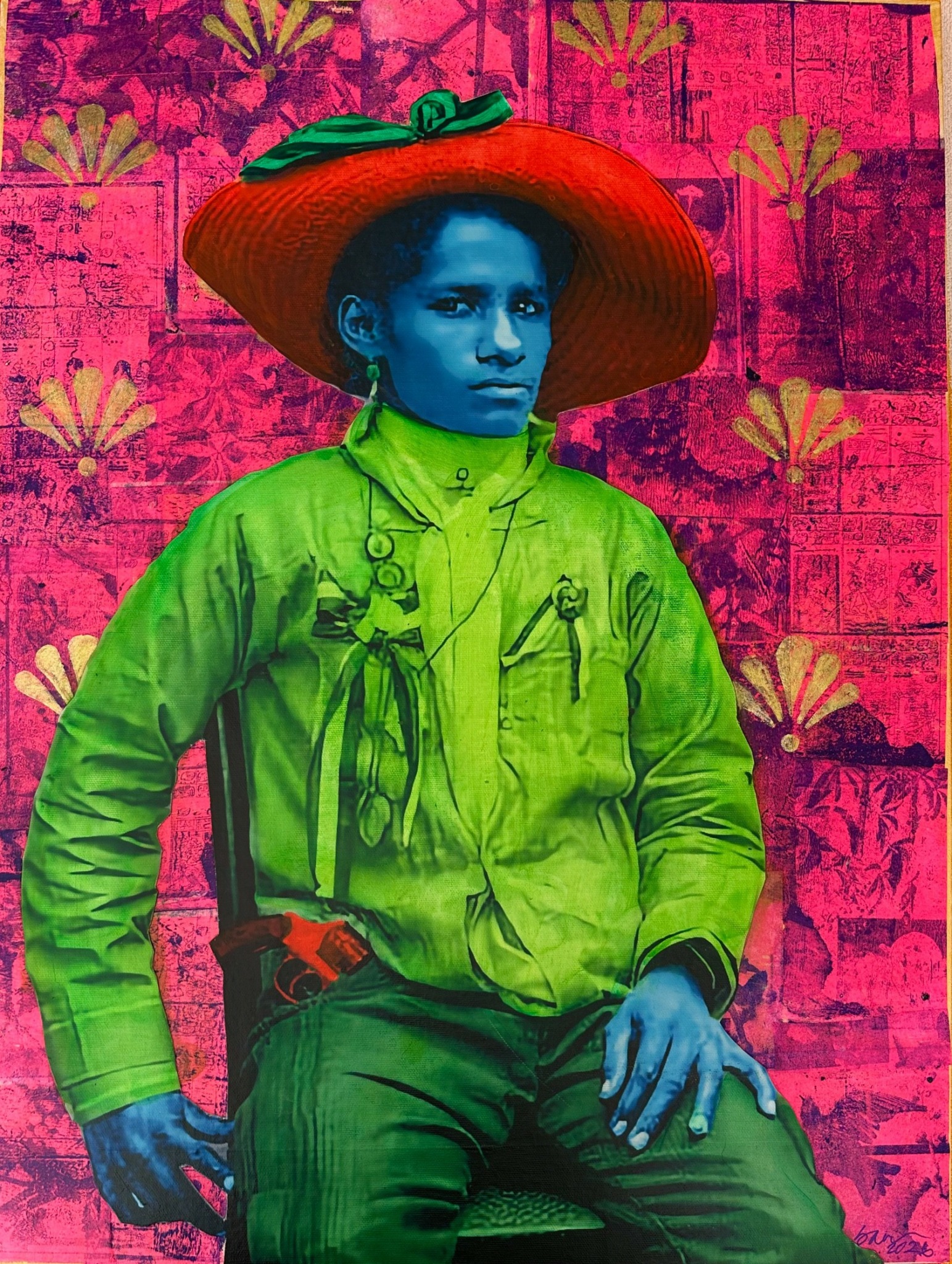
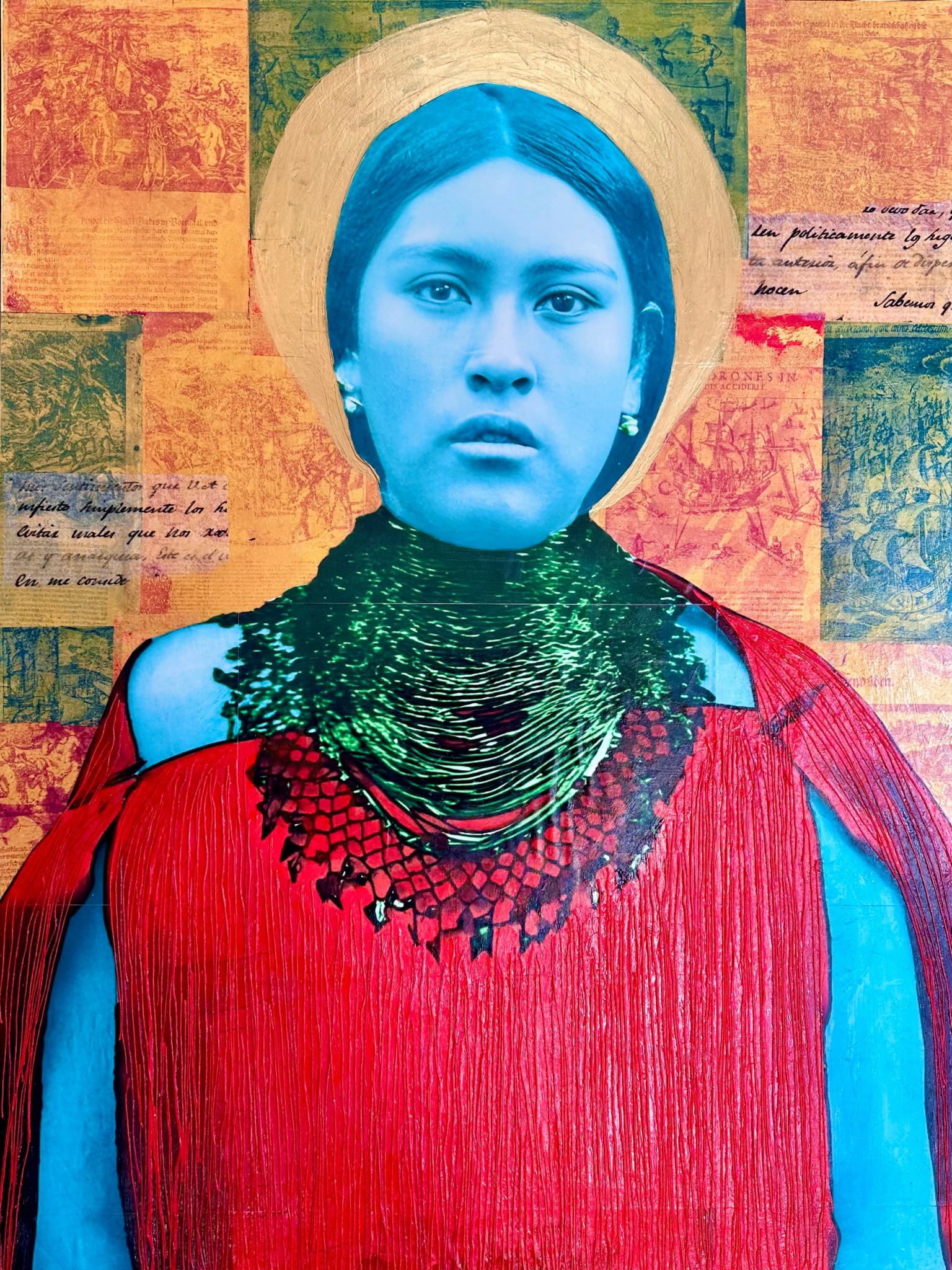
At the same time as I was working on this series, violations of immigrant rights, and particularly those of indigenous peoples of the Americas (marked by the melanin of their skin), were gaining more and more coverage the news and I found myself strongly identifying with the South American half of my family (I am 1/2 Colombian and 1/3 is indigenous to the region). I started creating portraits of women of indigenous descent – including “Bolivian Madonna” (30 x 40) “La Soladera Margarita” (18 x 24) and “Mary Snowden” (30 x 36). I started imagining their lives and the decisions they were faced as women of color in environments ruled by men with pale skin and privilege. In the midst of working on “Bolivian Madonna” I realized that my own pale skin – my ability to “pass” as Northern European and my German (married) name, provided privilege that I had taken for granted, privilege that my other family members do not have. I found myself asking profound questions – am I less Colombian for forgetting my high school Spanish? For my lighter skin?
These portraits, which orbit the axis of identity and belonging, have challenged me far beyond my technical and artistic skills. They’ve open up pathways to understanding myself and my heritage on a more profound, and intimate level. They’ve been one of the most meaningful personal experiences I’ve engaged in.
Sara, love having you share your insights with us. Before we ask you more questions, maybe you can take a moment to introduce yourself to our readers who might have missed our earlier conversations?
I am a professional mixed media artist as well as a practicing physician in Durham. NC. As a physician, I specialize in working with clients with substance abuse and mental health disorders. I started my own integrated practice, Triangle Wellness & Recovery PLLC, in Cary, NC in 2019, and our entire staff is specifically trained in trauma-based modalities to support our clients, so many of whom carry with them the scars of trauma and abuse.
I believe that being an artist makes me a better physician, I think one has to have a genuine interest in the human experience and a sense of humility to gain the trust of patients, as well as the ability to imagine someone else’s perspective and the discernment to see subtle connections that make someone really good at this. An essential part of being an artist is my willingness to spend a lot of time in a vulnerable place myself, so I know what that feels like. Yes, you need to know the neurobiology and understand how medications work, but at the end of the day, it is a very human to human connection that underlies everything else. It is as basic as the patient asking themself “do I feel safe enough with her to tell her the truth?” It’s only once we get to that point that the real practice of medicine begins.
The website for my professional art practice is: www.sarakoenigart.com
The website for my integrated medical practice is: www.twrnc.com
Looking back, are there any resources you wish you knew about earlier in your creative journey?
I wish I knew about and engaged more with local art communities earlier in my artistic journey. I think I was very caught up in the notion that every minute was precious – that if I went to a networking event or a gallery opening I was sacrificing my creative time and I would be less productive. Once I finally started to reach out to people and attend events the opposite turned out to be true. I returned home feeling inspired, energized and ideas seemed to flow easier. To be honest, I think part of what held me back was also a strong sense of imposter syndrome. I felt like I didn’t really deserve to be in those spaces – that I wasn’t a professionally trained artist and I had a day job so how could I be taken seriously? I was wrong – I wish I had the courage to take up space earlier – to ask for help and receive the nurturing and encouragement that I enjoy now when I needed it most.
What do you think is the goal or mission that drives your creative journey?
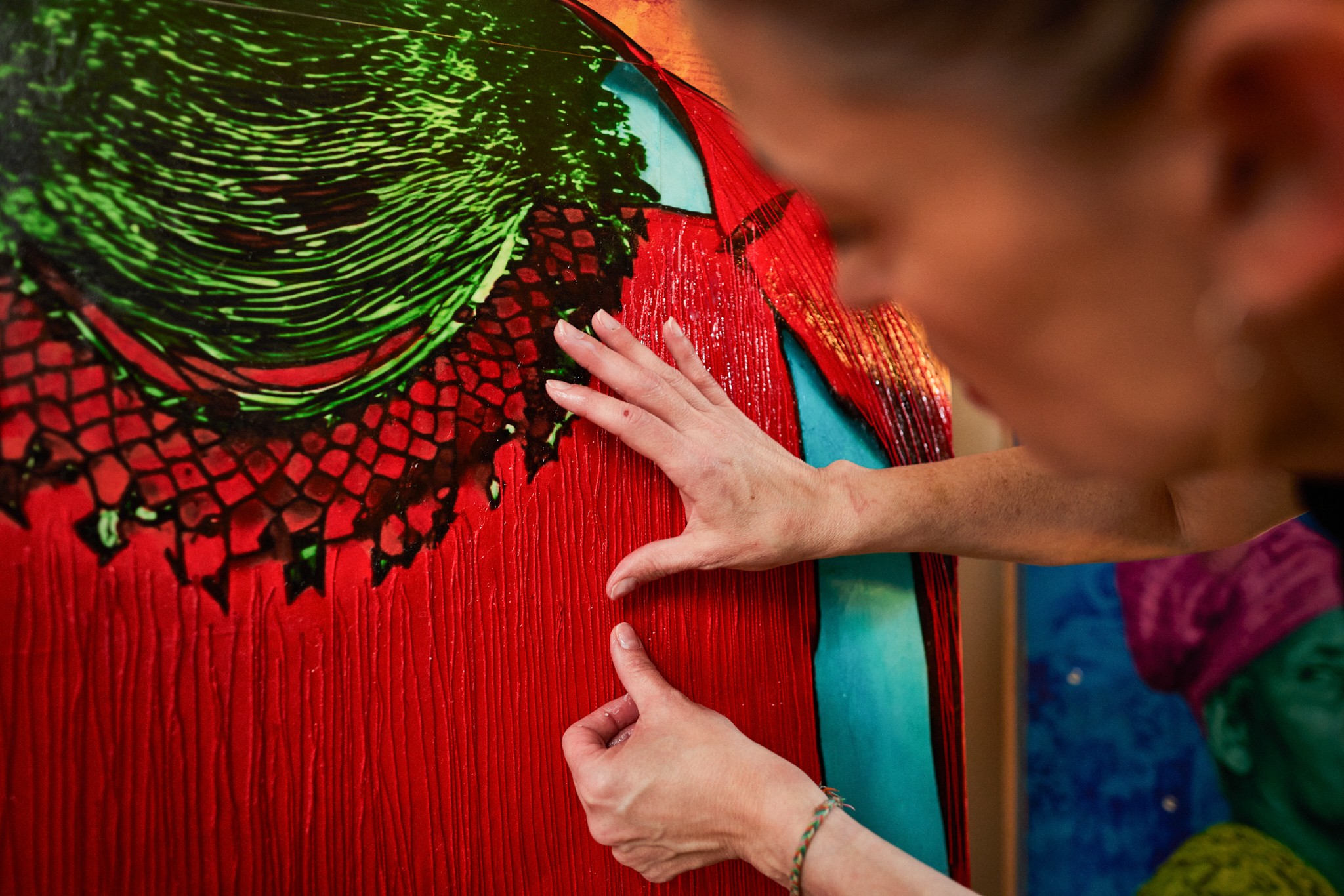
Yes, I want viewers of my art to feel more alive – connected both to the individuals featured in my portraits but also themselves. I think that is where the power of portraiture comes in compared to figurative art. Portraiture fosters intimacy, It sparks curiosity, but can also create discomfort depending on what aspects the viewer identifies with. Regardless, it is an exploration into the human experience, a realization that there are intimate lives lived beyond your own.
Contact Info:
- Website: https://www.sarakoenigart.com
- Instagram: @sarakoenigartist
- Other: https://damagallery.com/sara-koenig
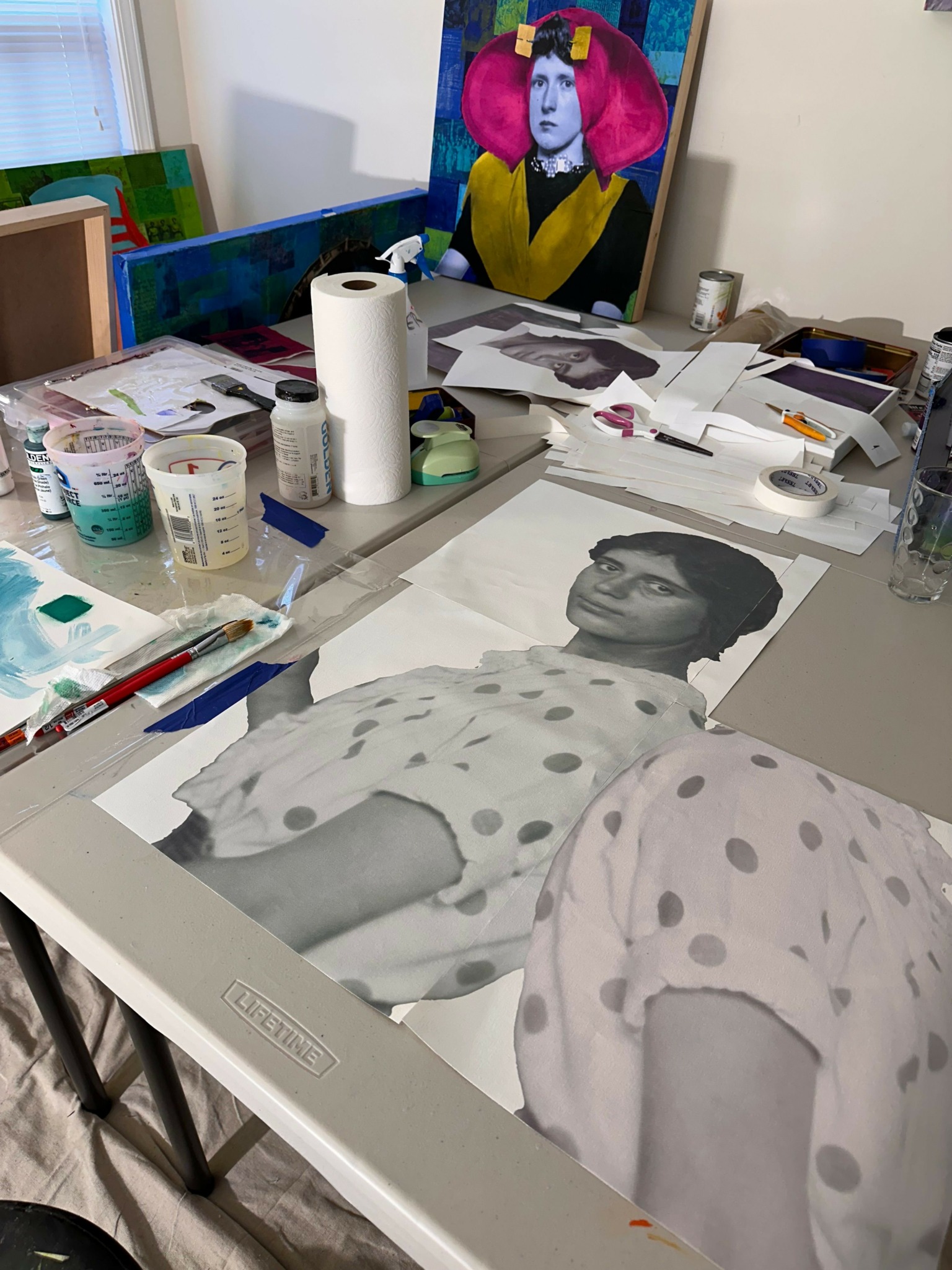
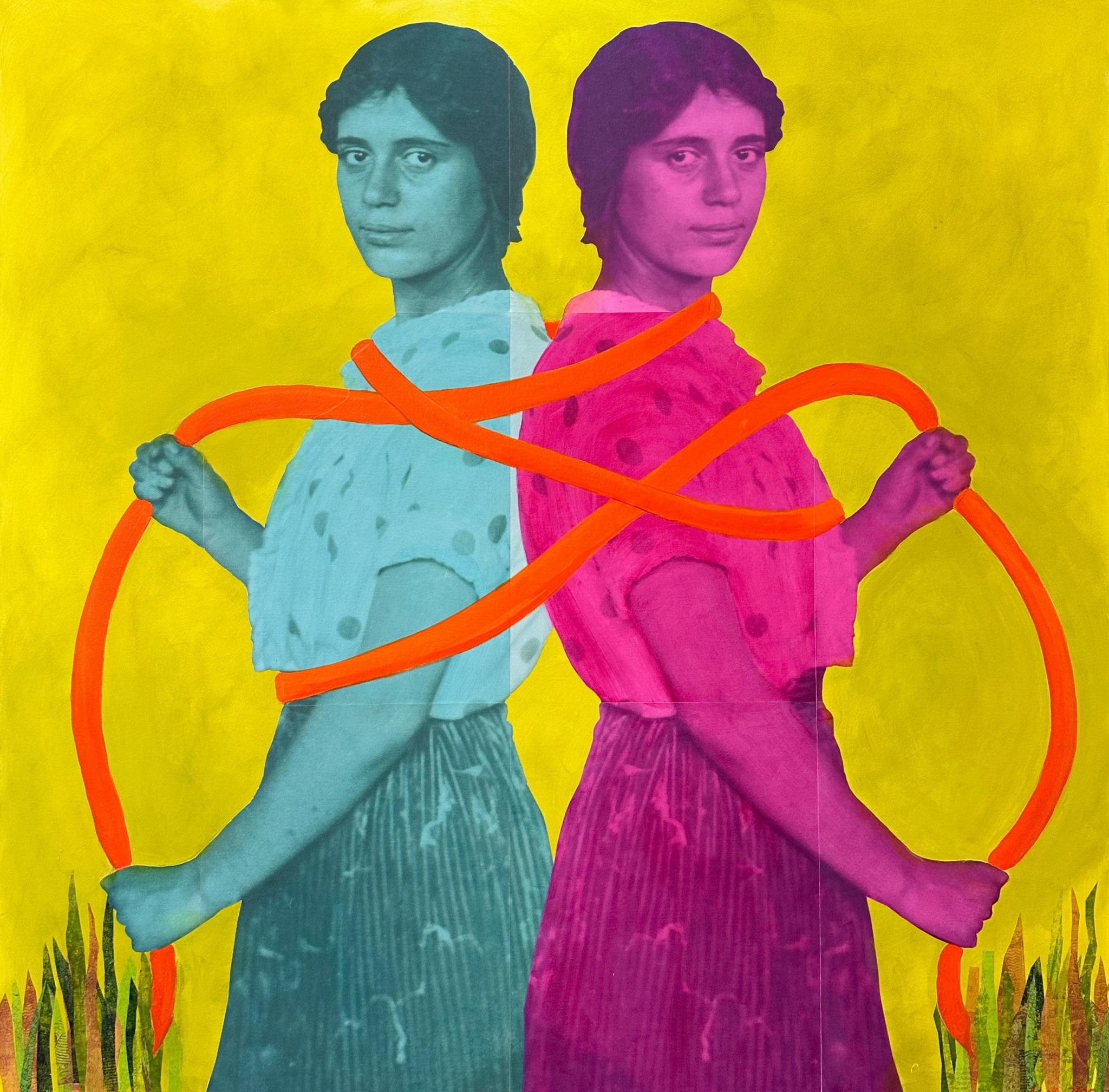
Image Credits
Jessica Bratton