
We’re excited to introduce you to the always interesting and insightful Melanie Sue Hicks. We hope you’ll enjoy our conversation with Melanie Sue below.
Melanie Sue, looking forward to hearing all of your stories today. We’d love to hear the backstory behind a risk you’ve taken – whether big or small, walk us through what it was like and how it ultimately turned out.
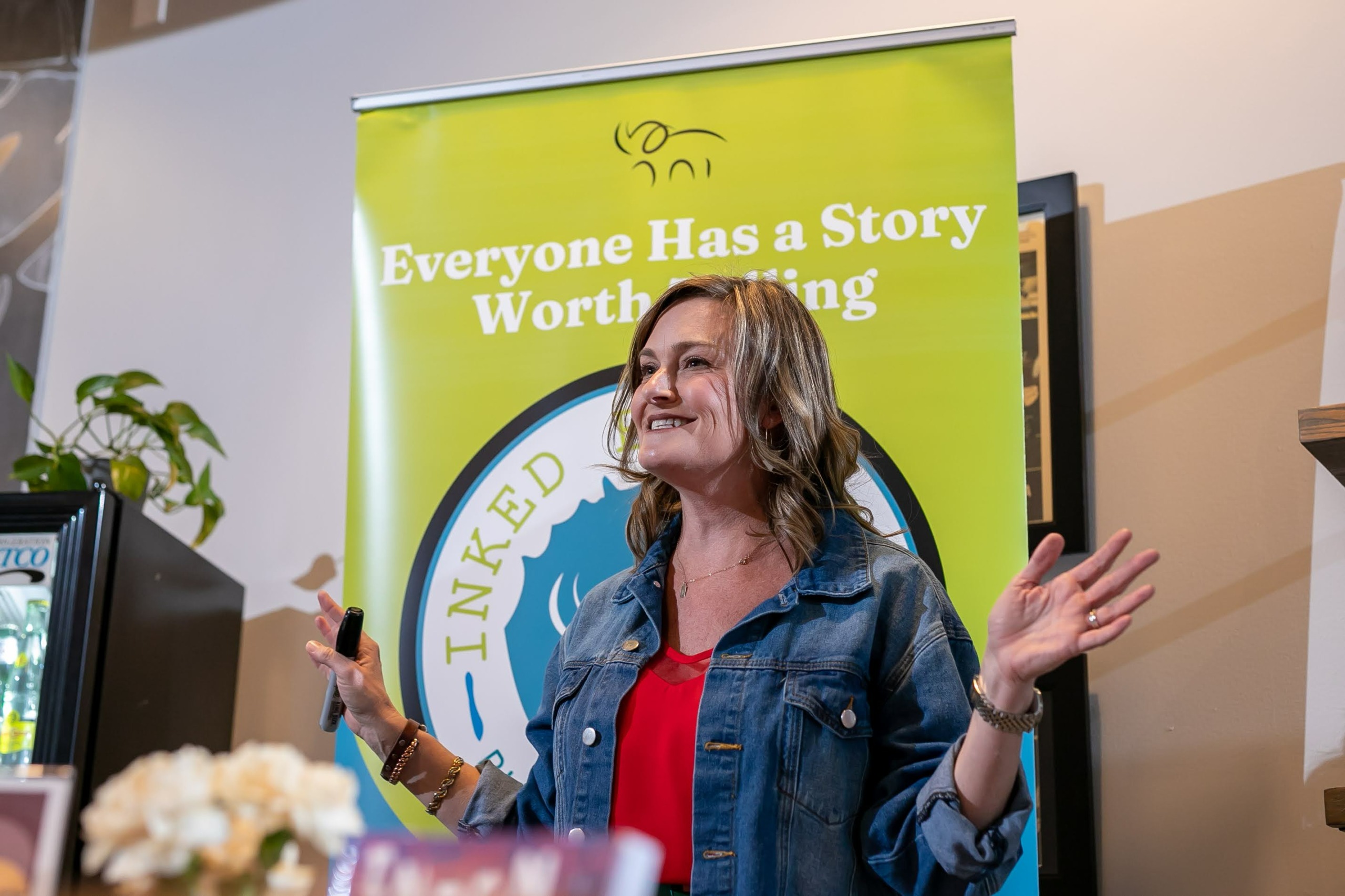
One of the biggest risks I have taken was founding my indie publishing imprint Inked Elephant Publishing House.
On paper, it looked impractical. Publishing is a difficult industry, margins are thin, attention is scarce, and independent presses are constantly told to stay small, stay safe, or not bother unless they already have money, influence, and a built-in pipeline. I knew all of that going in. What made it a real risk was that I was not building Inked Elephant because the market needed another generic publishing company. I was building it because I believed too many important stories were being overlooked, and I was willing to invest my own time, credibility, energy, and resources into proving that belief was worth something.
Across my work in leadership, workforce strategy, philanthropy, and community development, I kept seeing the same pattern: people with extraordinary lived experience often had the least access to the platforms that shape public conversation. The people closest to hardship, healing, reinvention, service, and community impact were not always the ones getting published, funded, or amplified.
Starting Inked Elephant meant risking more than money. It meant risking reputation. It meant saying publicly that I believed in emerging authors, community stories, and socially impactful work enough to build infrastructure around them. It meant stepping into an industry where it is easy to be underestimated and even easier to fail quietly. I had to make decisions without perfect information, create systems while still defining the mission, and keep moving even when the safer choice would have been to wait until everything felt more certain.
I took the risk because I did not want to spend years talking about voice, courage, and human connection while avoiding the vulnerability of building something that embodied those values. Inked Elephant forced me to do exactly what I encourage others to do: move before certainty arrives.
How it turned out is still unfolding, but for me it has been life changing. Not only the wonderful writers I get to know and support and stories I get to quietly beam about getting into the world, but about becoming a person with the courage to build what you believe should exist.
As always, we appreciate you sharing your insights and we’ve got a few more questions for you, but before we get to all of that can you take a minute to introduce yourself and give our readers some of your back background and context?
’m Dr. Melanie Sue Hicks, and my work sits at the intersection of leadership, workforce strategy, human connection, and storytelling. I am an author, speaker, corporate trainer, and founder, but more than that, I am someone who has spent my career helping people and organizations make better sense of complexity. Whether I’m advising leaders, designing learning experiences, publishing emerging voices, or speaking on resilience, my work is grounded in one core belief: people do better work, build better communities, and lead more effectively when they feel seen, challenged, and connected.
I came into this work through a combination of formal leadership roles, lived experience, and a refusal to stay interested in theory that doesn’t translate into practice. Over the course of my career, I’ve worked across higher education, nonprofit leadership, consulting, workforce development, and executive strategy. I’ve served in roles ranging from Assistant Provost to nonprofit executive to consulting leader, and in each setting I kept seeing the same problem: organizations often want transformation, but they rely on shallow language, outdated systems, and disconnected strategies to get there. They talk about people while designing around process. They talk about culture while ignoring behavior. They talk about resilience as inspiration instead of infrastructure. That gap is where I built my career.
Today, I bring that work to life through several connected platforms. Through my consulting and strategy work, I help organizations navigate leadership challenges, employee experience issues, culture, workforce development, change management, and organizational alignment. I design practical, implementation-focused solutions rather than abstract recommendations that look good in a slide deck and die in real life. My work often includes keynotes, workshops, leadership development, facilitation, executive advising, strategy sessions, and custom training experiences. I work with leaders who need more than motivation. They need language, tools, frameworks, and the courage to confront what is actually getting in the way.
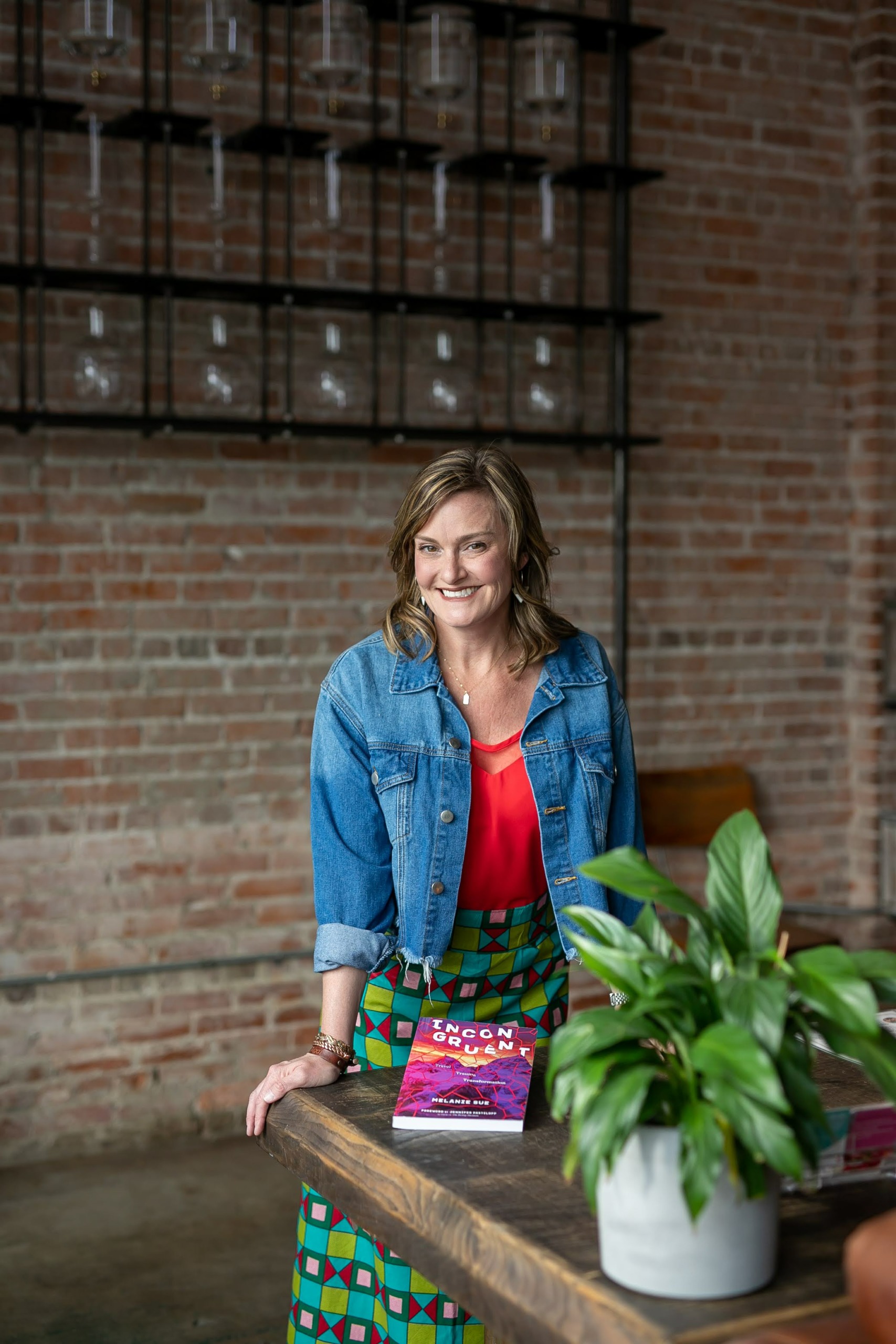
I also write and speak extensively on resilience, failure, leadership, and identity. My background as an author matters to my work because storytelling is not separate from strategy. Storytelling is how people make meaning. It is how leaders build trust, how teams understand change, and how individuals rebuild after disruption. My memoir, Incongruent: Travel, Trauma, Transformation, reflects that part of my work and my life. It explores resilience not as a slogan, but as something forged through loss, uncertainty, reinvention, and movement through the world. My poetry and thought leadership continue that same thread: I am deeply interested in what it means to become whole after fracture.
That interest is also what led me to build Inked Elephant Publishing House. Inked Elephant is a mission-driven publishing platform created to champion emerging, overlooked, and socially impactful voices. I built it because too many important stories never reach the page, not because they lack value, but because they lack access, advocacy, or infrastructure. I wanted to create something that took both story and people seriously. That work reflects a major part of who I am: I care about ideas, but I care just as much about who gets invited to contribute to them.
What problems do I solve? At the organizational level, I help leaders make sense of messy human problems that are often mislabeled as performance issues, communication issues, or strategy issues. Many of the problems my clients face are not actually technical; they are relational, cultural, structural, or behavioral. I help leaders identify the hidden disconnects that quietly erode trust, engagement, accountability, and results. I help organizations build clearer strategies, stronger leadership practices, more human-centered cultures, and better learning environments. At the individual level, I help people articulate what matters, sharpen their voice, and lead with more honesty and intention.
What sets me apart is that I do not separate rigor from humanity. A lot of people can inspire. A lot of people can analyze. Fewer can do both well. My work is deeply practical, but it is not sterile. It is intellectually grounded, but it is not detached from real life. I care about evidence, outcomes, and execution, but I also understand that people do not change because a framework exists. They change when something becomes clear enough, true enough, and actionable enough to move them.
I also bring an unusually broad lens to my work. My perspective has been shaped not only by professional leadership experience, but by global service, travel, writing, and deep engagement with people across contexts. I have traveled to more than 47 countries and contributed thousands of service hours in communities around the world. Those experiences strengthened my understanding of resilience, adaptability, inequity, and human connection in ways that no textbook ever could. They made me less interested in performance and more interested in substance. Less interested in polish and more interested in congruence.
What I am most proud of is not any single title or accomplishment. It is the body of work I have built across disciplines without flattening myself to fit one lane. I am proud that I have created work that is both strategic and deeply human. I am proud that I have helped leaders think better, helped organizations function better, and helped writers and emerging voices believe their stories matter. I am proud that I have kept building things that reflect my values, even when easier paths existed.
What I want potential clients, readers, collaborators, and audiences to know is this: I am not interested in empty inspiration, performative leadership, or generic language about purpose. I care about meaningful work. I care about helping people tell the truth about what is broken, what is possible, and what it will take to close that gap. My brand and my work are built around courage, clarity, resilience, and connection. I challenge people, but I do it in service of growth. I bring heart, but not at the expense of rigor. I believe people deserve work and leadership that are more honest, more skillful, and more human.
If someone engages my work, whether through a keynote, consulting partnership, workshop, book, or publishing collaboration, I want them to walk away with more than motivation. I want them to leave with language for what they are facing, sharper insight into what matters, and a stronger capacity to act on it. That is the standard I hold for myself, and it is the standard I bring to everything I build.

We often hear about learning lessons – but just as important is unlearning lessons. Have you ever had to unlearn a lesson?
For decades I believed if I worked hard enough, loved well enough, and held everything together skillfully enough, I could prevent things from falling apart.
The backstory is personal and painful. For a long time, I believed effort could fix almost anything. I do not mean that in a shallow, motivational way. I mean I genuinely believed that discipline, loyalty, achievement, and endurance could compensate for instability in other places. If something was breaking, I thought the answer was to become more capable. More patient. More useful. More accommodating. More excellent.
That belief served me for a time. It helped me achieve, lead, and produce. It made me resilient in some ways. But it also trained me to over-function. It taught me to confuse responsibility with control. And eventually life forced me to face the limits of that lesson.
And then one day, my entire world caved in. I lost my job and found out my husband was having an affair in the same month. That brutal collision of professional and personal loss, stripped away the illusion that good behavior guarantees good outcomes. I could be hardworking and still lose the job. I could be committed and still be betrayed. I could do all the “right” things and still find myself standing in the wreckage of a life I thought I had built carefully.
That is what I had to unlearn: the belief that my performance could protect me from other people’s choices, broken systems, or painful reality. It could not. And honestly, that was a hard lesson because it required me to stop treating self-sacrifice as a strategy.
What replaced that lesson was healthier, but harder won. I learned that my job is not to manage every outcome. My job is to tell the truth, pay attention, act with integrity, and stop carrying things that do not belong to me. I learned that being strong is not the same as being endlessly absorbent. I learned that boundaries are not failure. Discernment is not cruelty. And walking away from what is harming you is not weakness.
That unlearning changed me. It made me less interested in proving myself and more interested in living honestly. It made me less willing to confuse endurance with health. And it made me understand that sometimes the strongest thing you can do is stop trying to save what is not yours to save.
We’d love to hear a story of resilience from your journey.
One day I came to grips with not being a part of the motherhood club.
Motherhood is treated like both an expectation and a belonging. It is not just something many women hope for. It is also a club our culture assumes you will eventually join. There is language for it, rituals for it, community around it, and an entire social structure built around the assumption that you will one day be inside that circle. Realizing I would not be was its own kind of loss.
What made that season hard was that I was not only grieving the absence of children. I was grieving the loss of an identity I had assumed might one day be mine. I was grieving the fact that I would be standing outside of a space that so many women are folded into without even having to think about it. Baby showers, school conversations, parenting communities, casual assumptions, the way people talk about “when you’re a mom” as if it is universal. I had to come to terms with the reality that I would not be part of that club, and that reality landed much deeper than people often understand.
There is also a particular kind of loneliness in grieving something that is not always visible to other people. The world does not really stop for this kind of loss. There is no clear script. No public ritual. No easy way to explain that you are mourning not only what will not happen, but the version of yourself that will not exist. That took time. It took honesty. It took letting myself admit that this was not a small disappointment. It was real grief.
My resilience in that season was not about pretending I was fine or rushing to say that everything happens for a reason. It was about staying with the truth long enough to let it shape me without hardening me. It was about learning that my womanhood was not diminished because I would not be a mother. It was about separating my worth from a role I would not hold. It was about building a meaningful life without forcing myself to deny what I had lost.
Over time, I found a deeper sense of peace, but it was earned peace, not polished peace. I came to understand that nurturing, legacy, love, and impact are not limited to one form. I may not be part of the motherhood club, but that does not mean my life is empty of care, influence, or meaning. It simply means my story took a different shape than the one I once expected.
That experience made me more compassionate, more grounded, and more aware of the quiet grief so many people carry. It taught me that resilience is not about getting over loss quickly. It is about learning how to live fully and honestly alongside it.
Contact Info:
- Website: https://melaniesuehicks.com/
- Instagram: https://www.instagram.com/stories/inpursuitmelsue/
- Facebook: https://www.facebook.com/MelanieSueHicks
- Linkedin: https://www.linkedin.com/in/melaniesuehicks/
- Youtube: https://www.youtube.com/@melaniehicks3250
- Other: https://melaniesuehicks.pressfolios.com/