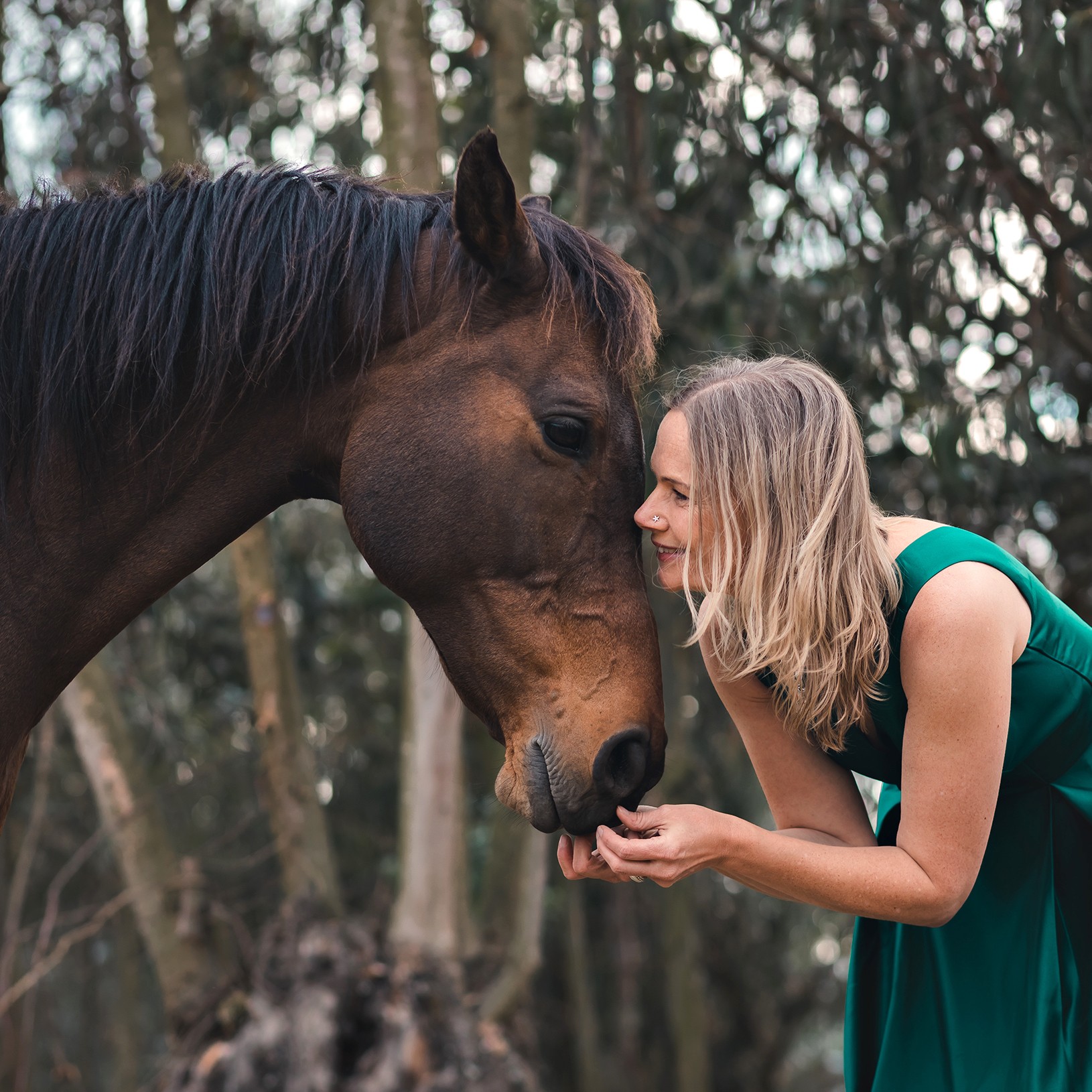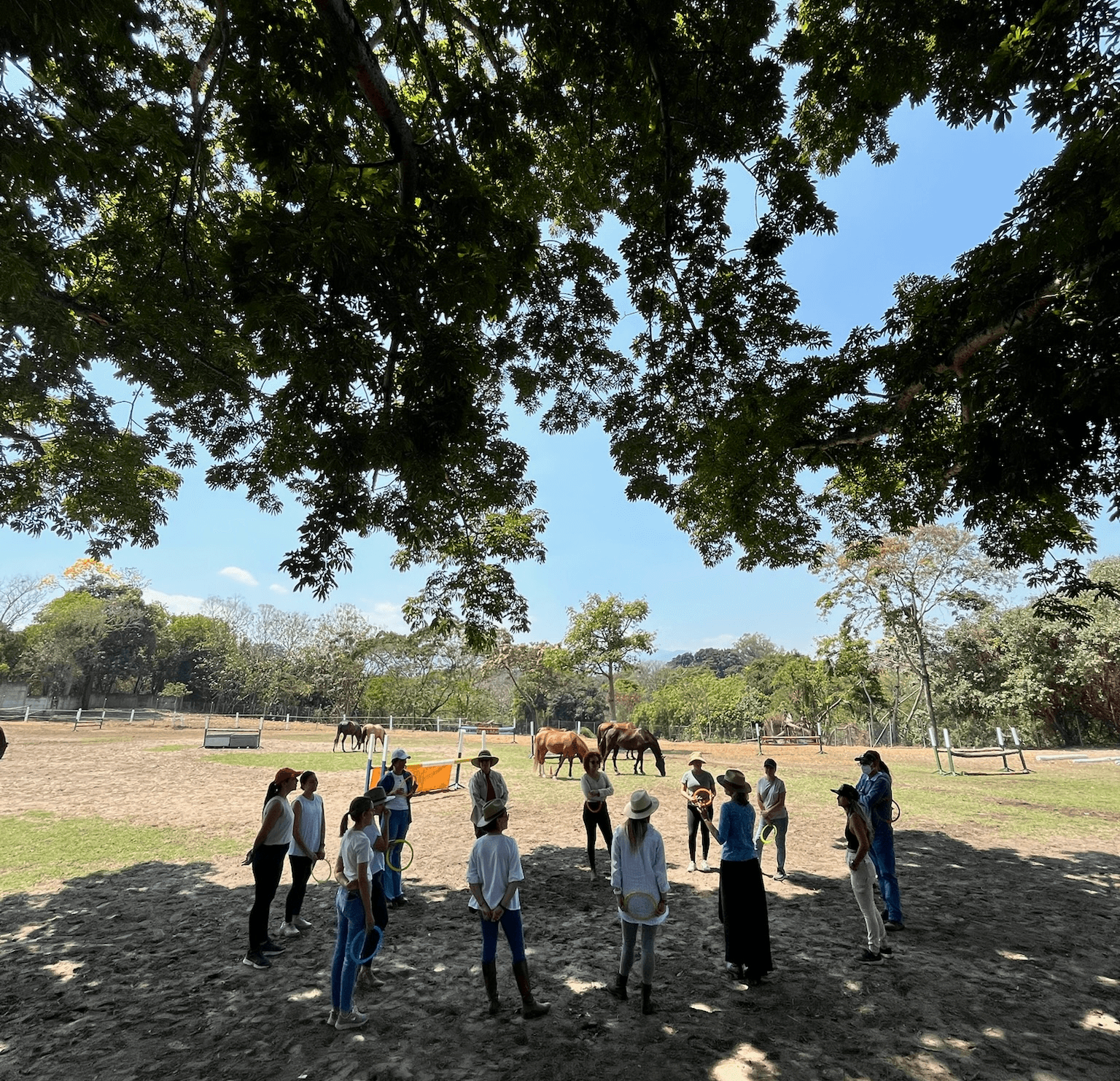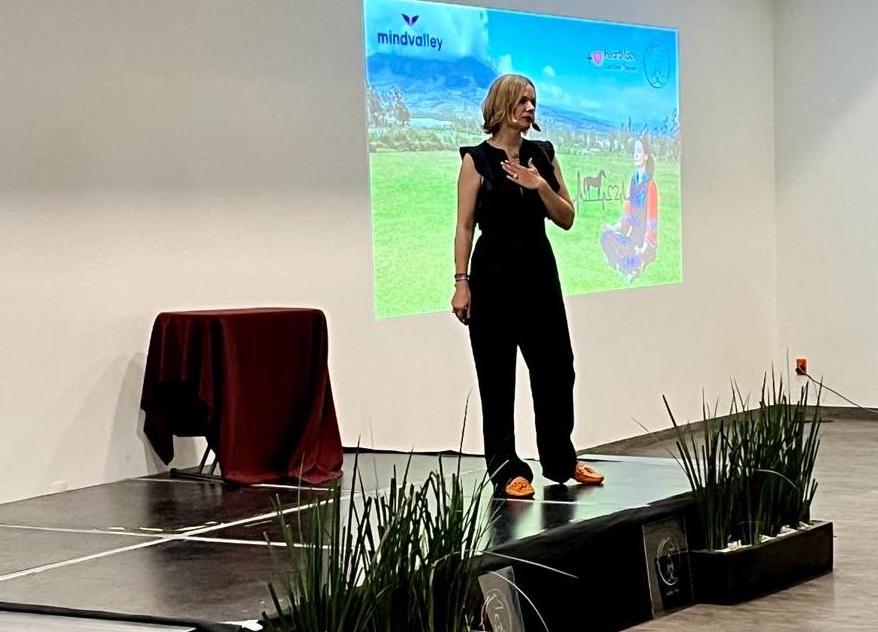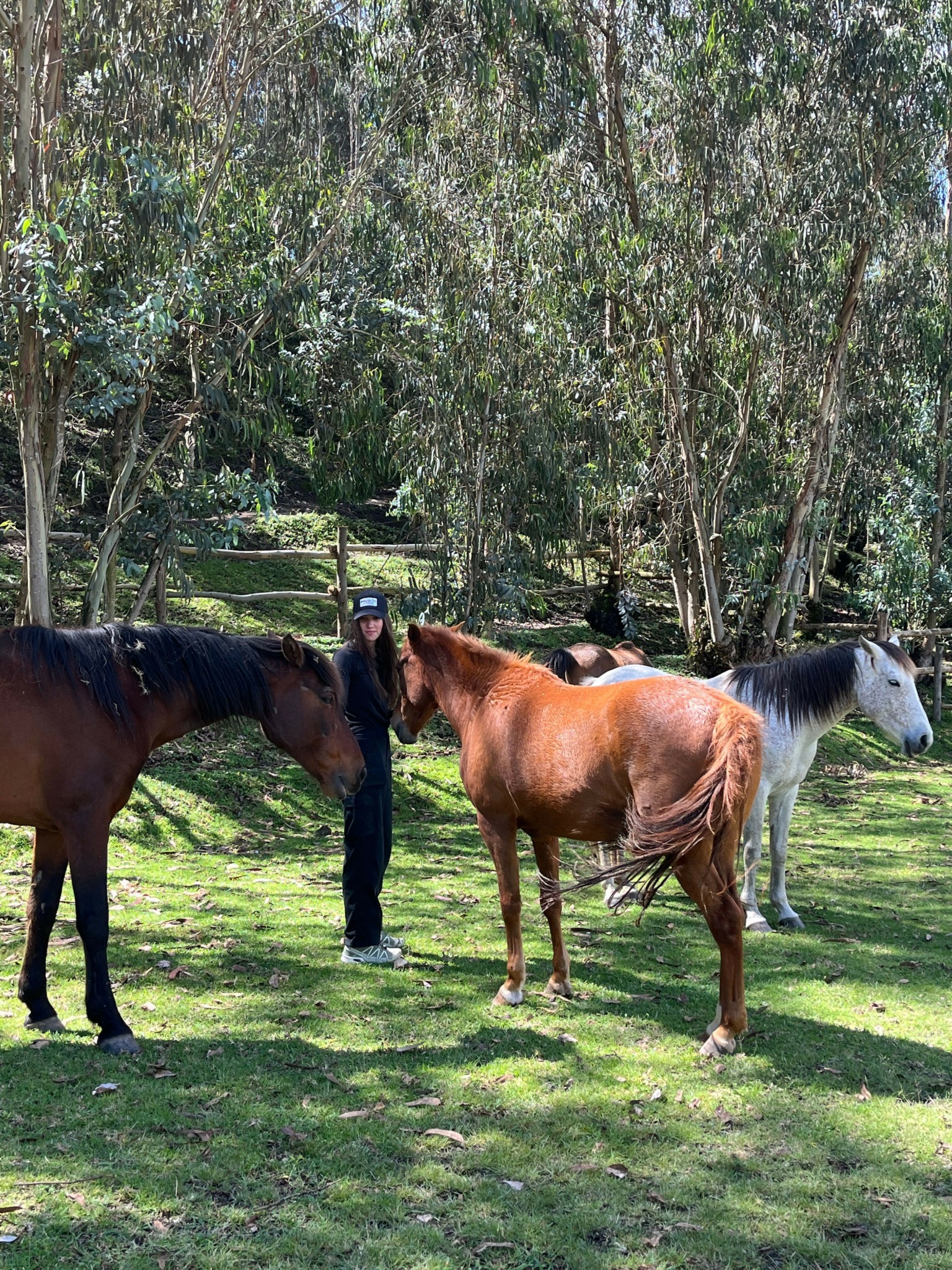

Alright – so today we’ve got the honor of introducing you to Christina Marz. We think you’ll enjoy our conversation, we’ve shared it below.
Christina, appreciate you joining us today. Have you ever had an amazing boss, mentor or leader leading you? Can you us a story or anecdote that helps illustrate why this person was such a great leader and the impact they had on you or their team?
Interviewer: If you had to answer the question “Who was the best boss you ever had?”, most people would name a person. Your answer is… different. Christina Marz: Very different. The best boss I ever had was a herd of horses.
Interviewer: That’s not an answer I hear every day.
Christina: I know! My life really is a chain of unlikely events with the most unlikely teachers and bosses – like herds. You might think it´s a joke, but if you’ve ever spent real time with horses, especially in a herd, it makes perfect sense.
Interviewer: What kind of “boss” is a herd of horses?
Christina: A very honest one that gives immediate feedback without micromanaging, without lecturing. A herd doesn’t care about your résumé, who you have trained with, or how well you can explain yourself. They respond to one thing only: how are you showing up right now?
If you’re coherent, meaning your emotions are regulated, your intention is clear, and your actions are aligned, you’re safe enough to do any job for them. If you’re not, the system reorganizes without you.
Interviewer: That’s a tough boss. And a brilliant one that makes one grow. I like that! You’ told me that you´ve worked with people and horses across many countries and cultures. I wonder, does this dynamic change?
Christina: I have met horses in all kinds of conditions, and many of them don´t feel free enough to have a voice. They are trained to obey and it takes a while until they feel safe enough to share their opinion and become true mentors. But when we talk about true herds, it applies to all of them. I’ve worked with horses and humans in Europe, Latin America, the Middle East and North America. There are different habits, different belief systems, and social rules vary greatly. But the horses, no matter if it´s an abandoned herd of Arabian broodmares in the desert or rescued ponies in Ireland, or a well-kept herd in the Mongolian plains, or a wild herd in Patagonia, they respond the same everywhere. Coherence is universal. There is a space between us where we replace overthinking with intuition, and that´s where the herds want us.
Interviewer: We have to come back to coherence, but tell me first, what did the horses teach you about leadership?
Christina: That leadership can be, but doesn´t have to be control. It can be regulation. The most stable horse in the herd, it´s usually a mare, by the way, doesn’t lead by force, but by nervous system stability. Others orient toward that presence naturally. When a grounded horse is leading, there’s no debate, no power struggle. In the wild, in the big herds, the herd will choose and promote that type of leader. In domesticated herds that´s not always the case though. Often the most dominant horse will lead out of insecurity or fear and install a system of harsh control. The herd will settle and adapt, because they have to. But they would not choose that leader if they had enough space. True harmony comes into the herd when the leader is emotionally strong and wise enough to lead with quiet presence. In those herds you won´t see any biting. My herd has such a leader at the moment – his name is Falcon. Imagine, to teach compliance he will quietly block the entrance to the pasture, and make herd mates wait, not eating himself, until he decides to let them in. He teaches patience and good manners with positive reinforcement. That´s quite extraordinary, don´t you think? It makes you realize how many leadership models are built on compensation rather than coherence.
Interviewer: Compensation?
Christina: I don´t mean monetary compensation or a reward system. I mean compensating what is not true. We hide our fears and turn them into control. We over-perform or over-explain to demonstrate confidence. We over-explaining decisions so we believe them. Horses don’t do that. And they don’t tolerate it either. If you try to lead from insecurity, they’ll mirror it back to you instantly. Not to shame you—just to restore balance. There is no way to trick a horse by showing up with fancy yet untrue body-language. They cut right through that.
Interviewer: This idea of being “mirrored” by horses comes up often in your line of work.
Christina: Yes, but I look at it differently. Horses don´t just mirror, they are not a reflection of you. It´s a true dialogue. Sometimes I say they are like an interactive Rohrschach Test – you know, these ink blobs in which you can see either a dragon or a butterfly depending on your own emotional state? There’s an exercise I use with clients called DescribeMe that is very similar. I ask them to describe a horse, usually one they’ve just met. People see strength, hesitation, guardedness, resilience, or quiet authority in the horses. The horses will respond to that, making it interactive. And then, as we look at the human and their own emotional landscape, we realize that these qualities also live inside them. They are projecting their own traits onto the horses, and the horses interact with that.
What’s fascinating is that clients often describe the real history of the horse. They pick a horse that is similar to them, in their injuries, social position in the herd, challenges, needs, fears. Without having been told anything about the horse! Unbelievable, right? It’s not mystical though. It’s relational perception within the coherence field. You can see in others what you carry within yourself, what vibrates within your field, what your authentic intention is seeking, or what your subconscious mind is focusing on. Yet, we can only perceive clearly when our system is present enough to listen. This isn’t psychic ability. It’s perception without interference.
Interviewer: Please explain more about that.
Christina: You can only perceive clearly when you are regulated enough to listen with your heart. Horses live in that state by default. Humans have to relearn it and horses are the best teachers. Or bosses, to stay within our topic! When we are invited to work on us in the presence of horses, we can slow down and sense the field. Our sensory system gets stimulated by the natural sounds and sights, our nervous system gets tuned by the herds´ coherence field, and we get access to a sixth sense. It´s somewhere between intuition and telepathy. We all have it! It´s not exclusive to some or based on mere coincidence. Quite the contrary, it can be trained to become a real asset, an ability to rely on.
Interviewer: Is that what you mean by coherence?
Christina: Not really, coherence is the necessary state to access the ability, like a pre-requisite. I am specifically referring to to heart coherence, which is a scientifically validated, self-generated state of synchronization between the heart, brain, and nervous system. Coherence is a state in which your heartbeat is balanced, and has a harmonious rhythm. That state has many benefits. It increases not only resilience and reduces stress, it also enhances our immune system, speeds up muscle recovery and improves mental clarity. It´s a high-performance physiological state. Horses organize themselves around that state naturally, we can measure that in their electromagnetic heart field.
Interviewer: Now you´ve lost me. What is an electromagnetic heart field?
Christina: I´m sorry, that was a lot of information. Have you ever seen an electrocardiogram? They have those monitors in hospitals, right? It shows the heartbeat as a curve with a peak and a valley and smaller peak. What is measured there is the intensity of an electric signal the heart produces. To measure coherence we look at the distance between those peaks, and we can also measure the field that is created by this electric signal. Whenever there is electricity, even a tiny amount, there will be an electromagnetic field. As it turns out, your heart rhythm and hence that field changes depending on the emotions we are feeling. Without going deep into science here, but this is the current scientific explanation of the esoteric phenomenon of “vibes” we feel in places, or around people and also around horses. We – or in fact our hearts – pick up the field and adapt to it. A herd of animals lives in an emotional unit and creates an exponentially strong field. That field is not always positive though. For example in a badly managed Zoo or at a meat factory, it will be an unpleasant field of anxiety, or even terror. In a barn where horses are locked into individual boxes the field is often loneliness or despair. But in a harmonious herd like the one´s I am working with, the field is about belonging, safety, positive curiosity and calm co-existence.
Interviewer: Oh that is interesting, so this is the reason why therapies with horses are so powerful?
Christina: Exactly! So my best boss is also my best therapist!
(Both laughing)
Interviewer: Thank you Christina, I will have to come see you to experience it myself I guess.
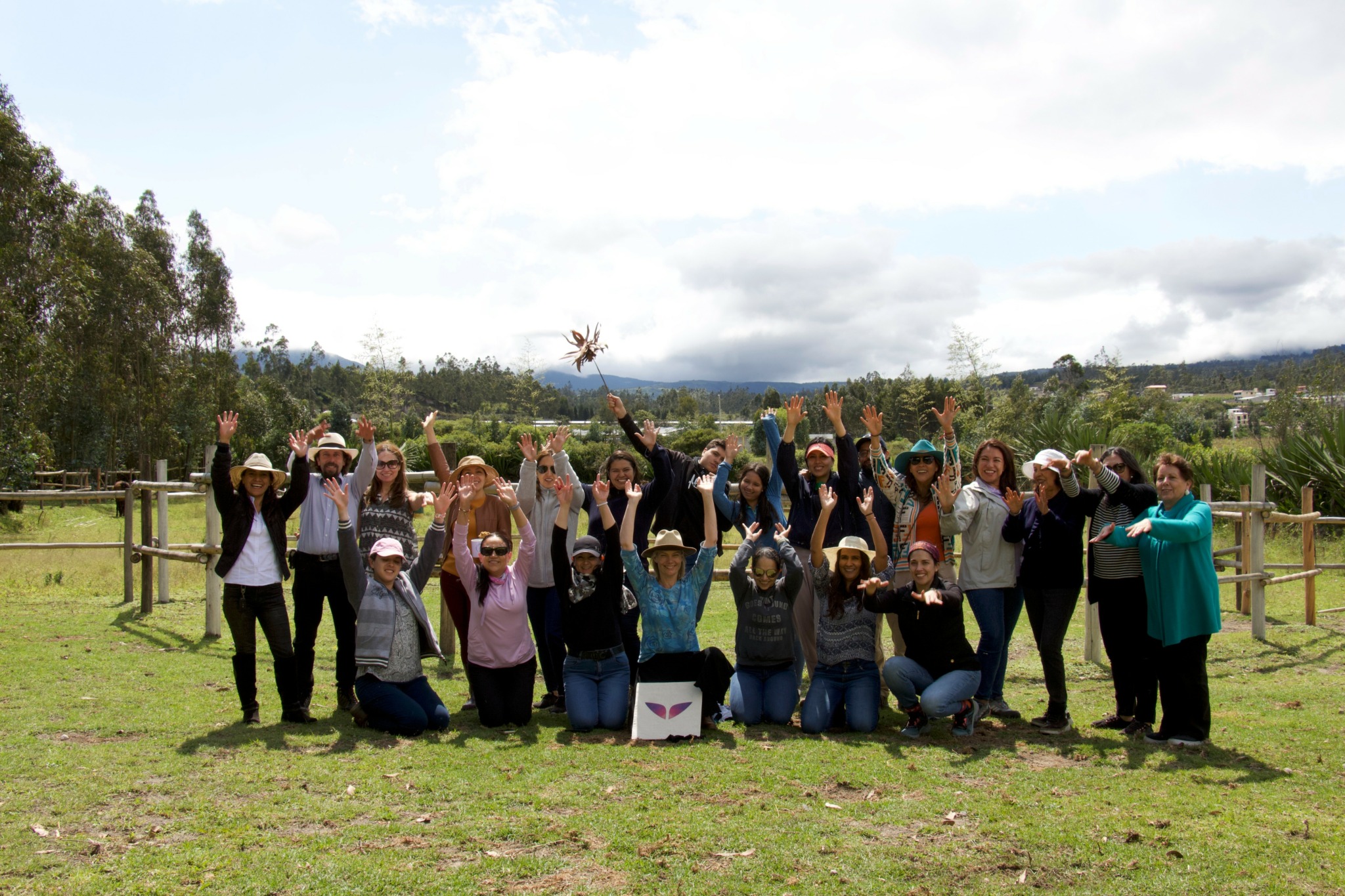
Christina: Please do. I lead sessions with my herd in Cotacachi, Ecuador, and I am also on a Worldtour, with many destinations from Costa Rica to Greece and Jordan. You can also write to me on Instagram at Marzmethod and I can refer you to a colleague, I have trained people in 45 countries!
Awesome – so before we get into the rest of our questions, can you briefly introduce yourself to our readers.
I first launched my own method Horse Guided Empowerment® in 2016, and it grew into MarzMethod, a global, trilingual training school for people who want practical, ethical ways to work with humans and horses. We offer education, mentorship, and a lot of hands-on experience in trauma-informed coaching, nervous system regulation, heart coherence, and equine-guided work. Most of the people who come to us are coaches, therapists, facilitators, educators, or professionals who want to enhance their life with horses. Our work is grounded in positive psychology, neuroscience, systemic thinking, and somatic awareness, but it always comes back to real life: How can you apply this in your cultural context with a group, a family, a team, or even for your own benefit, with your own horse?
I’m originally from Germany, and I’ve been fascinated by horse herds for as long as I can remember. Over the years I trained as a clinical and holistic psychologist, mindset coach, couples mentor, sexologist, and systemic constellation therapist – and some more, always finding ways to integrarte my passion for horses into the therapeutic work. I love supporting people in counseling with ad without horses, but I am even more fueled by teaching and benefiting more clients all over the world through my certified students. By now I’ve had the privilege of bringing this work into so many very different worlds—from corporate settings like the PwC Academy in Dubai, to international communities such as Mindvalley, to small therapy spaces and rural sanctuaries, I can easily adapt to most settings. It always comes down to the same core question: how does one become sustainably coherent enough to truly listen to their own body, their own relationships, surroundings, callings? Helping my clients answer this question and seeing them become resilient is fascinating to me, especially in the cultural diversity.
How’d you build such a strong reputation within your market?
What helped me build my reputation was really a mix of timing, adaptability, and a willingness to venture into the unknown. During Covid, I was lucky enough to shift my work online within the first 10 days of lock-down, which unexpectedly opened the door to a truly global audience. As an expat, I don´t fit easily into established systems, and instead of trying to, I learned to thrive at the margins. It allowed me to design my own frameworks, adapt them more often than you would believe, and invent approaches beyond existing labels.
Any advice for growing your clientele? What’s been most effective for you?
I believe that my German roots gave me discipline, structure, and an obsession for science that helped me distance my school from less professional organizations. The Latin cultures I’ve lived and worked in continuously invite passion and an endless creative flow which helps me to produce ideas and create an invigorating vibe in my community. And lastly, of course living with and caring for rescued horses anchored all of this in practice. Today I live with a herd of rescued horses and donkeys in the Ecuadorian Andes, as you know my herd is my best boss and most valuable mentor, they ground me, and they continuously shape my work. They taught me that real change comes from consistency, presence, and subtle adjustments over time. That blend of rigor and intuition, structure and relationship, innovation grounded in daily responsibility is not everybody´s cup of tea, but it helped me find my Soul Tribe of people who trust in my work.
Contact Info:
- Website: http://www.ChristinaMarz.com
- Instagram: https://www.Instagram.com/MarzMethod
- Youtube: https://www.youtube.com/@MarzMethod