



We caught up with the brilliant and insightful Chris Roberts a few weeks ago and have shared our conversation below.
Hi Chris, thanks for joining us today. We’d love to have you retell us the story behind how you came up with the idea for your business, I think our audience would really enjoy hearing the backstory.
The idea for HAULa didn’t come from a single “eureka” moment. It came from years of frustration that kept showing up in different chapters of my life, and eventually I couldn’t ignore it anymore.
It started in college. Every August and every May, I was doing what millions of students do – loading up a car, begging friends with trucks, renting vans that cost more than expected and came with a list of restrictions. Moving a couch up three flights of stairs with two reluctant roommates is more than just inconvenient. You’re stressed, you’re imposing on people, and there’s no good solution. Truck rental business exists. Moving companies exist. But not really anything in between.
Then came a home renovation. Anyone who’s done serious DIY work knows the moment when you’re standing in a hardware store parking lot next to a pallet of tile, a stack of lumber, or a set of appliances, and you realize your Ford Escape isn’t going to cut it. You call around. Rental trucks are available but can be inconvenient and time-consuming. Moving companies come with time minimums for labor. You end up paying a premium for services built for a completely different scale of job, or you spend two weekends making four separate trips. The problem wasn’t that there was no option. The problem was that none of the options were built for this, a single, specific haul for someone who just needs a truck and a driver for less than an hour.
Then came Facebook Marketplace. The Marketplace and similar apps/websites have become the most vibrant second-hand economies in the country. A lot of the time: the deal dies at the couch. You find the perfect sectional, vintage dining set, or outdoor furniture at a good price, and then reality hits. “Do you have a truck?” or “Do I know someone who has a truck I can borrow?” are the questions that kills more deals than any negotiation. Either the buyer can’t figure out pickup, or the seller can’t figure out delivery, and a perfectly good transaction falls apart. It has happened to me. This was the primary reason why it took at least three weeks to give away a piano.
Three completely different situations. Three completely different contexts. But the same underlying problem every single time: there is no simple, reliable, cost-effective way to move something large.
That’s when I knew this was real. Not just an inconvenience, but a structural gap in the market, which affects millions of people regularly and across completely ordinary moments in their lives. College students, homeowners, DIYers, Marketplace buyers and sellers, small businesses, etc. We think there is demand virtually everywhere.
What got me most excited wasn’t just the problem but it was the supply side of the equation. There are millions of people across this country who own trucks and trailers and use them for maybe 10% of their available time. That’s an under-utilized asset sitting in a driveway. HAULa gives those drivers a way to monetize what they already own in a new way, on their own schedule, without becoming full-time drivers. That two-sided marketplace dynamic with real demand meeting idle supply is a model we are excited about.
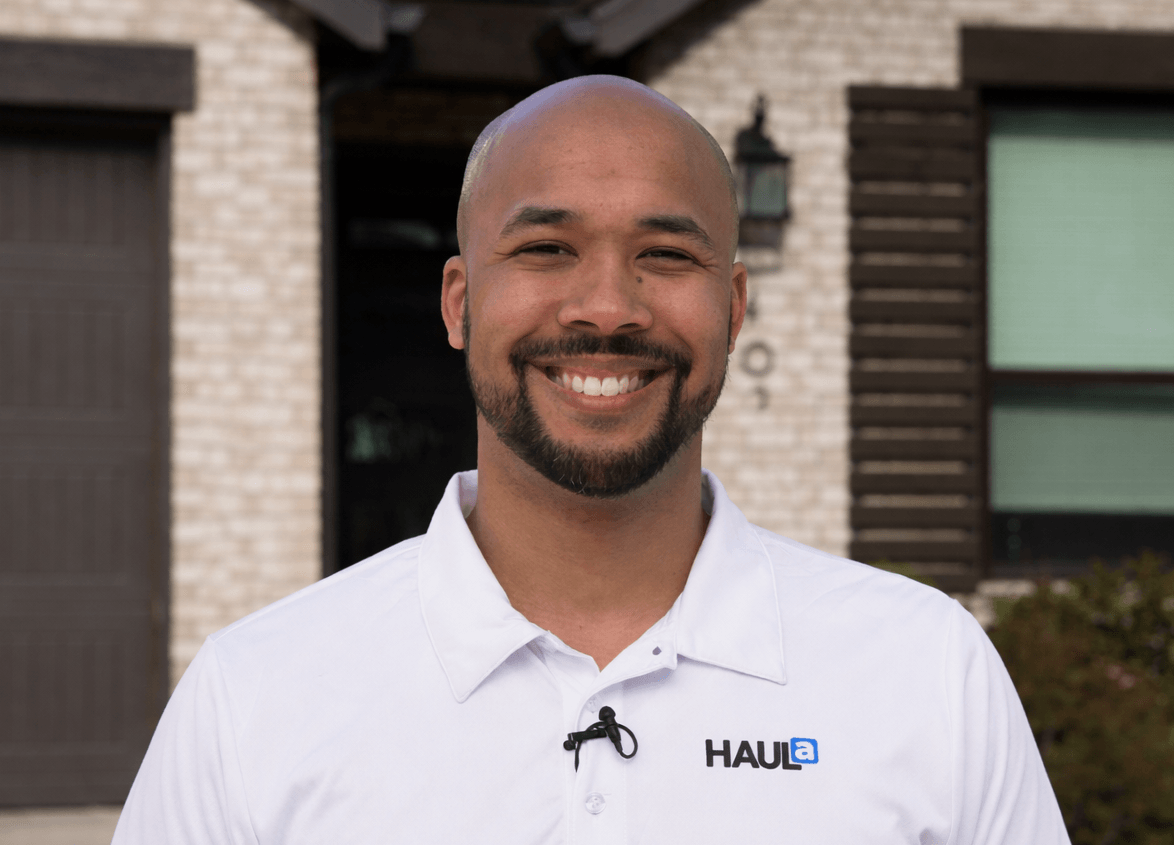
Chris, love having you share your insights with us. Before we ask you more questions, maybe you can take a moment to introduce yourself to our readers who might have missed our earlier conversations?
I’m a St. Louis native, born and raised. I took a winding road through college, law school, and my early career, and am now raising my own kids here.
My path to entrepreneurship wasn’t linear, and I think that’s actually one of my greatest strengths. After earning my undergraduate degree in Business Administration from George Washington University, I got my law degree from Pepperdine University.
After law school, I had a brief but formative stint working for a technology company in southern California. That experience gave me an early look at how tech businesses are built, how legal frameworks interact with product development, and what it means to operate at the intersection of law and innovation. But St. Louis kept calling. I came home, and not long after, I was offered an opportunity that would define the next decade of my professional life, a position as criminal prosecutor.
After nearly nine years, I made the deliberate decision to step away from the prosecutor’s office and go back into tech. Not because I was done with public service but because I saw a way to serve my community differently. As an entrepreneur.
Besides launching HAULa, I am finding ways to support local businesses and the rest of our community. Another project that I am helping put together and think will have a significant impact on so many in underserved areas of the region, is a non-profit fund to incentivize people to renovate the many abandoned or blighted houses in our community. This is in the very early stages, but I believe introducing this new approach to a stagnant problem will lead to substantial progress.
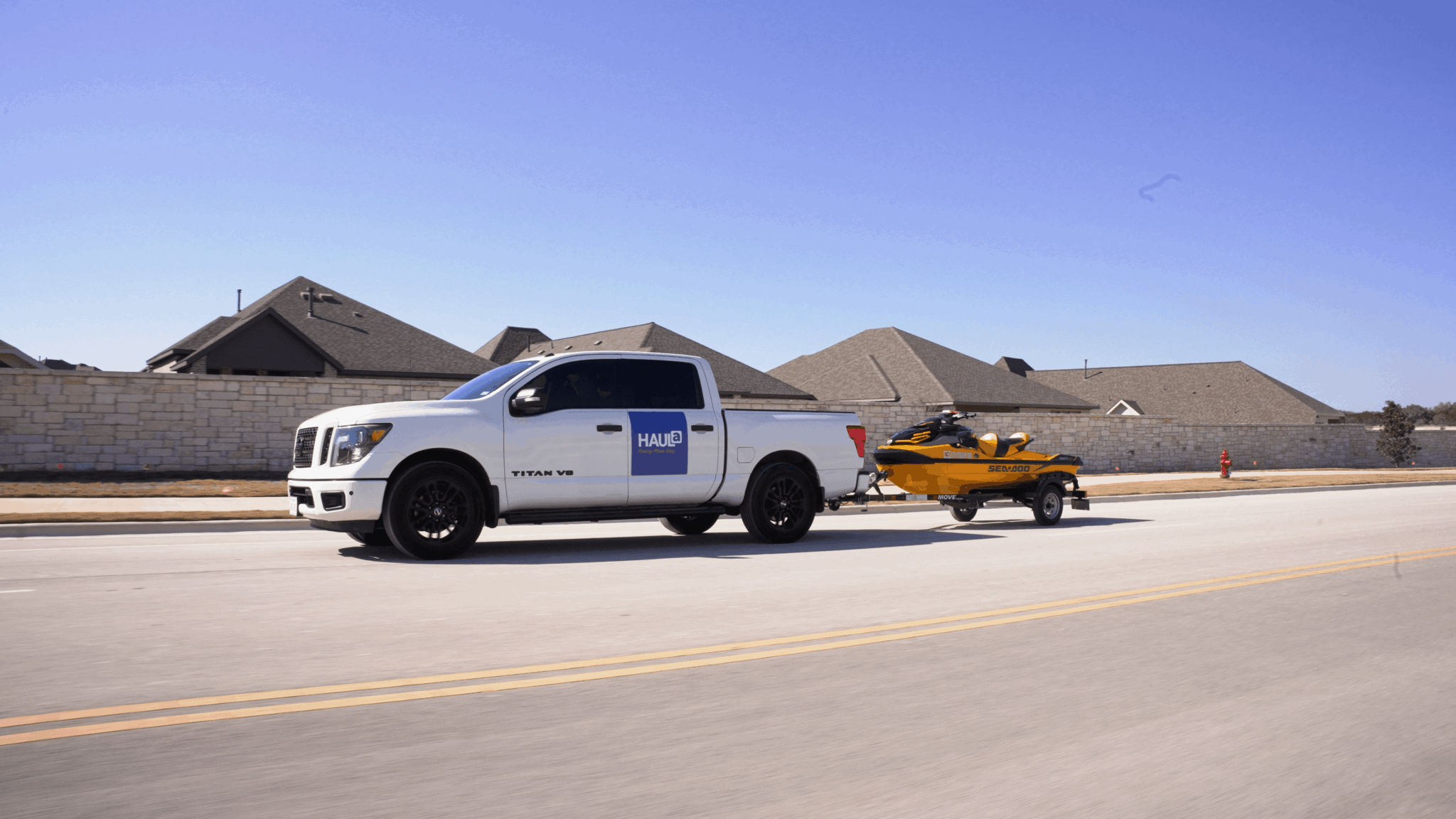
HAULa is an on-demand transportation platform that connects people who need to move large, heavy, or oversized items with pre-screened, trusted drivers who have the trucks and trailers to get the job done. Think of it as the bridge between a full-service moving company and doing it yourself. It is simple to book, fairly priced, and built for the kind of everyday hauling needs that fall through the cracks of every other service out there. Whether you’re moving furniture from a seller across town, hauling materials for a home renovation, clearing out after a DIY project, or moving in or out of an apartment, HAULa is the answer to a question people have been asking for years: why isn’t there a simple app for this?
What am I most proud of? Honestly, the decision to bet on St. Louis. There’s a narrative that if you want to build something in tech, you have to be on a coast. I disagree. St. Louis has real infrastructure, a growing startup ecosystem, a cost of living that allows for risk-taking, and a community of people who genuinely want to see each other succeed. HAULa is built here intentionally and I hope that as we grow, we become part of the story of what this city is becoming.
What do I want people to know about HAULa? I want them to know that this wasn’t built in a vacuum. It was built out of real experiences and real frustrations. We’re solving a problem that affects everyone, and not just once or twice but regularly.
Are there any books, videos or other content that you feel have meaningfully impacted your thinking?
I’m someone who reads broadly and across disciplines. I think some of the best business insights come from places that have nothing to do with business. When I think about books that have genuinely shaped how I think as an entrepreneur, my list reflects that. Here are a few that have left imprints on me:
“The Signal and the Noise” by Nate Silver is probably one of the books I recommend most often. Silver’s central argument that we are drowning in data but starving for genuine insight, and that most of what we think is signal is actually noise, is a discipline I try to apply constantly. This taught me to ask a harder question: what actually predicts something meaningful? His framework around probabilistic thinking and intellectual humility around forecasting has genuinely changed how I approach market analysis and decision-making under uncertainty.
“The Great Influenza” by John Barry is a book that I think everyone building anything (a company, team, or system) should read, even though it has nothing to do with business on its surface. It’s a masterwork on institutions, leadership under catastrophic uncertainty, and the gap between what we know and what we think we know. What struck me most was how the scientists who made the most progress during the 1918 pandemic were the ones who were comfortable operating at the edge of knowledge, and who could tolerate not having answers while still moving forward. I think that is entrepreneurship in a nutshell. The book also shaped how I think about organizational culture. The institutions that failed during that crisis failed largely because of rigidity, ego, and a refusal to update their thinking. A cautionary tale I keep close.
“When Breath Becomes Air” by Paul Kalanithi is a different kind of book. It’s not a business book at all, and that’s exactly why it is on my list. Kalanithi was a neurosurgeon facing a terminal diagnosis, and what he wrote is a profound meditation on purpose, meaning, and what it means to do work that matters. It reminded me that the businesses worth building are the ones solving real problems for real people, and that the urgency to do meaningful work isn’t something to defer.
“Atomic Habits” by James Clear is the most operationally useful book on this list. Clear’s insight that outcomes are a lagging measure of habits that you don’t rise to the level of your goals, you fall to the level of your systems is something I have wired into my head. It’s easy to be visionary about where a company is going, but harder to build the daily disciplines and repeatable systems that actually get you there.
Have you ever had to pivot?
I have started and stopped businesses seemingly hundreds of times. Not metaphorically. I mean I have had an idea, gotten genuinely excited about it, done serious market research, mapped out the competitive landscape, and then walked away from it. Over and over again.
I think a lot of people would call those failures or a waste of time. I call it discipline. There’s a concept in economics called creative destruction, which is the idea that innovation requires the clearing away of what no longer works to make room for what does. I’ve applied that framework not just to markets, but to my own ideas and time.
The reasons I’ve pulled the plug have usually fallen into one of a few categories. Sometimes the technology simply didn’t exist yet to make the idea viable at the scale it needed. Sometimes I’d do the research and discover that a market was already being served, maybe not perfectly, but well enough that the entry cost wasn’t justified by the differentiation that could be offered. And sometimes the competitive landscape was just too crowded, too entrenched, or too well-funded for a bootstrapped founder to find meaningful footing. In each of those cases, walking away wasn’t giving up.
But the pivot story that feels most relevant to where I am now is my own career arc because it wasn’t a single pivot, it was a series of them, each one feeling uncertain in the moment and logical in hindsight.
After law school I went to work for a tech company. That felt like the path. I had a legal background that translated well into that environment, and I was learning fast. But St. Louis kept pulling at me. So, I made what looked to likely a lot of people like a step sideways and came home and worked in criminal law.
The pivot away from that role was significant and full of uncertainty. I had stability, identity, and a community built around that work. Leaving it meant dismantling something that was working in order to build something that didn’t exist yet. That’s the hardest kind of pivot. Not pivoting away from failure, but pivoting away from comfort.
HAULa is what was on the other side of that decision. And when I look back at all of those ideas I explored and abandoned, every market I mapped and walked away from, every concept I threw out before it cost me real time and money, I can see that the discipline of those small pivots was actually training me for the big one.
It gave me the pattern recognition to know, when HAULa took shape, that this one was different. The market gap was real. The technology existed to support it. The competitive landscape had clear openings.
Contact Info:
- Website: https://haula.app
- Instagram: @haulaapp
- Linkedin: https://linkedin.com/in/chris-roberts-stl

Image Credits
Claire Bira Forrest (personal photo)
Michael Baker, 11th Grade Productions (close-up and truck)