

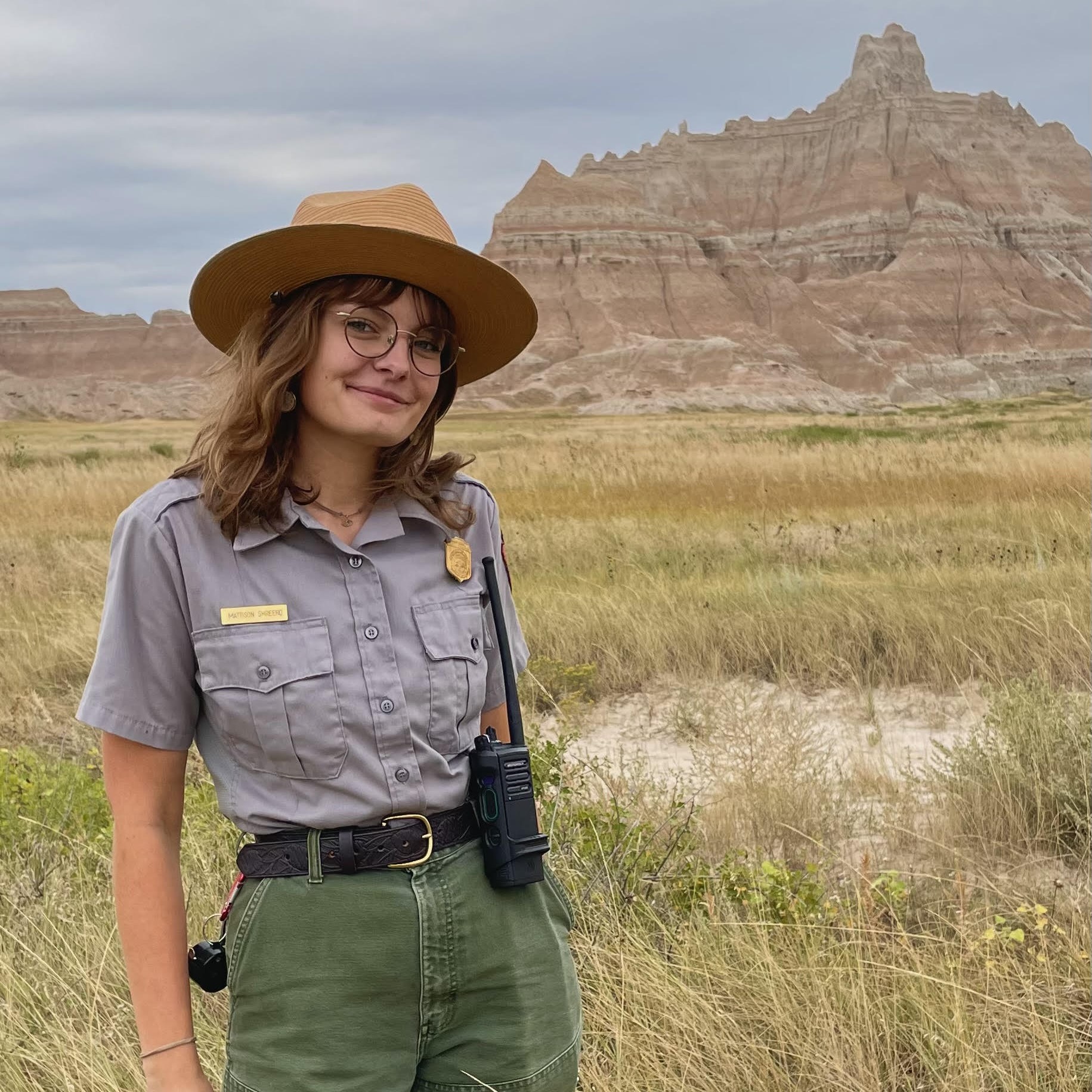

Today we’d like to introduce you to Mattison Shreero.
Hi Mattison, we’d love for you to start by introducing yourself.
Hi, my name is Mattison, and I’m a paleontologist, geologist, artist, and science communicator. I grew up in North Carolina, and I’ve actually wanted to be a paleontologist and geologist since I was a little kid. To pursue this dream, I attended Carleton College in Minnesota where I double majored in geology and studio art. Since then, I’ve primarily worked as a park ranger for the US Forest Service at the National Grasslands Visitor Center and for the National Park Service at Badlands National Park.
I love doing this sort of work—I get to spend my days teaching people about Earth science, exploring and looking for fossils, helping with paleontology in the park, and doing fossil preparation. This summer, however, I’ll be stepping away from the National Park Service to work for the Sternberg Science Camps (incredible paleontology summer camps for middle and high schoolers!) as a teaching assistant and instructor.
Outside of work and research, a big goal of mine is making science fun and accessible for everyone by doing science communication on social media with my partner in crime and life, Max Scott. As Earth scientists and educators, we want to help facilitate a society-wide understanding of the basics of Earth history in the hope that this will inspire a sense of loyalty to the planet and drive people towards bettering the environment and saving our planet.
Want to join us and support our mission? You can find us at @GeoSplore and @NotoriousNaturalistMax on Instagram!
Can you talk to us a bit about the challenges and lessons you’ve learned along the way. Looking back would you say it’s been easy or smooth in retrospect?
The road, of course, is never completely smooth. I’ve had my fair share of struggles along the way, and I’m still traveling down my road; the journey is nowhere near over! One of the biggest struggles I’ve faced recently though is staying motivated, resisting feeling overwhelmed and paralyzed, and trying to figure out the best course of action I can take to keep fighting for the future of our country and our planet.
Now more than ever science, education, and nature are under attack. The Trump administration is trying to take away our public lands, slash funding to science and education, demolish existing environmental protections, take away basic human rights, and so much more. I could go on, but I’m sure many of you are as inundated in the news as I am. All in all, it’s appalling to see such un-patriotic acts from those who claim to be the ultimate “patriots”, and it’s frightening that much of the general public does not see that we are on a path to a fascism, no question. We must learn lessons from history, and act accordingly by fighting for what is actually beneficial for the people, the ecosystems, and the future of this country. The America I know would say that preserving the unparalleled beauty of the American landscape is patriotic. That fighting for freedom for everyone is patriotic. That innovation and science and access to education are what makes this country actually great.
I struggle to keep hope that what I am doing matters, that what I am doing can help inspire change. But what keeps me motivated and pushing forward is seeing others do the same. If you find yourself feeling like I am, I urge you to seek out spaces–whether they’re in person, on social media, or wherever–in which you can see other people fighting back. It’s inspiring, it allows you to build connections, and it gives you a great starting point to resist and rebel. If you’re overwhelmed, find these spaces and start small. Learn from what others are doing. Seek out reliable news source, share stories, add your voice to the ever-growing voice of dissent. Individually, we may be small, but together? Together our impact is vast.
As we’ve all experienced in life, the road is rarely smooth, and there will always be struggles, but does that mean we should give up? No.
We stay strong. We keep fighting. We protect our planet’s future.
As you know, we’re big fans of you and your work. For our readers who might not be as familiar what can you tell them about what you do?
Working in and around Badlands National Park has allowed me the opportunity to dive into, obsess over, and do research on the fossils of the area. That means that, right now, I specialize in extinct North American animals from about 30 million years after the dinosaurs went extinct and about 30 million years before the ice age and us today. One of the things I’m most proud of is the publication of my first scientific paper in which my co-authors and I name a brand-new genus of absolutely adorable, tiny deer-like mammals called leptomerycids. Our little deer is named “Santuccimeryx elissae” after our friend and colleague Vincent Santucci, the Senior Paleontologist for the National Park Service who has been a huge supporter of paleontology at Badlands and all public lands. The paper received an overwhelmingly positive response in local and national news channels, and I will forever be so incredibly honored that so many people took an interest in our work (especially since it’s not about dinosaurs! They hog all the fame). If you want to learn more about our little deer, you can find our paper by searching “A Tiny Deer With Big Implications”.
But that’s not really “what I’m known for” (except in very specific, mammalian paleontology circles); I’m much more widely known for my work on social media as a science communicator under the name @GeoSplore. As I mentioned earlier, I’m on a mission to make science fun and accessible for everyone with my partner, Max Scott (@NotoriousNaturalistMax). As paleontologists and geologists, we want to bridge the growing gap between scientists and the general public and inspire people to be more environmentally-conscious. We’re doing this by creating all sorts of open-access educational resources, materials, and content for people who want to learn more about the planet we all share! I’d say, in general, we’re known for making fun and engaging content that synthesizes complex information into digestible, accessible bits and for bringing attention to less frequently discussed parts of science and how it happens.
Want to laugh and learn with us? Or help support our mission? Find us at @GeoSplore and @NotoriousNaturalistMax on Instagram!
Networking and finding a mentor can have such a positive impact on one’s life and career. Any advice?
One of the best pieces of advice I received when I was first starting out and nervous about networking was this–don’t think of it as networking; think of it as making new friends. It may sound silly, but it really does help take the pressure off and allows you to more confidently approach people. Plus, since you’re networking within your discipline, you’re always going to have something in common to talk about and bond over (for us paleontologists, a dinosaur nerd-out moment is a common experience while “networking” (aka making friends)). So I’d say, in general, meet as many people in your field as you can and become friends with them as many of them as you can! Attending conferences, festivals, or similar events in your field can be a great way to do this.
Building strong communities within your discipline is such a valuable tool and can, in my experience, lead to all sorts of connections and opportunities you never would’ve expected! And don’t forget, networking goes both ways–It’s a great feeling when you’re able to connect someone else with an opportunity, introduce them to someone new, or help them along their path. All in all, enthusiastically taking advantage of new opportunities, keeping an open mind, being confident, making sure to keep networking reciprocal, and approaching it as making new friends are all avenues that have worked well for me. I hope you find the same to be true!
In terms of finding a mentor, sometimes it’s less a matter of you finding a mentor and more a matter of a mentor finding (or, as I put it, “adopting”) you. I also prefer to take the approach of having multiple mentors that can aid you and provide advice on different things because I think approaching anything with multiple points of view or multiple lines of evidence usually delivers better results. Finding mentors can happen in unexpected ways. Professional networking, of course, is the typical way, but mentors can also be professors from college, teachers from high school, supervisors or coworkers at work, friends of friends, or even someone entirely outside of your discipline (life mentors are a thing too!). Whatever the setting may be, when you do find those certain people in your life who are full of wisdom, experience, and advice (and if you’re lucky enough that they “adopt” you), make sure to hold on to them, learn what you can from them, and thank them endlessly for their help.
Contact Info:
- Instagram: https://www.instagram.com/geosplore
- Youtube: https://www.youtube.com/@GeoSplore
- Other: https://www.researchgate.net/profile/Mattison-Shreero
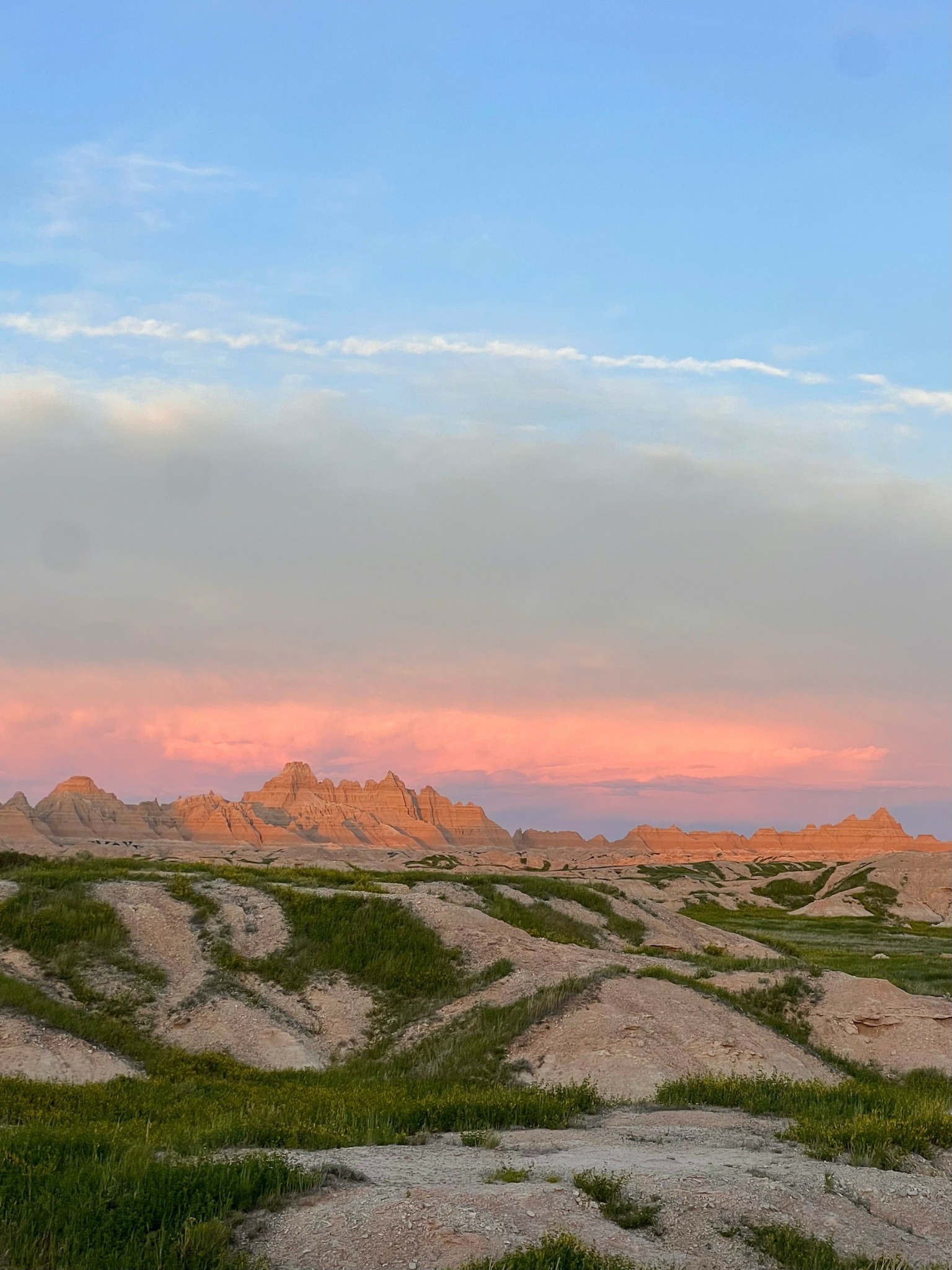
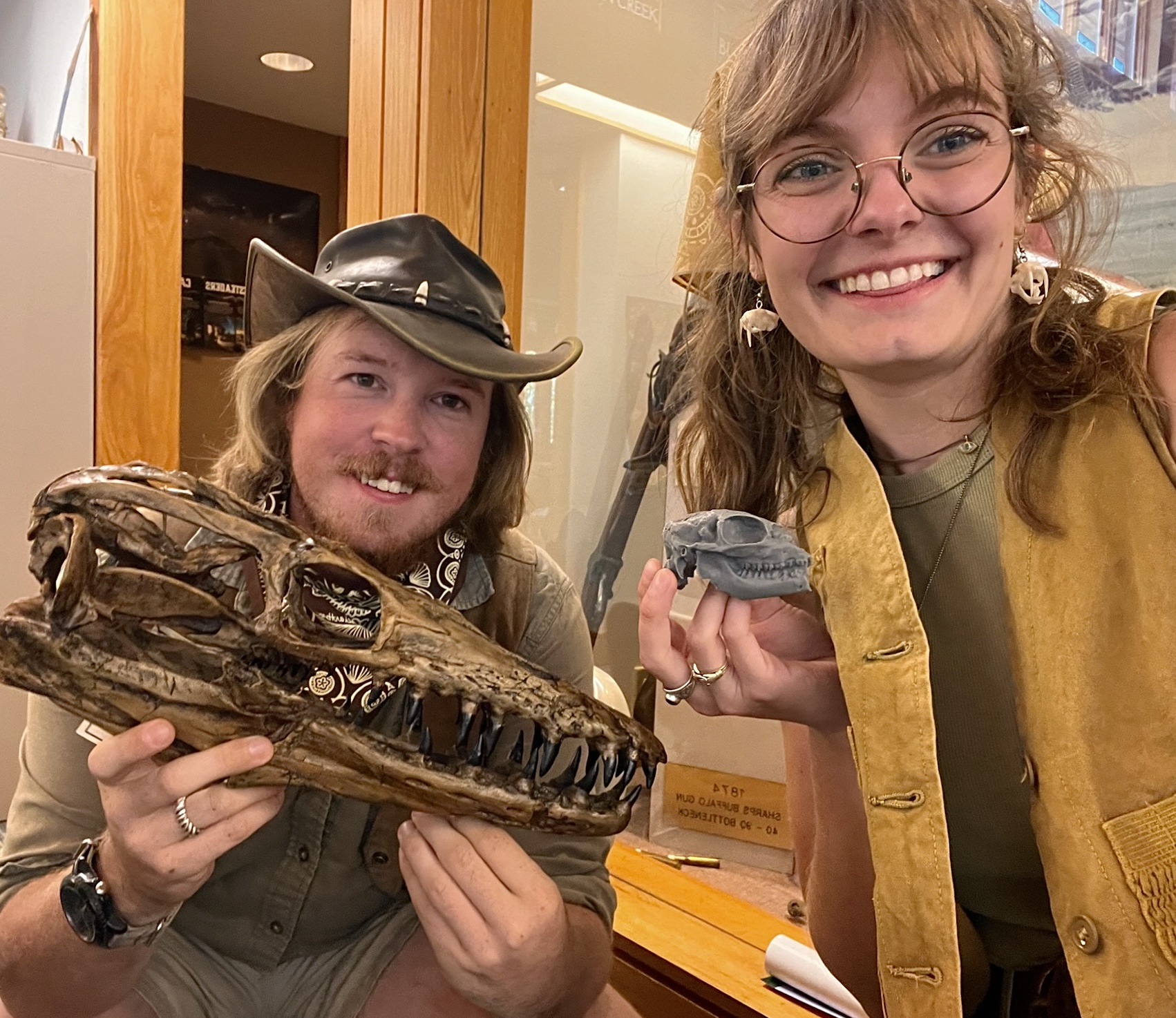
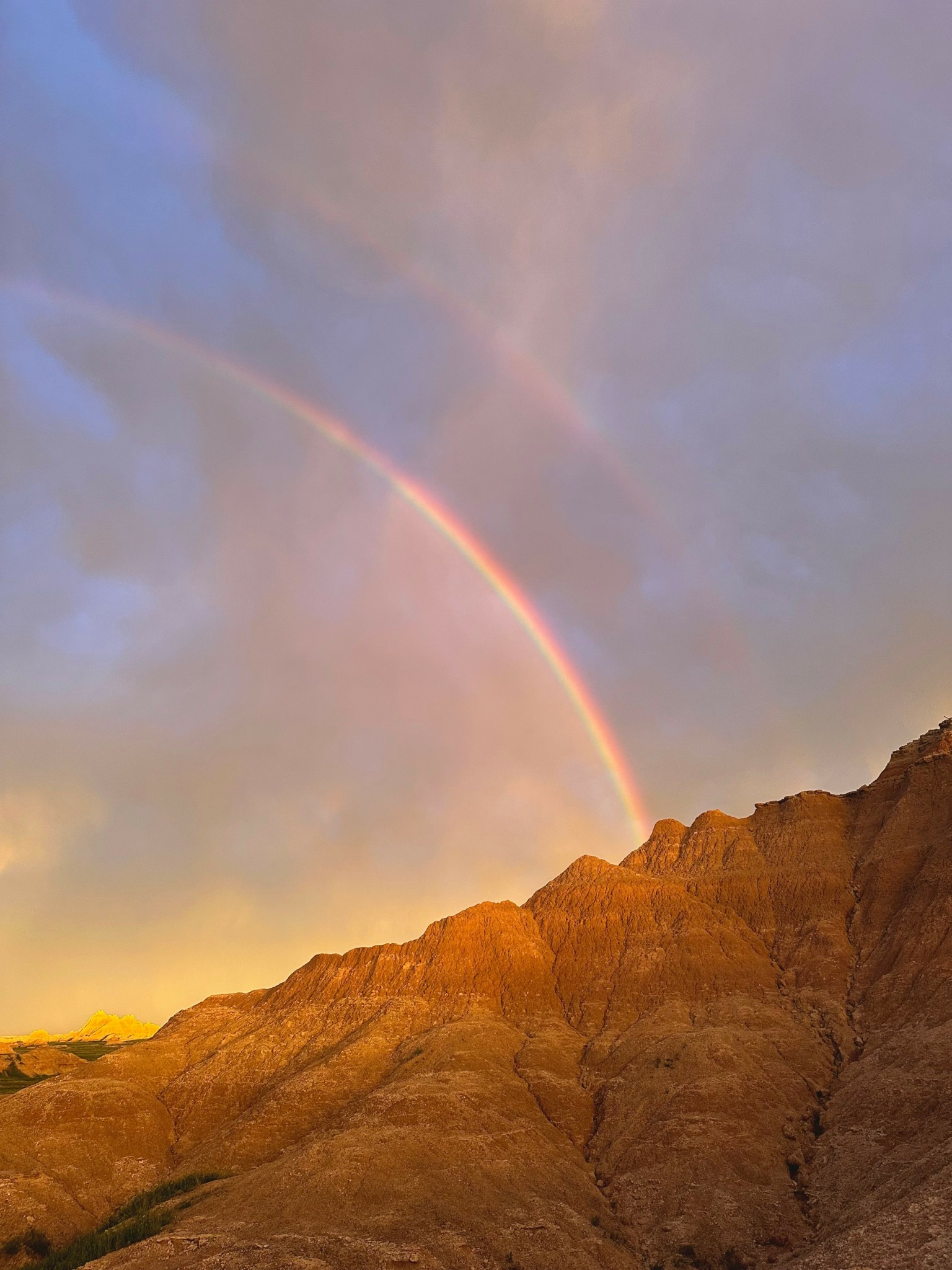
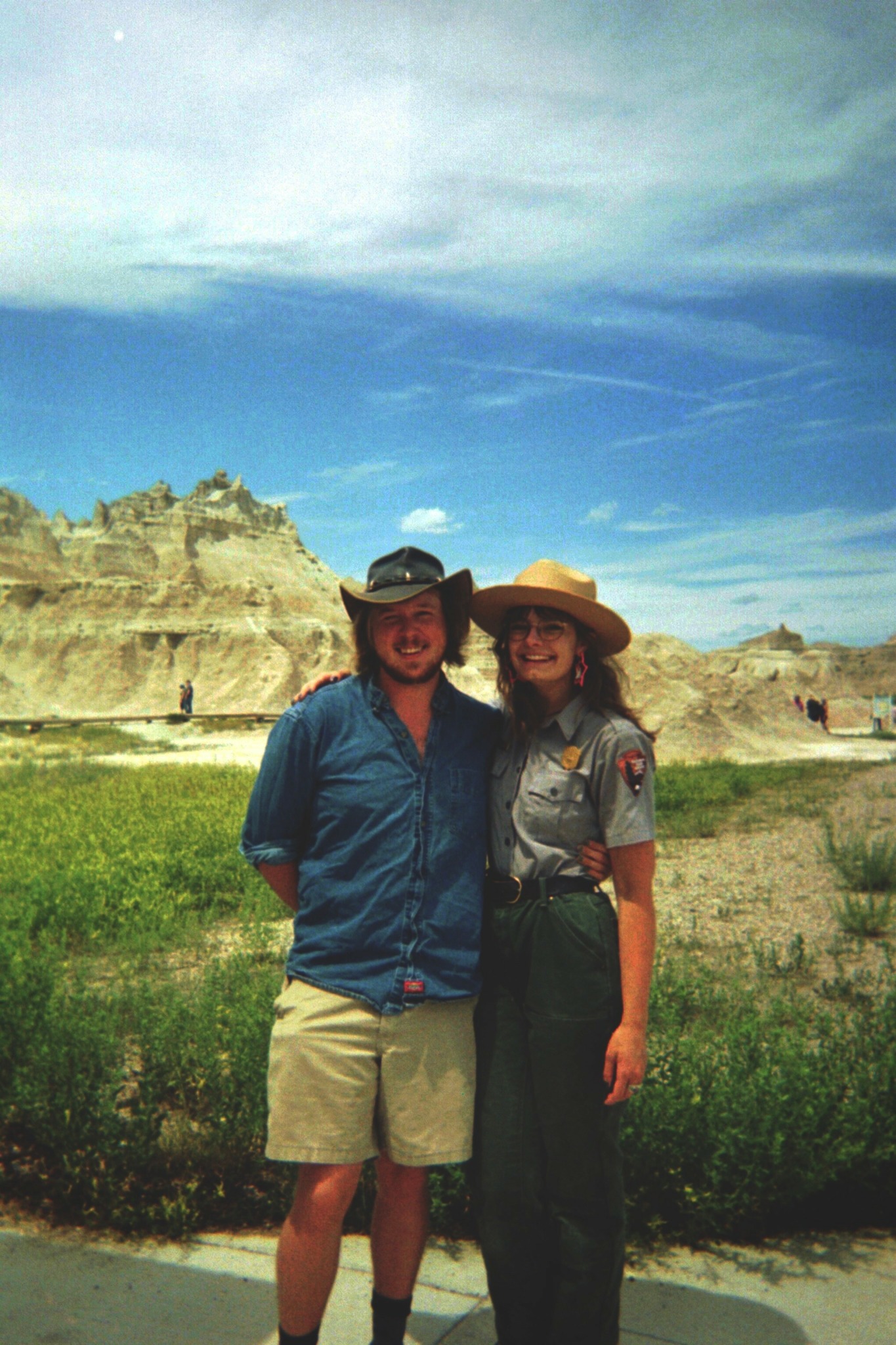
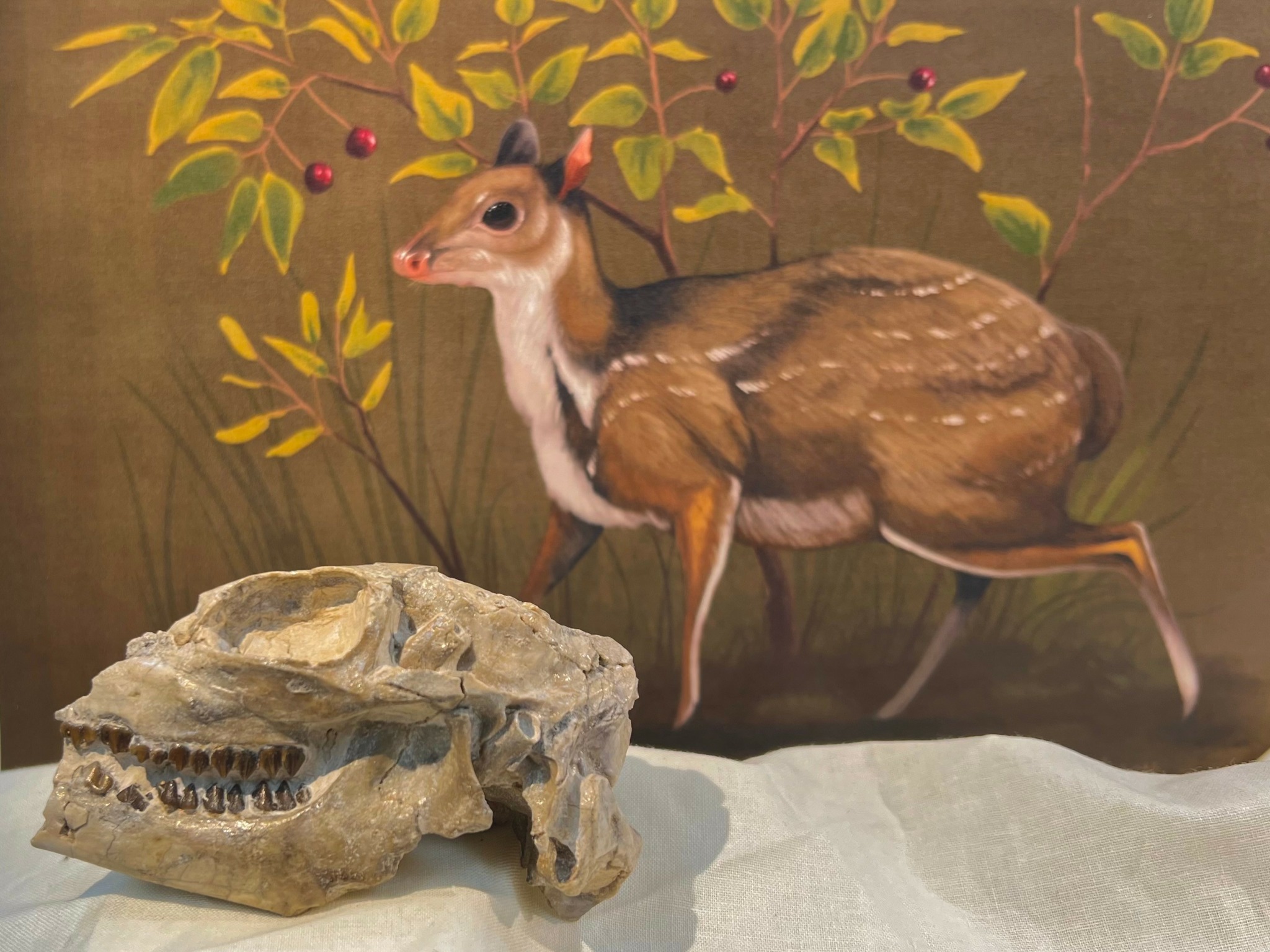
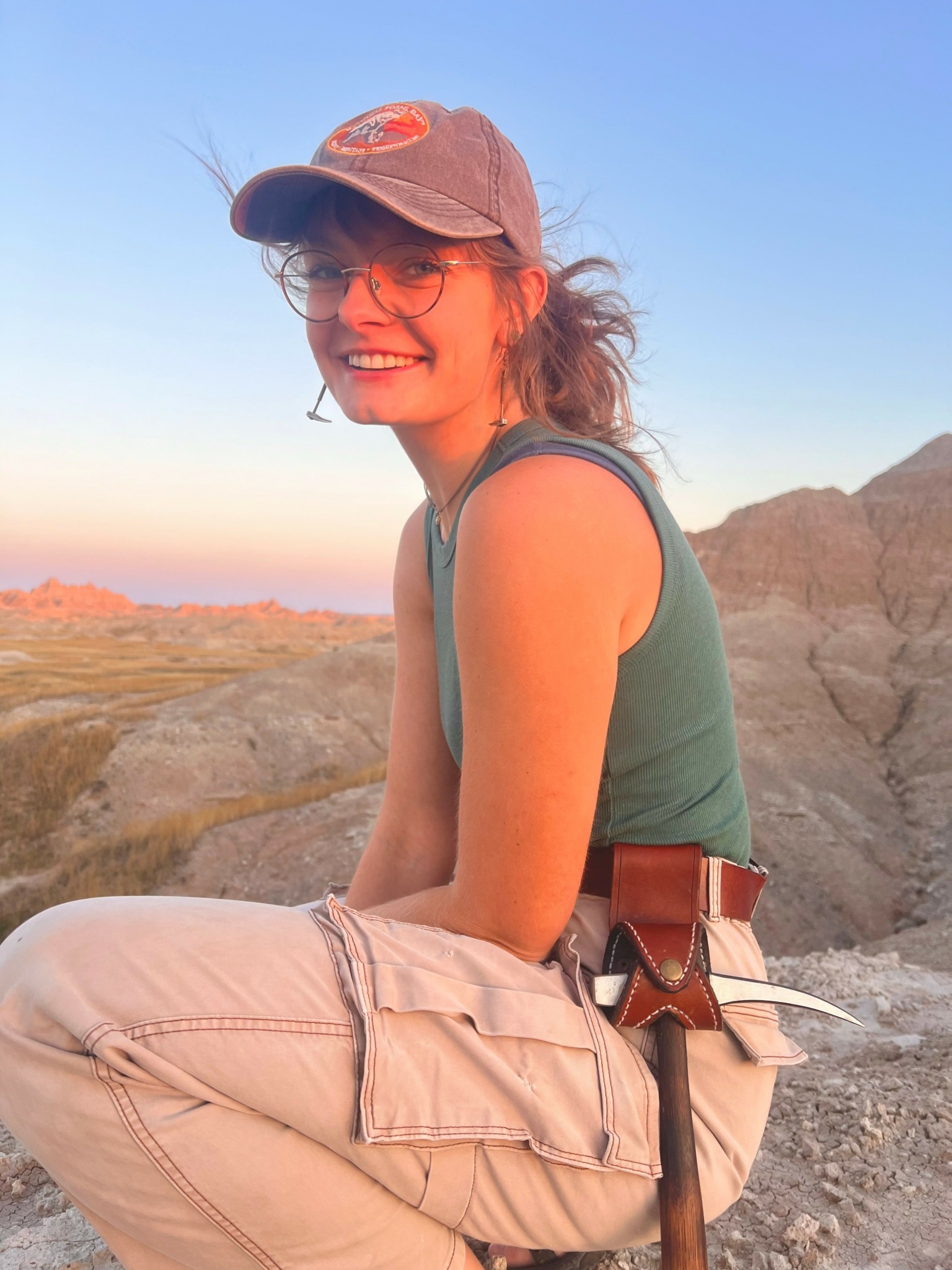
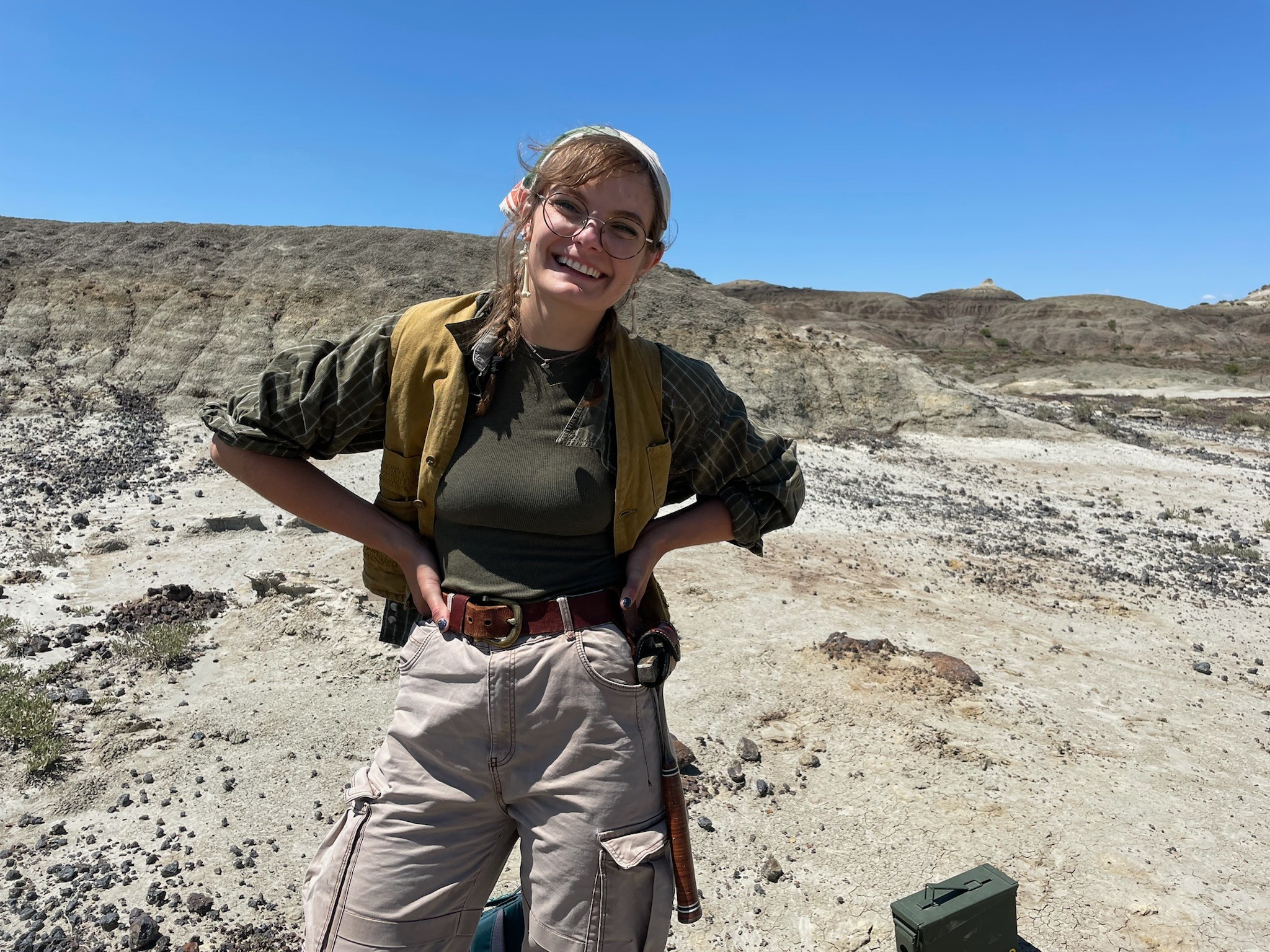
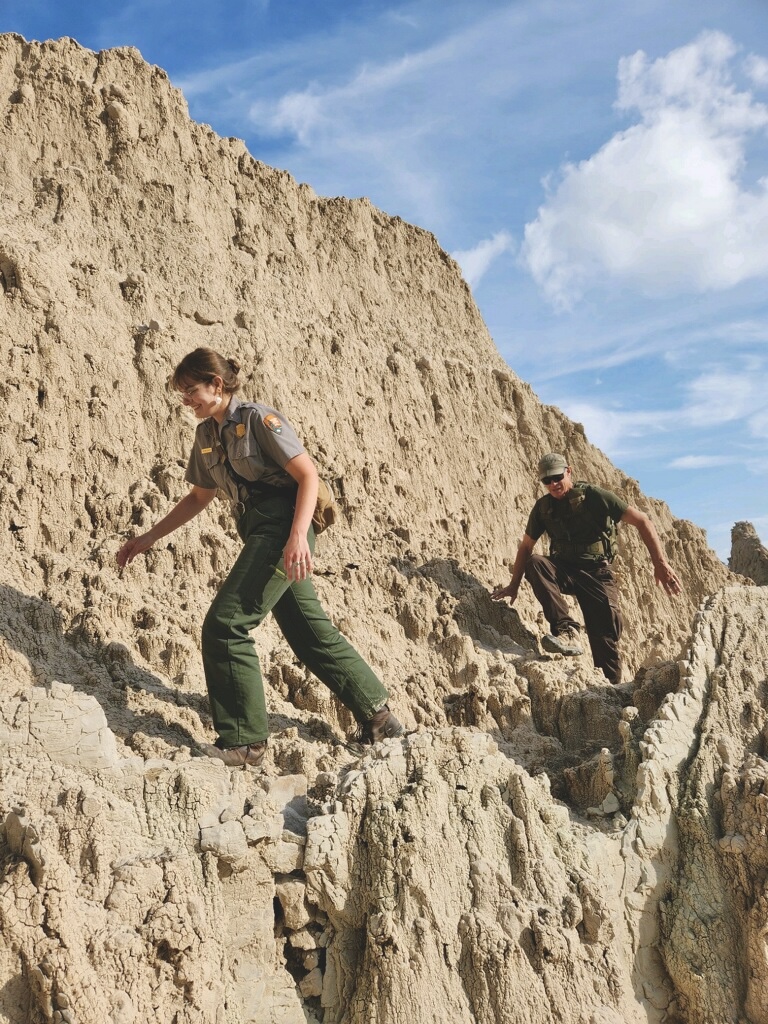
Image Credits
Badlands Sunset 1.jpg – Photo by Mattison Shreero
Matt and Max Doing SciComm.jpg – Photo by Mattison Shreero
Badlands Rainbow.jpg – Photo by Mattison Shreero
Matt and Max in the Badlands.jpg – Photo by Palina Buchanan
Santuccimeryx Skull and Paleoart.jpg – Photo by Mattison Shreero, Paleoart (in background) by Benji Paysnoe
Sunset Rock Hammer.jpg – Photo by Maximilian Scott
Excavating.jpg – Photo by Maximilian Scott
Exploring.jpg – Photo by Nickie Wheeler