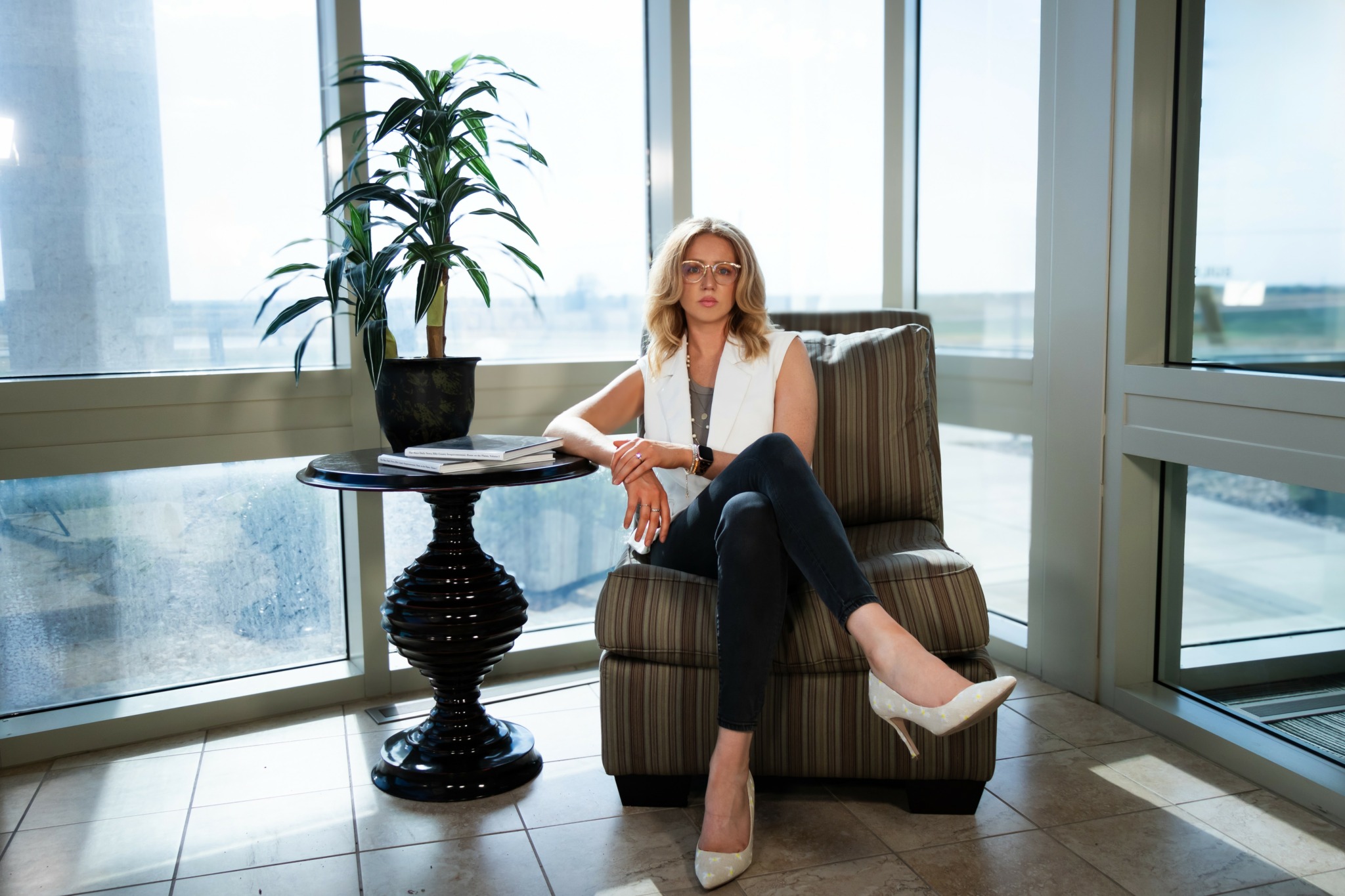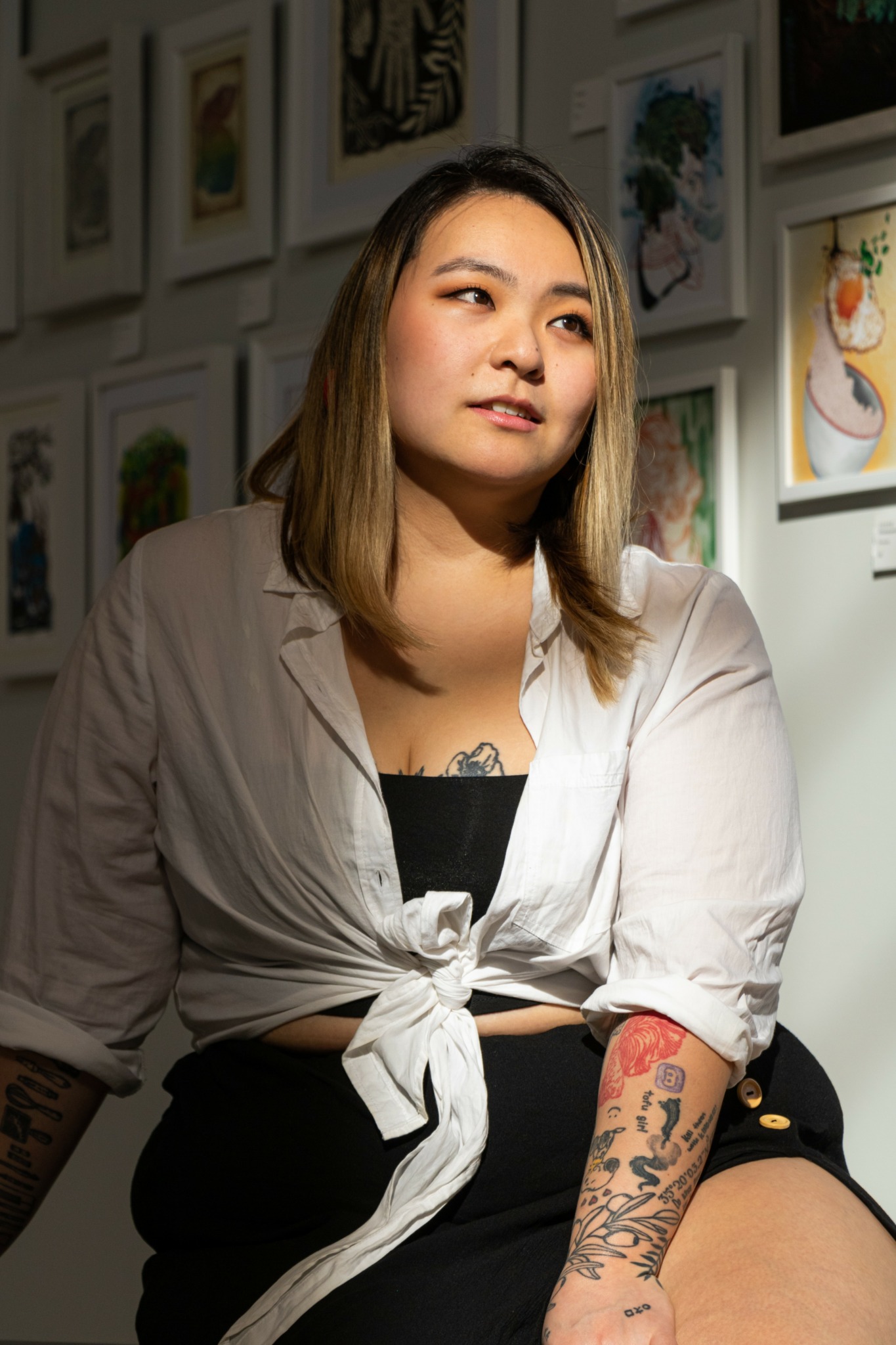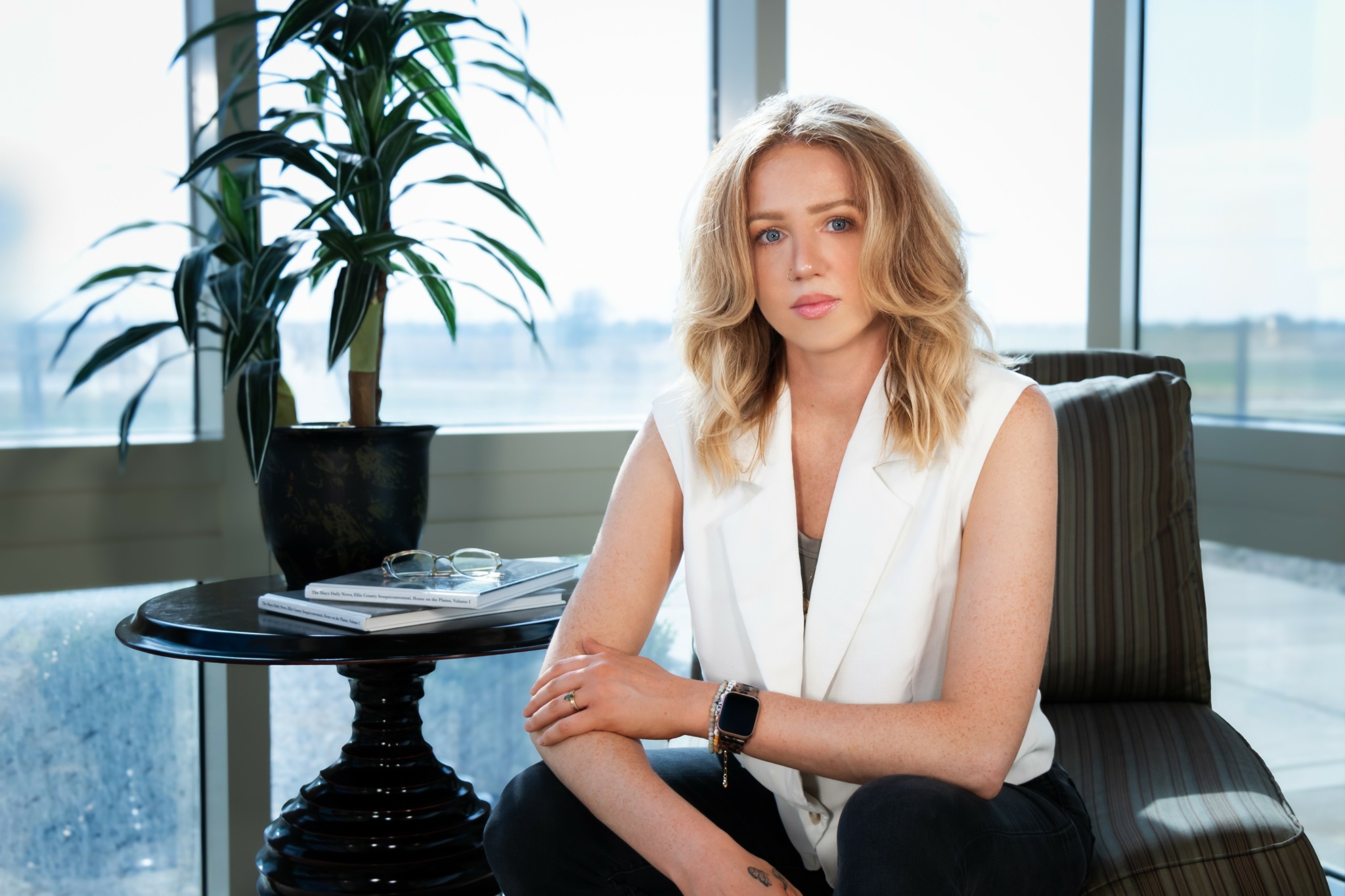

Today we’d like to introduce you to MaKinlie McRae.
Hi MaKinlie, can you start by introducing yourself? We’d love to learn more about how you got to where you are today?
It’s difficult to pinpoint the exact moment my creative practice formed. Reflecting on my childhood, I filter through various phases of creative expression. Whether piano or sewing lessons, singing, writing poetry, dance classes, experimenting with fashion, and eventually photography and design; creativity and imagination have been part of who I am for as long as I can remember. I’ve always needed an outlet. I’ve heard that many artists struggle to find their place–their niche, however, that wasn’t my experience. I took my first graphic design class in 2014 as a sophomore in high school, and I suppose that would be the moment that everything changed.
After a few lessons and successful projects, I thought, “Oh, now this…this is what we are meant to do.” And by we, I mean my present self, and the little girl who was told that artists will never make money and to find a different career. For the girl who was told she was “majoring in unemployment.” We might just make it after all. Taking that class didn’t just open up a window of opportunity, it shattered the building. The possibility of a career path where I could wield my creativity and make a living deconstructed everything I thought I knew about being an artist. I found my purpose at sixteen, and although teenagers aren’t notorious for having the best judgment, I haven’t questioned it once since.
Once I graduated high school in 2016, I continued to pursue graphic design at Fort Hays State University (FHSU) in Hays, Kansas, and graduated with a Bachelor’s in Fine Art in 2019. The colleagues and mentors I met during this time became family and played a considerable role in shaping who I am today. I am thankful for the opportunity to learn from each of them, in and outside the classroom. I was raised in rural Kansas where there is more diversity in cattle and crops than people. Listening to their life experiences outside of my frame of reference expanded my perspective in ways I desperately needed; at this point, I was addicted to learning and broadening my knowledge and perception of the world even further. Although I met them as an adult, we grew up together. We learned how to be adults together. We traveled all over the US and parts of Europe, touring studios and visiting art historical monuments we learned about during our studies together. They are just as much part of this journey as I am: the good, the bad, and the ugly.
Towards the end of my Bachelor’s degree, a few of us decided we weren’t quite ready to part ways. We each applied and were accepted into the FHSU Graduate School for Graphic Design and studied alongside each other for another year until I decided to step off the path I was once so sure of. A plot twist no one saw coming.
My second semester of graduate school had barely begun when our world was turned upside down by the COVID-19 outbreak and the police brutality injustice against George Floyd inciting the #BlackLivesMatter movement shortly after. This was a time of enlightenment and awakening for many people, especially myself. The world was burning around us and putting profit over people while I was stressing over designing packaging for an overpriced product that probably wasn’t worth the hard-earned money people spent on it. Was it imposter syndrome? Burnout? Resentment? The realization that we are living in a late-stage capitalistic hellscape and the industry that I fought so hard to work in is perpetuating the problem? Maybe a combination of it all. I felt like a joke—more of a machine than an artist. Most, if not all creative freedom was stripped away and I became a means of production. My value was assessed by how much and how fast I could produce for other people, not by my concepts or goals of using art to help others or create awareness. I gave every ounce of passion I had away—there was nothing left for me. And maybe it’s my fault that I let them take it. Take, take, take, depleting any available resources left. I was angry. Oh, I was SO angry, and I lost my outlet. For the first time, I had nowhere for those overwhelming emotions to go. I was ready to give up and walk away altogether. I wanted nothing more than the peace and freedom that came with quitting. I was mentally, physically, and emotionally exhausted, but suddenly everything changed.
I confronted two of my mentors with why I thought my time in graduate school had ended, and those conversations completely changed the course of my career. Deep down, I knew I was never leaving—I’m not the kind of person who can leave something unfinished. They pointed out that I knew what kind of work I didn’t want to do and helped me pivot to a new major with more freedom and a path where I could still utilize my graphic design skillset. I still loved design, it was the subject matter I felt no connection to.
One of the professors I confided in was my photography professor, Nicholas Simko. I started taking photography courses with Nick in 2019 and once I started I couldn’t stop. He cultivated a safe space of experimentation within his classroom, and here is where I found my outlet again. I safely tucked my design skills in my back pocket as I entered this new world of visual expression through the major of Intermedia. With this major, I was able to utilize graphic design, digital and darkroom photography, performance art, and social practice art, which meant there was essentially no restriction to my concepts. I could use whatever materials necessary to communicate my ideas. I could finally express myself artistically outside the lens of consumerism and I felt like an artist again. For those of you who believe in angel numbers, his office was 222: right place, right time. Although our time together was short, there is not a single doubt in my mind that our paths were supposed to cross. Having Nick as a mentor was one of the greatest honors of my life. I’m not sure I will ever be able to thank him for how he changed everything in the best way, but I hope he knows the impact his teaching had on my practice and general outlook on life. I still think of him often. Nick taught at FHSU from 2019 until 2022 when he took another teaching position in California.
I lost my mentor just a few months shy of graduation, but thankfully the second professor I confided in, Dr. Amy Schmierbach was there to hold everything together and take over until I walked the stage a final time. I studied under Amy in drawing and social practice art—I took my very first class with her during undergrad, and she saw me through to the very end when I graduated with a Master of Fine Art in Intermedia in 2022. Amy’s classes mulled the anger that once coursed through every fiber of my being. We worked very closely with communities of folks with disabilities, and you simply can’t be angry around their gentle souls. Their inner joy radiates through everyone they meet. My work with Amy was nothing short of transformative. Those two kept me going when I thought I couldn’t take anymore and truly exemplify what it means to be an educator. They believed in me when no one else did—you can’t just forget people like that.
Since graduating in 2022, I held my Graduate Thesis Exhibition titled Good Grief, started working professionally as a graphic designer and photographer for a Kansas-based tech company with a heavy focus on rural development and community involvement, and continued expanding my personal artistic practice. Getting my degree was nothing compared to finding a company to work for that aligned with my values without compromising any of my beliefs. I refuse to sell my soul and participate in encouraging people to over-consume or spend their money recklessly to appease a trending item that will be irrelevant in a month. I will only work commercially for sustainable companies that hold ethical practice as an utmost priority, and I truly believe I found that with my current company. I love my job, my coworkers, and the positive impact we make across the state. I have to believe in what I’m doing, and this is a company that believes in its mission and embodies it every day.
In my personal practice, I’ve been working with two local community foundations to design a brand identity for one and refresh the other’s existing brand through web design and photography. I started a small online business called Then and Again Earrings with the goal of sustainable fashion in mind where I collect second-hand jewelry from thrift stores or garage sales, deconstruct the pieces, and use the beads to create new sets of earrings. The other project I’m working on is the 43 Tiles Campaign which is centered around sexual assault survivor awareness. It’s an extremely sensitive and collaborative project where I meet with survivors of sexual assault to provide a platform for them to share their experiences. Each survivor makes a voice recording sharing their story which is then paired with a visual representation either through photo or video. The goal of this project is that viewers have no choice but to see AND hear their stories and for the survivor to take control back over the narrative which will hopefully eliminate victim-blaming mentalities. No one asks to be raped. Each of these projects is very much a work in progress, but you have to start somewhere. We are far from the finish line, but each day we are a little closer than we were before.
More recently, I married my husband, Draven McRae, in April of 2024 and we couldn’t be happier. We have been together since 2020 and he is my best friend and biggest supporter. We live a simple life in Scott City, Kansas where I hope to one day own a gallery or public area for art to hold classes and workshops to bring a wider variety of art and conversation to rural spaces. When I was younger, I considered moving away to a big city, and I’m sure that would come paired with an abundance of opportunity, but as I grew older, I realized I’d been right where I was supposed to be all along. My roots are here and the kind of work I’m interested in is extremely collaborative. If I moved away I would have to start from scratch making all new connections which could deter progress for years. My family is here too—I couldn’t imagine leaving them behind. After losing my father to suicide in 2013, we were forced to accept the reality that tomorrow is never promised. Hug your loved ones tight—you don’t get a warning when it’s the last one. As I mentioned before, rural Kansas is severely lacking in diversity and if I have to stick around to bring a new perspective and show others that you can be different in a small town then that’s what I’ll do. It lacks diversity because anyone who dares to be different is run out of town. Inclusion has to start somewhere, by changing one mind at a time.
Would you say it’s been a smooth road, and if not what are some of the biggest challenges you’ve faced along the way?
If it’s worth it, it’s never easy; and if it’s easy it’s rarely worth it. This journey has been far from a walk in the park, more like a terrifying sprint for your life through a dimly lit sketchy back alley. It’s challenged me in every sense of the word—but damn it, it was worth it. Every ounce of blood, sweat, and tears (so many tears) built the unbreakable foundation on which I stand today. While the struggle is an integral aspect to this story, it’s also important to acknowledge the privileges I benefit from.
I am by no means diminishing the trauma I’ve endured, but as a white woman, I have been afforded certain privileges simply because of the skin I was born in. It’s not right, but it’s reality and I won’t pretend it doesn’t happen. This is part of the reason I have worked so hard to build a platform—so I can share my privilege and hand the microphone over to amplify deserving voices with messages that need to be heard. I’m no white savior, just an ally with empathy trying to do her part to make the world a better place for everyone. It’s going to take all of us together to change society. The second privilege I benefit from is coming from a financially stable home. Although I have been financially independent since my father passed, we lived a very comfortable life while he was alive. He was the breadwinner of the family, so things changed drastically after he was gone. Our mother worked extremely hard to provide the necessities, but any “wants” were our responsibility. She had enough on her plate as it was, and it’s a privilege to be able to “want” in the first place. We were taken care of and loved, which was the biggest privilege of all.
As I previously mentioned, we lost my father to suicide in 2013, which turned our world upside down. My father struggled with alcoholism all of his adult life and lost his battle to addiction and depression at the age of 45. He wasn’t a mean drunk, he was a sad one. As a kid, I just saw my dad, but when I think back to how he was from an adult perspective, he reminds me a lot of Eeyore from Winnie-the-Pooh. Everyone said there were no signs, but the sadness in his eyes was quite literally staring everyone in the face for decades. How did we miss it? Why was his pain invisible to everyone until after he was gone? My father’s life was far from easy too. By the time I was able to remember people, both of his parents had passed away. I have pictures in my baby book of his dad, Grandpa Dick, holding me, but I don’t remember meeting him. Their family struggled financially growing up which put an immense amount of stress on his parents and siblings. I’m not sure if he ever got to be a kid, but there’s no asking him now. Every answer to my many questions and hope for closure faded away with the smoke from the gun that took his life. No one understood me like my dad did. He was a kind man, free of judgment; he just wanted to make people laugh. And how gut-wrenching is that? Someone so numb and broken inside who only wanted to bring a smile to other’s faces. I distinctly remember a time in therapy when my therapist asked “Do you blame yourself for his death?” and without even thinking about a response the words “absolutely not” came from my mouth. I followed with, “The one thing I never doubted was how much he loved us. I know I was loved. His pain just hurt more than the love helped.”
I turned 27 this year, and soon I will be at a point in my life where he has been gone for as long as I knew him. He should have been there for all three of my graduations, to walk me down the aisle, and to meet my husband and future children. I was robbed of something that so many take for granted. When I turn 30 I will have had 15 years with him and 15 without. I used to be extremely angry at him for leaving us behind until I reached a low point with my own mental health where I was ready to leave everything behind too. The year 2019 was the closest I ever came to taking my own life. I used to feel guilty about that until I discovered survivors of suicide have a much higher chance of taking their lives as well because they have already seen proof that it’s possible. Many people think about it, less act on it. It’s a hard feeling to describe because you really don’t feel anything at all. The numbness becomes peaceful, and once you get a taste of peace after years of struggle it’s a pretty enticing offer. It’s difficult to focus on anything else. I felt connected to my father for the first time since he left because I finally got it—I no longer blamed him for leaving.
I didn’t think I could take another day of this reality, but I’m so glad I stayed. I called the support line for FHSU’s mental health services to talk with someone and started seeing a therapist shortly after. Of course, there are still hard days, but therapy changed everything for the better. Healing is an ugly and messy journey, but like I said before, if it’s easy it’s rarely worth it. Look at everything I would have missed out on, what a shame that would have been. I channeled all of my emotions into my artwork, essentially forming a practice of art therapy. The work shows the processing of emotions and the stages of grief in real-time. Not just the grief from losing my father, but also from losing control of my body when I was raped at sixteen.
I am particularly passionate about The 43 Tiles Campaign due to my experience surviving sexual assault. The name for the campaign derives from the scene of the crime. I stared at the ceiling, counting the tiles over and over to distract myself from some of the worst minutes of my life. One of the first people I told asked me what I did to deserve it and I never mentioned it again for five years. I started to process what happened in 2019, which heavily contributed to my suicidal ideations. No one wants to be raped. No one wants to have no control over their body. No one wants to be slapped and punched to the point you fear for your life, You submit if that means you survive. The current political landscape, devastatingly unfortunate election results, and incoming Trump administration is even more motivation for this project; protecting healthcare for those with uteruses, especially access to abortion services is more important now than ever. No person should ever be forced to carry their rapist’s child. Everyone should have the ability to make that decision for themselves and their body. I hope this project will bridge the gap for viewers who still blame the survivor. Sexual assault does not discriminate. It can happen to anyone, anywhere, anytime regardless of age, gender, sexual orientation, geography, and social class.
The development for The 43 Tiles Campaign began while in graduate school at FHSU, but COVID-19 hit shortly after, which put everything on pause until it was ethical to meet with people again. By the time we were allowed back on campus, I had already decided to switch my major and leave my previous program behind. I would be lying if I said the experience of switching majors was sunshine and rainbows, but life rarely is. Higher education is designed to challenge the student, but I do feel certain people along the way actively made this process more difficult by throwing out unnecessary obstacles and creating a very unsettling and anxiety-ridden learning environment. However, I truly only have one thing to say to them: thank you.
Thank you for showing me how far I am willing to go to stand on my own. Thank you for showing me just how much I can take. Thank you for showing me the kind of people I will never work for again. Thank you for showing me what not to do as a leader and educator. Thank you for not believing I would make it. Although it is extremely disappointing to discover that people you once highly respected never deserved it in the first place, it also allowed an opportunity to make new relationships and expand my knowledge into areas I would have never been able to access before.
Through my time spent with Amy and Nick, I was able to study different communication methods that assist me in proving a point in a way that people will listen to, and I found a voice that didn’t have to be screaming to be heard. I now feel more confident than ever as a social justice advocate due to my time spent with Amy learning how to build community and the economic impact that can have. Knowing what I know now, I would still do it all again tomorrow and endure all the suffering to be where I am now—it was absolutely worth it in the end. I mean, I could definitely go without the whole dad dying thing, but it sure built some character.
There are always going to be obstacles in the road. It’s our duty as creatives to work around them—to forge a new path. One day you will look back at each bump in the road and they will only be a pebble. And you will be better for it. When you realize you are destined to climb mountains, the pebbles no longer trip you up. What I love the most about being an artist is the creative problem-solving. Tell me a problem and I’ll give you twenty-eight different solutions. I love the challenge of putting all the pieces together and finding a vision that best communicates an idea. It’s all about perspective and choice. You can choose to see something as an obstacle and sit around complaining about it, or you can see it as an opportunity and get to work.
Thanks – so what else should our readers know about your work and what you’re currently focused on?
As an Intermedia artist, I wouldn’t say I really have a specialty, unless diversity is considered so. I can be anything the client needs me to be—I’ve been described as a “creative unicorn.” I think that is what sets me apart from others. I can be a photographer, designer, creative director, copywriter, performance artist, videographer, or social practice artist. I love each one of them and wearing all the many different hats. If a client asks me to do something that I’ve never done before, I won’t sleep until I figure out how. Having a curious brain is a blessing and a curse. I love the knowledge from all of my research, but my brain is extremely impatient. When something sparks my interest, I can’t stop until I have an answer.
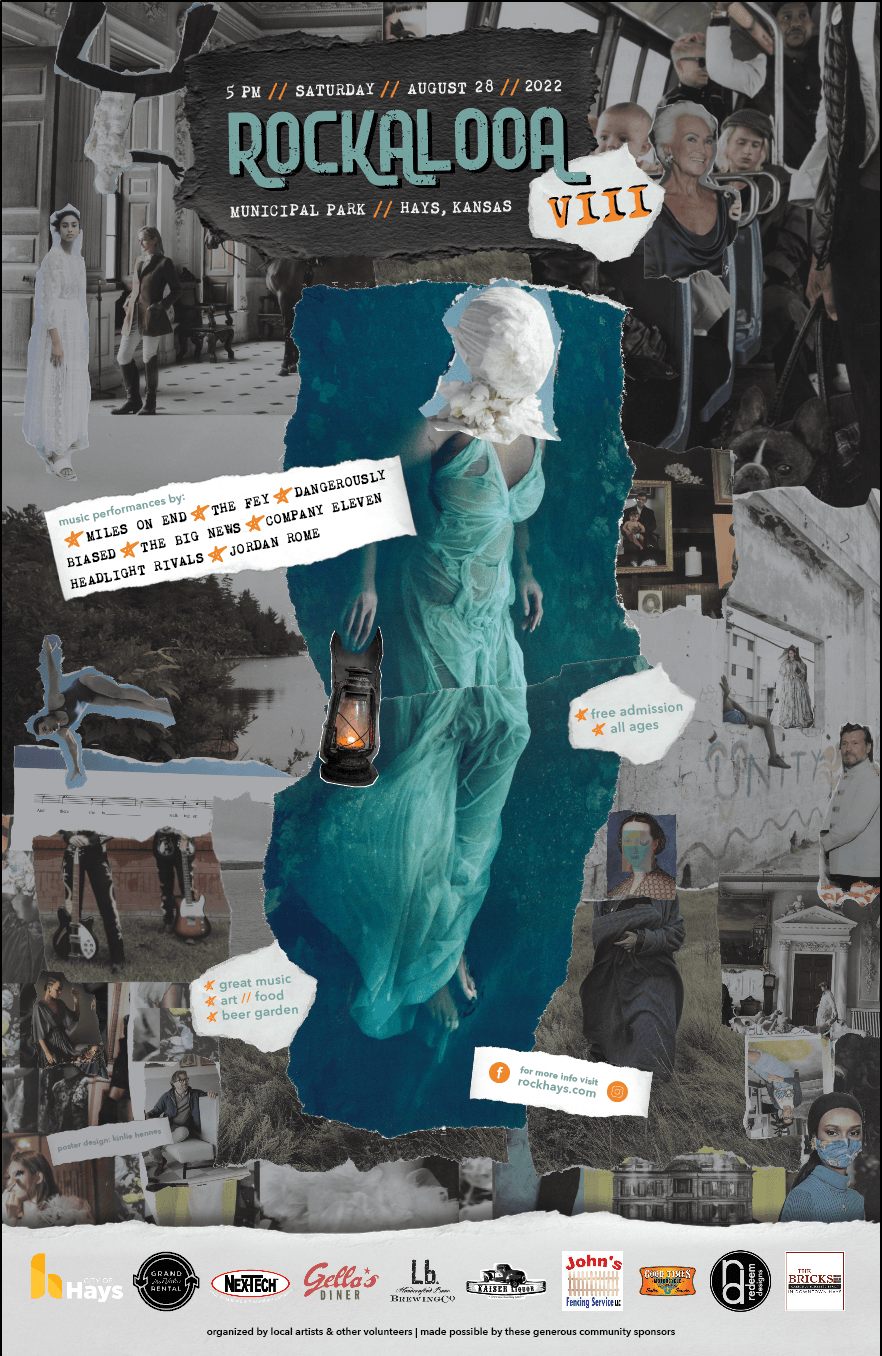
I would say I am most known for my design and photography, I do not advertise that I accept freelance projects, but fortunately, word of mouth has spread about my work and I always seem to have a new project or client to work with. I primarily focus on aiding small businesses that can’t afford to hire a full marketing team. In terms of photography, I am very selective of who I let step in front of my camera. For the most part, my artwork is centered around telling my life story, as well as sharing inspiring stories from influential people in my life.
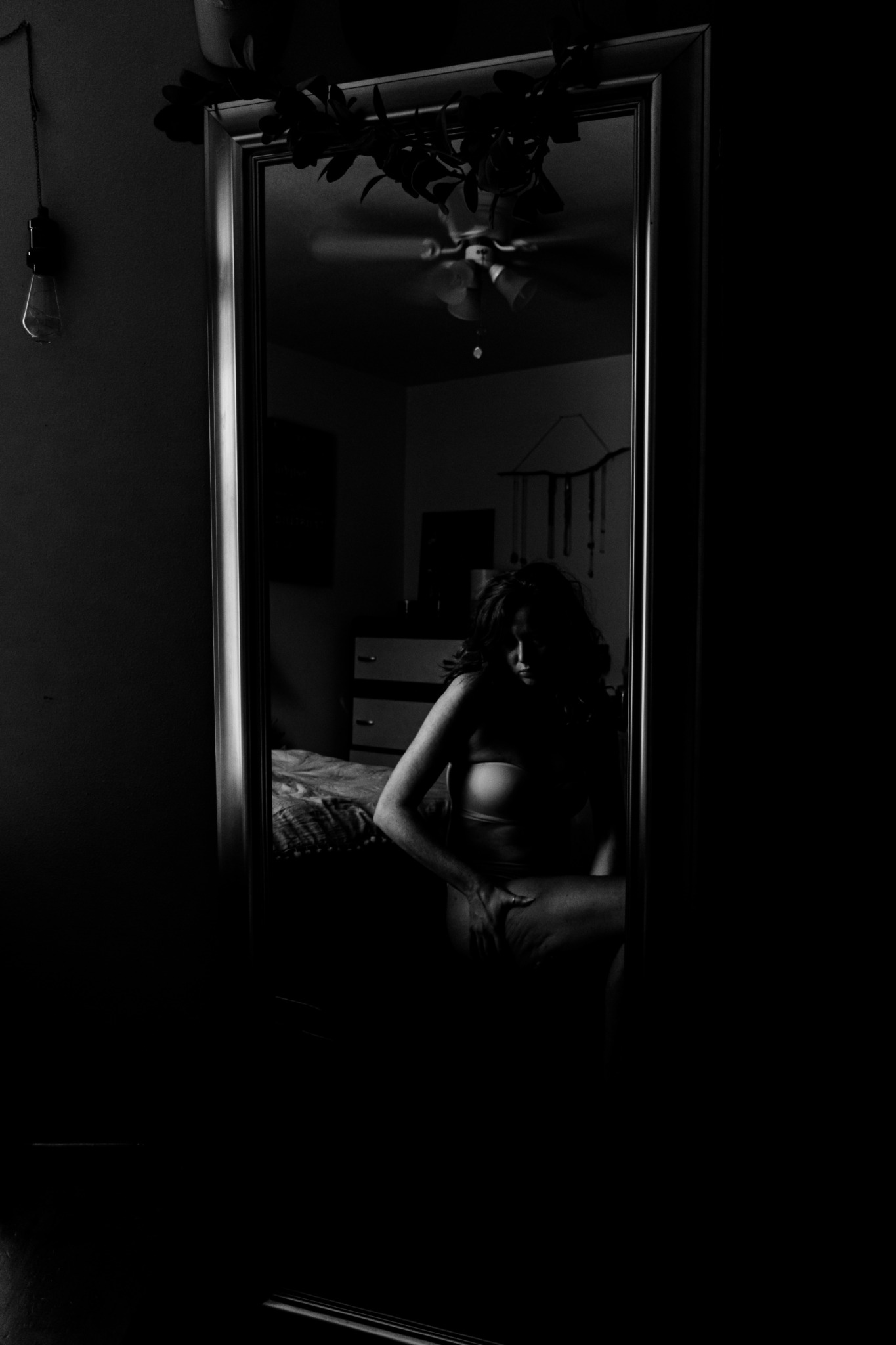
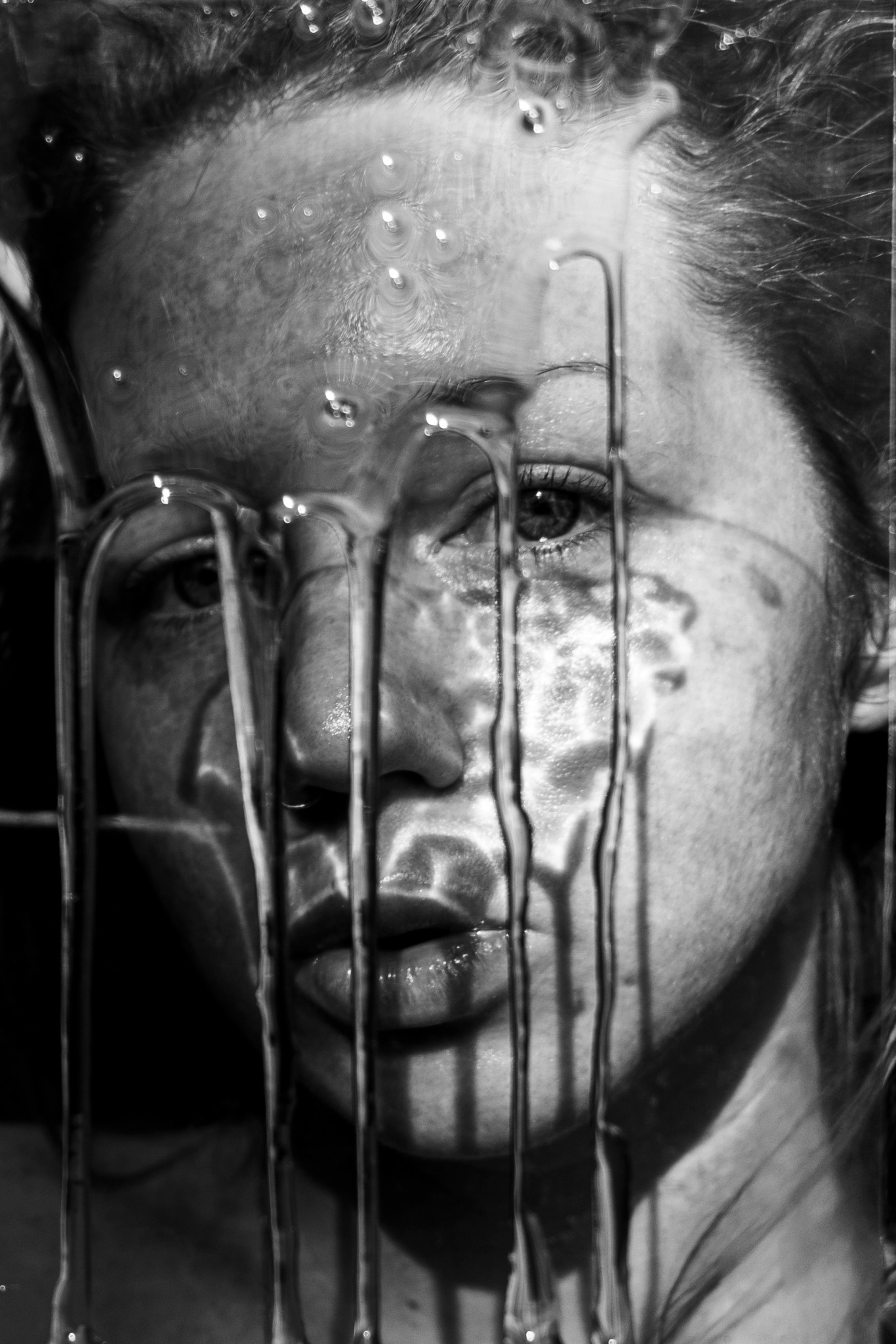
Although I am most known for my design and photography, I am most proud of my performance art. This is the most recent expansion of my practice, and it required a tremendous amount of vulnerability to bring the video performances to life. In my first performance titled “Dysmorphic,” I explore the challenges faced with eating disorders and feeling like a stranger in your own skin. I sit in front of a mirror while dissecting and investigating each part of my body. The following text was paired with the work: “I wish I could say this was a one-time performance, but this is simply the first time I have performed for you—one time a day would be far more accurate. Fleeting moments of my existence spent examining, dissecting, disgusted, exhausted, comparing, staring, these twisted perceptions chase me around this house. I’m tired. I created this work to try and allow you in, but you’ll never break the barrier. My home is imprisoned by .28 inches of skull and bone—trapped by darkness that demands deception. Only I can see the girl in the mirror.” The intention behind this work is to share with the audience only a few minutes of the toxic thought process of someone who struggles with body dysmorphia and eating disorders. The dramatic lighting and high contrast range of tones symbolize the inconsistency of experiencing extreme highs and lows and my fight for control.
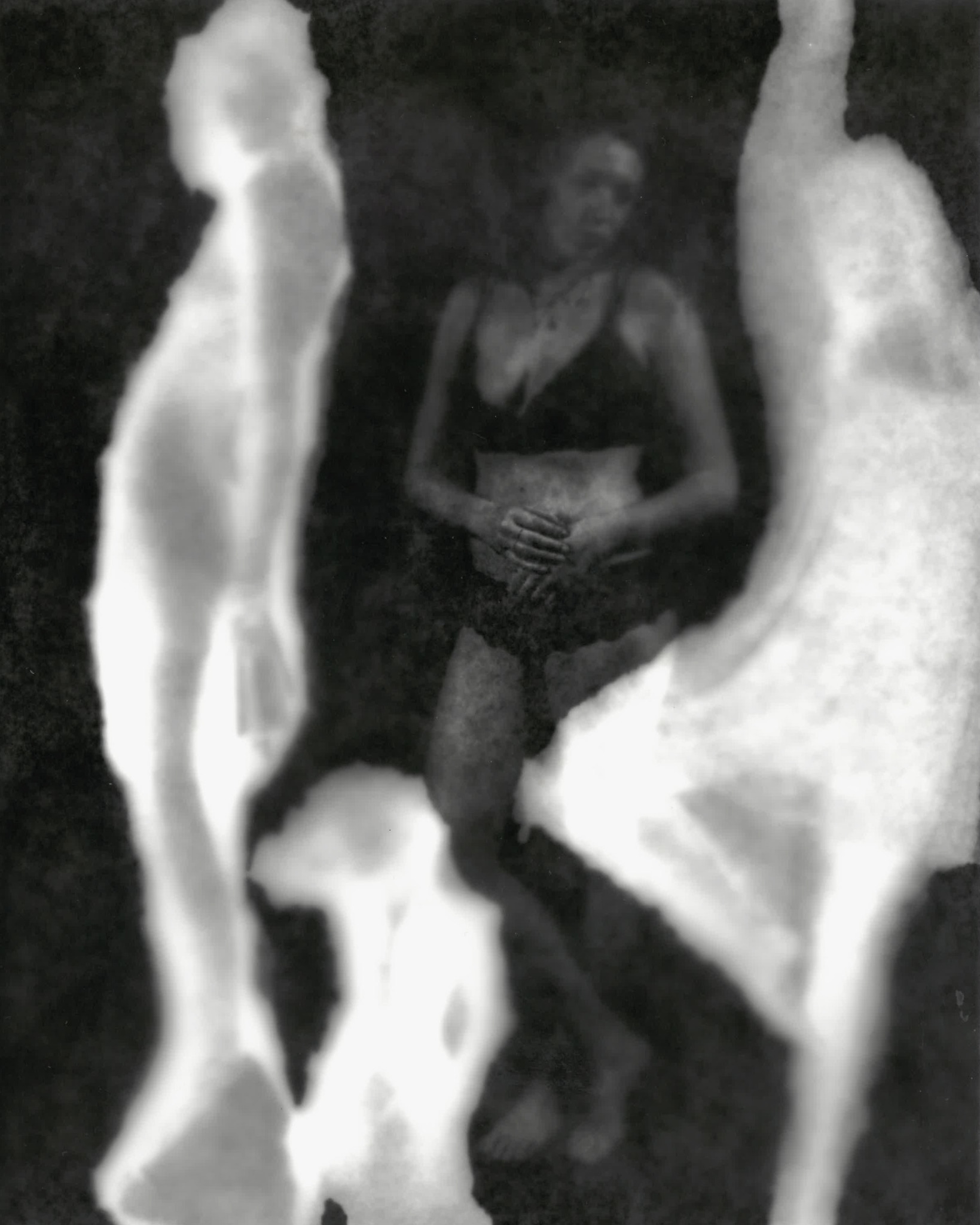
My second performance piece titled Darkroom Performance expanded on this idea further, but through the use of the darkroom and paper negatives instead of video. This project is a three-part performance deconstructing the relationship between the viewer and available representation in today’s visual culture through magazines, social media, television, etc. Attempting to form an identity in the present-day comes paired with implications of over, under, and misrepresentation of particular communities. This is an intentional use of propaganda weaponized by media entities to encourage mass assimilation and social norms. This project destabilizes the technological processes of digital photography, darkroom photography, and found image collage by bridging them together in new and unexpected ways. First, I performed a series of poses for my digital camera that antagonized the found imagery, edited and inverted the photos, and then printed them out on copy paper. The second performance was the act of reproduction—this time using issues of Vogue magazine and the copy machine to once again duplicate the found material. With the copies from the machine, I ripped around the edges (nodding to the Dada movement along the way) creating rigid and impermeable boundaries between the subjects. The final performance was conducted under a single red light as I layered each copy over the next in the darkroom, creating a paper negative. The paper negative was then exposed to light-sensitive paper, thus creating the final image. Each time the found imagery overlaps my body, all of the authentic information is lost, which supports the notion that the more we try to assimilate to unrealistic representations, the more we lose our true, authentic selves.
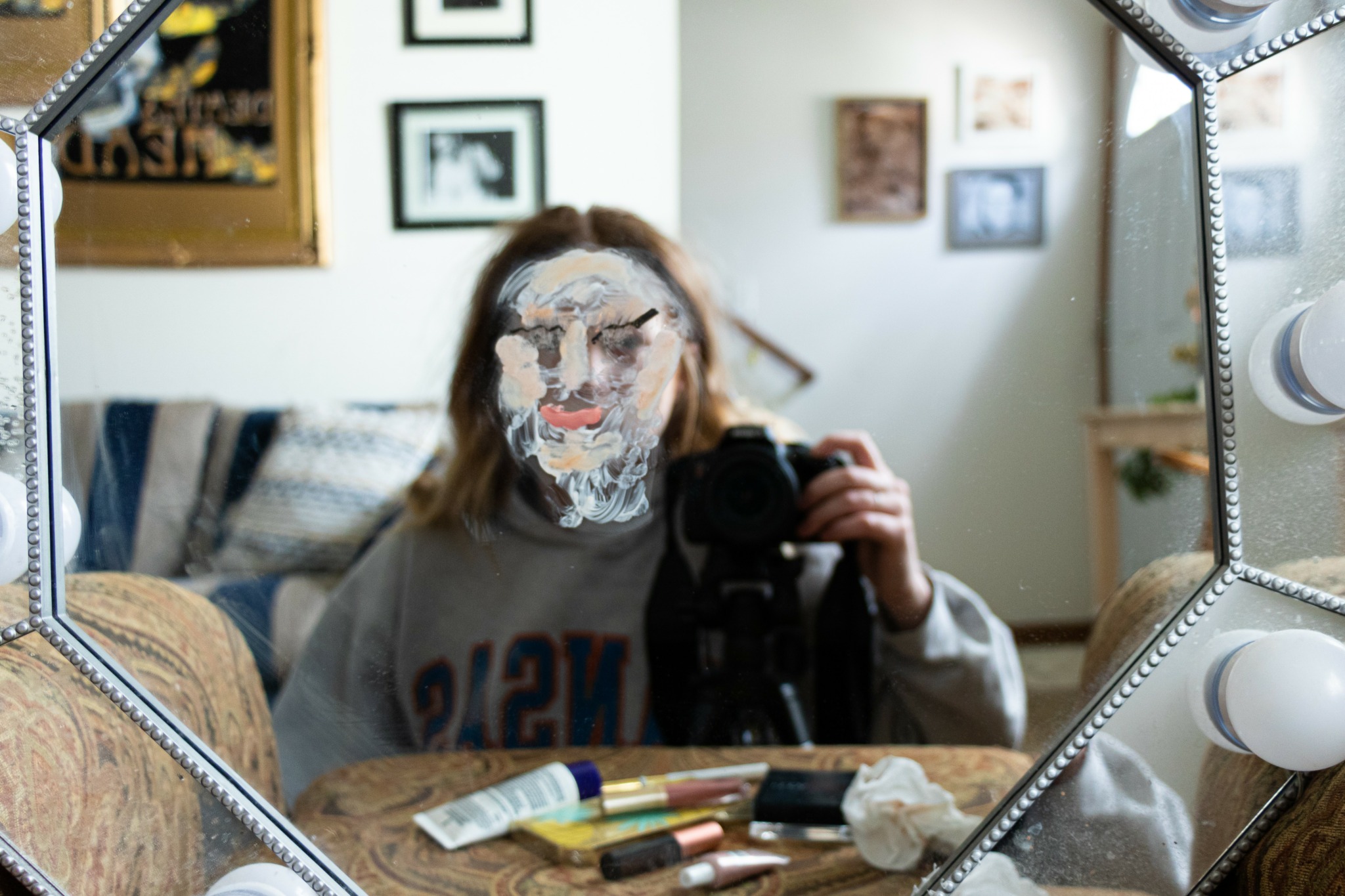
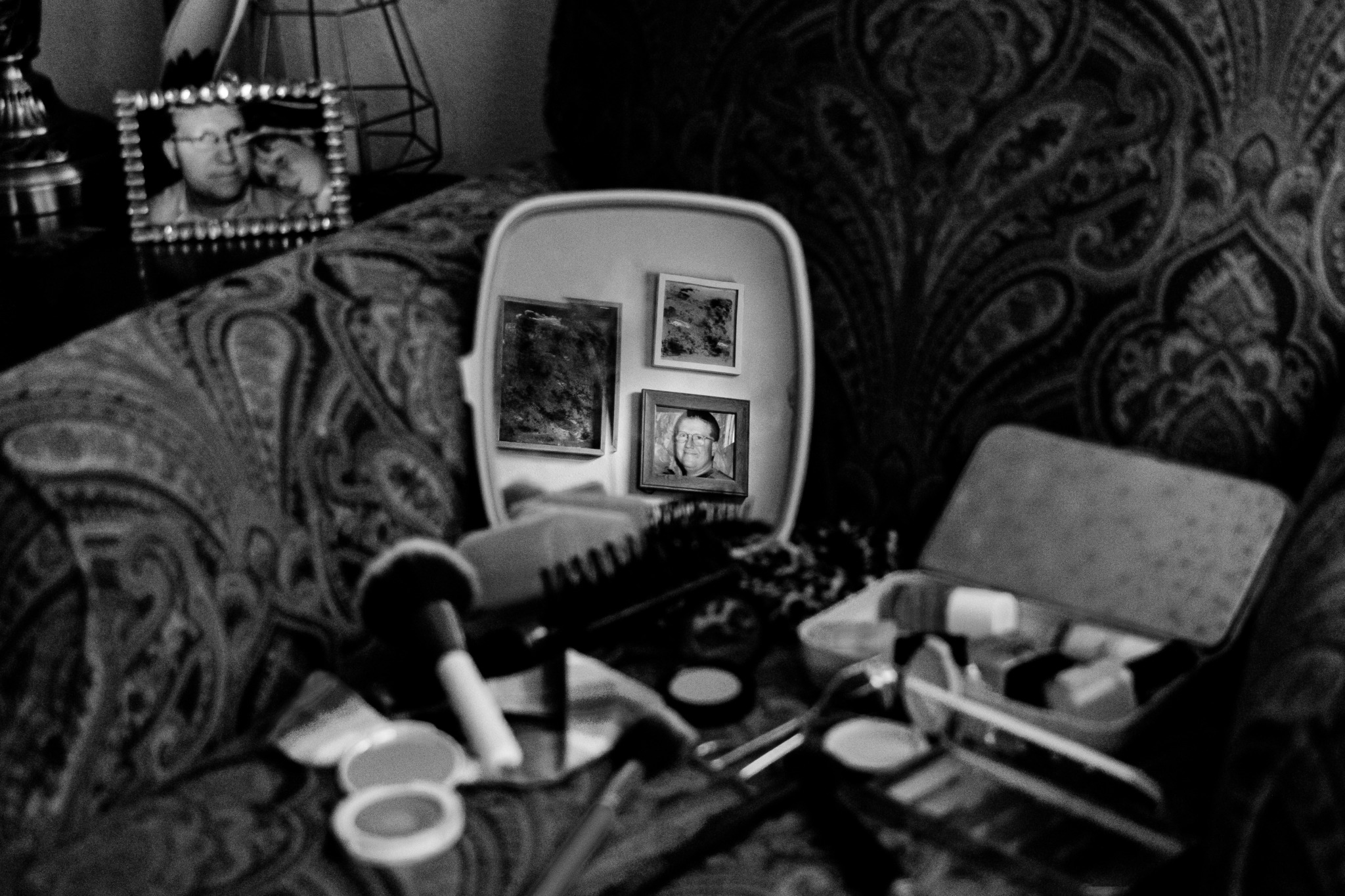
My last series of performances was centered around recreating core memories with my dad. These core memories included giving him a makeover, cooking frozen pizza when our mom was gone (even when she made us dinner beforehand), driving home from school singing along to D12, Eminem, and Sum 41 (but promising not to tell our mom), and driving into town to get a pop and snack at the local gas station. The first performance about my dad consisted of putting a framed photo of him in front of a mirror and attempting to give him a makeover by applying cosmetics to the surface of his reflection in the mirror. These memories are all we have left of him. After completing the first part of the project, I decided to include my two sisters and my niece. Together, we recreated the memories again, but this time my sisters and I in our dad’s place, and my niece in our place. When I showed the videos to my thesis committee, there wasn’t a dry eye in the room. I’m excited by all aspects of my practice, but expanding my performance art is something I am looking forward to the most in the future.
What matters most to you?
People. People matter to me. Their struggles, successes, voices, and needs matter to me. Helping as many people as I can is my #1 goal in life and I will continue to use my practice to make a positive impact—no matter how big or small. Maintaining an ethical practice is of the utmost importance to me. As I mentioned before, people in my industry have the power to create propaganda, and that is something I refuse to participate in. I also firmly believe that representation matters, and the more diversity the better. Collaboration and teamwork are also extremely important aspects of my practice, which is why I always try to be a team player and put people before the project. I have been exploited far more than I would like in my short career, and the last thing I want to do is exploit anyone else. On that same note, I am extremely selective about who I take on for clients, to avoid being exploited any further. I am very privileged to be at a point in my career where I can turn a project down if the client or intended project goal doesn’t align with my beliefs, but if you can, always say no to projects that don’t align with your practice. Word spreads fast, and before you know it you’ll have 5-10 potential clients knocking on your door asking you to do the same thing for them.
My family is one of my highest priorities; both my existing family and future children. I am fighting for a world that they would be proud to live in. One with diversity, equity, inclusion, positivity, love, and light. One that will accept someone from any walk of life with a warm embrace. A world of understanding, collaboration, and stability. With the uncertainty of what the next four years under Trump will entail, I couldn’t possibly imagine brining a child into the world at this point in time. But maybe one day.
Contact Info:
- Website: https://www.makinliemcrae.com/
- Instagram: https://www.instagram.com/kinliemcrae/profilecard/?igsh=Zzg3MmtqMTZkcnNl
- LinkedIn: https://www.linkedin.com/in/makinlie-mcrae-75bb46179?utm_source=share&utm_campaign=share_via&utm_content=profile&utm_medium=ios_app
- Other: https://www.43tilescampaign.com/