
Today we’d like to introduce you to Leo Bird
Hi Leo, please kick things off for us with an introduction to yourself and your story.
I started my artistic practice by writing explanations of why I was angry in college to my parents, but these never took off. In my sophomore year of college (2011), I took a Writing Short Stories class where I learned how to write true stories in the vein of JD Salinger, F. Scott Fitzgerald and Ernest Hemingway, but struggled in the class because I found it difficult to find interesting stories from my life to write about. In an interview in the summer between my junior and senior year of college, the recruiter suggested I could be someone who educates people about autism (I have autism), and I thought I could do that by using the techniques of my Writing Stories class. When my career counselor asked me what my greatest weakness was, I told her I had autism but had an idea for a story that explained it. She was impressed and invited me to speak to a class called Students With Exceptionalities, part of which is about autism. The class enjoyed the story. I continued to work on it, and when I shared it with my brother and users of the website Critique Circle, I learned neurotypicals (people without autism) and even cats and dogs face the same challenges fitting in as I do.
My Writer’s Workshop in Des Moines mentioned an open mic poetry at Ritual Cafe in 2018. I did a Google search for open mics and found one at Vaudeville Mews, now closed to the coronavirus pandemic. The only comedian there directed me to Lefty’s, an open mic for comedy where I found my home.
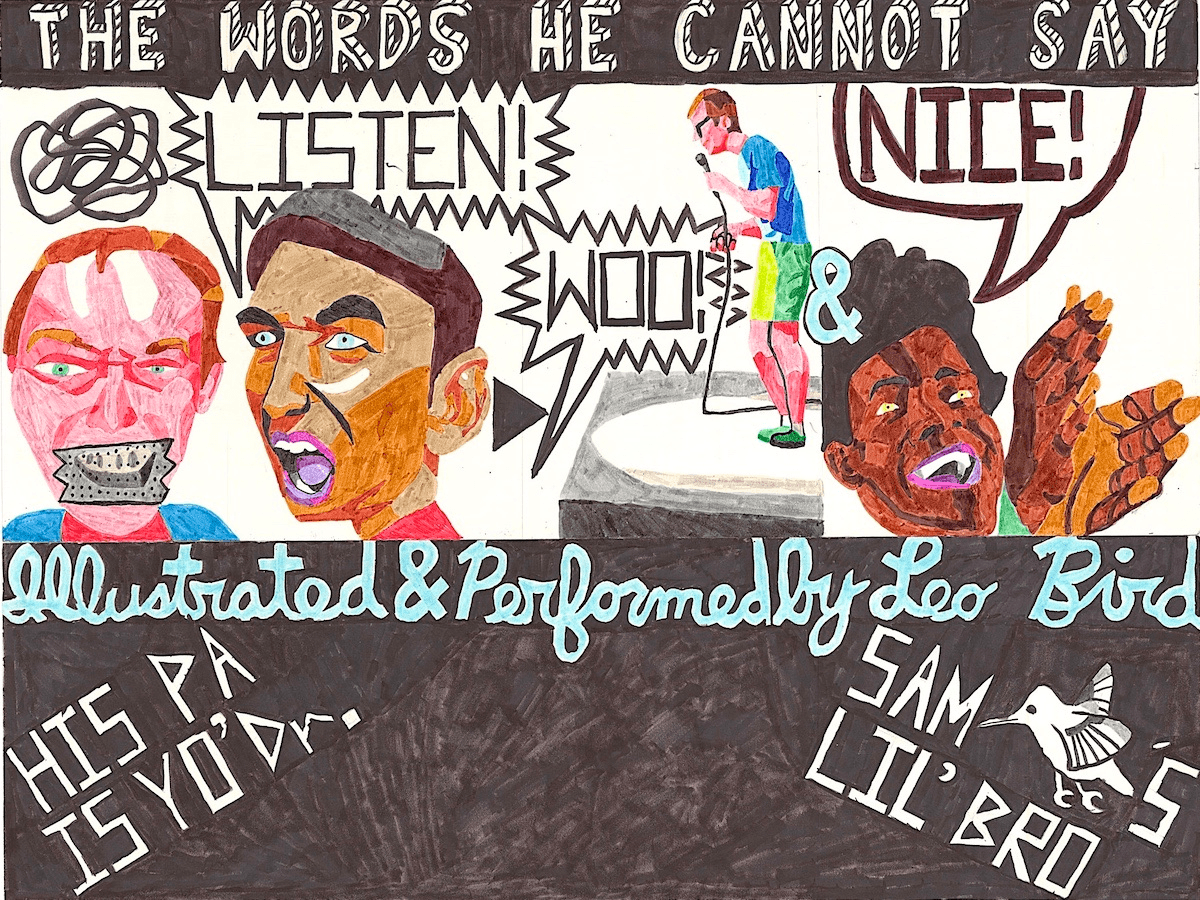
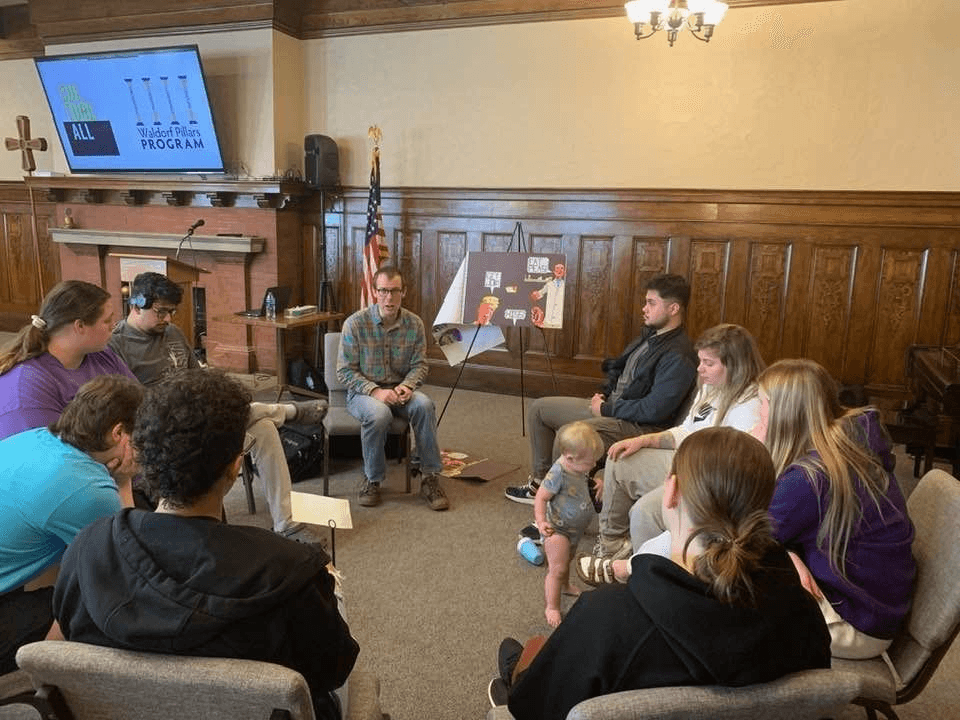
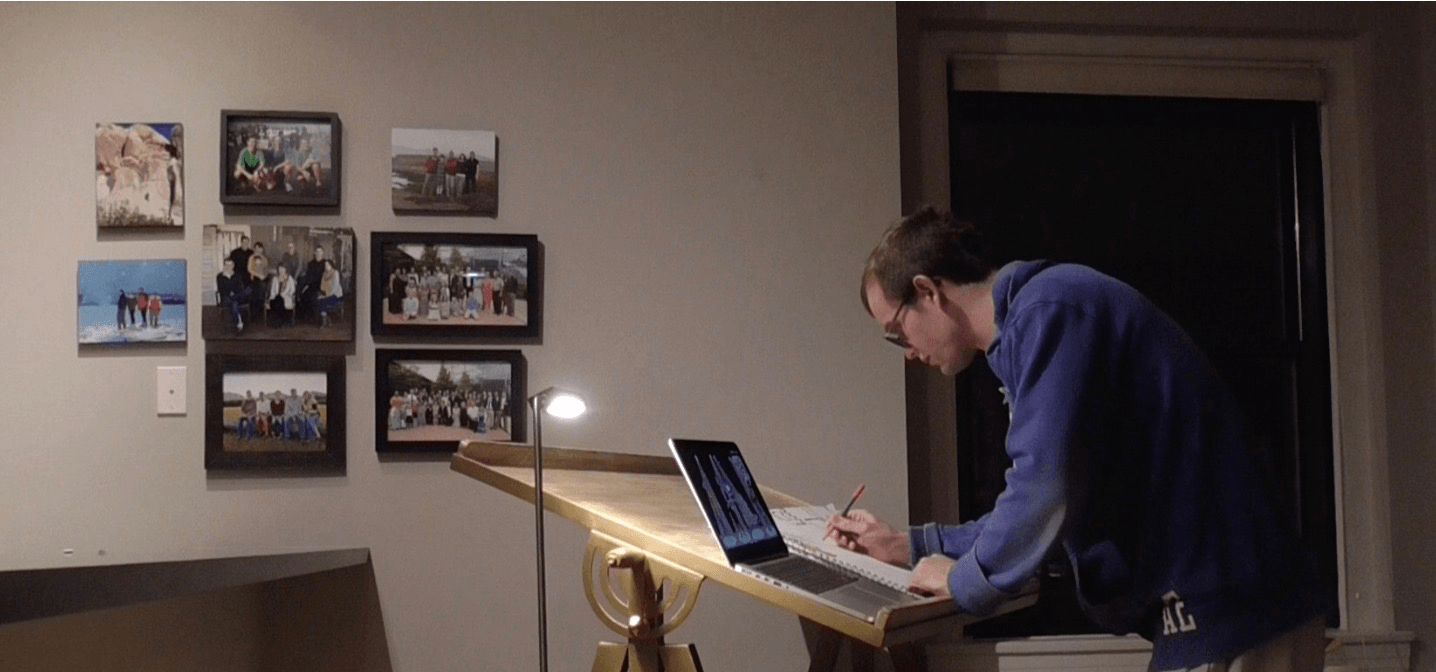
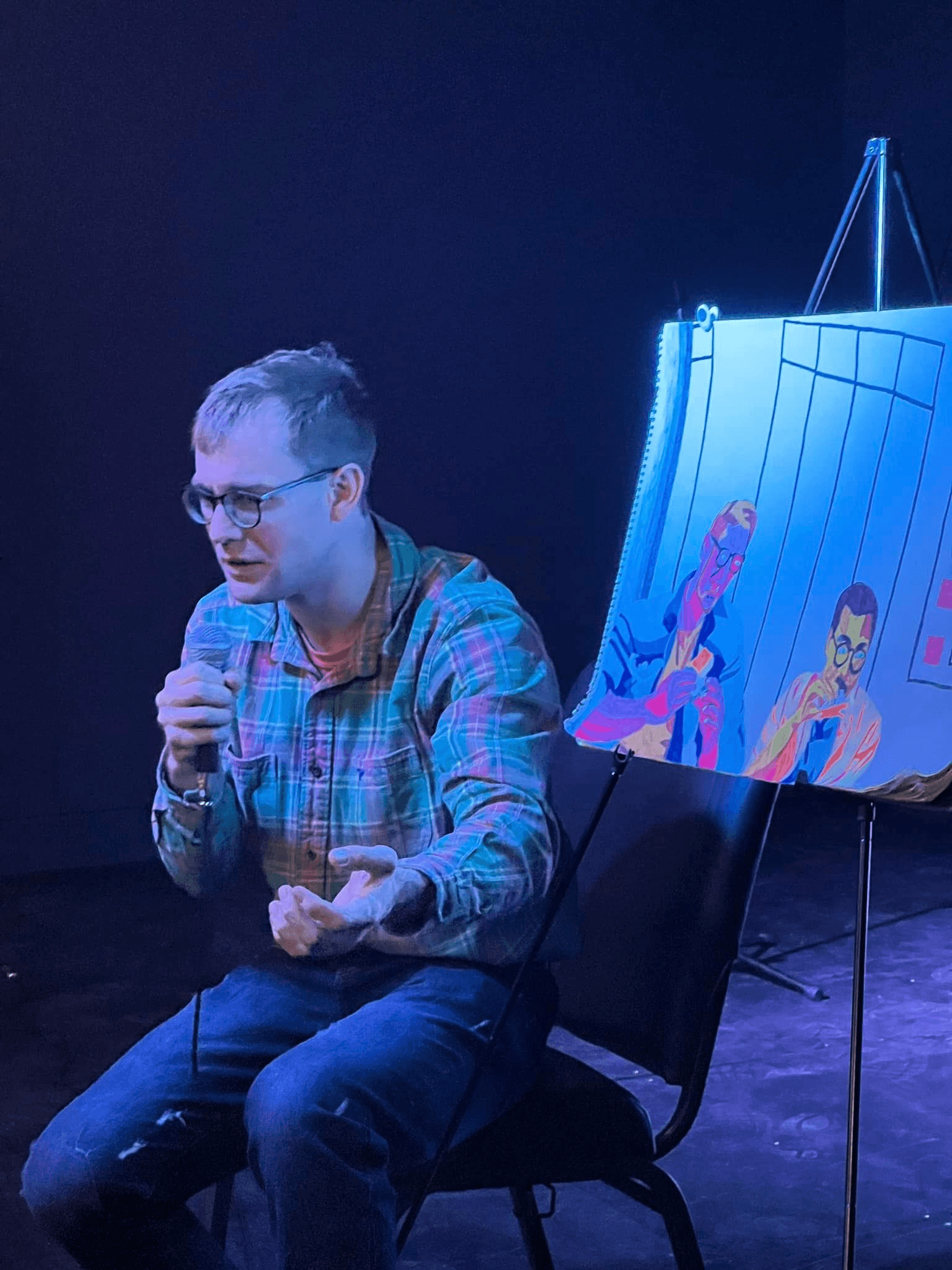
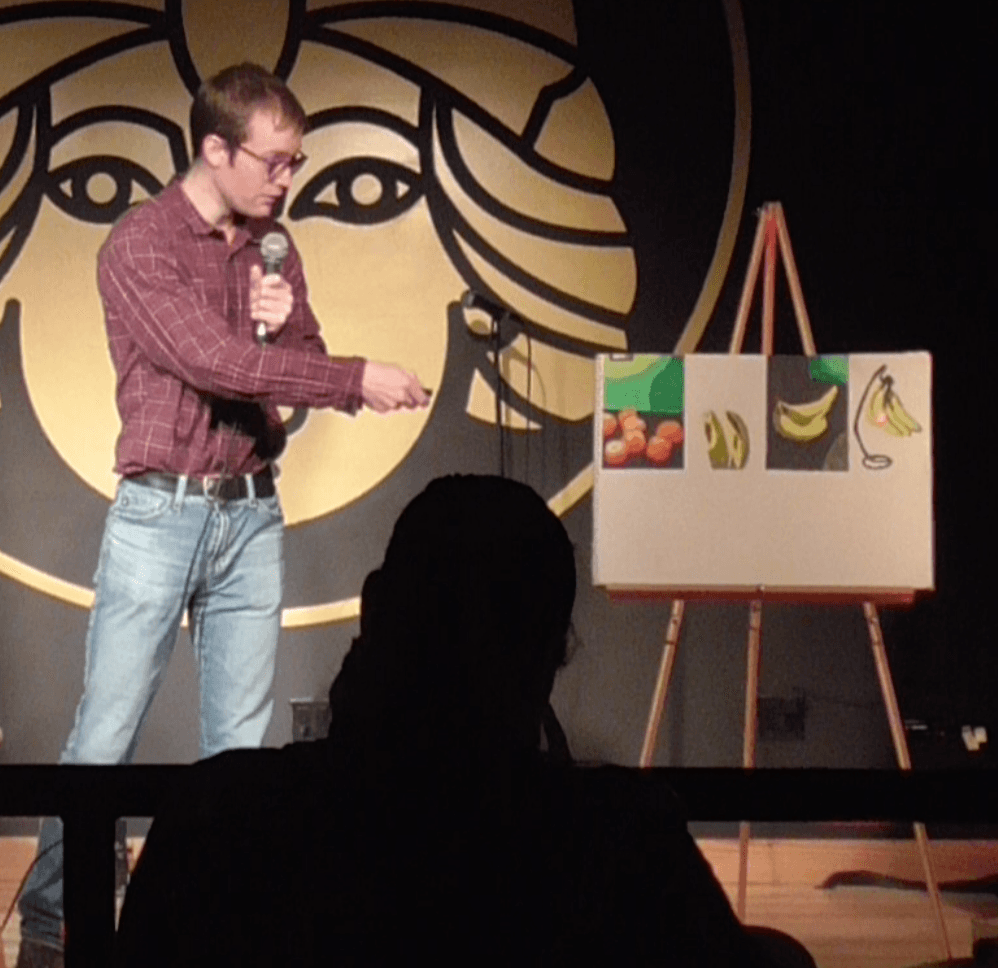
In 2019, I had a story where I casually threw in a drawing that showed the difference between one dorm with twenty people and ten dorms with two people each. When reviewing video, this was the funniest part of the story, so I made drawings for my other stories. Through experimentation, I learned that I needed to use a laser pointer to refer to the drawings as I spoke. Audiences say I pause in my speech when I point to the drawings. Later that year, I won second place three times in an open mic competition. I also changed my artistic medium from dry erase markers on a whiteboard to Staedtler markers on a drawing pad from a tip from a drawing teacher at the Des Moines Art Center, and made my drawings more realistic by using photo references, a tip from the book Drawing on the Right Side of the Brain, which states that you lose visual information when you draw from memory. Art teachers who examined my art have stated that I draw like Alex Katz https://www.alexkatz.com/print_archive. When businesses reopened after the coronavirus pandemic, I was invited to perform on invitation only comedy shows, including Clash of the Comics at the Funny Bone.
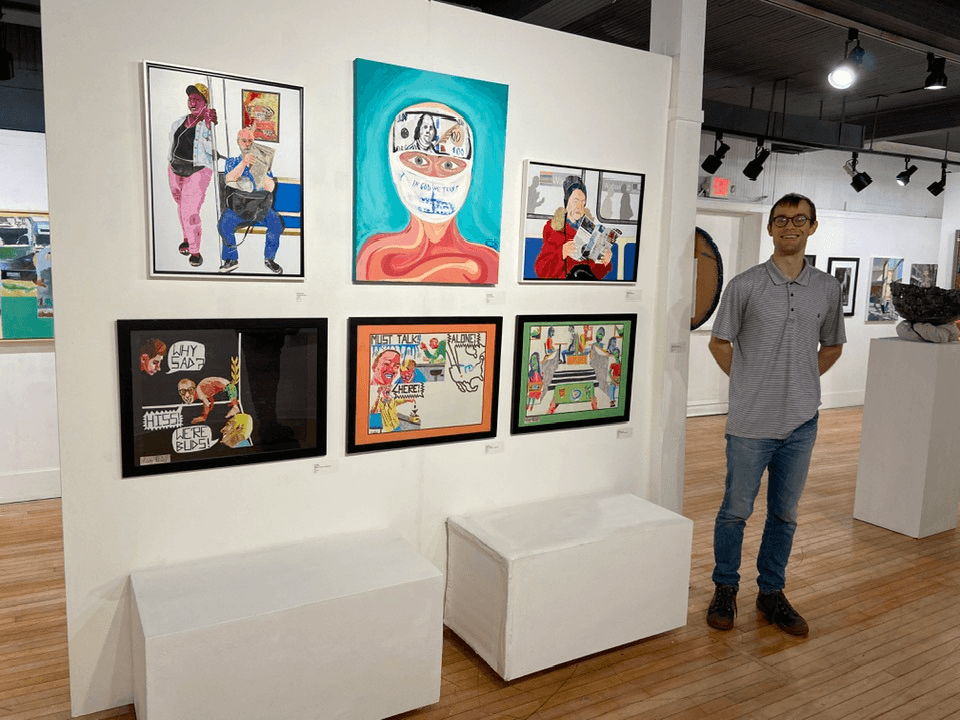
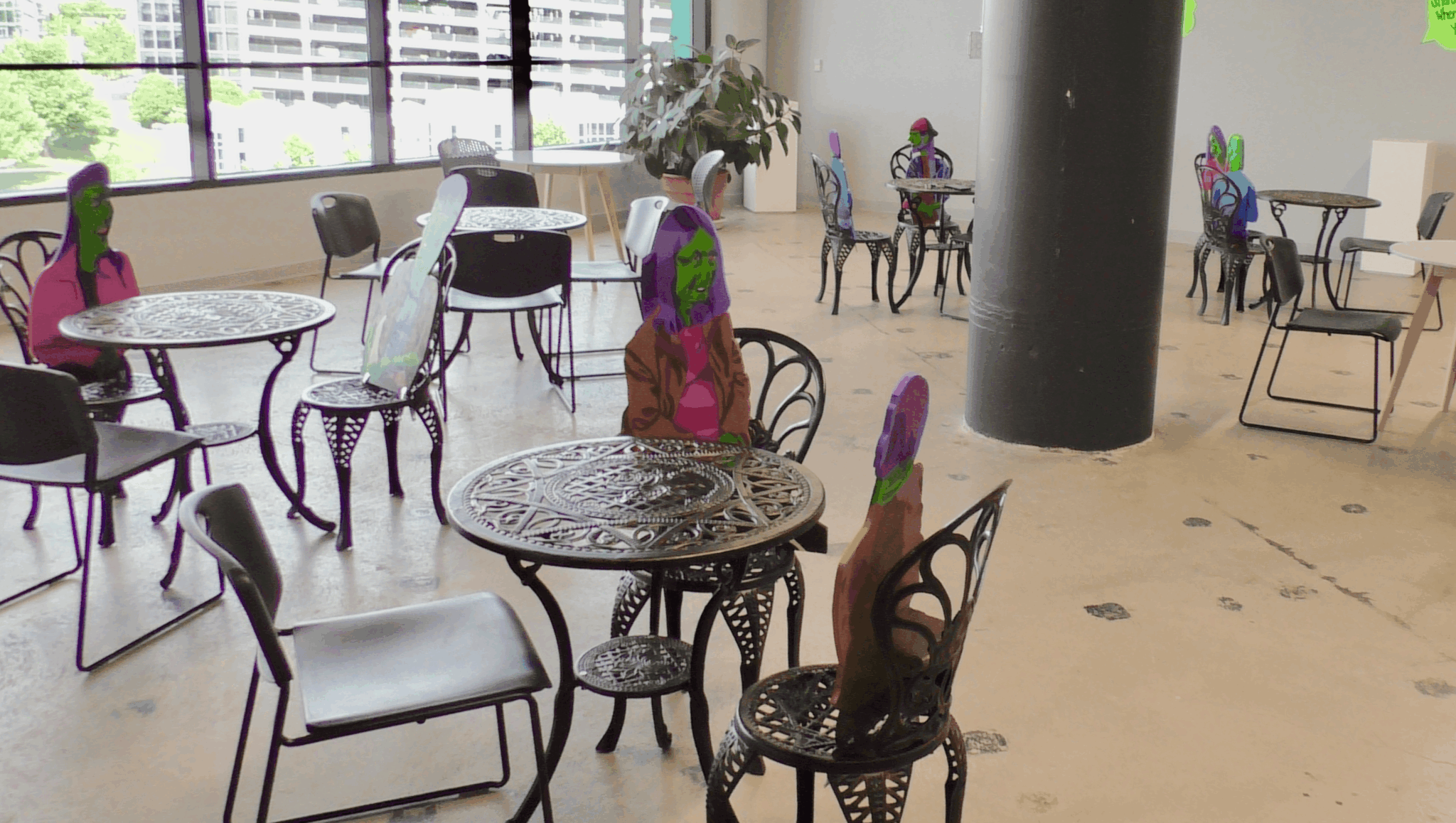
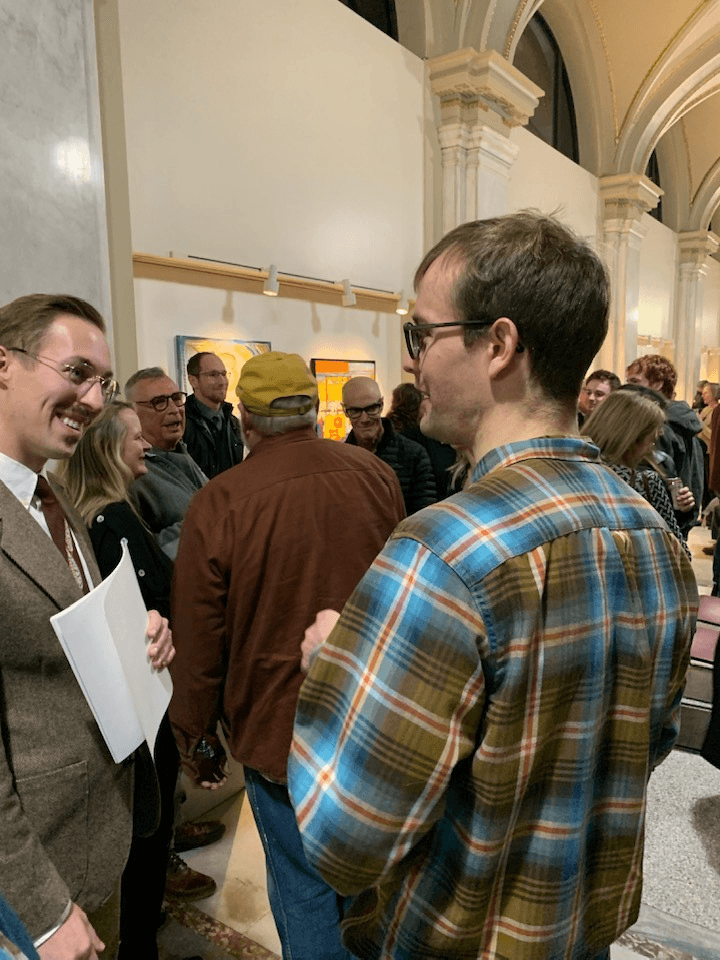
In 2021, I visited Mainframe Studios on First Fridays and discovered I could network with the artists there. I joined Momentum there, an art program for people with disabilities. I also had my first solo art exhibit at the Des Moines Public Library near the end of 2021. In 2024, at Enchanted Beauty’s Bohemian Arts Festival at Merle Hay Mall, I waved to guests of the mall with a smile and altered my sales pitch, and was able to sell $200 worth of art prints to strangers. Previously I was only able to sell art to family and friends.
Can you talk to us a bit about the challenges and lessons you’ve learned along the way. Looking back would you say it’s been easy or smooth in retrospect?
I had to deflect some criticisms of my proposed stories to advance. The first time I shared my story, a classmate responded to my struggle to find somewhere to sit at lunch with, “Well maybe we should try to include you more at lunch!”, like she thought it was stupid. Eight years later, the drawing that was inspired by that portion of my story won honorable mention twice, and first place once, and two jurors gave speeches about it. Another person thought what I was doing could only be done by the experts, and suggested I take my story in a different direction. What helps me with criticisms is that I do not have to choose their opinion and my critics may not have tried the activities I have, listened to my stories, or know everything I have experienced, which gives them no right to scold me.
At open mics, I am fortunate to have audiences support me after I screw up. I am also relieved that audiences have supported my viewpoints because many of them seemed like the unpopular opinion and because since I started college, I felt my peers could be stubborn. Many people fear public speaking, but I actually feel more comfortable talking about my life through a true story than in a conversation because I feel like people are more willing to listen to me in a true story than in a conversation.
I also have to consider that not all of the comedy shows or galleries I apply to will accept me. Even famous artists and authors face rejections. What gives me confidence is that I can get still get a quote of recommendation or be able to network with the gallery if I get rejected and there are plenty of other ways to display art or perform comedy.
As you know, we’re big fans of you and your work. For our readers who might not be as familiar what can you tell them about what you do?
I am motivational speaker who uses drawings as a visual aid. I tell true stories about fitting in, building talent and character, and autism, because I have autism. However I am learning that my struggles are more common amongst people without autism so it is losing the autism theme. Although I perform with comedians, I consider myself more of an activist, and write to support a cause, not out of a fan of any actor. I examine times when I received praise or criticism, when someone else did a good or bad job handling a situation, or to examine questions like “Why are people mean?”.
The first time I won second place at the open mic comedy competition at the end of 2019 was the happiest moment I had since I had graduated high school, which was May 2010. I am honored to be invited to perform at the Funny Bone. I am excited about the high success rate of being accepted into art galleries and the recent success I have had selling prints of my art. Audiences have called my stories clean and uplifting (someone asked me if I was speaking to a Christian group), which makes me unique amongst the other comedians in my scene who may use mature humor.
I am unique amongst textual storytellers in how I use drawings in my stories. Jessie Kiesling, who runs the Funny Bone, said no comedian she met had ever asked her if they could do prop comedy. Jurors of the Funny Bone’s Clash of the Comics thought my story was creative. Creston Arts told me I was unique amongst artists in how I accompany my drawings with textual stories. Many artists are illiterate, which makes me more unique. I also think my Alex Katz art style is unique amongst artists I have met.
Are there any apps, books, podcasts, blogs or other resources you think our readers should check out?
I watch videos of myself performing and transcribe the moments where the audience is laughing. If they repeatedly laugh at a line, that means something about that line is well written, so I can use that to guide my actions in future stories I write. My comedy teacher from an online Funny Bone class told me if an audience says something specific about what they liked about my story, like “My son just got diagnosed with autism and your story helped me” or a line they thought was funny, that praise is genuine.
The website Critique Circle https://www.critiquecircle.com/landing is a free website where writers can get critiques of stories or papers they write. Writers must critique stories before their stories can get critiqued, but critiquing stories improves your writing skills. The website Gyst Ink https://www.gyst-ink.com gives artists an editor for artist statements, resumes, and grant or project proposals, a one on on discussion about art practices, and workshops. Despite the use of the swear word “sh*t”, it is not a vulgar website. Art Centers also have services for artists.
I have been able to network with artists at open studios, art fairs, and artist receptions. I made business cards with my contact information and artist website, resume for art and comedy, factors that inspire me to write, and examples of my art. When I am on vacation, I go to art events and hand out business cards to artists who would not typically be able to learn about me as an artist as they are so far away from my hometown.
Contact Info:
- Website: https://leobirdstandsup.com