
We’re excited to introduce you to the always interesting and insightful Zhi Qu. We hope you’ll enjoy our conversation with Zhi below.
Zhi, thanks for taking the time to share your stories with us today We’d love to hear about a project that you’ve worked on that’s meant a lot to you.
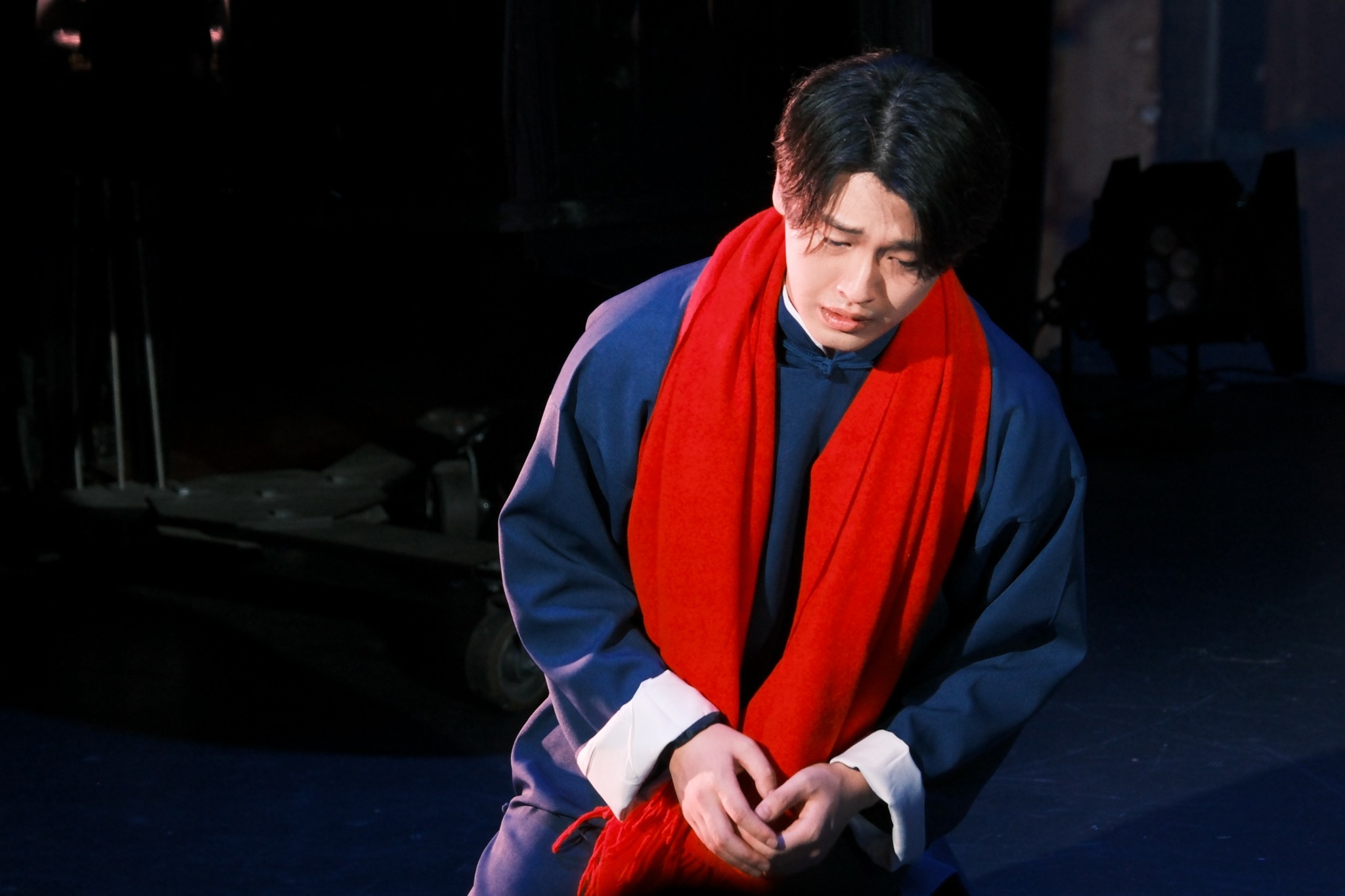
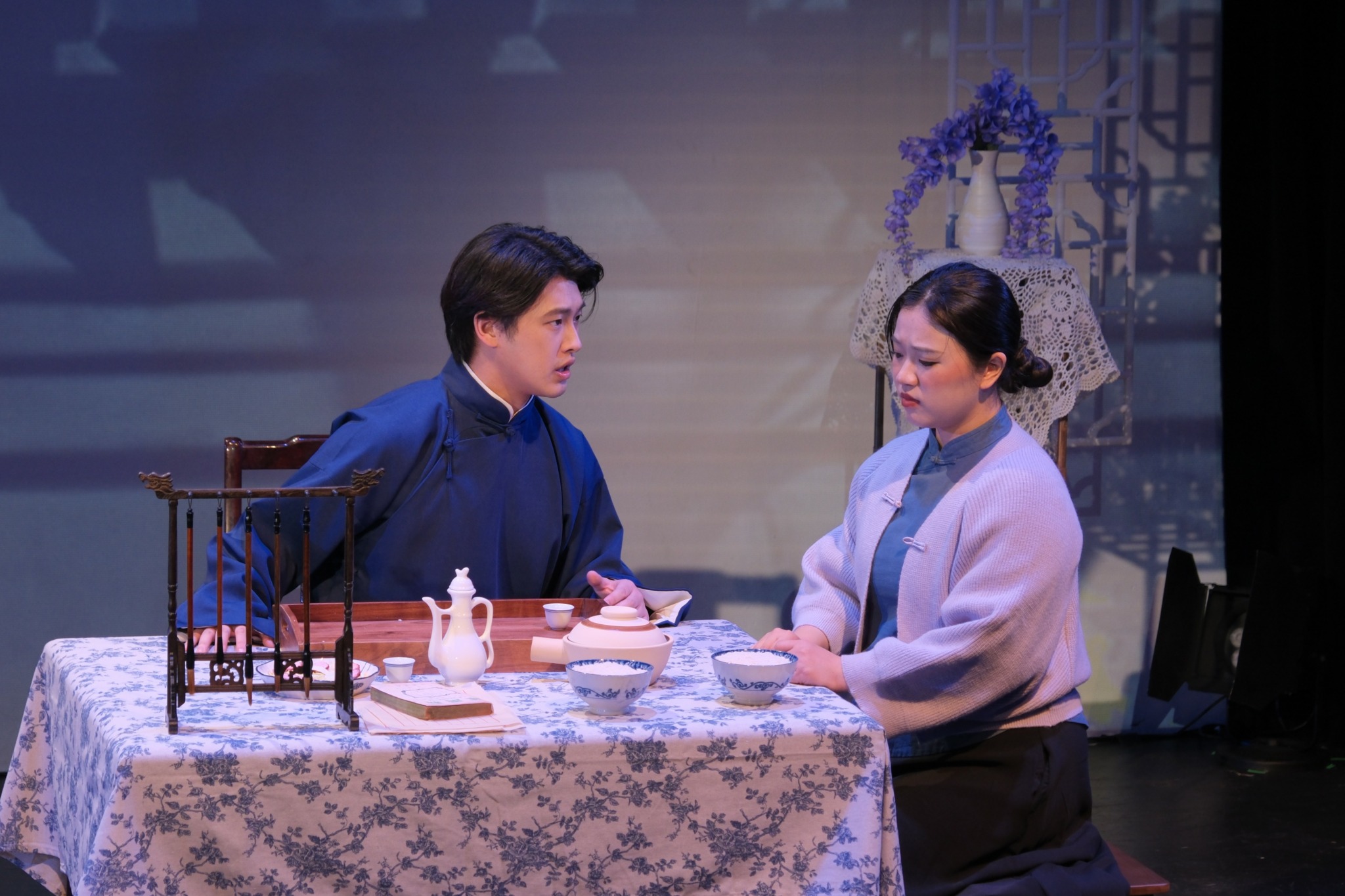
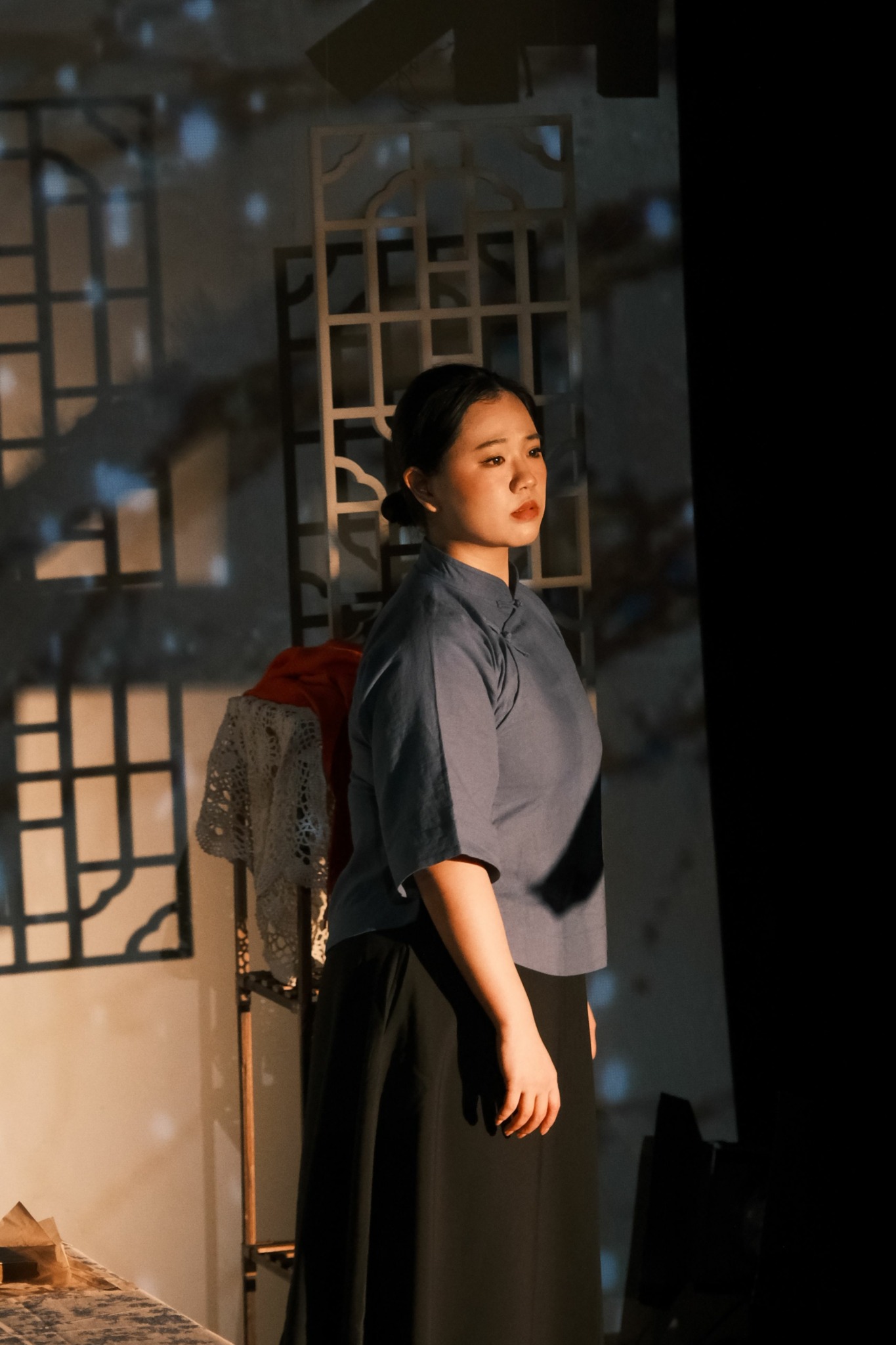
One of the most meaningful projects I have participated in is the New York production of the opera Remorse. This production premiered in February this year at the Off-Broadway venue Dixon Place and marked the opera’s first international performance since its original creation in 1981. I served as the director, music director, and artistic director of the entire production, which also marked my professional debut as an opera director.
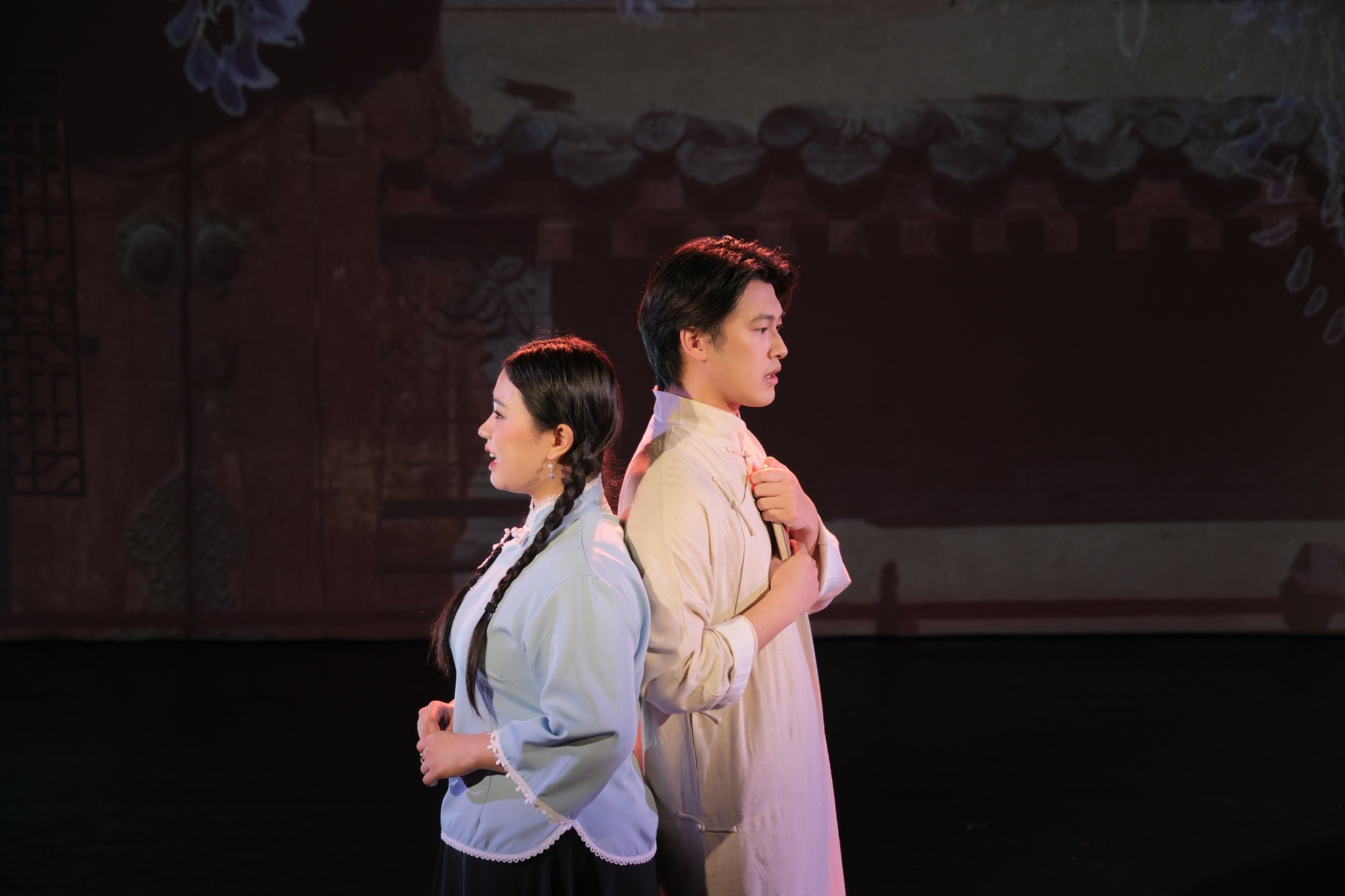
The opera is adapted from the novella of the same name by Lu Xun, one of the most prominent writers in modern Chinese literature. Performed in Chinese with English subtitles, the opera tells a tragic love story set in 1920s Beijing about a young couple who, over the course of a year, journey from defying feudal conventions in pursuit of love and individual freedom, to ultimately separating due to material hardship and societal pressure.
This project holds great significance for me not only because it marked the formal beginning of my professional career as a director, but also because it served as a vital outlet through which I could pursue and express my own artistic vision. One of the major challenges during the creative process was the opera’s long performance history in China—spanning over four decades and including several notable past productions with distinguished cast and crew—How could we create something truly distinctive? Beyond questions of form, I was also faced with a deeper artistic challenge: how to give new meaning to a century-old text in the context of today’s society. I had to discover how to weave together music, abstract design elements, and stage performance in a coherent way—and, most importantly, how to present those ideas in a way that was both executable on stage.
Ultimately, I made several key artistic decisions:
Abandoning naturalistic and realistic scenic design, I adopted a minimalist and abstract visual language inspired by classical Chinese aesthetics. When the audience entered the theater, they encountered three suspending rooftops at varying heights. These rooftops not only created dynamic entrances and exits for the performers, but also symbolized the couple’s love—floating and rootless, lacking a solid material foundation.
In terms of character, I reimagined the original male and female singers, who traditionally served only as narrators, by integrating them more actively into the narrative through staging and music. They became internal projections of the protagonists, representing versions of the characters in a parallel space. I also introduced an original character, the Narrator—a symbolic embodiment of Lu Xun’s soul. Drawing inspiration from Brechtian theory, this character served as a meta-theatrical figure who guided the storyline and created space for audience reflection.
In terms of performance style, I addressed a common limitation of traditional opera—its emphasis on singing often comes at the expense of acting. With over seven years of experience in drama, I placed special emphasis on the dramatic performance of the cast by adjusting and enriching the libretto. This allowed the audience to more deeply engage with the narrative. I also incorporated dances and physical theater to offer an additional aesthetic dimension to the storytelling.
Remorse was not just a milestone of my career but an invaluable opportunity. Through directing and producing this opera, I was reminded that many of the structural issues Lu Xun confronted a century ago—such as social inequality, societal constraints, and emotional repression—remain relevant today. As an artist and especially as a director, I see it as part of my mission to raise these enduring questions through my creative work and leave them to the audience for contemplation. Moreover, as a Chinese artist, I consider it equally essential to integrate Chinese aesthetics and cultural heritage into my cross-cultural and cross-linguistic productions.
Awesome – so before we get into the rest of our questions, can you briefly introduce yourself to our readers.
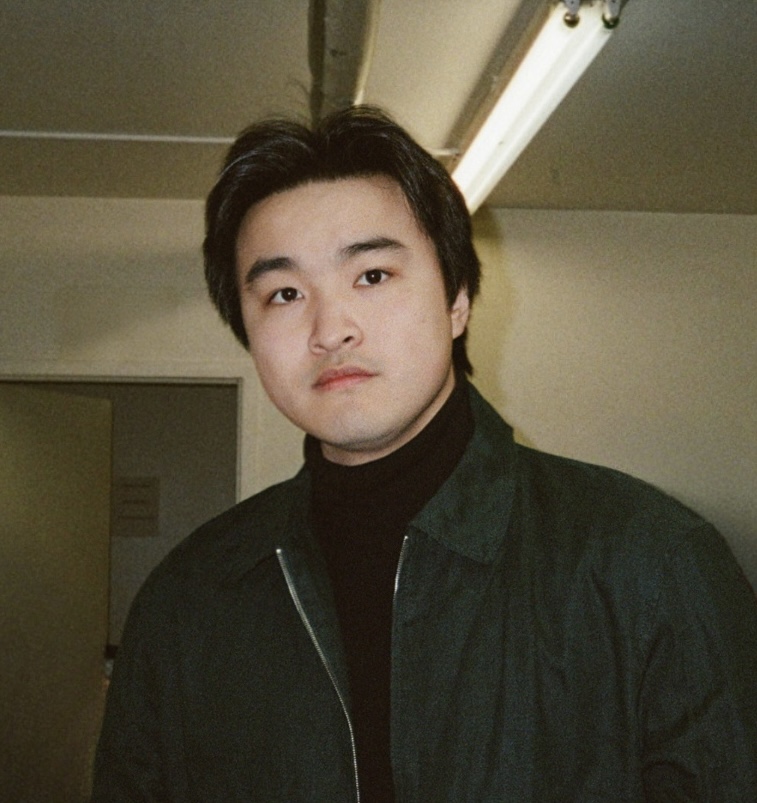
Hi guys! It’s so exciting to meet you. My name is Zhi Qu. I was born in Beijing, China and now based in New York City. I am a director with works spanning theater, dance, opera, concerts, and large-scale galas. I also work as an actor and a singer in different off-off Broadway and off-Broadway productions.
As a theater director, the heart of my work lies in breaking the boundaries of language through cross-cultural means—integrating elements from traditional Chinese opera, physical theater, classical music, and devising & improvising practices. I emphasize musicality, rhythm, and dramatic tension in the theatrical space, while reimagining and expressing stories through a collective, people-centered historical lens.
My journey into theater began unexpectedly—and later than most. Born into a musical family, I was raised on a rich tapestry of classical music, Chinese folk traditions, and opera. For a long time, I dreamed of becoming a singer, someone like Beniamino Gigli or Giuseppe di Stefano—voices that shaped my childhood imagination of beauty and art. Though I eventually chose to study Sociology and Philosophy at UC Santa Barbara, seeking to understand the deeper mechanisms of the world and human thought, music remained close to my heart. I was granted exceptional admission to the university’s Opera Studio and study under the guidance of the department chair. Looking back, that deep-rooted sense of musicality and aesthetic consistency has become one of the core elements in my approach to theater-making.
It was during this time that I stepped onto the stage as an actor with the UCSB’s Chinese Theater Society—my first encounter with theater. Over four years and more than ten productions, what began as curiosity bloomed into devotion. Theater became not just a form of expression, but a calling. After graduating, I moved to New York to pursue a master’s degree in Performing Arts Administration at NYU. While there, I continued to act in productions across the city, until I found myself on the other side of the process—directing. In late 2023, I directed my first full-length play, Diary in the Time of Cardiovaccumia, at Columbia University. That experience illuminated the path forward. It was then that I knew: I was meant to tell stories—not only through song or acting, but through a more creative and comprehensive vision. It was at that time I chose to pursue a life as a director.
Through my journey as a director, Language has always been a central theme in my artistic exploration. I am constantly drawn to the abstraction and redefinition of language—examining how the deliberate dismantling of linguistic barriers can open up new modes of storytelling that better reflect contemporary social life and issues.
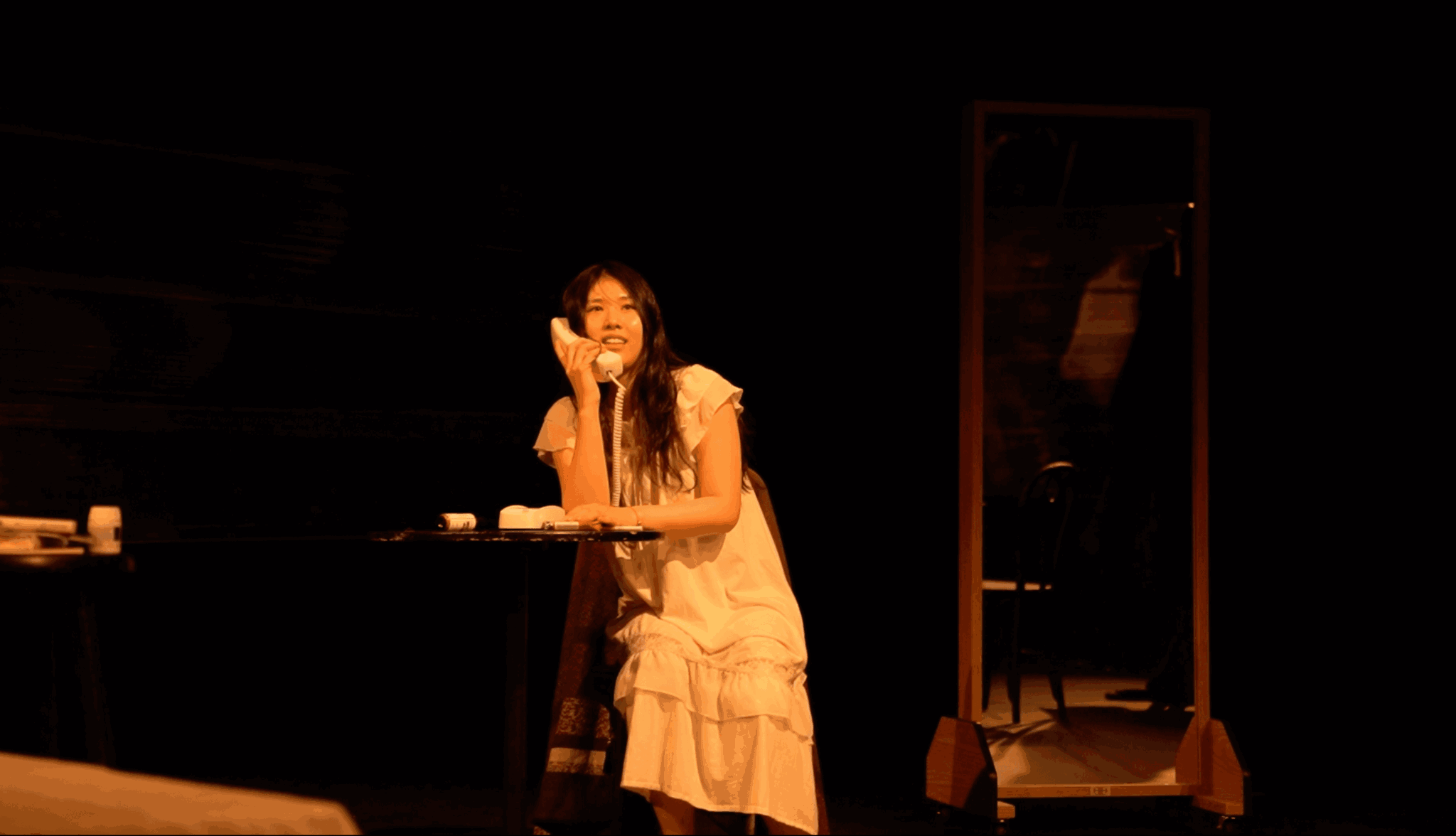
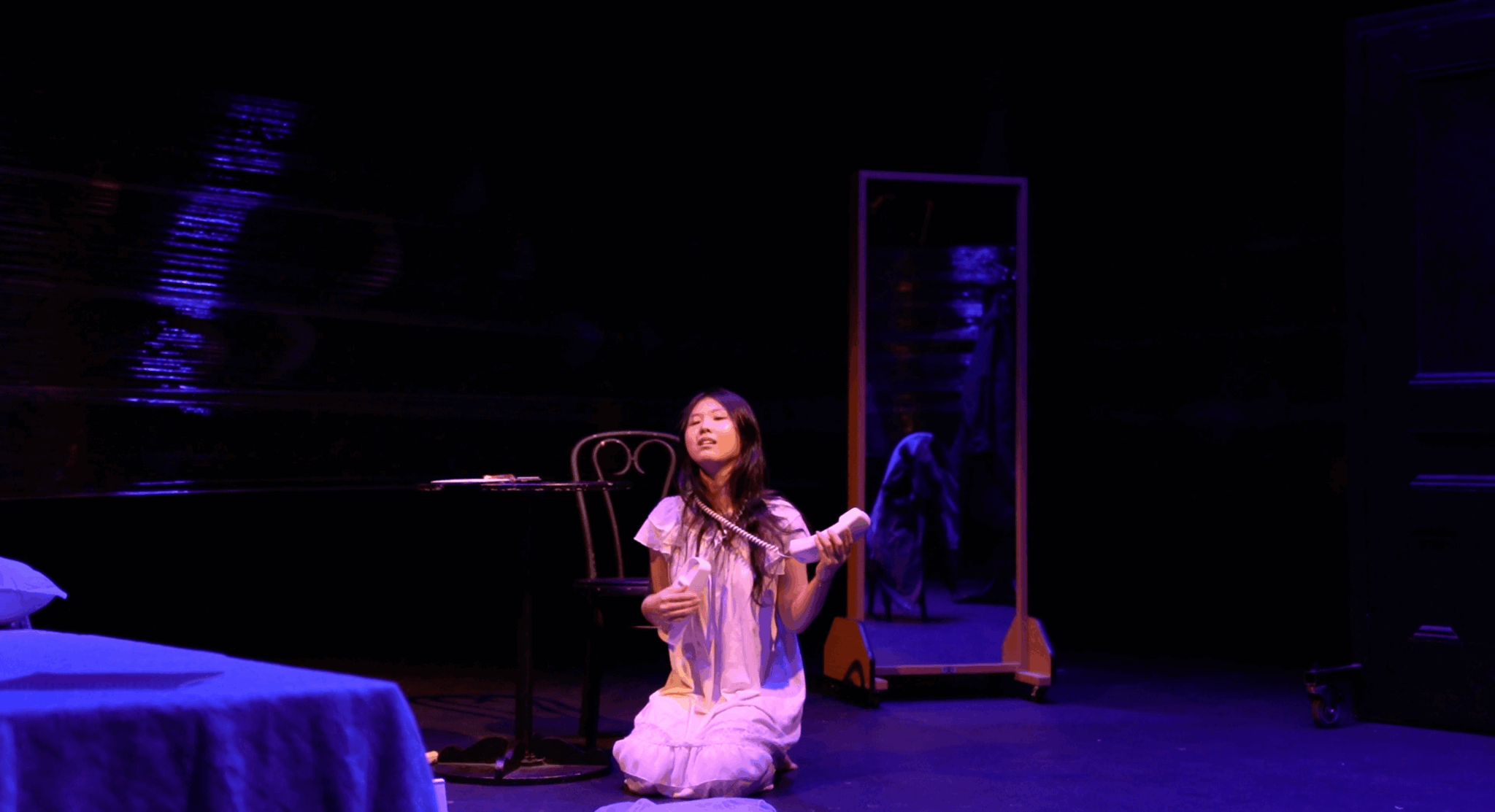
My work often incorporates non-verbal elements such as various design elements and an emphasis on the physical and vocal presence of the actors. In my short dance & physical theater piece Love Between a Bird and a Fish, for instance, I used the symbolic imagery of a “bird” and a “fish” to explore the push and pull, the struggle, and the suffocation that can exist within intimacy—without the use of spoken dialogue. And in my avant-garde monodrama La Voix Humaine, performed in Shanghainese, I stripped language of its informational function entirely, allowing it to serve purely as a personified vocal medium for raw emotional expression.
In most of my works, I seek the edges of language and experiment with theatrical forms beyond realism and naturalism, integrating new technologies and emerging ideologies into my practice. For I believe the director’s task is to create a fourth dimension—within the three-dimensional space of the stage. This also speaks to what sets my work apart: it is often inspired by the Chinese aesthetic philosophy of Yijing (意境)—a poetic sense of atmosphere and meaning beyond words. Whether in visual presentation or conceptual interpretation, I strive to create a space that cannot be fully articulated, but can be intuitively felt. Rather than asking the audience to process meaning solely through language, I aim to evoke emotion and atmosphere through non-verbal expression. Language is limited in what it can convey; it is often what lies beneath and beyond language that is more intricate—and more essential.
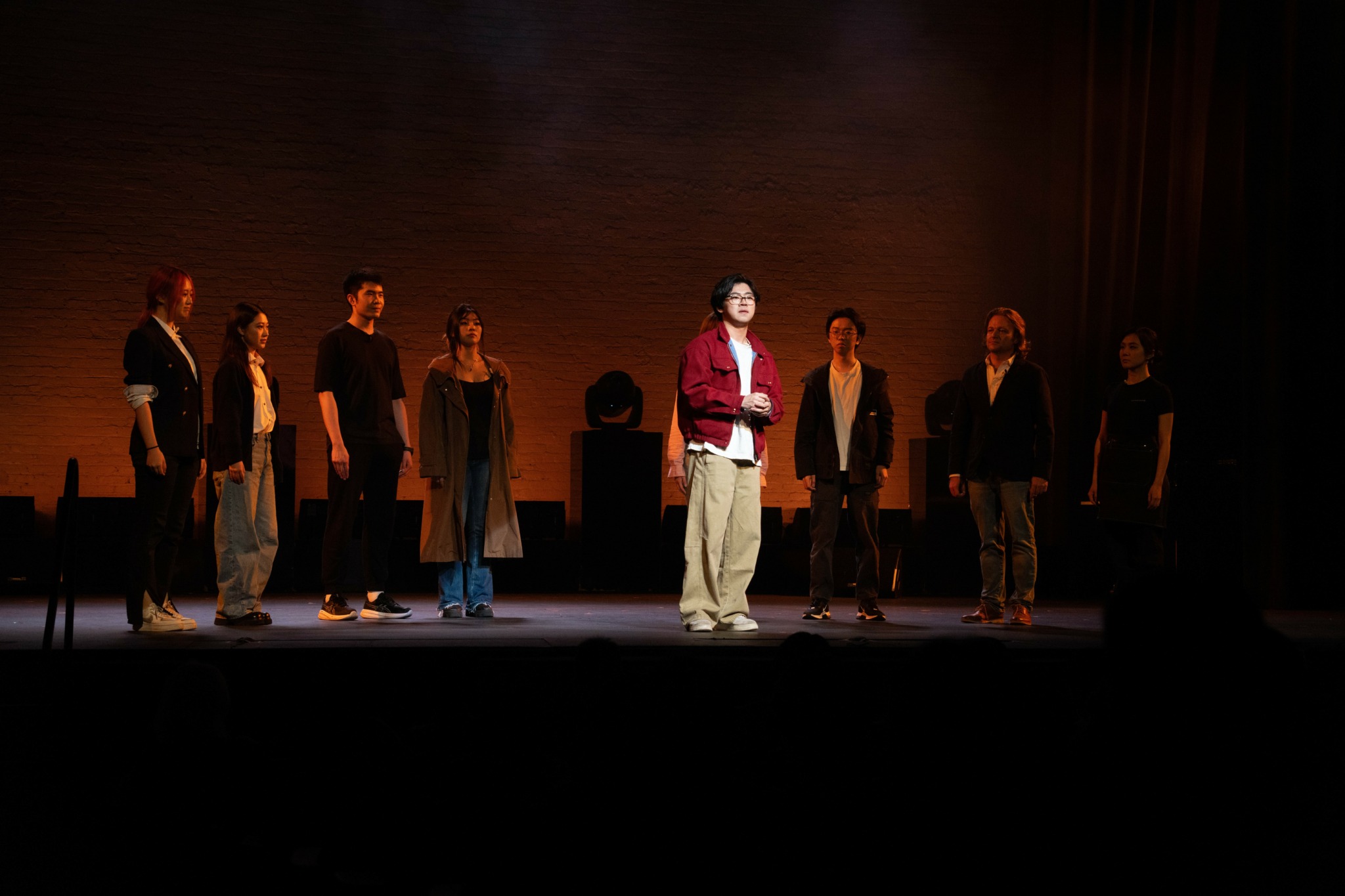
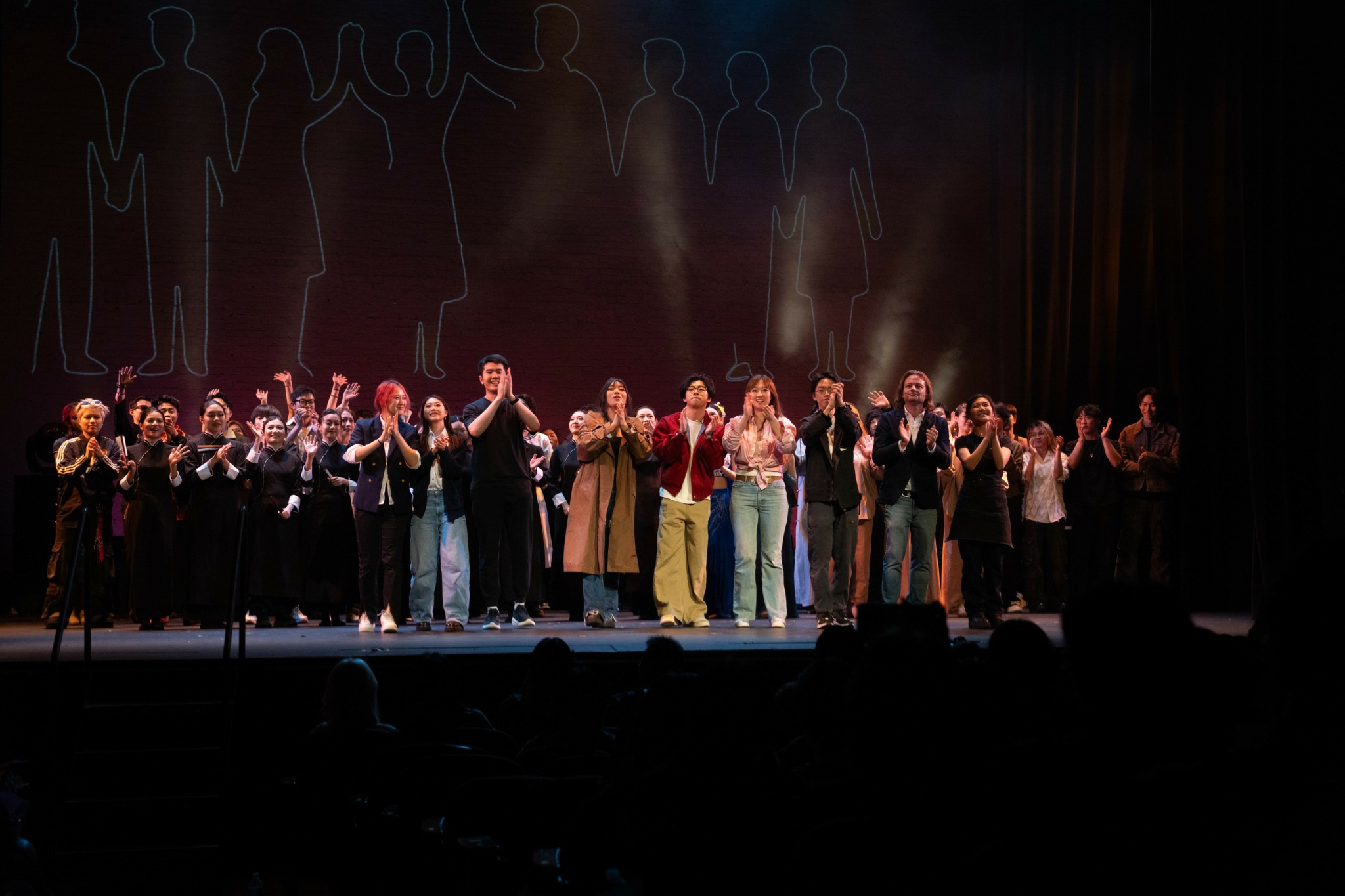
One of my most recent projects was serving as the chief director of NYU GALA 2025 – A Journey to the West, a large-scale performance co-produced with Hunan TV International and staged at the historic Apollo Theater. Unlike most traditional GALA formats, I took an innovative approach by constructing a dramatic narrative arc that connected 31 various programs—spanning music, dance, drama, animation, and film—into a cohesive theatrical experience. The story followed a Chinese international student’s journey from Shanghai to New York, where he navigates challenges, encounter growth, and ultimately find his unique pursuit. I firmly believe that this hybrid form initiated by me represents a future direction for GALA-style events: one that preserves the richness of multiple artistic expressions while offering the emotional consistency and layered meaning that only theatrical storytelling can provide.
Is there mission driving your creative journey?
Beyond my ongoing exploration of the boundaries of language in theater, another recurring theme that runs through all my work is departure (出走). Many of my directing projects revolve around examining the act of departing—its definitions, motivations, and consequences.
What draws me so deeply to this theme is the fact that I see myself as someone constantly in departure. Seven years ago, I made the decision to move to the other side of the world to study and live. Three years ago, I picked a different path for graduate school. And two years ago, I made perhaps the most defining decision of my life thus far: to choose theater and directing as my career. I’ve been stepping out of comfort zones ever since, in pursuit of what truly calls to me. To me, departure often stems from a sense that one’s current environment no longer fulfills their desires or pursuits, or perhaps one chooses to leave simply because they can no longer bear the weight of their present situation. However, once the decision to leave is made, it often leads not to arrival, but to another kind of limbo—a cycle of staying and departures. In this sense, every entrance is born of an exit—and every exit, in turn, marks the beginning of a new entrance.
In my previous works, I’ve consistently explored the duality of departure. In the final moment of La Voix Humaine, the woman tears the telephone cord twining her neck and exits the theater through the audience, while whispering “I love you.” This act can be interpreted both as her death and as a moment of the liberation of herself—a symbolic departure from the emotional entanglement that has haunted her consistently. In Remorse, during the fourth act, the protagonist Zi Jun walks away from the home she had built with her lover, Juan Sheng, as the opera’s main theme “Wisteria,” swells into a full chorus. In the original novel, Zi Jun dies after departing. But in my vision, a beam of intense warm light facing her from downstage evokes the sensation of a hopeful dawn—strikingly contrasted with the heavy, somber tone of the act—suggesting that she has finally reclaimed her autonomy.
These works inspired me to further expand my inquiry into departure by focusing on women across different times and cultures: a young girl from the Tang dynasty fifteen centuries ago, and a middle-aged British woman from the early 20th century. What drives them to depart? What parallels and divergences shape their journey of departure? I look forward to deepening this exploration in my upcoming productions, where their stories will unfold on stage—not as isolated narratives, but as reflections of a shared human longing for selfhood, pursuit, and change.
Have any books or other resources had a big impact on you?
Yes. My artistic inspiration comes from a remarkably diverse range of works. In my creative practice, I draw from the legacies of artists such as Jiang Wen, Wong Kar-wai, Akira Kurosawa, Tadashi Suzuki, Ang Lee, Akio Jissōji, Puccini, Ryuichi Sakamoto, Jean Cocteau, and Stan Lai, among many others. Each of them has offered me something irreplaceable in terms of aesthetic, form, or spirit. Two thinkers have profoundly shaped my artistic philosophy—Albert Camus and Karl Marx. Their ideologies stand in sharp opposition, yet both have found their way into my work, merged through distinct yet resonant channels. I believe this synthesis is rooted in the dialectical training I received from my undergraduate studies in sociology and philosophy, which taught me to hold contradictions and extract the essence from each.
Recently, the works that have most deeply impressed me are The Sun Also Rises by Chinese director Jiang Wen and Dreams, one of the late masterpieces by Japanese auteur Akira Kurosawa. I am moved not only by their distinctly Eastern aesthetic sensibilities and richly symbolic language, but also by the directors’ unwavering and consistent commitment to express their inner worlds through abstraction and allegory.
Moreover, my graduate training in Performing Arts Administration has significantly enriched my ability to lead as a director—with strength and gentleness, with structure and flexibility. From NYU, I’ve learned that theater must always be a process of collaboration—not a pursuit of individual self-fulfillment alone. Since the very first day I stepped into the role of a director, I’ve held on to humility, a practical mindset, and a deep commitment to growth, so that I could be a more reliable person to people I work with in the journey we build together.
Contact Info:
- Website: https://zhiqu.art
- Instagram: @frankqz0703
- Linkedin: https://www.linkedin.com/in/zhi-qu-a43754276/
- Other: Email: [email protected]